You just approved a $75,000 invoice for your next big trade show. The booth looks incredible, travel's booked, and your team is ready. But when your CEO asks, "What's our target cost per lead?" you freeze. Most exhibitors just shrug. They're tracking booth cost, not lead cost—a fundamental mistake that kills Event ROI. Many obsess over booth design and completely ignore lead capture. They'll spend $50K looking good and $0 on remembering what was said. What are you actually counting? Finding a reliable trade show cost per lead benchmark means you define that. Is it every badge scanned, or only the conversations that truly matter?
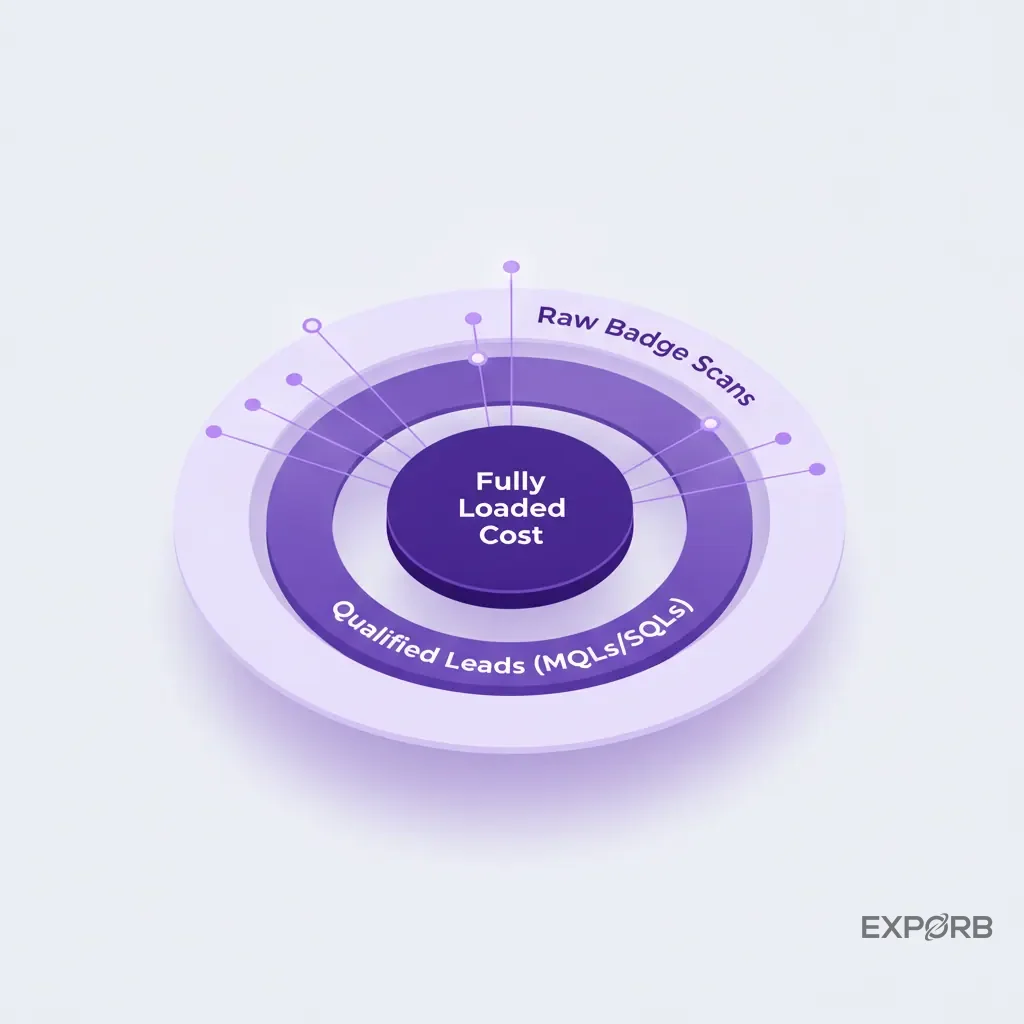
The three layers of CPL: Raw badge scans vs. qualified leads vs. fully loaded cost
Cost per lead isn't one number; it's a few distinct metrics. Most teams track only the first, which makes their event strategy feel like a gamble.
- Cost per Raw Lead (CPL): This metric is simple yet misleading. You take your total event spend and divide it by the number of badges scanned. Vendors love to quote it because it looks cheap, but it's a vanity metric. It treats a target account CEO the same as a student grabbing free swag.
- Cost per Qualified Lead (CPQL): This is where ROI begins. Instead of dividing by every scan, you only count Marketing Qualified Leads (MQLs) or Sales Qualified Leads (SQLs). These are the people who fit your ideal customer profile, have a real need, and expressed genuine interest. Your CPQL will always be higher than your raw CPL, and that's okay. It's a measure of efficiency, not volume.
- Fully Loaded Cost per Lead: This is the truest number. It includes direct event costs (booth, sponsorship, travel), but also "hidden" costs like salaries for attending staff, pre-show planning hours, and post-show data entry and follow-up time. It's the most honest accounting of your investment.
Common misconception: Why a cheap badge scan isn't always a cheap lead
A low raw CPL feels good, but it's often a sign of a failed strategy. Imagine spending $20,000 on an event and collecting 200 badge scans. Your CPL is $100. Looks great, doesn't it? But what if only 10 of those were actual prospects who could ever buy your product? Suddenly, your true Cost per Qualified Lead jumps to $2,000.
The exhibitor next to you might've spent the same $20,000, captured only 50 leads, but 25 of them were qualified. Their raw CPL is a "high" $400, but their CPQL is a much more efficient $800. Who really won?
Obsessing over scanning every badge that walks by clogs your pipeline with junk. It wastes sales' time. It makes measuring what's actually working impossible.
Setting the stage: A framework for accurate measurement in 2026
To get an accurate CPL, you need a system. We're not talking about a fishbowl for business cards that nobody will follow up on, or a rented badge scanner that just spits out a CSV of names and titles. You need a process that captures context.
Before the show, you've got to define what a "qualified lead" means for your team. Is it based on company size? Job title? A specific pain point they mentioned? Write it down. This becomes the filter you apply to your raw lead list to find your true CPQL. Without this definition, you're just guessing.
Related: The Complete Trade Show Lead Capture Guide
What is a good cost per lead benchmark for trade shows in 2026?
What's the magic number? The trade show cost per lead benchmark varies significantly. Data from dozens of sources shows a huge range, but we can establish some reliable guidelines. We must distinguish between the cost for a raw scan and the cost for a genuinely qualified lead.
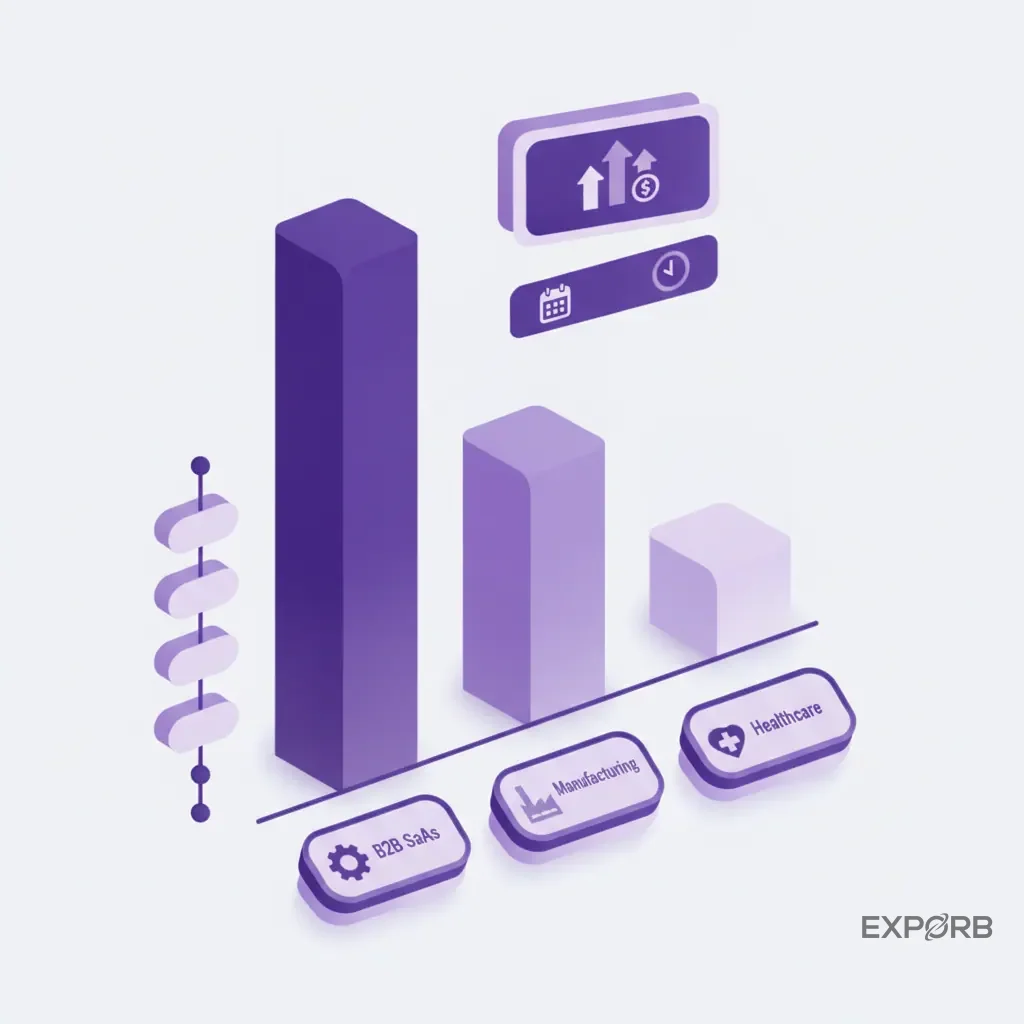
2026 trade show CPL benchmarks at a glance
Reports in 2026 place the average cost for a raw trade show lead anywhere from $100 to $300. For example, a study from Momencio pegs the range at $100-$300. Research cited by Pure Exhibits puts the average at $142. GoShowHero's analysis suggests a slightly tighter B2B range of $112–$186.
However, other, more complete studies that factor in additional variables paint a different picture. One industry benchmark from Martal.ca puts the average CPL closer to $811, with a 2026 update suggesting it has risen to $934. This higher number likely reflects a more "fully loaded" cost model.
The takeaway? If you're paying under $200 for a raw lead, you're in the ballpark. If you're paying over $800, you're either at a very high-end event or you're including more of your hidden costs—which is a smarter way to measure.
Comparing raw lead vs. qualified lead costs across studies
The real story comes out when you look at qualified leads. While a raw lead might cost $150, a qualified lead costs more because not every scan is a good fit. A 2026 report from Focus Digital places the average Cost per Qualified Lead (CPQL) from industry events at $231.
This jump from ~$150 to ~$230 tells you that, on average, roughly two out of every three leads you capture are actually qualified. Your own ratio could be better or worse, but tracking both metrics is important.
Comparison of 2026 Trade Show Cost Per Lead Benchmarks
How B2B SaaS, manufacturing, and healthcare benchmarks differ
Industry context is everything. A lead for a $500/month SaaS product has a different value than a lead for a $2 million piece of manufacturing equipment.
According to a 2026 industry report from First Page Sage, the blended CPL (across all channels) for B2B SaaS is $237. For a more niche field like cybersecurity, it's $406. These numbers aren't event-specific, but they show how target market value affects what a company will pay for a lead.
For high-value industries like manufacturing or complex healthcare tech, a CPL of $1,000+ at a specialized trade show might be a bargain if the potential deal size is in the six or seven figures. Understand your industry. You can't compare your CPL for a major industrial machinery expo to the CPL from a general marketing conference.
Why does CPL vary so much between industries and events?
You can't just Google "average CPL" and apply it to your business. The number means nothing without context. Several factors drive the cost up or down: audience seniority, the size of the deal you're chasing, and the event's format.
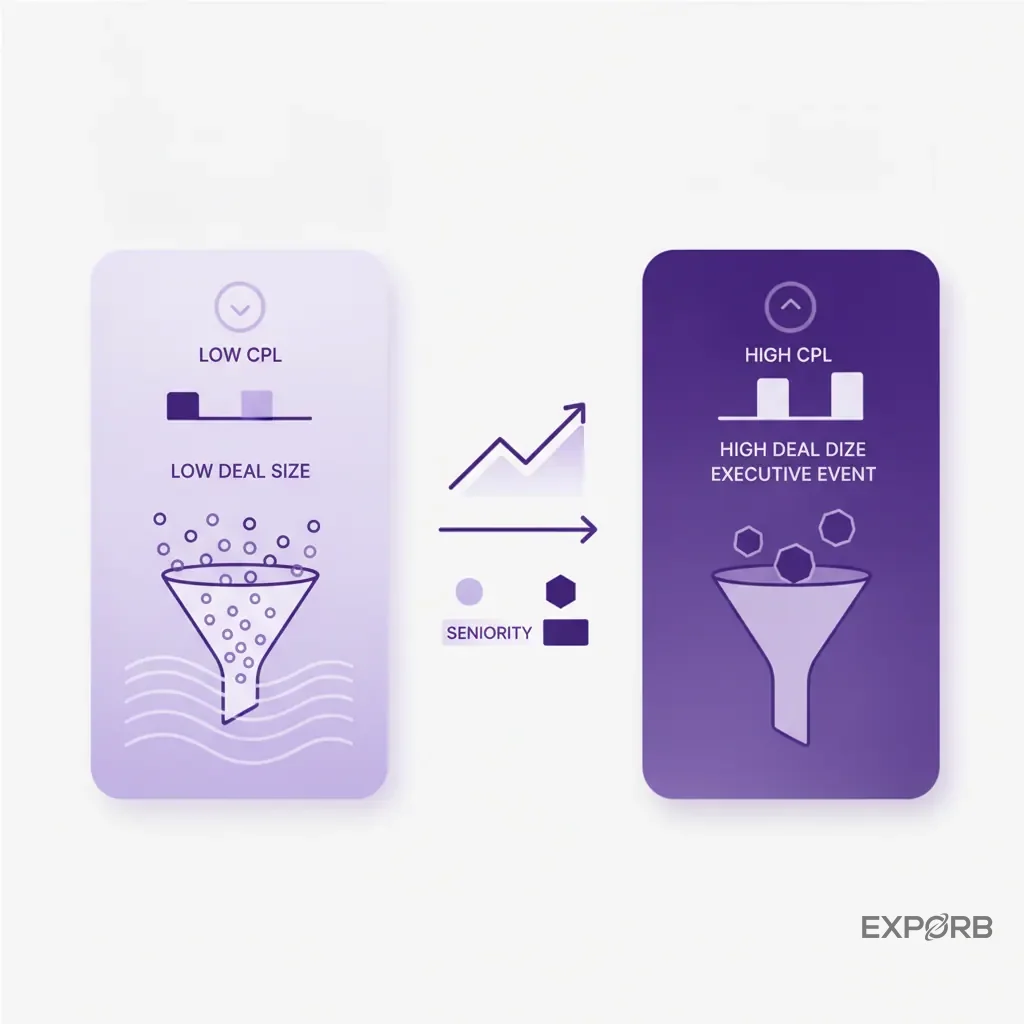
The impact of audience seniority: General attendees vs. executive events
Who are you trying to meet? An event open to the general public will have a very low CPL, but you'll have to sift through thousands of irrelevant contacts to find a buyer. Those leads are cheap because they aren't curated.
In contrast, an invitation-only executive summit or a C-suite roundtable will have a significantly higher cost per lead. A 2026 benchmark for executive events from Be Executive Events places the CPL between $1,000 and $3,500+. Why such a jump? You're paying for access. Every person in that room is a decision-maker. That's why it costs more. You're trading volume for extreme qualification. A single conversation could be worth more than a thousand badge scans at a general expo.
Deal size and sales cycle: How high ACV justifies a higher CPL
Your Annual Contract Value (ACV) or average deal size is the ultimate anchor for your CPL. If your product costs $1,000 a year, you can't afford to spend $1,500 to acquire a lead. But if you sell enterprise systems with an average deal size of $250,000, spending $1,500 on a highly qualified lead is a fantastic investment.
A simple rule of thumb: keep your Customer Acquisition Cost (CAC)—which CPL is a part of—at around one-third of your Customer Lifetime Value (LTV).
- Low ACV / Short Sales Cycle: Businesses with smaller deal sizes need a lower CPL. They must rely on high volume and efficient qualification to make the math work.
- High ACV / Long Sales Cycle: Enterprise businesses with large, complex deals can and should invest more per lead. The value of getting in front of the right buying committee is immense, justifying the higher upfront cost of specialized, senior-level events.
Event type and format: In-person, virtual, and hybrid event cost structures
The event format also plays a major role.
- In-Person Events: These carry the highest costs due to travel, lodging, booth shipping, and physical materials. They often produce the highest-quality leads because face-to-face interaction builds trust faster.
- Virtual Events: Virtual booths are cheaper, eliminating travel and logistics costs. This leads to a lower CPL. However, engagement can be a challenge, and the leads are often less qualified because it's easier for someone to "stop by" a virtual booth than a physical one.
- Hybrid Events: These offer a mix, but tracking becomes more complex. You've got to be careful to segment your leads and costs from the in-person and virtual components separately to understand the true CPL for each.
The right answer depends on your goals. Are you looking for brand awareness at scale or a handful of mission-critical meetings? Your event choice—and your target CPL—should reflect that.
What hidden costs inflate your true trade show CPL?
The number on the sponsorship invoice is just the beginning. The real cost of a trade show hides in expense reports, timesheets, and lost productivity. If you're only counting direct costs, your CPL calculation is a fantasy.
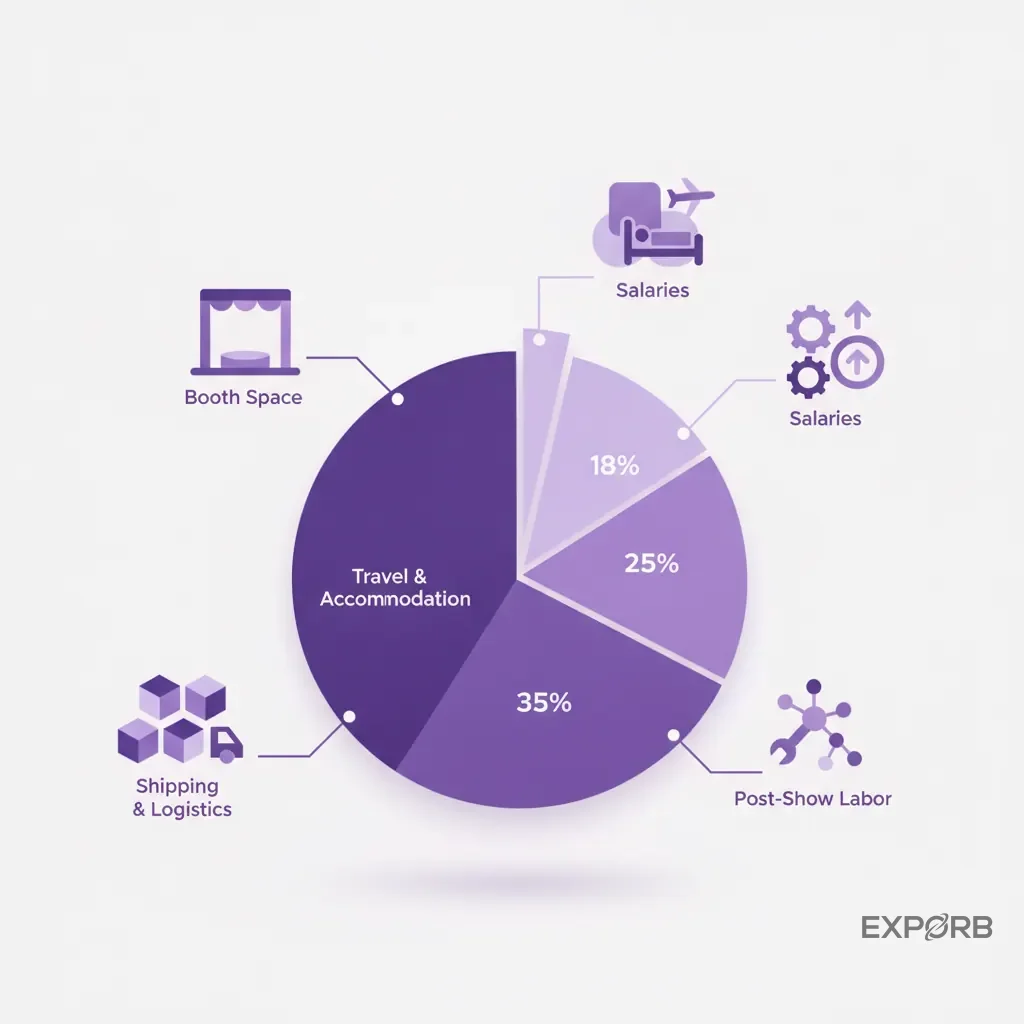
Beyond the booth: Factoring in travel, shipping, and accommodation
This is the most obvious set of hidden costs, but teams often underestimate it. We're talking about more than just flights and hotel rooms. It's the meals, the Ubers, the client dinners, and that last-minute trip to a print shop because you forgot the brochures.
And then there's freight. Shipping a 10x20 booth across the country—along with monitors, swag, and equipment—can add thousands, even tens of thousands, of dollars to your total bill. You must include all of this in the "Cost" part of your Cost per Lead equation.
The cost of labor: Pre-show prep, at-show staffing, and post-show follow-up
This is the hidden cost that will shock you. Your team's time is your most expensive asset, and trade shows consume a lot of it.
- Pre-Show Prep: How many hours did your marketing team spend designing the booth, writing copy, and coordinating logistics? How many hours did sales spend on pre-show outreach? Track it.
- At-Show Staffing: Calculate the fully-loaded daily cost (salary + benefits) for every person working the booth. If you have four people at a three-day show, that's 12 "person-days" of salary you've invested. It isn't free just because they already work for you. They shouldn't have spent that time on other revenue-generating activities.
- Post-Show Follow-Up: This is the killer. What happens after the show? Someone—usually a marketing coordinator or the sales reps themselves—spends days or even a week manually transcribing notes, deciphering handwriting from the back of business cards, and entering data into a spreadsheet. This soul-crushing manual labor is a massive, untracked cost that inflates your CPL.
Missed opportunity cost: The price of slow lead routing and poor qualification
The biggest hidden cost isn't on any invoice. It's the cost of lost deals.
What's the price of a hot lead going cold because it took you a week to follow up? What's the cost of your top sales rep wasting half a day chasing a "lead" who was actually a student looking for a job?
When lead capture is unstructured—a pile of cards, messy notes, a basic badge scan—the delay between the conversation and the follow-up is deadly. The prospect's memory fades. Their urgency cools. A week is too long. By the time your perfectly crafted email arrives five days later, they've already moved on. This delay directly inflates your CPL because it lowers your conversion rate. Fewer conversions from the same number of leads means each conversion costs more. At Exporb, we built our system for instant lead capture and qualification to fight this problem head-on.
Related: Top 5 Trade Show Lead Capture Apps for 2026
How do you accurately calculate your own trade show CPL?
You don't need a complex data science model to get a handle on your CPL. You just need discipline and a simple spreadsheet. By breaking it down into a few layers—raw, qualified, and fully loaded—you can move from guessing to knowing exactly what your event performance looks like.
Step 1: Tallying your total event investment (the 'cost' component)
First, get ruthless about tracking every single dollar. Create a spreadsheet with these categories; be exhaustive.
- Direct Event Costs:
- Booth space rental
- Sponsorship fees
- Booth design and construction
- Furniture and A/V rental
- Electricity and Wi-Fi
- Lead retrieval/scanner rental
- Logistics & Travel Costs:
- Booth shipping (freight)
- Flights for all staff
- Hotels for all staff
- Per diems or meal expenses
- Ground transportation (Ubers, taxis, rentals)
- Promotional & Material Costs:
- Swag and giveaways
- Printed materials (brochures, flyers)
- Pre-show marketing campaigns (emails, ads)
- Labor Costs (The Hidden Part):
- Calculate the daily salary cost for each staff member.
- Multiply by the number of days at the event (including travel days).
- Estimate and add the hours spent on pre-show planning and post-show data entry.
Sum all of this up. This is your Total Event Investment.
Step 2: Defining and counting your leads (raw, MQL, SQL)
Now for the denominator. This requires a clear, pre-defined set of rules, agreed upon by marketing and sales before the show.
- Raw Leads: This is easy. It's the total number of business cards collected, badges scanned, and forms filled out. Count them all.
- Marketing Qualified Leads (MQLs): Go through your raw list and apply your filter. Does the lead match your ICP criteria? (e.g., Company size > 50 employees, industry is manufacturing, job title is Director or above). Only count the ones that pass this initial check.
- Sales Qualified Leads (SQLs): This is the gold standard. An SQL is an MQL who also expressed a specific need, has a potential project, or asked for a follow-up meeting or demo. They've shown intent. This often requires context from the actual conversation—something a simple badge scan can't provide.
A simple formula and template for calculating your three CPL layers
Now, you just do the math.
- Raw CPL = Total Event Investment / Total Raw Leads
- Cost per MQL = Total Event Investment / Total MQLs
- Cost per SQL = Total Event Investment / Total SQLs
Let's say your Total Event Investment was $50,000. You collected 250 raw leads. Of those, 75 were MQLs, and 20 were hot SQLs who requested a demo.
- Your Raw CPL = $50,000 / 250 = $200
- Your Cost per MQL = $50,000 / 75 = $667
- Your Cost per SQL = $50,000 / 20 = $2,500
Suddenly, you've got a real story to tell. You aren't just reporting a $200 CPL. You're explaining that it costs you $2,500 to generate a qualified, demo-ready opportunity from a trade show. Now you can compare that number to your other channels and make intelligent budget decisions.
The founder's dilemma: 'What did my team actually learn?'
Here's a scene that plays out in hundreds of companies a week after a major trade show. The founder or head of sales walks over to the marketing manager and asks, "So, how'd the show go? Any good leads?"
The marketing manager proudly presents a spreadsheet exported from the badge scanner. It has 300 rows of names, titles, and emails. The founder scrolls through it, frowns, and asks the killer question: "Okay, but which of these conversations mattered? What did we actually learn?"
Silence. It's a common problem.
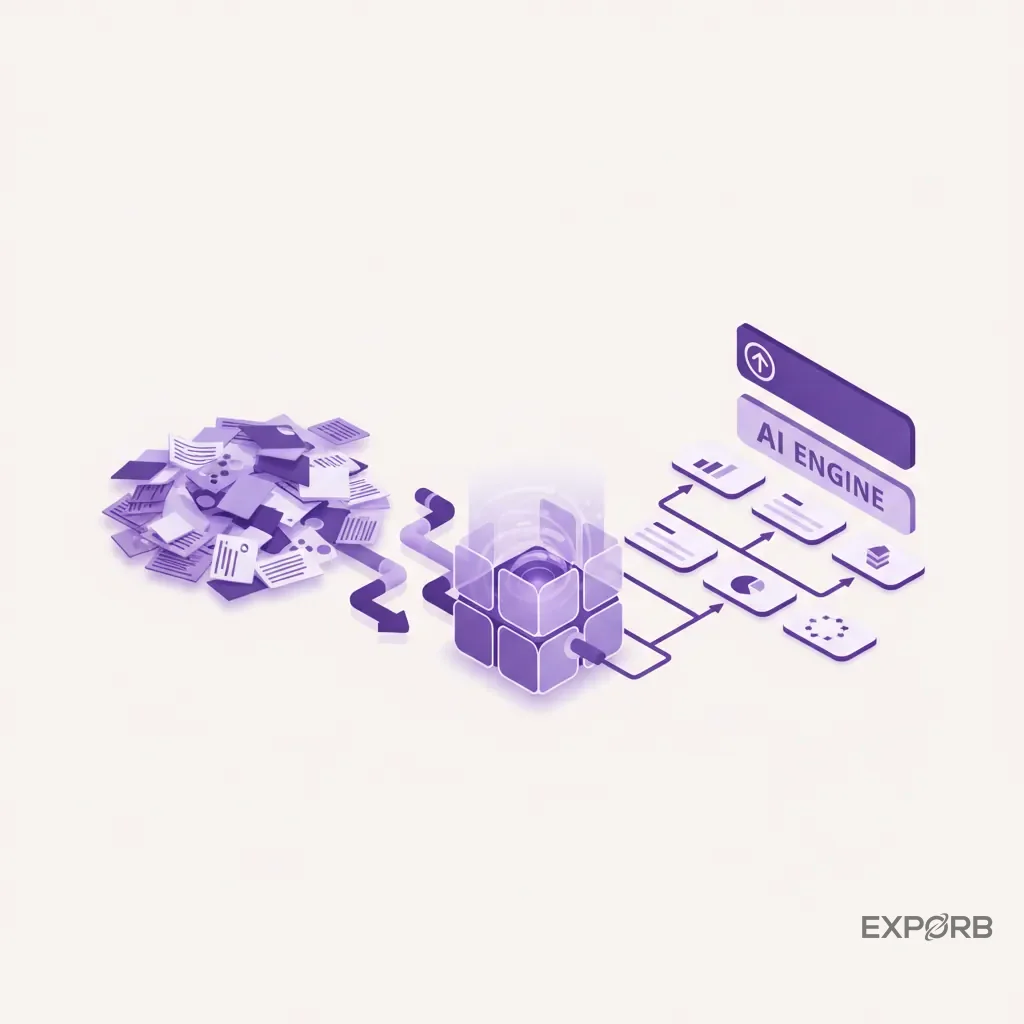
The real-world scenario: A pile of business cards with zero context
The spreadsheet can't answer that question. Neither can the stack of business cards with cryptic notes scribbled on the back. "Follow up re: Q3 project." What project? "Interested in API." Which one? "Call next week." About what?
This is the black hole at the center of event marketing. Companies spend millions on getting their teams into rooms with their best prospects, and 99% of the intelligence gathered in those conversations evaporates the moment the sales rep walks away. The founder is blind. They've got a list of names, but zero insight into the context, pain points, urgency, or potential of the opportunities.
How unstructured conversations kill event ROI and inflate CPL
This lack of structured data is a direct tax on your CPL. Here's how it destroys value:
- Slows Down Follow-Up: Without clear, structured notes, you delay follow-up. Reps have to try and remember what they talked about with 50 different people. The process is slow, so leads go cold.
- Leads to Generic Messaging: When you don't remember the details, you can't personalize. Every lead gets the same, "Nice to meet you at the show!" email. People ignore this generic outreach, crushing your response rates.
- Causes Inefficient Routing: Who should get this lead? Sales? Partnerships? Customer success? Without context, you don't know. You pass the lead around or, worse, it sits in a marketing automation queue, unassigned.
- Makes Qualification Impossible: You can't separate the hot leads from the tire-kickers based on a name and a title. The real qualification data was in the conversation, and it's lost.
Every one of these failures lowers your conversion rate, which means your cost to acquire a real customer from the event goes through the roof.
Bridging the gap between booth conversations and CRM data with AI
The only way to solve this is to treat conversations as data. You need a system that captures who you talked to and what you talked about.
This is where modern tools change the game. Imagine your sales rep finishes a great conversation. Instead of scribbling a note, they tap a button and record a 30-second summary: "This is Sarah from Acme Corp. They're struggling with inventory management and are looking for a new solution in Q3. Their main pain point is X, and they were really interested in our Y feature. I promised to send her the case study on Z. Hot lead."
At Exporb, we built our platform so AI automatically transcribes voice notes, attaches them to the contact record, and syncs them to a central dashboard. Now, the founder isn't blind anymore. They can see a real-time feed of every conversation, understand the key themes, and see which reps are generating the most qualified opportunities. The gap between the booth and the CRM disappears.
How can visitor identification and AI lower your blended CPL?
You've already paid for the most expensive part of Lead Generation—getting people to your booth. The plane tickets, hotel rooms, and significant cost of the booth space itself—that's all a sunk cost. The most effective way to lower your CPL is to get more value out of the traffic you've already bought.
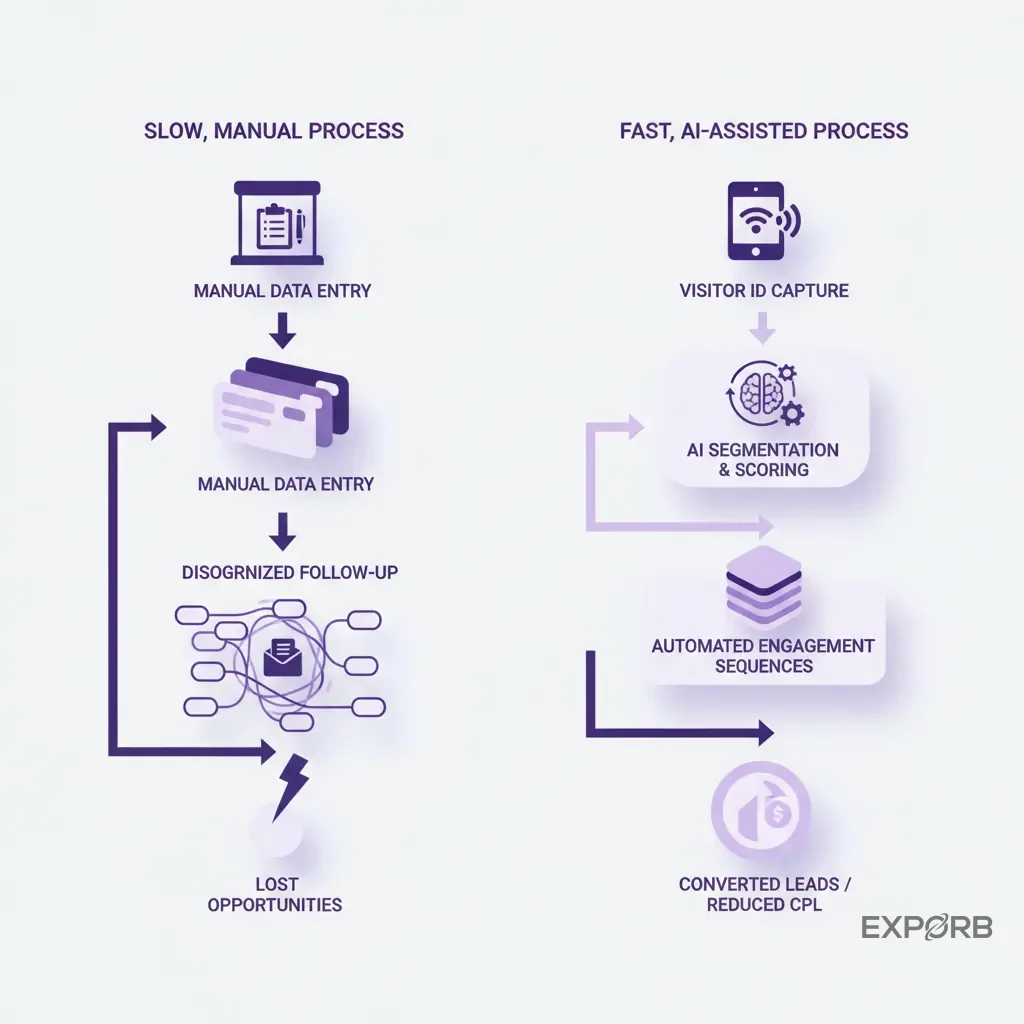
Converting traffic you already paid for: Engaging the unattributed booth visitor
Think about your booth traffic. For every person who waits in line to get their badge scanned, how many just walk by, pick up a brochure, or have a brief, informal chat with a junior team member? Five? Ten? You paid for those impressions, too.
Traditional lead capture methods miss these people entirely. They're invisible. But with the right approach, you can capture a portion of this "unattributed" traffic. An easy-to-use business card scanner that anyone on the team can operate in seconds, or a simple QR code that leads to a contact form, can turn a fly-by visitor into a known lead. Every one of these you capture is essentially a "free" lead that lowers your blended CPL.
Using AI-powered tools to instantly transcribe, qualify, and route leads
The real power comes from applying AI to the capture process. AI isn't simply a buzzword; it's a tool for speed and structure.
- Transcription: Instead of relying on handwritten notes, your team can record audio summaries of their conversations. AI transcribes these instantly, creating a perfect, searchable record of every important detail. You'll never forget what you talked about.
- Qualification: Modern event tools can use AI to analyze the content of these transcribed notes. By looking for keywords related to budget, authority, need, and timing (BANT), an AI lead scoring system can automatically flag the hottest leads. This means your sales team knows exactly who to call first when they get back from the show.
- Routing: Based on the content of the conversation—did they mention "partnership," "integration," or a specific product line?—AI can automatically tag the lead and prepare it for routing to the correct team or nurture sequence.
This isn't about replacing your sales team. It's about augmenting them. It's about turning every rep into a perfect note-taker and giving them superpowers to qualify leads on the fly.
The impact on follow-up speed and conversion rates
This combination of better capture and AI-driven intelligence has a significant impact on the most important post-show activity: the follow-up.
Because you capture data in a structured way at the booth, there's no post-show data entry delay. And because the conversation's context is preserved, the follow-up can be deeply personalized.
Instead of a generic email a week later, imagine an AI drafting a personalized email just minutes after the conversation ends. It can pull the prospect's name, company, the specific pain points they mentioned, and the agreed-upon next steps directly from the transcribed notes. Your sales rep just reviews it and hits send. With AI-powered email follow-up, the lead receives a relevant, personal message while the conversation's still fresh in their mind.
The result? Your response rates skyrocket. Your speed-to-lead time drops from days to minutes. And your conversion rate from lead-to-opportunity improves dramatically, which directly and powerfully lowers your true cost per lead.
Beyond CPL: Measuring pipeline efficiency and event ROI
Cost per Lead is a vital health metric, but it's not the finish line. It tells you how efficiently you're starting conversations, not how effectively you're closing business. To truly understand your event program's value, you need to look further down the funnel and measure what really matters: revenue.
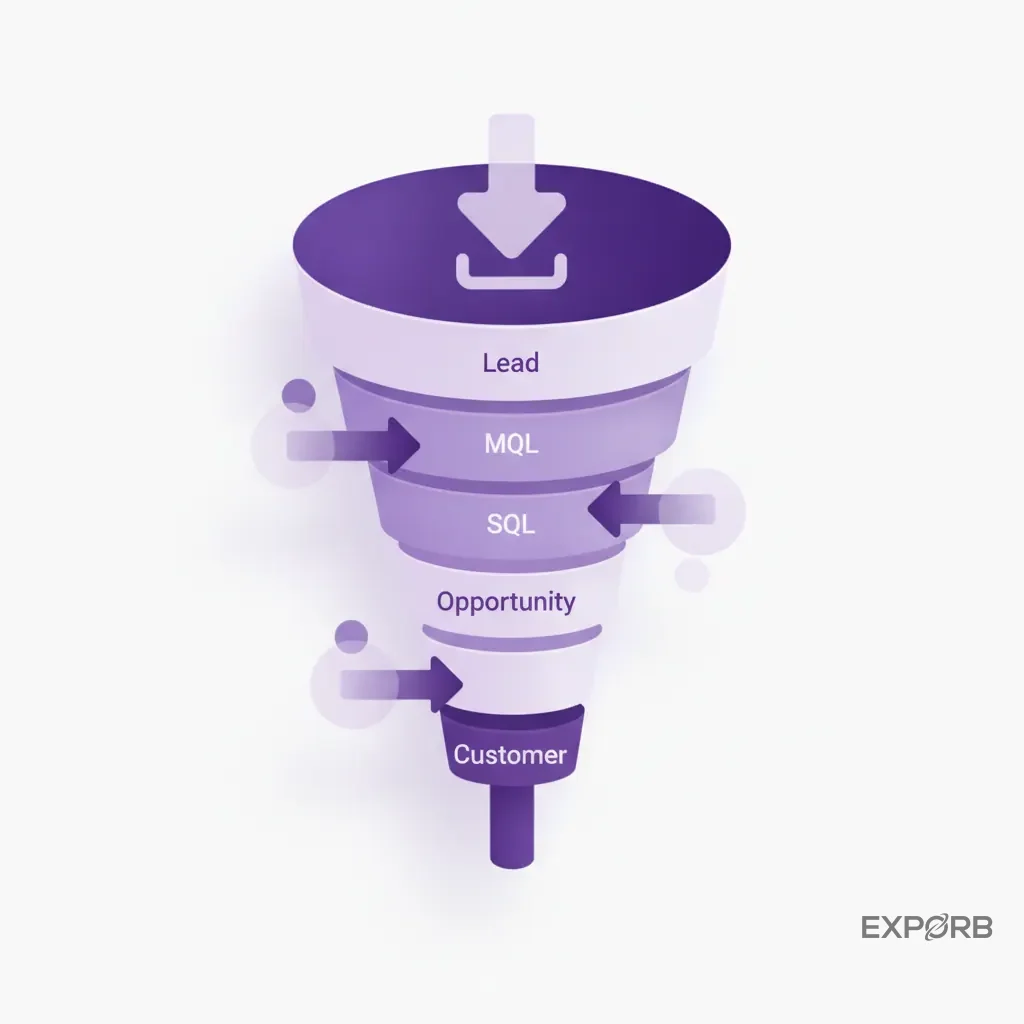
From cost per lead to cost per opportunity
The next logical step is to calculate your Cost per Opportunity. This metric tracks how much you have to spend to generate a legitimate, pipeline-worthy sales opportunity.
Cost per Opportunity = Total Event Investment / Number of Sales Opportunities You Generate
This is a much better indicator of event success than CPL because it filters out all the noise. It doesn't matter if you got 1,000 leads if none of them turned into a real sales cycle. An event that generates 20 leads but 10 of them become pipeline opportunities is far more successful than an event that generates 200 leads but only yields 5 opportunities.
Tracking this requires tight alignment between marketing and sales, and a CRM that can trace an opportunity back to its original source campaign.
Tracking lead-to-customer conversion rates from events
The ultimate measure of lead quality is whether they become paying customers. By tracking the lead source all the way through the sales cycle, you can determine your event-specific Lead-to-Customer Conversion Rate.
Event Conversion Rate = (New Customers from Event / Total Leads from Event) x 100
This percentage is your truth serum. It tells you how good your team is at picking the right events, attracting the right people to your booth, and converting those conversations into revenue. If your conversion rate from events is significantly higher than from other channels, it justifies the higher CPL. If it's lower, it's a sign that something's broken in your event strategy or your follow-up process.
Calculating the ultimate metric: Customer lifetime value (LTV) to CPL ratio
Now we tie it all together. The best metric for evaluating any marketing spend, including events, is the ratio of Customer Lifetime Value (LTV) to Customer Acquisition Cost (CAC).
- LTV: The total revenue you can expect from a single customer account over the lifetime of your relationship.
- CAC: The total cost to acquire that customer. Your event spend is a major component of this for any deals originating from a trade show.
A healthy LTV:CAC ratio for a B2B business is typically 3:1 or higher. This means for every dollar you spend acquiring a customer, you get at least three dollars back in lifetime value.
By calculating this ratio specifically for customers you acquire through trade shows, you can make definitive statements about ROI. You can go to your CFO and say, "Yes, trade shows have a high cost per lead, but the customers we acquire there have an LTV:CAC ratio of 5:1. It's our most profitable channel." That's a conversation that gets you more budget. Without it, you're just defending an expense.
Frequently asked questions about trade show CPL
Navigating trade show costs can be confusing. Here are direct answers to some of the most common questions exhibitors have about CPL benchmarks and performance.
What is a good cost per lead for B2B in 2026?
A good B2B cost per lead from a trade show in 2026 is between $200 and $800, depending on the industry and lead quality. For raw badge scans at a general industry event, aiming for the lower end ($200-$400) is a reasonable target. For highly qualified leads (SQLs) from a specialized or executive-level event, a CPL of $800 or even higher can be very profitable if your average deal size is large.
How do trade show leads compare to digital channels like LinkedIn or Google Ads?
Trade show leads are typically more expensive on a CPL basis but often have a higher conversion rate to opportunity and customer. A lead from a Google Ad might cost $50-$150, but they haven't met your team face-to-face. The trust and intent built during an in-person conversation are harder to quantify but often lead to faster sales cycles and larger deals. The key is to measure the full funnel—a cheap digital lead that never closes is more expensive than a "costly" event lead that becomes a top customer.
How quickly should we follow up with a trade show lead?
You should follow up with a trade show lead within 24 hours. Research consistently shows that response rates plummet after the first day. The prospect's memory of the conversation is sharpest immediately after they leave your booth. A personalized follow-up that references your specific discussion, sent the same day, will perform dramatically better than a generic email sent a week later. The goal? Make contact while they're still at the event or traveling home.
Your action plan for a lower CPL and higher ROI in 2026
Knowing the benchmarks is one thing; improving your own numbers is what matters. A lower CPL isn't about spending less; it's about getting more value from what you already spend. Here's a simple framework to make your next event your most efficient one yet.
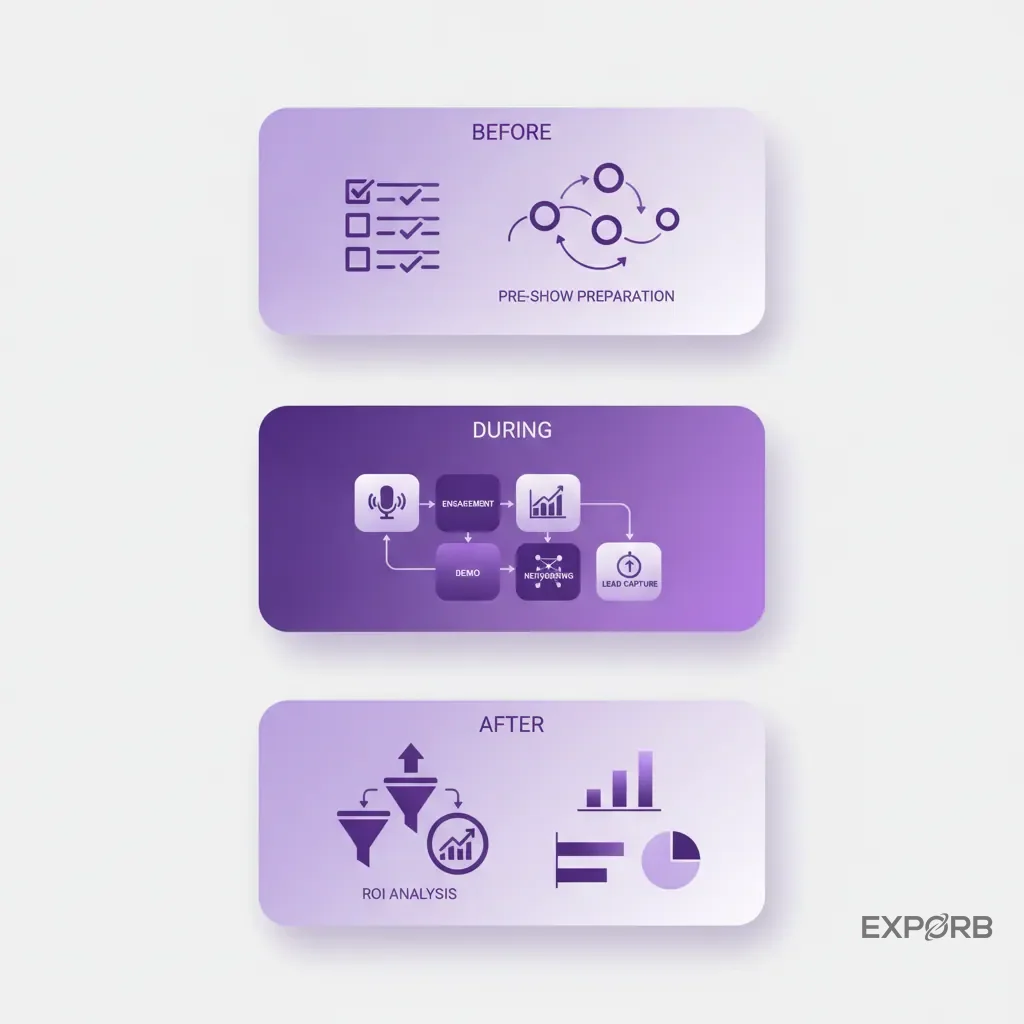
Before the event: Set clear goals and define your lead qualification criteria
Success starts weeks before you step onto the show floor. Don't leave anything to chance.
- Define a "Good Lead": Get sales and marketing in a room and agree on the exact definition of an MQL and an SQL for this specific event. Write down the criteria (title, company size, industry, expressed need).
- Set a Target CPL/CPQL: Based on the benchmarks and your budget, set a realistic goal. This gives your team a number to rally around.
- Train Your Team: Don't assume everyone knows how to work a booth. Role-play conversations. Teach them the qualification criteria. Make sure they know how to use your lead capture tools properly.
During the event: Arm your team with tools for structured data capture
Your goal at the booth is to capture context, not just contacts. The era of the fishbowl and the rented badge scanner is over.
- Ditch Manual Notes: Equip your team with a modern trade show lead capture app that allows them to scan cards, record voice notes, and add tags on the spot. We built our app to handle complex data entry simply and quickly.
- Focus on Quality Conversations: Coach your team to spend more time with fewer, better prospects rather than trying to scan every person who walks by. A 10-minute conversation with a real buyer is worth more than 100 badge scans of unqualified attendees.
- Sync Data in Real-Time: Use a tool that offers team synchronization. This prevents multiple reps from talking to the same person and gives managers a live view of performance. It also keeps data safe and centralized, even if the conference Wi-Fi fails, by using offline-first technology.
After the event: Implement a rapid, personalized follow-up sequence
The 48 hours after the show are the most important. Speed and personalization are your only advantages.
- Eliminate Data Entry: If you used a proper capture tool, you should have zero manual data entry. Your leads are ready for export to your CRM or for immediate follow-up the moment the show ends.
- Segment and Personalize: Use the rich data you captured (notes, tags, photos) to segment your leads. Hot SQLs should get a personal call or email from their assigned rep within hours. MQLs can go into a personalized nurture sequence that references the event.
- Measure and Report: Run the CPL, CPQL, and Cost per Opportunity calculations you planned. Analyze what worked and what didn't. Share the results with the entire team and use the insights to choose your next event and refine your strategy.