Why is a trade show marketing budget more critical than ever in 2026?
You've seen the line item. It's huge. A single trade show's cost can easily eclipse your entire quarterly digital ad spend. For years, many companies treated this like a necessary evil—a calendar expense you just had to pay. But that thinking's dangerously outdated. A modern trade show budget is a precision investment in your pipeline, not merely an expense. Get it right, and the returns are massive. Get it wrong? You're just funding an expensive team vacation.
The stakes have never been higher. You aren't just booking floor space anymore. You're competing for attention, for meaningful conversations, and for the handful of leads that'll define your next two quarters. This is serious business.
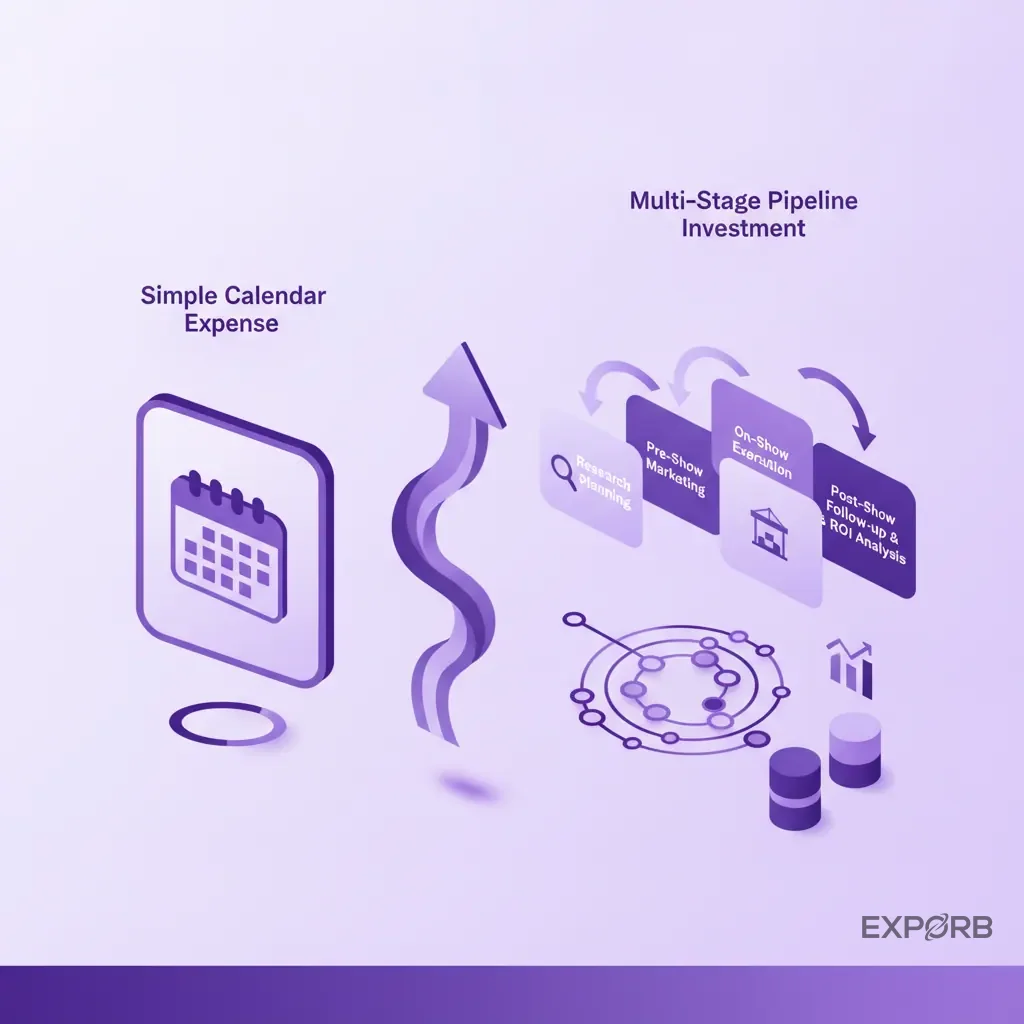
The shift from calendar expense to precision pipeline investment
📊 $15.8 Billion
The U.S. trade show market is valued at $15.8 billion in 2026 — and it's still growing. Every dollar you spend competes in one of the most expensive B2B marketing channels. Precision budgeting isn't optional; it's survival.
For too long, the budget conversation started and ended with, "How much did we spend last year? Okay, add 5% for inflation." That's a recipe for stagnation. It's a dangerous trap.
Today's smartest exhibitors treat their budget as a strategic tool. It funds outcomes, not just covers costs. Instead of asking, "What can we afford?" we should ask, "What pipeline do we need to generate, and what investment will hit that number?" This reframes the entire process. It shifts from a cost center to a profit center. This approach forces you to think about lead quality, follow-up speed, and sales cycle influence—not just booth size and carpet color.
Navigating rising costs and market growth in a $15.8 billion industry
The trade show industry is booming. The U.S. market alone is valued at around $15.8 billion in 2026, and it isn't slowing down. This growth brings more opportunities, but also stiffer competition and higher costs for everything from floor space to labor.
Ignoring these trends means your budget will fall short before you even print your first brochure. You need a plan that accounts for rising exhibitor fees, shipping surcharges, and the premium you'll pay for services in high-demand convention centers. A well-researched budget anticipates these costs. This prevents last-minute scrambles that drain resources and focus.
The data-backed case for trade shows' high ROI potential
So, why bother with the expense and complexity? Because the return is unparalleled when executed properly. Most exhibitors obsess over booth design and completely ignore lead capture. They spend $50K looking good and $0 on remembering what was said. That's a mistake.
While a qualified B2B digital lead can cost anywhere from $200 to $800, the industry benchmark for a trade show lead is about $142. Think about that. Face-to-face interaction builds trust and shortens sales cycles in a way no email campaign can. Companies that get their strategy right report an average ROI of nearly $21 for every $1 spent. But "when executed properly" is key. The ROI doesn't come from your fancy booth. It comes from the best system for capturing and converting conversations.
How much should you actually spend on a trade show?
This is the million-dollar question—sometimes literally. There isn't a single magic number, but proven models take the guesswork out of it. Don't just pull a number from thin air. You'll either underfund the event and guarantee failure, or overspend on things that don't drive results.
Let's look at four reliable methods for building a realistic budget baseline.
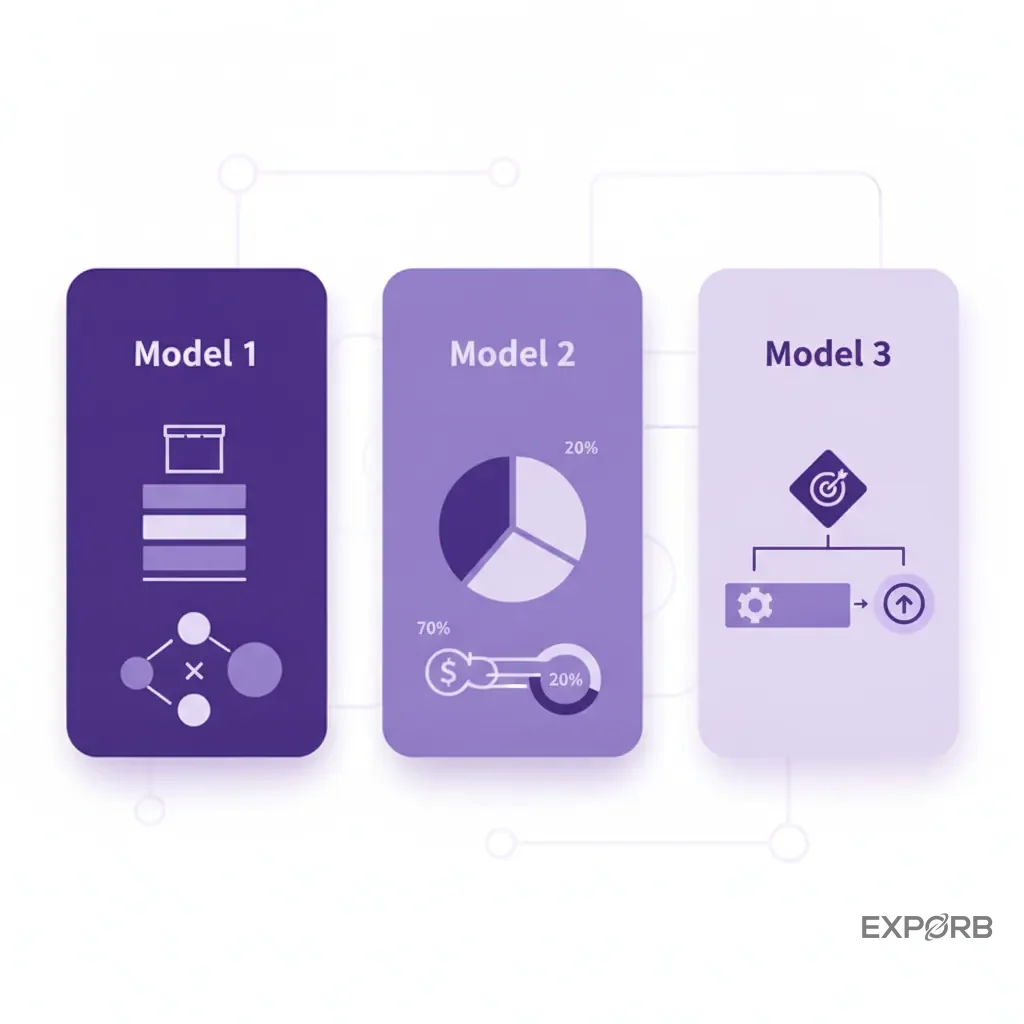
Using the 3x booth space cost rule as a starting point
If you're looking for a quick, back-of-the-napkin estimate, this is it. The rule of thumb, widely used by veteran event managers, is to take the cost of your booth space and multiply it by three. Research from The Trade Show Network shows this simple formula provides a surprisingly accurate ballpark figure for your total show investment.
- Booth Space Cost: $15,000
- Estimated Total Budget: $15,000 x 3 = $45,000
This works because floor space cost reliably indicates the show's scale and associated expenses. A more expensive booth fee usually means a larger, more prestigious event with higher costs for travel, lodging, and services. It's not perfect, but it's an excellent starting point to see if a show's even in your league.
Benchmarking your budget: allocating 30-32% of total marketing spend
For a more strategic approach, look at your event spend in the context of your entire marketing budget. On average, exhibiting companies allocate about 31.6% of their total marketing budgets to events. This figure holds steady for both SMBs and large enterprises.
How does this work in practice?
- Start with your total annual marketing budget (e.g., $500,000).
- Calculate the portion for events (e.g., $500,000 x 31% = $155,000).
- Divide that by the number of shows you plan to attend (e.g., $155,000 / 3 shows = ~$51,667 per show).
This method ensures your trade show program is appropriately funded relative to your other marketing channels. It prevents it from cannibalizing your digital, content, or PR efforts.
📈 31.6% of Marketing Budget
Exhibiting companies allocate an average of 31.6% of their total marketing budget to events — consistent across both SMBs and enterprises. If your event spend is significantly lower, you may be underinvesting in your highest-touch channel.
Source: Trade Show Statistics Report
Building from your goals: an objective-based budgeting model
This is the most advanced and most effective method. It starts with the desired outcome and works backward. Instead of asking what the show will cost, you ask what you need to achieve and what it will cost to get there.
Your goals could be:
- Generate 250 qualified leads.
- Source $500,000 in new sales pipeline.
- Book 50 C-level executive meetings.
- Close 10 deals on the show floor.
Let's say your goal is 250 qualified leads. You know the industry benchmark cost-per-lead is around $142.
- Goal: 250 leads
- Target CPL: $142
- Required Budget: 250 x $142 = $35,500
This model forces you to justify every dollar. Every line item—from the booth design to the lead capture software—must contribute directly to achieving that core objective. It connects your spending directly to your ROI calculation from day one.
Budget Models Compared
| Model | Formula | Best For | Key Risk |
|---|---|---|---|
| 3x Booth Cost | Booth Space × 3 | First-time exhibitors, quick estimates | Ignores travel, staffing, marketing costs |
| % of Marketing Spend | Total Marketing Budget × 31.6% | Companies with established marketing mix | Doesn't account for show-specific needs |
| Objective-Based | Goal × Cost-Per-Result | Experienced exhibitors, ROI-focused teams | Requires accurate benchmark data |
Recommendation: Start with the 3x rule for a quick ballpark. Cross-check with your marketing budget percentage. Then build a detailed objective-based budget for each specific show. This three-layer approach gives you confidence your numbers are grounded in reality.
Related: The Complete Guide to Trade Show Lead Capture
A detailed breakdown of common trade show costs
A successful trade show budget accounts for everything. The big, obvious costs are easy to remember, but dozens of smaller, hidden fees can wreck your ROI. We've seen it happen—a team has a great show but blows their budget on unexpected drayage and last-minute Wi-Fi charges.
Let's break the costs down into three phases: pre-show, at-show, and post-show.
Pre-show investments: booth space, exhibit design, and shipping
These are the foundational costs you'll incur weeks or months before the event. They typically make up the largest portion of your budget.
- Booth Space: This is your rent for the show floor. It's usually the single biggest expense, often representing 30-35% of your total budget.
- Exhibit Design & Fabrication: A custom booth looks great, but it comes at a price. This can range from a few thousand for a portable display to hundreds of thousands for a multi-story custom build.
- Graphics & Signage: High-quality graphics are essential for attracting attention. Don't skimp here, but do shop around for printers.
- Promotional Materials: This includes brochures, sell sheets, case studies, and any pre-show mailers or email campaigns designed to drive booth traffic.
- Shipping & Freight: Getting your booth and materials to the convention center is a significant cost. It's calculated by weight and distance, so plan accordingly.
At-show expenses: staffing, travel, drayage, and services
These are the costs of operating your booth and supporting your team during the event. They're often variable, so it's important to build in a buffer.
- Staffing: This includes salaries and commissions for the team working the booth. Don't forget to factor in training time.
- Travel & Accommodation: Flights, hotels, and ground transportation for your team can add up quickly, especially for major national shows.
- Drayage (Material Handling): This is the fee the convention center charges to move your freight from the loading dock to your booth space—and back again. It's a non-negotiable, often surprisingly high cost.
- On-site Services: This is the killer category of "hidden" fees. It includes electricity, internet access, booth cleaning, lead retrieval/scanner rental, and furniture rental. Each is a separate line item. These can really add up.
Post-show essentials: lead follow-up, nurturing campaigns, and measurement tools
This is the most important—and most often forgotten—part of the budget. The show isn't over when the lights go out. The real work of converting leads into revenue is just beginning.
- Lead Follow-up Systems: You need a tool to manage the leads you just collected. A pile of business cards isn't a system. Manually entering them into a spreadsheet is slow and error-prone. Modern lead capture tools digitize this process instantly.
- Email Nurturing Campaigns: Not every lead is ready to buy. You need a budget for the Marketing Automation software and content required to nurture them over the next few months.
- CRM Integration & Data Entry: Someone has to get the leads from your capture tool into your CRM. If your process is manual, this means budgeting for hours of administrative time. The best systems automate this with direct CRM exports.
- ROI Reporting & Analysis: You need to budget for the tools and time required to analyze your results, calculate your cost-per-lead and cost-per-opportunity, and prove the show's value to your leadership.
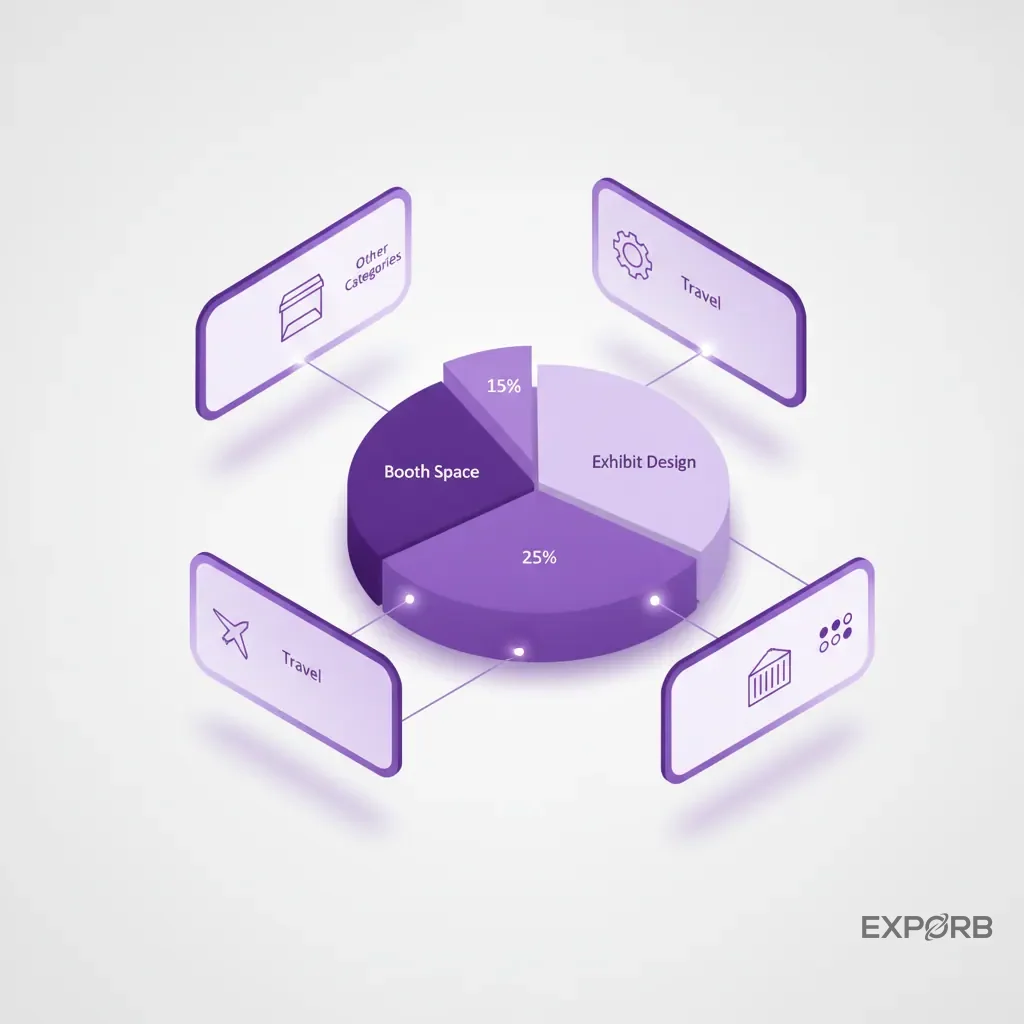
Here's a sample budget breakdown for a mid-size show with a total budget of $50,000.
Sample $50,000 trade show budget allocation for a 10x20 booth.
How do you create a trade show budget from scratch?
Building a budget from a blank spreadsheet can feel intimidating. But a systematic process turns a big, scary number into a series of manageable decisions. It's about planning, not just spending. A great budget is a strategic document that guides your entire event program.
Let's walk through the three essential steps to build a powerful, defensible budget. For a ready-to-use framework, grab our trade show planning template to map out your entire event timeline alongside your budget.
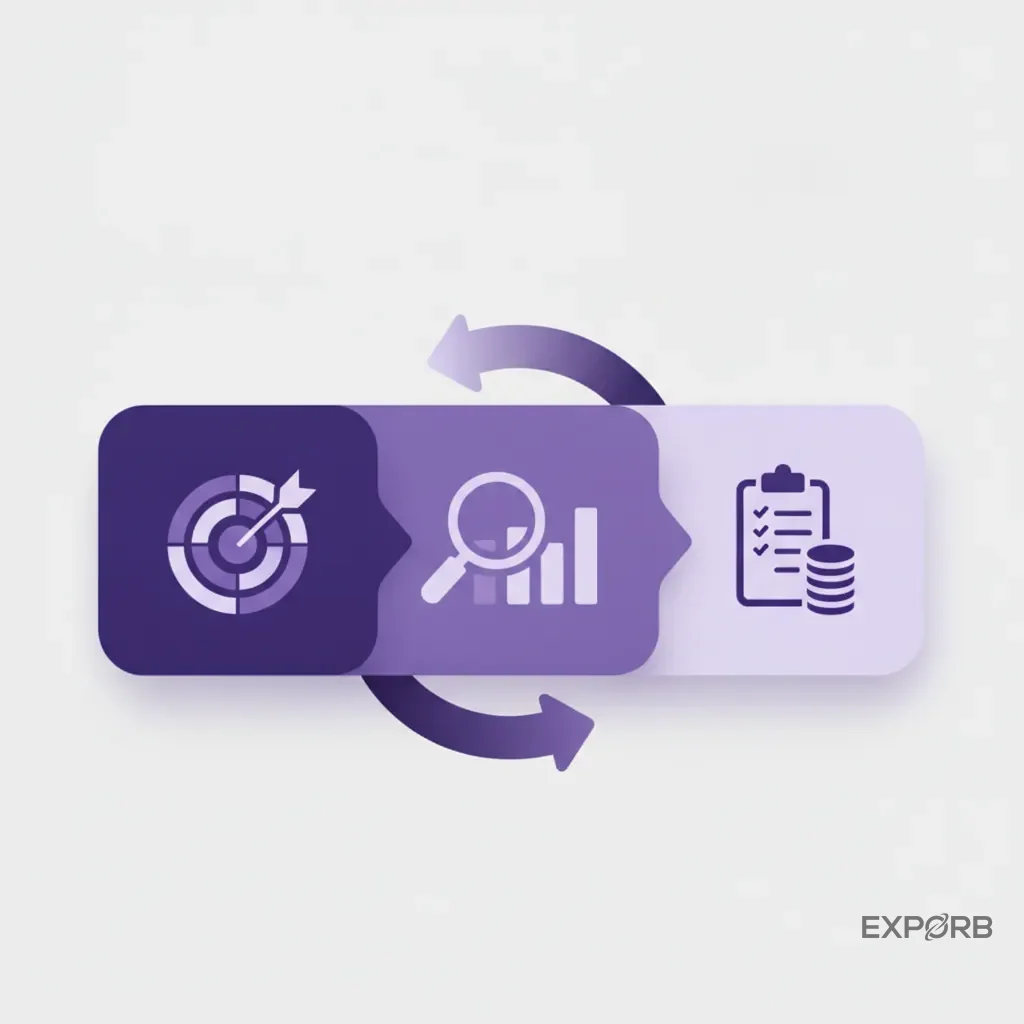
Step 1: Define your goals and target cost-per-lead
Before you look at a single floor plan, you need to define success. What does a win look like for this specific show? Your goals must be specific, measurable, achievable, relevant, and time-bound (SMART).
Don't say: "We want more leads." Do say: "We'll capture 150 marketing-qualified leads with an average deal size of $25,000, resulting in $750,000 of new pipeline within 30 days of the show."
This clarity is your North Star. Once you have a target number of leads, you can set a target Cost-Per-Lead (CPL). Use the industry benchmark of $142 as a starting point, but adjust it based on your industry and average contract value. A higher ACV can justify a higher CPL. This goal-driven approach makes your budget an investment tool, not just a spending tracker.
Step 2: Research and select high-relevance shows for your ICP
Not all shows are created equal. The biggest show isn't always the best show for you. Your budget will be wasted if you're exhibiting to the wrong audience. You need to find the events where your Ideal Customer Profile (ICP) congregates in high concentrations.
Look for:
- Attendee Demographics: Does the show organizer provide a breakdown of past attendees by job title, industry, and company size? Match this against your ICP.
- Exhibitor List: Are your competitors there? Are your partners there? The presence of other relevant companies is a strong signal that it's the right place to be.
- Educational Tracks: Review the conference agenda. Do the topics align with the pain points your product solves? If so, the attendees are likely pre-qualified.
- Cost vs. Opportunity: A smaller, niche industry show might have a lower cost and a higher concentration of your ICP than a massive, general-purpose conference. Don't chase vanity. Chase relevance.
Step 3: Build your line-item budget (with our free template)
Now it's time to get granular. Create a spreadsheet with every possible cost category. Use the breakdown from the previous section as your guide: pre-show, at-show, and post-show.
For each line item, get real quotes whenever possible. Don't guess. Call your shipping provider. Check the exhibitor manual for drayage rates. Use a travel site to estimate flight and hotel costs. The more real data you use, the more accurate your budget will be.
Always—and I mean always—include a line item for contingency. A buffer of 10-15% is standard. This will cover the inevitable surprises, like needing to reprint banners because of a typo or a last-minute staffing change. Without it, one small problem can derail your entire financial plan.
What are the most common budget mistakes and how can you avoid them?
I've been to hundreds of trade shows, both as an exhibitor and as a vendor serving exhibitors. And I see the same costly mistakes over and over again. These are the unforced errors that turn a potential ROI-positive event into a money pit.
The good news? They're all avoidable with a bit of foresight.
Misconception: Overspending on booth design instead of lead capture tech
This is the single biggest strategic error in trade show marketing. Companies will spend $50,000 on a stunning booth with custom lighting, beautiful graphics, and a fancy coffee bar. Then they'll hand their sales team a stack of notepads or a rented badge scanner from the 1990s and call it a day.
That's backwards.
Your booth's job is to attract people and start conversations. But the value of the show comes from capturing the details of those conversations and turning them into actionable sales intelligence. A beautiful booth that results in a fishbowl full of dead business cards is a failure. A simple 10x10 booth with a killer system for capturing lead context and triggering instant follow-up is a success. Allocate your budget accordingly. Your lead capture tech is more important than your carpet color.
Forgetting the 'hidden' costs like drayage, electricity, and wifi
The exhibitor manual is your best friend and your worst enemy. It contains all the information you need to avoid budget-busting surprises, but it's often dense and confusing. You have to read it carefully.
First-time exhibitors are consistently shocked by the costs of basic services:
- Drayage: You'll pay hundreds or even thousands of dollars just to have your boxes moved 100 feet.
- Electricity: Need to plug in a monitor? That'll be $300 for a single outlet.
- Wi-Fi: The convention center Wi-Fi is notoriously unreliable and expensive. You can't run your business on it. This is why tools that offer solid offline functionality are non-negotiable. Your lead capture process can't stop just because the internet does.
The biggest mistake: failing to budget for post-show follow-up (the 80% gap)
Here is a terrifying statistic: up to 80% of trade show leads are never followed up on.
Let that sink in. You spend tens of thousands of dollars to generate a lead, and then it gets thrown away. This happens because most companies don't budget for the time, tools, and process required for effective follow-up. The sales team gets back to the office, buried in their regular work, and that stack of business cards gathers dust.
Your budget must include a dedicated line item for closing this gap. This means investing in technology that makes follow-up fast and effective. Imagine your rep finishes a great conversation, scans a business card, and records a quick voice note about the next steps. Before the lead even leaves the booth, an AI-powered system drafts a personalized follow-up email based on the conversation, ready for your rep to review and send. That's how you close the 80% gap.
Related: Post-Event Follow-Up: The Definitive Guide
Maximizing ROI with smart budget allocation
You don't need a bigger budget to get better results. You need a smarter budget. It's about reallocating funds from low-impact, traditional expenses to high-impact, technology-driven strategies. It's about shifting your mindset from "cost of exhibiting" to "investment in pipeline."
Every dollar should be scrutinized. Does this expense help us have more meaningful conversations? Does it help us capture the context of those conversations more effectively? Does it help us follow up faster and more personally? If the answer is no, that dollar should be moved somewhere else.
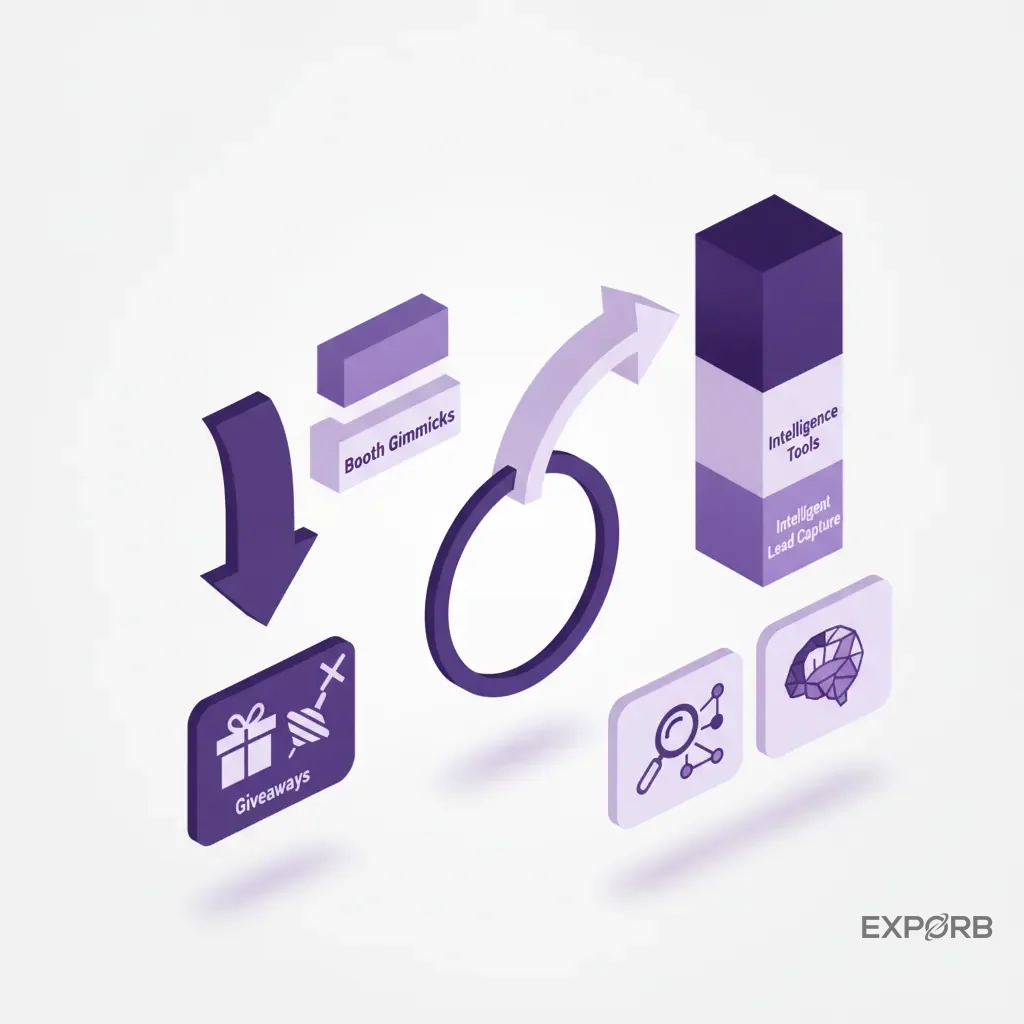
Reallocating spend from giveaways to intelligent lead capture tools
Let's talk about swag. How much of your budget is going to branded pens, stress balls, and cheap t-shirts? Now, how many closed deals can you attribute to that swag? The answer is probably zero.
People who come to your booth for a freebie aren't leads. They're trick-or-treaters. You're attracting the wrong crowd and generating noise in your lead list.
Take the $5,000 you were going to spend on fidget spinners and re-invest it in a modern lead capture platform. Instead of a bag of useless plastic, you get structured data, conversation transcripts, and automated follow-up. Which asset do you think your sales team would rather have? One good conversation captured perfectly is worth more than 100 scans from people who just wanted a free hat.
Solving the founder's blind spot: budgeting for conversation intelligence
Here's the problem that led us to build Exporb. As a founder, I'd send my team to a show. They'd come back and say, "It was great! We talked to a ton of people." But I had no visibility. Which conversations mattered? What did they talk about? What were the customer's actual pain points? It was a black box.
Your budget needs to solve this. You need to invest in tools that give you—the leader—clear insight into what's happening on the show floor. This means going beyond basic contact info. It means using tools that allow your team to capture voice notes after every conversation, which are then automatically transcribed and analyzed by AI.
Suddenly, you aren't just getting a list of names. You're getting a searchable database of market intelligence. You can see which products are resonating, what competitors are being mentioned, and what pain points come up most often. This data is invaluable for sales, marketing, and product development, and it justifies the entire cost of the show.
Achieving economies of scale: planning a multi-show budget for lower CPL
Attending a single trade show is inefficient. You're doing all the work—booth design, training, process development—for a one-time event. The real power comes from building an event program.
When you plan and budget for a full year of shows (e.g., 5 or more), you unlock significant economies of scale. Research shows that companies exhibiting at 5+ events per year see a 15-20% lower cost per lead than those attending just one or two.
Why?
- Reusable Assets: You can use the same booth and graphics at multiple shows, amortizing the cost.
- Process Efficiency: Your team gets better and faster at setup, teardown, and lead capture with each show.
- Bulk Discounts: You can often negotiate better rates with vendors for multi-show contracts.
A multi-show budget allows you to think long-term, refining your strategy and improving your ROI with each event.
How can small teams build a competitive budget without enterprise resources?
You don't need a Fortune 500 budget to succeed at trade shows. In fact, smaller, more agile teams often have an advantage. You can be more focused, more personal, and more creative. The key is to be strategic and resourceful with every dollar you spend.
It's not about outspending the competition. It's about outsmarting them.
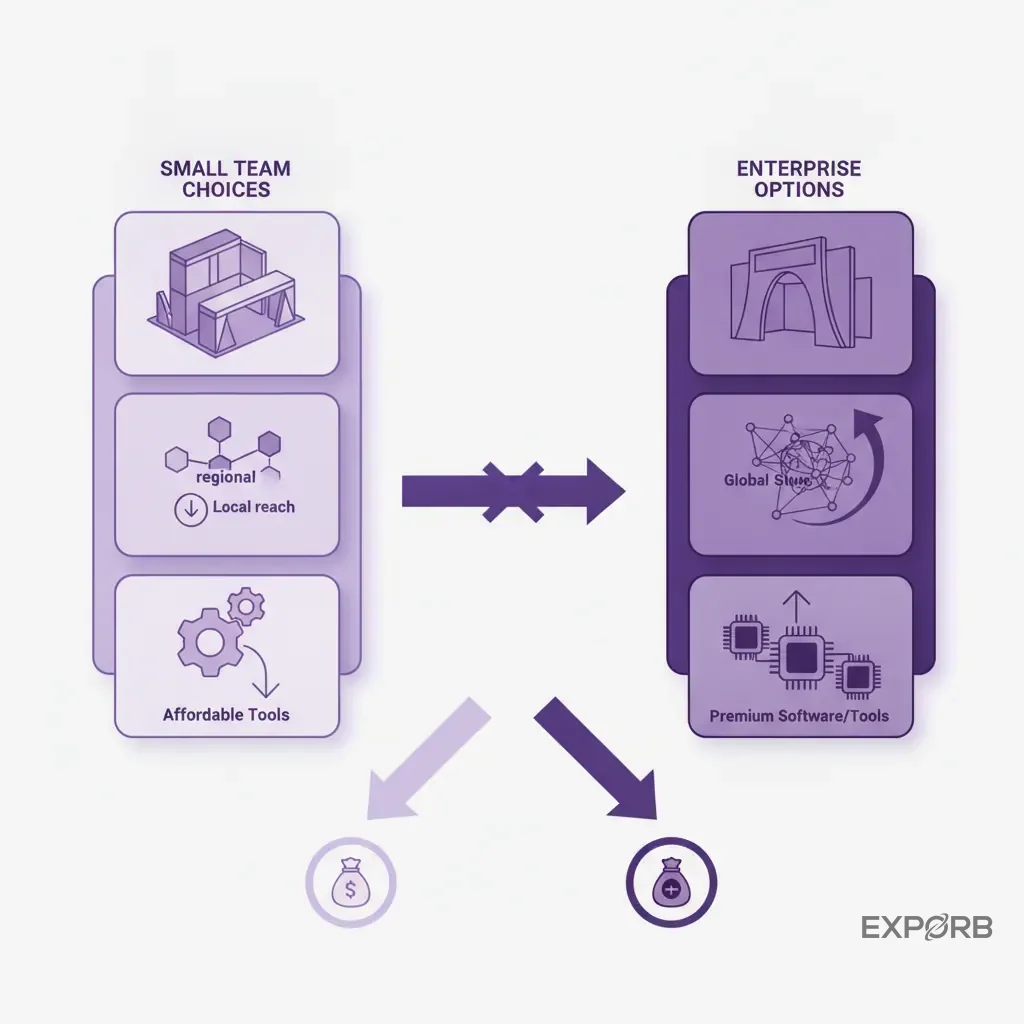
Using modular booth designs and reusable assets
That massive, custom-built booth might look impressive, but it's a budget killer for a small team. The initial cost is high, and so are the shipping, installation, and storage fees.
The smart move is to invest in a high-quality modular or portable display. These systems are lightweight, easy to transport, and your own team can set them up, saving you a fortune on labor costs. You can reconfigure the same components to fit different booth sizes (10x10, 10x20), making it a versatile, long-term asset. Focus on crisp, interchangeable graphics that you can update for different shows or product launches.
Choosing high-impact, low-cost regional and vertical-specific shows
Don't feel pressured to exhibit at the biggest, most expensive national shows. Often, the best ROI for a small business comes from smaller, more focused events.
- Regional Shows: These attract a local audience, reducing your travel and lodging costs significantly. If your target market is concentrated in a specific geographic area, these are a goldmine.
- Vertical-Specific Shows: Niche industry events deliver a highly qualified, relevant audience. You'll have fewer conversations, but the quality of those conversations will be much higher. Your cost-per-opportunity will plummet.
Do your homework. Find the shows where your specific buyer persona spends their time, and dominate that smaller pond instead of getting lost in the ocean.
Using affordable tools for lead management and automated follow-up
Technology is the great equalizer. Enterprise companies used to have an edge with their expensive, custom-built CRM and marketing automation platforms. That's no longer the case.
Today, a small team can use an affordable, powerful app to run a lead capture and follow-up process that's better than what most large companies are doing. The right lead generation strategy paired with smart tools can level the playing field against much larger competitors. You can use a single tool to scan business cards, record conversation details, score leads with AI, and trigger personalized follow-up emails right from the show floor.
With Exporb, you can start with a free plan and scale as you grow. It gives your small team the same capabilities—offline capture, team collaboration, AI analysis—that used to be reserved for enterprise budgets. This is the single highest-use investment a small team can make in their trade show program.
How do you measure and report on your trade show budget's success?
Your work isn't done when you submit the expense report. To justify your trade show marketing budget—and secure funding for future events—you need to prove its value. Measuring event marketing ROI is about connecting spend to revenue, not just counting booth visitors.
A good ROI report tells a story. It connects the money you spent to the pipeline you created and the deals you closed. It transforms the perception of the events team from a cost center to a critical driver of growth.
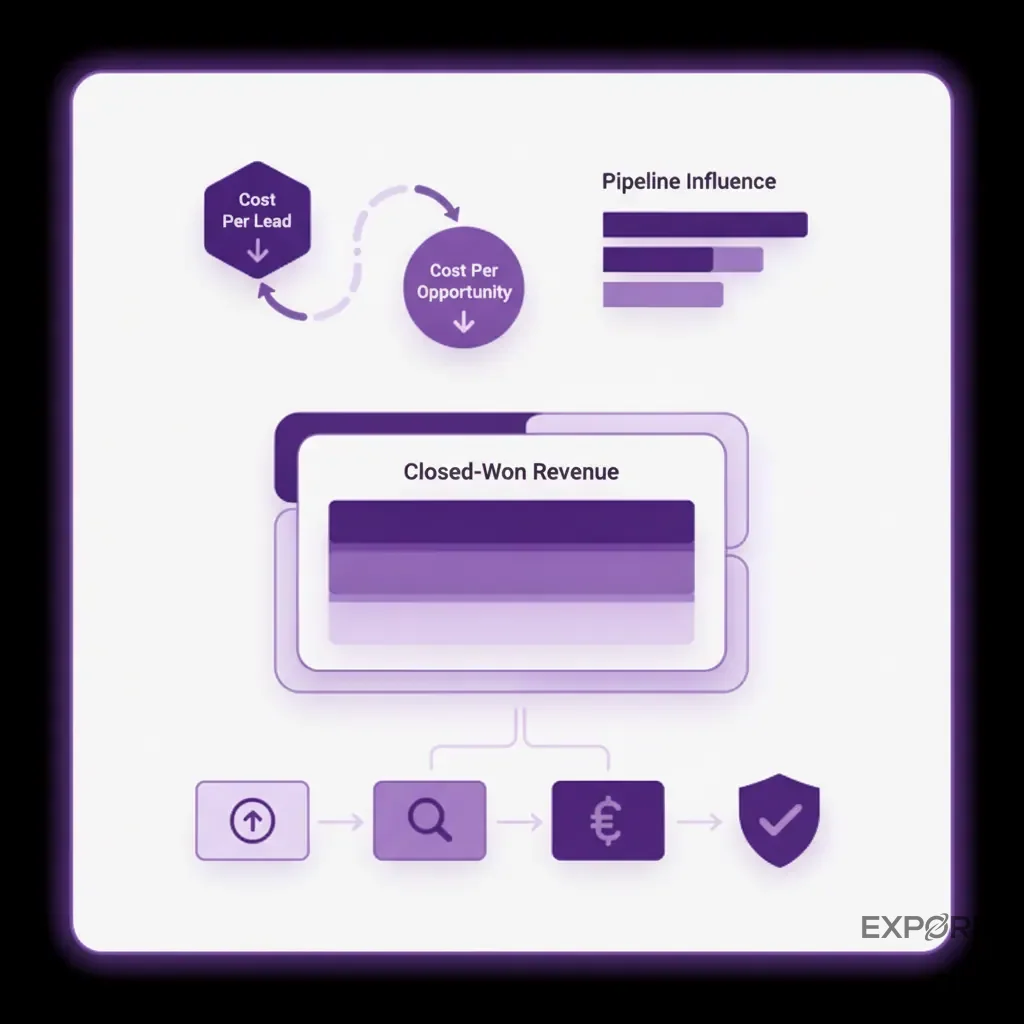
Key metrics beyond lead count: cost per opportunity and pipeline influence
The number of leads you collected is a vanity metric. It's easy to measure but tells you very little about the success of the show. 500 badge scans of unqualified attendees is a failure. 50 deep conversations with decision-makers is a massive win.
You need to track metrics that reflect business impact. A strong CRM integration is essential for properly attributing pipeline and revenue back to specific events:
- Cost Per Lead (CPL): Total Show Cost / Number of Leads. This is your baseline efficiency metric.
- Cost Per Opportunity (CPO): Total Show Cost / Number of Sales-Qualified Opportunities Created. This is far more important than CPL. It tells you how much it costs to generate real pipeline.
- Pipeline Influence: The total dollar value of all sales opportunities that originated from the show. This is the number your CEO and CFO care about.
- Closed-Won Revenue: The ultimate metric. How much revenue did you close from deals that started at the event? This can take months to track, so you need a system to tag these leads in your CRM.
Building your post-show ROI report to prove value
Your ROI report should be a simple, clear document that anyone in the company can understand. Don't bury the key findings in a 20-page slide deck.
Your report should include:
- Executive Summary: A few bullet points with the most important results (e.g., "We invested $45,000 in Show X and generated $650,000 in new sales pipeline, for a pipeline-to-spend ratio of 14.4x.").
- Budget vs. Actual: A simple table showing what you planned to spend versus what you actually spent in each category. This shows financial discipline.
- Key Performance Metrics: A scorecard with your CPL, CPO, total pipeline influenced, and (eventually) closed-won revenue.
- Qualitative Insights: What did you learn? What were the common customer pain points? What competitor intelligence did you gather? This is where data from conversation intelligence tools becomes invaluable.
- Recommendations: Based on the results, should you attend this show again next year? Should you increase or decrease your investment? What would you do differently?
Using performance data to justify and refine future event budgets
This report isn't just a historical document. It's the foundation of your next budget proposal. When you can walk into a budget meeting with hard data that shows a 14x return on your last event, the conversation changes.
You're no longer asking for money based on feelings or tradition. You're presenting a data-backed business case. This data-driven approach allows you to:
- Secure More Funding: Proven success makes it easier to get the resources you need.
- Refine Your Strategy: You can identify which shows produce the best ROI and double down on them, while cutting underperforming events.
- Improve Your Execution: The data will reveal weaknesses in your process. A high CPL might mean you need better pre-show promotion. A low lead-to-opportunity conversion rate might point to a problem with your follow-up process.
Download Your Free Trade Show Budget Template
Stop building budgets from scratch. We've created a complete spreadsheet template with 30+ line items, auto-calculating formulas, and a built-in ROI tracker.
📊 Trade Show Budget Template
CSV format — opens in Google Sheets, Excel, Numbers. Includes Budget Calculator, Model Comparison, and ROI Tracker.
📥 Download Template (CSV)Watch: Trade Show Budget Breakdown: Hidden Costs Walkthrough
Get a visual walkthrough of how to plan, allocate, and track your trade show budget in under 10 minutes.
Frequently asked questions about trade show budgeting
Even with a detailed plan, questions always come up. Here are direct answers to some of the most common queries we hear from exhibitors.
What is a good cost per lead from a trade show in 2026?
A good cost per lead (CPL) from a trade show is approximately $142. This is a widely accepted industry benchmark based on research from organizations like the Center for Exhibition Industry Research (CEIR). However, this number can vary based on your industry. For highly specialized fields with large deal sizes (like enterprise software or medical devices), a CPL of $200-$300 can still provide an excellent ROI. The key is to compare your CPL to the lead's potential lifetime value.
How much contingency should I add to my budget for unexpected costs?
You should add a contingency of 10% to 15% of your total estimated budget. For a $50,000 budget, this means setting aside $5,000 to $7,500 for unforeseen expenses. These can include last-minute shipping surcharges, needing to hire extra temporary staff, broken equipment that needs replacement, or unexpected travel delays. Without a contingency fund, these small issues can force you to make cuts in more important areas.
Are smaller regional shows more cost-effective than large national ones?
Yes, smaller regional shows are often more cost-effective for generating qualified local leads. While large national shows offer massive exposure, they come with higher costs for travel, lodging, and booth space. A regional show allows you to target a specific geographic market with much lower travel expenses and often lower exhibitor fees. The audience is smaller but can be more concentrated with relevant prospects, potentially leading to a lower cost per opportunity.
Your 2026 trade show budget action plan
You have the data, the models, and the strategy. Now it's time to act. A budget is a living document, not a one-time task. It requires commitment and a forward-looking perspective. Here's how to put this guide into practice and build a budget that drives real results.
Commit to objective-based planning, not last year's numbers
Your first step is to break the cycle of incremental budgeting. Schedule a meeting with your sales and marketing leadership. Don't start by asking how much you can spend. Start by defining what you need to achieve: pipeline goals, customer acquisition targets, and strategic meeting objectives. Build your budget from these goals backward. This is the only way to ensure every dollar you allocate ties directly to a measurable business outcome.
Invest in technology to close the critical lead follow-up gap
Recognize that the single biggest point of failure in any trade show investment is the gap between a great conversation and a timely, relevant follow-up. Earmark a portion of your budget specifically for technology that solves this problem. You can't afford to let 80% of your leads die on the vine. A modest investment in a modern lead capture and automation platform will deliver a higher return than any booth upgrade or giveaway. It's the highest-use decision you can make.
Schedule your budget review and start planning your next event now
The best time to plan your next trade show budget is right after the last one ends. While the data is fresh, conduct your post-show ROI analysis. Use that report to build the business case for your next event. The trade show world moves fast, and the best booth locations and sponsorship opportunities are secured months in advance. Get your budget approved early. Start the conversation today. Your future pipeline depends on it.