
You've been there. You spend $50,000 on a booth, fly your best people across the country, and spend three days talking until your voice is gone. You come back with a fishbowl full of business cards and a spreadsheet of 500 badge scans. A week later, after someone finally types it all up, sales gets a list of names and companies. They ask, "Which ones are hot?" And nobody knows. The context is gone.
That pile of dead business cards is the expensive result of treating lead scoring for trade shows as an afterthought. You focused on the booth, the banners, and the swag, but you forgot the one thing that generates ROI: a system for capturing conversations, not just contacts — and scoring them while they're still warm.
The problem with the traditional badge scan
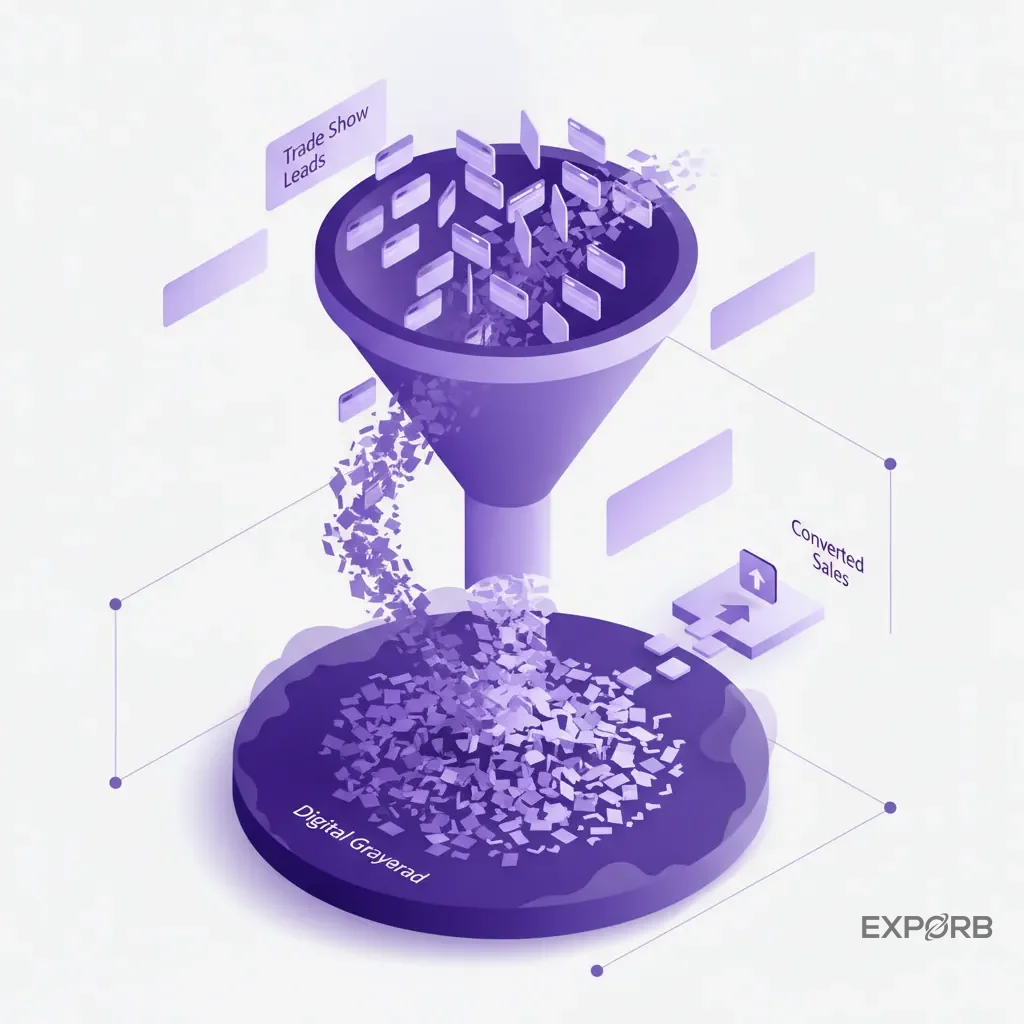
A badge scanner tells you who someone is, but it doesn't tell you what they want. It won't reveal their problems or why they stopped at your booth. It's a name without a story. Relying solely on badge scans is like collecting book covers without ever reading the pages. You get a long list of titles but haven't any idea which ones contain the plot twists that lead to a sale. This is the fastest way to lose leads you've already paid to acquire.
From lead quantity to conversation quality: The 2026 mindset shift
For years, the measure of trade show success was the number of scans. Exhibitors would brag about collecting 1,000 leads, even if 950 of them were students looking for free pens. This is a vanity metric, and it's killing your pipeline. The industry is now focusing on quality over quantity. It's better to have 50 deeply qualified conversations than 500 empty contacts. According to research from Apogee Exhibits, an average exhibitor generates just one marketing-qualified lead (MQL) for every seven booth visitors. Top performers get two or three. The difference isn't magic; it's a process.
The high cost of delayed and decontextualized follow-up
When your team gets back from a show, the clock's ticking. The memory of that great conversation you had fades fast—for both you and the prospect. When you delay follow-up by a week of manual data entry, the email that finally goes out is generic and cold. "Hi John, great meeting you at SaaSCon." John met 50 other vendors. He doesn't remember you. The opportunity evaporates because you lost the context between the show floor and the CRM. That delay is where your event ROI dies.
What is intent-based lead scoring for trade shows?
Intent-based lead scoring helps you prioritize prospects based on the quality of their conversation and demonstrated interest, moving beyond simple demographics like job title or company size. It's a framework that helps your booth staff instantly identify hot, ready-to-buy leads from tire kickers. It captures the real signals of buying intent that only happen face-to-face.
Moving beyond basic demographics to behavioral signals
Traditional lead scoring relies on demographic and firmographic data: job title, company size, industry. This is useful, but it's incomplete. A CEO from a 10-person startup might be a hotter lead than a manager from a Fortune 500 company if that CEO has a burning problem you can solve right now. Intent-based scoring looks at behavioral signals. Did they ask about pricing? Did they mention a specific pain point your product solves? Did they ask to see a demo on the spot? These are the signals that predict pipeline.
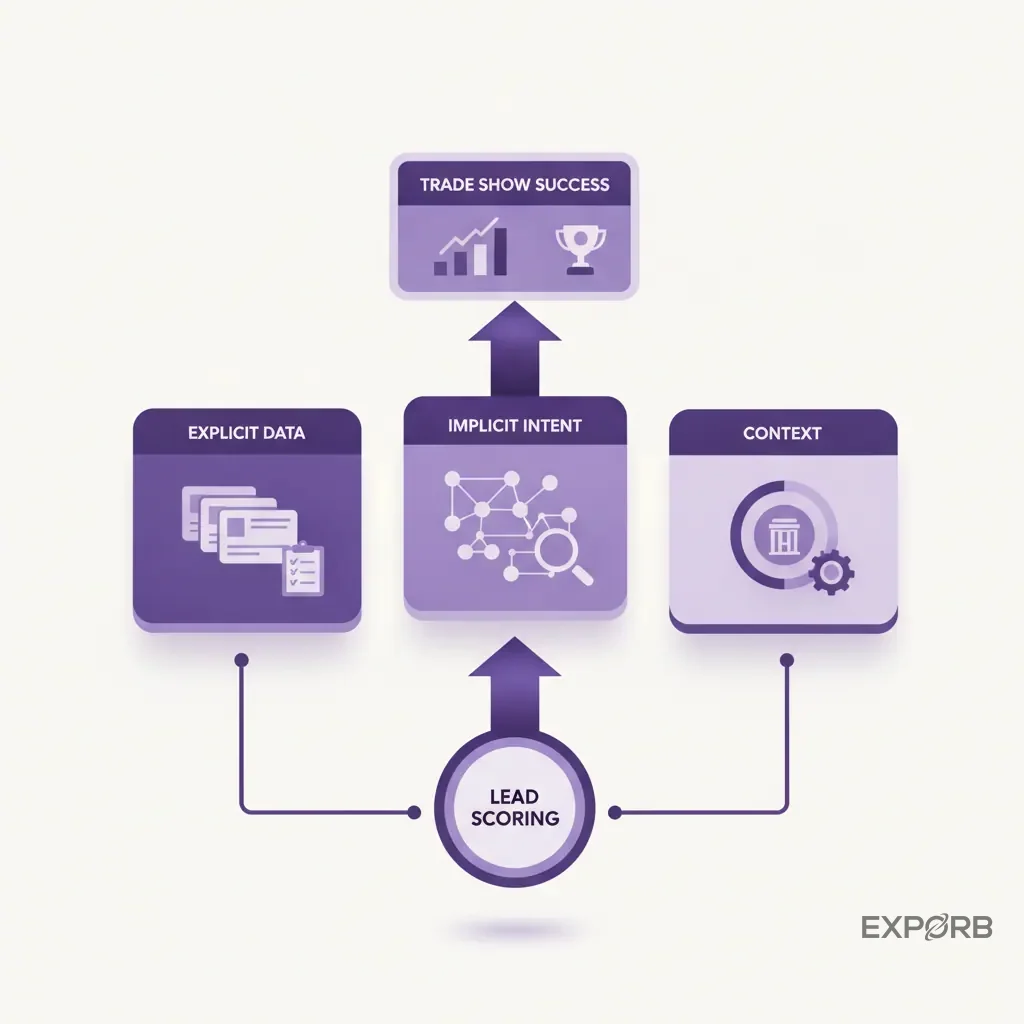
The three pillars: explicit data, implicit intent, and conversation context
A solid scoring model rests on three pillars:
- Explicit Data: This is what they tell you directly. Their title, company, budget authority, and timeline. It's the "who" and "what."
- Implicit Intent: These are the buying signals you have to listen for. Phrases like "We're currently reviewing solutions," or "Our contract with [competitor] is up in three months." It's the "why now."
- Conversation Context: This is the glue that holds it all together. The specific pain points discussed, the product features they were excited about, and the agreed-upon next steps. It's the "what's next."
Without all three, you're just guessing.
How a scoring framework separates hot leads from tire kickers
A scoring framework gives your team a simple, repeatable way to qualify leads in real time. Instead of a messy pile of notes, you get a clean, prioritized list. Sales knows exactly who to call first when they get back. Marketing knows who to add to which nurture campaign. It turns post-show chaos into a smooth, efficient process that drives revenue.
How do you build a scoring model before the event begins?
You don't just show up and hope for the best. The most successful exhibitors walk onto the show floor with a clear plan for identifying and capturing their ideal customers. Building your scoring model is the most important thing you can do before the event.
Tactic 1: Define your ideal event profile and pre-show target list
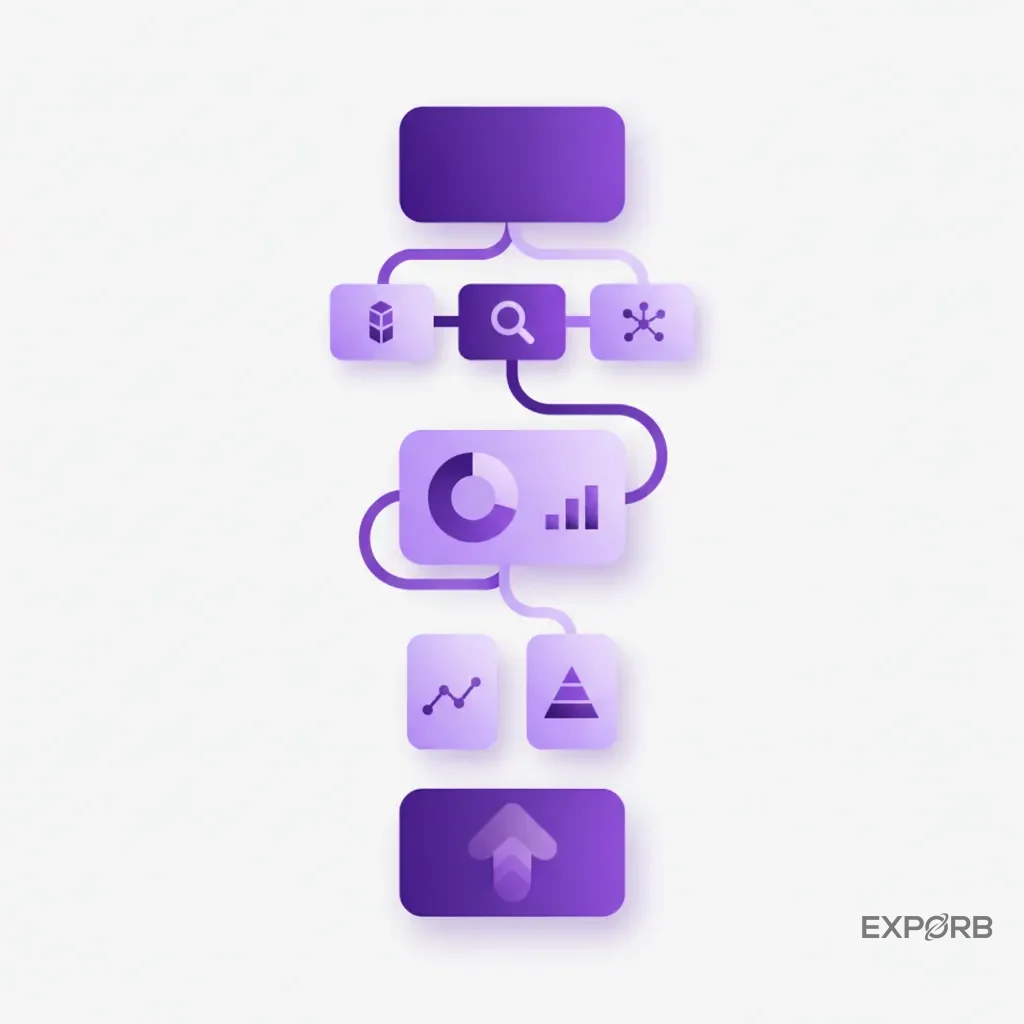
Who are you trying to meet? Don't say "everyone." Get specific. What job titles? What company sizes? What industries? What specific challenges do they face? Once you've this "Ideal Event Profile" (IEP), build a target list. Some experts recommend a list of 30 to 50 companies to proactively target. This list becomes your pre-show outreach campaign and your on-site priority list.
Tactic 2: Create a simple A/B/C scoring matrix for your team
Don't overcomplicate it. Your team needs to be able to use this in a loud, distracting environment. A simple A/B/C or Hot/Warm/Cold system works best. Define what each tier means in concrete terms. This ensures everyone on the team qualifies leads consistently.
A simple A/B/C lead scoring matrix for trade show teams.
Tactic 3: Aligning your CRM properties with your scoring criteria
Your scoring model is useless if the data can't get into your CRM in a structured way. Before the show, make sure you've custom fields in your CRM for the key qualification data you plan to collect. This could include:
- Lead Score (A/B/C)
- Key Pain Point
- Product of Interest
- Next Step
- Timeline
This preparation prevents the post-show data cleanup nightmare and ensures leads flow smoothly to the right sales rep or marketing campaign.
Related: The Ultimate Trade Show Lead Capture Guide
What are the best tactics for scoring leads on the show floor?
The pre-show plan is your strategy; execution on the floor is where tactics matter. A chaotic booth environment isn't an excuse for messy data. With the right workflow, your team can capture, qualify, and score leads in seconds.
Tactic 4: Using a mobile app to capture and qualify in one workflow
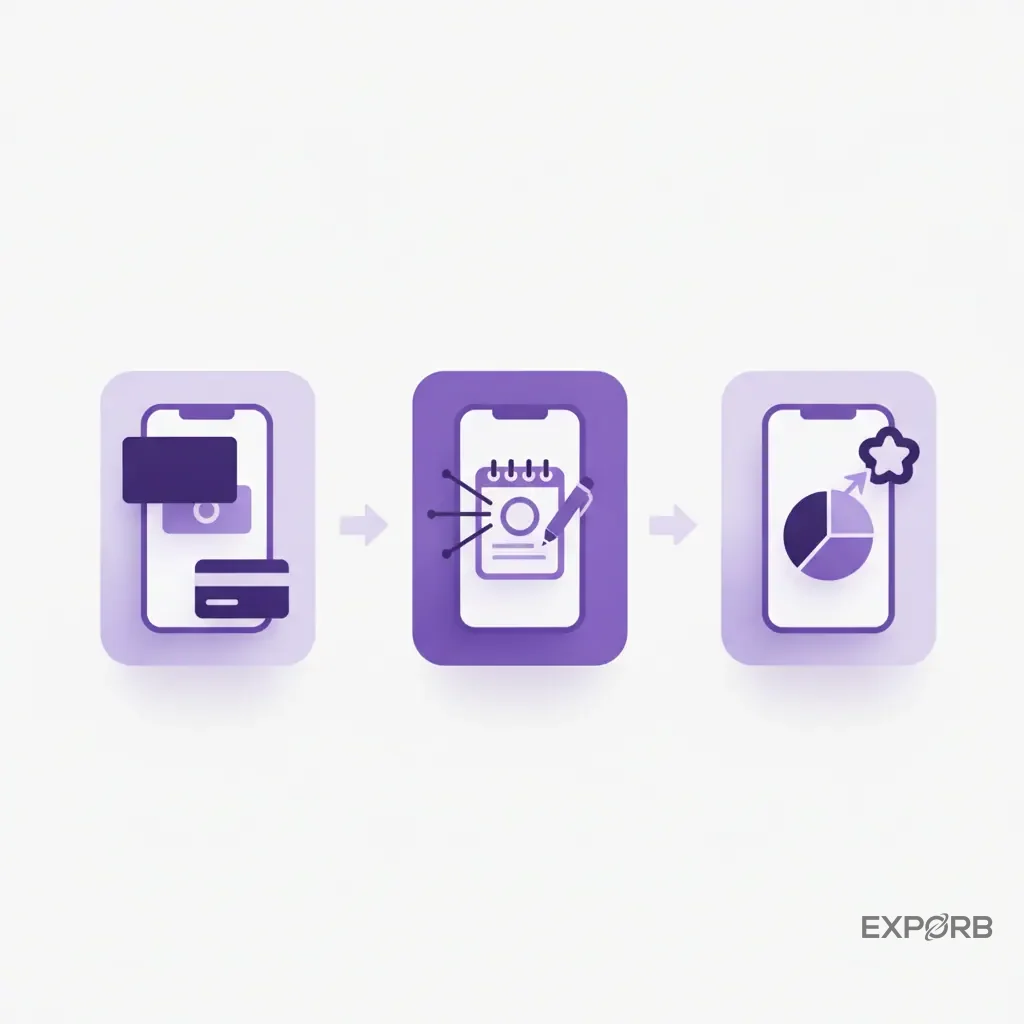
Ditch the paper forms and rental scanners. Modern lead capture happens on the device your team already has in their pocket: their phone. A dedicated app allows your team to scan a business card, add notes, and assign a lead score all in one smooth motion. This process turns a 5-minute conversation into a structured, qualified lead in your system before the person even walks away from the booth. It's the difference between proactive data capture and a pile of work for later.
Tactic 5: Listening for trigger phrases (pain points, timeline, budget, next steps)
Your booth staff should train to listen for key buying signals. These are the trigger phrases that indicate a prospect is moving from passive interest to active consideration.
- Pain Points: "We're struggling with..." "Our current system can't..."
- Timeline: "We need a solution by next quarter." "My contract is up in..."
- Budget: "What does a typical implementation cost?" "Is there volume pricing?"
- Next Steps: "Can you send me a proposal?" "How do we schedule a demo?"
When your team hears these phrases, it's a signal to dig deeper and update the lead's score accordingly. At Exporb, we built our voice notes feature so you can capture these exact phrases without losing anything in translation.
Tactic 6: Using booth heat mapping and engagement zones
Where people spend time in your booth says a lot about their interests. As a recent Ace Displays trend report noted, technologies like booth heat mapping are emerging to provide data on high-traffic areas. You can do a low-tech version of this by creating distinct "zones" in your booth. A demo station, a product display, and a meeting area all attract different types of visitors. Someone who walks straight to the demo station and asks for a walkthrough is likely a hotter lead than someone just browsing the product display. Train your team to note where the conversation happened as another data point for their score.
How does AI technology solve the 'founder visibility' problem?
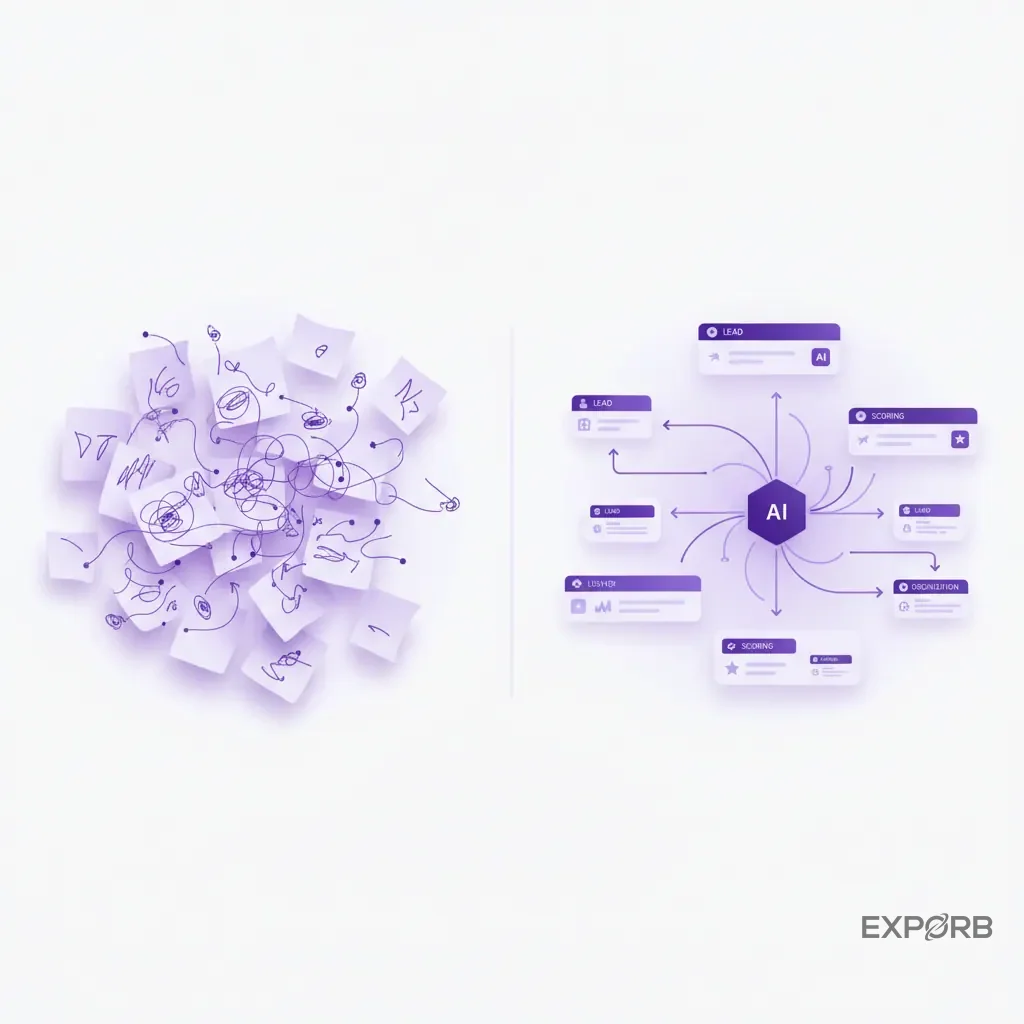
Here's a scenario every founder or sales leader knows too well. Your team comes back from a major trade show. You ask, "How'd it go?" They say, "Great! We talked to hundreds of people." Then you get the export: a spreadsheet of 500 names and emails with zero context. You've no idea which conversations mattered, what problems were discussed, or who needs an immediate follow-up. This is the founder visibility black hole.
The scenario: a founder gets a spreadsheet of names with zero context
That spreadsheet represents a massive failure of information transfer. Your team on the ground learned invaluable insights—pain points, buying signals, competitor mentions, and next steps. But almost none of it makes it back to leadership in a usable format. It's trapped in notebooks, on the back of business cards, or worse, just in their memory. As a founder, you're flying blind, unable to make strategic decisions based on what your team's learning from the market.
How AI conversation intelligence captures what your team learns
AI changes the game here. Imagine your team member has a great conversation. Instead of scribbling a few cryptic notes, they record a 30-second voice memo summarizing the discussion. When they're back online, AI transcribes the audio and analyzes it for key information:
- Pain Points: "They're struggling with manual data entry."
- Interests: "Showed high interest in the reporting dashboard."
- Sentiment: The prospect seemed positive and engaged.
- Next Steps: "Agreed to a follow-up demo next Tuesday."
Suddenly, you get more than just a name. You get the full context of the conversation.
From messy notes to structured data for hyper-targeted follow-up
This AI-generated data is structured and ready to use immediately. You can use it to automatically score leads based on the content of the conversation. A lead that mentions "budget approved" and "timeline is Q3" can be automatically flagged as an A-tier lead. This allows for hyper-targeted follow-up. Instead of a generic email, you can send one that references the exact pain points they discussed. This is how you turn a black hole of information into a transparent, revenue-generating machine. We built Exporb to solve this exact problem, giving founders perfect visibility into every conversation that happens on the show floor.
Why is your follow-up speed more critical than the perfect score?
A perfectly scored lead is worthless if you wait a week to contact them. The enthusiasm and urgency of a face-to-face conversation have a short half-life. While a perfect scoring model is important, the speed and quality of your follow-up process ultimately determine your event ROI. According to an often-cited study by Harvard Business Review, firms that tried to contact potential customers within an hour of receiving a query were nearly 7 times as likely to qualify the lead as those that tried to contact the customer even an hour later.
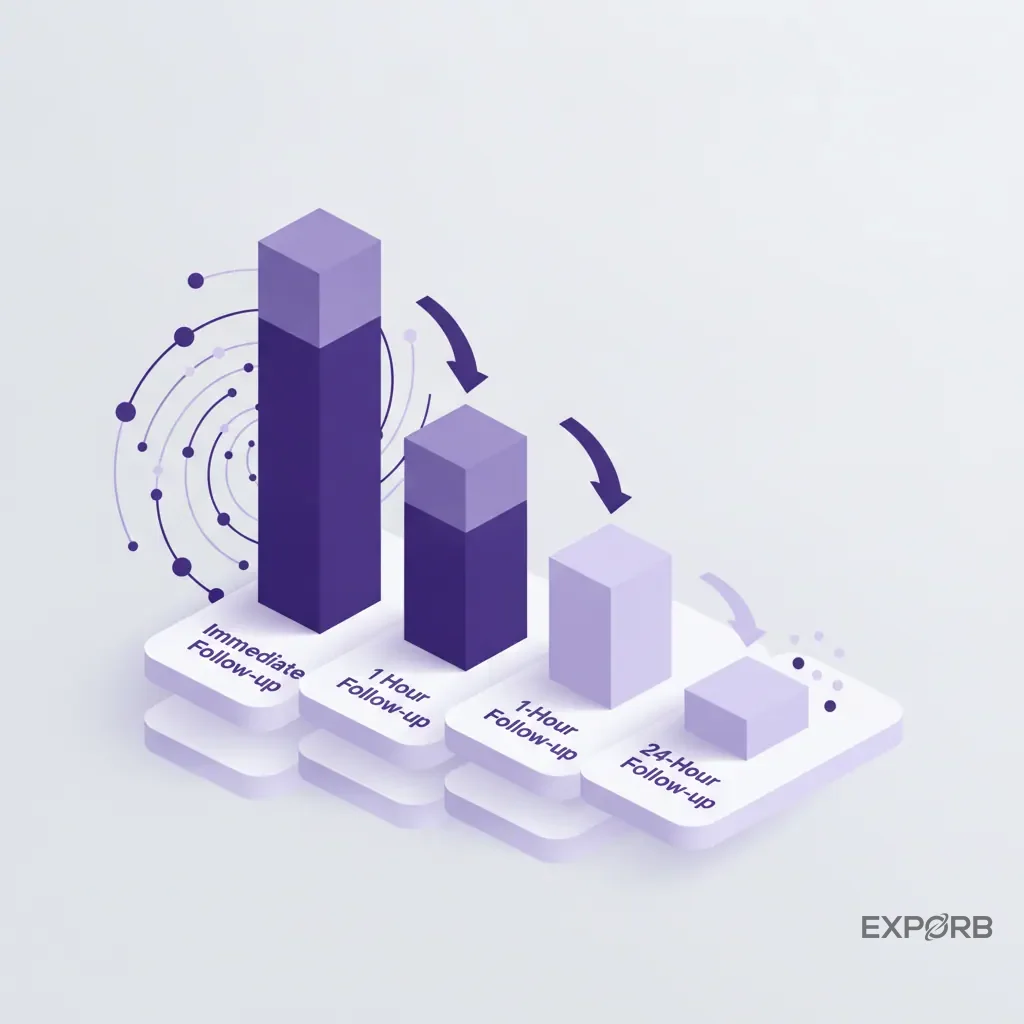
The 'golden hour' for trade show leads: fact vs. fiction
The "golden hour" isn't an exaggeration; it's a reality. At a trade show, a prospect is in a peak buying and learning mindset. They're actively evaluating solutions. The moment they leave the exhibit hall, that focus begins to dissipate. By the time they're back in the office drowning in emails, your company's a distant memory. Your goal should be to re-engage them while the conversation is still fresh in their mind.
Tactic 7: Automating CRM routing based on lead score tiers
Your A/B/C scoring model does more than just report data; it should trigger action. Set up automation rules that route leads based on their score.
- A-Leads: Immediately assign them to the appropriate sales rep in your CRM with a task to call within 24 hours.
- B-Leads: Automatically enroll them in a targeted, multi-touch email nurture sequence that references the event.
- C-Leads: Add them to your monthly newsletter list for long-term brand awareness.
This automation eliminates manual triage and ensures no hot lead ever sits idle.
Establishing a real-time sales SLA for all A-tier leads
You need a service-level agreement (SLA) with your sales team for all A-tier event leads. A 24-hour SLA is standard, but top-performing teams aim for much faster. The ideal workflow allows a sales rep to send a personalized follow-up email before the prospect even leaves the exhibit hall. With modern tools, your team can capture a conversation, and an AI can instantly draft a personalized email based on the context. The rep just reviews and hits send. That's how you win the race for attention.
The technology that powers modern trade show lead capture
The days of fishbowls for business cards and clunky barcode scanners are over. The modern exhibitor's toolkit is powered by sophisticated, AI-driven software that runs on a standard smartphone. This technology makes real-time scoring and immediate follow-up possible.
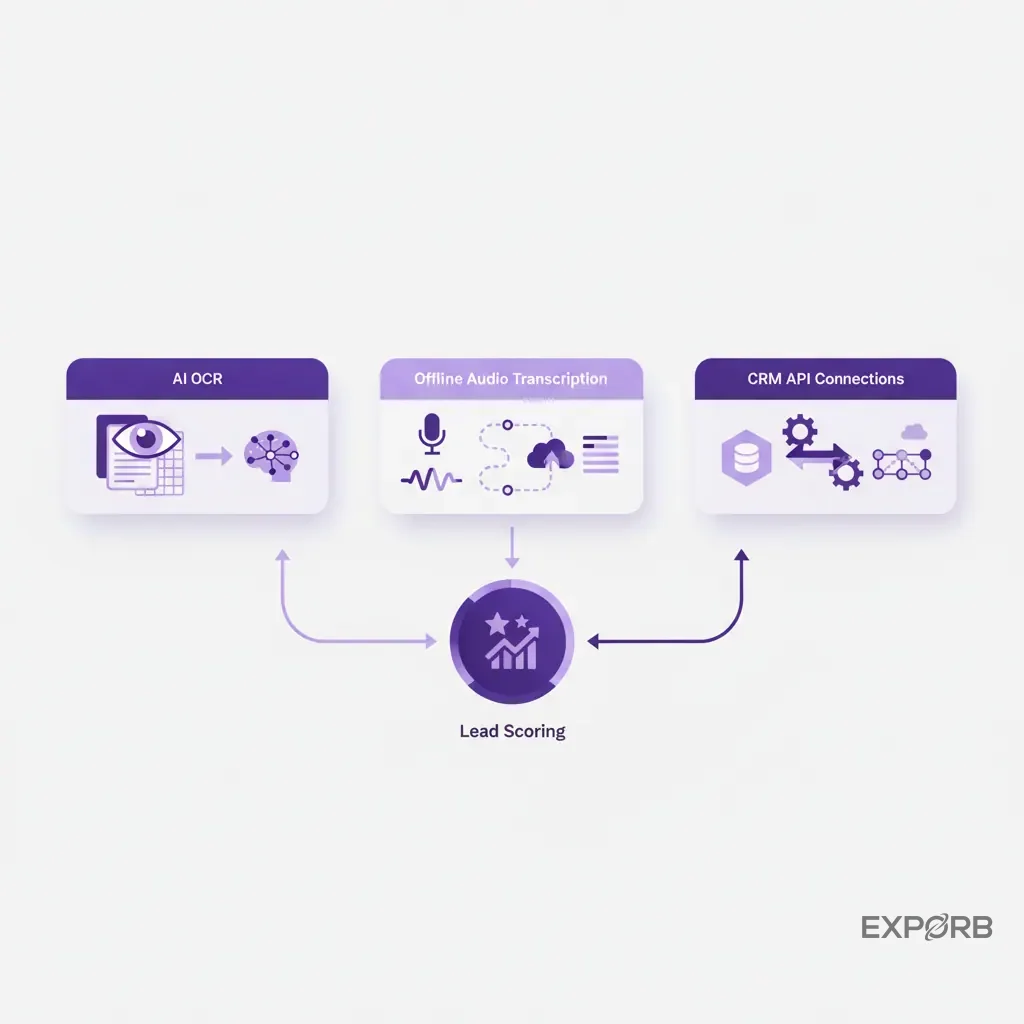
AI-powered OCR for instant business card scanning
Typing business card data is a soul-crushing, error-prone task. Modern AI-powered optical character recognition (OCR) can scan any business card in any language and accurately pull the contact information in seconds. The data is instantly digitized, structured, and ready for qualification. This alone can save your team dozens of hours of post-show manual labor.
Offline audio transcription for capturing detailed conversations
Trade show floors are notorious for having terrible Wi-Fi. Your lead capture tool can't depend on a stable internet connection. That's why an offline-first architecture is non-negotiable. Your team should be able to scan cards, record voice notes, and add qualifications entirely offline. The app then syncs all the captured data to the cloud automatically once a connection is available. This means you'll never lose a lead because of bad connectivity.
Smooth CRM integrations that eliminate manual data entry
The final piece of the puzzle is getting the data out of your capture tool and into your system of record without manual effort. A lead capture platform should offer smooth exports to your CRM or a simple CSV download. This closes the loop and eliminates the data entry bottleneck that delays follow-up and kills deals. The goal is a smooth flow of information from the booth to the pipeline.
Related: [How to Choose the Best Trade Show lead retrieval App](https://exporb.com/blog/en/lead-retrieval-vs-lead-capture)
Frequently asked questions about trade show lead management
Even with modern tools, trade shows present unique challenges. Here are answers to some common questions about managing leads from events.
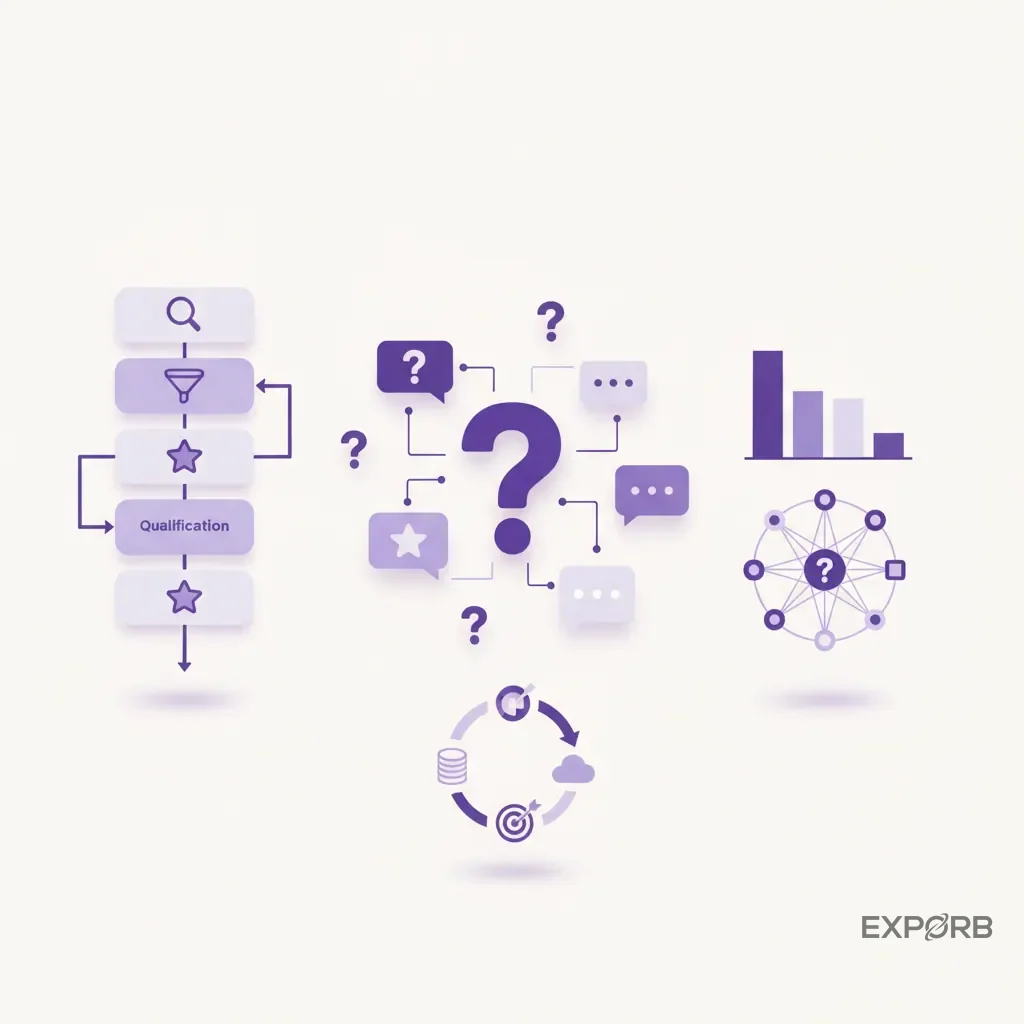
What is the difference between lead retrieval and lead capture?
Lead retrieval is the simple act of collecting contact information, typically by scanning a badge. It answers the question, "Who did we meet?" Lead capture is a broader process that includes retrieval but adds qualification, context, and scoring. It answers the more important question: "Who did we meet, what do they need, and how likely are they to buy?" Don't settle for simple retrieval when true capture drives ROI.
How can you use trade show leads to improve your product?
The conversations your team has at a trade show are a goldmine of market intelligence. You get direct, unfiltered feedback from potential customers about your product, your messaging, and your competitors. When you systematically capture conversation notes (especially with audio), you can analyze this data after the show. What features were people most excited about? What objections came up repeatedly? This feedback is invaluable for your product and marketing teams.
What are the biggest challenges with qualifying trade show leads?
The top challenges are speed, consistency, and environment. The show floor is loud and distracting, making it hard to have in-depth conversations. Without a clear framework, qualification is inconsistent from one rep to another. Finally, the sheer volume of conversations makes it difficult to remember the details of each one. A mobile app with a structured qualification workflow and voice notes is the best way to overcome all three of these challenges.
Beyond vanity metrics: measuring pipeline quality, moving beyond simple scan volume
For too long, the primary KPI for events has been the total number of "leads" collected. This is a flawed metric. This doesn't help your business; in fact, it creates more work for your sales and marketing teams. The real goal is to generate qualified pipeline.
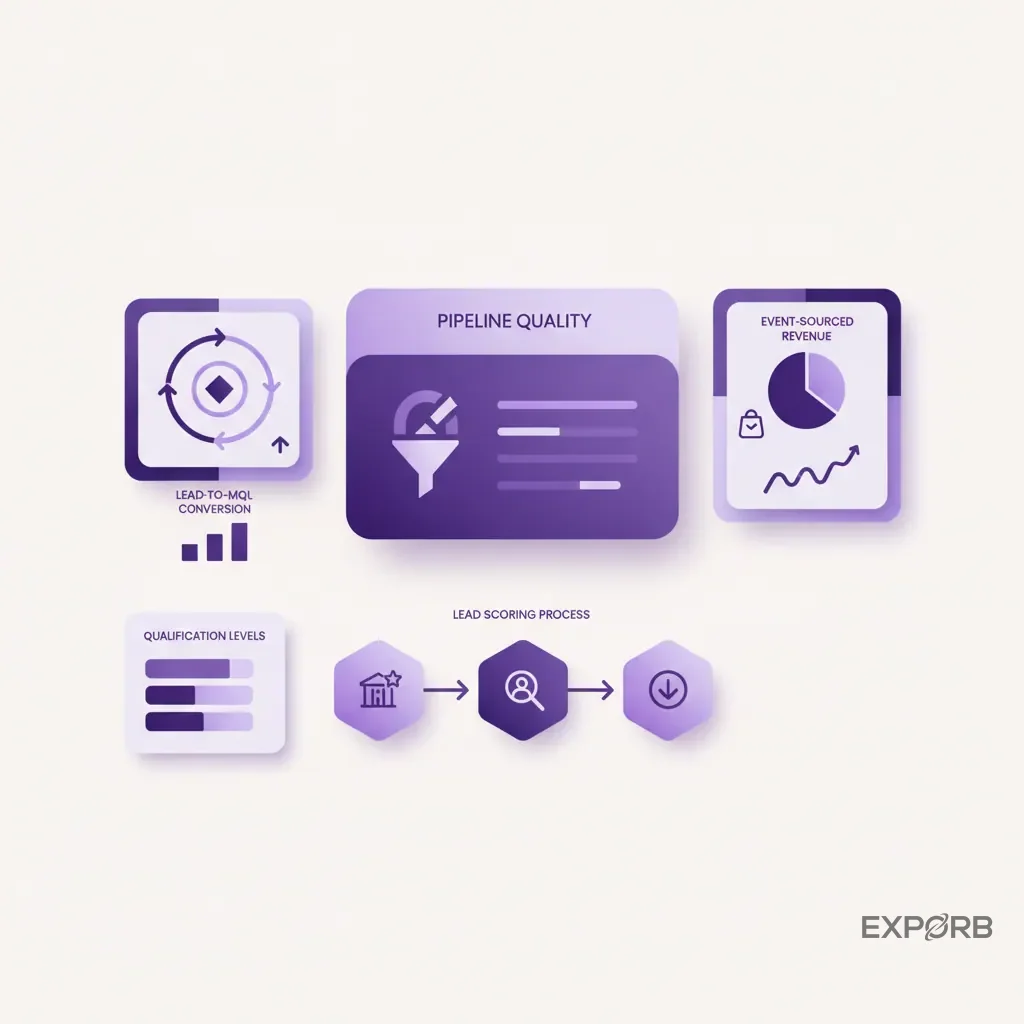
Misconception debunked: why more scans can actually hurt your ROI
Most exhibitors obsess over booth design and completely ignore lead capture. They spend $50K looking good and $0 on remembering what was said. When your team's incentivized to maximize scan volume, they often sacrifice quality. They spend less time with each person, fail to ask qualifying questions, and end up with a list full of low-intent contacts. This bloated list then requires significant effort to sift through, and the generic follow-up annoys the few good prospects you did find. Focusing on quality conversations with fewer, better-fit prospects will always yield a higher return.
Key metrics: lead-to-MQL conversion rate, pipeline generated, and event-sourced revenue
Instead of counting scans, track the metrics that matter to your CFO.
- Lead-to-MQL Conversion Rate: Of the contacts you captured, what percentage met the criteria to become a Marketing Qualified Lead?
- MQL-to-SQL Conversion Rate: Of those MQLs, how many did sales accept as a Sales Qualified Lead?
- Pipeline Generated: What's the total dollar value of the sales opportunities created from the event?
- Event-Sourced Revenue: How much closed-won business can you directly attribute to leads from the show?
These are the numbers that prove the value of your trade show program.
How to build a trade show report your CFO will actually love
Your CFO doesn't care about booth traffic or the number of t-shirts you gave away. They care about the return on investment. A great post-show report connects the event spend to business outcomes. It should look something like this:
- Total Event Spend: $50,000
- Total Leads Captured: 250
- Marketing Qualified Leads (MQLs): 50 (20% conversion)
- Sales Qualified Leads (SQLs): 20 (40% conversion)
- Pipeline Generated: $300,000
- Event ROI (Pipeline-to-Spend): 6:1
This is a story every executive understands and respects.
Turn your next trade show into a revenue engine: your 3-step action plan
Stop treating trade shows as a branding exercise with a fuzzy ROI. With a modern approach to lead scoring and capture, your event program can become a predictable, scalable source of revenue. Don't wait until the week before the show to think about this. Start now.
Step 1: Build your pre-show scoring model and target list this week
Sit down with your sales and marketing leaders and define your Ideal Event Profile. Create that simple A/B/C scoring matrix and build a target list of 50 companies you want to meet. This planning phase separates the pros from the amateurs. As one marketing expert puts it, ROI is won or lost "before the booth and after follow-up," according to a markempa article.
Step 2: Equip your team with the right tools for real-time qualification
Your team's success on the floor depends on the tools you give them. A powerful mobile lead capture app is essential equipment, not merely a nice-to-have. Make sure it works offline, allows for custom qualification questions, and makes capturing conversation context easy. Train your team on the workflow before they ever get on the plane.
Step 3: Automate your follow-up process before you book your flight
Map out your follow-up strategy and build the automation rules in your CRM and marketing platform now. Create the email Templates, define the routing logic for A/B/C leads, and establish the SLA with your sales team. When the first qualified lead is captured at the show, the follow-up machine should already be running. This is how you capitalize on momentum and turn conversations into customers.