
The 2026 reality: Why 80% of trade show leads are wasted
You just spent $50,000 on a trade show booth. The graphics are sharp, the lighting is perfect, and your team is scanning badges like there's no tomorrow. Most exhibitors obsess over booth design and completely ignore lead capture. They spend $50K looking good and $0 on remembering what was said. You walk away with 500 "leads," but a month later, your pipeline is empty. What went wrong? The problem isn't your booth or your team's hustle; it's your lack of a modern lead qualification strategy. You collected contacts, not opportunities.
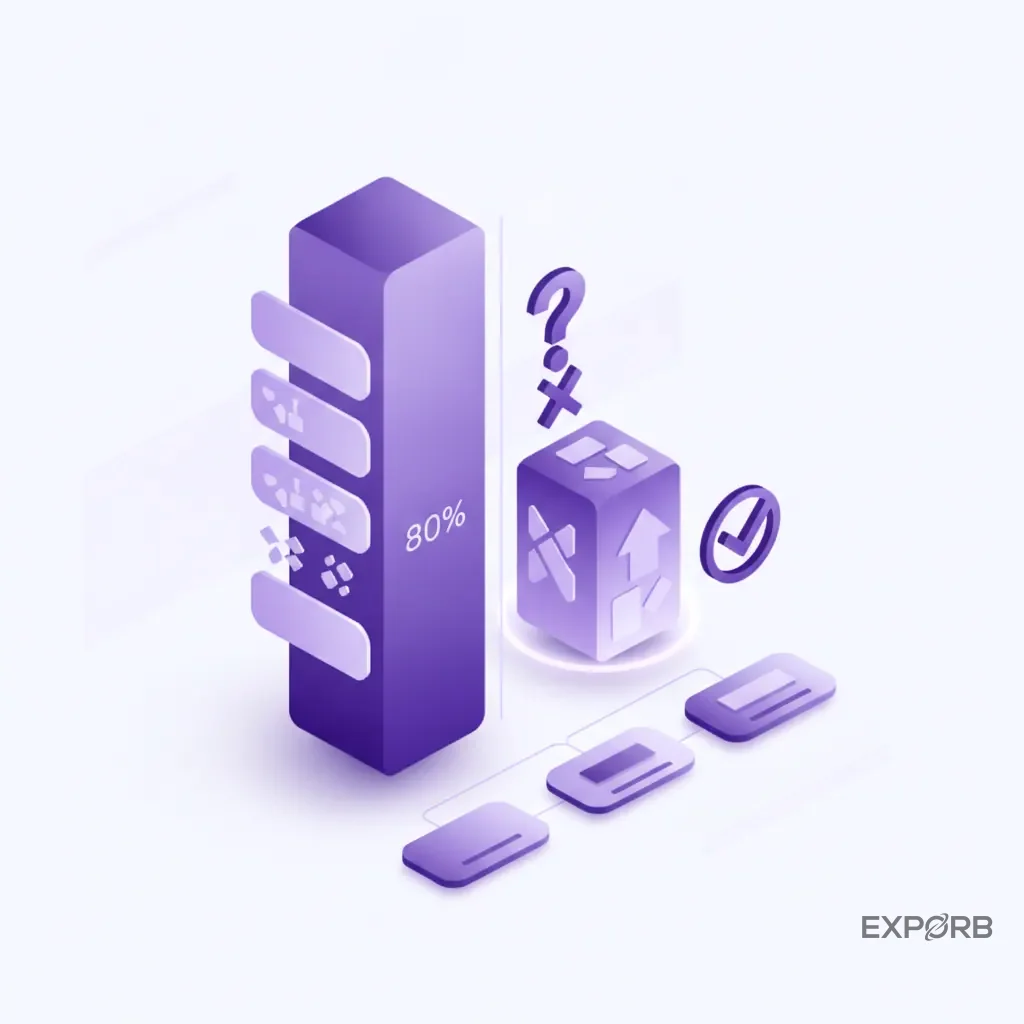
And you're not alone. According to a recent industry report from Momencio, nobody follows up on a staggering 80% of trade show leads. That's four out of every five conversations ending in a black hole.
Challenging the myth: Lead capture isn't the problem, qualification is
For years, we've been told the goal is to capture as many leads as possible. Scan every badge. Collect every business card. Fill the fishbowl. This is the wrong approach. It treats every visitor the same, from the CEO with a budget to the student grabbing free swag.
The real challenge isn't capturing contacts; it's understanding context. Who are they? What problem are they trying to solve? Are they ready to buy, or just browsing? Answering these questions at the booth is the only way to separate real pipeline from noise. This is critical. You can't just hand your sales team a list of names and emails; that forces them to waste days re-qualifying everyone from scratch.
The high cost of failed follow-up in a $15.78 billion market
The U.S. B2B event market is valued at an enormous $15.78 billion. When you fail to qualify and follow up effectively, you lose more than just leads; you also leave your share of that multi-billion dollar pie on the table.
Think about the math. If an average trade show lead costs $112 to generate, and you collect 500 leads, you've spent $56,000. If you waste 80% of those leads, that's $44,800 of your marketing budget thrown away before your sales team even makes a single call. That's the real cost of poor qualification.
Setting the stage for a data-driven event strategy
The solution is to stop thinking about lead quantity and start focusing on lead quality. This means equipping your team with a process and the right tools to qualify prospects in real-time, right on the trade show floor. It's about turning a five-minute chat into structured, actionable data your sales team can use to close deals.
This goes beyond better ROI. It's about respecting your buyer's time and your sales team's effort. A qualified lead represents a conversation with purpose. An unqualified lead is just noise.
What is lead qualification and why does it matter?
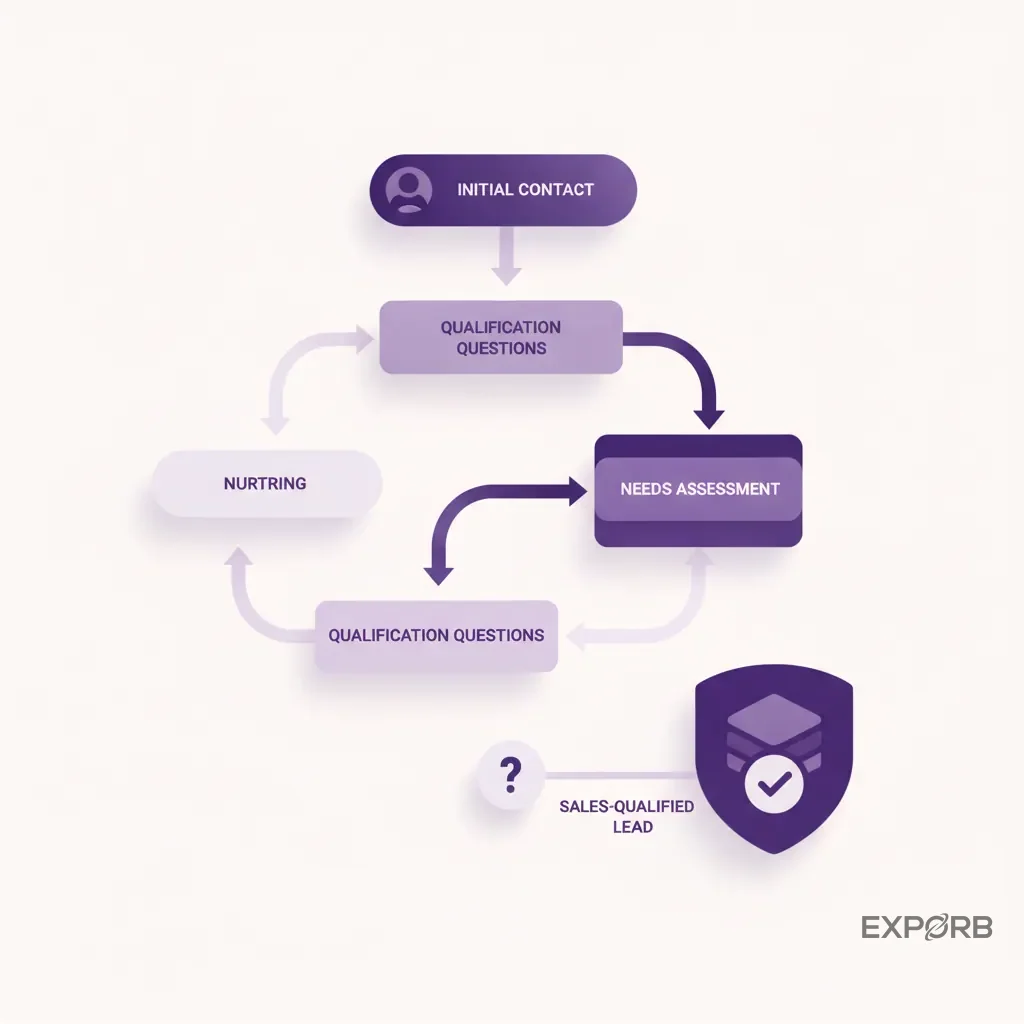
Lead qualification is the process of determining if a prospect is a good fit for your product or service and will likely become a customer. It's a filter that separates high-potential buyers from the casual browsers, competitors, and job seekers who inevitably visit your booth.
It isn't about being exclusive or turning people away. It's about focusing your finite time and resources on conversations with the highest probability of turning into revenue. At a busy trade show, it's the difference between a productive day and a frantic, fruitless one.
Defining lead qualification for the modern B2B buyer
In the past, qualification was a simple checklist. Do they have a pulse? Do they have a budget? Great, they're a lead. But today's B2B buyers are more informed than ever. According to McKinsey, buyers now use ten or more channels during their purchase journey. They've already read your G2 reviews, watched your demos, and checked your pricing page before they even step into your booth.
Modern lead qualification respects this reality. It's less an interrogation and more a consultation. It's about understanding their research, validating their pain points, and confirming that your solution aligns with their needs. It's a two-way street: you're qualifying them, and they're qualifying you.
The core difference between MQLs, SQLs, and unqualified contacts
Not all leads are created equal. Dumping a raw list of booth visitors on your sales team is a recipe for friction and failure. You need to segment them first.
- Unqualified Contact: Someone who stopped by for a free t-shirt. They gave you their contact info, but there's no indication of need, interest, or fit. Chasing these is a waste of time.
- Marketing Qualified Lead (MQL): A prospect who fits your ideal customer profile (ICP) and has shown interest. They downloaded a whitepaper, asked a few good questions at the booth, and seem to have a problem you can solve. They aren't ready for a sales call yet, but they're perfect for a nurture campaign.
- Sales Qualified Lead (SQL): The jackpot. An MQL who has expressed clear buying intent. They have a defined need, a budget in mind, and the authority to make a decision. Your sales team needs to call these leads immediately.
The goal of on-site qualification is to correctly bucket every conversation into one of these three categories.
Connecting on-site qualification to downstream revenue
Why does this matter so much? Speed and relevance are everything in modern sales. When you properly qualify a lead at the event, the handoff to sales is clean and immediate. Your salesperson doesn't have to start from zero. They already know the prospect's pain points, their role, and what you discussed at the booth.
This context allows for a highly relevant, personalized follow-up that stands out from the generic "nice to meet you" emails everyone else sends. That direct line from conversation to context to personalized follow-up is what turns a trade show booth from a cost center into a revenue engine.
This is why simply taking notes isn't enough. You need a structured way to capture these details. Using a tool that allows for quick voice notes and AI transcription can be a major advantage. The context from the booth conversation becomes the thread that connects your email marketing, your sales calls, and your social media outreach into one cohesive experience for the buyer.
Related: The Ultimate Trade Show Lead Capture Guide
How do you separate hot leads from casual booth visitors?
So, the show floor is buzzing. You've got a line of people waiting to talk to your team. How do you efficiently figure out who's a future customer and who's just killing time between sessions?
It comes down to decoding intent from the conversation itself. A badge scan gives you a name. A real conversation gives you a pipeline.
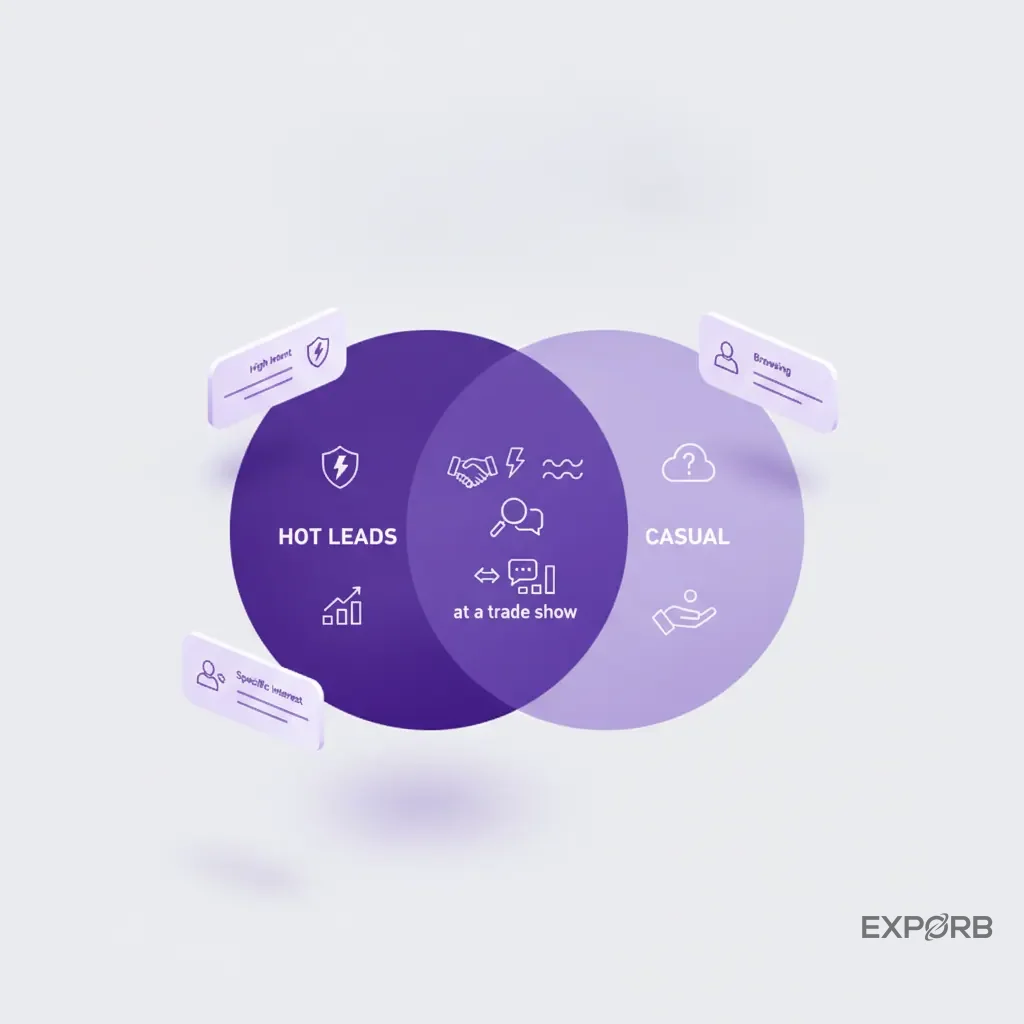
Decoding buyer intent from on-site conversations
You don't need to be a mind reader; you just need to listen for specific signals. The questions a visitor asks are a huge tell.
- Low Intent Signals: "What do you guys do?" "Can I get one of those phone chargers?" "Are you hiring?" These are conversation starters, but they don't signal a buying need.
- High Intent Signals: "How do you integrate with Salesforce?" "We're currently using [Competitor Name] and we aren't happy with it. How are you different?" "What does your pricing look like for a team of 50?" These are buying questions.
The language they use also matters. Are they talking about specific problems, projects, and deadlines? Or are they speaking in generalities? The more specific they're, the more likely they're to be a serious buyer. Your team needs training to listen for these keywords and tag the lead accordingly.
Aligning qualification criteria with your ideal customer profile (ICP)
Before your team even steps foot in the convention center, they need to know—with absolute clarity—who your ideal customer is. An ICP is more than just a job title and industry. It's a detailed profile of the company you're best equipped to serve.
- Firmographics: Company size, industry, revenue, location.
- Technographics: What software do they currently use? What's their tech stack?
- Pain Points: What specific business challenges do they have that you solve?
- Buying Process: Who is involved in the decision? The economic buyer? The technical user? The champion?
Every conversation at the booth should be an exercise in matching the visitor against your ICP. If there's a strong match, you've got a potential MQL or SQL. If there's a weak match, they might be a good contact for a newsletter, but they don't belong in your sales pipeline.
The role of conversation data in an omnichannel follow-up journey
The conversation at the booth is just one touchpoint. In today's market, buyers use many channels, and the data you capture in person fuels the rest of their journey.
Did they mention a specific feature? Your follow-up email should link to a case study about that feature. Did they talk about a frustrating workflow? Your sales rep's first call should focus on how you solve that exact problem. This is where most exhibitors fail. They collect a business card but lose the context. The details of the conversation evaporate the second the visitor walks away.
This is why simply taking notes isn't enough. You need a structured way to capture these details. Using a tool that allows for quick voice notes and AI transcription can be a major advantage. The context from the booth conversation becomes the thread that connects your email marketing, your sales calls, and your social media outreach into one cohesive experience for the buyer.
Related: The Ultimate Trade Show Lead Capture Guide
What are the best lead qualification frameworks for event teams?
You don't need to reinvent the wheel. Sales teams have been using qualification frameworks for decades because they work. They provide a structured way to guide conversations and ensure you ask the right questions. The key is to adapt them for the fast-paced environment of a trade show floor.
You can't pull out a 20-question survey. It has to be conversational. But your team should have a framework in their back pocket to guide the discussion.
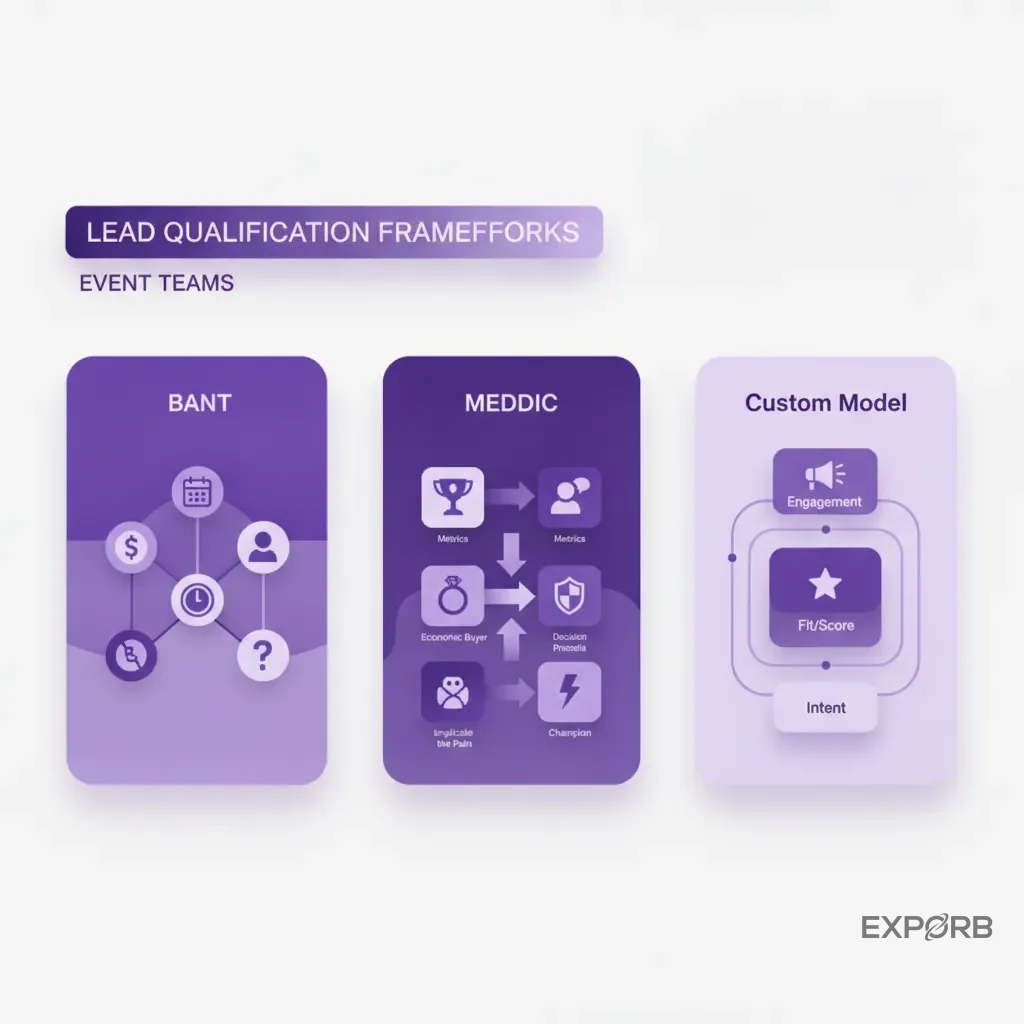
Applying BANT (Budget, Authority, Need, Timeline) at the booth
BANT is the classic, and for good reason. It's simple, memorable, and covers the core qualification criteria.
- Budget: Do they have the financial resources to buy your solution?
- At the booth: You probably won't ask "What's your budget?" directly. Instead, try: "How are you currently handling [Problem X]?" or "What kind of solutions have you looked at?" Their answers can give you a sense of their spending level.
- Authority: Is this person a decision-maker, an influencer, or just a researcher?
- At the booth: Ask: "Who else on your team is involved in evaluating new tools?" or "What does the typical purchasing process look like at your company?"
- Need: Do they have a specific pain point that your product can solve? This is the most important part.
- At the booth: This is where your discovery questions shine. "What's the biggest challenge you're facing with [Area of Business] right now?"
- Timeline: When are they looking to make a purchase?
- At the booth: A great question is: "What's driving the need to solve this now?" or "Do you have a specific project or deadline this is tied to?"
A prospect who scores high on N, A, and T but is fuzzy on B is still a great lead. A prospect with a big B but no real N is probably a waste of time.
Using MEDDIC for complex enterprise sales cycles
If you're selling a high-ticket, complex solution to large enterprises, BANT might be too simplistic. MEDDIC (or its variants MEDDICC/MEDDPICC) provides a more detailed framework for navigating corporate buying committees.
- Metrics: What are the quantifiable business outcomes they want to achieve? (e.g., "increase revenue by 15%," "reduce support tickets by 30%")
- Economic Buyer: Who has the ultimate P&L responsibility and can sign the check?
- Decision Criteria: What specific technical, legal, and business requirements will they use to evaluate solutions?
- Decision Process: What are the formal steps they must take to make a purchase?
- Identify Pain: What is the business pain driving this initiative?
- Champion: Who is the person on the inside selling on your behalf when you aren't there?
You won't get all of this in a five-minute booth conversation. But your goal is to identify at least the Pain, the Champion, and get a hint of the Metrics. This gives your enterprise sales rep a huge head start for their follow-up calls.
Creating a custom framework tailored to your sales process
The best framework is the one your team will actually use. BANT and MEDDIC are great starting points, but feel free to create a custom model that fits your business perfectly.
Maybe you add a "C" for "Competition" (Who are they looking at?) or an "I" for "Implication" (What's the cost of not solving this problem?).
The key is to keep it simple—no more than 4-5 key areas to investigate. Keep it simple. Define what a "good," "average," and "bad" answer looks like for each area. Then, build these fields directly into your lead capture app. This turns a subjective conversation into objective, structured data that can be used for scoring and routing leads automatically.
How do you create a bulletproof lead qualification checklist for your next trade show?
A framework is your guide, but a checklist is your insurance policy. It ensures every team member asks the right questions and captures the same critical information for every lead. A good checklist turns your event strategy from theory into practice.
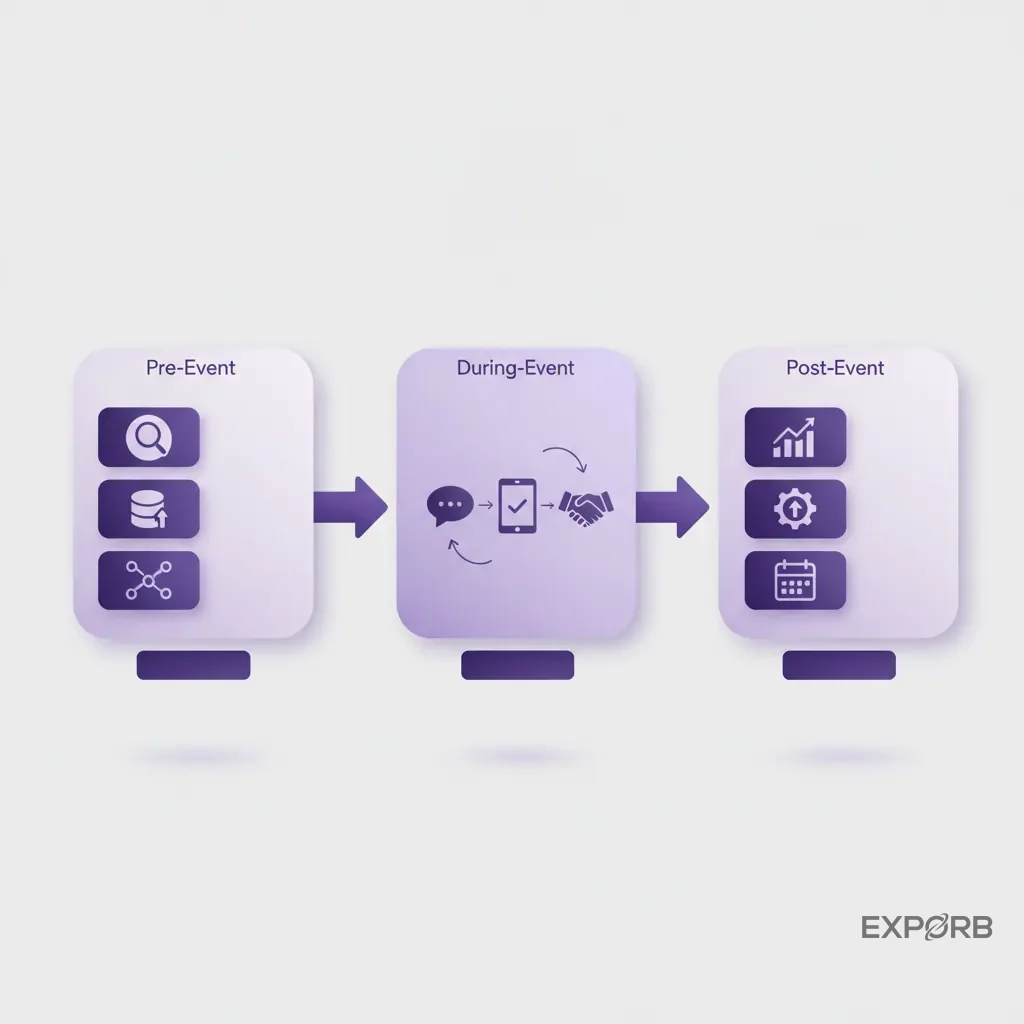
Pre-event: Aligning sales and marketing on qualification tiers
Don't skip this step. The most important work happens before you even book your flight. Sales and marketing must agree on a single, universal definition of a qualified lead. If marketing thinks a lead is anyone from a target account, but sales only considers someone with a budget and timeline, you're set up for failure.
Hold a formal meeting and get answers to these questions in writing:
- What are the exact criteria for an MQL? (e.g., From a company with 100+ employees, in the SaaS industry, expressed a need for X).
- What are the exact criteria for an SQL? (e.g., All MQL criteria met, PLUS has a stated budget and a project timeline within 6 months, and is a decision-maker).
- What's the service-level agreement (SLA)? How quickly must sales follow up on an SQL? (e.g., 4 hours). How will MQLs be nurtured? (e.g., Added to a 5-part email sequence).
This alignment is non-negotiable. Without it, you'll end up with the classic finger-pointing match: "Marketing sent us junk leads!" versus "Sales never followed up!"
During the event: Key questions to ask every visitor
Your booth team should have a short list of go-to questions that help them quickly qualify visitors without sounding like they're reading from a script. These should be open-ended questions designed to get the prospect talking.
- To uncover need: "What brought you to the show today?" or "What's the biggest challenge you're hoping to find a solution for?"
- To understand their role: "What's your role in tackling that challenge at your company?"
- To gauge seriousness: "What are you using right now to handle [Problem X]?" or "What would a perfect solution look like for you?"
- To determine next steps: "Is this something you're actively looking to solve this quarter?"
You should build these questions directly into your lead capture process as custom fields or tags. This makes it easy for your team to capture the answers with a few taps.
Post-event: A structured data handoff process
The race against time starts the moment the show ends. A pile of business cards and scribbled notes is a data nightmare. You need a process for getting clean, qualified leads to your sales team instantly.
A modern event CRM solves this. Your team captures everything at the booth—contact info, qualification notes, voice memos—and it syncs directly to a central dashboard. From there, you can automatically route leads based on the qualification criteria you defined pre-event.
A sample lead routing and follow-up matrix for post-event handoff.
This structured handoff eliminates the week-long data entry slog that kills momentum. SQLs get to sales reps while the conversation is still fresh. You enter MQLs into a nurture track before they forget who you're. This maximizes the ROI of your event spend.
What common challenges sabotage follow-up and how do you solve them?
Even with a great plan, things can go wrong. The chaos of the trade show floor, combined with old habits and mismatched expectations, can easily derail your lead qualification and follow-up efforts. Recognizing these common pitfalls is the first step to avoiding them.
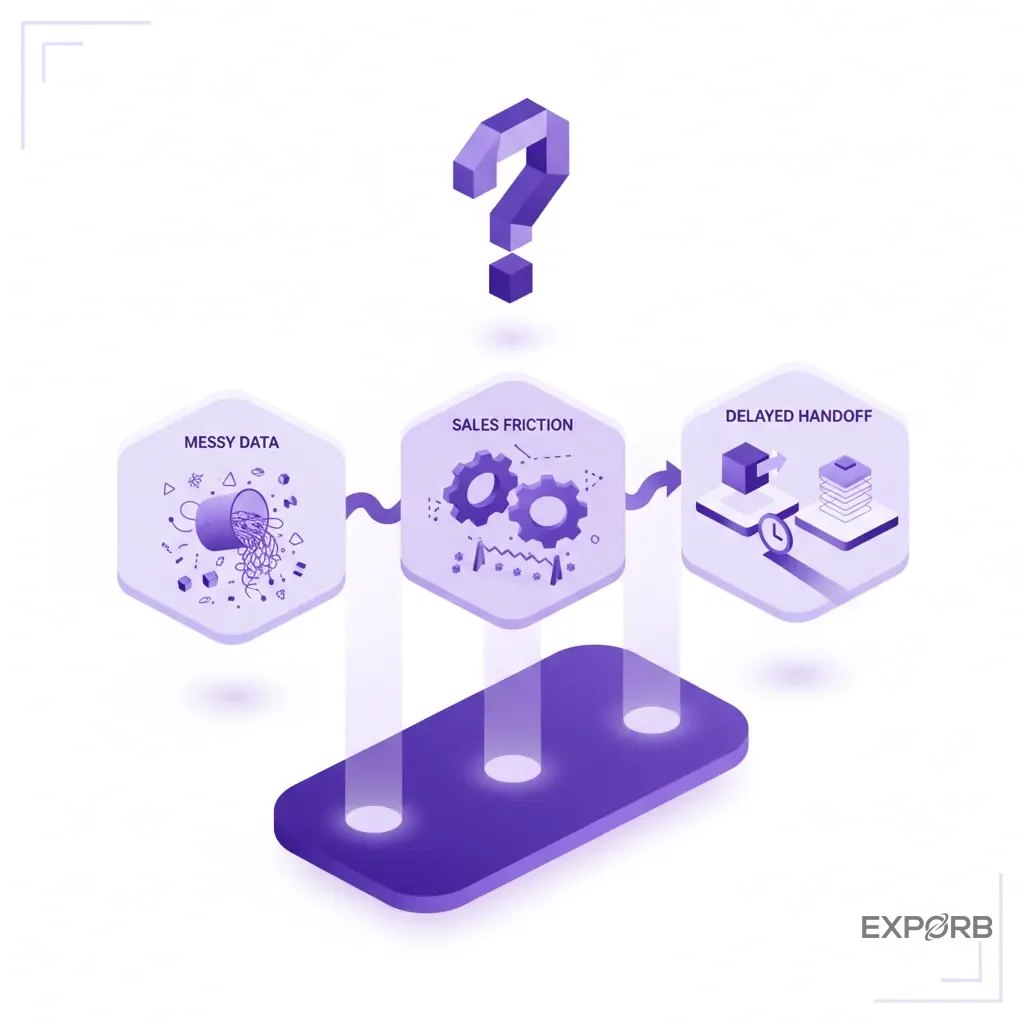
The 'pile of business cards' problem: Lost context and messy data
This is the original sin of trade show marketing. Your team comes back with a stack of hundreds of business cards. Some have notes scribbled on the back; some don't. Who was the hot prospect? Who was just looking for a job? What did you promise to send them? Nobody knows.
The context is gone.
This forces someone—usually a junior marketer—to spend days manually typing every card into a spreadsheet. The data is often inaccurate, incomplete, and by the time it reaches the sales team, it's stale. The solution is to kill the paper process entirely. Use a business card scanner app that uses OCR to instantly digitize contact info and lets you attach notes, photos, and voice memos to each contact. The data is captured, structured, and centralized from the moment of the conversation. No more messy piles.
Sales team friction: When marketing and sales aren't aligned on lead quality
We touched on this earlier, but it's worth repeating because it's the number one cause of Event ROI failure. Marketing generates 500 "leads." Sales calls a few, finds them unqualified, and then ignores the rest of the list, claiming it's junk.
This isn't a sales problem, nor is it a marketing problem; it's an alignment problem. The pre-event SLA meeting is the cure. When both teams agree on the exact definitions of MQL and SQL before the show, there's no room for debate later.
Tools can enforce this alignment. An event lead capture tool with team sync capabilities can give sales managers real-time visibility into the leads the team generates at the booth. They can see the quality of conversations as they happen and provide feedback to the on-site team, to ensure everyone stays aligned with the qualification goals.
Delayed handoff: Why speed-to-lead is critical after an event
Every hour that passes after a trade show, the value of your leads decays. The prospect is getting back to their regular work, their inbox is flooding, and their memory of your conversation is fading. A follow-up a week later feels like a cold call.
Your goal should be to follow up with your hottest leads—your SQLs—before they even get on the plane home.
This sounds impossible with a manual process, but it's standard with the right tech. Imagine this workflow: Your rep has a great conversation and qualifies a lead as an SQL. They tap a button in their app. This can trigger an automated, yet personalized, follow-up email. At Exporb, we built our AI-powered email follow-up feature to use the context from the captured conversation to draft an email that references the specific pain points and next steps discussed. The rep just reviews it and hits send. The follow-up is done in 30 seconds, right at the booth. That's how you win the speed-to-lead race.
What is the founder's blind spot? Solving the post-show data gap
As a founder or executive, you sign the check for a six-figure trade show sponsorship. You know your team is on the ground, working hard and having hundreds of conversations. But when they get back, what do you really know?
You get a spreadsheet with names and titles. You hear a few anecdotes about "great conversations." But you have zero visibility into the actual substance of what was learned. This is the founder's blind spot, and it's a massive strategic risk.
The scenario: You know great conversations happened, but the details are lost
Your top salesperson tells you they had an "amazing talk" with a VP at a Fortune 500 company. It sounds promising. But what did they talk about? What was the specific business pain? What was the competitor they mentioned? What were the agreed-upon next steps?
Often, the salesperson can't remember the specifics. They had 50 of those conversations. You lose the critical details that would inform your product roadmap, your competitive strategy, and your sales messaging forever. You're flying blind, making strategic decisions based on vague summaries instead of raw, ground-truth data.
How unstructured notes fail to capture true buying signals
Even when your team takes notes, they're often unstructured and inconsistent. One rep uses a notepad, another uses the Notes app on their phone, a third just tries to remember everything. There's no standard format, no required fields, no way to analyze the data in aggregate.
You can't search for trends. You can't filter for all the leads who mentioned a specific competitor. You can't identify the most common pain point your prospects are facing. Silos trap the data, making it impossible to see the bigger picture. This unstructured mess is where buying signals go to die.
Giving leadership full visibility into what the team learns at events
This is why we built Exporb. The core idea is to give founders and sales leaders a direct line of sight into every conversation happening on the trade show floor.
When your team uses a unified platform to capture every interaction—scanning a card, recording a quick voice note summary, snapping a photo of a whiteboard diagram—all that rich, qualitative data flows into a single, structured dashboard.
As a leader, you can see a live feed of activity. You can listen to the 30-second summary of the conversation your rep just had with that enterprise prospect. You can see which pain points are coming up most frequently. The event stops being a black box. It becomes your single best source of real-time market intelligence. You get more than just leads; you gain a direct pulse on your market, your customers, and your competition.
Related: Choosing the Best Trade Show Lead Capture App
How can AI-powered tools drive pipeline from every conversation?
For years, Event technology has focused on logistics: registration, badge printing, floor plans. But tech has ignored the most important part of the event—the human conversation. That's finally changing. AI is transforming lead capture from a manual data entry task into an intelligent, automated process.
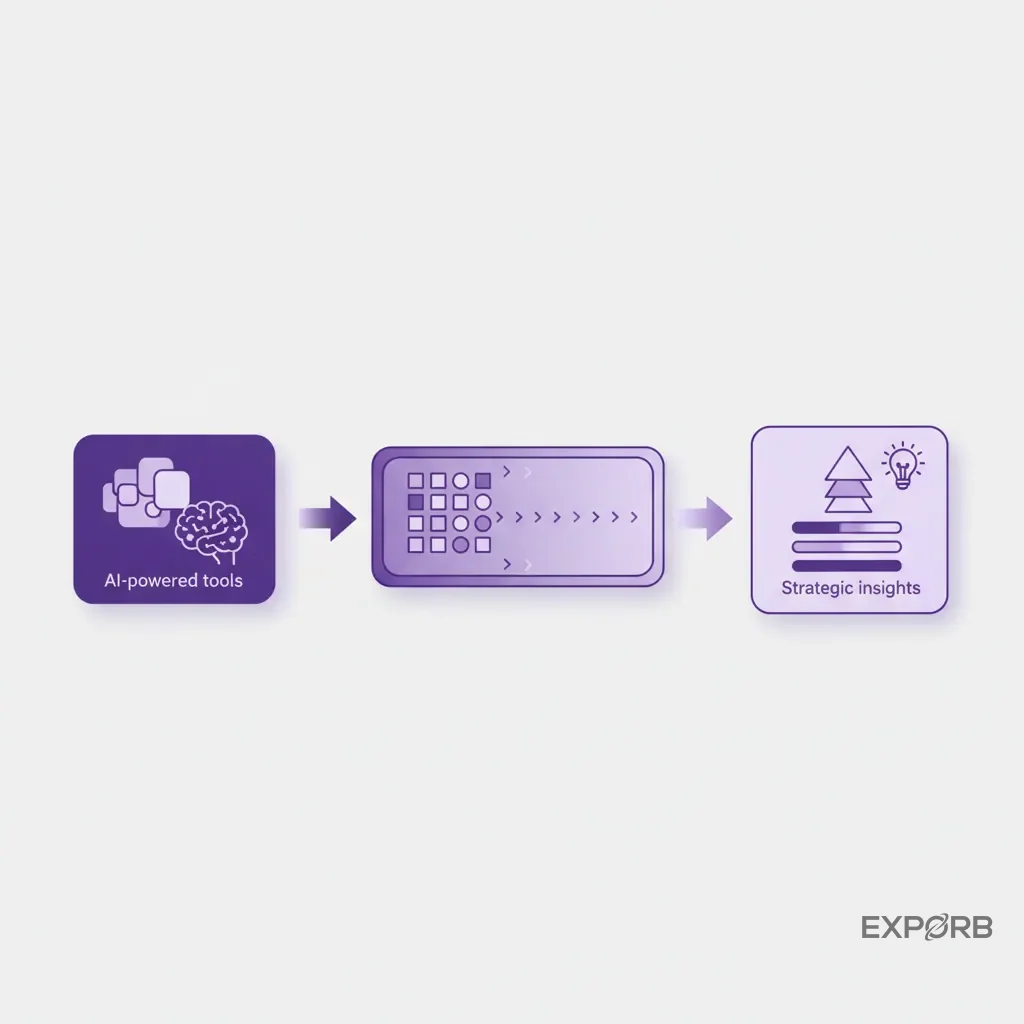
Automating data capture with AI-powered OCR and transcription
The first step is eliminating the manual work. No one should be typing business cards into a spreadsheet in 2026. AI-powered Optical Character Recognition (OCR) can scan any business card in any language and instantly pull the contact information with near-perfect accuracy. That's table stakes.
Beyond basic data, capturing the conversation itself provides significant advantages. Instead of frantically typing notes while trying to maintain eye contact, your reps can record a quick voice memo summarizing the conversation. AI can then transcribe that audio, making the full context of the discussion searchable and analyzable. This frees up your team to focus on what they do best: building rapport and listening to the customer.
Structuring conversational data for intelligent segmentation and follow-up
Once the data is captured, AI's real power is in structuring it. An AI-powered event CRM can analyze the transcribed text from a conversation and automatically:
- Identify pain points: It can detect keywords like "frustrated with," "struggling to," or "our current solution can't."
- Extract next steps: It can find phrases like "follow up next week," "send me the case study," or "connect me with your engineer."
- Perform sentiment analysis: It can determine if the conversation was positive, negative, or neutral.
- Assign a lead score: Based on all these factors, an AI lead scoring model can predict the lead's likelihood to close, automatically prioritizing the hottest prospects for your sales team.
This turns a messy, unstructured conversation into clean, structured data points that can be used to trigger automated workflows, personalize follow-up at scale, and give you deep insights into your event performance.
The future of event CRMs: From data entry to strategic insight
The old model of event tech was a glorified digital rolodex. The new model, powered by AI, is a strategic intelligence platform. It goes beyond collecting leads faster; it's about understanding them more deeply.
Instead of just knowing who you met, you know what they care about. Instead of just having a list of contacts, you have a prioritized list of opportunities. This is the shift that's happening right now. Companies that embrace these AI-powered tools will build pipeline faster, understand their customers better, and leave their competitors wondering how they did it. The future isn't about working harder at events; it's about working smarter.
How do you measure success and benchmark your event performance?
You can't improve what you don't measure. After the show is over and the dust settles, you need to look at the data and answer one simple question: Was it worth it? To do that, you need to track the right metrics and understand how your performance stacks up against industry benchmarks.
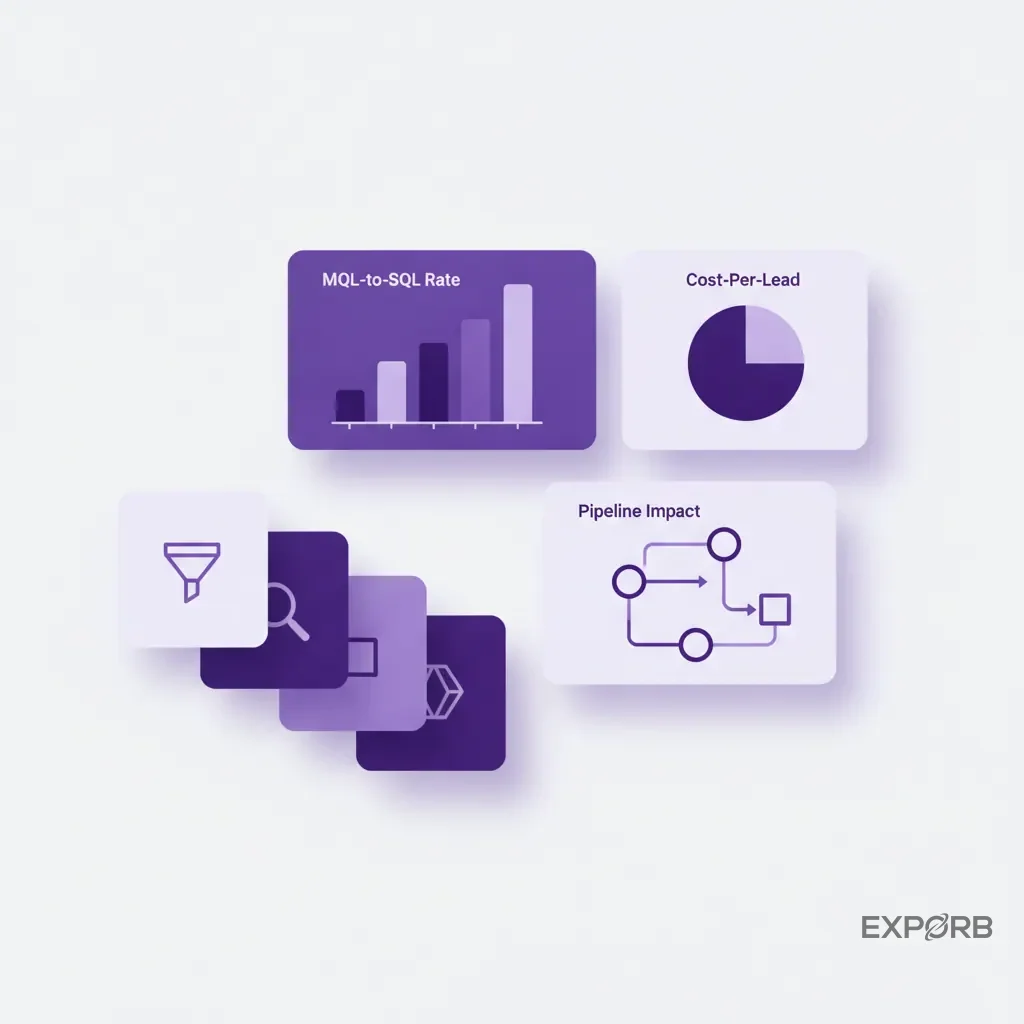
Key metrics: Tracking lead-to-MQL, MQL-to-SQL, and SQL-to-opportunity rates
Don't just count the total number of scans. That's a vanity metric. The numbers that matter are the conversion rates at each stage of your sales funnel.
- Lead-to-MQL Rate: What percentage of the total contacts you captured met your criteria for a Marketing Qualified Lead? This tells you if you were attracting the right audience to your booth.
- MQL-to-SQL Rate: Of those MQLs, what percentage converted to Sales Qualified Leads? This measures the effectiveness of your on-site qualification process.
- SQL-to-Opportunity Rate: What percentage of your SQLs resulted in a new, qualified sales opportunity in your CRM? This is the ultimate test of lead quality.
Tracking these metrics for every event allows you to see which shows are performing best and where you have room for improvement in your process.
Benchmarking your results against industry standards (16-20% MQL-to-SQL)
How do you know if your numbers are good? You compare them to industry benchmarks. While these can vary, some solid data points give you a target to aim for.
According to research cited by Cubeo.ai, a typical MQL-to-SQL conversion rate for B2B companies is between 16-20%. If you're well below that, it might indicate a problem with your qualification criteria or your follow-up process. Similarly, data from The Starr Conspiracy shows an average MQL-to-SQL rate of around 13% for tech sellers. And according to recent 2026 benchmarks from Lunas Consulting, you can expect roughly 30-59% of your SQLs to convert into a sales opportunity.
If your event leads are converting at or above these rates, you have strong evidence that your event strategy is working.
Calculating cost-per-lead and proving pipeline impact to justify event spend
Finally, you need to connect your event activity to real financial outcomes.
- Cost Per Lead (CPL): This is your total event cost (sponsorship, travel, salaries, etc.) divided by the total number of leads captured.
- Cost Per Opportunity (CPO): This is your total event cost divided by the number of sales opportunities generated. This is a much more meaningful metric than CPL.
- Pipeline Impact: What's the total dollar value of the sales opportunities generated from the event?
- Event ROI: Ultimately, this is the closed-won revenue from the event divided by the total event cost.
When you can walk into your CEO's office with a dashboard that says, "We spent $75,000 on this event and generated $500,000 in qualified pipeline and a 3x ROI," you're no longer having a conversation about expenses. You're having a strategic discussion about revenue growth. That's how you prove the value of your event program.
Your action plan for turning event conversations into revenue
You've seen the data, you understand the frameworks, and you know the pitfalls to avoid. Now it's time to put it all together. Turning trade show chaos into a predictable revenue stream doesn't require a massive budget; it requires discipline and the right process. Here's your three-step plan.
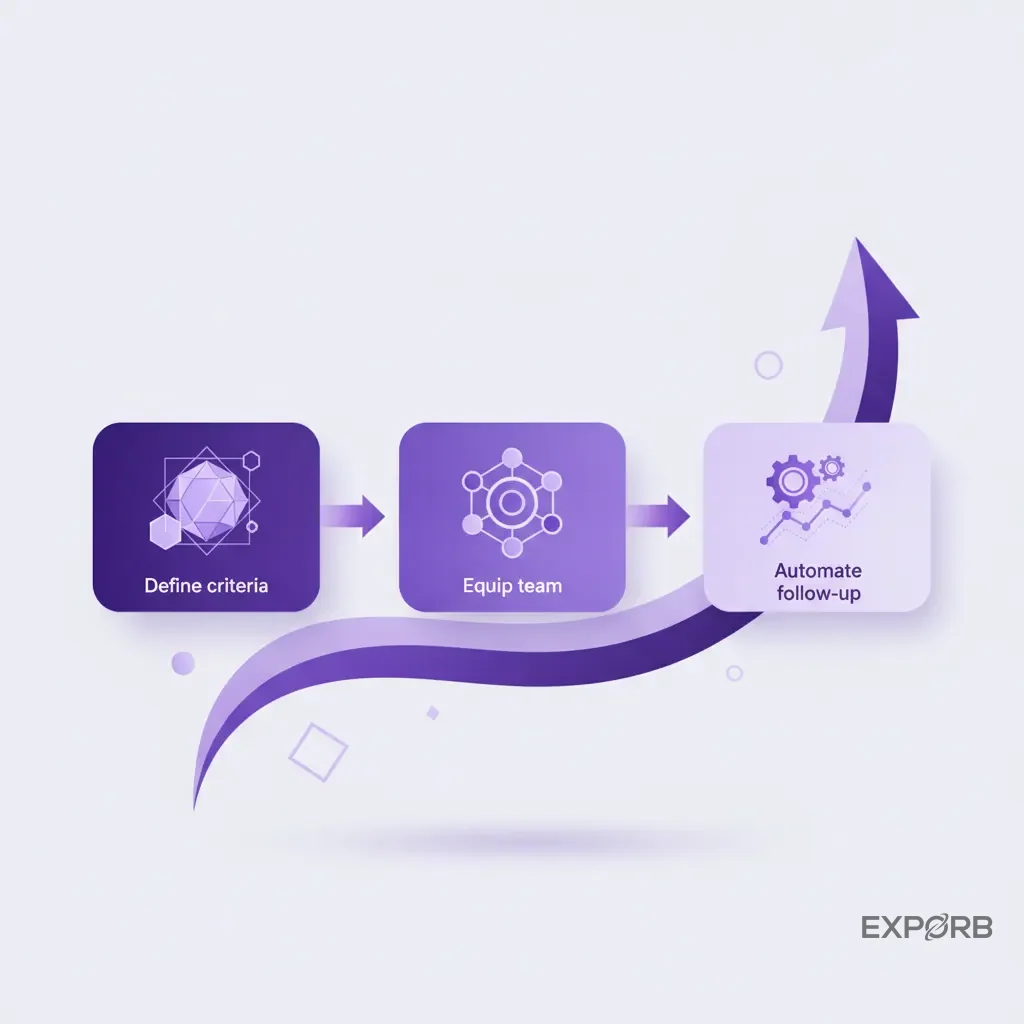
Step 1: Define your qualification criteria before the show
Don't skip this step. Before you do anything else, get your sales and marketing leaders in a room (virtual or physical) and hammer out your universal lead definitions.
- Document the exact, objective criteria for an MQL and an SQL.
- Agree on the SLA for follow-up times for each lead type.
- Choose your qualification framework (BANT, MEDDIC, or a custom model) and make sure every person working the booth is trained on it.
This single meeting will prevent 90% of the friction that typically occurs after an event.
Step 2: Equip your team with the right tools and training
Your team can't be expected to execute a modern lead qualification strategy with outdated tools. A pen and paper won't cut it. A spreadsheet is a bottleneck.
Invest in a modern trade show lead capture platform. Make sure it has:
- Offline capabilities, because convention center Wi-Fi always fails.
- Fast business card scanning to eliminate manual entry.
- Customizable fields that match your qualification criteria.
- Voice notes and photo capture to save all the rich context.
- Real-time team sync so everyone has visibility.
Train your team on how to use the tool and, more importantly, how to have consultative, qualification-focused conversations. Role-play different scenarios. Your goal is to make qualification feel like a natural part of the conversation, not an interrogation.
Step 3: Implement a disciplined, automated follow-up process
Speed wins. The follow-up process should be as automated as possible to make sure no lead falls through the cracks.
- Set up your lead routing rules before the event. SQLs go directly to the assigned sales rep's inbox. MQLs go into a specific nurture sequence.
- Use email templates that can be personalized with the data captured at the booth. A simple token like
{{Pain_Point}}can make a templated email feel incredibly personal. - Measure everything. Track your follow-up times and conversion rates. After the event, hold a debrief to discuss what worked, what didn't, and how you can improve for the next show.
Trade shows are more than just brand awareness anymore. They're powerful revenue-generating channels—if you treat them with the strategic discipline they deserve. Stop collecting contacts and start having qualified conversations. That's how you build a predictable, healthy pipeline.