TL;DR — the best trade show lead capture apps by what your team actually needs
| Your situation | Best pick | Why |
|---|---|---|
| You need offline-first reliability — trade show WiFi can't be trusted | Exporb | The only platform built offline-first end-to-end. Reps capture, scan, and record on the floor; everything syncs when the team is back online. |
| You want analytics on every conversation, not just contact info | Exporb | Records the booth audio. AI extracts pain points, intent, sentiment, and next steps. Team dashboard surfaces per-rep performance and lead quality. |
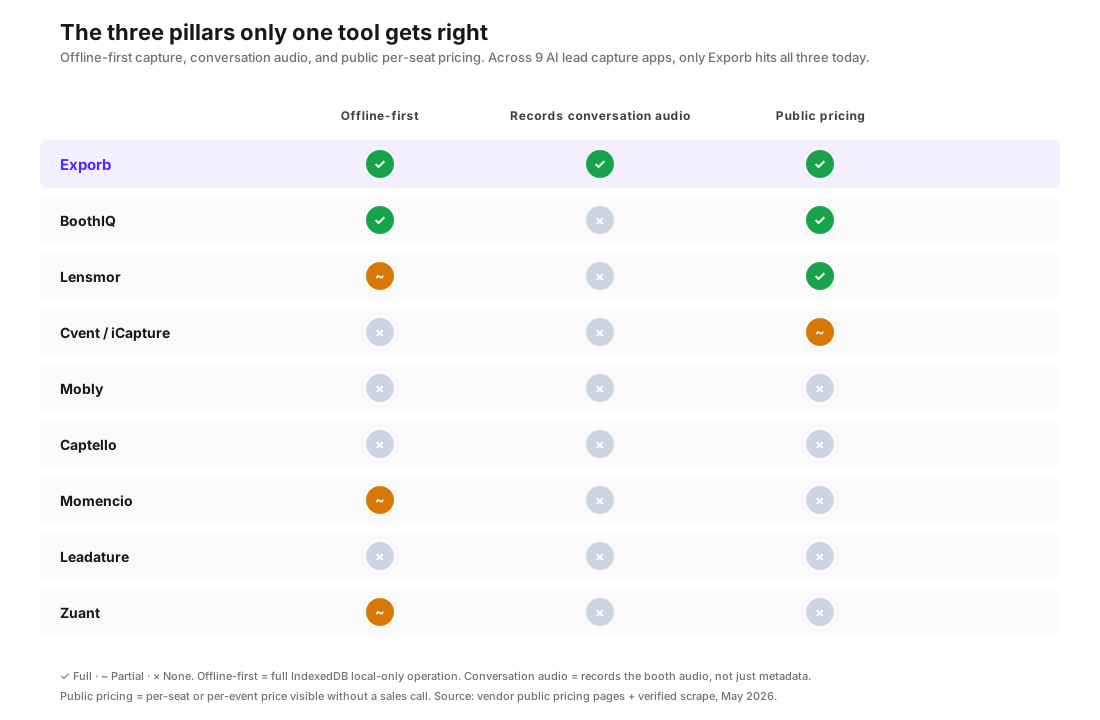
| Transparent pricing — no sales call, no 12-month commit | Exporb, BoothIQ, Lensmor | Public per-seat plans. Free tiers. The only three vendors in the category you can evaluate without booking a demo. |
| Plug-and-play Salesforce / HubSpot sync without an enterprise contract | BoothIQ | Most polished native sync at SMB pricing. Most enterprise tools (Captello, Momencio, Mobly) have native sync too — but only after a sales call and a 12-month commit. |
| Pre-event attendee intelligence + automated outreach | Lensmor | AI agent identifies high-value attendees before the show. |
| Conversation capture without trusting reps to hit record | Backtrack | Buffers booth audio continuously; reps save the last few minutes retroactively, AI summarizes and drafts follow-up. |
| Everything in one event app (agenda, networking, capture) | Whova | Lead capture is a module inside the app attendees already have. Best when Whova is the show's official platform. |
| Official badge workflow at fielddrive-supported shows | Fielddrive | Per-event licensing, custom qualification questions, offline capture, content sharing at the booth. |
| Enterprise scale (5+ shows / year, $50K+ budget, dedicated ops team) | Cvent LeadCapture · Captello · Momencio | Integrated registration + capture + analytics + email. Quote-based, $5K–$50K+/year. |
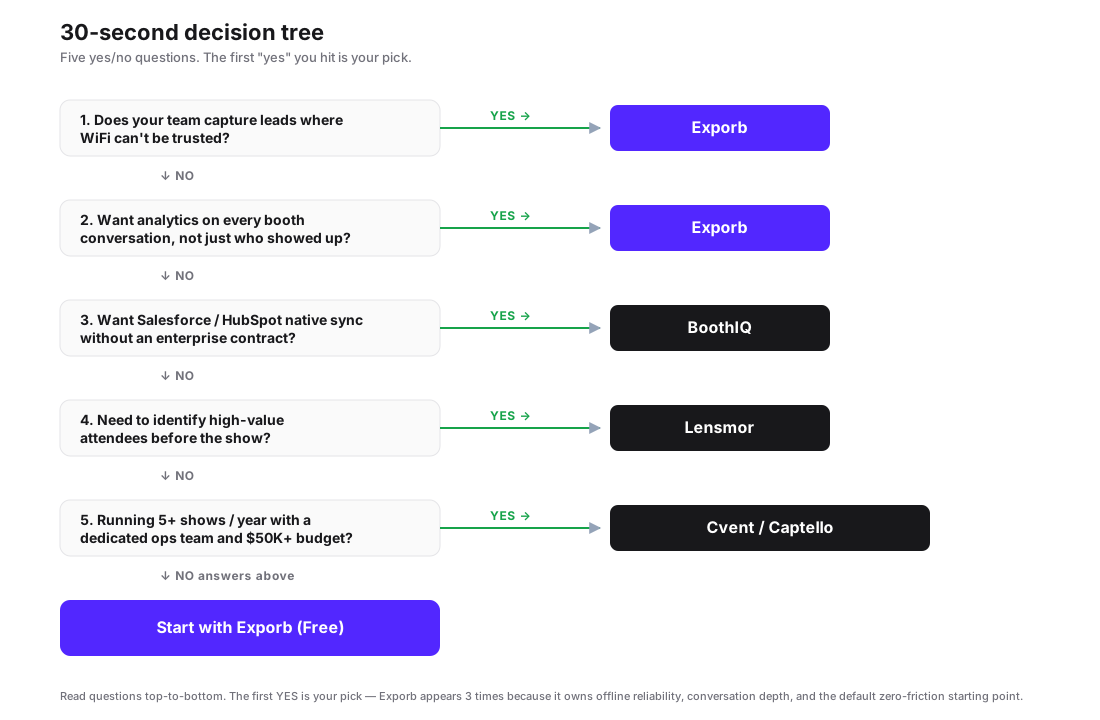
30-second decision flow
- Does your team capture leads where WiFi can't be trusted? → Exporb is the only platform built around this.
- Do you want analytics on every conversation, not just who showed up? → Exporb records and analyzes the booth audio — the only tool that records it proactively. (Backtrack records retroactively, on the rep's save.)
- Want native Salesforce / HubSpot sync without an enterprise contract? → BoothIQ. (Captello, Momencio, Mobly also have it — but only via sales call + 12-month commit.)
- Need to know who's worth talking to before the show? → Lensmor.
- Running 5+ enterprise shows / year with a dedicated ops team? → Cvent LeadCapture or Captello.
- Don't want to trust reps to hit record? → Backtrack buffers the audio for you.
- Want capture inside the event app attendees already use? → Whova (or Fielddrive at fielddrive-supported shows).
Side-by-side feature comparison → · Pricing breakdown →
My first trade show was the Canton Fair in Guangzhou, around 2013. I was working at a quality control company and I'd never seen anything that big in my life. Twenty-plus halls, the size of city blocks. Tens of thousands of exhibitors. People speaking forty languages. And here's how we captured leads back then: I had a stack of business cards, a spiral notebook, and a Sharpie. End of day three, I'd dump my pockets onto a hotel bed, tape cards to A4 paper, and try to remember which one was the guy who needed 10,000 units of rare-earth magnets shipped to Rotterdam.
I forgot most of it.
That's the problem nobody actually solved for the next decade. Badge scanners came along and gave you a name and email. CRMs let you type the rest. But the conversation, the part that's worth money, kept living in someone's memory and dying there. So when people ask me what changed in 2026, that's the answer. The category formerly known as "lead retrieval" is finally becoming AI lead capture, and a few apps are racing to define what that actually means.
I've spent the last six months building one of those apps and benchmarking the rest. So this isn't a sponsored listicle. It's a look at the twelve tools you should actually evaluate, what they're each genuinely good at, and where each one falls flat. Including mine.
Looking for a quicker event-focused comparison? We also maintain a 9 best lead capture apps for trade shows & events page with a different tool set (Popl, Cvent, Swapcard, iCapture, Wave Connect) — more event-type coverage, less AI depth. This blog article goes deep on AI capabilities; that page is a faster side-by-side for event planners.

What "AI lead capture app" actually means in 2026
Three years ago "lead capture app" meant one thing: scan a badge, pull a name and email from the show organizer's database, sync to your CRM, done. iCapture (now part of Cvent), Lead Liaison, Attendify — that whole generation. The job was to replace the fishbowl of business cards, and they did. Sort of.
But then a few things broke at once.
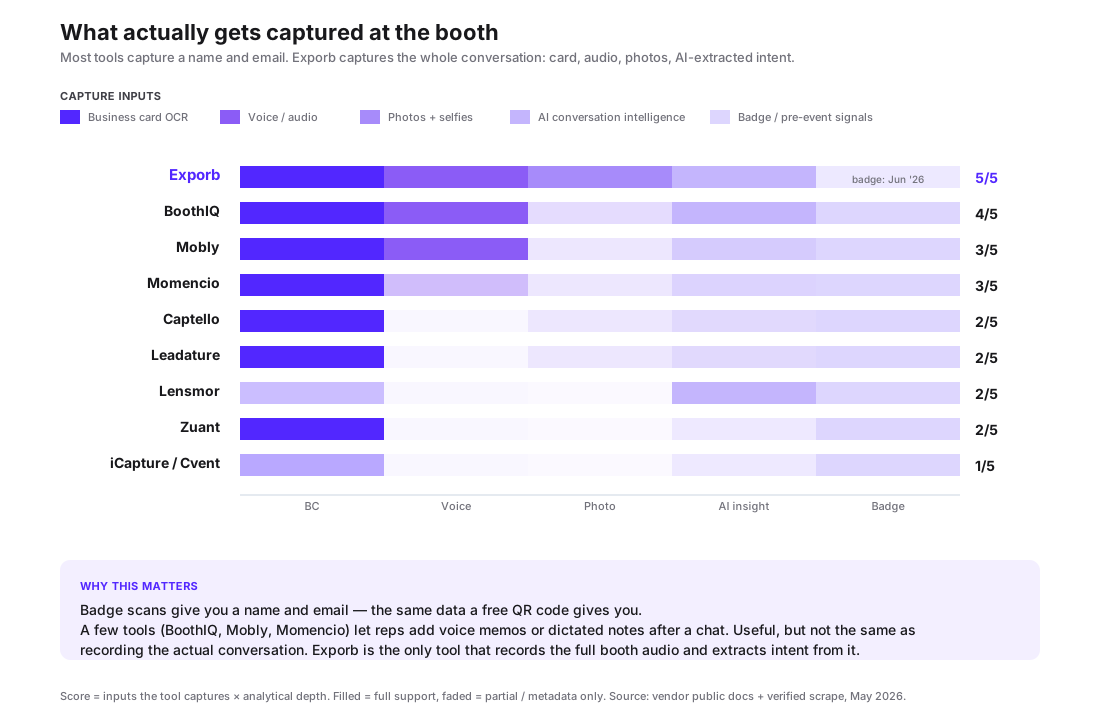
Show organizers started charging exhibitors hundreds of dollars per scanner per show. AI got cheap enough (like, fractions-of-a-cent cheap) that suddenly the bottleneck wasn't reading the badge, it was understanding what the conversation was about. And buyers started asking a question that none of the badge-scanner companies wanted to answer: if your tool gives me a name and email, what stops me from just using a free QR code?
So the category shifted. The "AI" prefix isn't marketing fluff this time. It's a real feature delta. Here's roughly what an AI lead capture app should do in 2026:
- Capture the contact. Yes, scan badges or business cards. Yes, type manually if needed. Multiple channels.
- Capture the context. Audio of the conversation. Photos. Notes. Whatever helps you remember.
- Enrich with AI. Pull pain points, intent, timeline, budget signals, sentiment, recommended next steps. Not "this is a hot lead" with no reasoning. Actual structured insights you can read.
- Score and qualify. Hot/warm/cold with reasons.
- Export or sync. CSV, CRM integration, your choice.
- Work without WiFi. Trade show floors are connectivity black holes. If your tool dies when the network does, it's not a trade show tool.
Of the twelve apps below, none does all six perfectly. The interesting question is which compromise fits your team.
Related reading: Lead capture forms vs business cards: why digital wins in 2026
The 12 AI lead capture apps to evaluate in 2026
I'll start with mine, because I'd rather get the bias on the table than pretend it's not there. Then we'll go through the rest in roughly the order I'd recommend evaluating them, depending on your buyer profile.
1. Exporb — the offline-first conversation capture wedge
Best for: Solo sales reps, founders working the conference circuit, small teams that want a single app that works at any event — with or without an organizer-issued badge.
What it is: Tap record. Have your conversation. Snap the business card. Walk away. AI transcribes the audio, reads the card with OCR (any language), and pulls out company description, pain points, sentiment, follow-up topics, and recommended next steps. Works offline. Exports to CSV for any CRM.
Where it wins:
- The only app in this list built offline-first end-to-end. IndexedDB stores everything locally, sync happens in the background when you're back online. We engineered around iOS Safari quirks (self-hosted WASM, persistent storage opt-in, two-tier upload timeouts) because trade show WiFi melts.
- Conversation intelligence is the deepest in this segment because Exporb is the only tool that proactively records and analyzes the full booth audio. Backtrack records retroactively (a dashcam model); the rest of the category does AI on enrichment data — title, company, scraped LinkedIn — not on the conversation. We do both.
- Transparent AI cost tracking. You can see how much each enrichment cost (it's fractions of a cent) and a live credit indicator. Momencio bills AI as a separate add-on; Exporb just bakes it in.
- Zero data lock-in. Export to CSV, JSON, PDF, or download a ZIP with all audio and card images organized by contact. No "upgrade to export" paywall.
- Pricing actually starts at zero. Free tier with 10 AI enrichments a month. Solo at $9/month ($90/year). Growth at $59/month ($590/year) for 5 seats. Scale at $99/month ($990/year) for 10 seats plus $10/month per extra seat. No 12-month commitment, no minimum seats, no add-ons.
Where it falls short:
- No native CRM integrations yet. We export beautifully formatted CSVs that import into Salesforce, HubSpot, Zoho, anything. But if you want a webhook firing every time a lead is captured, that's coming later in 2026, not today.
- Badge photo-capture is on the roadmap. Same flow as business cards: snap a photo of the badge, AI extracts the name, company, title — anything printed on it. No show-specific hardware needed. The one thing we don't read is the proprietary RFID/QR data show organizers embed for their internal systems — for that you still want iCapture or Cvent.
- No automated follow-up sequences yet. You export the data and run sequences in your existing email tool.
- Native iOS and Android apps are in development. Today Exporb runs as an offline-capable web app (PWA) that installs to your home screen on any phone — capture, voice notes, and card scanning all work offline either way.
- We're a small team. Solo founder, pre-PMF, LLC stage. If you need an enterprise SLA and SOC 2 yesterday, that's not us yet.
Pricing: Five tiers, purposefully simple.
- Free — full feature set, 10 AI enrichments/month, single user. Stays free until we hit 1,000 users; after that the limits may tighten.
- Solo — $9/mo or $90/yr with a 14-day no-hurry trial. Unlimited AI enrichments, unlimited exhibitions, CRM export, priority support.
- Growth — $59/mo or $590/yr (save $118 with annual). 5 seats included. Shared workspace, branded share links, unlimited AI, team-wide lead ranking.
- Scale — $99/mo or $990/yr (save $198 with annual). 10 seats included, $10/mo per additional seat. Shared exhibitions, priority support.
- Lifetime — $139 one-time. Pay once, own it forever. For teams that want to buy once instead of subscribe.
- Enterprise — talk to us. Custom CRM hooks, API access, SSO, dedicated setup. We build to your contract.
2. Captello — the engagement-heavy enterprise platform
Best for: Large brand exhibitors who treat the booth as theater. Trade show coordinators, retail marketers, event marketing teams running 20+ shows a year.
What it is: A unified event platform. Lead capture is one of five or six things it does. The rest is gamification (scavenger hunts, leaderboards, prize draws), meeting management, and engagement analytics. Think of it as Cvent for the experiential booth crowd.
Where it wins:
- 14 sub-features just for interactive booth experiences. Scavenger hunts, leaderboards, kiosks, gamified data capture. If your booth strategy involves drawing a crowd with a game, Captello eats this category.
- 17 sub-features for data enrichment. Title, company size, industry, social, behavior, verified contact details. Heavy on filling in the gaps of what a badge scan misses.
- 11 sub-features for meeting management. Pre-event scheduling, on-site management, post-event follow-up. If your reps are booking meetings at the show, this is well thought out.
- White-glove onboarding, dedicated account managers, on-site support. The enterprise treatment.
Where it falls short:
- Pricing isn't published. Expect a sales call, an annual contract, and a price tag that makes sense for a company sending 50 reps to 30 shows.
- AI is split: enrichment plus conversation transcription. You get better data about the lead and a transcript of what was said — but not deep analysis of intent, sentiment, or next steps from that conversation.
- It's a platform play. Broad and shallow on lead capture specifics, deep on event operations. Solo reps and small teams are the wrong buyer.
Pricing: Not public. captello.com
3. Momencio — the pipeline-intelligence platform
Best for: Mid-market and enterprise sales teams that already live in Salesforce or HubSpot and want event data flowing into pipeline analytics.
What it is: Lead capture plus what they call AI IntelliSense (behavioral analytics across reps, events, and campaigns). Their hook is LiveMicrosites, personalized landing pages that get pushed to a lead post-event so you can track engagement after the booth.
Where it wins:
- 23 sub-features for integrations. Over 1,000 listed connectors including Salesforce, HubSpot, Marketo, Dynamics. If your tech stack is sprawling, Momencio plugs into it.
- 18 sub-features for predictive analytics. Pattern detection across events, hot lead surfacing, pipeline-leak detection.
- 20 sub-features for attendee journey tracking. Pre-event registration through post-event microsite engagement, tied to the lead record.
- Solid automated follow-up. Personalized landing pages plus email campaigns, tied to behavior triggers.
Where it falls short:
- The pricing model is rough. Minimum 12-month commitment, minimum 5 seat licenses, AI enrichment billed as a separate add-on, CRM integrations also billed separately. The base price isn't the price you'll pay.
- No free trial. No mid-term cancellation, no refunds.
- Conversation intelligence at the booth itself is shallow. Momencio's AI is more "what did this lead do post-event?" than "what did they actually say?"
- Their offline mode is more "graceful degradation" than truly offline-first.
Pricing: Not public, contract-based. momencio.com
4. Leadature — the event-ops + RFID platform
Best for: Agencies and large enterprises running complex events where you need badge-scanner hardware rentals, RFID tracking, and BANT/MEDDIC qualification frameworks built in.
What it is: A complete event tech platform. Hardware rentals, RFID-based attendee journey tracking, dynamic lead qualification with pre-built sales frameworks, white-glove on-site support.
Where it wins:
- AI Speech-to-Notes: real-time transcription of booth conversations into structured notes, alongside BANT/MEDDIC qualification.
- 21 sub-features for event lifecycle management. They cover almost every aspect of running a major event.
- 12 sub-features for advanced lead qualification including BANT and MEDDIC scoring frameworks. If your sales process is structured, this matches it.
- 20 sub-features for attendee journey tracking with RFID. Dwell time, session attendance, booth flow. The kind of behavioral data you can't get without dedicated hardware.
- 16 sub-features for analytics and predictive insights. AI narrative summaries, pipeline predictions.
Where it falls short:
- This isn't a SaaS app you sign up for and try. It's a custom-quoted, project-based engagement. Single-event pricing or yearly subscription, no transparent pricing.
- Massive overkill for anyone smaller than a pharma company at HIMSS or a defense contractor at AUSA.
- The lead-capture part of it is good but not their main act. You're paying for the event-operations expertise, not the AI.
Pricing: Custom quote. leadature.com
5. BoothIQ — the SMB-friendly CRM-integrated option
Best for: Individual reps and small teams that already use Salesforce, HubSpot, or Zoho and want lead data flowing in automatically with minimal setup.
What it is: AI lead capture with deep first-party CRM integrations and a refreshingly honest pricing page. Free forever for individuals, flat-rate teams plan with the ability to pause subscriptions during off-months.
Where it wins:
- 18 sub-features for CRM and marketing integrations. Salesforce, HubSpot, Zoho, plus Slack, Microsoft Teams, Google/Outlook calendar and email. The plug-and-play story is genuinely good.
- 11 sub-features for team collaboration. Slack notifications when leads come in, shared workspaces, real-time alerts.
- The pricing model. Free forever for individuals, no per-scan fees, the ability to pause team plans during months you're not running events. This matches how event marketing budgets actually work.
- AI features for instant follow-up drafts, meeting scheduling, lead prioritization. Solid post-event automation.
Where it falls short:
- Offline mode exists (scanning, voice memos, and notes work disconnected and sync later), but it's not the offline-first architecture Exporb builds around.
- Conversation intelligence is shallow. BoothIQ's AI is mostly about post-event action (drafts, scheduling, prioritization) rather than analyzing what was said at the booth.
- Voice memos with AI transcription — but no full-conversation audio recording. That's the line between BoothIQ and Exporb's conversation intelligence.
- Smaller team, lighter feature set than enterprise platforms. Not necessarily a bad thing for SMB buyers, but worth knowing.
Pricing: Free for individuals. Teams plan flat-rate, pausable. getboothiq.com
6. Mobly — the in-person GTM platform for B2B teams
Best for: B2B Go-To-Market teams (field marketing, demand gen, revenue ops) that systematize in-person events the way they systematize digital campaigns.
What it is: An in-person GTM platform. Lead capture is a piece of it; the rest is event planning, hosting, post-event automation, and pipeline measurement. Heavy emphasis on speed-to-lead.
Where it wins:
- 13 sub-features for event lifecycle management. Event discovery, curated lists of relevant shows, sub-event management.
- 8 sub-features for automated follow-up. Behavior-triggered email and text sequences. Speed-to-lead is the core value prop.
- 9 sub-features for data enrichment, with 20+ data providers and 97% email accuracy Source. The enrichment quality is among the best in this list.
- 11 sub-features for event performance analytics including rep-level performance and AI-structured event summaries.
- AI content generation for branded registration pages — useful if your team is also responsible for the event microsite.
Where it falls short:
- Pricing is flat-rate, but not published. Enterprise-leaning.
- Like Momencio and BoothIQ, it's stronger on what happens after the conversation than on capturing the conversation itself.
- Offline mode is present but basic — capture queues for later sync, not a true offline-first architecture.
- Voice memos for on-the-go conversations, but no full-conversation recording or conversation analysis.
Pricing: Not public, flat-rate annual. getmobly.com
7. Lensmor — the pre-event signal-intelligence engine
Best for: B2B sales teams running ABM at trade shows. The kind of team that wants to know who's coming, identify decision-makers, and start outreach before the show even starts.
What it is: Less a booth-side capture tool, more a pre-event intelligence platform. Their hook is an autonomous AI agent that scouts events, identifies attendees, verifies emails (claimed 95% accuracy) Source, and runs personalized outreach campaigns to book meetings before you arrive.
Where it wins:
- 15 sub-features for AI agents and workflow automation, genuinely the deepest in this category. The autonomous-agent angle is real, not vapor.
- 9 sub-features for data enrichment with 95% email accuracy Source. Verified emails, LinkedIn, company size, industry.
- 18 sub-features for data privacy and ethical handling. Public data sources only, GDPR/CAN-SPAM compliance baked in. They take the legal exposure seriously.
- Credit-based pricing. Free plan with 2,000 credits. Pay per unlock for events, emails, AI agent runs. Actually transparent.
Where it falls short:
- This is a pre-event tool, not a booth capture tool. If you're holding a phone in front of a card on the show floor, Lensmor isn't really what you want. It's what you used six weeks ago to figure out who'd be at the booth.
- In-person capture is shallow.
- Better for ABM sales teams than for booths trying to capture everyone who walks up.
Pricing: Free plan with 2,000 credits, then credit-based. lensmor.com
8. Zuant — the legacy enterprise data-capture system
Best for: Large enterprises with multi-event programs, retail/showroom check-in flows, and a need for compliance features beyond standard data privacy.
What it is: Three decades of enterprise event data capture. They cover trade shows, showrooms, field sales, retail, even office check-in. "Long-tenured" is the more accurate word.
Where it wins:
- 9 sub-features for versatile data scanning. Business cards, QR, 1D and 2D barcodes, NFC chips. They scan everything.
- 18 sub-features for full-stack lead capture and management. Deep, if a bit dated in places.
- Compliance and operational features that nobody else even thinks about. Fire safety tracking, COVID track-and-trace, the Zuant Vault for data management.
- 8 sub-features for automated follow-up.
- Specialized apps for office check-in and retail appointments. Niche but real.
Where it falls short:
- The UX feels three decades old, because it kind of is.
- AI is bolted on rather than core. You won't get the conversation intelligence depth of Exporb or even the predictive analytics depth of Momencio.
- No public pricing.
- Offline mode is partial.
- Modern user experience features — pull-to-refresh, skeleton loading states, live waveforms — are basically absent. If you've used a 2026-era SaaS app, Zuant feels different in a way that won't be flattering.
Pricing: Not public. zuant.com
9. Cvent LeadCapture — the enterprise badge platform
Best for: Enterprise event teams running many shows who want lead capture wired into the same platform as registration, with badge kits that work across shows and organizer partnerships.
What it is: The category's default enterprise option. Cvent acquired iCapture and folded it into its lead capture line; between them they scan badges and business cards, pull attendee data from registration, and sync to your CRM. iCapture's universal config layer handles 100+ badge kit formats plus OCR and human validation.
Where it wins:
- Ecosystem. Registration + capture + analytics + follow-up in one platform — the same system the show organizer likely runs. That's a real integration advantage at Cvent-powered shows.
- Badge support breadth. iCapture's universal config layer covers 100+ badge kit formats, so it works at shows where niche apps can't read the organizer's badge.
- Governance at scale. Standardized qualification fields, centralized reporting, and CRM hygiene across a multi-event program. Built for teams that run 30+ shows a year.
- Enterprise support. White-glove onboarding, dedicated account managers, the full corporate treatment.
Where it falls short:
- No conversation capture. Contact-centric: name, email, company, notes. The thing AI-era tools are racing to capture — what was actually said — isn't here.
- Pricing opacity. No public price. Marketplace estimates put Cvent LeadCapture in the $5K–$50K/yr range depending on scope, and iCapture packages start around $8K/yr Source. This is a budget-line item, not a self-serve purchase.
- Venue dependence. Full data requires the organizer's registration infrastructure and WiFi. No offline-first architecture; if the network drops, capture drops.
- Overkill below ~10 shows a year. Solo reps and small teams are paying for governance they don't need.
Pricing: Quote-based; ~$5K–$50K/yr (marketplace estimates) Source, iCapture from ~$8K/yr Source. cvent.com · icapture.com
10. Backtrack (Yac) — the retroactive booth recorder
Best for: Exhibitors who want the conversation captured without trusting reps to remember to hit record — a dashcam for the booth.
What it is: Continuously buffers booth audio in the background, so a rep can save the last several minutes after the fact. AI turns saved segments into transcripts, summaries, and action items; scans business cards and badges; and exports to CRM. Recording is local-first — nothing uploads unless you save it.
Where it wins:
- Retroactive save is a real UX unlock. "Did you record that?" stops being a question. The audio was already buffered.
- Privacy-first posture. On-device by default, recordings deleted if the user doesn't save them. A genuinely different stance from cloud-everything competitors.
- AI summaries and follow-up drafts from saved segments, plus business card and badge scanning on the floor.
- Offline capture. Works where WiFi doesn't.
Where it falls short:
- Retroactive, not proactive. It only saves what a rep chooses to save, after the fact. Context from before the save is gone.
- Shallow conversation intelligence. Transcription and summaries — not deep analysis of pain points, sentiment, or next-step scoring.
- Pricing is inconsistent across listings (free tier, ~$10–29/mo, one-time passes up to ~$500, some event-based pricing). Verify current numbers before you buy.
- Younger, smaller product. Team collaboration and reporting are thinner than the platforms in this list.
Pricing: Free plan; paid tiers vary by listing (~$10–$500 depending on plan or pass — verify) Source. usebacktrack.com
11. Whova — the all-in-one event platform
Best for: Organizers and exhibitors who want lead capture inside the same app as registration, agenda, networking, and gamification — one system instead of five.
What it is: A full event management platform with an exhibitor lead capture module: QR-code scanning, manual entry, spreadsheet export, digital booth profiles, coupons, giveaways, and passport-style gamification that drives booth traffic.
Where it wins:
- Everything in one app. Attendees already have it installed, so there's no new hardware to hand out.
- Gamification is a real booth-traffic lever. Passport contests, coupons, and giveaways measurably increase footfall — Whova's own claim is 2x booth traffic.
- Digital booth profiles. Brochures, videos, chat, coupons — content lives with the booth.
- Good fit for organizer-led events where Whova is the official app.
Where it falls short:
- Lead capture is an add-on module, not the core product.
- QR-based scanning only. No universal badge config; limited compared with specialized badge readers.
- Spreadsheet-first export. Deep CRM sync isn't the strength.
- Quote-based pricing (~$1,000+/event, or per-user/month in listings) — not transparent.
- No conversation capture.
Pricing: Quote-based; ~$1,000+/event (estimate) Source. whova.com
12. Fielddrive — the per-event badge retrieval specialist
Best for: Exhibitors at fielddrive-supported shows who want the official badge workflow plus qualification questions, offline capture, and follow-up in one app.
What it is: fielddrive Leads — badge-scanning lead retrieval built for trade shows and conferences. Scans attendee badges, captures notes, qualifies with custom questions, shares marketing content mid-conversation (brochures, spec sheets, videos), and gives follow-up access straight from the lead record. Works online and offline.
Where it wins:
- Official badge support at major shows, especially the medical and tech congress circuit where fielddrive is the venue's provider.
- Custom qualification questions built into capture. BANT-style or your own sales framework — scored at the booth.
- Content-enabled capture. Share brochures, specs, and videos during the conversation, attached to the lead record.
- Offline capture + real-time sync once you're back online.
Where it falls short:
- Per-event licensing model. App licenses, extra licenses, device rentals, API kits — you buy per show, not per subscription. No clean monthly plan.
- No conversation recording or AI conversation intelligence. Notes + qualification only.
- Pricing varies by show and order form (licenses ~€240–290, device rentals ~€390–650, API kit ~€1,500 for 5 devices).
- Best where fielddrive is the venue's official provider — universal capture isn't the pitch.
Pricing: Per-event: app license ~€240–290 (early bird/standard) Source, device rental ~€390–650, API kit ~€1,500. fielddrive.com
Side-by-side comparison
I tried to be honest here, including the rows where Exporb loses. Before the table, here's the same data as a heatmap. Filled dots mean the product ships that feature. Open circles mean it doesn't. Scan it once and you can see the shape of each tool: where it's deep, where it's empty, where it goes its own way.
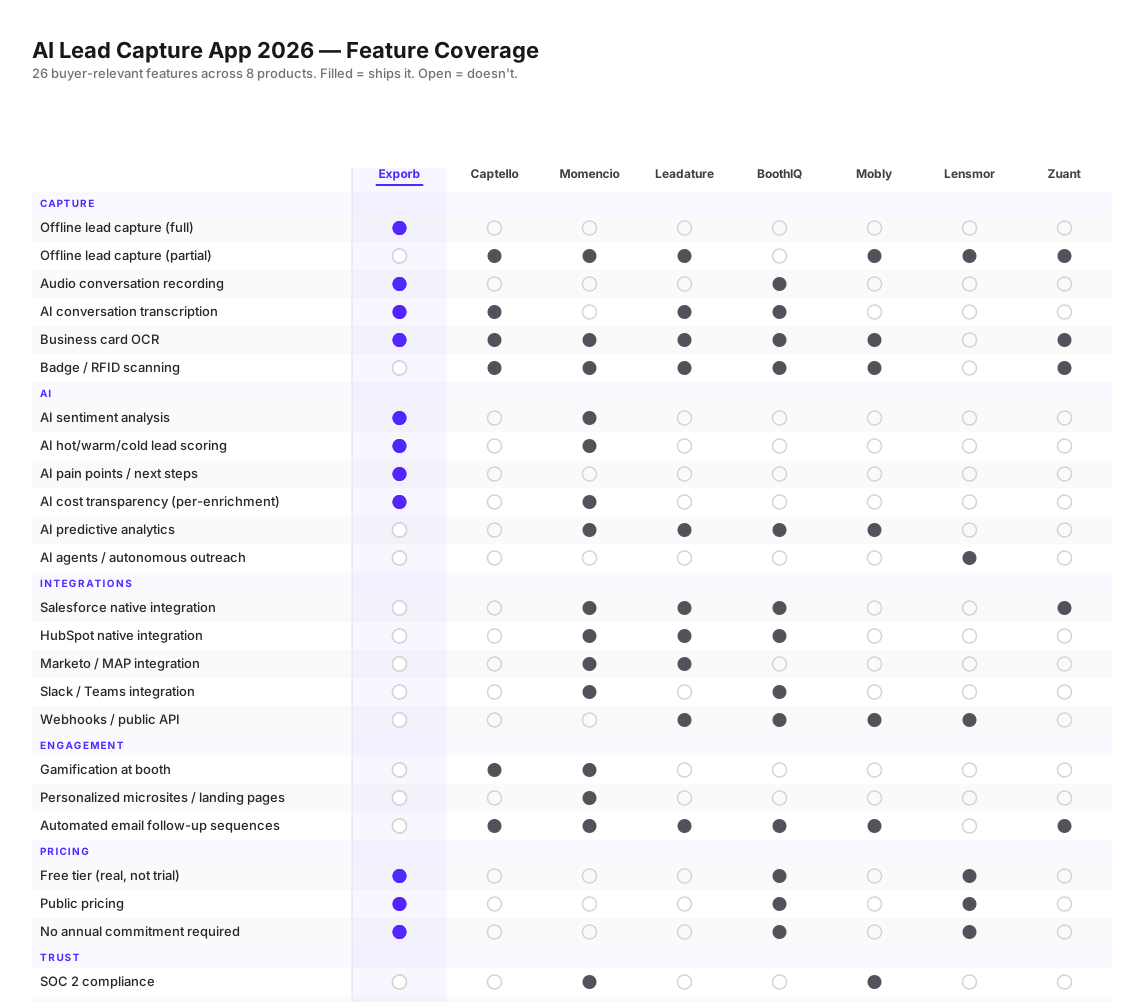
A few things jump out of that grid.
- Exporb is the only tool with a filled cell next to "AI pain points / next steps." That's the conversation-intelligence wedge. Backtrack captures audio retroactively but doesn't extract structured pain points or next steps — the rest of the category doesn't capture the audio at all.
- The integration row is mostly empty for Exporb. That's the honest gap. BoothIQ, Momencio, and Leadature are deep there.
- The bottom three rows on pricing are inverted. Free tier, public pricing, no annual commitment — that's where Exporb, BoothIQ, and Lensmor cluster, and where the enterprise platforms have nothing.
- Engagement (gamification, microsites, automated email follow-up) is a Captello/Momencio strength and an Exporb gap. Worth knowing if your booth strategy depends on those.
The table version below has more nuance for the rows where "yes" needs an asterisk.
The 12 AI lead capture apps for 2026 — capability comparison
If you scan that table you'll notice something. Every single one of these apps wins on something different. There is no universal best. Anyone who tells you their tool is the best lead capture app, full stop, is selling you the tool, not solving your problem.
The right question is which buyer profile are you?
Pricing breakdown — where the category is honest and where it isn't
Here's the awkward truth about lead capture pricing in 2026: most of it isn't public.
I made phone calls and signed up for demos to get a rough sense of what the contract-based ones actually charge. Take this with appropriate skepticism. These numbers change, and your mileage will vary based on how you negotiate and how many seats you need.
Plotted on a 2x2, the category looks like this. X axis is how transparent the pricing is. Y axis is how expensive the entry is.
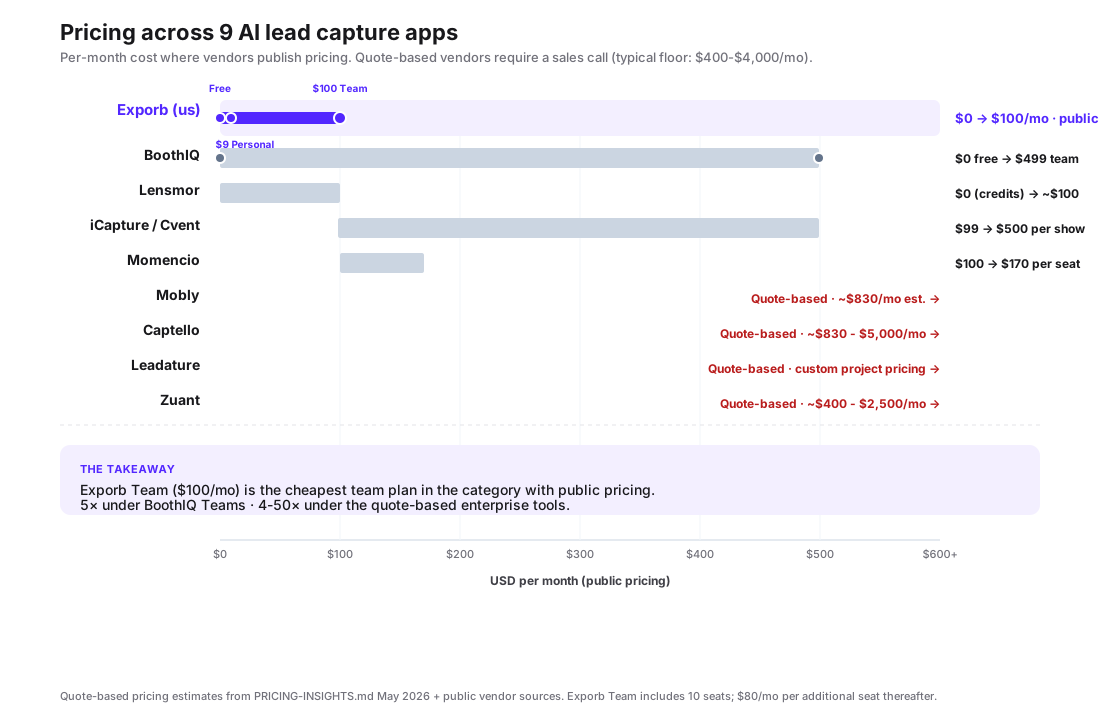
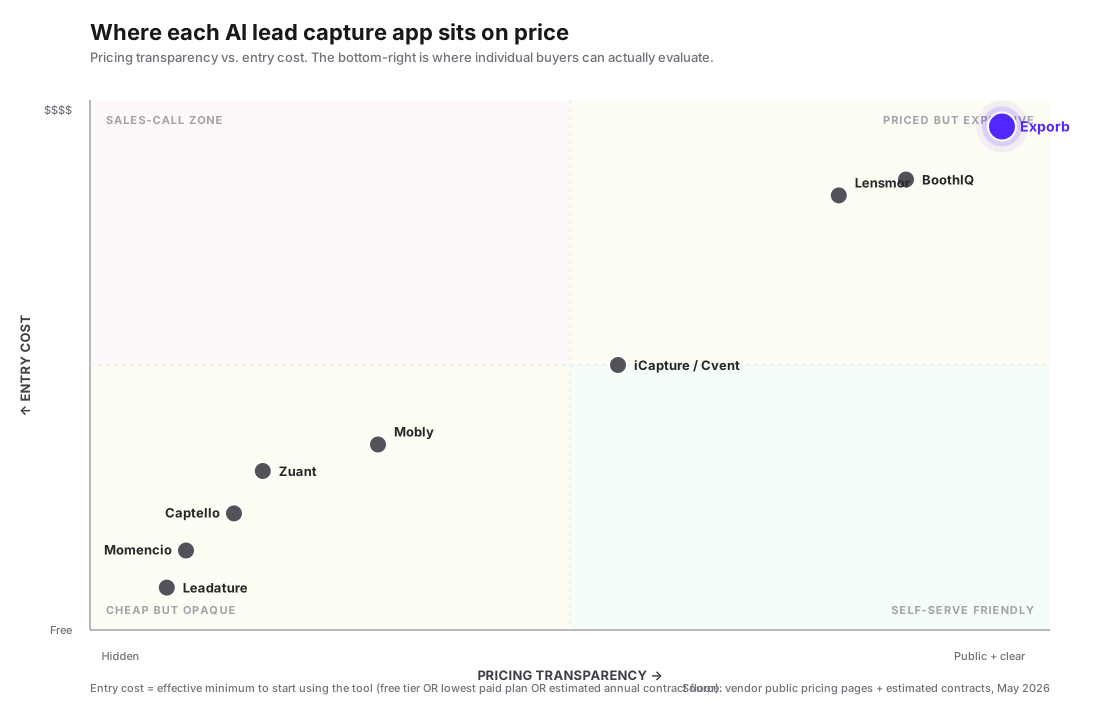
The bottom-right quadrant is where individual buyers and small teams can actually evaluate without a sales call. Four tools live there: Exporb, BoothIQ, Lensmor, and Backtrack (with a free tier, albeit with varying pricing visibility). The top-left is the sales-call-required + expensive zone, where Momencio, Leadature, Captello, Zuant, and Cvent LeadCapture cluster. Whova and Fielddrive sit in the middle: priced per event but not cheap, and tied to whatever shows your organizer partners with.
If your buying motion is "evaluate three tools this afternoon, pick one tomorrow," the whole left half of this chart is filtered out for you before you even look at features. That's a real moat at the SMB end and a real friction at the enterprise end.
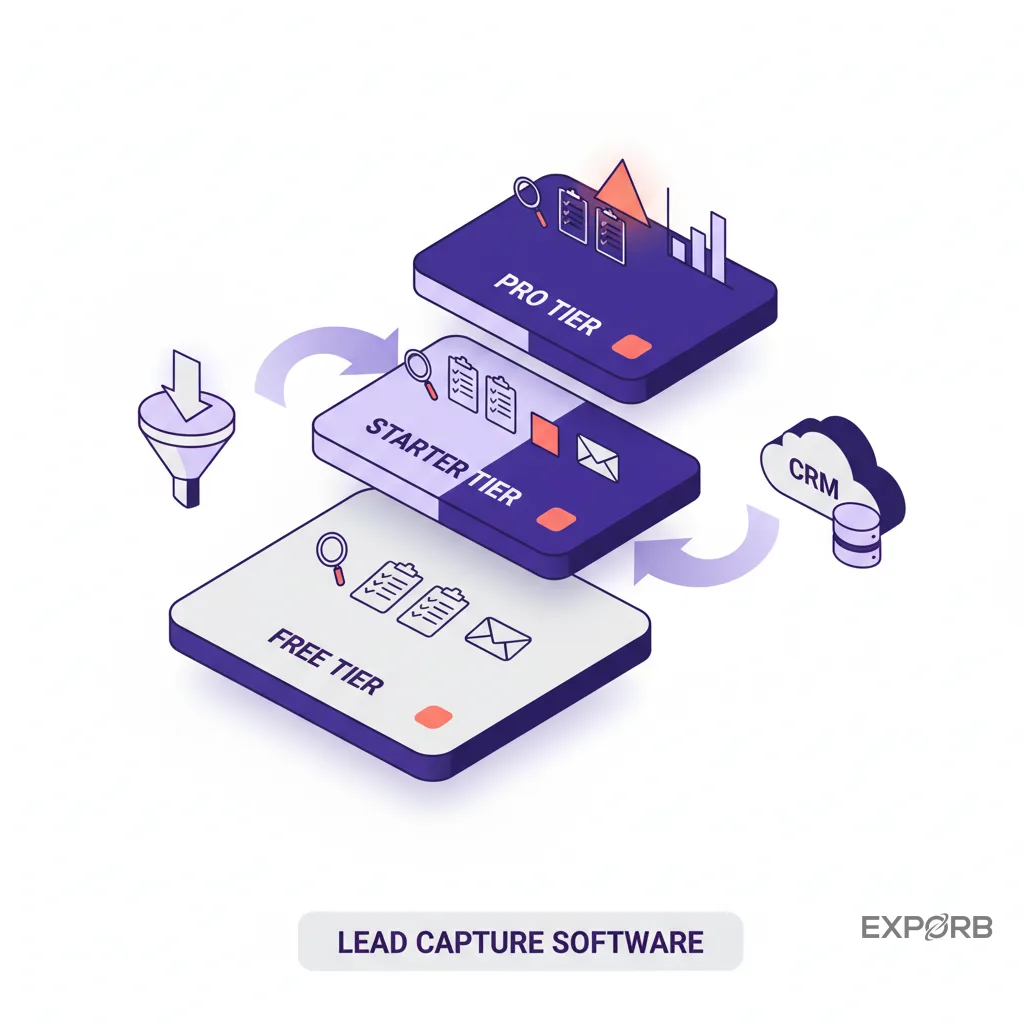
AI lead capture app pricing — public vs estimated, 2026
The pattern: the SMB end of the market is transparent, the enterprise end is not. That's not a moral judgment. Enterprise procurement is its own world and custom contracts make sense at that scale. But if you're a solo founder or a five-person team, most of this category isn't priced for you. The tools with genuinely public pricing (Exporb, BoothIQ, Lensmor, and partially Backtrack) are where you start; everyone else wants a call.
The 3 buyer personas — and what to actually pick
After looking at these tools side by side, three buyer profiles fall out cleanly. Pick the one that's closest to you.
Persona 1: Solo SDR or small sales team
You're 1–10 people. You go to 4–12 trade shows a year. You don't have a dedicated event marketing team and you're not running a 30-by-30 booth with a magician. You need a tool that works the second you sign up, costs nothing to try, and gives your reps something they actually want to use.
My honest pick: Exporb if you care about depth of conversation context (and we built it for this exact persona). BoothIQ if your priority is automatic Salesforce/HubSpot sync and you'd rather not manage CSV exports. Lensmor if you want help before the show, figuring out who'll be there and automating outreach to book meetings. Backtrack if you want the conversation captured without trusting your rep to hit record.
Don't pick: Captello, Momencio, Leadature, Zuant, Cvent LeadCapture, Whova, Fielddrive. You'll spend half a sales cycle on procurement, sign a 12-month minimum (or commit to per-event licensing), and use 5% of the platform.
Persona 2: Mid-market exhibitor with a CRM
You're 50–500 people. You have Salesforce or HubSpot. You go to maybe 15 shows a year with a few reps each. You have a marketing ops person who'd actually use the integrations. You want clean data flowing into your CRM with some automation, but you're not running a stadium-scale activation.
My honest pick: BoothIQ if you want native CRM and don't need depth of conversation analysis. Mobly if you have a B2B GTM team that wants pipeline measurement and rep-level performance analytics. Momencio if your sales process leans heavily on post-event behavior tracking and microsite engagement. Fielddrive if your target shows run on fielddrive's official badge system and you want the qualification workflow built in.
Worth a look: Exporb. Even without native CRM integration, the CSV export imports cleanly and the conversation intelligence is unique to this tool. Treat it as the capture layer, and let your existing CRM and email tool be the action layer. Many teams find this is cleaner than maintaining yet another integration anyway.
Don't pick: Leadature unless you need RFID. Zuant unless you've got a niche compliance need. Cvent LeadCapture unless you're running enough shows to justify the annual commitment.
Persona 3: Enterprise event marketing org
You're 500+ people. You have a dedicated event marketing team, an agency partner, and a budget that includes "experiential booth design." You go to 30+ shows a year, including a few flagship events where the booth is the point. Lead capture is one piece of a larger event-tech stack.
My honest pick: Captello for engagement-led booths. Cvent LeadCapture if you're a Cvent-shop that wants capture wired into registration. Leadature if you need the hardware and the BANT/MEDDIC structured qualification. Momencio if your buying motion is heavily pipeline-analytics driven. Zuant if you've already got it deployed and the switching cost is high.
Worth a look: Exporb as a complement to your enterprise platform, not a replacement. Your AEs running booth conversations will love having structured AI insights from the actual conversation. Pair it with whatever's running your operations layer.
Don't pick: BoothIQ for primary, Lensmor for primary capture, Mobly if your needs are heavily logistics/operations focused. Each of those is great for narrower personas than enterprise event ops.
What's actually changing — and where this category goes next
A few patterns I'd watch over the next 12 months.
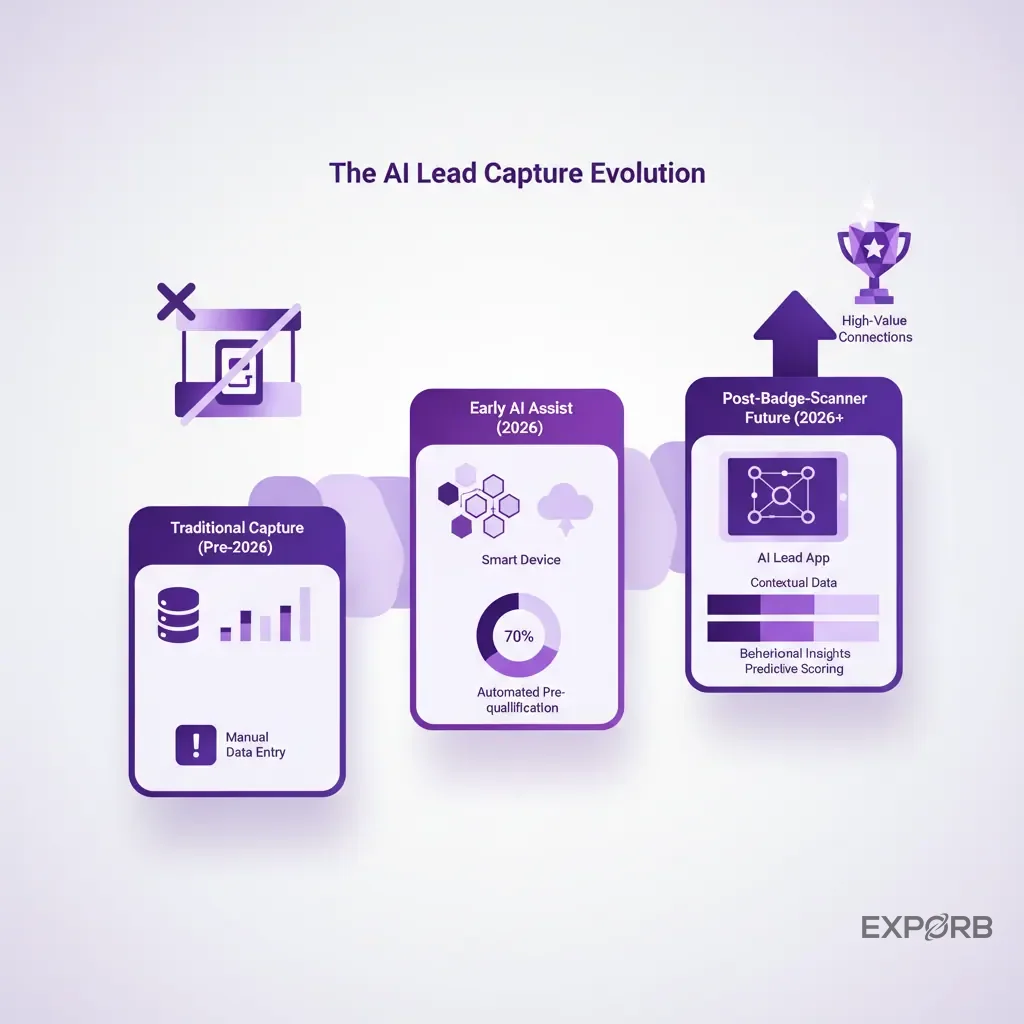
1. Conversation capture becomes table stakes. Right now Exporb is the only tool that proactively records and analyzes the full booth conversation — Backtrack records retroactively, on the rep's save. That gap is already closing. By next year, expect more of the category to ship audio capture. Audio is the real frontier. It's what badge scanners couldn't get and what AI is finally cheap enough to handle.
2. The "free for individuals" model spreads. BoothIQ already does it. Exporb does it. Lensmor does it via credits. The enterprise platforms will need to respond, probably with a freemium tier, or watch SDRs and founders adopt the bottom-up tools and bring them into deals.
3. CRM integration becomes a commodity. Right now BoothIQ wins on this. By 2027 every serious player will have it, and the differentiator moves elsewhere, probably to depth of insight per lead.
4. Badge scanning stops being a separate product. Charging $300 per device per show only works while exhibitors believe they have to use the show-provided tool. As universal apps add badge capture (ours is on the roadmap), the $300/device/show pricing evaporates — but the underlying capability stays useful. The category just absorbs it as one more input alongside cards, audio, and photos.
5. Privacy gets serious. Lensmor is already there. Exporb takes it seriously (Row-Level Security, GDPR export, audit trails). The rest will need to catch up. EU AI Act compliance and US state privacy laws are about to make sloppy data handling expensive.
The honest read on where Exporb fits in all this: we're betting on #1 (conversation capture as the core feature, not a bolt-on) and #5 (privacy as a real product feature, not a checkbox). We're behind on native CRM integrations and we know it. That's the next twelve months.
Related reading: The trade show planning template I wish I had at Canton Fair
Picking the best trade show lead capture apps for 2026
Here's how I'd actually run this evaluation if I were sitting where you're sitting. The best trade show lead capture apps aren't the ones with the flashiest marketing — they're the ones that work offline, produce structured data, and make Tuesday morning follow-ups painless.
Spend an afternoon, not a quarter. Most of these tools will take a sales call before they show you anything real. Don't book it. Start with the four that have public pricing and free trials: Exporb, BoothIQ, Lensmor, and (technically) Cvent's per-show option. Sign up, capture five mock leads each, see how the data looks in your CRM.
Test on a real bad WiFi connection. Turn off your phone's data. Walk to the basement of your building. See what still works. The tools that hold up offline are the ones that will hold up at McCormick Place during day two of CES, where the WiFi is technically present but practically nonexistent.
Look at the actual data. Forget the marketing pages. Capture a real lead, then look at what you actually got back. Is it a name and email and a "score: hot" badge with no reason? Or is it a structured profile with the pain points the prospect actually mentioned, the products they were curious about, the timeline they hinted at? That's the difference between contact data and conversation data.
Don't optimize for the booth, optimize for Tuesday morning. The whole point of capture is that on Tuesday morning, you can sit down, sort by hot, and write five highly personalized follow-ups in under 30 minutes. If the tool dumps you back into "cold lead, generic blast email" territory, you've recreated the fishbowl in software.
That's the bar.
If you want to try the offline-first conversation capture approach we built — record the booth conversation, snap the card, AI does the rest — sign up for free at exporb.com. 10 AI enrichments a month free, no credit card. Native apps and badge photo-capture are on the roadmap. The free plan stays free until we cross 1,000 users; after that, things may change. If you want to keep using something else and just steal the personas table from this article, that's also fine — every tool in this list earns its keep for the buyer we built it for.
Either way, stop taping business cards to A4 paper. The best trade show lead capture apps make that process extinct — and this comparison gives you everything you need to pick the right one for your team.
How this comparison was researched
A note on method, because "best apps" lists are a dime a dozen and most of them are affiliate walls.
Scope. Twelve tools, selected because they are the trade-show-specific lead capture players worth evaluating in 2026. We deliberately excluded CRMs (Salesforce, HubSpot, Zoho), general lead-gen tools (ZoomInfo, Apollo, Cognism), form builders (Typeform, Jotform), and generic business-card scanners (CamCard, ABBYY) — they're a different buying decision.
Data. Pricing and features were pulled from vendor pricing pages, product documentation, and App Store / Play Store listings in August 2026, cross-checked against marketplace estimates and third-party reviews. Where a vendor doesn't publish pricing, we say so and give the estimated range with a source. Treat any "~" number as an estimate — contract pricing changes with seats, shows, and negotiation.
Bias. We built Exporb — it's #1 in this list, and we say so at the top. We've tried to be honest in both directions: the rows where we lose (native CRM integrations, gamification, pre-event intelligence) are marked as losses, and the Exporb section lists its gaps in the same format as everyone else's.
Key sources:
- Cvent LeadCapture — official · iCapture — official · Cvent pricing guide
- BoothIQ — official · Lensmor — official · Mobly — official
- Captello — official · Momencio — official · Leadature — official · Zuant — official
- Backtrack — pricing · Whova — lead retrieval · Fielddrive — lead retrieval
- Marketplace pricing estimates — Blinq · Fielddrive per-event order form — EWMA
If a number on this page is wrong, tell us and we'll fix it — with a correction note, not a silent edit.
Disclaimers: Trademarks belong to their owners. We're not affiliated with any company listed here. Pricing and features come from public sources — vendors change things, so check their sites before buying. See something off? contact@exporb.com.