
What is event marketing ROI measurement in 2026?
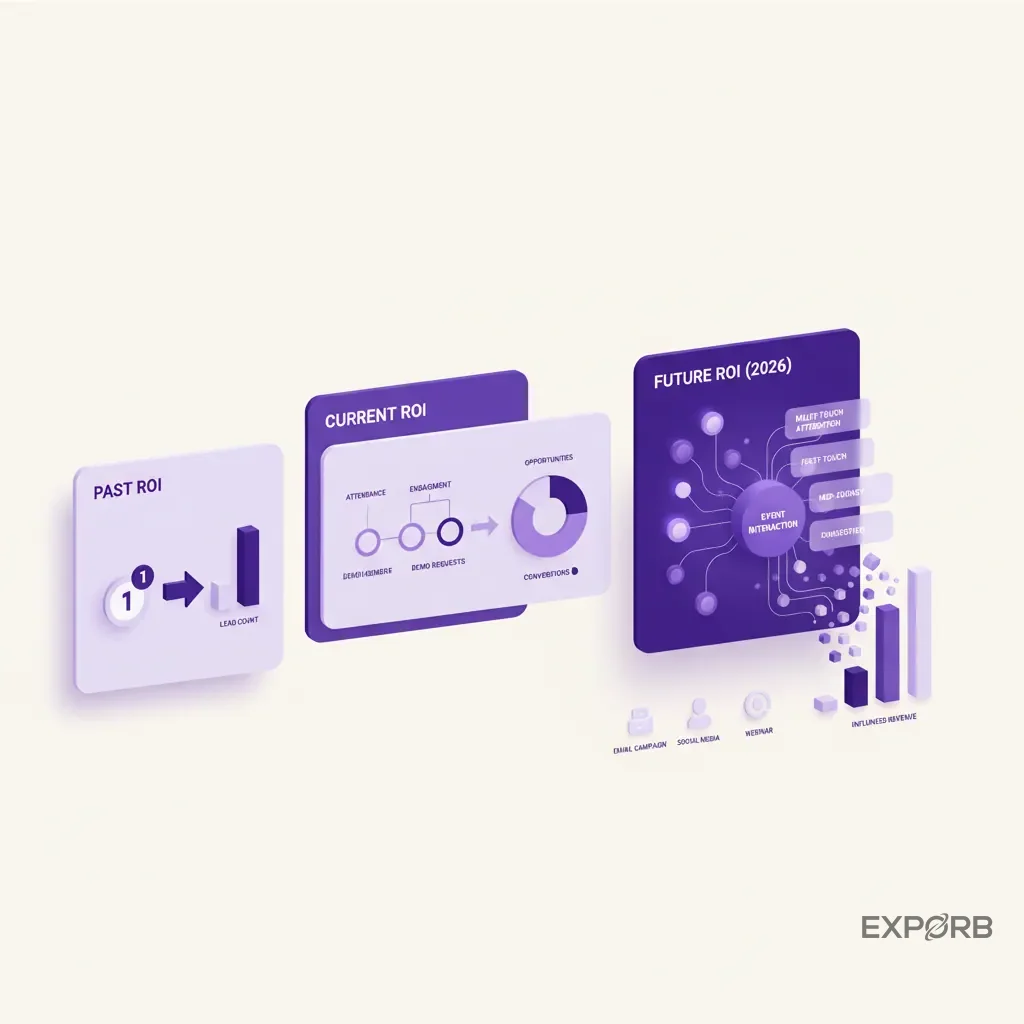
Event marketing ROI measurement isn't only about tracking money anymore. It's the full value chain: initial contact to closed deal and beyond. For years, B2B marketers judged event success by badge scans or booth traffic. Those vanity metrics won't cut it.
Not in 2026.
The shift is real and it demands numbers — quantifiable impact tied to revenue, pipeline acceleration, and first-party data. Not vibes.
Evolving beyond vanity metrics
You can't afford to walk away from a trade show with a stack of business cards and no path to revenue. That's budget down the drain. The question used to be "how many people visited our booth?" Now it's "how many opportunities did we create, and how much pipeline did we influence?"
More than 60% of event professionals say engagement and business outcomes matter more than attendance figures when evaluating event success in 2026, according to Force4Events. You're accountable for real business results. Not impressions.
The revenue influence blind spot
Here's the misconception we keep running into: exhibitors drop tens of thousands on booth design and almost nothing on lead capture. That's backwards. Your booth is the stage. Your lead capture is the script.
B2B marketers are pivoting to measure revenue influence — not just direct revenue. They're tracking how events shorten sales cycles and bump win rates. They're linking event conversations to CRM records so the pipeline doesn't go dark the moment everyone flies home. It's about seeing the event's upstream effect on the whole sales engine.
Why tracking event ROI matters more than ever
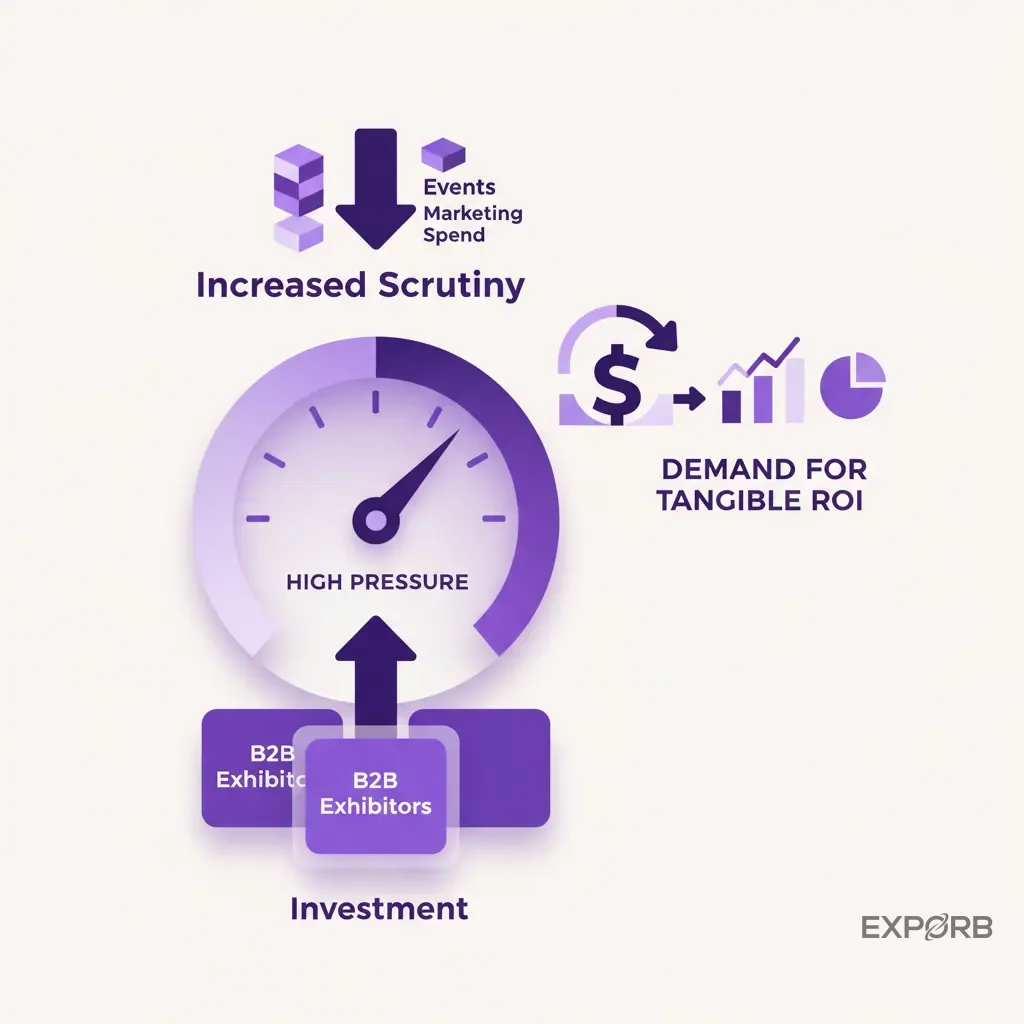
Trade shows aren't cheap. You're spending on booth space, design, travel, staff, marketing materials. Without proper event marketing ROI measurement, you're flying blind — unable to justify those expenses or get smarter for the next event. It's throwing darts in the dark.
Justifying the budget
The global event marketing industry is projected to hit roughly $36.31 billion by 2026. Digital and hybrid activations fuel that growth, and they demand smarter ROI tracking, as Launchmetrics reports. With that much capital pouring in, you need to show every dollar earned its keep.
Here's the founder's nightmare: your team meets 100 people at the booth. Monday morning, you ask what they learned. Blank stares. Without structured data, you can't tell which leads are real and which are business card collectors. No clear ROI, no budget for next year.
The pressure for hard numbers
According to The Event Planner Expo, 95% of event teams say proving event ROI is a top priority. You need granular data that shows how events move deals forward — not just a positive number, but proof that the event made a dent in your pipeline. Show that your events matter where it counts: the bottom line.
Related reading: Lead Capture Forms vs Business Cards: Why Digital Wins
How to design "measurement-ready" trade show programs
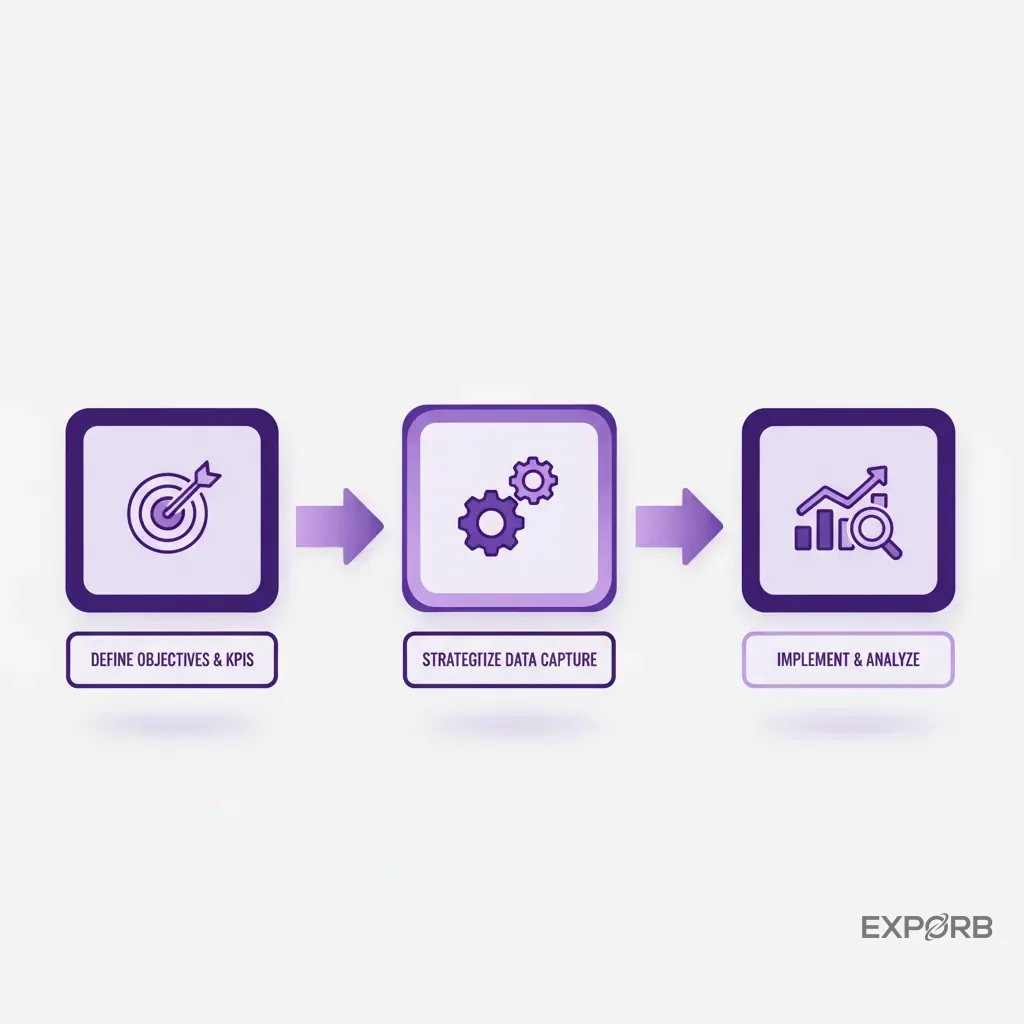
You can't measure ROI if measurement wasn't baked into the program from day one. Clear goals, a solid lead capture system, a standardized follow-up process. Most exhibitors treat lead capture as an afterthought — a badge scan here, a fishbowl of business cards there. That's why they end up with nothing to measure.
Define revenue goals and ICPs first
Before you book the booth, define success. What's your target revenue from this event? How many sales-qualified leads (SQLs) do you need? Who's your ideal customer profile (ICP)? Without these nailed down, you won't know what to measure.
A practical benchmark from Ticket Fairy: a B2B event that generates 500 SQLs from a $100,000 budget hits $200 per SQL. Set your own benchmark before you step on the show floor.
Build lead capture that actually captures something
This is where exhibitors bleed money. Fancy booth, zero lead capture investment. Badge scanning gives you a name and email. It misses intent, pain points, and next steps. You need conversation notes, specific interests, qualification details — captured at the booth, not reconstructed from memory on the flight home.
We built Exporb so your team can record conversations offline, scan business cards with AI-powered OCR, and capture photos. Back online, the AI transcribes and enriches everything — giving founders full visibility into every booth interaction. It's digital note-taking, not surveillance.
Standardize follow-up or lose the attribution
Your follow-up process directly affects whether you can attribute ROI at all. Standardize it:
- Categorize leads with consistent tags or scores
- Assign follow-up to specific reps immediately
- Personalize outreach using the context captured at the booth — no generic "nice to meet you" templates
- Track every interaction back to the event so you can trace which conversations became pipeline
Beyond leads: What are the key ROI metrics for trade shows in 2026?
Event marketing ROI measurement has evolved past "leads generated." The real picture includes financial impact, behavioral signals, and data quality. If you're only counting badge scans, you're missing most of the story.
Financial metrics: the numbers your CFO wants
Net revenue from event-sourced deals. Pipeline value of opportunities created or influenced. ROMI: (Revenue - Cost) / Cost. CAC reduction: how much less it costs to acquire a customer through events versus other channels.
Behavioral indicators: what happens next
Financial metrics tell you what already happened. Behavioral indicators hint at what's coming:
- Sales cycle length: did event-sourced leads close faster?
- Win rate: did event-sourced opportunities convert at a higher rate than your baseline?
- Engagement scores: how locked-in were attendees with your booth and staff? An NPS of 50+ is the "excellent" threshold for event satisfaction and a leading indicator of long-term ROI, according to Ticket Fairy.
- Brand sentiment: any shift in how the market perceives you post-event?
The five layers of event ROI
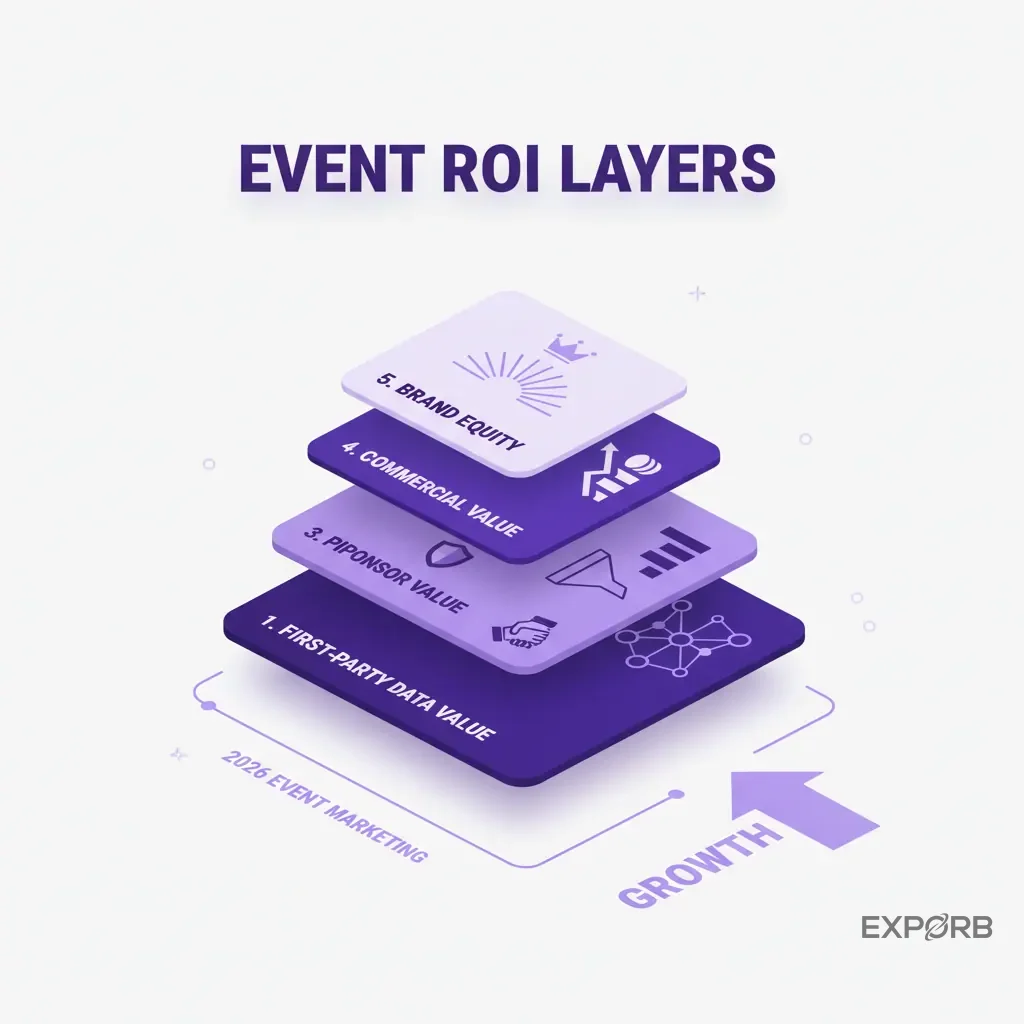
Modern ROI frameworks track five layers: commercial return, pipeline impact, attendee value, sponsor value, and first-party data value. This goes well past revenue-only calculations, as Eventrize recommends. Don't stop at one or two metrics.
The Five Layers of Event ROI in 2026
How to calculate financial ROI for trade shows
Calculating financial ROI goes past subtracting costs from revenue. It's about the specific, measurable ways an event changed your pipeline. These are the numbers your finance team wants on their desk.
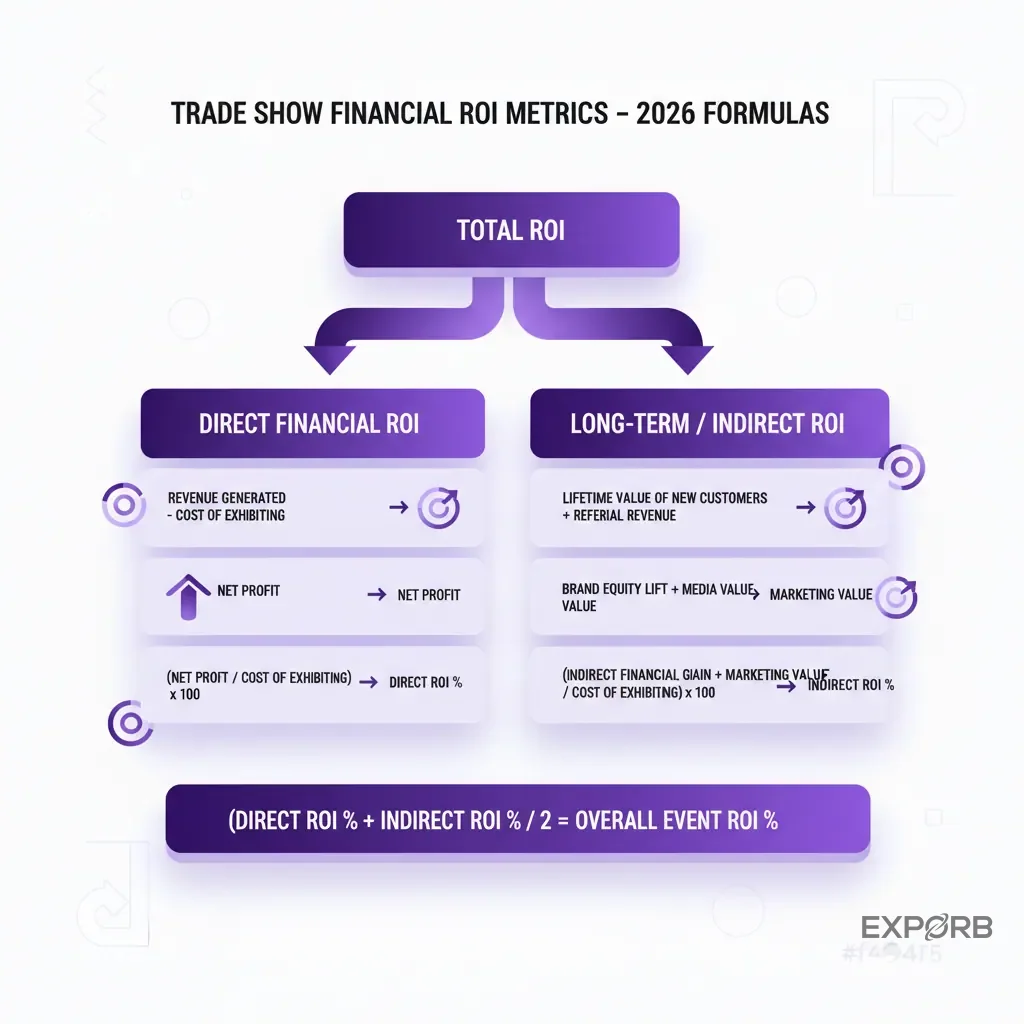
Cost per sales-qualified opportunity (CPSQO)
Formula: Total Event Cost / Number of Sales-Qualified Opportunities.
Event cost $50,000, you generated 250 SQLs — your CPSQO is $200. Compare that against your other channels. You want this number low. It tells you how efficiently you're turning event spend into real opportunities.
Revenue influenced & incremental margin
According to The Event Planner Expo, 52% of business leaders say events deliver the highest ROI of any marketing channel. The revenue isn't always from the booth. Sometimes an event nudges a deal that closes months later or expands an existing account.
Revenue Influenced: Sum of deals where the event played a real role — first touch, key meeting, demo that turned the tide. Incremental Margin: Profit from event-influenced revenue, after subtracting event costs and COGS. That's the true profitability number.
Customer acquisition cost (CAC) reduction
Events can lower your CAC by producing faster conversions and higher close rates.
Compare the average CAC for event-sourced customers against your overall average. If your normal CAC is $1,000 but event customers come in at $750, that's $250 saved per customer. Multiply by the number of customers events bring in — that's real money back in the budget.
Related reading: Trade Show Follow-Up Email Templates That Convert
First-party data ROI: How events enrich your CRM
Your CRM is where sales and marketing ops live or die. Trade shows are the richest channel for feeding it first-party data you can't get anywhere else — not just new contacts, but context that makes your existing data smarter.
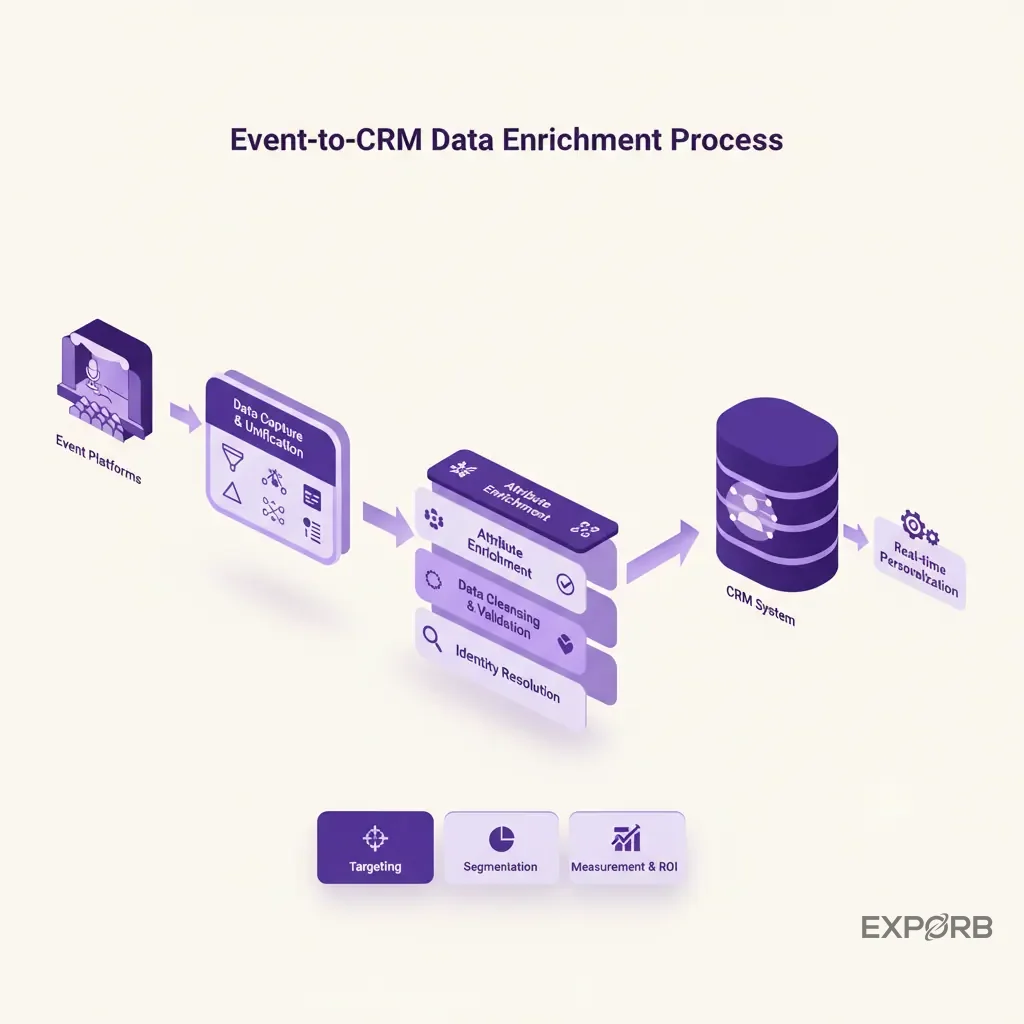
Capturing data that badge scanners miss
Badge scanners give you a name and email. That's table stakes. What did you actually talk about? What are their pain points? What problem are they trying to solve right now? That context is what turns a lead into a deal.
We built Exporb to capture exactly that. Your team records conversations, scans business cards with AI-powered OCR, and adds photos — all offline, because trade show Wi-Fi is reliably terrible. Once you're back online, the AI transcribes everything, pulls out key interests, pain points, opportunities, even sentiment. Think of it as a data analyst sitting in on every conversation.
Measuring data quality, not just data quantity
According to Eventrize, data quality is a strategic outcome in itself. You can measure it:
- Data completeness: what percentage of event leads have full profiles (company, role, needs, follow-up actions)?
- Data enrichment: how much useful new information did the event add — AI-generated insights, key interests, recommended next steps?
- Intent signals: how many leads showed active buying intent, captured directly from conversation analysis?
Intent signals = better follow-up
When you know a prospect's specific pain points, your follow-up stops being generic. Instead of "nice to meet you," you send an email that references their actual problem and a relevant fix. This isn't politeness. It's the difference between a single-digit response rate and a real conversation. Structured intent data lets your sales team prioritize the hot leads and skip the tire-kickers.
Accelerating pipeline: how events move deals faster
Trade shows generate leads. But their real power is speeding up deals already in your pipeline. The face-to-face interaction compresses weeks of email into a single conversation.
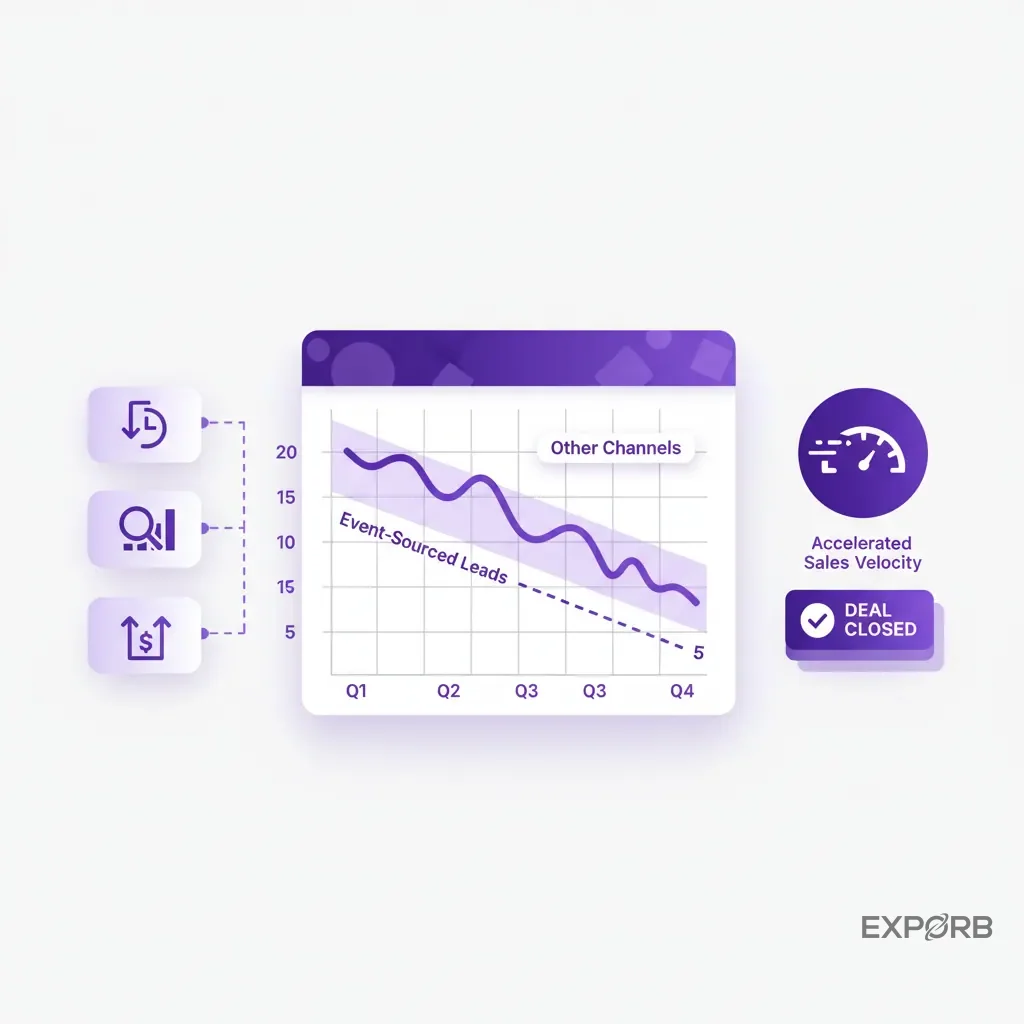
Track sales cycle reduction
How long does it take to close a cold lead versus one you met at a trade show? Track the average time from event contact to deal close for event-sourced opportunities, then compare it against your overall sales cycle. Shorter cycles mean your team closes more deals in the same window. That's direct revenue impact.
Measure win rate improvement
Do event-sourced leads convert better? They often do — you've shaken their hand, built rapport, heard their context firsthand. Calculate: deals closed / opportunities created for event-sourced leads, versus your baseline win rate. If events produce a higher percentage, that's not luck. That's the format working.
Check for larger deal sizes
Sometimes events don't just close faster — they close bigger. In-person conversations surface broader needs and bigger problems. Compare average deal size for event-sourced customers against your company average. If event deals are consistently larger, that's the kind of finding that gets your budget renewed.
Account-based event ROI: tracking impact on named accounts
For B2B companies chasing enterprise deals, account-based marketing is where the real money lives. Trade shows put you in the same room with target accounts — decision-makers you've been trying to reach for months. Measuring this impact needs a different playbook.
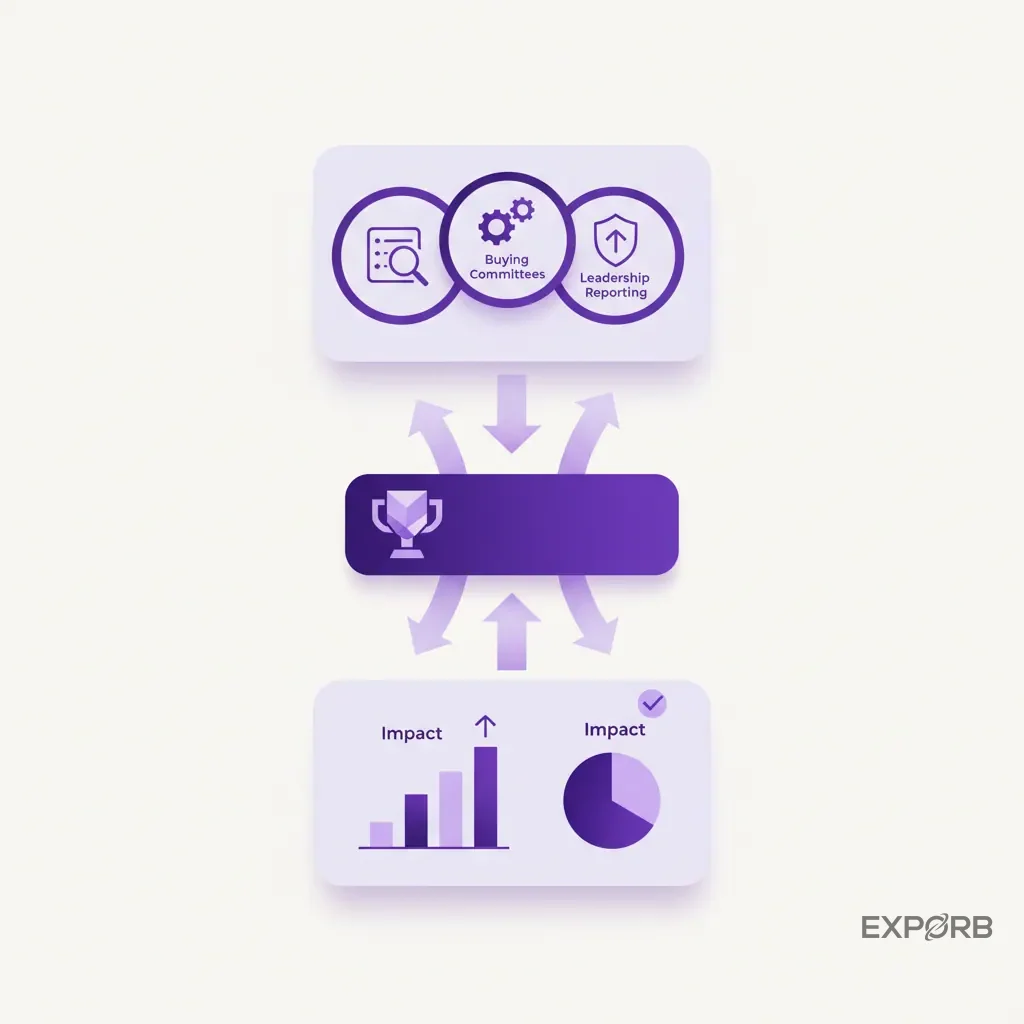
Track target account engagement
Your ABM list has specific companies you're hunting. At the show, you're not looking for "leads" — you're looking for specific people at those named accounts.
Track: how many target accounts did you engage? How many meetings did you lock in? How deep were the conversations (recorded context showing real project needs)?
Measure buying committee coverage
Enterprise sales means convincing multiple stakeholders. An event gives you a rare shot at connecting with several committee members from one account in a single day.
Track: how many unique contacts per target account? What roles — IT, finance, ops, exec? Did you find new committee members you didn't know existed? That expands your map.
Report what leadership actually cares about
Leadership wants to see events moving the needle on strategic accounts. Show them: pipeline generated within target accounts, engagement score jumps post-event, new contacts added to target account records, and acceleration of deals already in play.
Real-time optimization: adjust during the show
According to NextGen Event Co, 47% of event marketers say in-person events deliver the highest ROI of any channel. But you can't wait until post-show to know if your strategy worked. You need to watch performance during the event and pivot in real time.
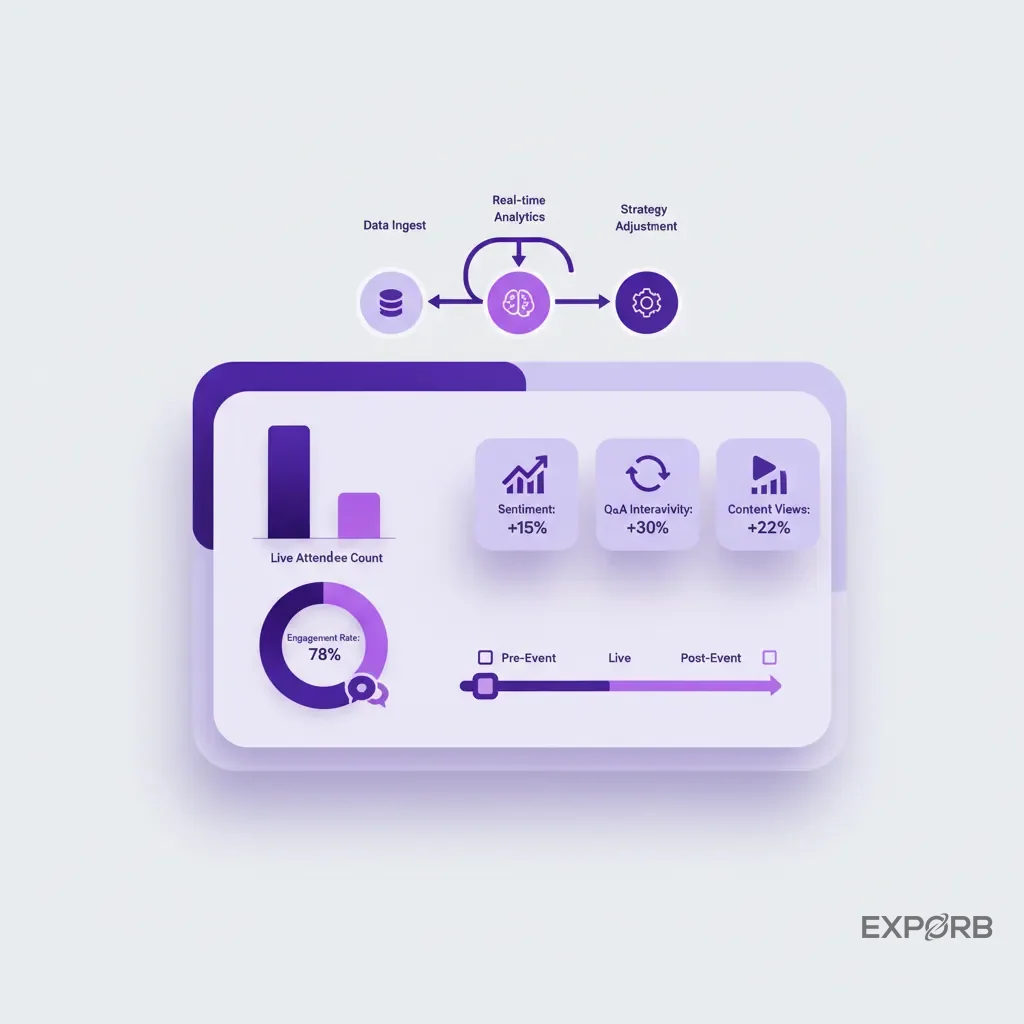
Live engagement dashboards
A dashboard that shows which booth staff are capturing quality leads, which topics are landing, which hours are dead. With Exporb, founders see conversations as they happen (once synced online). If one staff member is struggling, you coach them at lunch. If a demo isn't clicking, you rework the pitch before the afternoon rush.
On-site interventions that actually help
Real-time data means real-time fixes. Move staff to busier zones. Swap out messaging that isn't landing. If you're drowning in unqualified leads, tighten your qualifying questions. If AI analysis flags a common pain point, your whole team can start addressing it proactively.
Experiment while the floor is hot
Test different approaches during the show. Try two offers. See which qualifying questions produce better data. You're not just troubleshooting — you're finding what works best and doubling down, while the event is still happening.
Proving event impact: where to start
Proving event impact in 2026 means killing the guesswork. No more collecting business cards and hoping. You need a plan that connects your tech, your team, and your measurement framework — and you need to revisit it after every show. That's what modern event marketing ROI measurement actually looks like: a repeatable system, not a one-off calculation.
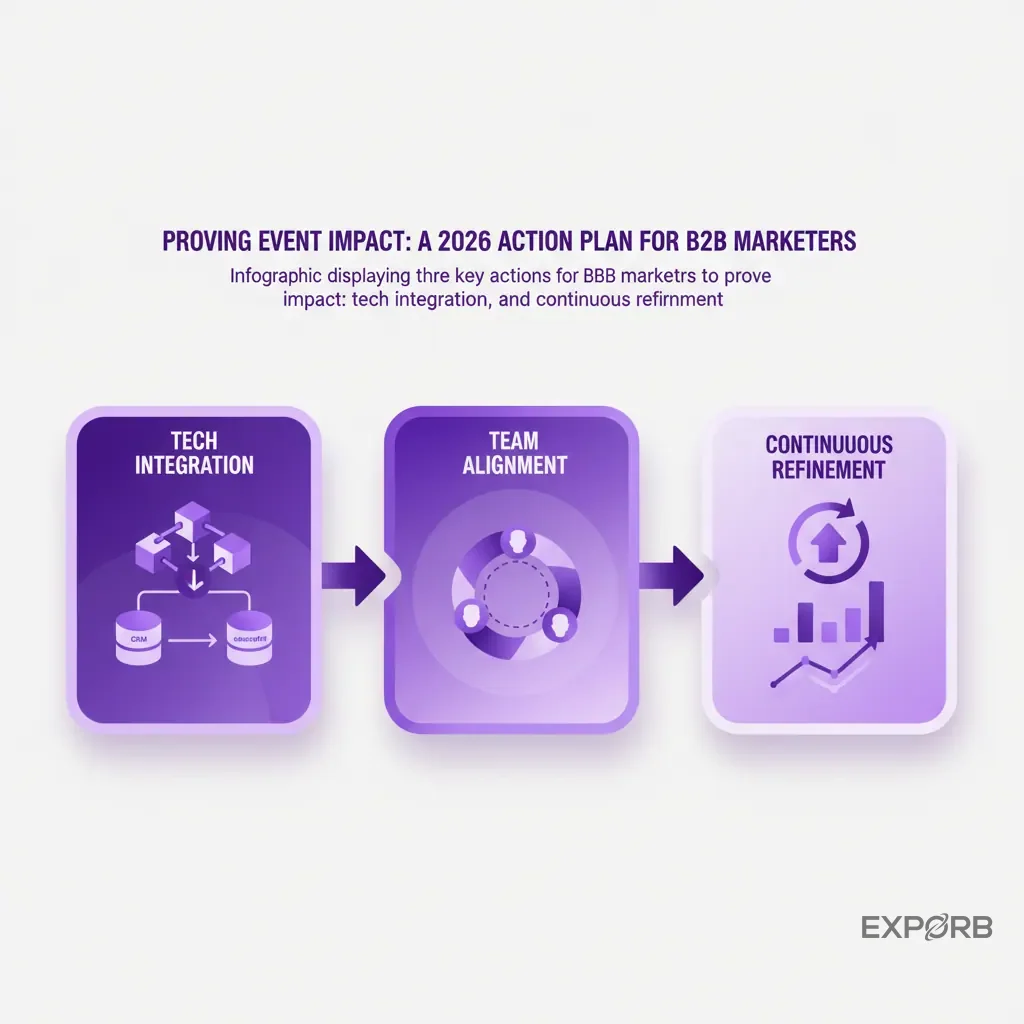
Connect your tech stack
Your event tech can't live in a silo. Your lead capture platform needs to feed your CRM and marketing automation. Exporb exports to CSV and Excel for any CRM — but the point is that data has to move. Manual imports kill attribution. When the flow is automatic, you can trace a deal from booth conversation to closed-won without spending a day in spreadsheets.
Get sales and marketing in the same room
Marketing builds the stage. Sales closes the deal. They need shared goals, a shared definition of a qualified lead, and a shared follow-up process. Pre-event briefings. Target account alignment. Post-event debriefs where both sides review results together. When sales and marketing actually talk, lead conversion improves.
Refine after every show
Event ROI isn't set-and-forget. Markets shift. Tech changes. Your goals move. After each event, review what the numbers say. What worked? What didn't? What would you change? Update your framework, brief the team, run it back. Every iteration makes your next event more measurable — and more valuable.