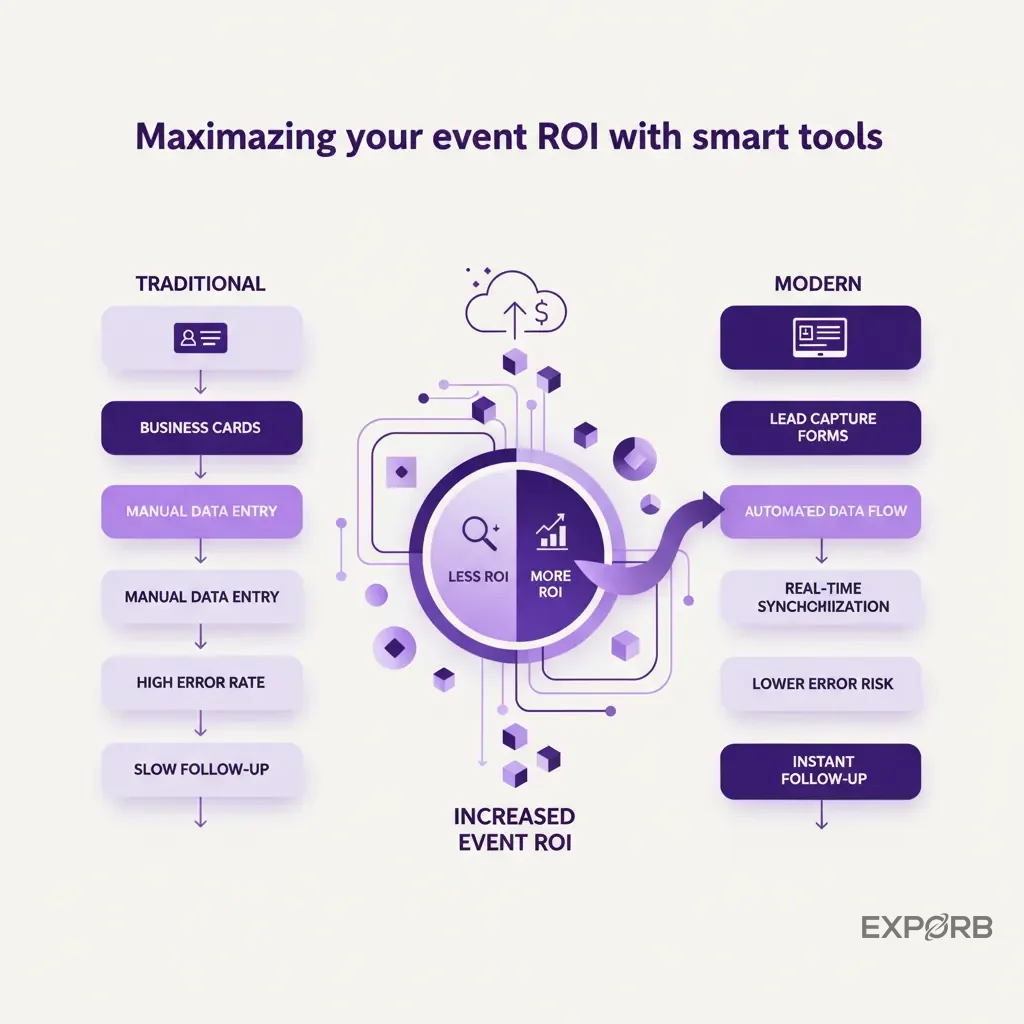
You've spent weeks on your booth. The graphics are dialed in, the team's trained, everything looks sharp. But when it comes to actually capturing what happens in those conversations — lead capture forms vs business cards — what's your plan?
Here's the uncomfortable truth: most exhibitors blow their budget on booth design and spend nothing on remembering what was said. They fall back on paper business cards — the same method that's been silently bleeding revenue for decades. You lose context, you lose accuracy, and your sales cycle stretches out before it even starts.
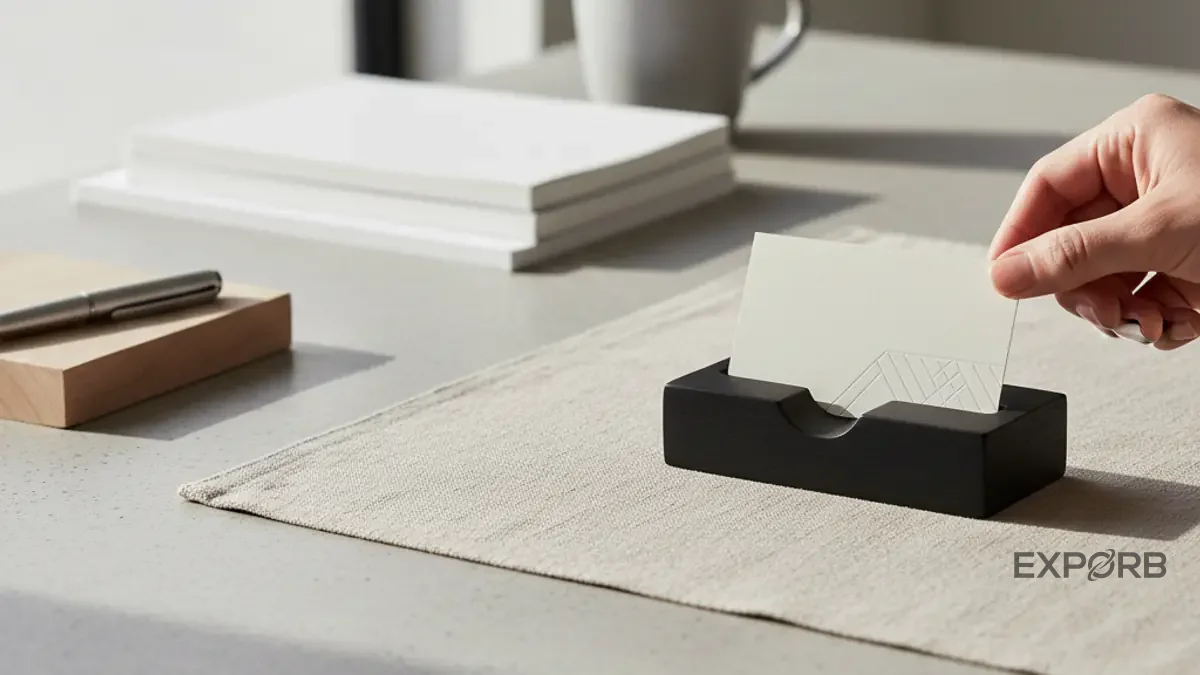
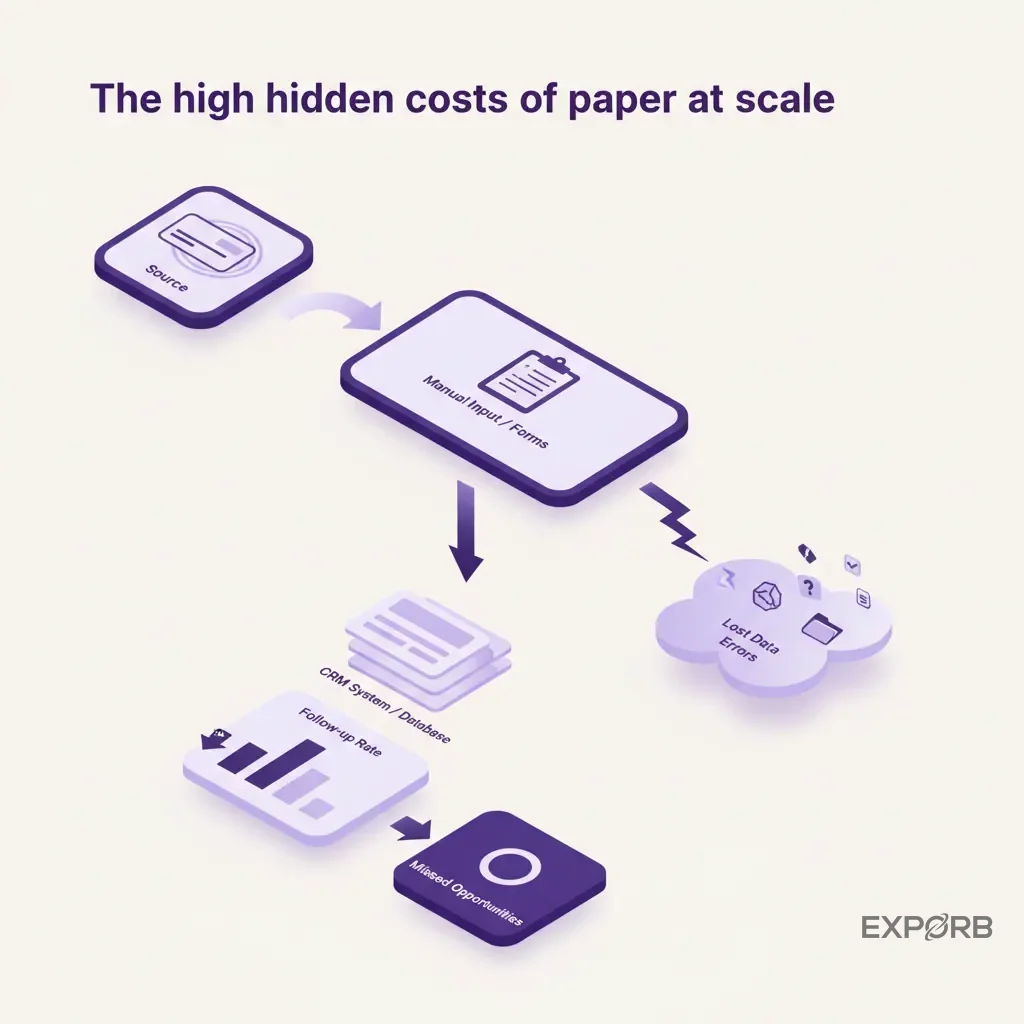
Think about that fishbowl at the end of a long show. It's not a lead list. It's a graveyard. Names go missing, notes are illegible, half the contacts never make it into your CRM. Industry data puts manual entry inaccuracies at 30-50%. That's not a margin of error — that's nearly half your investment walking out the door. And your founder? They've got no clue which conversations mattered.
Then there's the sustainability piece. In 2026, handing someone a paper card doesn't feel premium — it feels dated. You're making a statement about your brand whether you mean to or not.
But the real cost isn't the paper. It's the week your team spends after the show transcribing, correcting, and chasing down context that's already gone cold. That's a week of follow-ups you'll never get back.
Lead capture forms vs business cards: what actually works on the show floor?
This isn't about paper versus pixels. It's about guesswork versus structured data. Digital cards with embedded forms let you capture qualification info during the conversation — not try to reconstruct it from memory three days later.
A digital business card is a shareable profile that lives on your phone. Name, title, links, portfolio, a clear call to action. But the form is where the real shift happens. Instead of just handing over your contact, you present a short qualifying form right there. Your rep asks a couple of quick questions, the prospect taps through, and you walk away with structured context — not a scribbled note on the back of a card.
Tapni found that digital cards stay 100% updatable after the event. Paper doesn't. Once it's printed, it's frozen.
And it's not just contact storage. Digital cards with forms act as a data hub — every interaction becomes a structured record. Context, intent, next steps. No post-show scramble to decipher handwriting. Your team walks into Monday morning with leads already qualified.
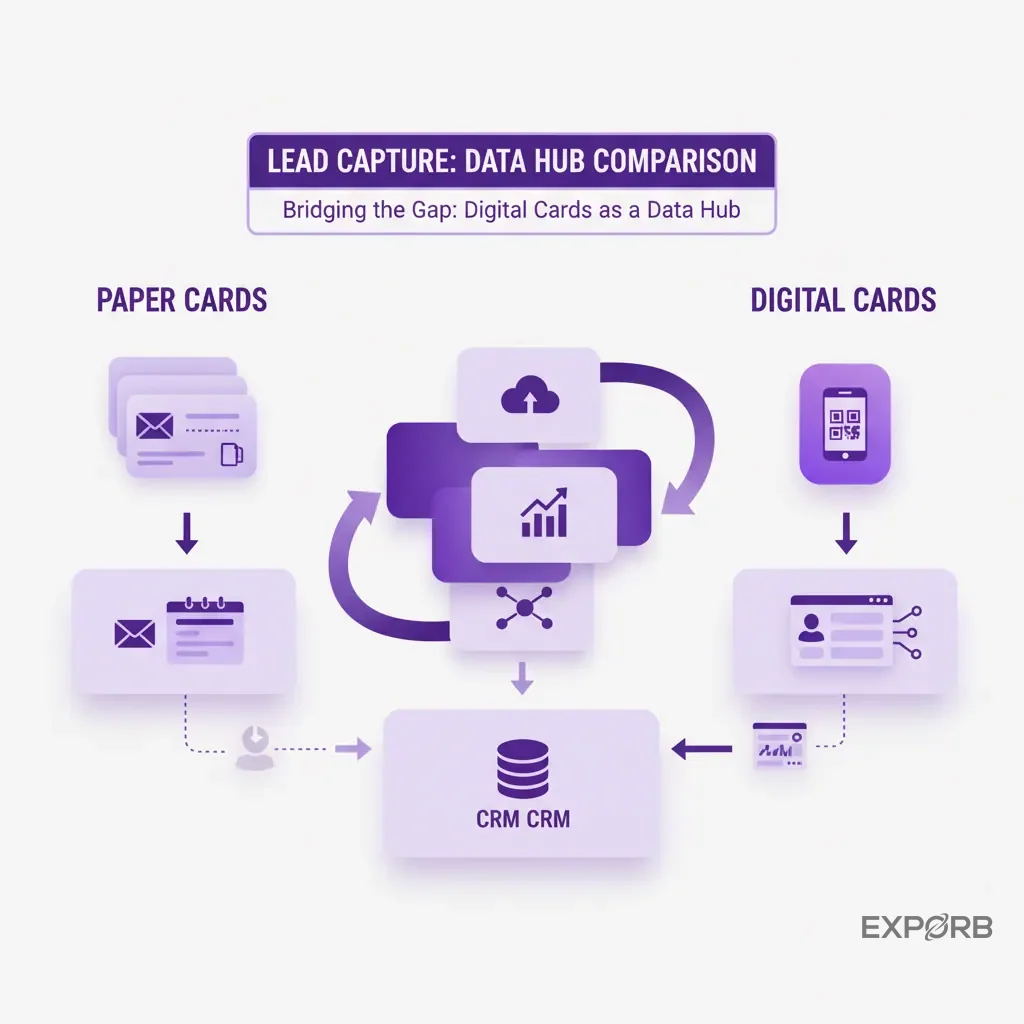
How digital cards with forms actually change your pipeline
This isn't a minor efficiency gain. It's a different way to run your booth.
When your team uses a digital form, data goes straight into a structured format. No transcription. No lost sticky notes. Tapni reports that autofill alone cuts collection time by 50% at events. Your follow-up process starts on the show floor — not Thursday afternoon when everyone's back at the office.
And the accuracy difference is real. Dropdowns and validation rules don't make typos. Digital tools reduce lead loss by up to 70% compared to paper cards. If a prospect's info changes later? Their digital profile updates. You're not stuck with an old title on a card someone handed you six months ago.
But here's what actually moves the needle: personalized follow-up. When your rep captures specific pain points right at the booth, the follow-up email writes itself. "Hey, you mentioned you're struggling with X — here's how we handle that." Not "nice to meet you." Exhibitors using lead capture apps hit 3x higher conversion rates than the fishbowl crowd.
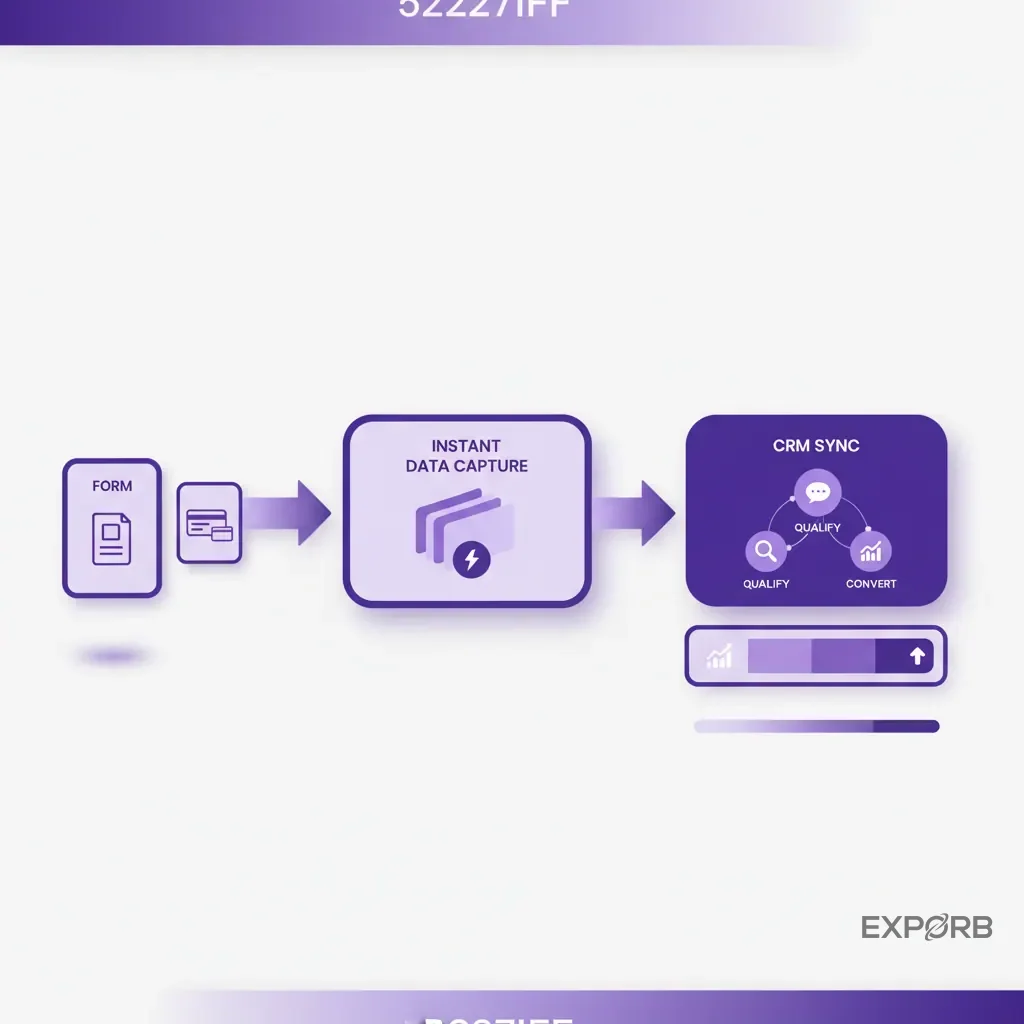
Related reading: The ultimate guide to trade show lead capture
The ROI question: paper cards vs digital forms
Paper cards feel cheap upfront. That's the trap.
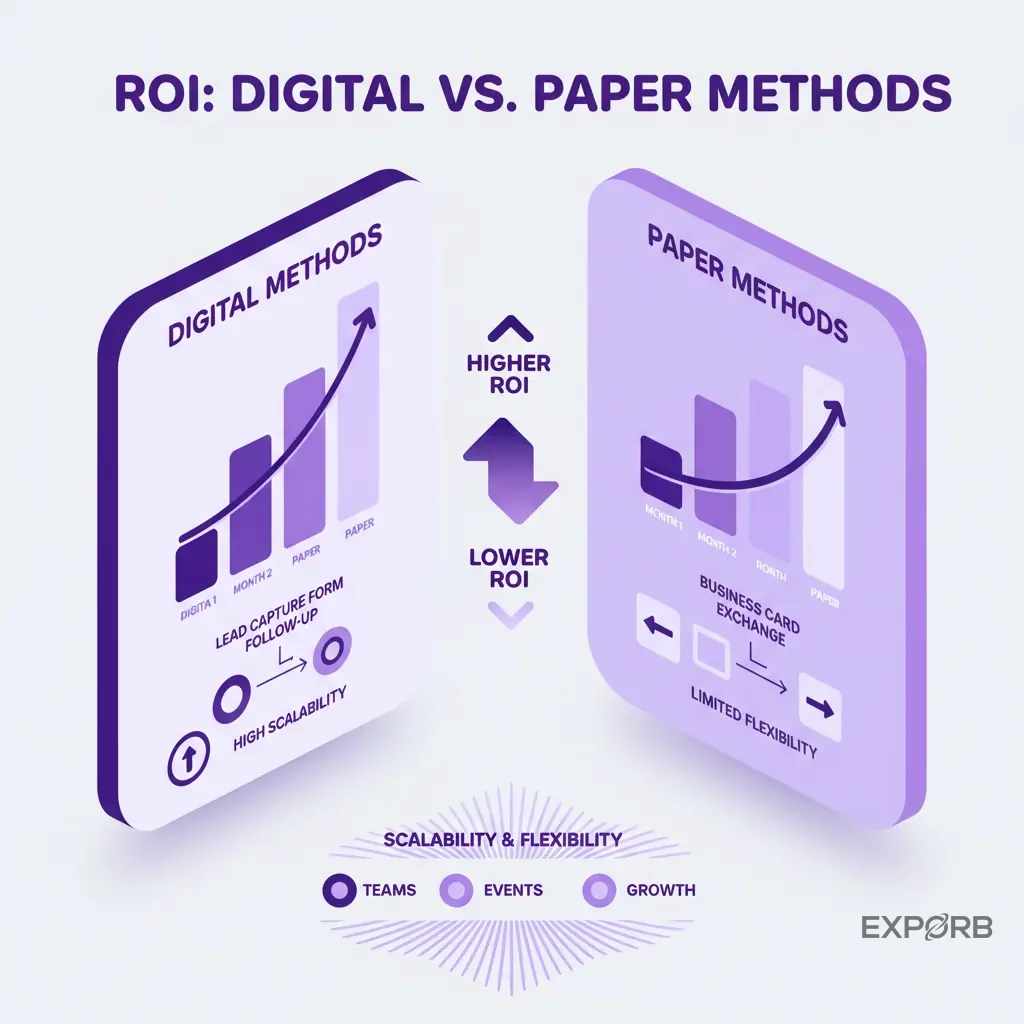
Design, printing, reprints when someone changes roles, shipping to the event — it adds up. Then you pay for it again in labor: manual entry, error correction, chasing missing fields. Blinq found that QR-based digital capture runs 40% cheaper than badge scanners for trade shows. Over a year of events? The gap is enormous.
Time matters more than the subscription fee. Your team should be talking to prospects, not hunched over a laptop transcribing business cards. Digital forms mean more conversations per day — and better ones, because you're capturing qualification data in the moment. Higher lead quality, shorter sales cycle, clearer pipeline for your founder.
And scale. Try managing paper cards for a team of 20 across five trade shows. You'll drown. Digital scales instantly: provision new team members in minutes, customize forms per event, collect everything centrally. Paper can't touch that.
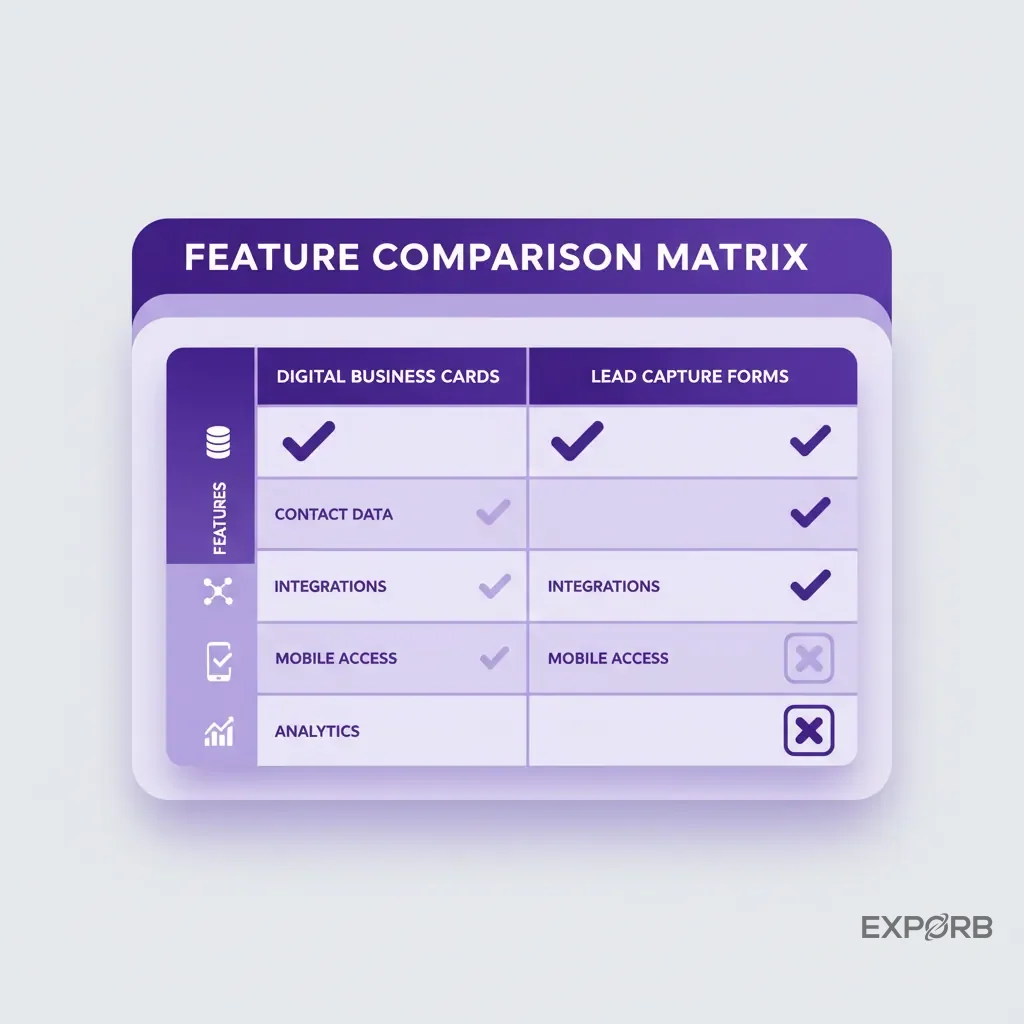
A comparison of paper business cards vs. digital lead capture forms for trade shows
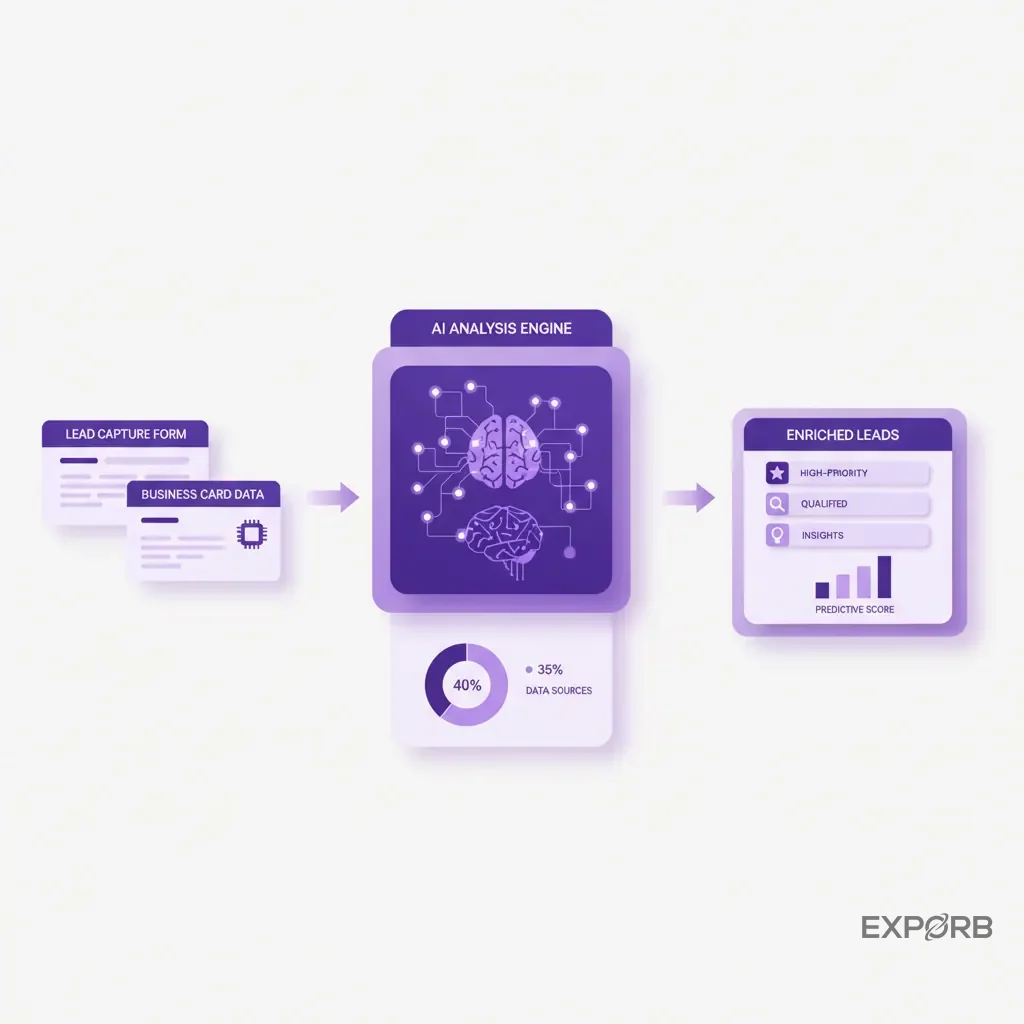
AI and wearables: what's actually changing in 2026
AI isn't a buzzword here. It's doing real work on the show floor — transcribing conversations, flagging hot leads, and saving your team from hours of manual data cleanup.
Exporb records voice notes at the booth (with consent). AI transcribes them, pulls out pain points and next steps, and builds a structured summary. Blinq found that AI-enriched leads fill missing data 85% faster before hitting the CRM. Your founder sees a real summary of every important conversation — not just a name and an email address to decode from memory.
Wearables are in the mix too. Smartwatch taps, NFC rings — a quick gesture triggers the card and form exchange. It's smoother than digging through pockets for a paper card. But honestly? The AI enrichment matters more than the form factor. A tap gets you a name. AI gets you context.
The scoring piece is happening in real time now. Based on title, company fit, and what the prospect actually said, AI scores leads during the event. Hot leads get flagged. Your team adjusts who they spend time with. Not after the show — during it.
Is this actually easy to roll out to your team?
New tech for a whole team sounds painful. It doesn't have to be.
Keep your forms short. Don't ask for everything upfront — name, company, one qualifying question, done. Add more later in follow-up. MakeForms found that single-page forms get 25% more submissions than multi-field ones. People standing in a loud exhibit hall won't fill out ten fields. Don't ask them to.
Setup on most platforms is straightforward: create profiles, build forms with drag-and-drop fields, train the team in one session, connect to your CRM. Exporb uses CSV/Excel exports — no direct CRM integration, but it works with any system you've got. Captures everything offline, syncs when you're back online. No dependency on the convention center's Wi-Fi.
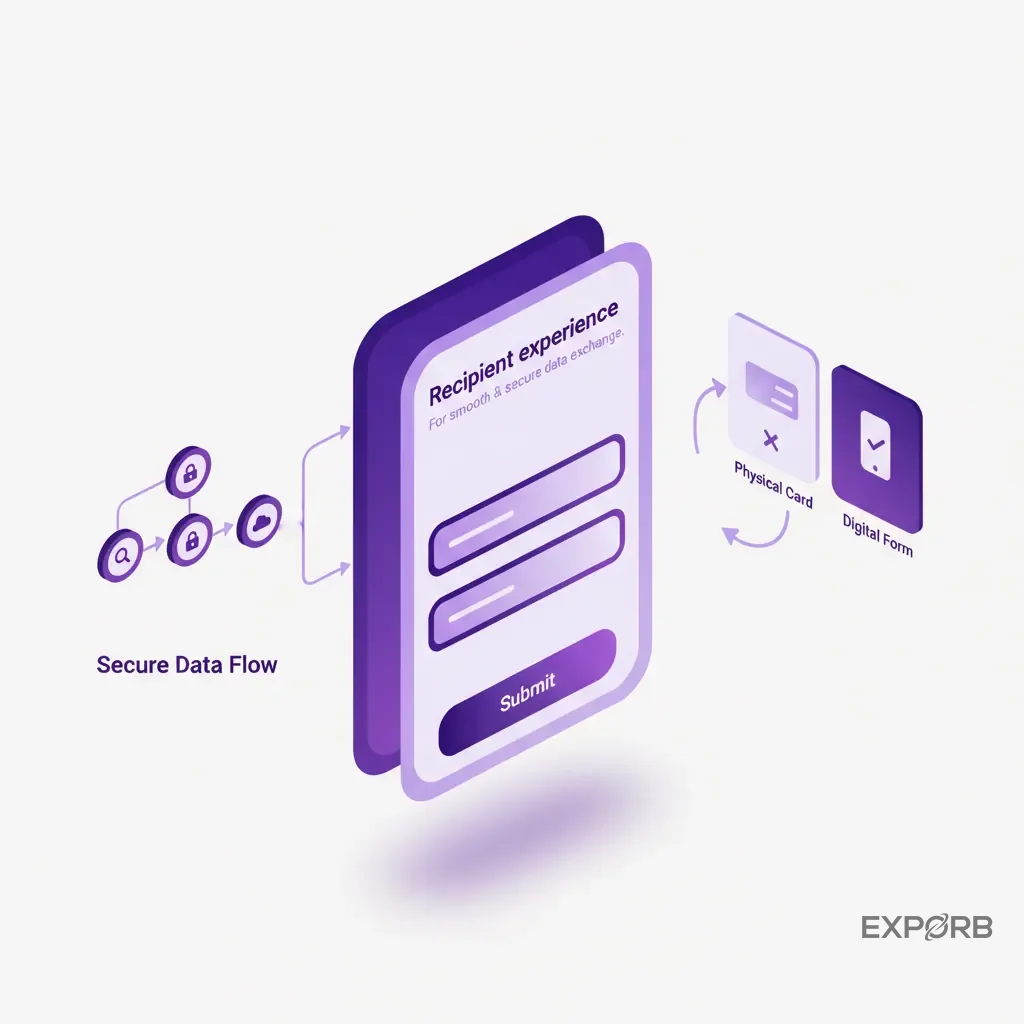
The prospect experience matters too. A clean form on their phone, two taps, done. No app install. No account creation. If you make them work for it, they won't.
Related reading: Beyond the badge: Why conversation capture beats simple scans
What happens after you capture the lead?
Capturing is step one. What you do next is where the money is.
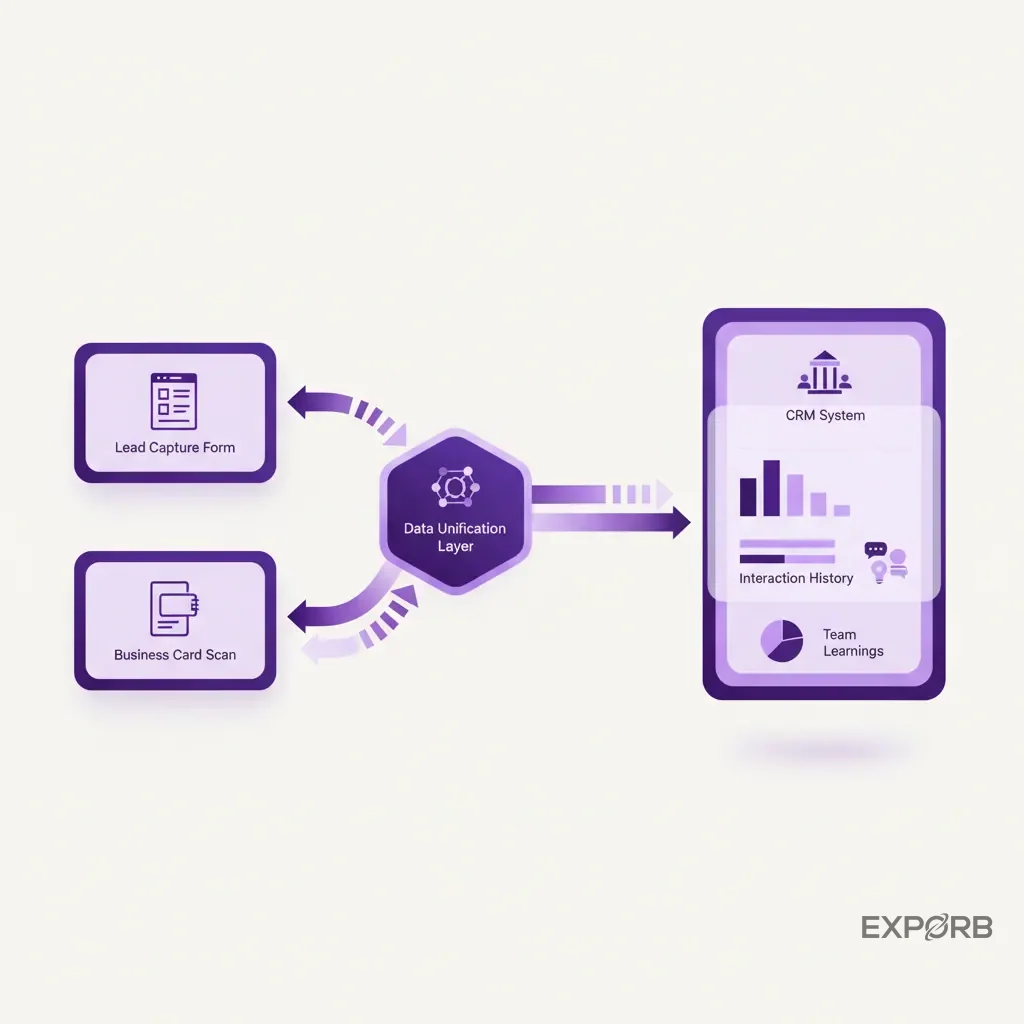
With structured data, follow-ups can trigger automatically. Hot lead from a director at a target account? Personalized email goes out before they leave the booth. Perenso found that CRM-integrated digital capture automates 80% of follow-ups. That's 80% less manual work for your team.
Exporb takes a flexible approach: clean, AI-enriched CSV/Excel exports that drop into any CRM. No direct integration lock-in. You control where the data goes, and the rich context from every conversation comes with it — not just a name and a timestamp.
And for founders: you finally see what your team learned. No more "how was the show?" followed by shrugs. Every conversation becomes a structured record — pain points, next steps, hot or cold. You know which deals are real before the team unpacks their bags.
Sustainability: more than a checkbox
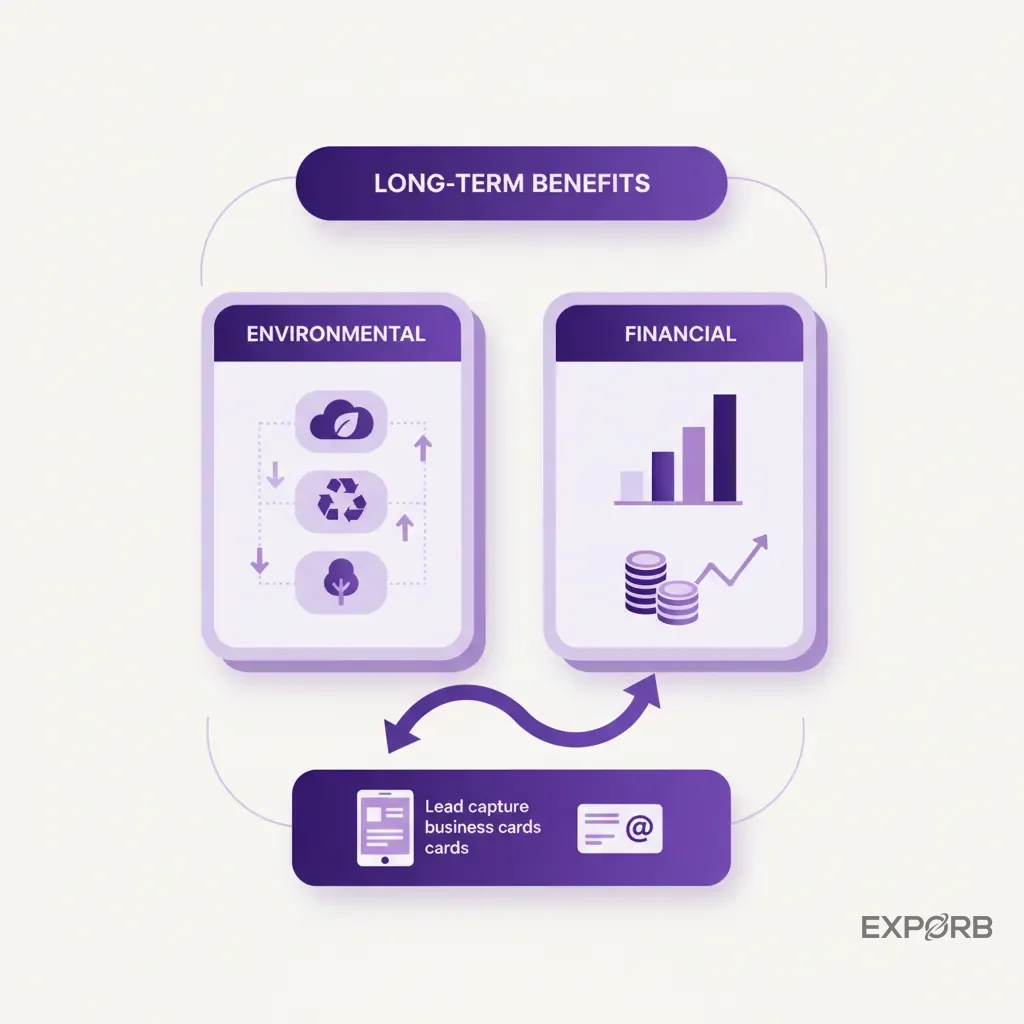
ESG isn't going away. Paperless lead capture is the easiest sustainability win your events team will ever get.
No printing. No shipping. No fishbowl full of wasted cardstock. It's not going to save the planet — but if your company has sustainability goals, this one's a layup. And prospects notice. A team that hands over a digital card looks current. A team that hands over a paper card in 2026... doesn't.
Picking the right tool for your team
There are a lot of digital lead capture tools out there. The right one depends on your team size, how many events you do, and what you're actually trying to solve.
If you need rich context — not just contact data — look for: AI-powered card scanning, voice notes with transcription, AI enrichment that pulls out pain points and next steps, offline-first capability, flexible CRM export, and team analytics so your founder can see what's happening.
We built Exporb because badge scanners capture names — not conversations. It's for founders who want to know what their teams actually learned at the show. Blinq leads G2 with 8,800+ reviews if you want a more traditional digital card platform. Pick based on whether you need a card or you need context.
Time to switch
Collecting names isn't enough anymore. Your competitors are walking out of events with structured, scored, CRM-ready leads — and you're still holding a fishbowl.
Start small. Pilot one tool with a few reps at your next event. See what the data looks like on Monday morning. Then scale.
You're spending tens of thousands on your booth. Don't let the lead capture be an afterthought — because it's the only part of the event that actually pays you back.