
You've seen it before. The generic booth greeting, the same tired product pitch for every visitor, and the follow-up email with the subject line "Nice to meet you at [Event Name]." It's an expensive way to be forgotten. Crafting personalized attendee journeys is the direct opposite of this approach. It's a complete system, far more than just a marketing buzzword, for turning passive booth traffic into qualified, engaged leads who remember who you are and what you talked about.
It's about treating every attendee as an individual with a specific problem, not as a faceless name on a badge scan list.
Beyond the buzzword: moving from tactics to a full revenue system
Personalization means more than just adding a [First Name] tag to your emails. That's table stakes. A true journey is a connected series of experiences you design for specific types of attendees. It means the pre-show email a CEO receives differs from the one an engineer gets. It means the demo you give a potential partner differs from the one you give a current customer.
And it means your follow-up is based on the actual conversation you had at the booth—not a generic template. It's a system that respects attendees' time and intelligence.
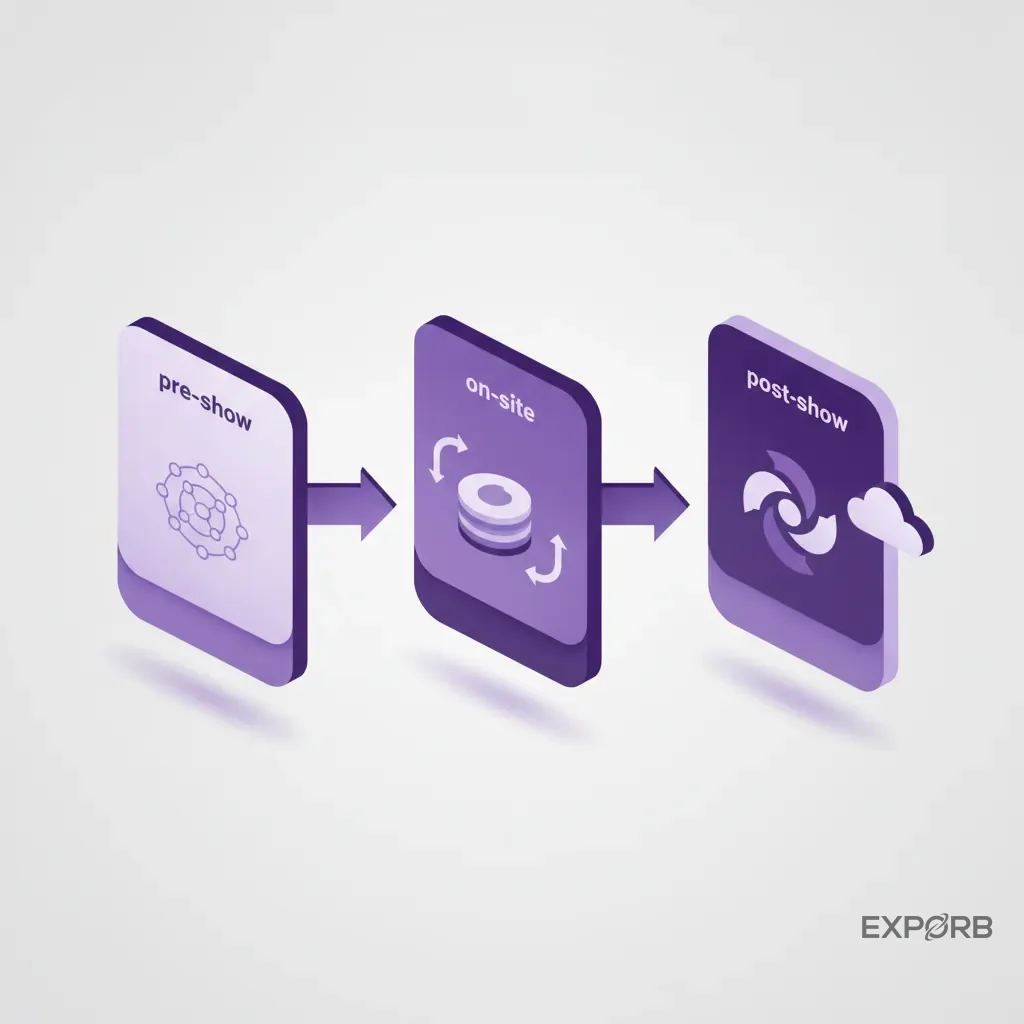
The three core phases: pre-show targeting, on-site engagement, and post-show follow-up
The journey isn't a single moment. It's a story with a beginning, a middle, and an end.
- Pre-Show: This is where you set the stage. You use targeted ads, emails, and social outreach to connect with high-value accounts you know will be at the event. You aren't just announcing your booth number; you're starting a conversation about their specific challenges.
- On-Site: The trade show floor. Here, the journey becomes real. Every interaction—from a quick check-in to a deep-dive demo—is an opportunity to learn and adapt. You aren't just pitching. Instead, you're listening, capturing context, and tailoring your message on the fly.
- Post-Show: This is where most exhibitors drop the ball. A personalized journey connects the on-site conversation directly to the follow-up. The email they receive should feel like a direct continuation of the discussion, referencing their pain points and your proposed solution.
Why one-size-fits-all events are costing you qualified leads
When you treat every attendee the same, you connect with no one. The C-level executive looking for ROI gets bored by a technical deep-dive. The end-user who needs to understand how it works is alienated by a high-level business pitch. This disconnect leads to dead ends. They walk away from your booth, and you never hear from them again.
You've spent thousands on the booth space, design, and travel. A generic approach guarantees most of that investment is wasted on conversations that go nowhere.
Why are multi-day events the highest-use personalization opportunity?
Think a one-day event is intense? A multi-day trade show is a marathon. It's also your single best chance to build a real relationship with a prospect. A single conversation can be forgotten. But a series of targeted interactions over two or three days? That's how you build trust and pipeline.
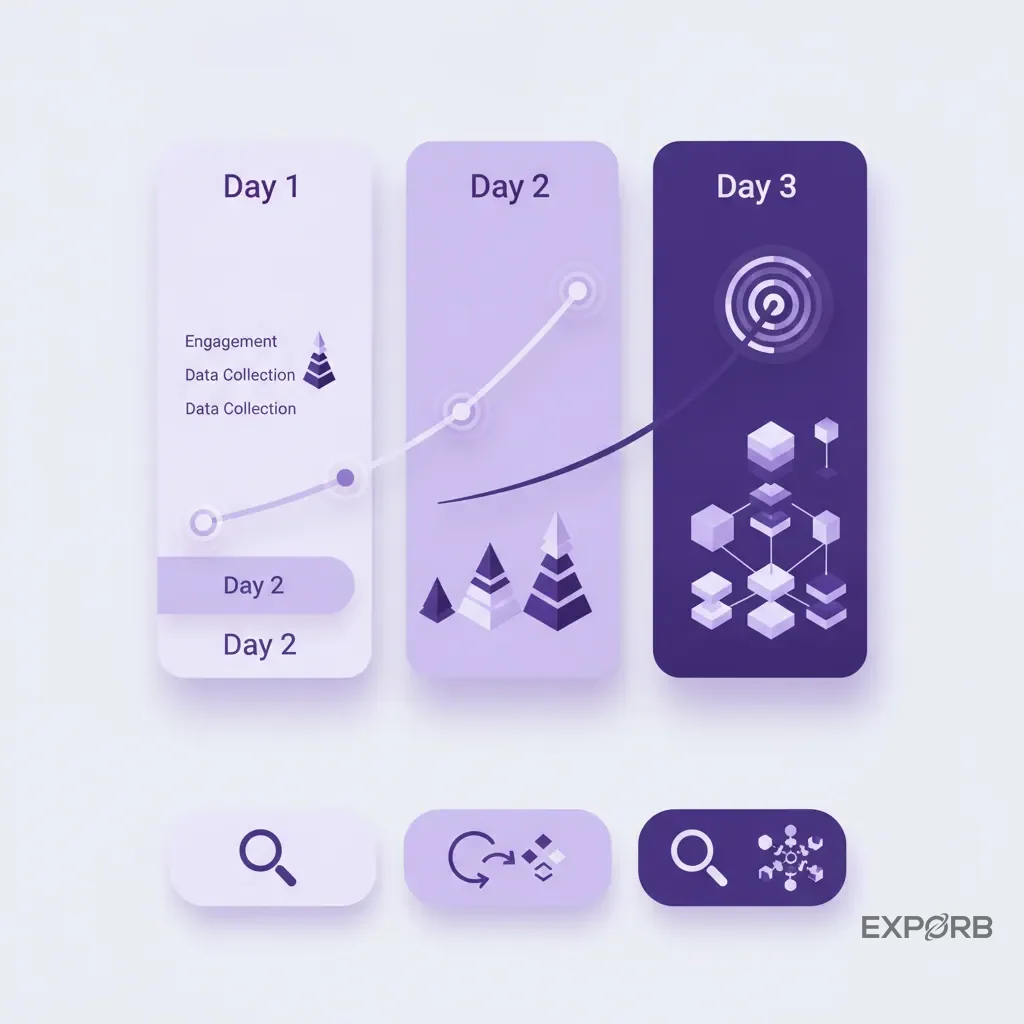
The compounding effect of daily engagement data
On Day 1, you meet a prospect and learn about their initial challenges. On Day 2, you can invite them to a specific session that addresses that exact problem. By Day 3, you can schedule a private demo to show them the solution. Each day builds on the last.
Your knowledge about them compounds. Their interest in you compounds. This is impossible to achieve with a single, fleeting touchpoint. You're building a narrative across the event, not just collecting a business card.
Misconception alert: why the event doesn't end when the hall doors close
Many teams pack up on the last day, thinking the work is done. That's a huge mistake. The "event" includes the evenings. Are there networking dinners? Happy hours? These are invaluable opportunities to continue the journey in a more relaxed setting.
A conversation at a Day 2 happy hour can be the touchpoint that turns a lukewarm lead into a hot prospect. If your team isn't capturing these informal interactions, you're losing valuable data and context.
Moving attendees from passive awareness to active consideration across the event
A multi-day event mirrors the buyer's journey itself.
- Day 1 (Awareness): They discover you. Your booth attracts them, and your team has an initial qualifying conversation.
- Day 2 (Consideration): They return with more specific questions. You provide a deeper demo or introduce them to a technical expert.
- Day 3 (Decision): You solidify next steps. You book a follow-up meeting, discuss pricing, or get their commitment for a formal evaluation.
By designing your on-site experience this way, you guide them through their decision-making process right there on the show floor.
The multi-day journey framework: a day-by-day blueprint
So how do you actually structure this? Don't just show up and hope for the best. You need a plan for each day of the event. Here's a simple framework you can adapt.
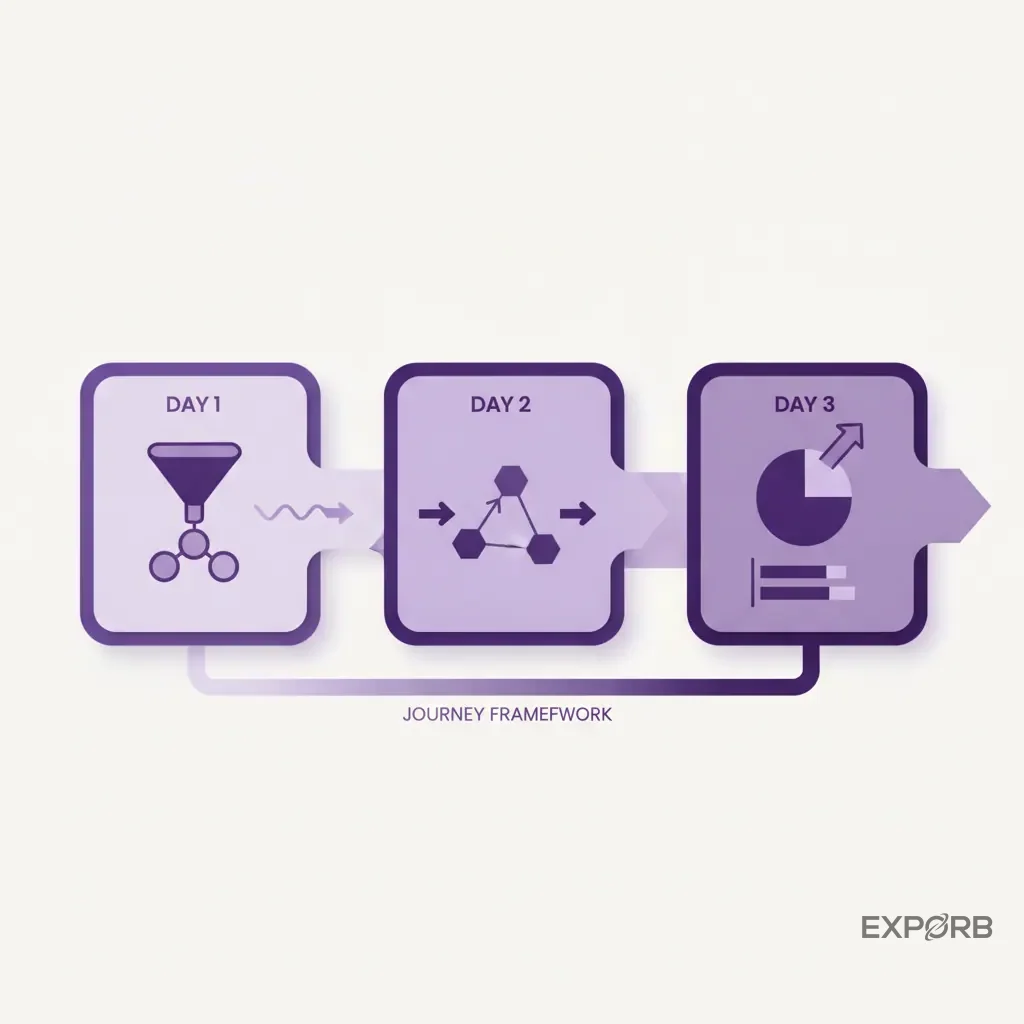
Day 1: Attract and profile with personalized check-ins and agenda recommendations
The goal for Day 1 is broad engagement and data collection. You want to meet as many relevant people as possible and quickly understand who they are and what they need.
Your team's conversations should focus on profiling. Are they a decision-maker or an end-user? What's their biggest pain point related to your industry? What sessions are they planning to attend? According to event marketing experts at LinkedIn, you can use this initial data to recommend specific sessions or speakers, immediately adding value.
Don't go for the hard sell. The first interaction is about helping them get the most out of their event experience—and learning enough to personalize their next touchpoint.
Day 2: Deepen engagement with adaptive content and targeted matchmaking
The goal for Day 2 is to use what you learned on Day 1 to create a more tailored experience. This is where the personalization really kicks in.
Did you meet a CTO who was worried about security? Have your security expert ready to talk to them. Did you meet a marketing manager struggling with lead follow-up? Show them a demo of your Marketing Automation integration.
This is also the time for targeted matchmaking. If you've partners at the event, you can make strategic introductions. "You mentioned you were struggling with X. You should really meet Jane from [Partner Company]; she's an expert on that." You become a valuable resource, not just another vendor.
Day 3: Convert interest with role-specific demos and priority meeting slots
The goal for Day 3 is conversion. People are tired, and their schedules are packed. You need to be direct and make it easy for them to take the next step.
This means offering role-specific demos. Don't give the CFO the same demo you give the IT manager. Have 15-minute versions prepared that focus on the outcomes each role cares about: ROI for the CFO, implementation and security for the IT manager.
Keep a few "priority" meeting slots open in a quieter part of your booth or a nearby cafe. When you identify a high-intent lead, you can say, "I've got a slot open in 30 minutes to discuss this properly. Can you make it?" This creates urgency and shows you value their time.
Related: [The Ultimate Trade Show lead capture Guide](/blog/trade-show-lead-capture-guide)
How do you design journey tracks for different attendee types?
You wouldn't send the same marketing email to your entire list, so why would you give the same booth experience to every visitor? The key to effective personalization is segmentation. You need to identify the key attendee personas coming to the show and build a unique journey for each.
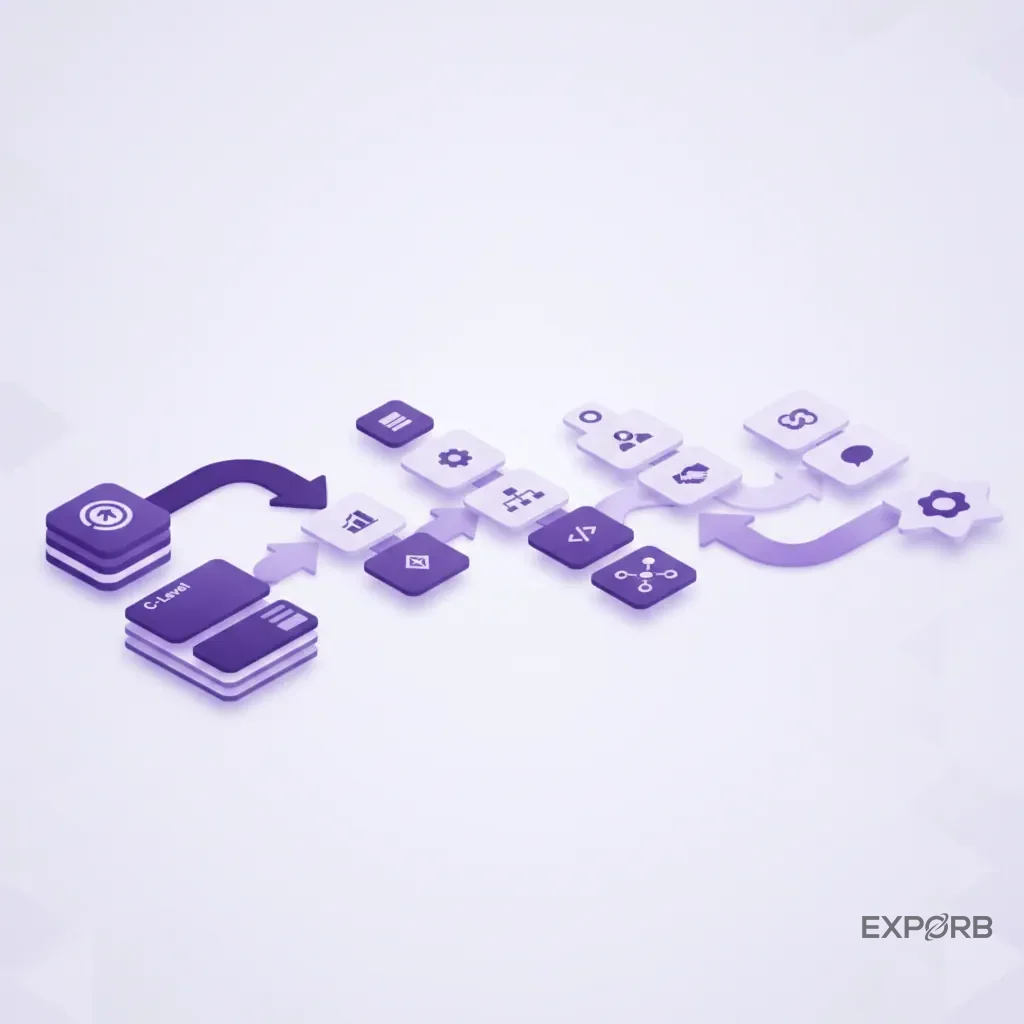
Segmenting your audience: from C-level decision-makers to technical users
Start by identifying two to four primary personas. For most B2B companies, these might be:
- The Executive (CEO, CFO, VP): They care about business outcomes—ROI, competitive advantage, and market share. Their journey should be short, strategic, and focused on results.
- The Manager (Director, Manager): They care about team efficiency, budget, and solving a specific operational problem. Their journey should be solution-focused, with clear case studies and implementation details.
- The Practitioner (Engineer, Analyst, Specialist): They care about features, functionality, and how your product works. Their journey needs to be hands-on, with deep-dive demos and access to technical experts.
- The Partner (Reseller, Consultant): They care about how you can make money together. Their journey should focus on the partner program, margins, and joint marketing opportunities.
Using dynamic registration to build rich attendee profiles from the start
The journey doesn't start at the booth. It starts the moment they register for your event, webinar, or meeting. As suggested by a LinkedIn analysis on customizing trade show experiences, you can use dynamic registration forms that ask different questions based on the attendee's role or industry.
An engineer might answer questions about their current tech stack. A CEO might share their top strategic priorities for the year. This data gives you a head start on personalization long before they set foot in the convention center.
Creating role-based micro-experiences at your booth
Your booth should be designed to support these different journeys. This doesn't mean you need four separate booths. It can be as simple as having different "stations":
- A comfortable seating area with coffee for executive conversations.
- A large monitor with a live demo environment for practitioner deep-dives.
- A high-top table with one-pagers and partner program info.
When a visitor arrives, your team's first job is to quickly identify their persona and guide them to the right experience. This simple act of triage makes your booth feel more organized and respectful of their time.
How can you use real-time data to adapt the journey mid-event?
Here's the problem with most trade shows: you spend three days talking to hundreds of people, but as a founder or manager, you've no idea what your team is actually learning. It's a black box. Conversations happen, business cards get collected, but the rich context—the pain points, the buying signals, the next steps—is lost in messy notebooks or forgotten by the time everyone gets back to the office.
How can you adapt the journey on Day 2 if you don't know what happened on Day 1? You can't.
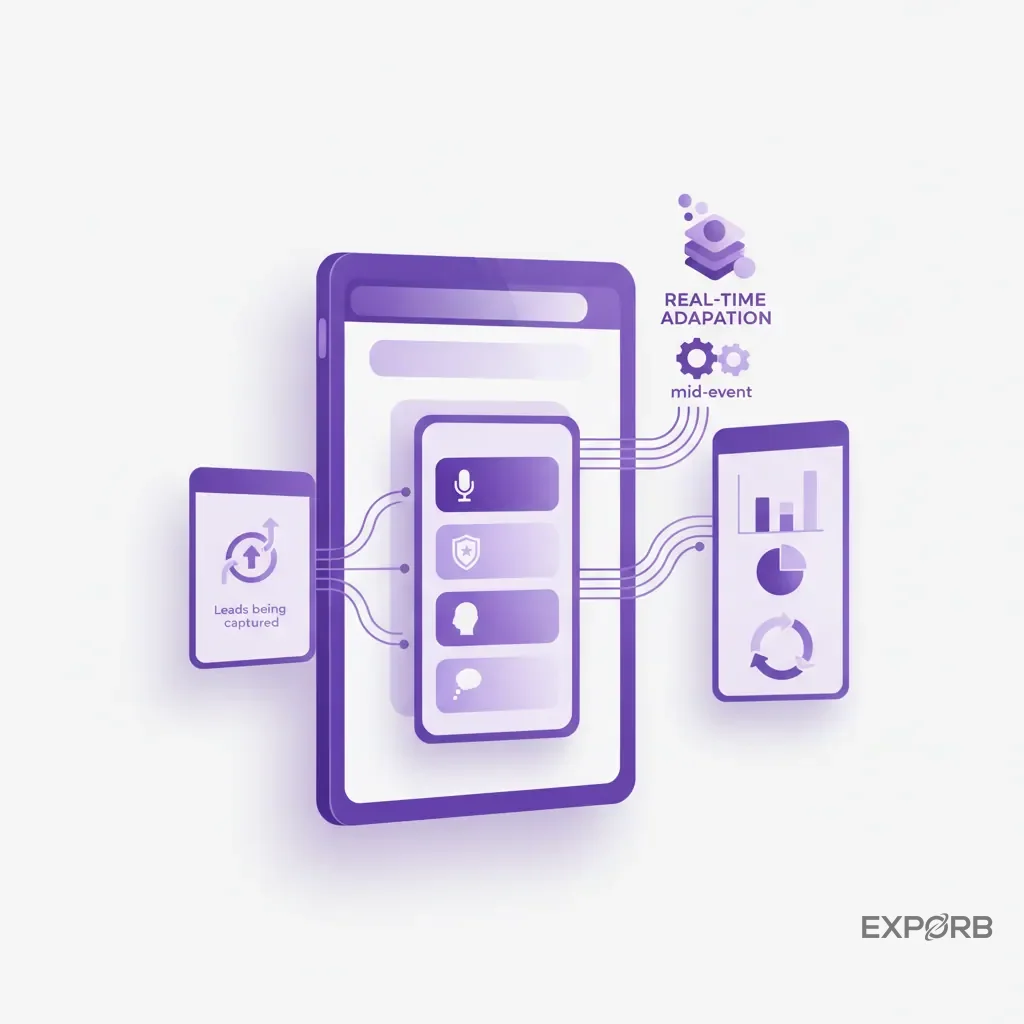
The exhibitor's pain point: the 'black box' of team conversations
Your team is on the front lines, hearing directly from prospects. They're learning which marketing messages are landing and which ones are falling flat. They're identifying unexpected use cases and hearing about new competitors.
But this intelligence rarely makes it back to leadership in time to be useful. It sits in individual notebooks or gets summarized in a messy spreadsheet a week after the event is over. By then, the opportunity to adapt your strategy mid-show is long gone.
Using an AI-powered CRM to capture and structure live insights
This is where modern tools change everything. Instead of relying on memory and paper, your team can use a tool to capture every detail right at the booth. We built Exporb so a team member can instantly scan a business card, record a quick voice note summarizing the conversation, and snap a photo of a whiteboard diagram.
This data doesn't go into a black hole. It syncs to a central dashboard in real-time. The AI transcribes the voice notes, analyzes the conversation for key topics and sentiment, and structures the data automatically. As a manager, you can see—live—who your team is talking to, what matters to them, and which leads are the hottest.
Triggering real-time alerts for high-intent booth visitors
Imagine this: a sales rep at your booth finishes a conversation with a VP from a Fortune 500 company. They record a voice note saying, "This is a hot lead, they need a solution in the next quarter, and the budget is approved."
With the right system, this can trigger an instant alert to your Head of Sales or even the CEO, who might be at the event. They can see the notes, understand the context, and immediately walk over to the prospect to introduce themselves and solidify the relationship. This is how you use real-time data to accelerate deals, not merely log contacts.
The post-event opportunity: closing the multi-day loop
The event is over. Your team is exhausted. You've a fishbowl full of business cards and a folder of random badge scans. Now what? For most companies, this is where the personalized journey grinds to a halt and the generic email blast begins.
This is the single biggest missed opportunity in Event Marketing.
You've spent three days building rapport and gathering intelligence. Using a generic follow-up now is like running 25 miles of a marathon and then walking off the course. You've to close the loop.
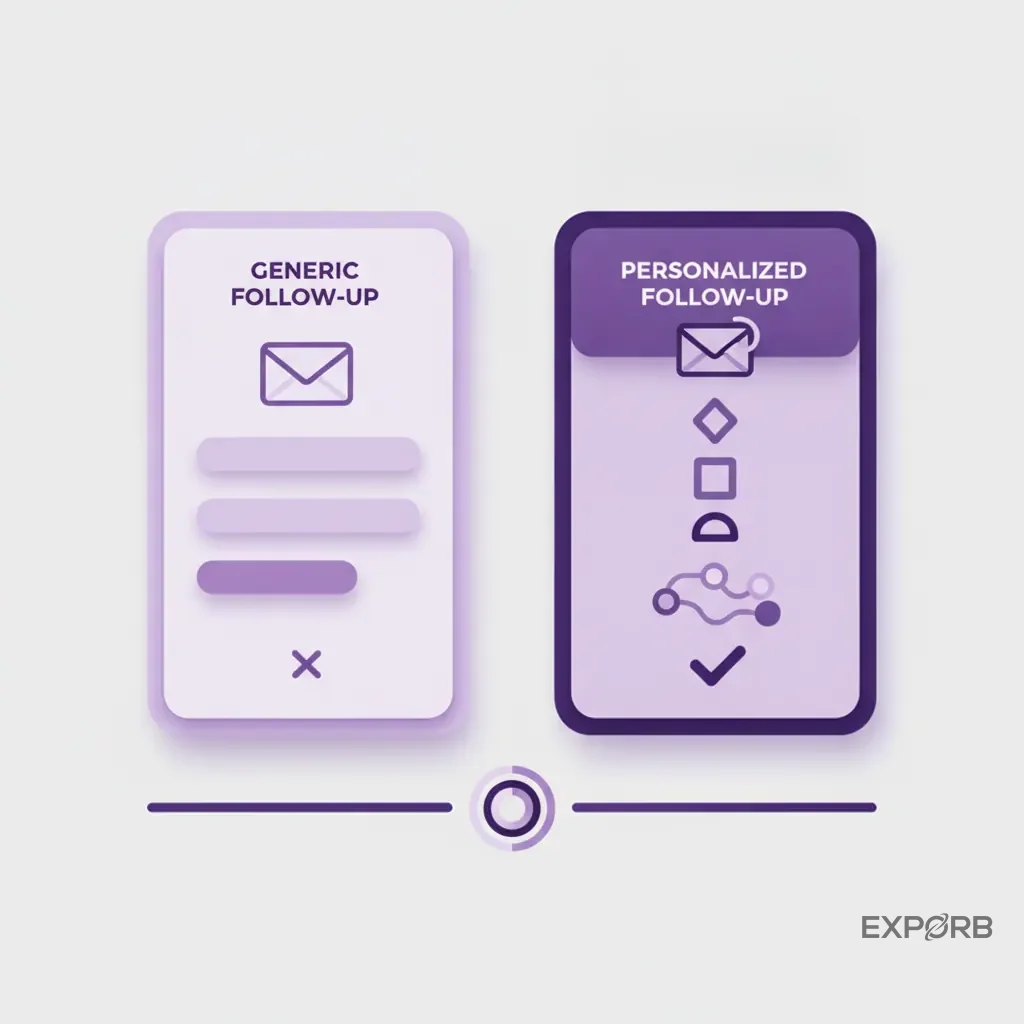
From generic email blast to behavior-triggered nurture sequences
Stop sending "It was great to meet you" emails. Instead, your follow-up should be a direct continuation of the conversation you had.
- Generic: "Thanks for stopping by our booth."
- Personalized: "Following up on our chat about your challenge with legacy system integration—I've attached the case study I mentioned that shows how we helped [Similar Company] solve that exact problem."
This is impossible if your conversation data is a bunch of messy, handwritten notes. But when you capture structured data on-site, you can trigger these personalized follow-ups instantly. Tools like Exporb can even use AI to draft the follow-up email for you based on the conversation context, so your team can send it before they even leave the booth.
Enriching lead data for faster qualification and prioritization
The name and email from a badge scan aren't enough. To prioritize effectively, you need more context. According to a [2026 Lead Generation guide from ZoomInfo](https://pipeline.zoominfo.com/marketing/trade-show-event-lead-generation), enriching leads with data like company size, industry, and tech stack is essential for effective follow-up.
Your on-site conversation provides the most valuable data of all: their specific pain points, their timeline, and their budget. Combining this first-party conversational data with third-party enrichment data gives your sales team a complete picture. They can immediately see which 10 leads they should call today versus which 100 can go into a long-term nurture sequence.
Measuring the true ROI of your personalization strategy
How do you know if your personalization efforts are working? You've to track the results. By connecting your on-site capture to your CRM, you can follow the entire journey.
You can answer critical questions like:
- Which types of attendees converted to pipeline at the highest rate?
- What were the most common pain points discussed at the booth?
- How many meetings were booked directly from personalized follow-ups?
This data feeds back into your strategy for the next event, creating a virtuous cycle of improvement. You're no longer guessing; you're making data-driven decisions.
What are the most common personalization mistakes to avoid?
Building a personalized journey sounds great in theory, but it's easy to get wrong. Many well-intentioned exhibitors make a few common mistakes that undermine their efforts. Knowing what they are is the first step to avoiding them.
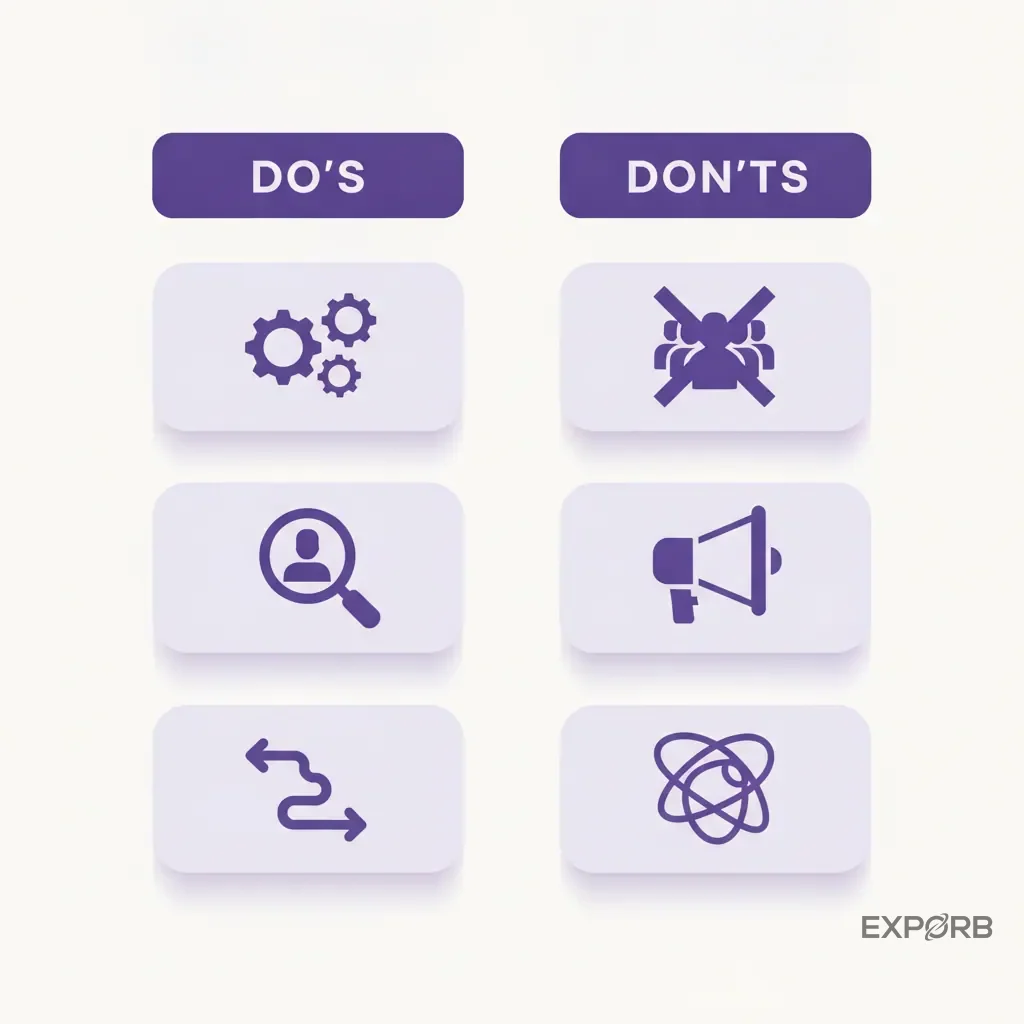
Over-collecting data vs. practicing privacy-aware personalization
In the quest for personalization, it's tempting to ask for every piece of data imaginable. But this can backfire. Attendees are more aware of their data privacy than ever. Long, intrusive forms or overly personal questions can feel creepy and will drive people away.
The rule is simple: only ask for data you've a clear plan to use to improve their experience. Don't ask for their budget on a pre-show form. Do ask about their primary role so you can recommend the right sessions. It's a balance between being helpful and being invasive.
Focusing only on pre-show marketing and ignoring the on-site experience
Many marketing teams spend months crafting the perfect pre-show email campaign to drive booth traffic. Then, the on-site team delivers the same generic demo to everyone who shows up.
This creates a massive disconnect. The personalization promised in the marketing doesn't match the reality of the experience. The journey has to be consistent across all phases. The on-site engagement is the core of the experience—it's where the relationship is built. Don't let your investment in pre-show marketing go to waste with a lazy on-site strategy.
Failing to connect on-site data to your post-show CRM and follow-up
This is the most common and most damaging mistake. You can do everything right pre-show and on-site, but if the rich, contextual data your team captures on the floor never makes it into your CRM in a timely, structured way, the entire journey falls apart.
This is what leads to those generic email blasts a week later. The sales team gets a CSV file with names and emails, but none of the context. They've no idea what was discussed. A modern CRM export process should be fast and include all the notes, qualifiers, and next steps captured at the booth. Without that connection, you've just created a list of dead business cards.
Related: 5 Trade Show Follow-Up Email Templates That Get Replies
Building your personalization tech stack for 2026
You don't need a dozen different tools to build effective personalized journeys. What you need is a few key platforms that work well together, covering the three main phases of the event.
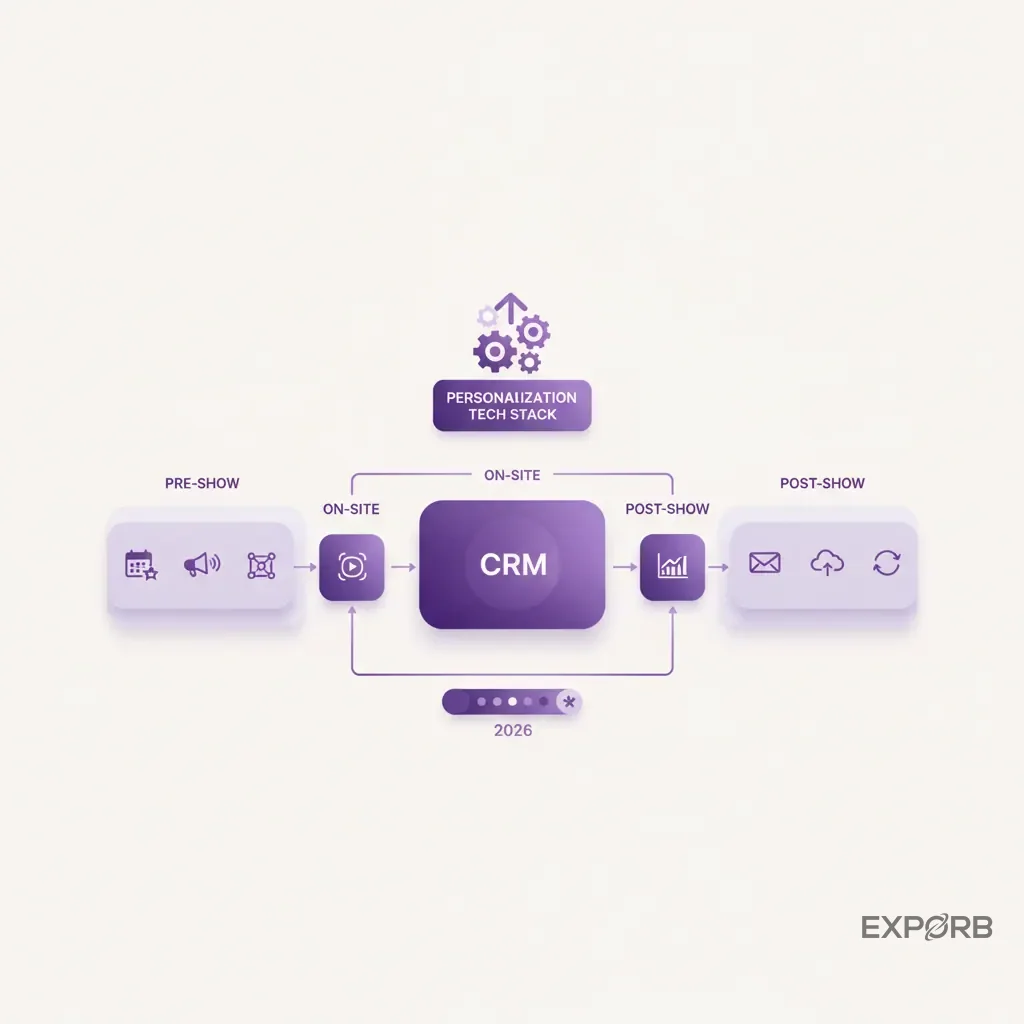
Comparing tools for pre-show targeting, on-site capture, and post-show automation
You can break down your tech stack into three simple categories. Your goal is to have one solid tool for each job.
Core components of an event personalization tech stack.
The critical role of an AI-powered trade show CRM like Exporb
The most common point of failure in this stack is the on-site piece. Many companies still rely on rented badge scanners or manual note-taking. This creates a data bottleneck and loses all the valuable context.
An AI-powered trade show CRM like Exporb is built to solve this exact problem. It's the central hub for all on-site data capture. It replaces the fishbowl of business cards, the unreliable badge scanner, and the messy notebooks with a single, simplified app that works even when the conference Wi-Fi fails. It ensures the rich data from booth conversations makes it to the post-show systems cleanly and quickly.
Integrating your stack for a smooth flow of attendee data
The final step is making sure these tools talk to each other. Your on-site capture tool must integrate smoothly with your main CRM or marketing automation platform. A simple CSV export is the bare minimum. A direct integration that pushes enriched lead data into Salesforce or HubSpot is even better.
When data flows automatically from the booth to your system of record, your sales team can follow up within hours—not weeks. That speed is often the difference between winning and losing a deal.
How can small teams implement personalized journeys without enterprise tools?
Feeling overwhelmed by the talk of tech stacks and AI? Don't be. You can implement the core principles of a personalized attendee journey even with a small team and a limited budget. It's about being smart and scrappy, not about buying expensive software.
Starting with smart segmentation in your existing spreadsheets or CRM
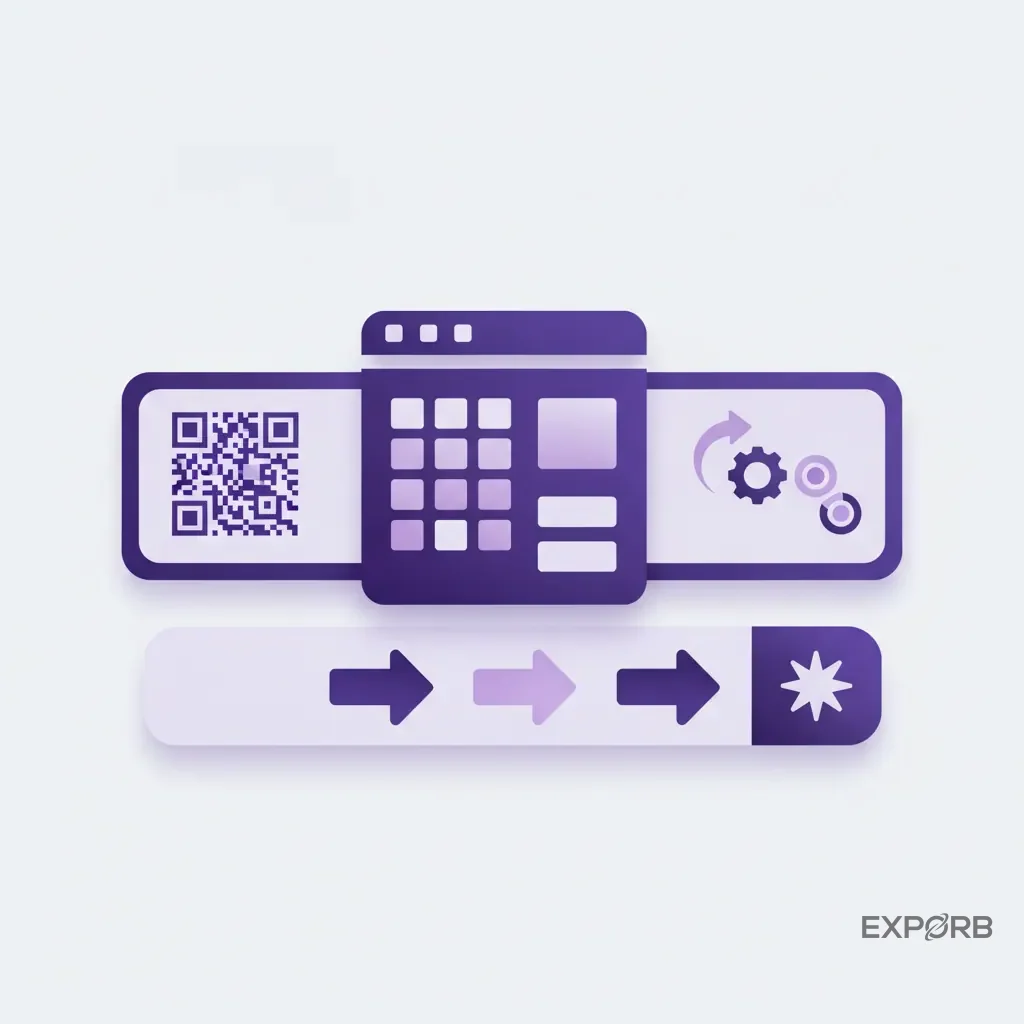
You don't need a fancy ABM platform to start. Before the event, sit down with your team and identify your top 20 target accounts who will be there. Put them in a simple Google Sheet. Research the key people from those companies on LinkedIn.
This simple act of pre-event planning allows your team to be on the lookout for high-value prospects. When one of them visits the booth, your team already has context and can have a much more meaningful conversation.
Using QR codes and logic-based forms for customized content delivery
Want to deliver different content to different personas? Create a few simple QR codes.
- One QR code links to a technical whitepaper for engineers.
- Another links to a high-level case study for executives.
You can print these on signs at your booth. It's a simple, free way to let attendees self-segment and get the information that's most relevant to them. You can use a tool like Google Forms or Typeform with conditional logic to ask different follow-up questions based on their initial answers.
Using daily team huddles to manually adapt your on-site strategy
The most powerful personalization tool you've is your team's brain. You don't need a real-time AI dashboard if you can just talk to each other.
Hold a 15-minute huddle at the beginning and end of each day. What did you learn today? What messages are resonating? Are we seeing a lot of people from a specific industry? This manual, real-time feedback loop allows you to adapt your strategy for the next day. It's the low-tech version of real-time data analysis, and it's incredibly effective.
Ready to transform your Trade Show ROI with personalized journeys?
Moving from a generic, one-size-fits-all approach to building personalized attendee journeys is the single most impactful change you can make to your event strategy. It's how you stop wasting money on forgettable conversations and start building a real pipeline from the trade show floor.
Your 3-step action plan for your next event
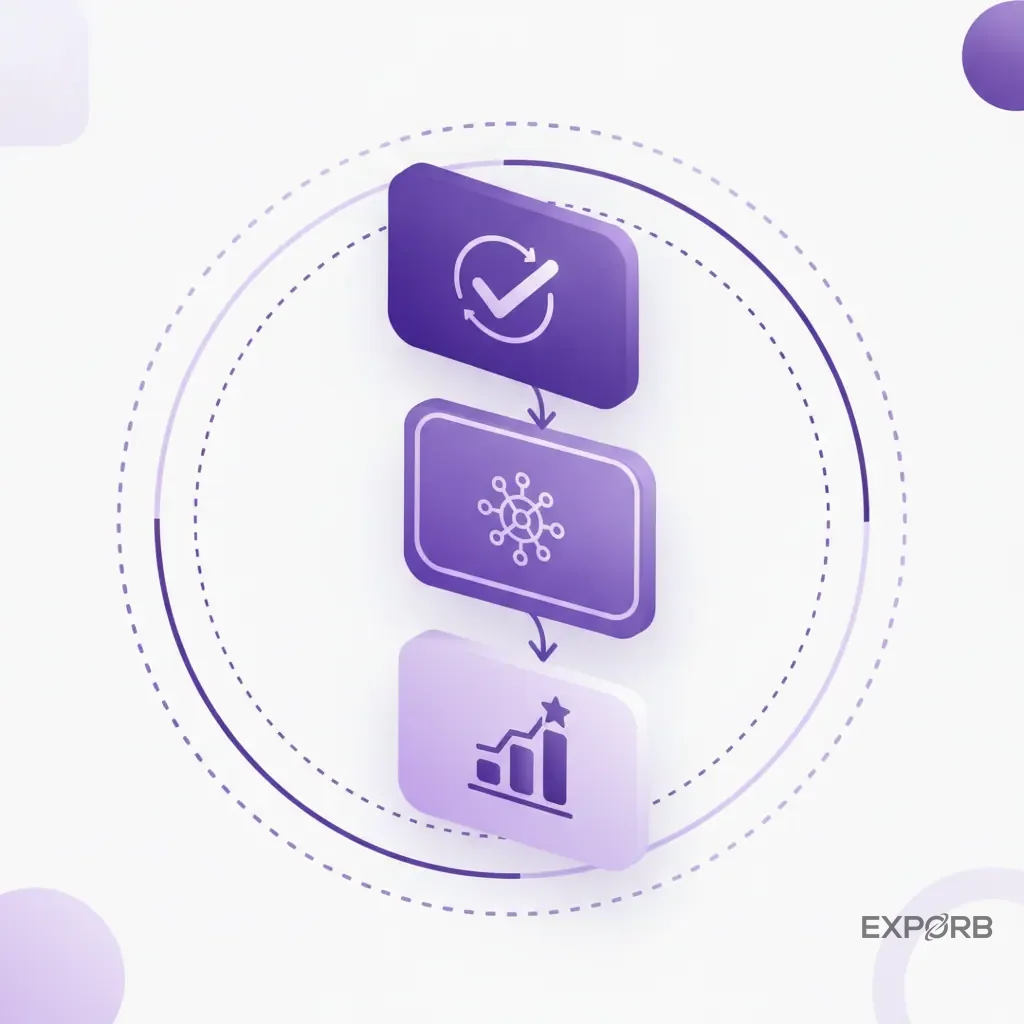
You can start today. Here's a simple plan for your very next trade show:
- Segment Your Audience: Before the show, identify your top two to three attendee personas. Write down what each one cares about and what you want them to learn at your booth.
- Map the On-Site Experience: Plan a slightly different conversation track or demo for each persona. Train your booth staff to quickly identify who they are talking to and guide them to the right experience.
- Connect Your Follow-Up: Have a clear plan for how you'll capture and use the context from each conversation in the follow-up email. Write a few email templates—one for each persona—before you even get to the show.
How Exporb provides end-to-end visibility into your attendee journeys
The biggest challenge in this process is capturing the conversational data on a noisy trade show floor and getting it into a useful format. That's why we built Exporb. It gives founders and sales leaders the visibility they've been missing.
From the live activity feed that shows every interaction as it happens, to the AI-powered conversation analysis that tells you what prospects really care about, Exporb closes the loop between on-site engagement and post-show follow-up. It turns the "black box" of event conversations into your richest source of customer intelligence.
Frequently asked questions about attendee journey personalization
How much data is too much to collect? Focus on "just in time" data. Collect only what you need to personalize the next step of the journey. For pre-show, that might just be their role and company. At the booth, it's their specific pain point. Avoid asking for information you won't use.
Isn't this too complicated for a small team? No. Start small. Personalize the journey for just one key persona at your next event. Even small steps, like preparing a different demo for executives versus engineers, can have a huge impact. You don't need to do everything at once.
How do you measure the ROI of personalization? Track your personalized leads separately in your CRM. Tag them with the event name and their persona. Over the next 6-12 months, compare the pipeline and closed-won revenue from this group against leads from previous, non-personalized events. The data will speak for itself.