Beyond the badge scan: Mastering hybrid event lead capture in 2026
Your team is back from the big industry show. You've got a fishbowl full of business cards and a spreadsheet of badge scans. Now what? The real work begins: deciphering scribbled notes, figuring out who talked to whom, and trying to remember the context of a hundred different conversations. This is the broken reality of Event Marketing. A modern hybrid event lead capture strategy isn't just a good idea; it's the only way to justify your event spend.

Challenging the myth: Why booth size no longer guarantees Event ROI
We've all seen it. A company spends $50,000 on a massive booth with flashy lights and free swag but invests nothing in a strategy for what happens during a conversation. They're betting that presence equals pipeline. That's a losing bet. Most exhibitors obsess over booth design and completely ignore lead capture. They spend $50K looking good and $0 on remembering what was said.
The real value of an event doesn't come from the booth. It comes from the conversations that happen inside it. If you don't have a system to capture the details of those talks, you're just paying for expensive brand awareness.
From disconnected touchpoints to a unified lead operating system
A hybrid event creates two parallel streams of data: attendees at your physical booth and those engaging with your virtual sessions. A traditional badge scanner only sees one. A webinar platform only sees the other. The result? A messy, incomplete picture of your total addressable audience. A modern system unifies these into a single view, treating every interaction as part of one continuous buyer journey.
The high cost of inaction: What happens when 94% of event leads go cold
Here's a number that should keep you up at night. According to research from WaveCNCT, a staggering 94% of marketers feel their company fails to convert event leads into real opportunities. Why? Because the lead data is slow, messy, and lacks context. By the time you've sorted through the spreadsheet and assigned leads, the intent is gone. The conversation is forgotten. And your potential customer has moved on. What was the point of the event then?
Why's traditional lead capture failing at hybrid events?
Traditional methods served a world of physical-only events. They can't handle the complexity and speed of a hybrid model where engagement happens both in-person and online, often at the same time. You're trying to fit a square peg in a round hole, and your pipeline's paying the price.
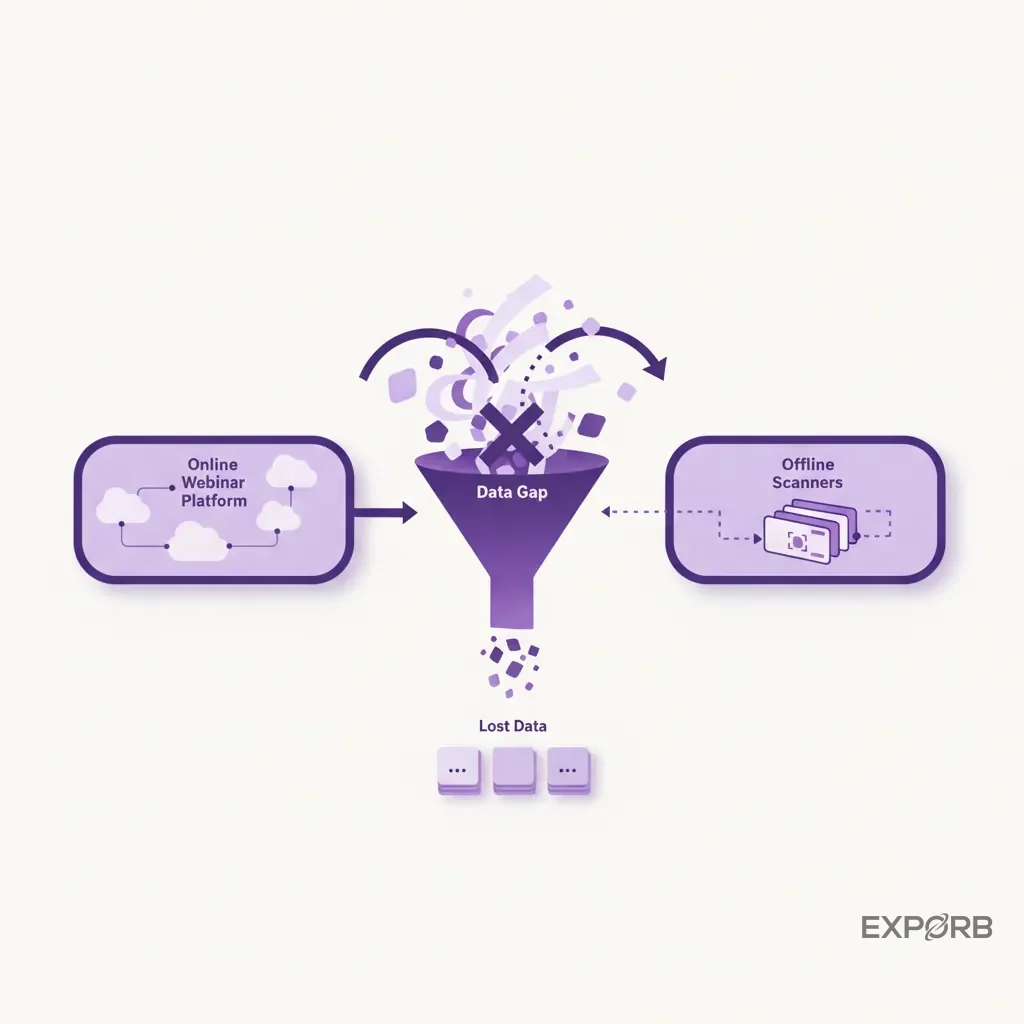
The data gap between the virtual stage and the physical booth
Someone attends your virtual keynote, asks a great question in the Q&A, then visits your booth in person the next day. How do you connect those two events? For most companies, you can't. The data lives in separate systems that don't talk to each other. Your booth staff has no idea they're talking to a highly engaged prospect. This gap is where high-quality leads disappear.
The founder's blind spot: When sales intelligence is lost in conversation
As a founder, I know this pain personally. Your team comes back from a show and says they met 100 people. Great. Which ones mattered? Who had a specific budget? What were their biggest pain points? The answers are usually locked away in your team's memory or on the back of a business card. That intelligence never makes it back to you or into the CRM. It's a black box. At Exporb, we built a system that gives you full visibility into every conversation, turning anecdotes into structured, actionable data.
Manual methods vs. modern demands: The 4x lead volume difference
Still collecting business cards or using a paper form? You're falling behind. Research from TradeShowPro shows that exhibitors using digital lead capture tools see a 3-4x improvement in lead volume compared to manual methods. It's faster, cleaner, and eliminates the post-show data entry nightmare that delays follow-up and kills deals.
What defines a next-gen hybrid lead capture system?
A next-generation system is more than just a better scanner. It's a complete operating system for event intelligence. It's built on the idea that the conversation—not just the contact info—is the most valuable asset you can acquire at an event.
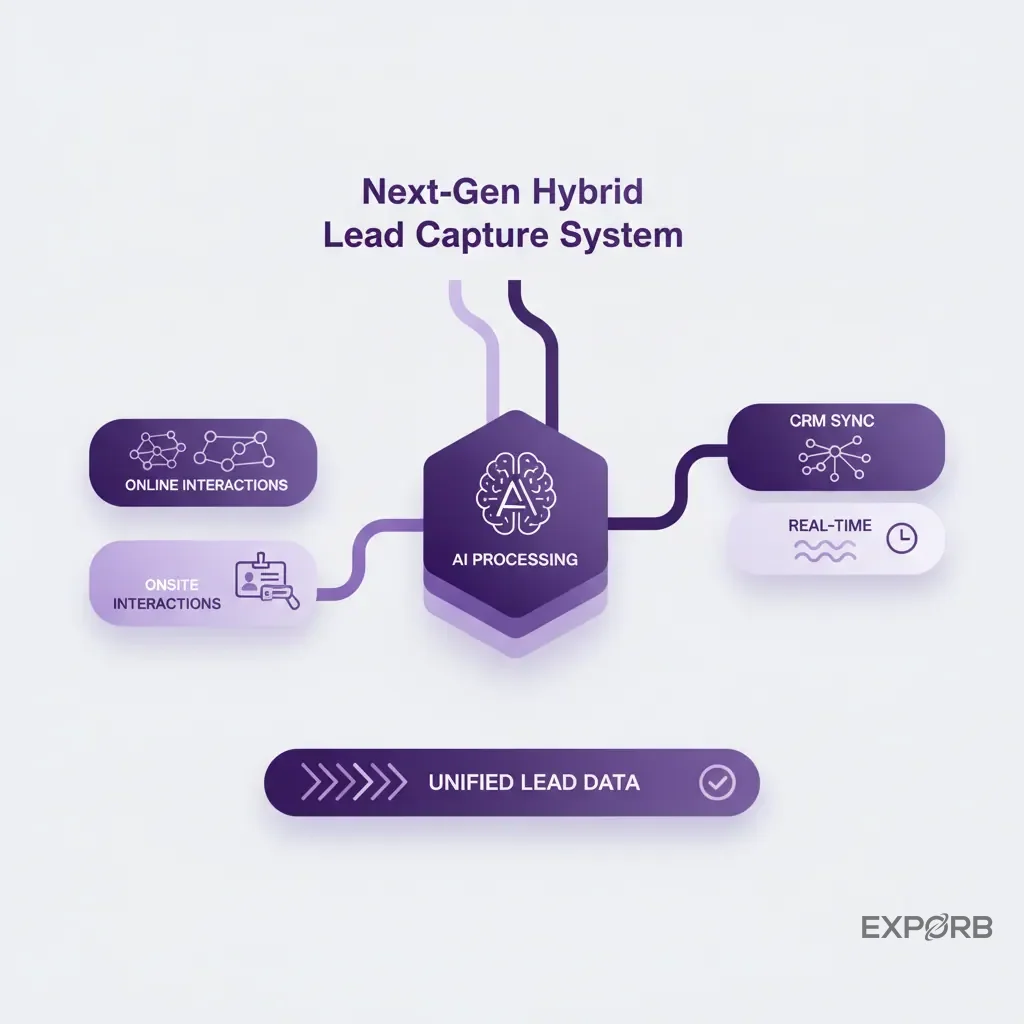
Unifying onsite and online interactions into a single source of truth
The core of a modern system is its ability to create a single profile for each lead, no matter where they interact with you. It combines their virtual session attendance, poll answers, and content downloads with the notes, photos, and business card scans from your booth staff. Your sales team gets a complete, 360-degree view of every prospect's interests and intent.
Using AI for conversation transcription and structured data
What if you could remember every word of every conversation? That's what AI enables. Instead of relying on messy, incomplete handwritten notes, your team can record voice notes summarizing the discussion. AI then transcribes these notes, analyzes them for key topics, pain points, and sentiment, and structures the data automatically. You get perfect recall and clean data without the manual effort.
Achieving real-time CRM sync for immediate sales activation
You should follow up with a lead moments after they leave your booth. Yet most teams wait days, even weeks. A modern system pushes enriched lead data directly to your CRM in real time. This means your sales team can trigger follow-up sequences while the event's still happening, beating competitors to the punch. With Exporb, you can even draft and send personalized follow-up emails right from the trade show floor.
Related: The Ultimate Guide to Trade Show Lead Capture
How do you build a continuous hybrid lead funnel?
A hybrid event isn't a single point in time; it's a multi-stage campaign. Your lead capture strategy needs to reflect that, engaging prospects before, during, and after the main event to build a continuous pipeline.
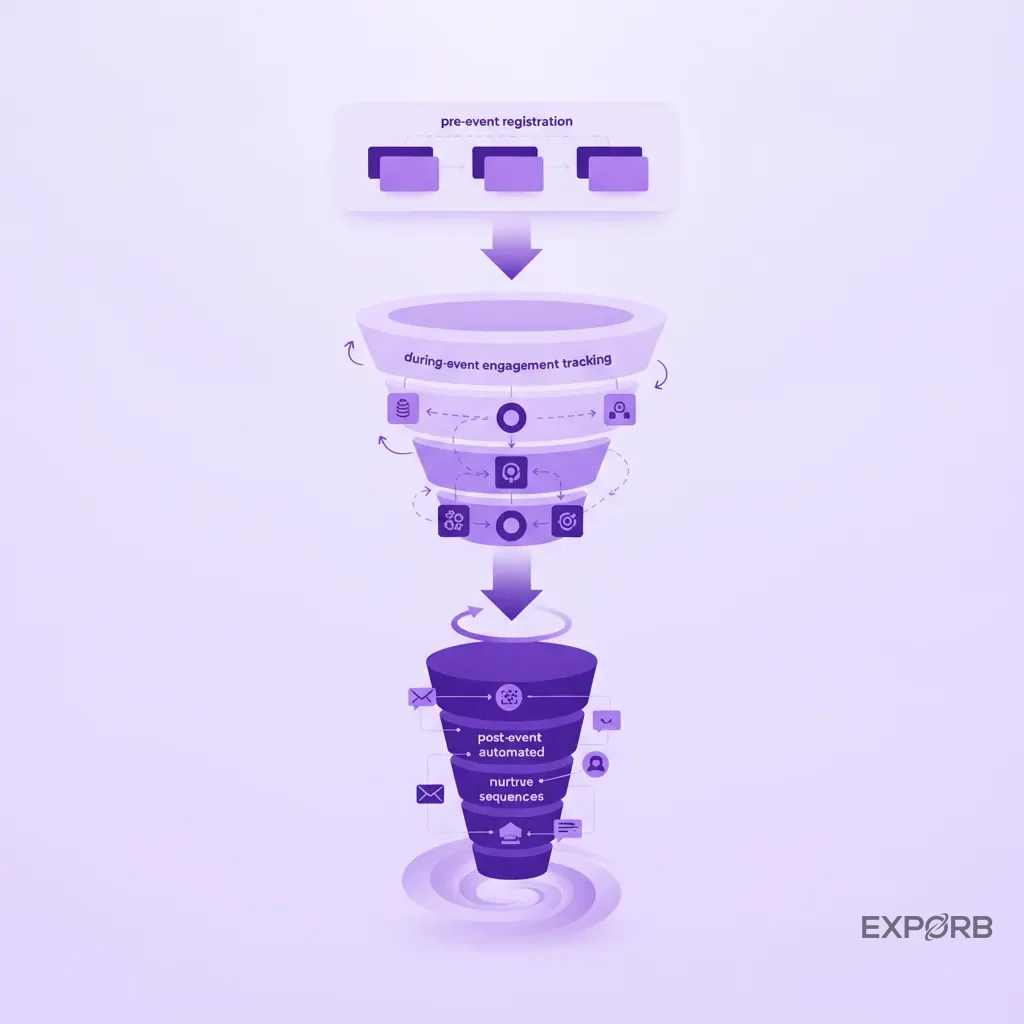
Pre-event: Frictionless registration and progressive profiling
Your funnel starts with registration. Don't ask for 20 fields of information upfront. Best practices from CloudPresent suggest limiting initial forms to 5-7 critical data points to maximize sign-ups. You can then use progressive profiling—asking for more information in subsequent interactions, like when they download a resource or register for a specific session—to build a richer profile over time.
During-event: Tracking deep engagement signals (polls, Q&A, downloads)
Not all engagement is created equal. Someone who just registers is less qualified than someone who attends three sessions, asks a question, and downloads your case study. Your system must track these "deep" signals. A study highlighted by DigitalApplied found that combining webinar attendance with a content download lifts qualification likelihood by 33%. These are the people your booth staff needs to find.
Post-event: Automating personalized, multi-touch nurture sequences
Generic, batch-and-blast follow-up emails don't work. Your post-event strategy should use the specific data you've collected to send personalized, relevant messages. Did they ask about a specific feature? Send them a video demo. Did they visit your booth and talk about a competitor? Send them a comparison sheet. Automation makes this scalable, and the rich, contextual data from your capture system makes it effective.
Which type of lead capture system do you actually need?
The market's crowded with options, including simple badge scanning apps and all-in-one event management platforms. Choosing the right one depends on your specific needs, event format, and budget. Don't pay for features you won't use.
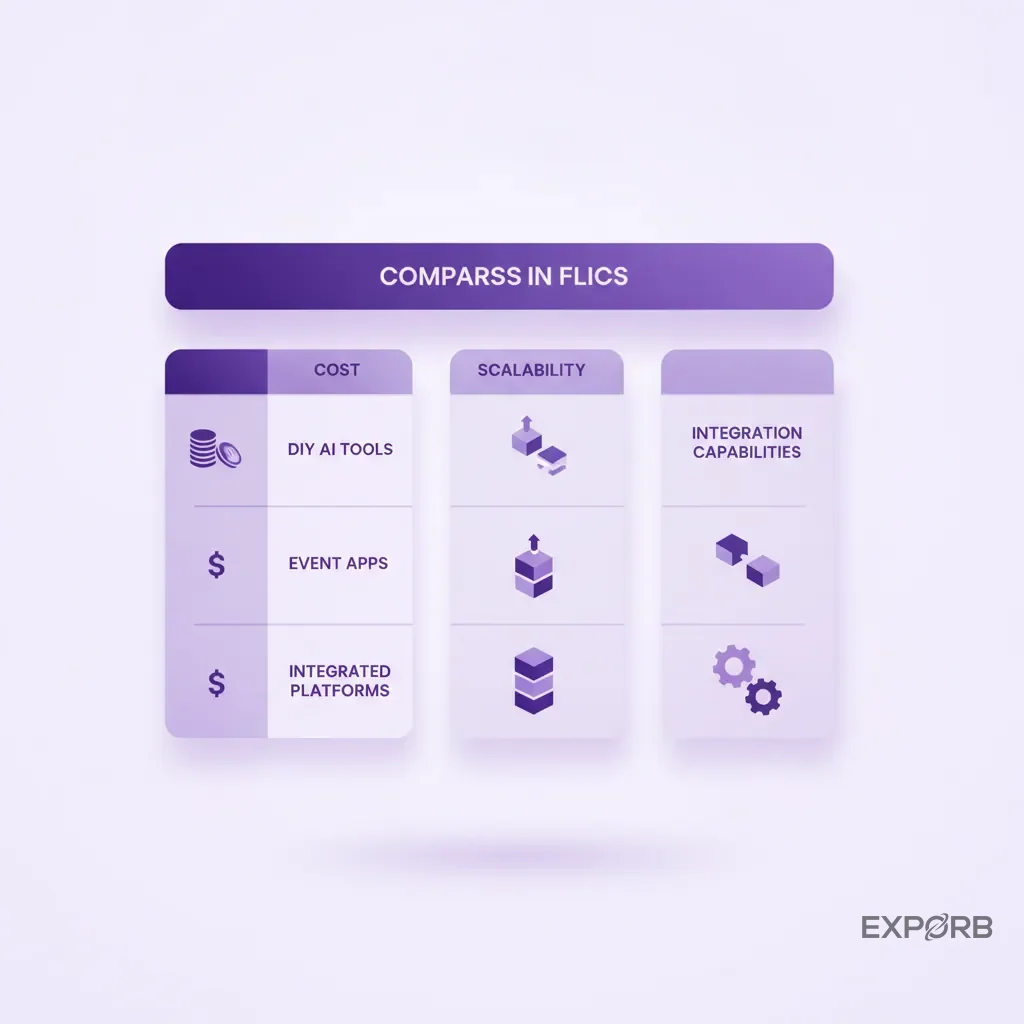
Comparing the options: DIY AI tools vs. event apps vs. integrated platforms
You've got a few main choices. DIY tools are cheap but require technical skill. Standard event apps are easy to use but often lack deep CRM integration or AI capabilities. Integrated platforms are powerful but can be expensive and complex. The sweet spot for most companies is a dedicated lead capture tool that focuses on doing one thing exceptionally well: turning conversations into clean, actionable data.
Comparison of lead capture system types
Aligning your tech stack with event format (trade show, roadshow, webinar)
The right tool for a massive trade show might be overkill for a series of small roadshows. For large events, you need scalability and strong offline capabilities for when convention center Wi-Fi inevitably fails. For smaller, more intimate events, features like detailed conversation notes and photo capture become more important. For webinars, it's all about tracking digital engagement signals.
Key considerations: Cost, scalability, and integration capabilities
When evaluating options, ask three questions:
- Cost: What's the total cost of ownership, including setup, training, and per-event fees?
- Scalability: Can this tool grow with us from small events to our biggest trade shows?
- Integration: How easily does it connect to our CRM? A simple CSV export is the bare minimum; a direct, real-time sync is the goal.
Can you really build a custom lead capture app in under an hour?
With the rise of no-code and low-code platforms, building a simple app is more accessible than ever. But just because you can build it doesn't always mean you should. Let's look at the reality.
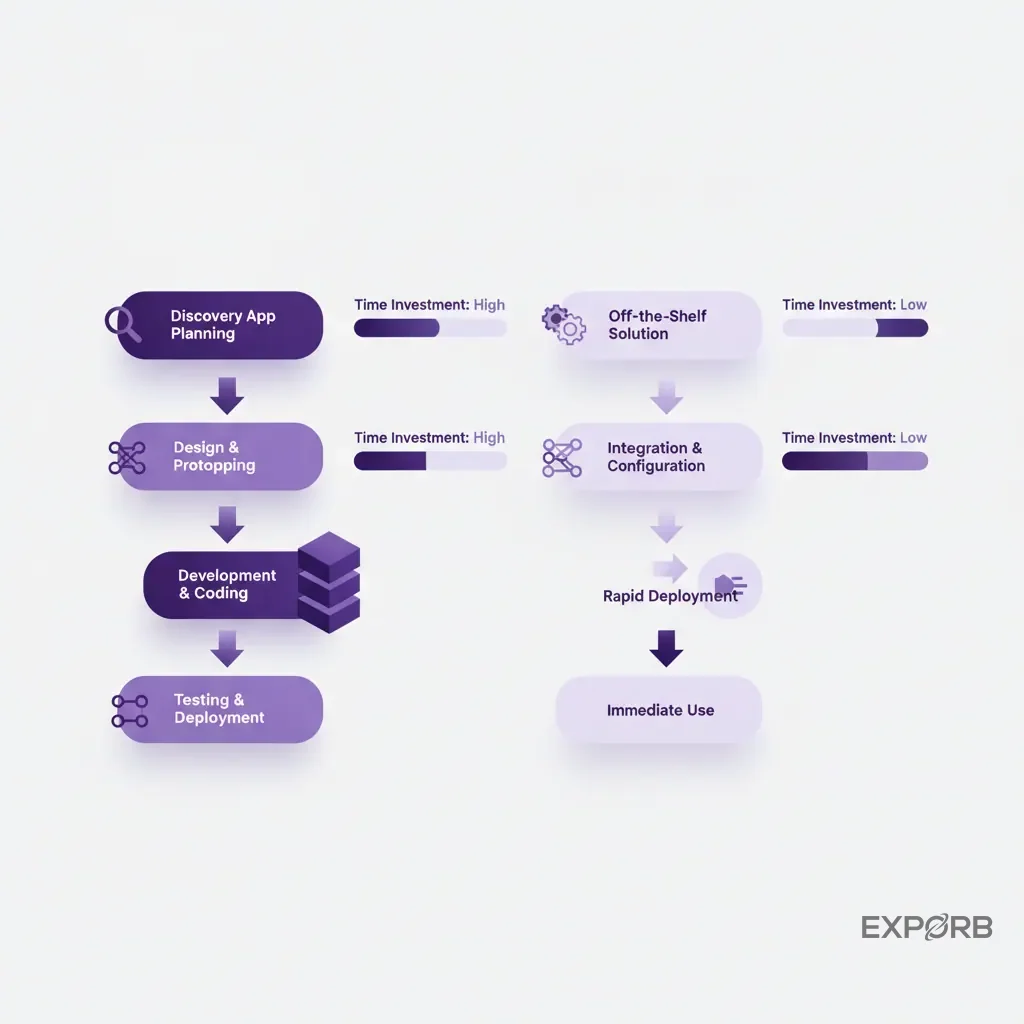
The rise of AI-assisted DIY development platforms for marketers
Platforms like Zapier, Make, and a host of newer AI-powered builders allow marketers to stitch together different services to create custom workflows. You could, for example, connect an OCR API to a form builder and then pipe that data into a Google Sheet. It's powerful, but it can also be brittle.
A step-by-step guide to building a simple OCR and CRM-syncing app
- Choose your tools: You'll need a form builder, an OCR service (like Google Vision AI), and an automation platform.
- Build the form: Create a simple interface for your team to input data and upload a photo of a business card.
- Set up the automation: Create a workflow that triggers when a new form is submitted.
- Connect the API: Send the uploaded image to the OCR service to extract the text.
- Map the data: Take the output from the OCR and map the fields (name, title, email) to your CRM fields.
- Push to CRM: Send the structured data to your CRM.
When to build vs. when to buy: A decision framework for your team
Building makes sense if you've highly unique requirements that no off-the-shelf tool can meet. But for most companies, buying is the smarter choice. A dedicated tool like Exporb has already solved the hard problems: offline reliability, team collaboration, security, and a polished user experience. You get a better, more reliable product on day one without the engineering headache.
What metrics actually prove hybrid event ROI in 2026?
Vanity metrics like booth traffic and the number of badge scans don't tell you anything about business impact. To prove ROI, you need to track metrics that connect event activity directly to pipeline and revenue.
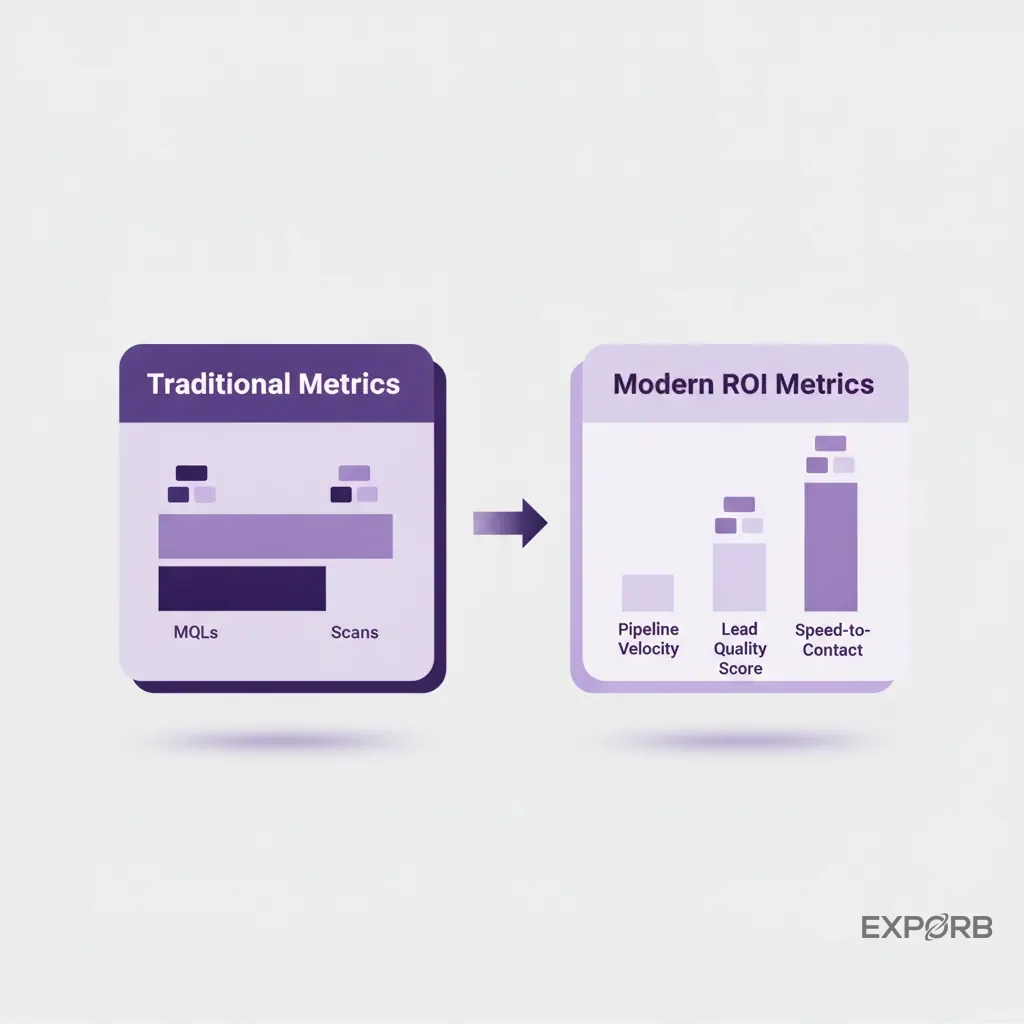
Moving beyond MQLs: Measuring lead quality and pipeline velocity
Stop counting MQLs. Start measuring pipeline velocity. How quickly do event leads move from initial contact to a qualified opportunity? How does this compare to other channels? An AI-powered lead score considers both demographic data and engagement signals to help you prioritize the hottest leads and focus your sales team's efforts where they'll have the most impact.
Speed-to-contact: The new benchmark for capitalizing on high intent
This is the single most important metric for event success. A lead never gets hotter than in the hours immediately following a great conversation. According to TradeShowPro, following up within 48 hours is critical. Waiting longer is "leaving money on the table." Your goal should be to get this down to minutes, not days. This requires a fully integrated system from capture to CRM.
Why micro-events deliver 3x higher lead-to-opportunity conversion
Bigger isn't always better. Data from ProfileTree shows that micro-events with fewer than 50 attendees drive a lead-to-opportunity conversion rate three times higher than large-scale trade shows. Why? Because they allow for deeper, more meaningful conversations. Your capture strategy should document that depth, not just the basic contact info.
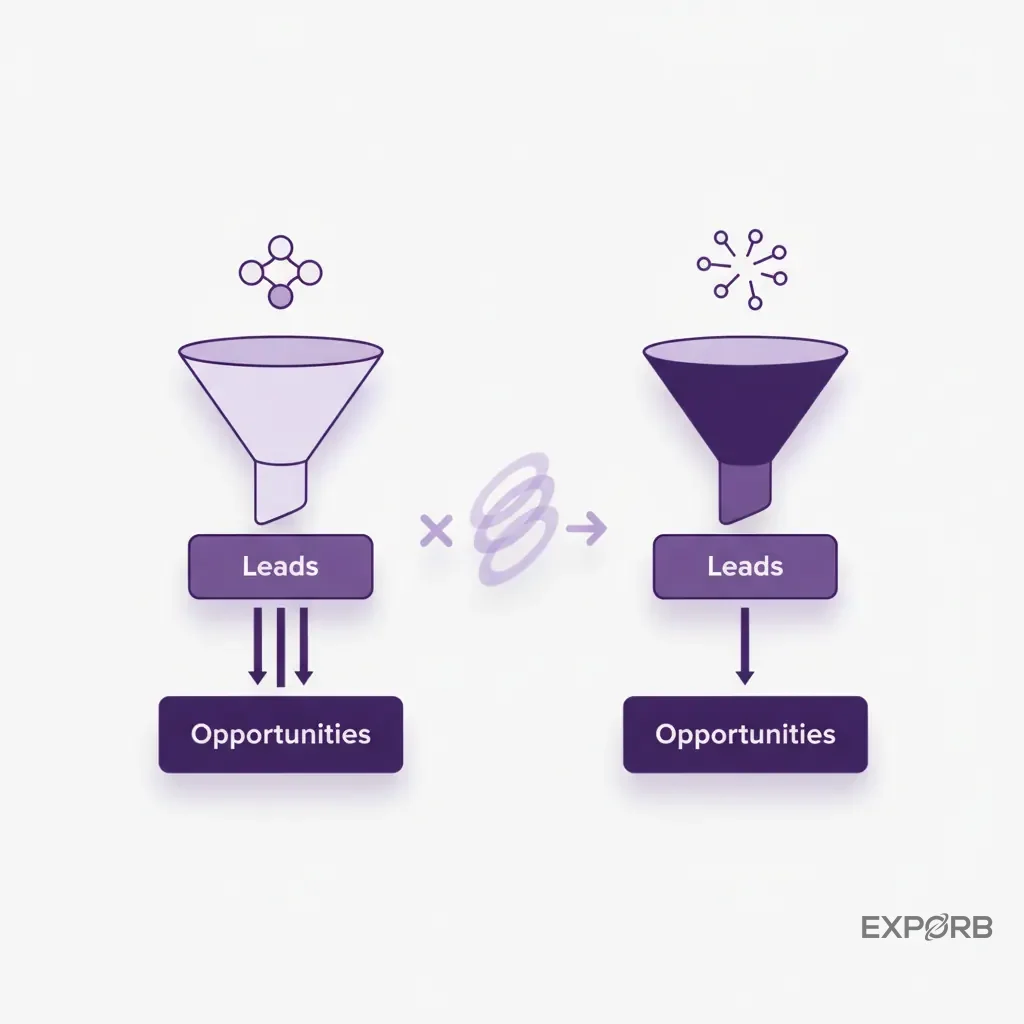
Real-world applications: A small team's guide to success
Let's make this practical. How does a small team with a limited budget actually pull this off? It's about being smart with your resources and focusing on what truly matters: the quality of the conversation.
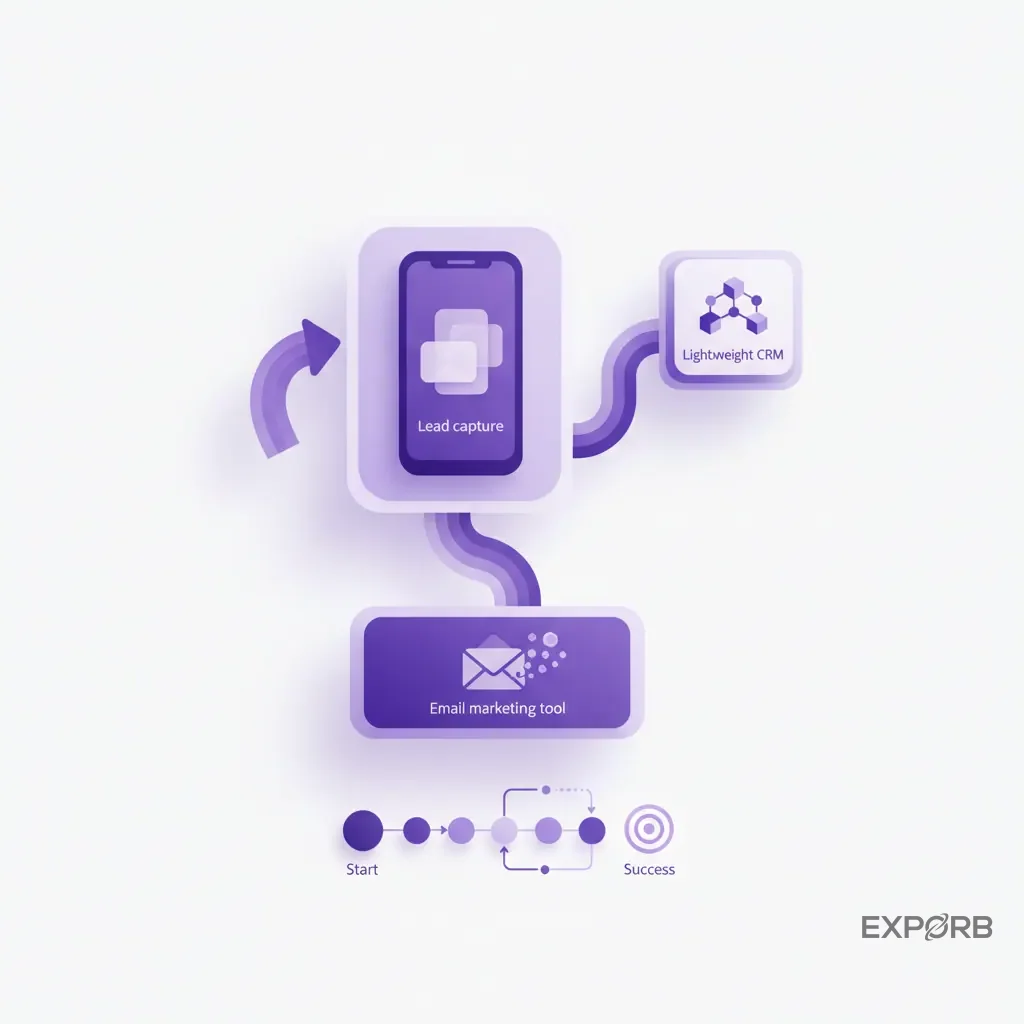
Case study: How a SaaS startup captured and converted leads at a hybrid roadshow
A 20-person SaaS startup was attending a multi-city roadshow. They didn't have a big budget for a fancy booth or expensive hardware. Their goal was simple: have 10 high-quality conversations in each city.
They used Exporb on their personal phones. After each conversation, the sales rep would scan the business card, record a 30-second voice note summarizing the discussion, and snap a photo of the whiteboard sketch they'd drawn. The AI transcribed the notes and enriched the contact. By the time they got on the plane to the next city, personalized follow-up emails based on those conversations were already sent. They closed two deals within a week of the roadshow ending—a direct result of speed and personalization.
Optimizing a limited budget for maximum impact
- Invest in the tool, not the hardware. Use the phones your team already has.
- Focus on conversation quality, not quantity. Set a goal for deep conversations, not just badge scans.
- Automate the follow-up. Use templates and AI-assist features to send personalized outreach instantly.
- Measure what matters. Track pipeline velocity and cost-per-opportunity, not just cost-per-lead.
What founders and lean marketing teams should do next
You don't need a massive budget to compete. What you need is a smarter process. By focusing on capturing the context of every conversation and acting on it immediately, a small, nimble team can run circles around larger competitors who're still stuck sorting through a pile of dead business cards a week after the show.
Related: How to Calculate Trade Show ROI: A Founder's Guide
Using technology for a powerful, integrated system
The right technology is a force multiplier for your event team. It automates tedious work, provides critical real-time intelligence, and frees your staff to do what they do best: connect with people.
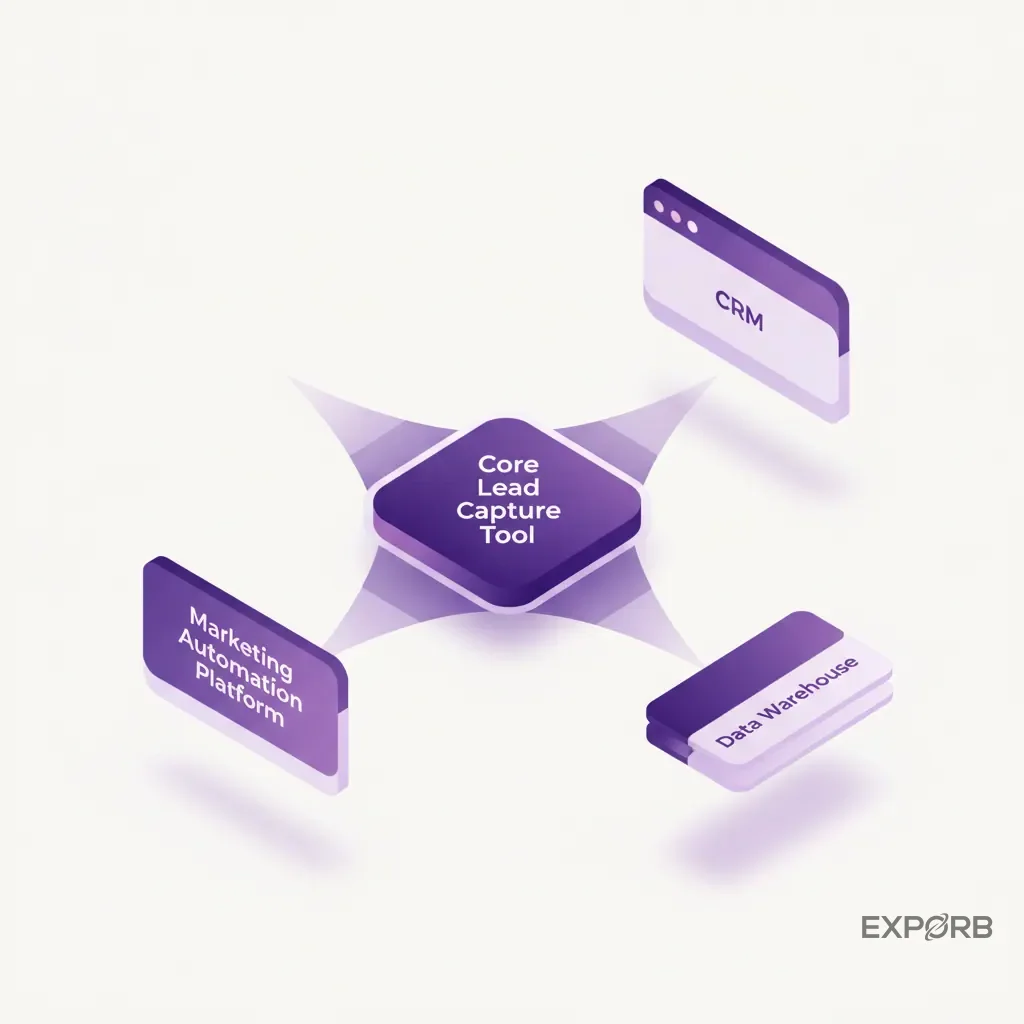
Powerful on its own: Core features of a standalone capture tool
Even without a complex integration, a strong standalone tool should provide immense value. Look for core features like offline functionality, unlimited business card scanning, voice and text notes, photo attachments, and simple data export. This is your foundation for a clean, reliable data collection process.
A force when combined: Integrating with your CRM and marketing automation
A smooth CRM integration means an enriched lead captured at the booth is instantly available to your entire sales and marketing team. This enables immediate follow-up, automated nurture sequences, and accurate, closed-loop ROI reporting. It connects the dots between a handshake at the booth and a closed deal in your pipeline.
Building a compliant-by-design data pipeline
In an age of GDPR and CCPA, you must handle contact data carefully. Using a makeshift system of business cards and spreadsheets is a compliance nightmare. A professional lead capture tool incorporates compliance, providing a clear, auditable trail of how and when you obtained consent. It's both good practice and essential for protecting your business.
Your action plan for mastering hybrid lead capture
Ready to move beyond the fishbowl of business cards? Here's a simple, three-step plan to build a modern, effective hybrid event lead capture workflow that drives real results.
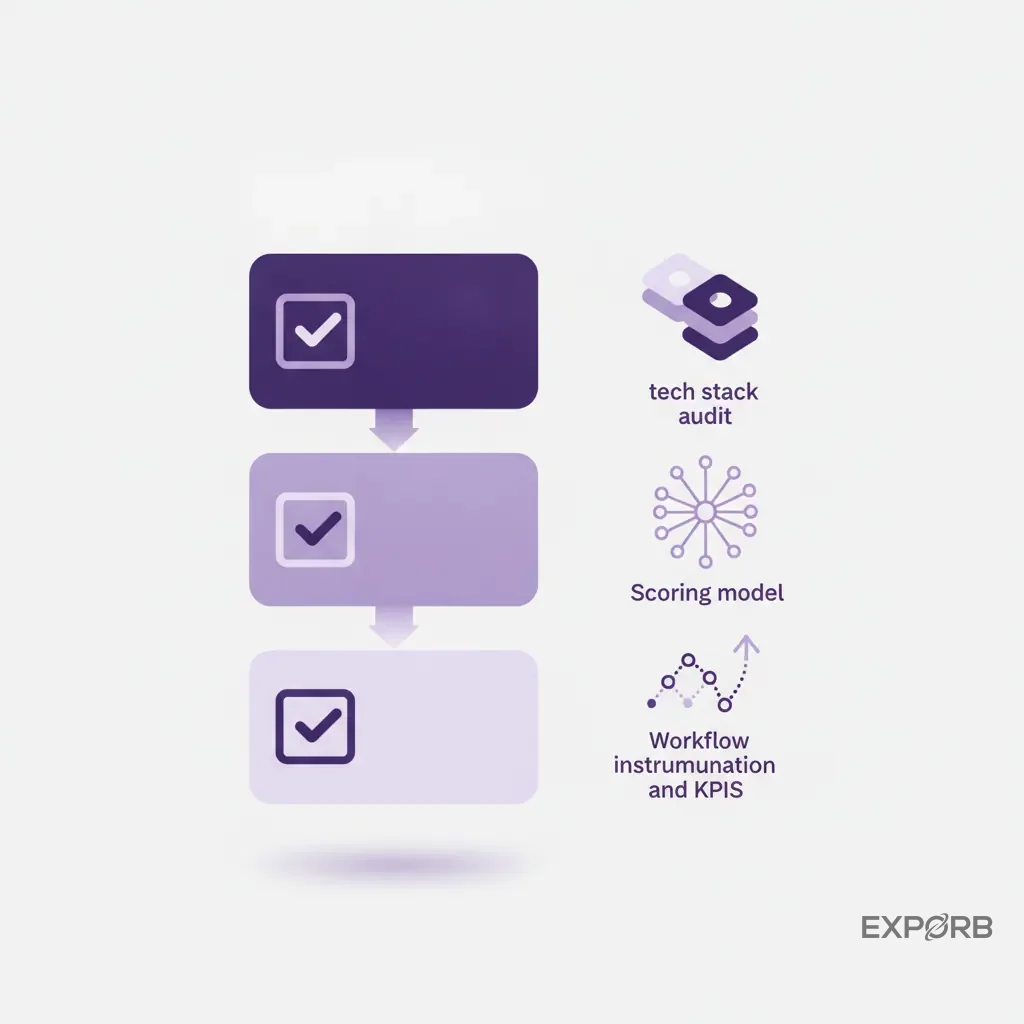
Step 1: Audit your current tech stack and identify data silos
Where's your lead data right now? Make a list of every system that touches a lead—your webinar platform, your event app, your CRM, and even your team's spreadsheets. Identify where the data gets stuck or disconnected. This is the first problem you need to solve.
Step 2: Define your unified lead scoring model for hybrid behaviors
Work with your sales team to define what a "hot lead" actually looks like. Assign points to different actions—attending a webinar, asking a question, visiting the booth, discussing budget. Create a single scoring model that applies to both virtual and in-person interactions so you can accurately compare and prioritize all your leads.
Step 3: Instrument your capture-to-follow-up workflow and set KPIs
Choose a tool that can bridge your data silos and execute your scoring model. Set up the integrations and automations. Most importantly, define your key performance indicators (KPIs) before the event. Your primary KPI shouldn't be "leads collected." It should be "pipeline generated within 30 days" and "speed-to-contact in minutes." This focuses your entire team on what actually drives revenue.