Why are trade shows still a critical B2B growth engine in 2026?
You're probably searching for a list of the best trade shows 2026 to fill your calendar. But the more important question isn't which shows to attend, it's why you're going. For years, people have predicted the death of in-person events. They were wrong. Trade shows are thriving. They're becoming the most concentrated source of high-intent pipeline for B2B companies that know how to work them. It's a goldmine.
The difference is the mindset. You can't treat them like a branding exercise anymore. The companies winning at events see them as a powerful growth engine—a place to have hundreds of sales conversations in 72 hours.
The strategic shift from awareness to pipeline engine
The old model was simple: get a big booth, scan a thousand badges, and hope for the best. That's a recipe for wasting money. Today, the focus is on qualified conversations, not just booth traffic. You need to capture, structure, and push every interaction into your sales process immediately.
Success isn't measured by the number of fishbowls full of business cards. It's measured by how many meetings get booked and how much pipeline gets generated within 30 days of the show. If you aren't tracking that, you're flying blind.
Key trends shaping the event landscape: AI, ROI, Consolidation, and Actionable Follow-Up
Four significant shifts are defining the modern trade show experience. First, AI is no longer just a buzzword; it's a practical tool for capturing and processing lead data right on the show floor. Second, CFOs demand clear ROI. You have to prove that the $50,000 you spent on a show generated real revenue—not just "brand awareness." Third, industries are consolidating around fewer, larger flagship events, making your choice of which shows to attend more important than ever. Finally, you need to secure actionable follow-up opportunities, not just collect contacts.
Debunking the myth: it's about the conversation, not just the booth
Here's the biggest mistake we see companies make: they spend a fortune on booth design, shipping, and travel, but allocate zero budget and zero strategy to the most important part—capturing what's said in the booth. Most exhibitors obsess over looking good and completely ignore lead capture. They spend $50K on a dazzling display and $0 on remembering what was discussed.
A fancy booth attracts people. But it's the conversation that qualifies them. If your team isn't equipped to capture the details of those conversations—the pain points, the budget, the timeline, the next steps—then you're leaving your most valuable asset on the show floor. Your investment should be in the system that turns talk into data; the backdrop is secondary.
How do you choose the right trade shows for your business?
Attending the wrong trade show is an expensive mistake. You burn cash, your team loses morale, and your pipeline stays empty. The right show, however, can generate enough qualified leads to hit your quarterly target. The stakes are that high. Pick the winners carefully.
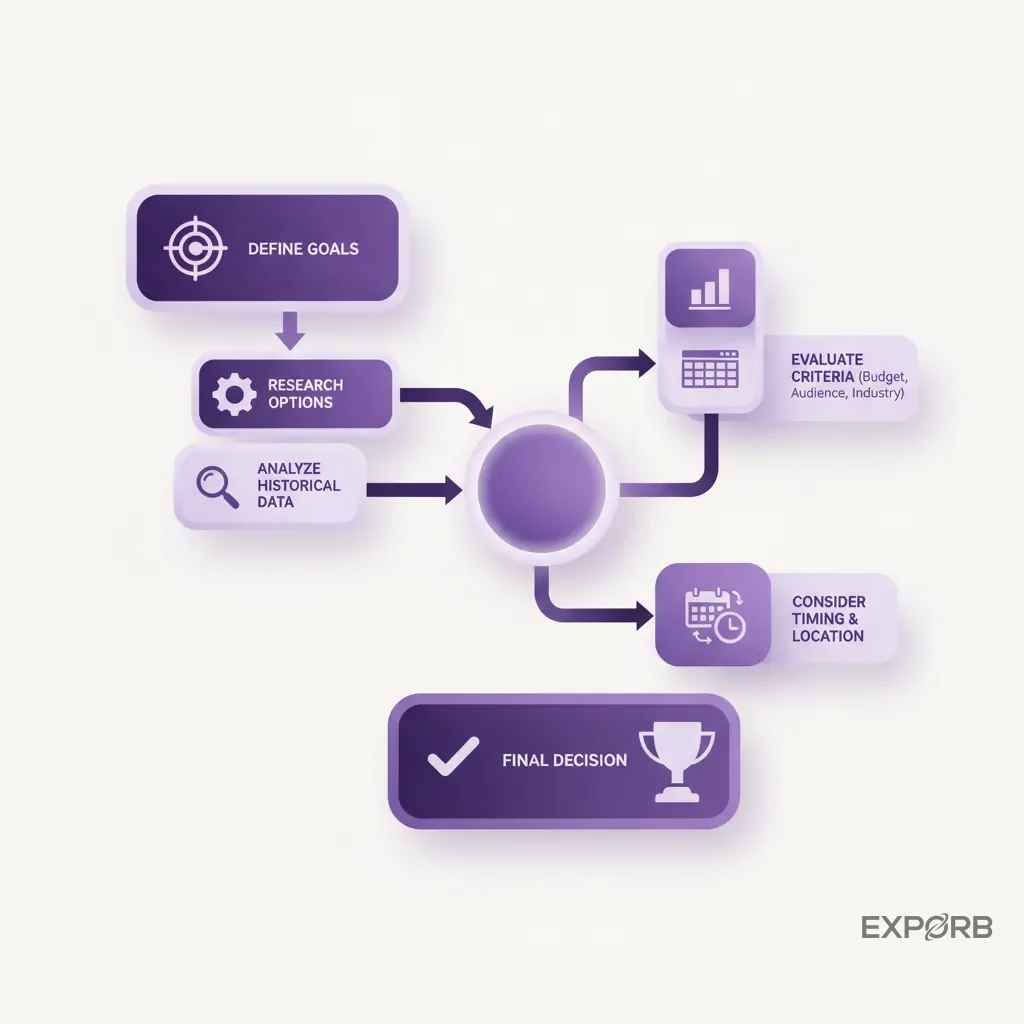
Defining your goals: leads, partners, or brand expansion?
First, get honest about what you want to achieve. Do you need to generate net-new sales leads? Is finding channel partners and resellers your primary goal? Or are you entering a new market and need to establish your brand presence?
Each goal requires a different type of event.
- For Lead Generation, look for shows with high attendee-to-exhibitor ratios and a strong focus on your ideal customer profile.
- If partnerships are your focus, niche industry conferences or events with dedicated partner tracks are often better than massive, general-purpose expos.
- Looking for brand expansion? Attending a major international show in a new region can be effective, but only if you have a clear plan for follow-up and market entry.
Don't try to do all three at once. Pick one primary goal per event and build your strategy around it.
Using historical attendance data to forecast opportunities
Don't rely on the organizer's marketing brochure. Dig into the real data. Look for post-show reports from previous years. What were the actual, audited attendance numbers? What percentage of attendees were decision-makers? What job titles were most common?
Many organizers provide this data if you ask them. According to Adam Expo Stand's analysis of European shows, a show like MWC Barcelona draws around 101,000 attendees, but they're heavily concentrated in mobile and tech. If you sell manufacturing software, that's the wrong pond to fish in, no matter its size. Use data to find your pond.
Building a focused portfolio: the power of quality over quantity
It's better to exhibit properly at two high-impact shows than to have a weak presence at ten mediocre ones. Create a tiered list of potential events: "must-attend," "consider," and "watch list."
Focus your budget and team's energy on the "must-attend" shows. These are the events where your best customers and competitors are guaranteed to be. For the others, consider just sending a few people to walk the floor and network without the expense of a booth. This "attendee" strategy can deliver 80% of the value for 20% of the cost, letting you test a show's potential before committing to a full exhibition.
Related: The Complete Trade Show Lead Capture Guide
The top global multi-industry trade shows for maximum reach
Some events are so massive they function as global hubs for commerce, connecting buyers and sellers across dozens of industries. If your goal is broad reach and tapping into international supply chains, these shows should be on your radar. They're complex and expensive—but the scale of opportunity is unmatched.
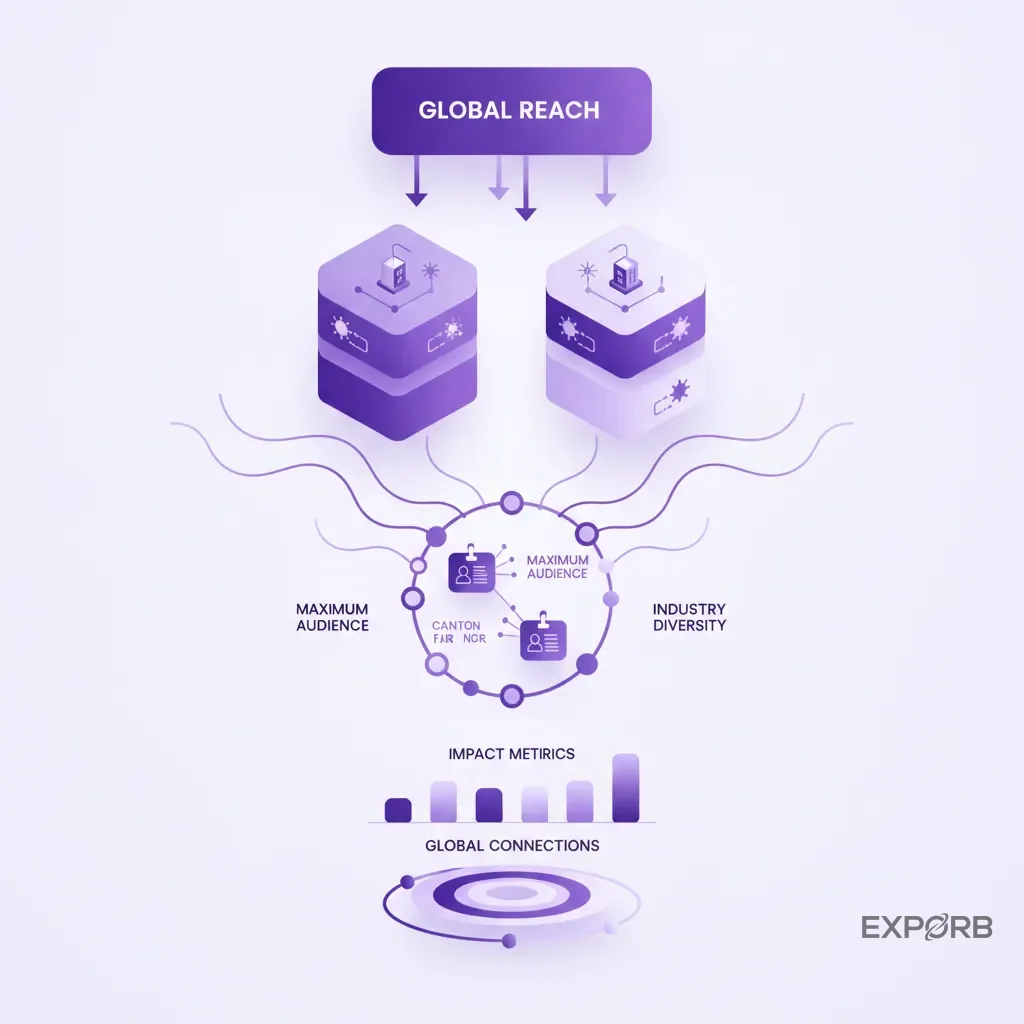
Canton Fair (Guangzhou): the gateway to global sourcing and supply chains
The Canton Fair is less a trade show and more a temporary city built for global trade. Held twice a year in Guangzhou, China, it's one of the largest and most complete trade events in the world. As detailed by multiple sources including the official fair directory, it connects tens of thousands of exhibitors with hundreds of thousands of international buyers.
This isn't the place for a casual visit. It's for serious sourcing, manufacturing, and import/export business. If your company deals with physical products, from consumer electronics to building materials, the Canton Fair is the epicenter of the global supply chain.
Hannover Messe (Hannover): the epicenter of industrial technology and automation
If your business is in manufacturing, industrial automation, robotics, or energy technology, Hannover Messe in Germany is your world championship. It's where the future of industry gets displayed and sold. According to event data, it typically attracts around 130,000 visitors, almost all of whom are engineers, plant managers, and C-level executives from industrial firms.
This is a deeply technical show. The conversations focus on integrating new technologies into complex production lines. It's the definition of a high-value, high-complexity B2B sales environment.
Comparison of leading multi-industry global trade shows.
Must-attend vertical industry shows across key sectors
While massive multi-industry shows offer scale, the real magic for most B2B companies happens at vertical-specific events. These are the places where you can get in front of a concentrated audience of buyers who have the exact problems your product solves. Lead quality goes up, and your cost-per-qualified-lead goes down. Don't miss these.
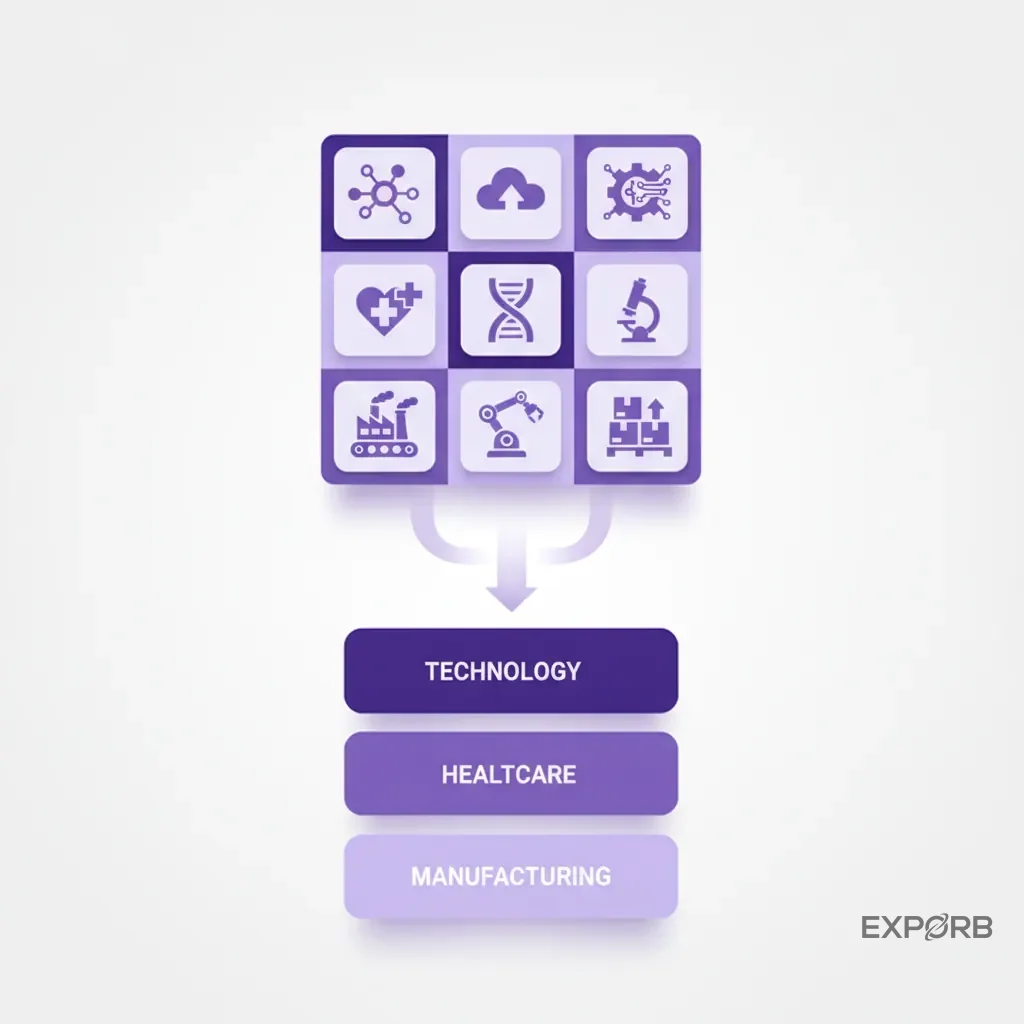
Technology and mobile: MWC Barcelona and CES Las Vegas
For anyone in the mobile, connectivity, or consumer tech space, two shows dominate the calendar: MWC Barcelona and CES Las Vegas.
- MWC Barcelona is the global meeting point for the mobile industry, drawing around 101,000 attendees from mobile operators, device manufacturers, and enterprise tech buyers. If you sell anything related to 5G, IoT, or mobile infrastructure, you have to be here.
- CES Las Vegas is the world's biggest stage for consumer technology. While it's known for new gadgets, it's also a massive B2B event where deals get made for component supply, retail distribution, and software licensing.
Healthcare and medical tech: MEDICA Düsseldorf
MEDICA is the world's largest medical trade fair. Period. Held in Düsseldorf, Germany, it brings together roughly 82,000 visitors and thousands of exhibitors from every corner of the healthcare industry—medical devices, diagnostics, health IT, and more. If you're selling into hospitals, clinics, or research labs, your entire target market is walking the halls of MEDICA. It's a critical event for any company serious about the global healthcare market.
Manufacturing, packaging, and automotive: Interpack and Automechanika
For heavy industry, a few key events are notable.
- Interpack Düsseldorf is the essential show for the packaging industry. With about 170,000 visitors, it covers everything from packaging machinery to materials. If your product touches a supply chain, this is a key audience.
- Automechanika Frankfurt is the leading global trade fair for the automotive aftermarket. It attracts around 84,000 visitors, making it a vital hub for B2B suppliers, service providers, and technology companies in the automotive space.
Emerging B2B marketing and event industry shows to watch
The big, established shows aren't the only ones that matter. Some of the most valuable connections happen at newer, more focused events where tomorrow's leaders gather. For B2B marketers and event professionals, two Las Vegas shows are quickly becoming essential dates.
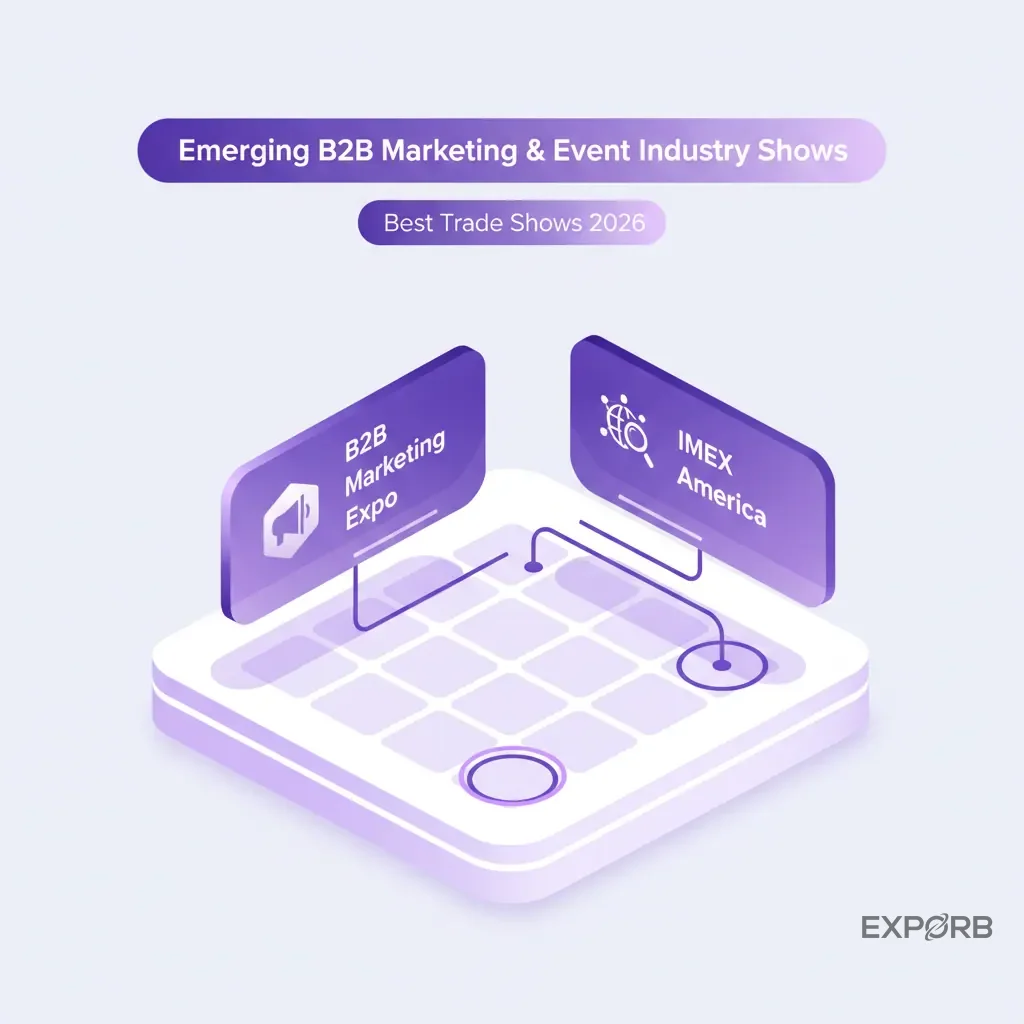
B2B Marketing Expo (Las Vegas): for the modern demand generation leader
The B2B Marketing Expo is tailored for marketing professionals who are on the hook for generating revenue. The conversation here focuses on demand generation, marketing operations, sales enablement, and proving ROI, not just fluffy brand metrics.
You'll find heads of marketing, demand gen managers, and MarTech buyers actively looking for solutions to their biggest pipeline challenges. It's a smaller, more focused crowd, which means the conversations you have are often with the exact person who can sign a check.
IMEX America (Las Vegas): connecting the global business events industry
If you plan corporate events, run an agency, or supply Event Technology, IMEX America is your show. It's the largest trade show in the U.S. for the global meetings, events, and incentive travel industry.
This is where the industry connects, learns, and does business. You can meet with representatives from convention centers, hotel chains, event tech companies, and corporate planners from Fortune 500 companies all in one place. If your product or service helps people run better events, IMEX is a target-rich environment.
What does a high-ROI trade show strategy look like?
Showing up isn't a strategy. A high-ROI trade show plan is designed months in advance and executed with precision on the floor. It treats the event like a three-day sales campaign, not a party. It's all about defining success before you even book your flight.
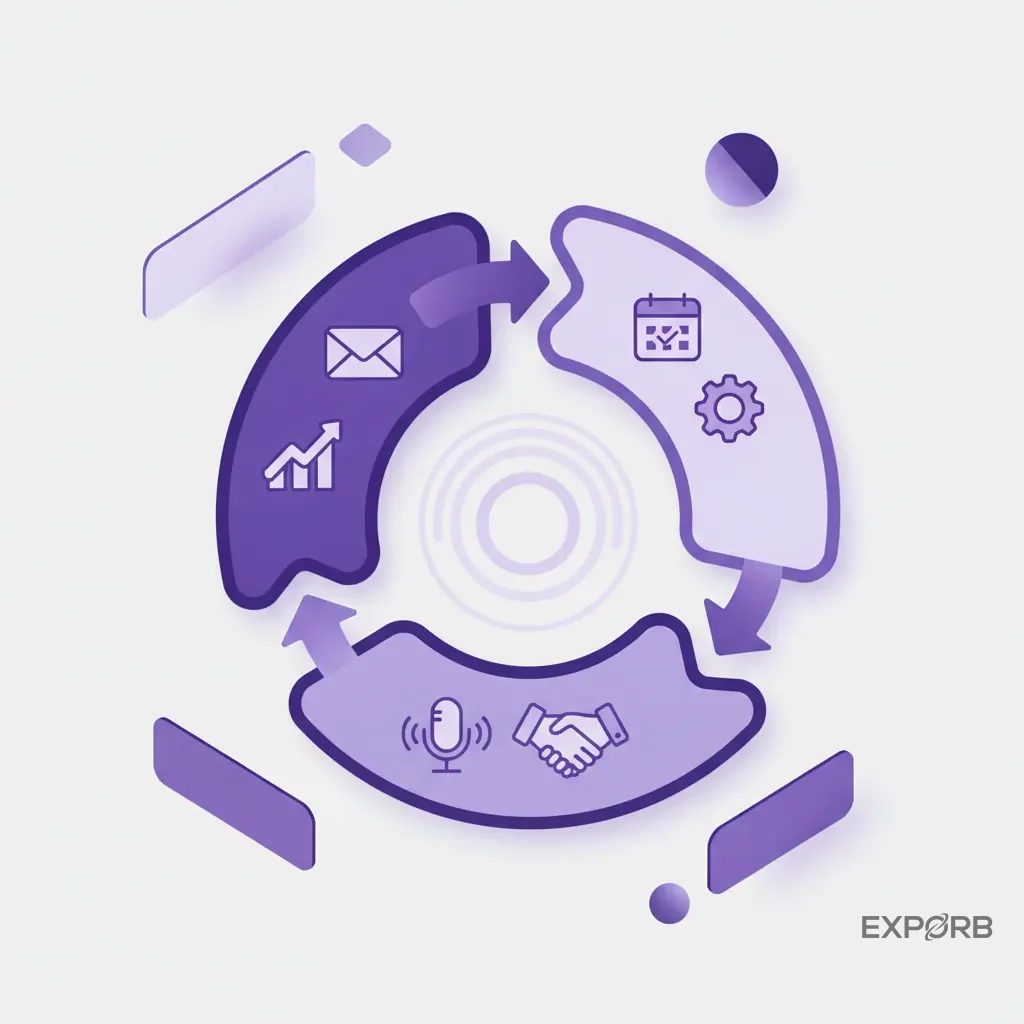
Setting clear pipeline targets and meeting quotas before the show
Your goal isn't to "get a lot of leads." Your goal is to generate a specific amount of qualified pipeline. Work backward from your revenue target. If you need to close $250k from the show and your average deal size is $25k, you need 10 deals. If your close rate from show leads is 10%, you need 100 qualified leads.
That's your target. 100 qualified leads. Now, your booth team has a clear, measurable quota. They hunt for 100 specific opportunities, not just scan badges.
Aligning your sales and marketing teams for pre-show outreach
The best meetings don't happen by chance; they're booked in advance. Weeks before the show, your marketing team should be warming up the attendee list. Your sales team should be reaching out to top accounts and prospects, letting them know you'll be there and scheduling specific times to meet.
A pre-booked meeting is 10x more valuable than a random walk-up. Aim to have 30-40% of your meeting schedule filled before you step on the plane. This guarantees you'll have meaningful conversations even if booth traffic is slow.
Planning your on-site capture and qualification process
How will you get information from a person's brain into your CRM? This is the single most common point of failure. A pile of business cards is a data graveyard. A spreadsheet filled with cryptic notes isn't much better.
You need a structured process. What qualifying questions will your team ask? How will they record the answers? How will they capture next steps? Modern tools are essential here. Your team needs a system that quickly scans business cards, records key conversation details, and syncs everything to a central database. It's no longer a 'nice-to-have'; it's table stakes for a professional operation.
Related: The Ultimate Trade Show Booth Design Guide
How can AI transform your lead capture process at events?
For decades, lead capture meant a clipboard, a bowl for business cards, or a clunky badge scanner that gave you a name and an email—and nothing else. That's finally changing. AI is turning lead capture from a manual data entry task into an automated intelligence-gathering process.
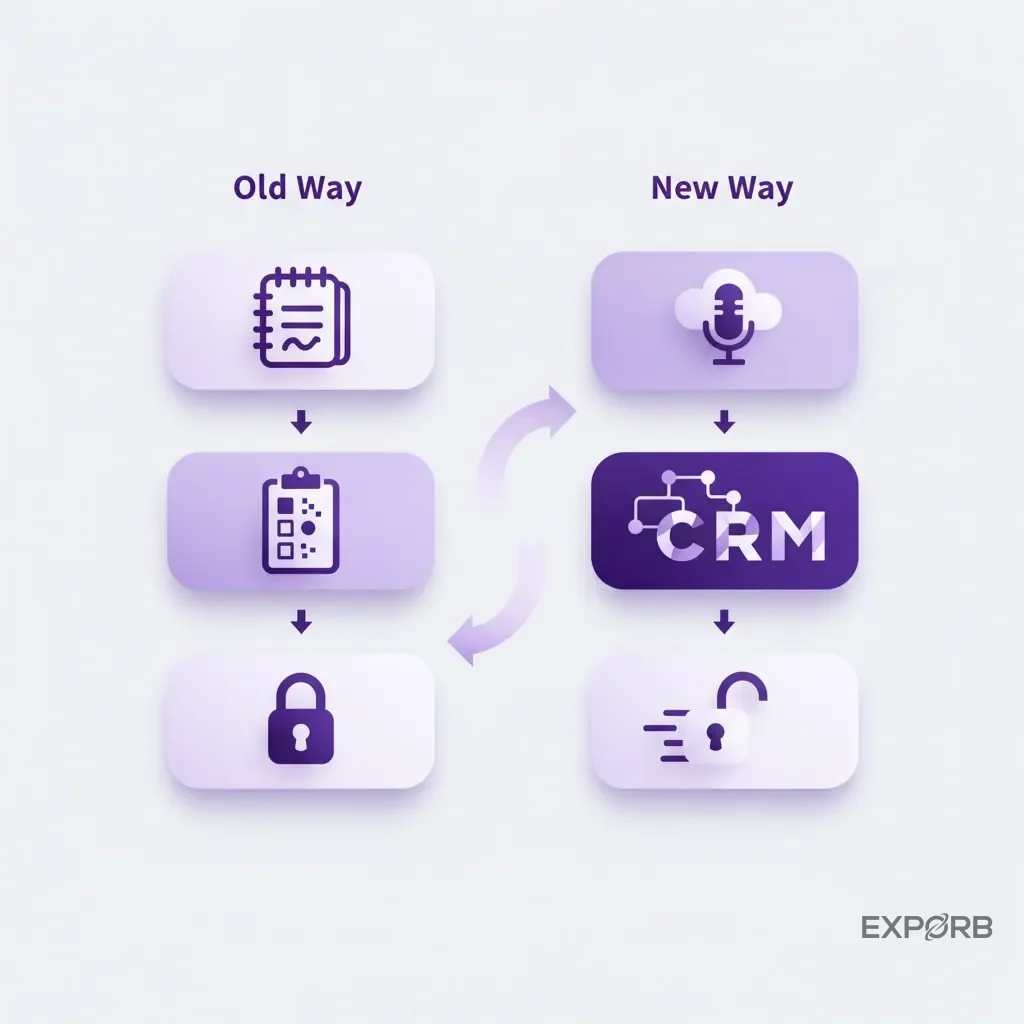
Moving beyond business card bowls and error-prone manual entry
The classic business card fishbowl is the perfect symbol for everything wrong with old-school lead capture. It's a black hole where valuable context goes to die. Even if someone diligently types those cards into a spreadsheet later, the notes are often misspelled, incomplete, or indecipherable.
AI-powered scanning changes this. You can now scan a card with your phone, and OCR technology instantly pulls the contact info with near-perfect accuracy. No more typos. No more lost cards. Just clean, structured data from the start. Simple.
Using AI for instant conversation transcription and data structuring
But contact info is only half the story. The real value is in what was discussed. What were the prospect's pain points? What was their budget? Who else is on their buying committee? Nobody can type fast enough to capture this in a busy booth.
This is where AI makes its biggest impact. Instead of scribbling notes, your team can record a quick voice memo summarizing the conversation. AI then transcribes that audio, analyzes it for key information, and structures it into clean data fields. What used to be a messy, manual process now happens automatically in the background. We built Exporb because we saw how valuable these conversation details are.
From conversation to CRM: automating your follow-up workflow in real-time
The biggest delay in the sales process is the gap between the show and the follow-up. It often takes a week or more to sort through leads before the first email goes out. By then, the lead has gone cold.
AI closes this gap completely. Imagine this workflow: your rep finishes a great conversation. They record a 30-second summary. The AI transcribes it, identifies the prospect's main challenge, and automatically drafts a personalized follow-up email referencing that exact pain point. Your rep reviews it, hits send, and the follow-up is done before the prospect has even left the booth. Platforms like Exporb enable this right now. It's not just a future vision.
How do you solve the post-show data black hole?
You just spent $100k on a major trade show. Your team comes back energized, talking about all the great conversations they had. You ask for the lead list. And you get... a messy spreadsheet. Or worse, a stack of business cards with scribbles on the back. You have no idea which conversations mattered, who needs immediate follow-up, or what the real ROI was.
This is the post-show data black hole. And it's a founder's worst nightmare.
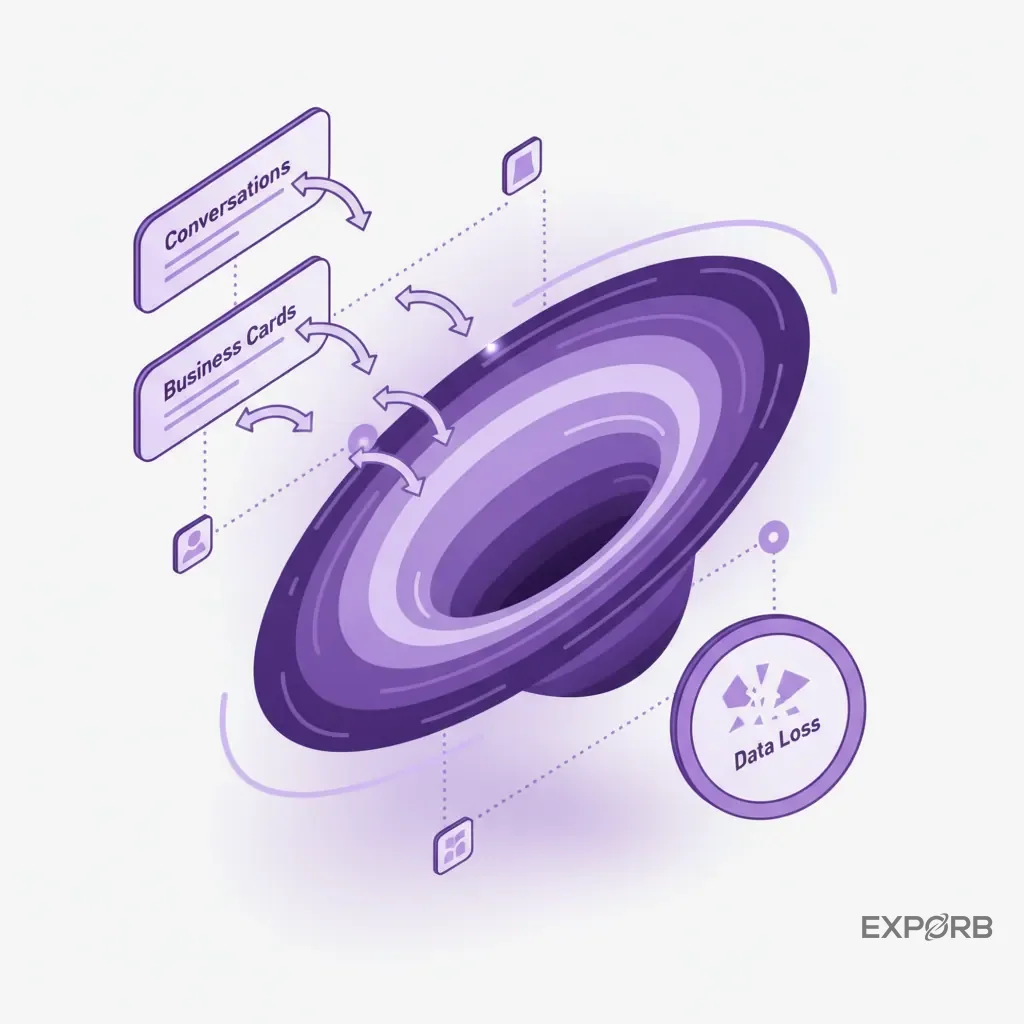
The founder's nightmare: valuable insights lost in transit
Your team on the floor learns an incredible amount of market intelligence. They hear about competitors' plans, emerging customer needs, and common objections. But where does all that insight go? Most of the time, it just evaporates. It stays locked in your reps' heads or gets lost in a sea of disorganized notes.
The founder or sales leader is left completely blind, unable to see the ground truth of what happened at the event they just funded. They can't make strategic decisions because they don't have the data.
Creating a single source of truth for all event intelligence
The only way to fix this is with a centralized system. Every conversation, every business card, every photo, every note from every team member needs to go into one place in real-time. This is about context, not just contacts.
When you have a single source of truth, you can see everything. You can see which reps are having the most conversations. You can see which products are generating the most interest. You can spot trends as they happen on the show floor, not weeks later. A modern team sync solution provides this: a live feed of your event activity.
Giving leadership full visibility into what the team actually learned
When all your event data is structured and centralized, you can finally connect the dots. You can run a report showing every lead that mentioned a specific competitor. You can filter for all prospects who have a budget of over $50k and need a solution in the next quarter.
This transforms the post-show debrief. Instead of relying on anecdotes, you're looking at hard data. You know exactly which leads are hot, who should follow up with them, and what to say. You've closed the black hole and replaced it with a clear, actionable pipeline. You can even export all this enriched data for your wider sales and marketing teams to use.
What are the most common questions about attending 2026 trade shows?
Planning for major trade shows can feel overwhelming, especially for international events. Here are quick answers to some of the most frequent questions we hear from exhibitors.
How far in advance should we plan for a major international show?
For a major international event like Hannover Messe or MWC, you should start planning 9 to 12 months in advance. This isn't an exaggeration. Prime booth locations sell out early, and you'll need ample time for logistics like international shipping, booking travel and accommodations for your team, and planning your pre-show marketing campaigns. Last-minute planning always costs more and delivers less.
What is a realistic budget for exhibiting vs. just attending?
A common rule of thumb is to budget 3-5 times your booth space cost for the total event expense. So, if the booth space is $10,000, your all-in budget will likely be between $30,000 and $50,000. This covers booth design and build, shipping, technology, marketing materials, travel, and staff expenses. In contrast, sending a couple of people to attend and network might only cost $5,000 - $10,000, offering a much lower-cost way to evaluate an event.
How do we measure the true ROI beyond just counting scanned badges?
Counting badges is a vanity metric. True ROI is measured in pipeline and revenue. The formula is: (Revenue from Show - Total Cost of Show) / Total Cost of Show. To calculate this accurately, you need to track leads from the event all the way through to closed deals in your CRM. You should also track "Pipeline ROI," which measures the value of all qualified opportunities generated. Aim for a 3:1 pipeline-to-cost ratio as a minimum benchmark for a successful show.
Your action plan for a successful 2026 trade show season
Reading about the best trade shows is one thing. Building a program that drives real revenue? That's another. Don't let another year go by with wasted event spend and messy spreadsheets. Here's a simple, three-step plan to make your 2026 trade show season your most profitable yet.
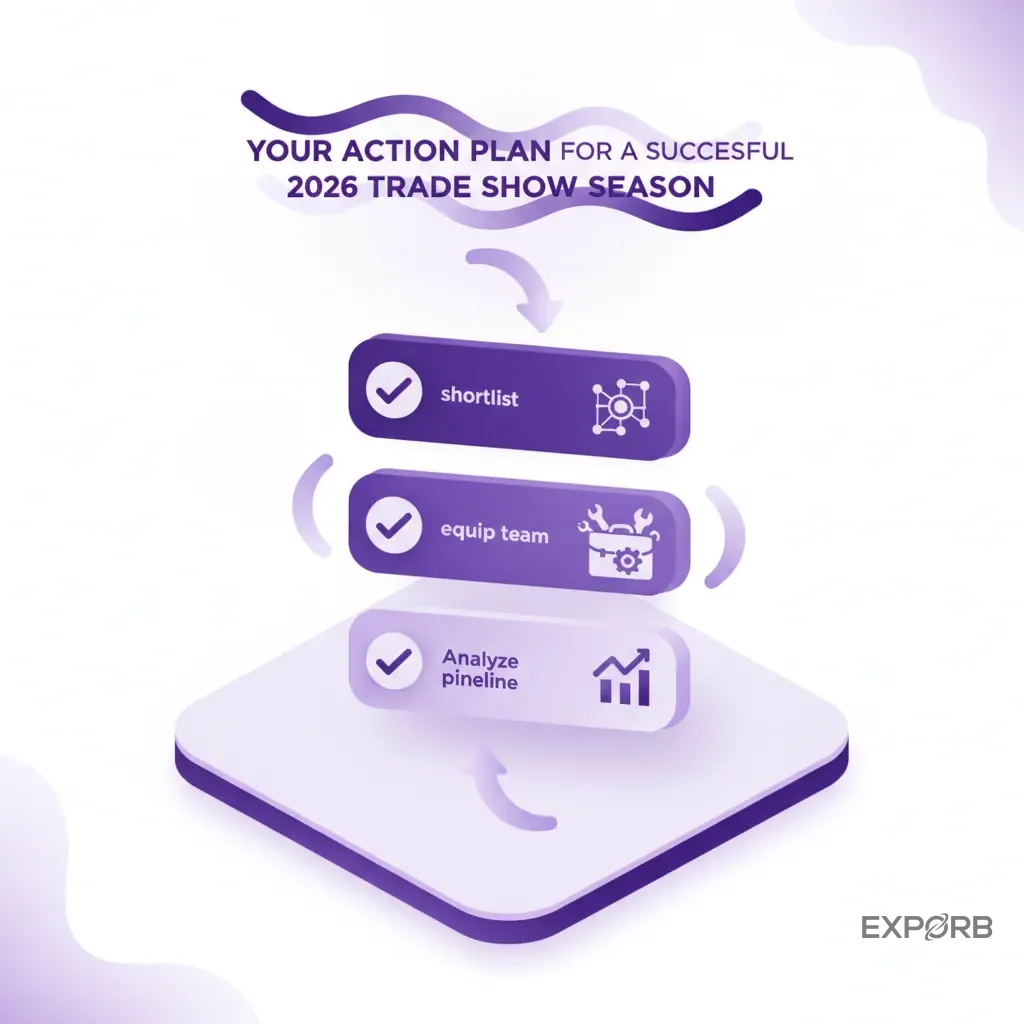
Step 1: shortlist your strategic events based on data
Stop guessing. Pull the historical attendance data for your top 5-10 potential shows. Analyze the job titles, company sizes, and industries represented. Match this against your ideal customer profile. Choose the 2-3 events with the highest concentration of your target buyers. Be ruthless—it's better to dominate one perfect show than to be invisible at five mediocre ones.
Step 2: equip your team with modern lead capture tools
Your team's most important job is to have high-quality conversations. Don't saddle them with clipboards or clunky apps. Give them a tool that makes capturing context effortless. It should work even when the terrible conference Wi-Fi fails. Your team needs a system that lets them scan cards, record voice notes, and sync everything automatically. This isn't an expense; it's an investment in the data that fuels your entire Sales Pipeline. A proper trade show lead capture system is non-negotiable.
Step 3: schedule your post-show debrief and pipeline analysis
Book this meeting before you even leave for the show. Schedule a pipeline review for 14 days after the event. In that meeting, you should be reviewing the opportunities that have already been qualified and entered into the sales process, not sorting through leads. The goal is to review the ROI data, not to create it. This single meeting will hold everyone accountable and ensure that the value from the show actually makes it into your pipeline.