
What is trade show management in 2026?
For years, trade show management meant one thing: logistics. It was simply a checklist of booking flights, shipping a booth, and making sure the carpet was the right color. That approach is now outdated. Today, effective management isn't about execution; it's about intelligence. It's the system you use to turn chaotic booth conversations into clean, actionable pipeline that actually drives revenue.
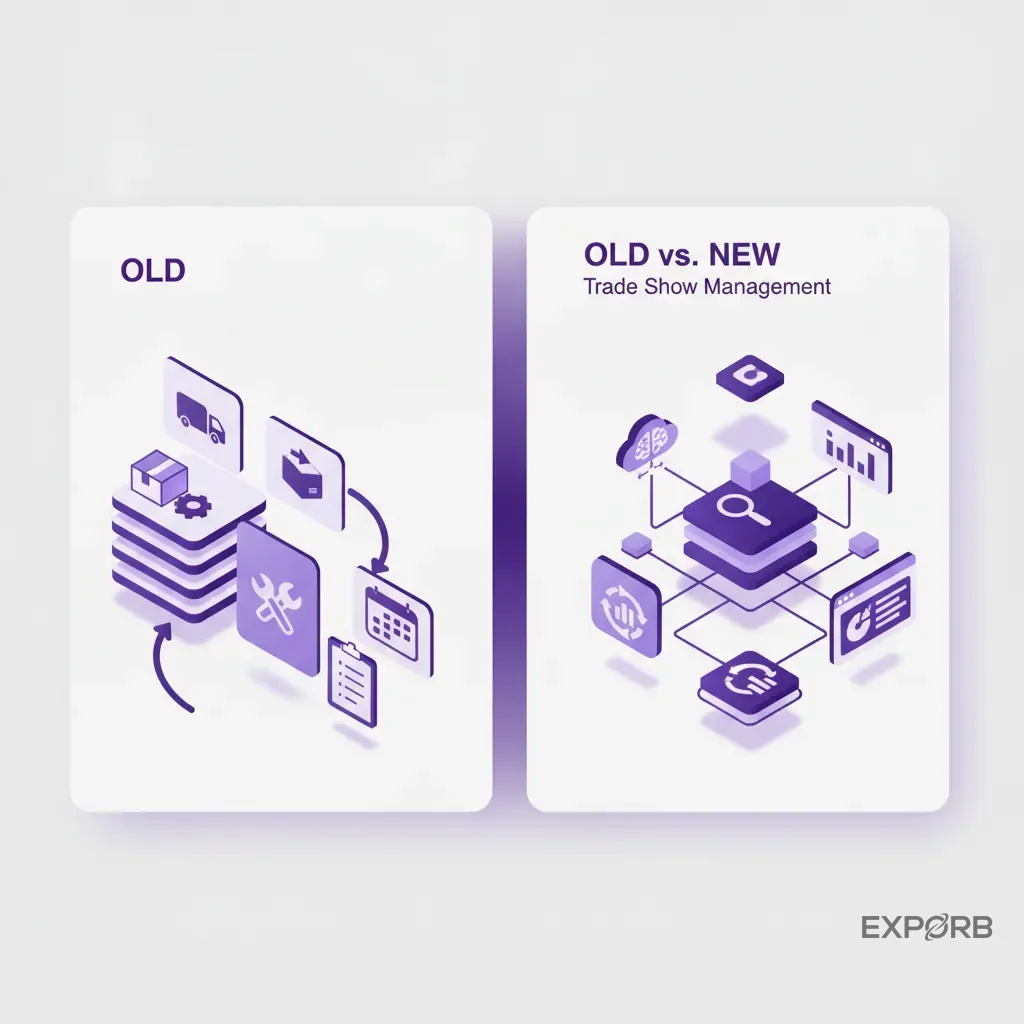
Moving beyond logistics: The shift from event execution to event intelligence
The most expensive part of a trade show isn't the booth; it's the missed opportunity. You're spending tens of thousands of dollars to get your team in a room with hundreds of qualified buyers. Yet, what happens to the insights from those conversations? They usually die in a notebook, a half-remembered thought, or a stack of dead business cards. That's a huge waste. The shift to event intelligence means prioritizing the capture, structuring, and analysis of conversation data over the physical setup of the booth itself.
Why your old checklist is costing you pipeline
That fishbowl on your counter collecting business cards? It's a pipeline graveyard. Relying on manual notes, badge scans that lack context, and a week-long data entry process after the event is throwing leads away. According to a 2026 report from Trade Show PRO, sales teams never follow up on up to 80% of trade show leads. It isn't because your team is lazy; it's because your system is broken.
Why has a unified tech stack become essential for exhibitors?
Your registration data lives in one system, your booth lead notes are scattered across a dozen different apps (or notebooks), and your CRM remains a pristine garden that never sees the messy reality of the show floor. This chaos defaults for most exhibitors, and it's a massive, self-inflicted wound. A unified tech stack isn't a luxury; it's the only way to ensure the business actually gets the value generated at the show.
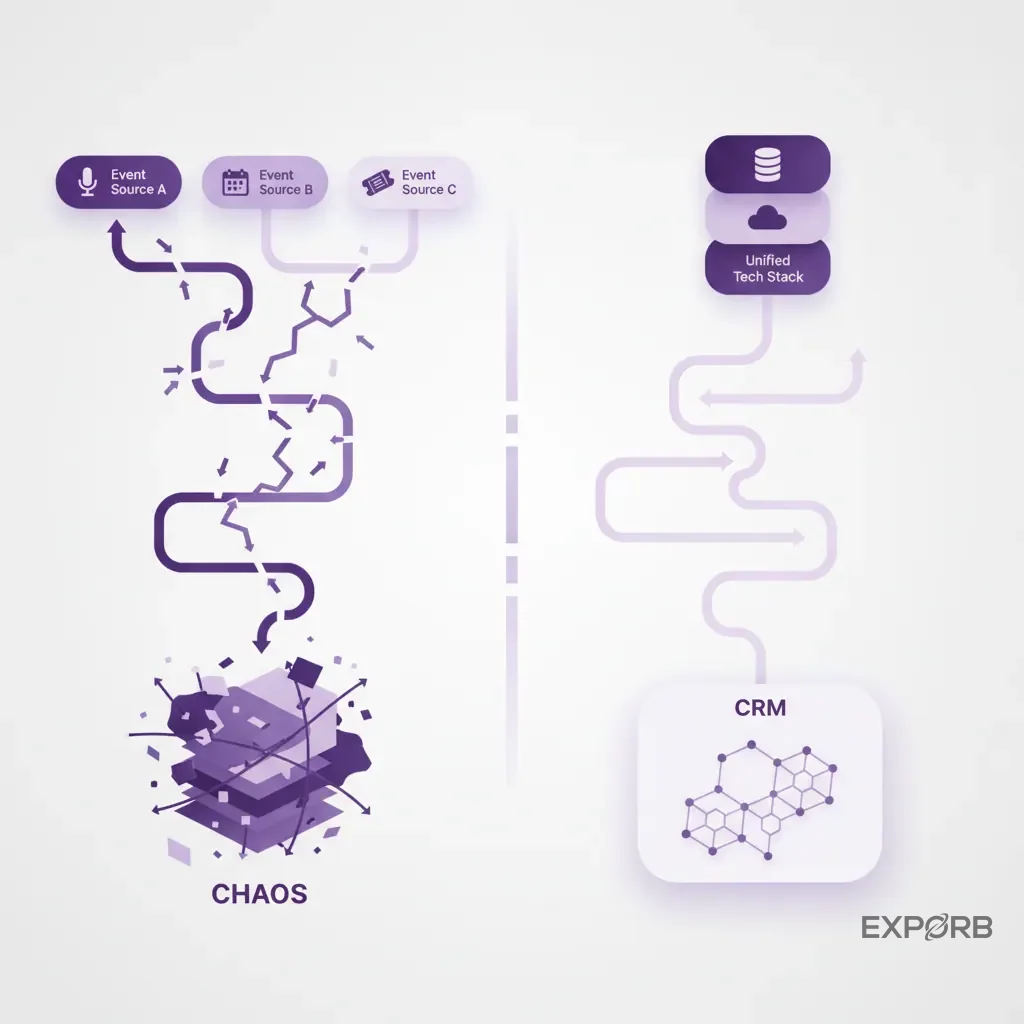
The problem with siloed data: From registration to CRM
When your lead capture app doesn't talk to your CRM, you're creating a "follow-up gap." Your team has great conversations, but the context—the pain points, the budget, the buying timeline—gets lost. A generic "nice to meet you" email sent a week late almost never converts. You need a single thread of data that follows a prospect from the first handshake to the final deal.
Integrating lead capture, collaboration tools, and system analytics
A modern event stack connects four core functions:
- Lead Capture: The tool your team uses on the floor to get contact info and conversation context.
- Collaboration: A real-time view for the entire team—and the founder back at the office—to see who's talking to whom and what they're discussing.
- Analytics: A dashboard that measures what matters: qualified conversations and pipeline influence, not just the number of badge scans.
- CRM Integration: Seamlessly push structured lead data directly into your customer relationship management system.
The rise of cloud-based event management platforms
What makes this unification possible? The cloud. With a cloud-based system, a conversation that happens at 10 AM in Las Vegas can be in your CRM and visible to your marketing team by 10:05 AM. This real-time sync eliminates the post-show data entry scramble and allows for immediate, context-rich follow-up. It closes the gap between the event and the revenue it's supposed to generate.
How does modern trade show management directly increase ROI?
Let's be blunt: if you're not capturing leads digitally, you're lighting money on fire. A recent Spreadly report found a shocking correlation: among exhibitors with a 4x or higher ROI, 62% used digital lead capture. Among those with a 2x or lower ROI, a staggering 0% did. The data couldn't be clearer. Switching from paper to a digital system is the single most impactful change you can make.
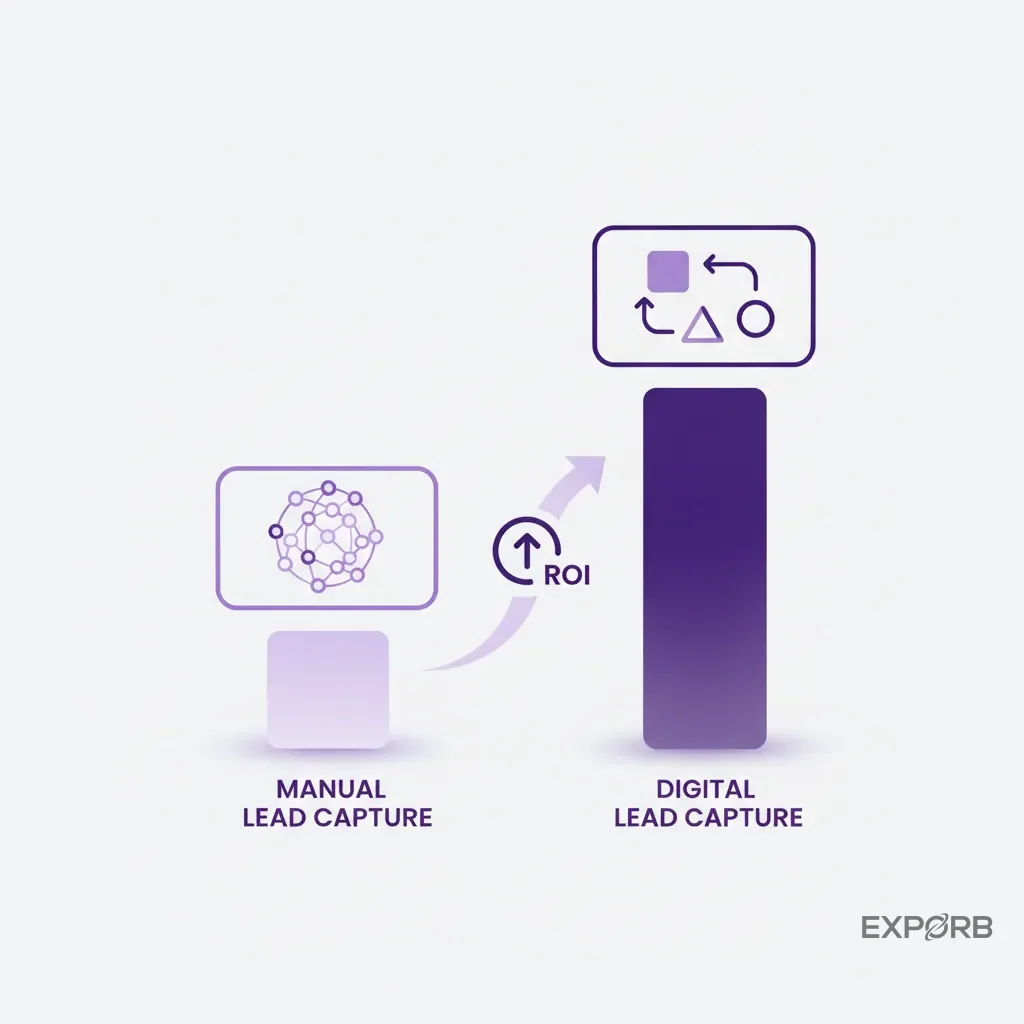
The data-driven link between digital capture and 4x+ ROI
Why the huge difference? Digital capture tools do more than just collect names. They structure data instantly. They capture context through notes, photos, and voice recordings. They enable immediate follow-up. This combination of speed and quality turns a conversation into a qualified lead. Paper forms and business cards introduce delays and data loss at every step.
Calculating the true cost per lead vs. cost per qualified meeting
The average cost per lead at a trade show can be anywhere from $100 to $300. But "lead" feels vague. A better metric is Cost per Qualified Meeting (CPQM). A badge scan is a low-quality, high-cost lead. A conversation where you identify a specific need and book a next step is a high-quality, high-value meeting.
Comparison of Cost per Qualified Meeting for traditional vs. modern lead capture methods.
Real-time dashboards: Shifting from guesswork to business intelligence
What if you could see your booth's performance in real time? Modern lead capture platforms give you a live dashboard. You can see which reps are having the most conversations, what topics are resonating with visitors, and how many qualified leads you've generated by lunchtime on day one. This allows you to adjust your strategy on the fly—not after the show's over.
Related: The Complete Trade Show Lead Capture Guide
What does an end-to-end trade show revenue system look like?
Winning at trade shows requires a system, a smooth workflow that connects your pre-show planning, at-show execution, and post-show follow-up.
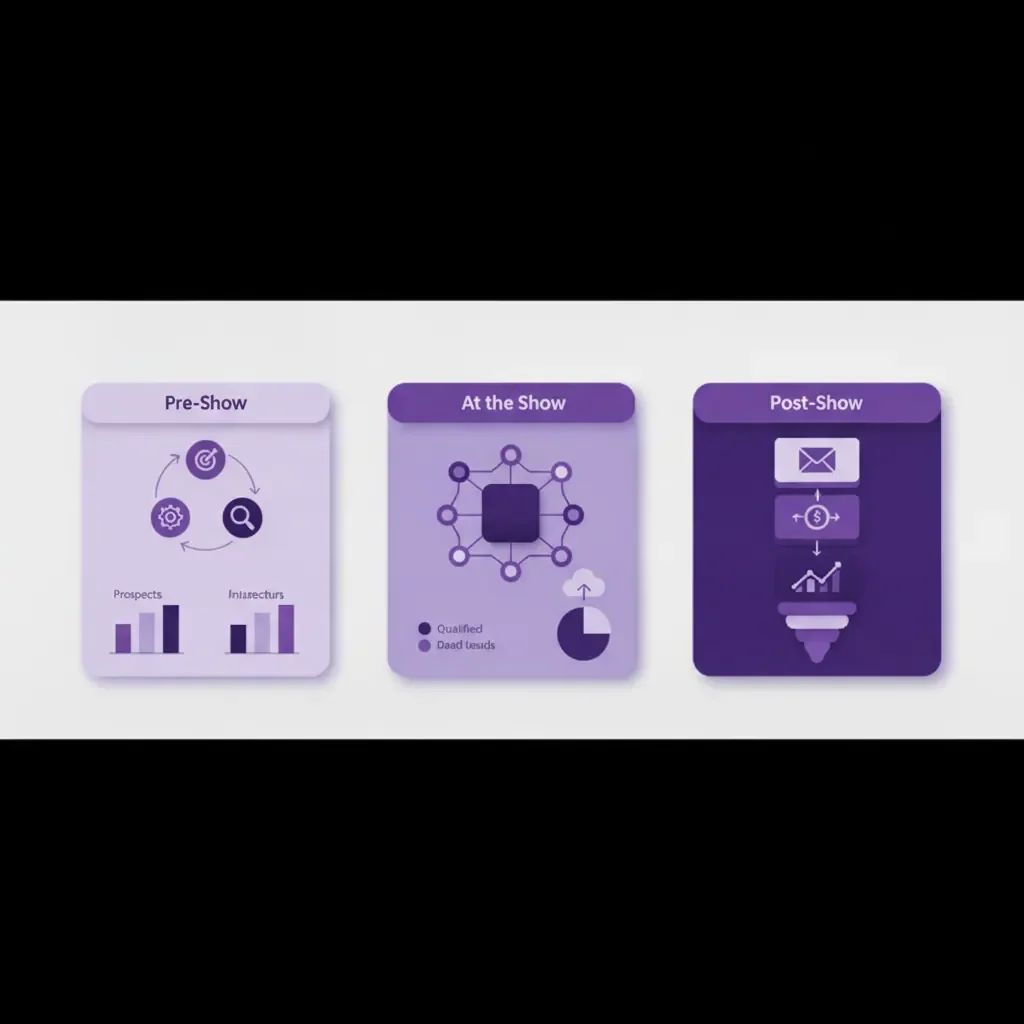
Pre-show: Setting goals, training staff, and prepping your tech
Success starts before you book your flight.
- Set concrete goals: Instead of "get more leads," aim for "book 40 qualified demos with VPs of Marketing."
- Train your team on the tech: Everyone at the booth should be an expert with your lead capture tool. Role-play conversations and practice capturing notes quickly.
- Prep your tech: Make sure your lead capture app is configured with the right custom fields and qualification questions.
At the show: AI-assisted Lead Qualification and instant data sync
Magic happens here. Your team is on the front lines, having hundreds of conversations. A modern system uses technology to make them more effective. With the right tool, they can scan a business card, record a quick voice note summarizing the conversation, and let AI automatically score the lead's quality in seconds. The data syncs to the cloud, giving the whole team visibility.
Post-show: Automating follow-up and measuring pipeline attribution
The post-show phase should be the easiest part. Because you captured structured data at the booth, follow-up isn't a chore; it's a button click. The system should connect directly to your CRM, pushing clean, context-rich leads without any manual data entry. This is how you finally connect trade show spending to closed-won deals and prove the event's ROI.
Are you losing sales in the 'follow-up gap'?
Here's a scenario every founder knows: you spend $50,000 on a trade show. Your team comes back energized, holding a thick stack of business cards. You ask, "So, who were the best leads?" And you get vague answers. "Oh, we talked to a lot of great people." The specific details are gone. This is the founder's blind spot, and it's where your ROI goes to die.
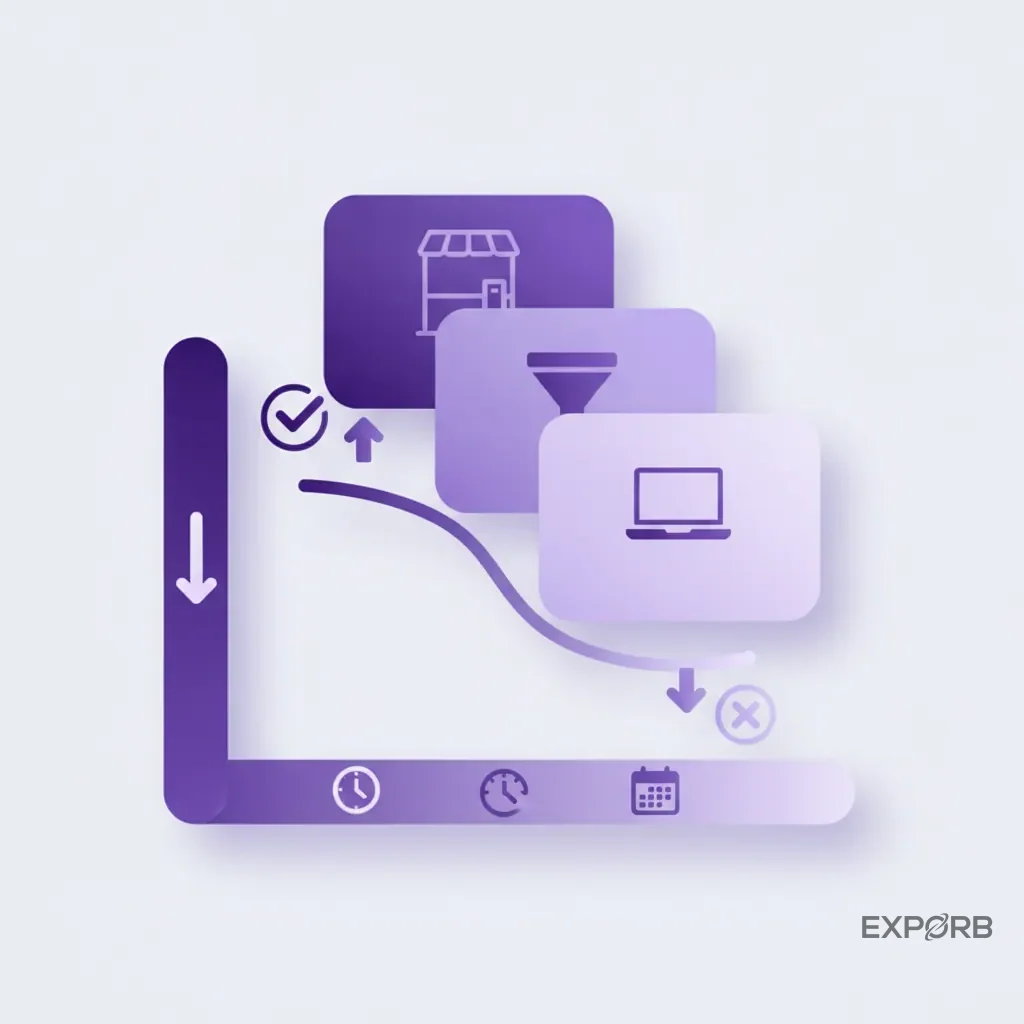
The founder's blind spot: What did the team actually learn?
Without a system to capture conversation context, you've zero visibility into what your team learned. You don't know who was a hot lead, who was just kicking tires, or what specific pain points were discussed. The intelligence you paid for evaporates the moment your team leaves the show floor. You're left with a list of names and no idea how to prioritize them.
Why 80% of leads are never followed up on (and how to fix it)
That horrifying statistic—that 80% of leads get no follow-up—isn't an indictment of your sales team. It's an indictment of the process. After three days of non-stop talking, the last thing anyone wants to do is spend a week deciphering scribbled notes and typing emails. The fix is to eliminate the manual work. The follow-up process needs to start at the booth, not a week later.
How to follow up in 24 hours without burning out your team
Companies that follow up within 24 hours are far more likely to convert leads. The only way to do this consistently is with technology. Imagine your rep finishes a great conversation. They tap a button, record a 30-second voice memo with the key details, and the system instantly drafts a personalized follow-up email based on that context. Your rep just reviews it and hits send. We built Exporb's AI email drafter so the follow-up is done before they even walk away from the booth.
How can AI boost your booth's effectiveness?
Artificial intelligence isn't a futuristic buzzword anymore; it's a practical tool that solves the biggest problems in trade show lead capture. It automates tedious tasks, surfaces critical insights, and frees your team to do what they do best: talk to potential customers.
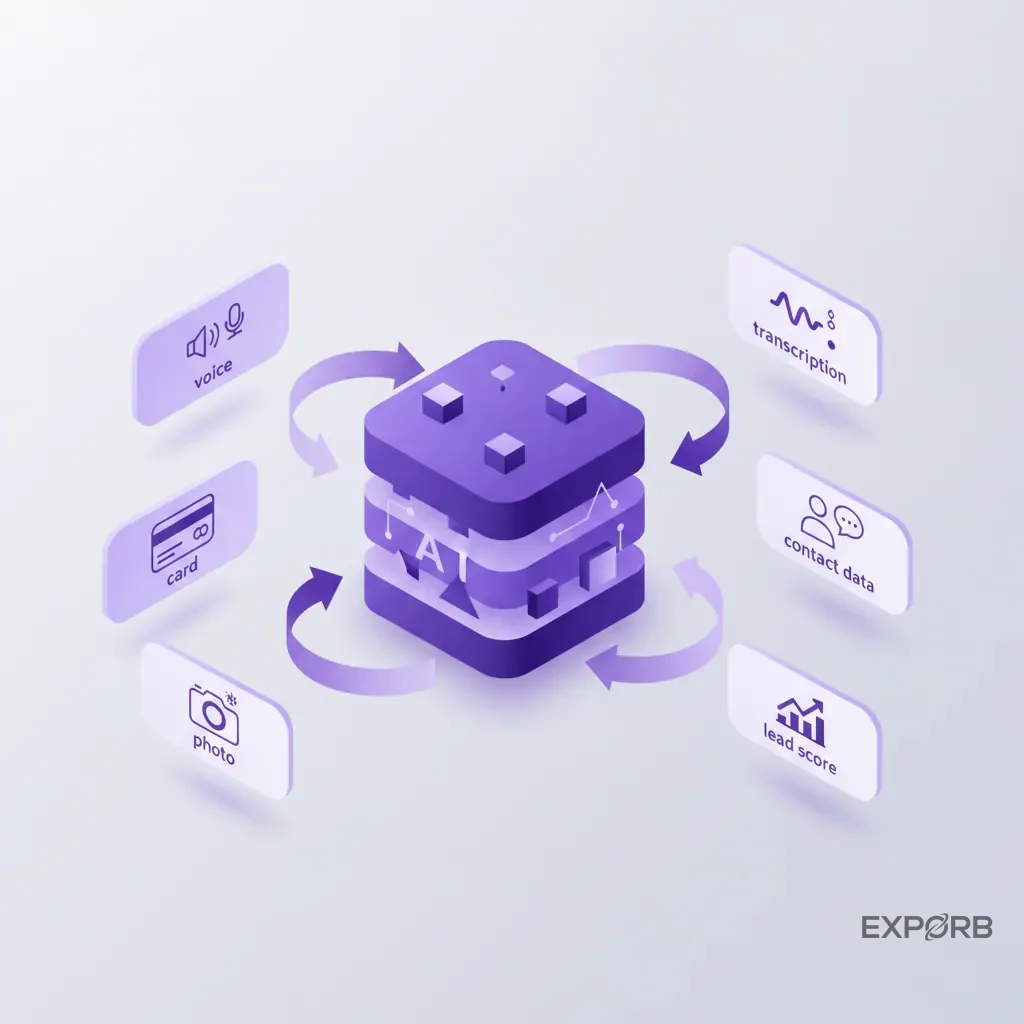
From business card bowls to AI-powered OCR and transcription
The first step is getting data into the system cleanly. Instead of manually typing business card info, you can use an AI-powered scanner that pulls contact details from any card in any language. But contact info is just the start. The real value is in the conversation. By recording voice notes, you can have AI transcribe the discussion, pulling out key interests, pain points, and action items automatically.
Using AI to score leads and prioritize conversations in real time
How does your team know which of the 50 people they talked to is the most important one to follow up with first? AI can analyze the conversation transcripts, sentiment, and topics discussed to assign a lead score automatically. This lets your team—and your founder back home—see a real-time leaderboard of the hottest opportunities as they happen.
A practical guide to implementing AI in your workflow
You don't need a data science team to get started. Here's a simple, three-step plan:
- Capture Rich Media: Choose a tool that lets your team capture more than just text. They should be able to snap photos of whiteboards, scan cards, and record audio notes.
- Automate Transcription and Summarization: Let the AI do the heavy lifting. It should turn unstructured audio into a structured summary with key insights.
- Trigger Automated Actions: Use the AI insights to drive the next step. Automatically draft a follow-up email, assign a lead score, or sync the data to your CRM with the right tags.
The industry standard for event management technology
While your sales and marketing teams focus on conversations, your operations team is wrestling with a different beast: the physical assets. Booths, monitors, swag, and marketing materials all need tracking, shipping, and management. For this, a specialized category of software has emerged: the Exhibit ERP system.
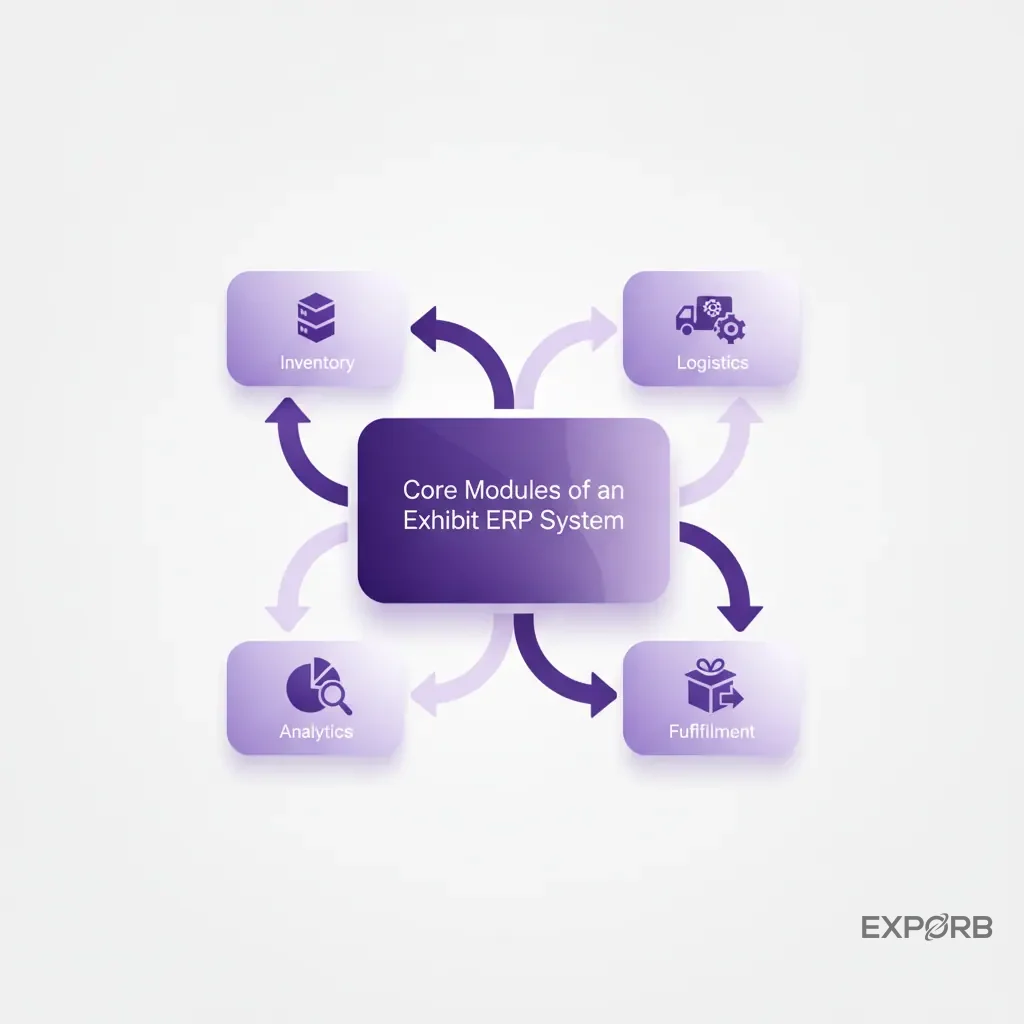
What is an Exhibit ERP system?
An Exhibit Enterprise Resource Planning (ERP) system is a centralized platform for managing all the logistical and inventory-related aspects of your trade show program. Think of it as the single source of truth for your physical event assets. It helps you avoid the chaos of spreadsheets and last-minute panics about where a critical piece of your booth is.
Key features: Inventory, logistics, and fulfillment tracking
A solid Exhibit ERP provides four core functions:
- Inventory Management: A complete catalog of every asset you own, from large booth components to boxes of pens.
- Logistics Tracking: End-to-end tracking of shipments to and from event venues.
- Fulfillment: A system for stakeholders to request materials (like brochures or swag) for an event and for the warehouse to fulfill those requests accurately.
- Budgeting & Cost Control: Track spending against budgets to optimize expenses across multiple events.
Choosing a solution for your business size: From startups to enterprise
You don't need a massive ERP on day one. A startup might manage with a detailed spreadsheet. But as your event program grows to multiple shows per year, the complexity quickly becomes unmanageable. That's when investing in a dedicated Exhibit ERP pays for itself by preventing costly mistakes, lost assets, and shipping errors.
Related: Trade Show Booth Design Ideas to Attract Visitors
Updating best practices for event data and attribution
For too long, we've measured trade show success with vanity metrics like "booth traffic" or "number of badge scans." These numbers feel good, but they don't tell you anything about revenue. The new best practice is to focus on metrics that connect directly to pipeline and to build a data strategy that gives you full control.
Owning your first-party data in a privacy-first world
When you rely solely on the event organizer's badge scanner, you're renting their data. You don't own it, you don't control its quality, and it often comes with usage restrictions. By using your own lead capture app, you're collecting first-party data directly from the attendee. This means you get more accurate, compliant data that's an asset you own forever.
Measuring what matters: From badge scans to qualified pipeline
Stop counting scans. Start measuring conversations that lead to action. The key metrics for a modern trade show program are:
- Number of qualified conversations held.
- Number of next-step meetings booked at the booth.
- The event's influenced pipeline value.
- Closed-won revenue sourced from the event.
These are the numbers your CFO cares about.
Connecting trade show activity to closed-won deals in your CRM
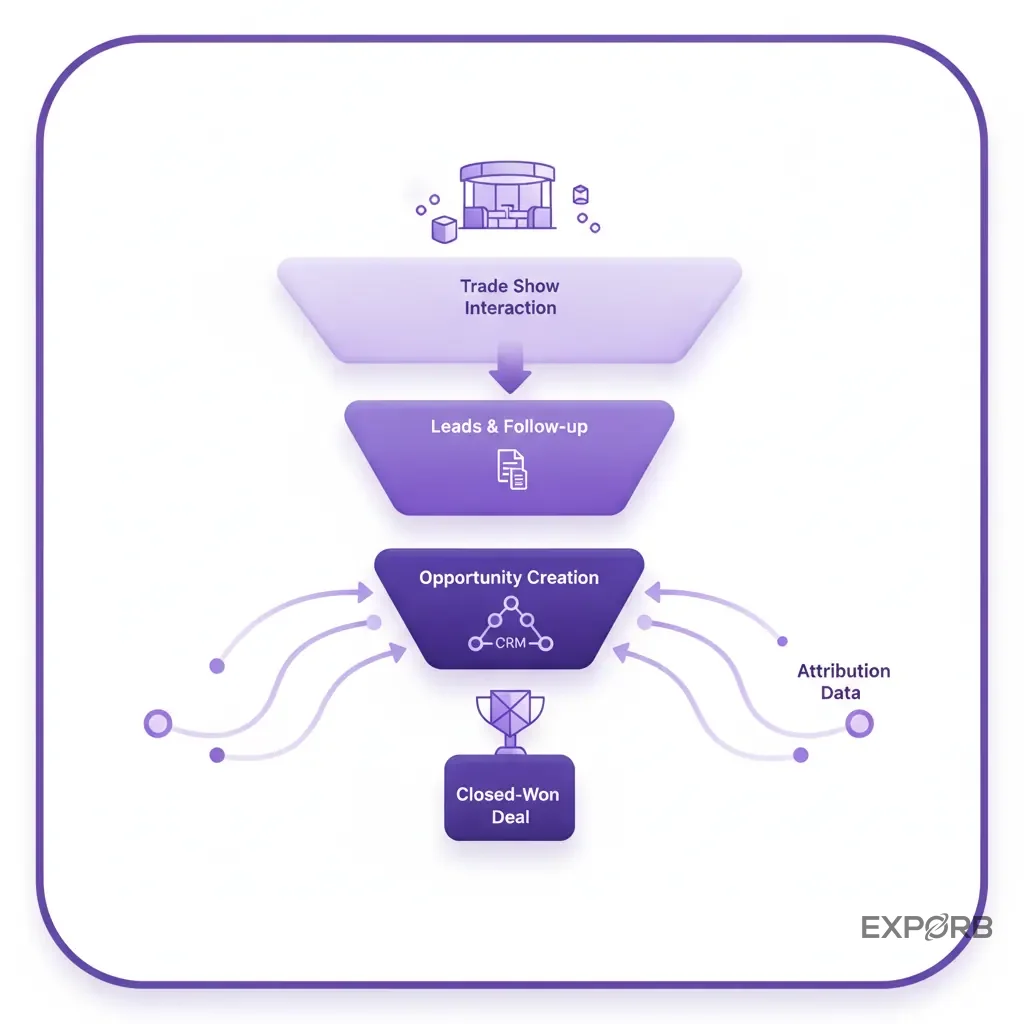
Attribution is the final piece of the puzzle. This is only possible if you've a clean, fast, and reliable way to get event data into your main CRM. A manual CSV upload a week after the show spells disaster—data gets lost, duplicates are created, and attribution is broken. A system with a direct CRM export or integration properly tags every lead from the show, allowing you to track its journey all the way to a closed deal.
What are the top trade show management companies and tools?
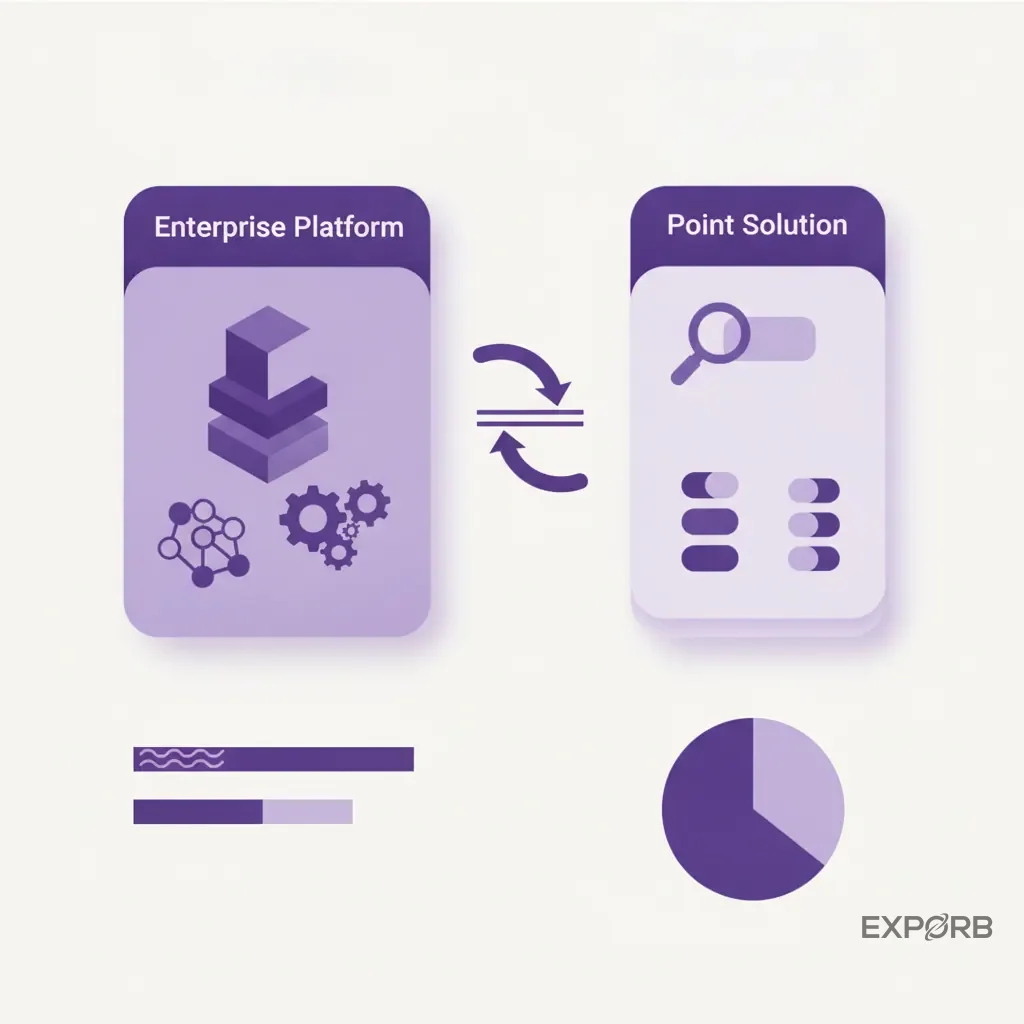
The market for Event Technology is crowded, with all-in-one enterprise behemoths and nimble, specialized apps both existing. Choosing the right tool depends entirely on identifying your biggest bottleneck. Are you struggling with logistics or are you struggling with lead quality?
Enterprise platforms vs. specialized point solutions
Enterprise platforms try to do everything—registration, Event Marketing, logistics, and lead capture. They offer a single vendor relationship but often mean each individual feature is rarely excellent. Specialized point solutions, on the other hand, focus on doing one thing exceptionally well. At Exporb, we're laser-focused on building the best system in the world for capturing and structuring conversation intelligence at the booth.
Evaluating software: Key questions to ask vendors
When you're looking at tools, don't get distracted by flashy features. Ask the questions that matter on a noisy, chaotic trade show floor:
- Does it work offline? The Wi-Fi at convention centers is notoriously unreliable. If your app needs a constant connection, it'll fail.
- How fast can my team capture a lead? It needs to be faster than grabbing a business card.
- Does it capture context or just contact info? A name and email isn't a lead. You need the "why."
- How quickly is the data available to my team and in my CRM? The answer should be "instantly."
Getting started: Free and low-cost tools for small teams
You don't have to sign a five-figure enterprise contract to improve your process. Many modern tools offer free or low-cost entry points. You can start by replacing your paper forms and business card fishbowl with a simple app on your team's phones. The improvement in data quality and follow-up speed will be immediate.
Your blueprint for mastering trade show management
Improving your trade show program doesn't have to be a massive, year-long project. You can make significant progress by taking a systematic approach. It's a simple, three-step process: audit, define, and implement.
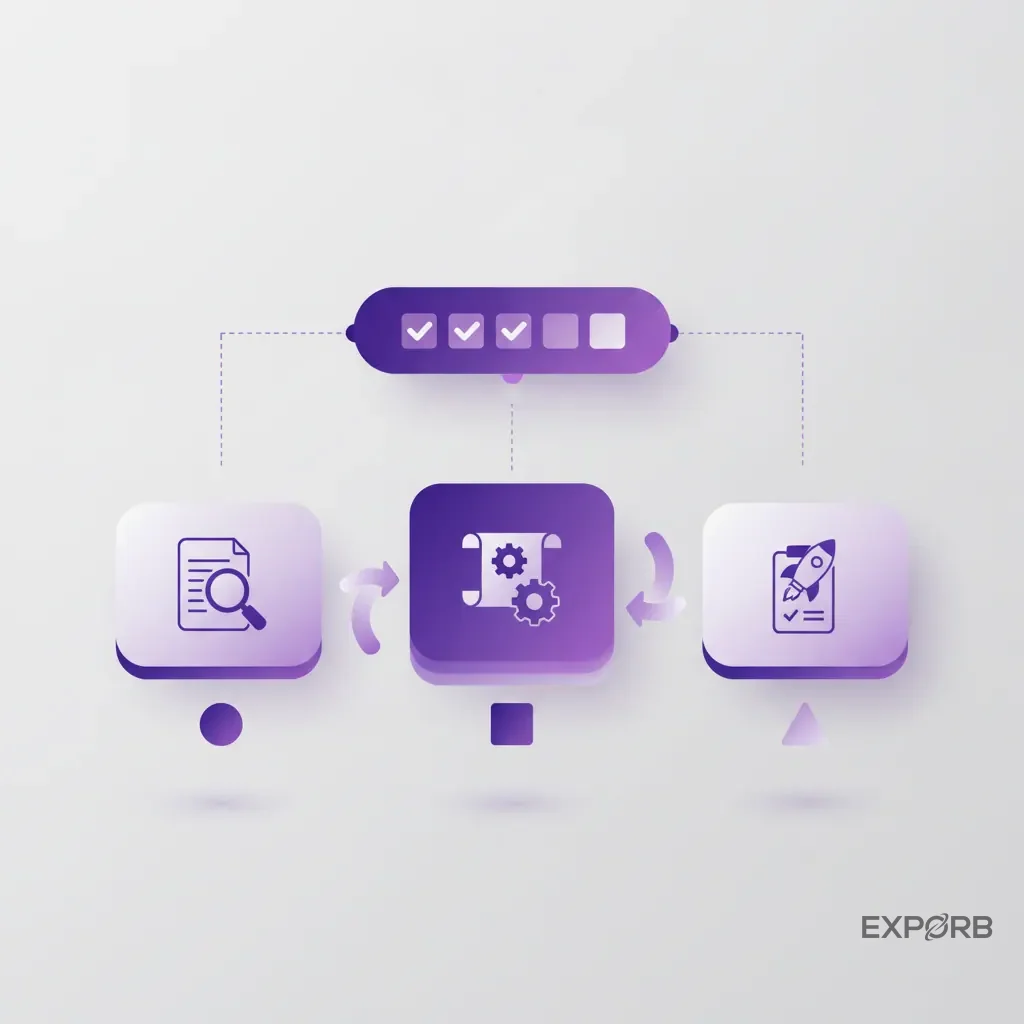
Step 1: Audit your current process and identify bottlenecks
Be brutally honest with yourself. Where does your current process break down?
- Is it at the booth, with reps taking messy, unusable notes?
- Is it the week after the show, with the painful data entry process?
- Is it the follow-up, where generic emails get ignored?
- Is it in reporting, where you can't prove the show's ROI?
Find the single biggest point of failure. That's where you start.
Step 2: Define your goals for lead quality, speed, and attribution
Once you know the problem, define what success looks like. Set specific, measurable goals.
- Quality: "Increase the percentage of leads with budget and timeline information from 10% to 60%."
- Speed: "Follow up with 100% of qualified leads within 24 hours of the conversation."
- Attribution: "Attribute at least $500,000 in closed-won pipeline to our presence at the show."
Step 3: Implement a unified system to connect your entire event workflow
Finally, choose the technology that solves your specific bottleneck and helps you achieve your goals. Don't buy an enterprise suite if your only problem is messy lead capture. Find a best-in-class tool that excels at turning booth conversations into clean, actionable data. Implement it, train your team, and measure the results. This is how you move from simply attending trade shows to mastering them.