Why does trade show staff training matter more than ever in 2026?
You spend tens of thousands—sometimes hundreds of thousands—on booth space, design, and travel. But what about the people standing in it? The single biggest mistake we see exhibitors make is investing everywhere except in their team. Effective trade show staff training isn't a nice-to-have; it's the difference between a massive ROI and a massive waste of money. You can have the best-looking booth on the floor, but if your team can't engage, qualify, and capture leads effectively, you're just hosting an expensive party.
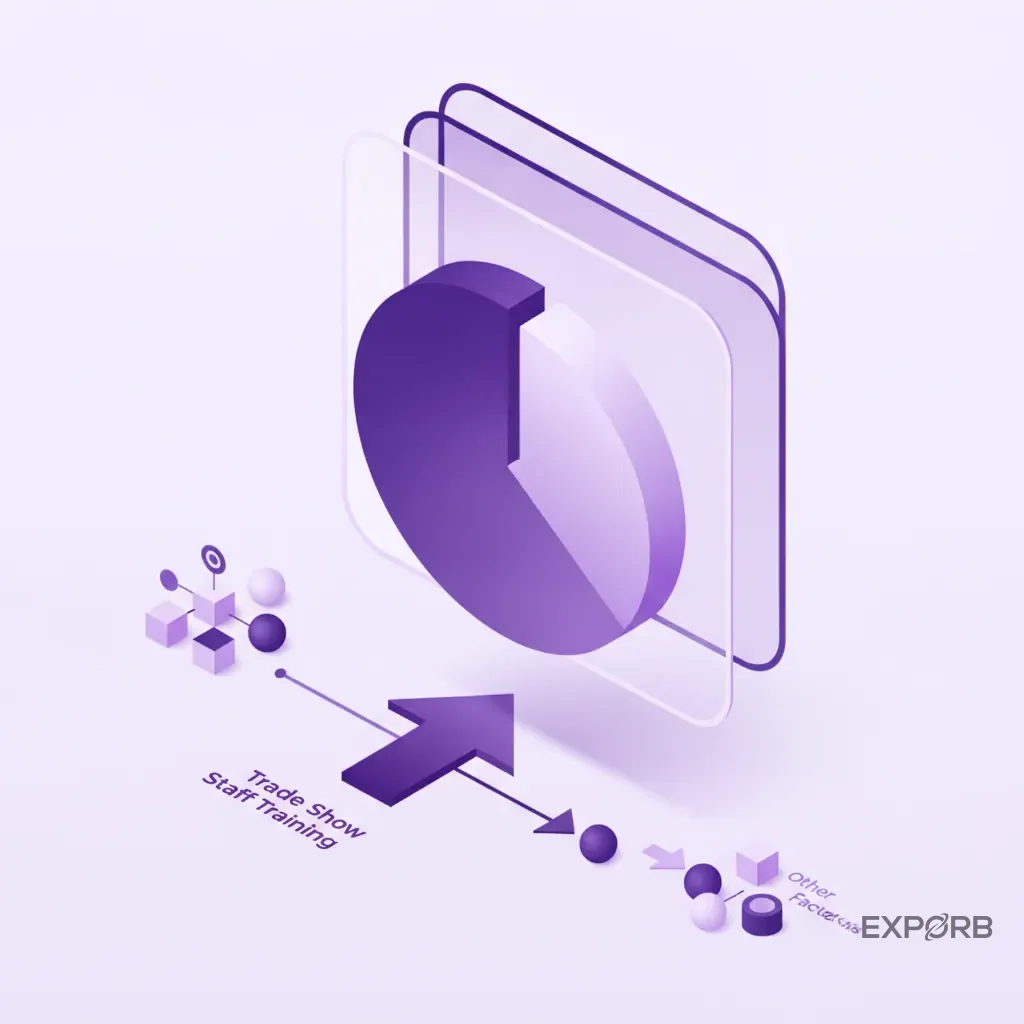
The 85% rule: How booth staff performance dictates exhibitor success
Here’s a number that should stop you in your tracks: booth staff performance accounts for about 85 percent of an exhibitor's success. That's not an exaggeration. It's a hard truth. Your team's ability to connect with visitors, understand their pain points, and clearly articulate your value proposition is what turns booth traffic into actual pipeline. The slickest video wall or plushest carpet can't save a conversation that goes nowhere.
Market shifts in 2026 demanding a more skilled, data-driven team
The game has changed. With 58 percent of companies focusing on smaller, more targeted events, every interaction counts more. You can't just scan badges and hope for the best. Prospects expect more. They want to talk to experts who understand their specific problems, not just someone reciting a generic script. Your team needs to be consultative, sharp, and equipped with tools that capture the context of a conversation, not just the contact info.
The hidden costs of an unprepared team
What does an untrained team actually cost you? It’s not just the missed leads. It's the cost of following up with unqualified prospects, the damage to your brand from poor interactions, and the complete lack of visibility into what was actually learned on the show floor. You end up with a pile of dead business cards and a CRM full of contacts labeled "spoke at show," with no memory of what you talked about. That's a black hole for your marketing budget.
What are the measurable goals for your booth team?
"Get more leads" isn't a goal. It's a wish. A well-trained team operates on clear, measurable objectives that tie directly back to revenue. If you can't measure it, you can't improve it. And you certainly can't calculate your ROI.
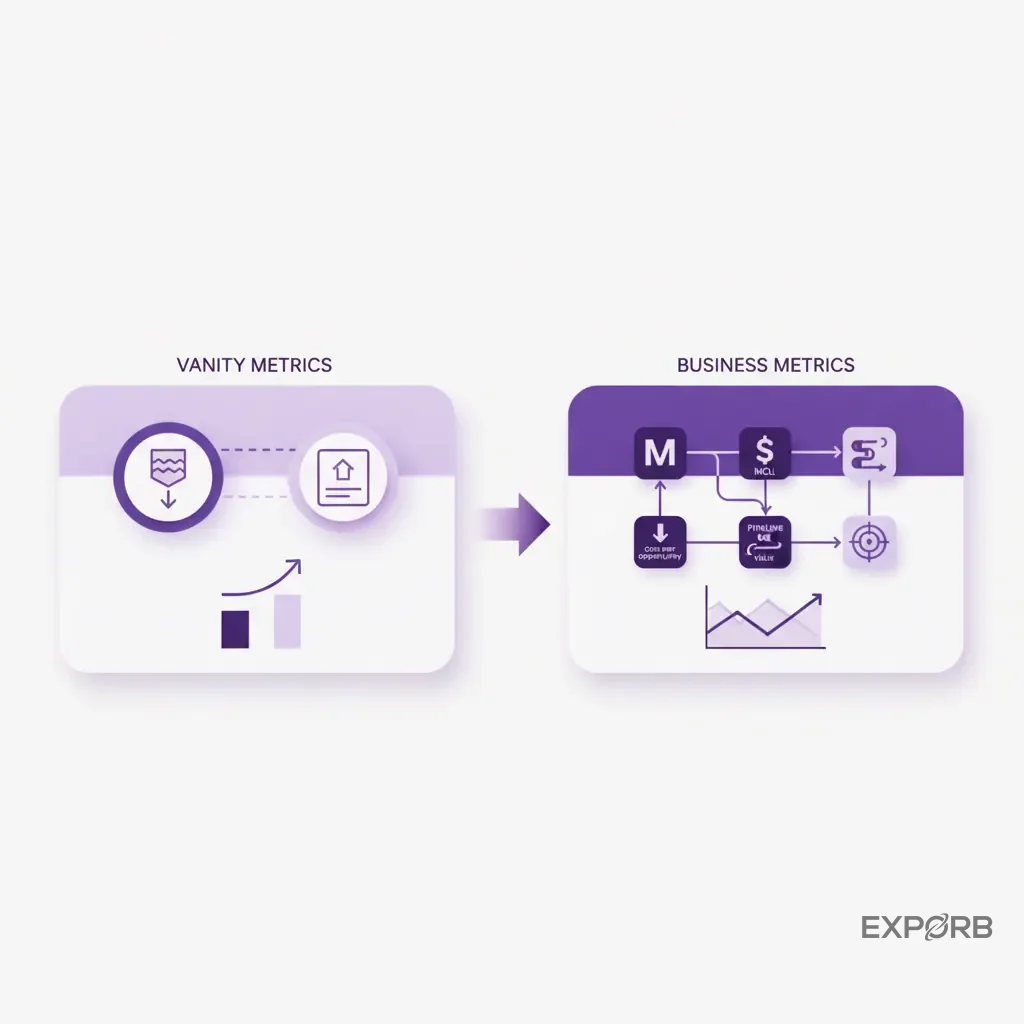
Moving beyond lead quantity to lead quality and pipeline value
Stop counting business cards. The real metric for success is qualified leads that turn into pipeline. A hundred badge scans from students and tire-kickers are worthless compared to five qualified conversations with decision-makers who have a real, urgent problem your product can solve. Your training should focus on teaching your team how to identify and prioritize these high-value prospects.
Setting SMART goals: From MQLs per visitor to cost per opportunity
Get specific with your targets. Instead of "more leads," set goals like:
- MQLs per staff hour: How many marketing-qualified leads does each rep generate?
- Cost per qualified lead: Divide your total event spend by the number of truly qualified leads.
- Visitor-to-MQL conversion rate: On average, exhibitors generate one MQL for every seven booth visitors. Top performers get two or three. Where do you want to be?
Aligning individual and team KPIs with overall sales targets
Your booth goals shouldn't exist in a vacuum. They need to connect directly to the company's sales targets. Work backward from your revenue goals. If you need to close $250,000 in new business from this show, how many opportunities does that require? How many qualified meetings? How many booth conversations? Give each staffer a clear target that rolls up to the team's overall goal.
Related: The Ultimate Lead Capture App Guide
How do you assign roles for maximum booth coverage and engagement?
Putting your best people on the floor isn't enough. You need to put them in the right positions with clearly defined responsibilities. A chaotic booth where staffers trip over each other or huddle in a corner is a recipe for failure. Structure is everything.
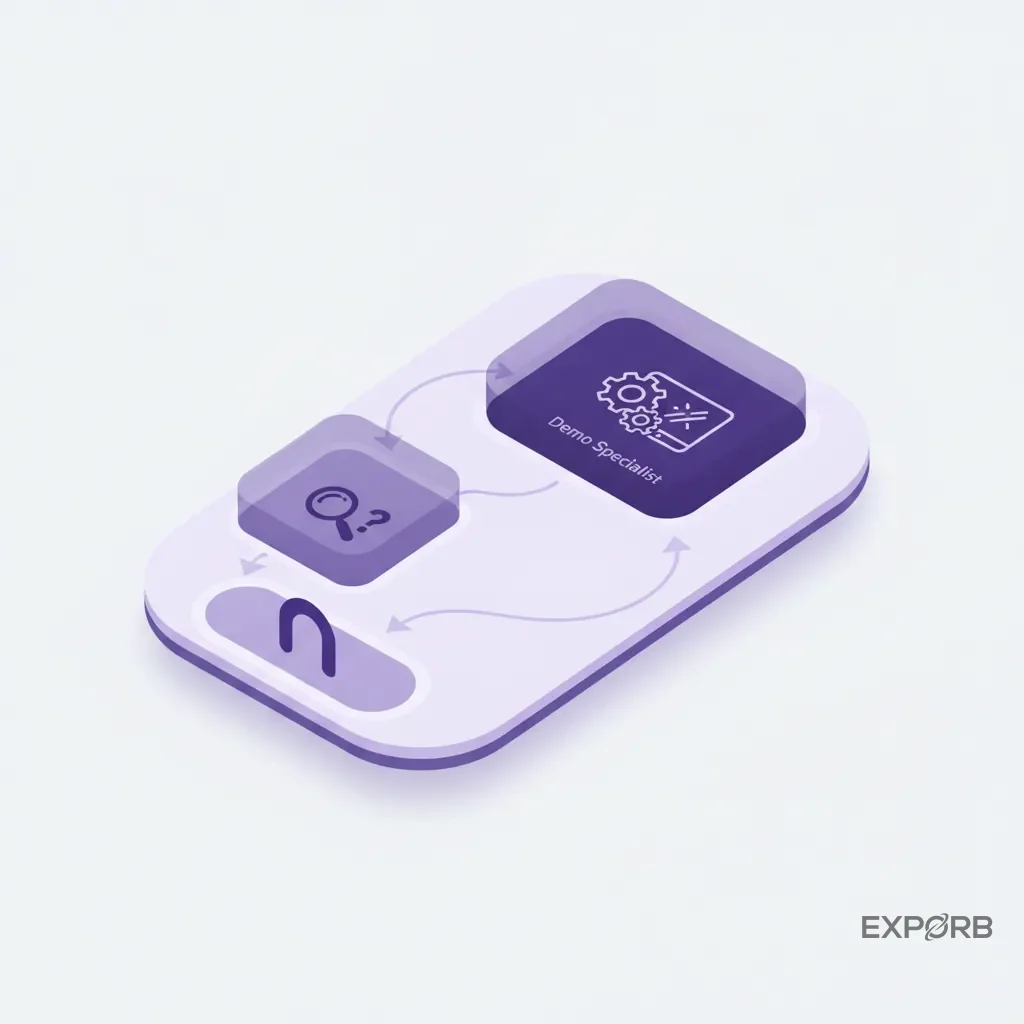
Mapping roles to booth traffic flow: The greeter, the qualifier, and the demo specialist
Think of your booth like a well-oiled machine with three key roles:
- The Greeter: Positioned at the edge of the aisle, their job is to make eye contact, smile, and ask an open-ended question to draw people in. They're your friendly front door.
- The Qualifier: Once a visitor is engaged, the qualifier takes over. Their goal is to ask discovery questions to determine if there's a real fit. Are they the right person? Do they have a problem you can solve?
- The Demo Specialist: If the prospect is qualified, they're handed off to your product expert for a tailored demo. This person knows the product inside and out and can connect features to the prospect's specific pain points.
Applying the 1 staffer per 50 square feet rule effectively
How many people do you actually need? A good rule of thumb is one staffer for every 50 square feet of booth space. So, a standard 10x10 booth (100 sq. ft.) needs two or three people to be effective. A 20x20 booth (400 sq. ft.) needs six to eight. Understaffing leads to missed opportunities; overstaffing leads to reps standing around on their phones, which looks terrible.
Creating a schedule that manages energy and ensures peak performance
Trade shows are marathons, not sprints. Standing on a concrete floor for eight hours is brutal. Create a rotating schedule that gives everyone regular breaks away from the booth. A tired, grumpy staffer won't close any deals. Schedule shifts, plan lunch breaks, and make sure everyone has time to recharge so they're sharp for every conversation.
What essential skills does every booth staffer need?
A friendly personality is a start, but it won't get you qualified leads. Your team needs specific, trainable skills to succeed on the trade show floor. These aren't complicated, but they require practice.
Mastering the 30-second value proposition
Can every person on your team explain what your company does, who it's for, and what problem it solves in 30 seconds or less? If not, you have a problem. This isn't a feature dump; it's a concise, compelling statement that makes a prospect lean in and say, "Tell me more." Everyone needs to have this down cold.
The art of discovery: Asking questions that qualify and uncover pain points
The most important skill is listening, not talking. Train your team to ask smart, open-ended questions that go beyond "What do you do?"
- "What's the biggest challenge you're facing with [their area of responsibility] right now?"
- "How are you currently handling [the problem you solve]?"
- "What would an ideal solution look like for you?"
These questions uncover pain and qualify the lead at the same time.
Training for modern lead capture: Badge scanners, QR codes, and conversational notes
The days of dropping a business card in a fishbowl are over. Your team needs to be proficient with your lead capture tool. But badge scanners only give you contact information—they don't tell you anything about the conversation. The real value is in the context. Train your team to add quick notes about pain points, next steps, and purchase timelines. This is where tools that allow for quick voice notes or photos can make a huge difference, ensuring you don't forget what you talked about.
How can you build a repeatable trade show training system?
One-off training sessions before a big show are better than nothing, but a repeatable system ensures consistency and continuous improvement. Your goal should be to build a trade show playbook that anyone on the team can pick up and use to become an effective booth staffer.
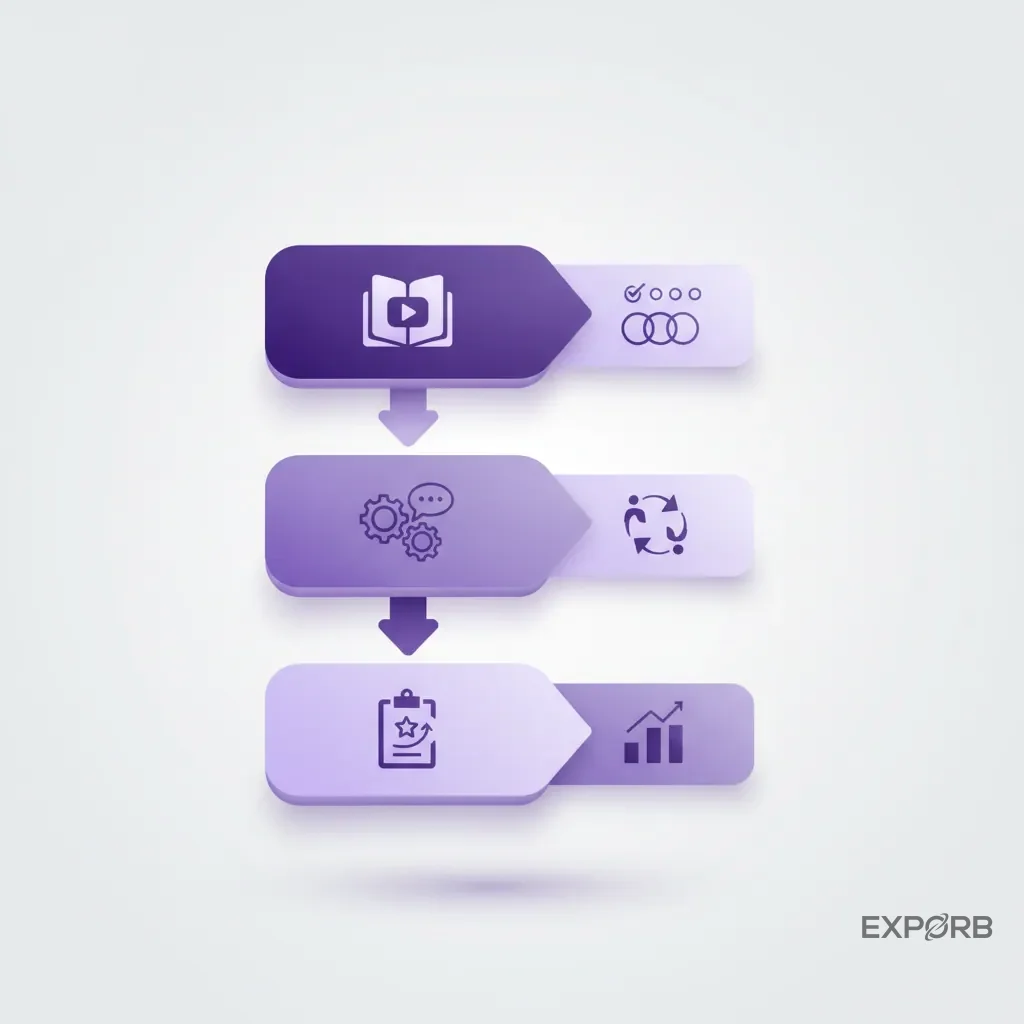
The pre-show playbook: Aligning on messaging, goals, and logistics
Your playbook should be a single source of truth for the event. It should include:
- Event Goals: The specific KPIs we discussed earlier.
- Target Audience: Who are we trying to talk to? What are their titles and pain points?
- Key Messaging: The 30-second value prop and answers to common questions.
- Lead Capture Process: A step-by-step guide on how to use your capture tool.
- Logistics: Booth numbers, schedules, dress code, and contact info.
Running effective role-playing sessions for demos and objection handling
You wouldn't send a sales rep on a call without practice, so why send them into a trade show booth cold? Role-playing is the best way to build confidence and muscle memory. Practice the initial engagement, the discovery questions, the demo, and—most importantly—how to handle common objections. Run through scenarios until the responses are natural and confident.
Using microlearning and daily debriefs to reinforce training on-site
Training doesn't stop when the show starts. Hold a brief 15-minute huddle each morning to review goals and messaging. At the end of the day, do a quick debrief. What worked? What didn't? What questions are we hearing most often? This real-time feedback loop allows you to make adjustments on the fly and keeps the training fresh in everyone's mind.
How do you solve the 'black box' problem of booth conversations?
Here's the founder's dilemma: you send your team to a show, they talk to hundreds of people, and when they get back, you have no real idea what happened. The most valuable insights—customer pain points, competitive intel, product feedback—are trapped in their heads or scribbled on the back of a business card. They're lost forever.
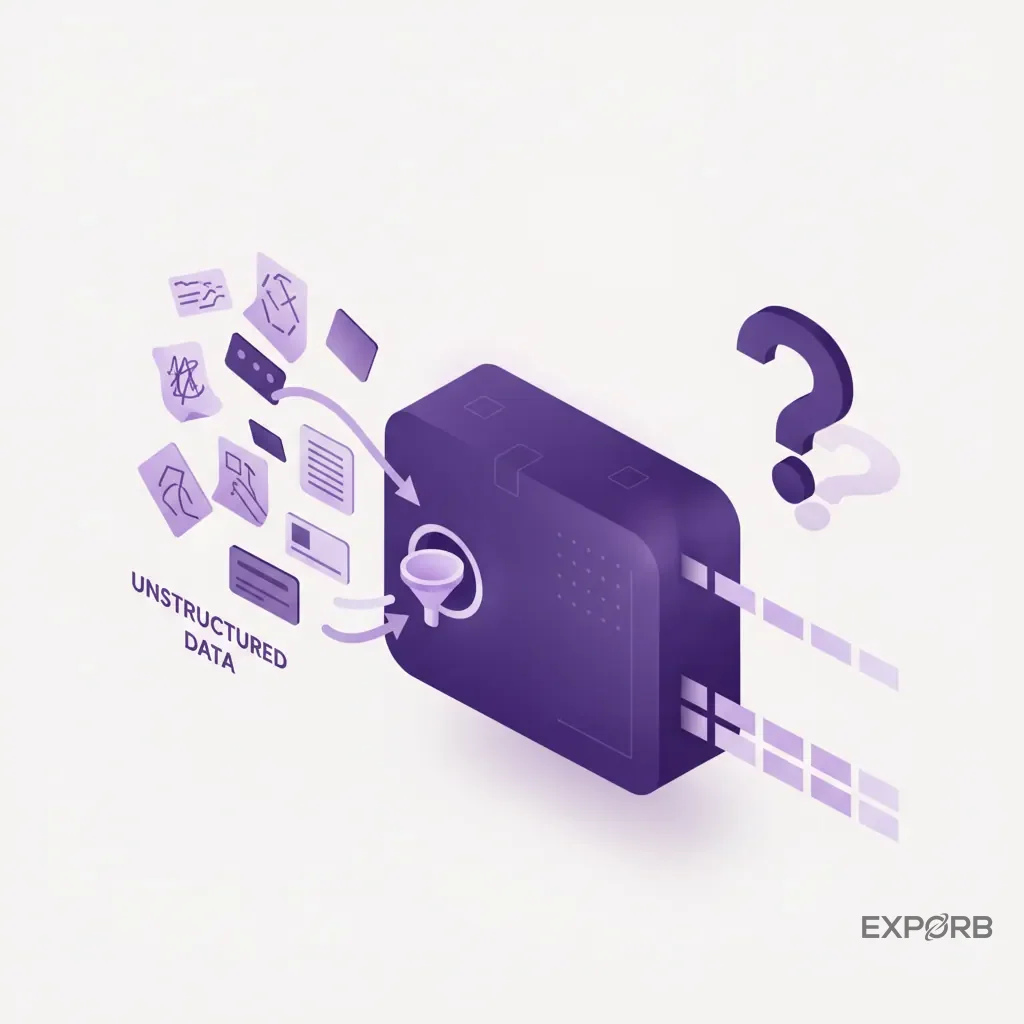
The founder's dilemma: Why valuable insights get lost after the handshake
Your team has amazing conversations. They learn about a prospect's budget, their timeline, and the one feature that would make them sign today. But by the time they get back to the office a week later, those details are fuzzy. The follow-up email is generic. The CRM entry is empty. The opportunity dies on the vine because the context was lost.
Implementing a system for real-time conversation capture and transcription
What if you could have a perfect memory of every important conversation? That's the problem we built Exporb to solve. Instead of relying on messy handwritten notes, your team can record a quick voice memo summarizing the conversation right after the prospect leaves. The discussion is captured while it's fresh. AI transcribes the voice note, making the key details searchable and shareable with the entire team. It turns every conversation into a permanent, structured asset.
Turning unstructured conversations into structured data for immediate follow-up
This isn't about surveillance; it's about digital note-taking. That raw conversation data—the pain points, the buying signals, the next steps—can be structured and analyzed. With a system like Exporb, you can see in real-time which reps are having the best conversations and which leads are hottest. It allows you to trigger a perfectly personalized follow-up email drafted by AI using the conversation's context—before your rep even leaves the booth. The "black box" is gone. You have full visibility.
How do you measure training effectiveness and booth ROI?
If you've set clear goals and implemented a solid capture system, measuring your success becomes straightforward. You can finally connect the dots between your trade show staff training investment and your bottom-line results.
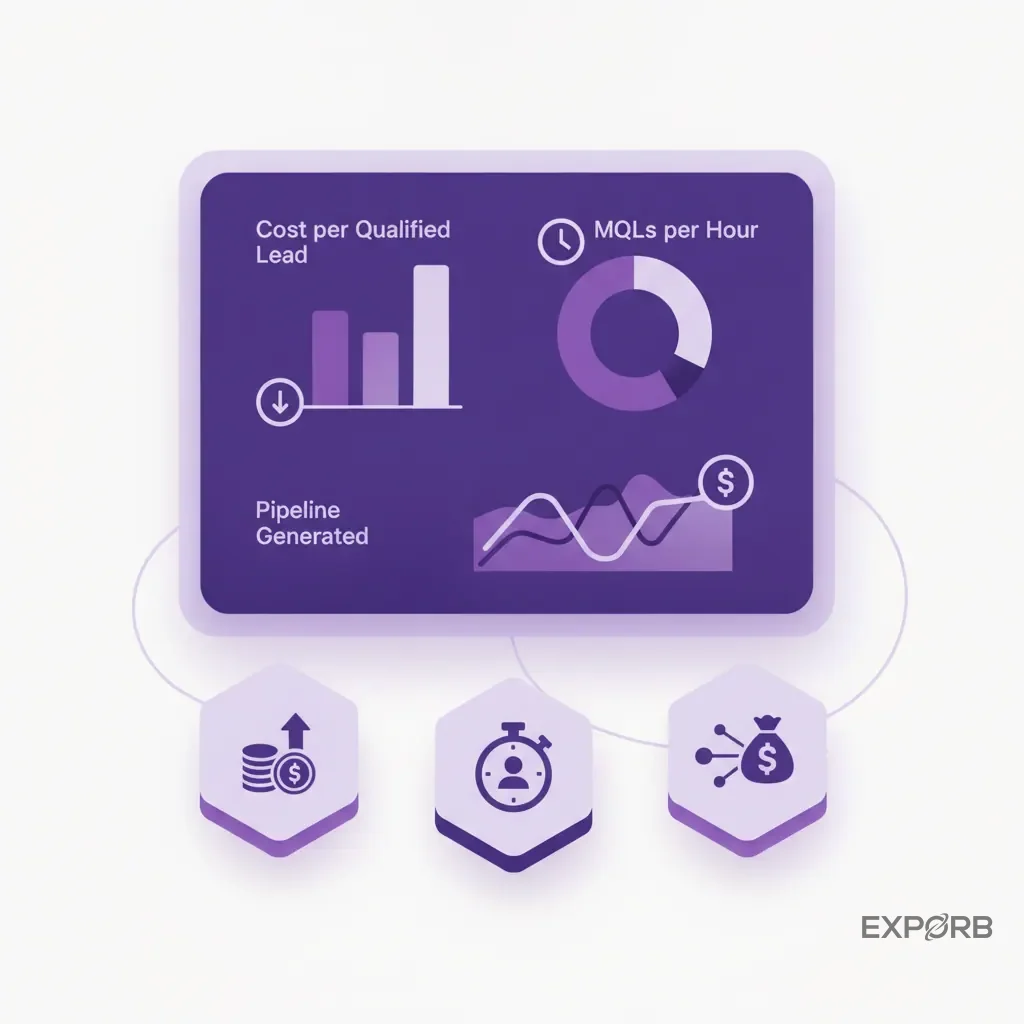
Key metrics to track: Cost per qualified lead and MQLs per staff hour
These are your two most important efficiency metrics.
- Cost per Qualified Lead (CPL): (Total Event Cost) / (Number of MQLs). This tells you how much you're spending to acquire a real sales opportunity.
- MQLs per Staff Hour: (Total MQLs) / (Total Staff Hours on Booth Duty). This measures your team's productivity.
Track these numbers for every show. Your goal is to see the CPL go down and MQLs per hour go up as your training program matures.
Connecting booth activity directly to sales pipeline and closed-won revenue
The ultimate measure of success is closed business. Tag every lead from the trade show in your CRM. Then, track how many of those leads convert to opportunities, what the total pipeline value is, and how much revenue is ultimately closed. This is the number you show your CFO to justify the event budget for next year. This is your ROI.
Benchmarking your performance against industry standards
How do you know if your numbers are any good? You need benchmarks. By tracking your performance consistently, you can start comparing your results against industry averages and your own past events.
Trade Show Performance Benchmarks
Is booth design more important than staff performance?
It's the classic debate: should you spend your budget on dazzling aesthetics or on enabling your people? Too many companies get this wrong. They pour $50,000 into a custom build and $0 into preparing the team that will stand in it. That's completely backwards.
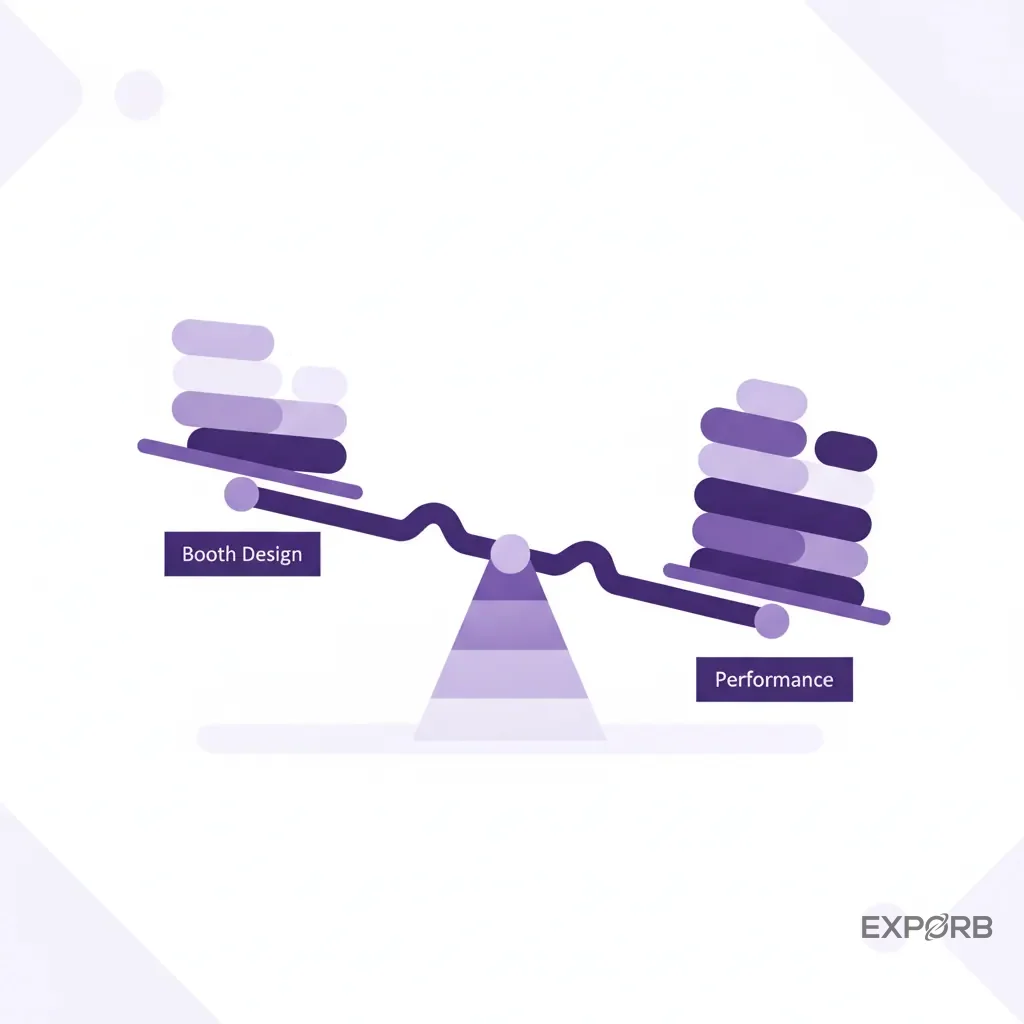
Challenging the common misconception: A great booth can't save bad conversations
A beautiful booth is an invitation. It gets people to stop and look. But that's all it does. It can't ask discovery questions. It can't handle objections. It can't build rapport. An amazing booth with an untrained, unengaged, or unmotivated team is like a beautiful restaurant with a terrible chef. People might walk in, but they won't stay for the meal.
How a well-trained team amplifies your booth design investment
Think of it this way: your booth is the stage, but your team is the performance. A great performance on a simple stage is far more effective than a terrible performance on a Broadway set. When you invest in training, you ensure that every dollar you spent on booth design pays off. A skilled team can turn the attention your booth generates into meaningful, qualified business conversations. They are the engine of your ROI.
Balancing your budget between aesthetics and enablement
The answer isn't to have a terrible-looking booth. It's about balance. Allocate your budget intelligently. Can you achieve nearly all of the visual impact with a more modest design and reallocate the savings to training and better lead capture technology? Almost always, the answer is yes. A smart exhibitor invests in the conversation, not just the backdrop.
Maximize your investment with a team that’s ready to perform
Your trade show program is a major investment. Don't leave its success to chance. A disciplined approach to training turns your booth staff from a group of individuals into a high-performance team focused on a single objective: generating qualified pipeline.
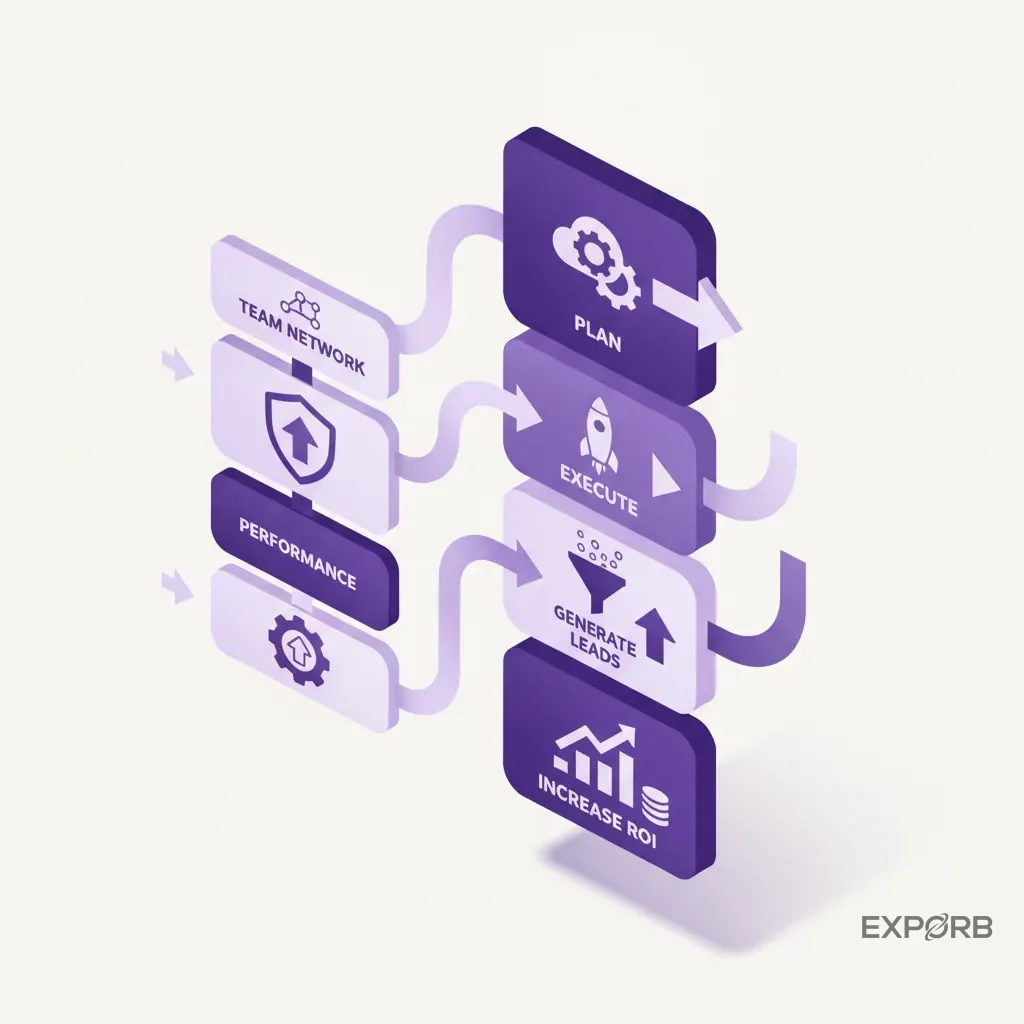
A practical plan to execute a flawless trade show presence
Success isn't about luck; it's about preparation. By defining roles, setting clear goals, practicing conversations, and using modern tools, you create a system that is predictable and repeatable. You remove the guesswork and replace it with a professional operation designed for results.
How disciplined training helps you generate more qualified leads
A trained team knows who to talk to, what to ask, and when to disengage. They spend less time with unqualified attendees and more time in deep conversations with ideal customer profiles. This focus on quality over quantity is what fills your sales pipeline with opportunities that actually close, not just contacts that bloat your CRM.
Increasing both ROI and ROO (return on objective)
The return on your investment isn't just financial. It's also the return on your objectives—building brand awareness, gathering competitive intelligence, and strengthening customer relationships. A well-prepared team excels at all of these. They represent your brand professionally and act as your eyes and ears on the ground, bringing back insights that are just as valuable as the leads they generate.
Build your high-performance trade show team in 30 days
Getting your team ready doesn't have to take months. With a focused, four-week plan, you can transform your staff into a confident, effective, and goal-oriented unit. Here’s a practical timeline to implement a world-class trade show staff training program.
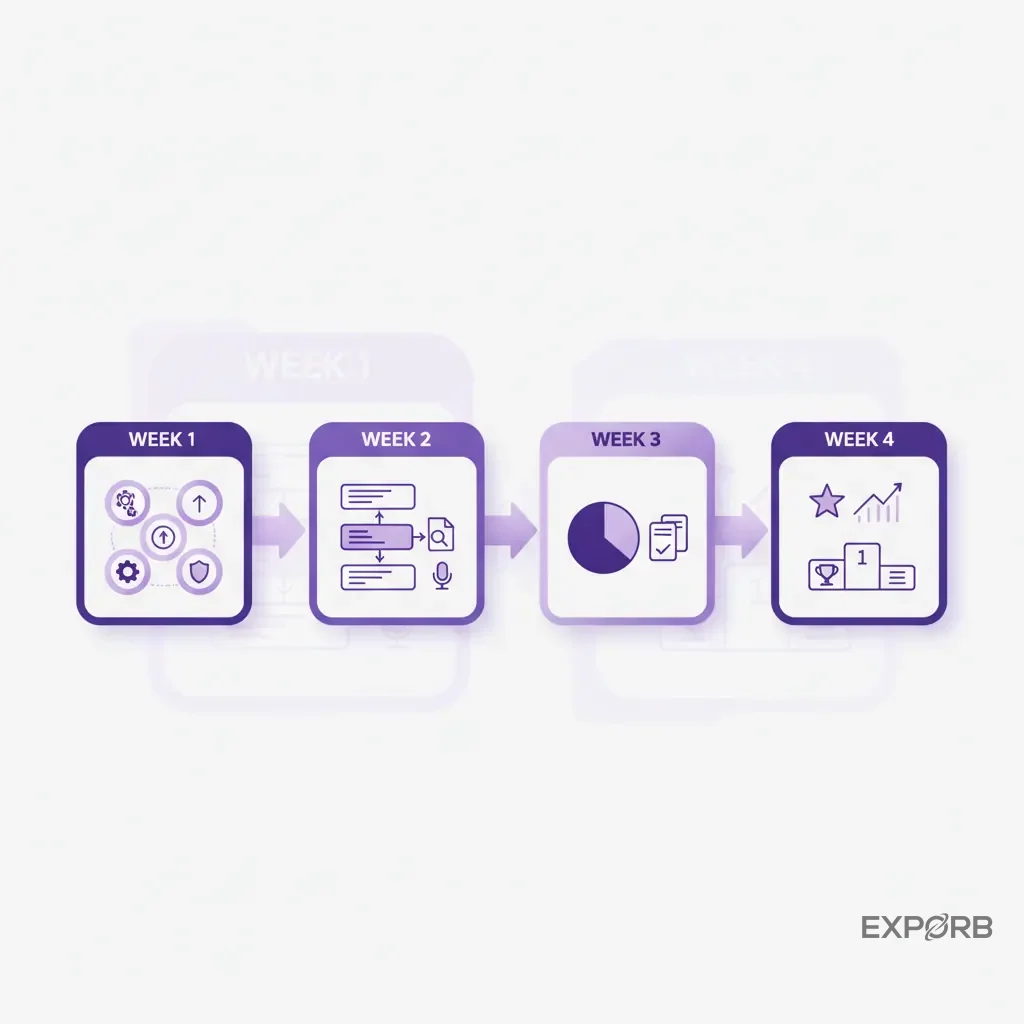
Weeks 1-2: Define goals, map roles, and create training materials
This is your foundation. Start by defining the specific, measurable goals for the event. What does success look like in numbers? Based on those goals and your booth layout, assign the roles—greeter, qualifier, demo specialist. Then, build your pre-show playbook with key messaging, target personas, and your lead capture process.
Week 3: Conduct live training, role-play sessions, and tech tutorials
Get everyone together for a hands-on training session. Don't just lecture them. Run through role-playing exercises for every part of the booth interaction. Practice handling the toughest objections. This is also when you do a deep dive into your tech stack. Make sure everyone is 100% comfortable using your lead capture app until it's second nature.
Week 4: Finalize logistics, run a final briefing, and plan your post-show follow-up
The week before the show is for final preparations. Confirm all travel and logistics. Hold one last briefing to review the playbook and get the team hyped up. Critically, you must have your post-show follow-up plan locked in. Who is responsible for follow-up? What are the email sequences? A lead is worthless without a fast, relevant follow-up. Get it ready before you capture a single name.