Why does booth engagement matter more than raw lead counts in 2026?
You just spent $100,000 on a trade show, and your team returned with a list of 500 scanned badges. Success, right? Wrong. This is the biggest lie in Event Marketing. The real measure of success isn't how many people you scanned—it's how many meaningful conversations you had. Good trade show booth engagement tactics prioritize quality over quantity. Why? Because pipeline isn't built on a list of names; it's built on understanding problems you can solve.
Most exhibitors still obsess over vanity metrics. They spend a fortune on fancy graphics and flashing lights to attract crowds, then hand out cheap swag in exchange for a badge scan. What's the result? A mountain of dead-end leads and a C-suite left wondering where the ROI went.
The shift from vanity metrics to pipeline contribution
The game has changed. CFOs don't care about "booth traffic." They care about influenced revenue. A lead isn't a lead until it has context: a documented pain point, a budget, a timeline, and a clear next step. A badge scanner gives you a name and an email. A real conversation gives you a qualified opportunity.
Attendee quality is the most important factor for 64% of exhibitors, according to recent data. So why are we still chasing quantity? The goal isn't to talk to everyone. It's to talk to the right people and turn those conversations into pipeline. Every minute your team spends talking to a tire-kicker is a minute they're not talking to your next enterprise customer. That's a costly mistake.
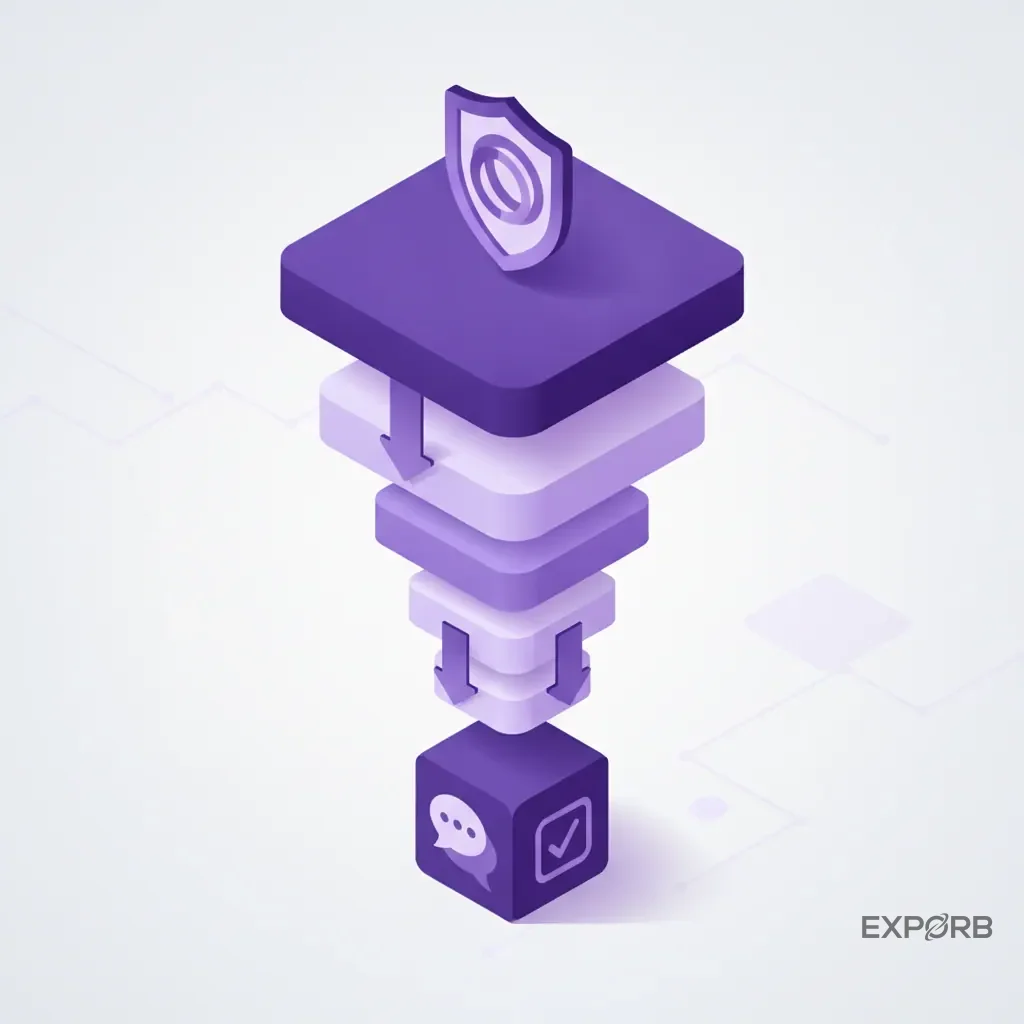
How intentional interactions create qualified opportunities
An intentional interaction is a conversation with a purpose. It's not a pitch; it's a discovery session. Your booth staff should be trained to ask probing questions, listen more than they talk, and identify genuine needs.
This requires a significant shift in Booth Design and staff training. Your booth shouldn't be a fortress with a counter that acts as a barrier. It should be an open, inviting space that encourages dialogue. Your team shouldn't be pitch-machines; they should be consultants. Every interaction must focus on qualifying the prospect and capturing critical conversation details.
Challenging the myth: why 5 deep conversations beat 200 badge scans
Let's do the math. You get 200 badge scans. Maybe 10% respond to your generic "Thanks for stopping by" email. Of those 20, perhaps two become meetings. That's an abysmal 1% conversion rate from scan to meeting.
Now, imagine you have five deep, 15-minute conversations. You understand their specific challenges, you've qualified their interest, and you've agreed on a next step. You follow up with a personalized email that references the exact problems you discussed. Your meeting conversion rate on those five leads will be closer to 80%.
Which would you rather have? Two meetings from a list of 200 strangers, or four meetings from five qualified prospects? It's not even a contest. Trade shows aren't about collecting contacts anymore. They're about creating connections that turn into customers.
How do you design a booth for intentional interaction, not just foot traffic?
Your booth's layout is the first and most critical step to make meaningful conversations possible. Most booths are designed to shout. Yours should be designed to listen. It's about creating an environment that pulls the right people in and makes it easy for them to have a real conversation with your team. 2026 trade show trends indicate open designs are critical for improving attendee interaction.
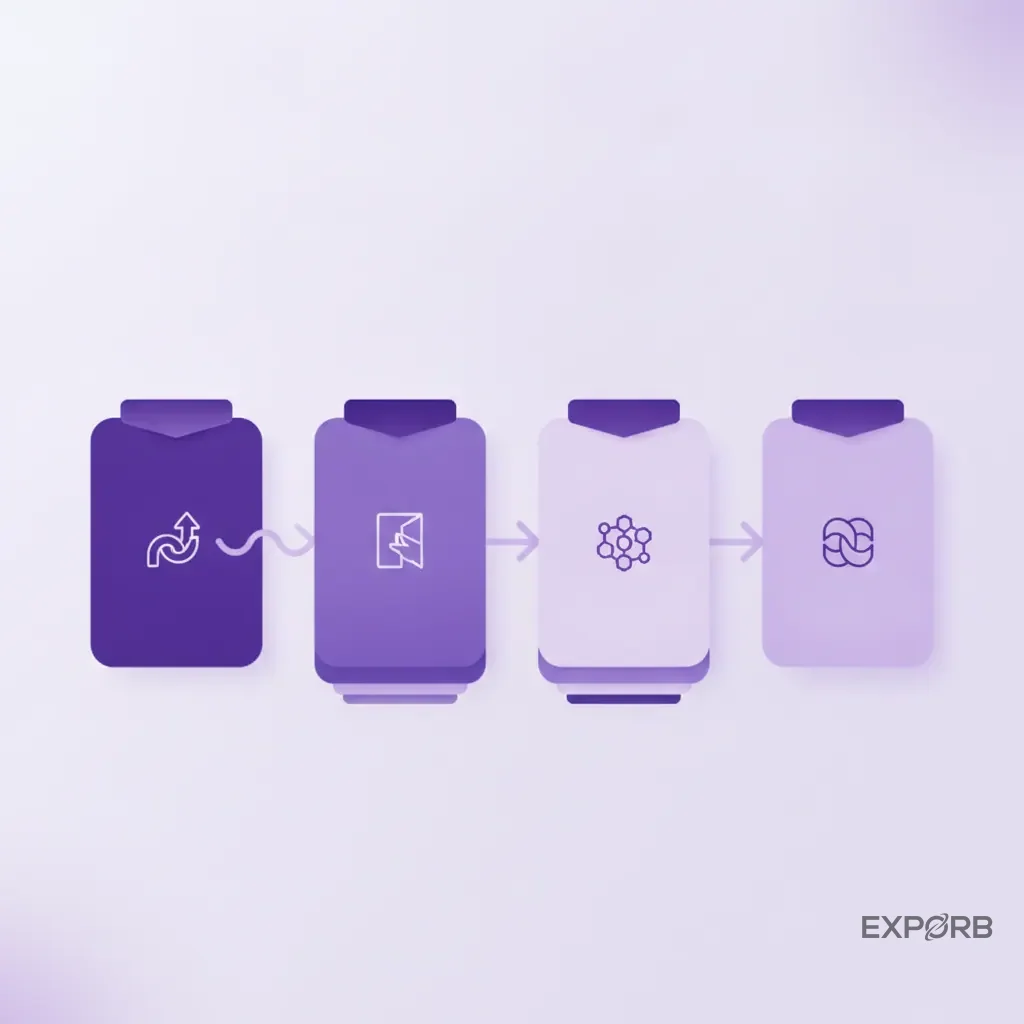
Applying the 'attract → invite → engage → connect' flow model
Think of your booth as a four-stage funnel. Each part of the design should move a prospect to the next stage.
- Attract: This is your big visual hook. A striking graphic, a unique lighting setup, or a large screen with a compelling demo. Its only job is to make people stop and look from 10 feet away.
- Invite: Once you've got their attention, you need to invite them in. This means no barriers. Get rid of the giant reception counter that screams "don't come in here." Use open corners and clear pathways.
- Engage: This is where interaction happens. Have dedicated demo stations, comfortable seating areas, or interactive touchscreens. This is the "zone of conversation."
- Connect: After a great conversation, you need to capture the details. This could be a small, semi-private area where your team can scan a business card, record voice notes, and confirm next steps without shouting over the crowd.
The power of open layouts and dedicated conversation zones
An open layout is non-negotiable. It removes the physical and psychological barrier between your team and your prospects. Use low tables, small pods, or even just open space. People are more likely to step into a space that feels like a lounge than one that feels like a bank teller's window.
Create different zones for different types of engagement. You might have a quick demo station at the front for a 2-minute overview, and a more comfortable, quieter seating area at the back for deeper dives with highly qualified prospects. This allows your team to segment visitors and invest their time where it matters most.
Using lighting, graphics, and structure to guide the attendee journey
Great design guides the eye and the body. Use spotlights to highlight your main demo area. Use floor graphics to create a subtle path into the booth. Your main backwall graphic should feature a clear, concise headline that states the problem you solve, not just your logo.
Structure can also create intimacy. Even in an open layout, you can use partial walls or tall planters to create nooks that feel more private and conducive to conversation. The goal is to make your 10x20 or 20x20 space feel like a series of intentional environments, not just a box with a table in it.
25+ modern trade show booth engagement ideas that actually work
Forget the fishbowl for business cards and the cheap pens. Attendees are smarter, and their time is more valuable than ever. You need trade show booth engagement tactics that offer real value, create memorable experiences, and generate qualified leads—not just a long list of trick-or-treaters looking for swag.
These ideas span from high-tech solutions to more personal, high-touch approaches, broken down by category.
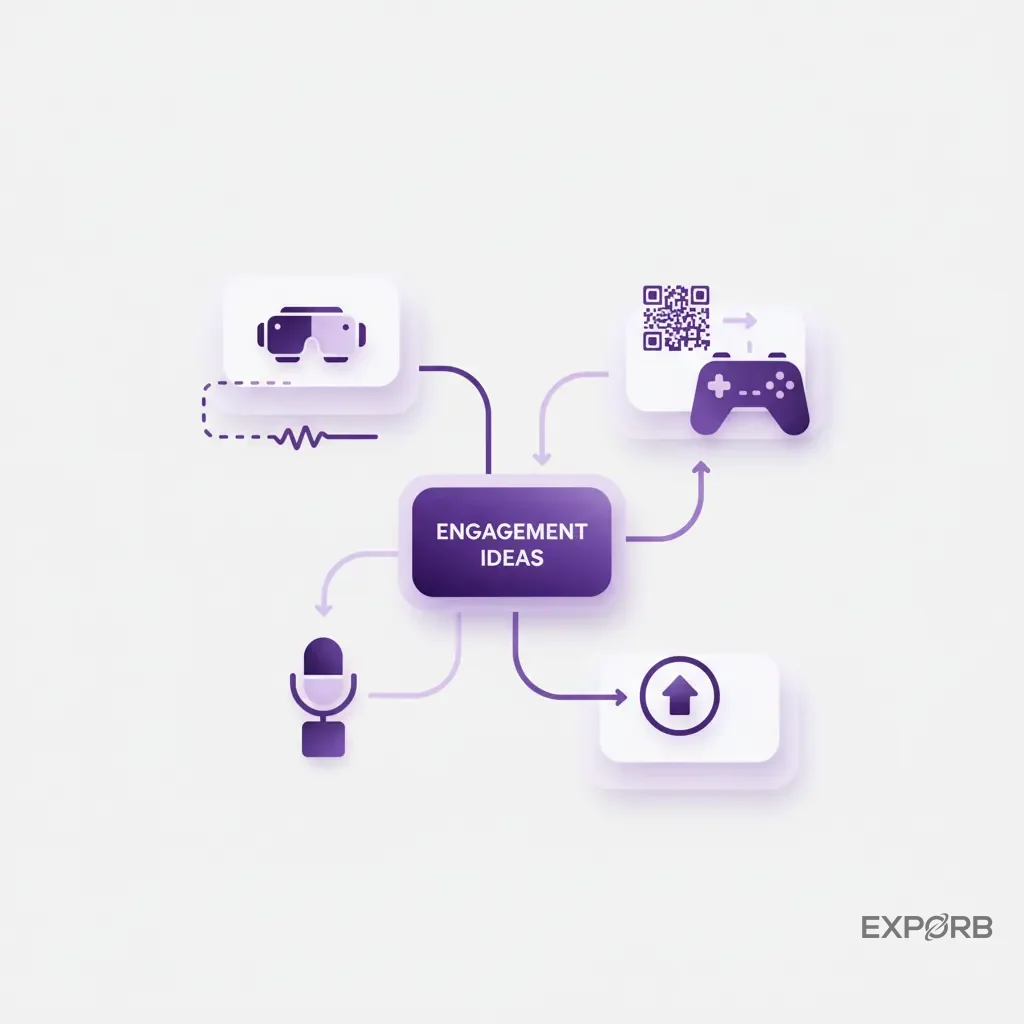
Tech-powered activations: AI assistants, AR product demos, and VR experiences
Technology creates "wow" moments that draw people in and lets them experience your product in a new way. Research from the EventCortex 2026 Design Guide shows AI-powered activations can lift engagement by up to 45%.
- AI Digital Assistant: Set up a large touchscreen with an AI chatbot trained on your product data. Attendees can ask complex questions and get instant answers, pre-qualifying them before they even speak to a human.
- AR Product Demos: If your product is large, complex, or digital, use Augmented Reality. Give attendees a tablet, have them point it at a marker on your booth floor, and watch a full-scale 3D model of your product appear.
- VR "Test Drive": Let prospects experience your software or service in a virtual environment. This is perfect for complex workflows or showing how your solution works in a specific setting. VR experiences drive longer dwell times.
- Interactive Touchscreen Wall: Build a large video wall that reacts to touch. It could be an interactive map of your customer case studies, a quiz about their industry pain points, or a configurable model of your product.
- Projection Mapping: Project dynamic visuals onto a 3D object in your booth, like a plain white model of your hardware. This is visually stunning and tells a product story without a single screen.
- NFC Tap-to-Learn Stations: Place NFC tags at different stations in your booth. Attendees can tap their phone to instantly get a product datasheet, a case study video, or a link to a specific landing page.
- Live Social Media Wall: Display a live feed of social media posts using your event hashtag. Encourage people to post photos from your booth for a chance to be featured.
Interactive experiences: gamification, lightning demo theaters, and co-creation walls
These tactics get attendees to do something, not just passively watch. Active participation creates a stronger memory and a better connection to your brand.
- Gamified lead capture: Instead of a form, create a fun, short game on a tablet. Their score could determine their prize, and their contact info is the entry fee. Make it relevant to your product (e.g., a "spot the security flaw" game for a cybersecurity company).
- Lightning Demo Theater: Don't do long, boring demos. Set up a small stage with seating for 5-10 people and run a high-energy, 5-minute demo every half hour. This creates urgency and respects attendees' time, a key trend noted by Zundaa Events.
- Co-Creation Wall: Put up a large whiteboard or digital screen with a question like, "What's the biggest challenge in [Your Industry] today?" Give people sticky notes or digital pens to add their thoughts. It's a fantastic source of market research and a great conversation starter.
- Live Polling & Quizzes: Use a tool like Slido or Mentimeter on a large screen. Ask questions related to your industry and show the results in real-time. It gets the whole crowd involved.
- The Reaction Challenge: Set up a Batak-style reaction board where attendees have to hit randomly lit buttons as fast as they can. It's addictive, competitive, and draws a crowd.
- Escape Room Puzzle: Create a mini, 5-minute escape room puzzle in a corner of your booth. The clues should relate to the problems your product solves.
- Photo Booth with Digital Props: A classic for a reason. But upgrade it with digital props, animated backgrounds, and instant social sharing capabilities that automatically tag your company.
Related: The Ultimate Trade Show Lead Capture Guide
Value-exchange tactics: digital swag bags, instant insight reports, and QR-gated content
This is about offering something of genuine value in exchange for a conversation and contact information. The key is that the "swag" directly relates to your business.
- The Insight Generator: Create a simple diagnostic tool on a tablet. Attendees answer 5-7 questions about their business, and it instantly generates a personalized "Insight Report" with benchmarks and recommendations, which then gets emailed to them.
- Digital Swag Bag: Instead of physical junk that ends up in the hotel trash, offer a digital swag bag. Scan a QR code to get a bundle of valuable digital assets: an e-book, a free trial extension, a discount code, or a template pack.
- QR-Gated Premium Content: Have a "premium" whitepaper or research report available only at the show. A QR code at the booth takes them to a landing page to download it.
- Headshot Station: Hire a professional photographer to take professional headshots for attendees. It's high-value, they'll be grateful, and you'll email them the photos after the show—a perfect excuse for a follow-up.
- "Ask an Expert" Bar: Staff your booth with your best engineers, strategists, or product managers, not just salespeople. Position it as a free consultation station.
- Live Caricature Artist: An old-school classic that still works. A caricature artist drawing attendees on a tablet creates a crowd and a personalized piece of swag they'll actually keep.
- Charging Lounge: Sometimes the best engagement is utility. A comfortable lounge with secure charging lockers is a lifesaver. While they wait, they're a captive audience for a low-pressure conversation.
- Coffee/Espresso Bar: Hire a barista to make premium coffee. The line will give your team time to chat with prospects while they wait.
- Data-Driven Art Installation: Create a physical art piece that changes in real-time based on data collected at the booth (e.g., live poll results, social media mentions).
- Personalized Swag Station: Instead of pre-printed shirts, let attendees customize a t-shirt, mug, or notebook with a custom message or design on the spot.
- Charity Donation Station: For every qualified conversation, make a donation to a charity of the attendee's choice from a pre-selected list. It shows your company has values and attracts people who want to make an impact.
What technology should you use to drive meaningful engagement?
Choosing the right tech isn't about having the flashiest gadgets. It's about using tools that remove friction and create better conversations. The best technology feels invisible—it helps the human connection instead of getting in the way.
Comparing engagement tech: AR, VR, interactive touchscreens, and AI
Each technology serves a different purpose and comes with a different price tag. You don't need all of them. Pick the one that best tells your product's story.
- Augmented Reality (AR): Best for visualizing large or complex physical products. It's more social than VR because you're not cutting yourself off from the world.
- Virtual Reality (VR): Best for immersive software demos or simulations. It's a powerful tool for creating a memorable experience, but it's a one-person-at-a-time activity.
- Interactive Touchscreens: The most versatile option. You can use them for quizzes, data collection, product demos, or interactive case studies. They invite collaboration, and multiple people can use them at once.
- AI Assistants: Great for pre-qualification and answering common questions, which frees up your human team to have deeper strategic conversations.
Here's a quick breakdown to help you decide:
Comparison of common booth engagement technologies
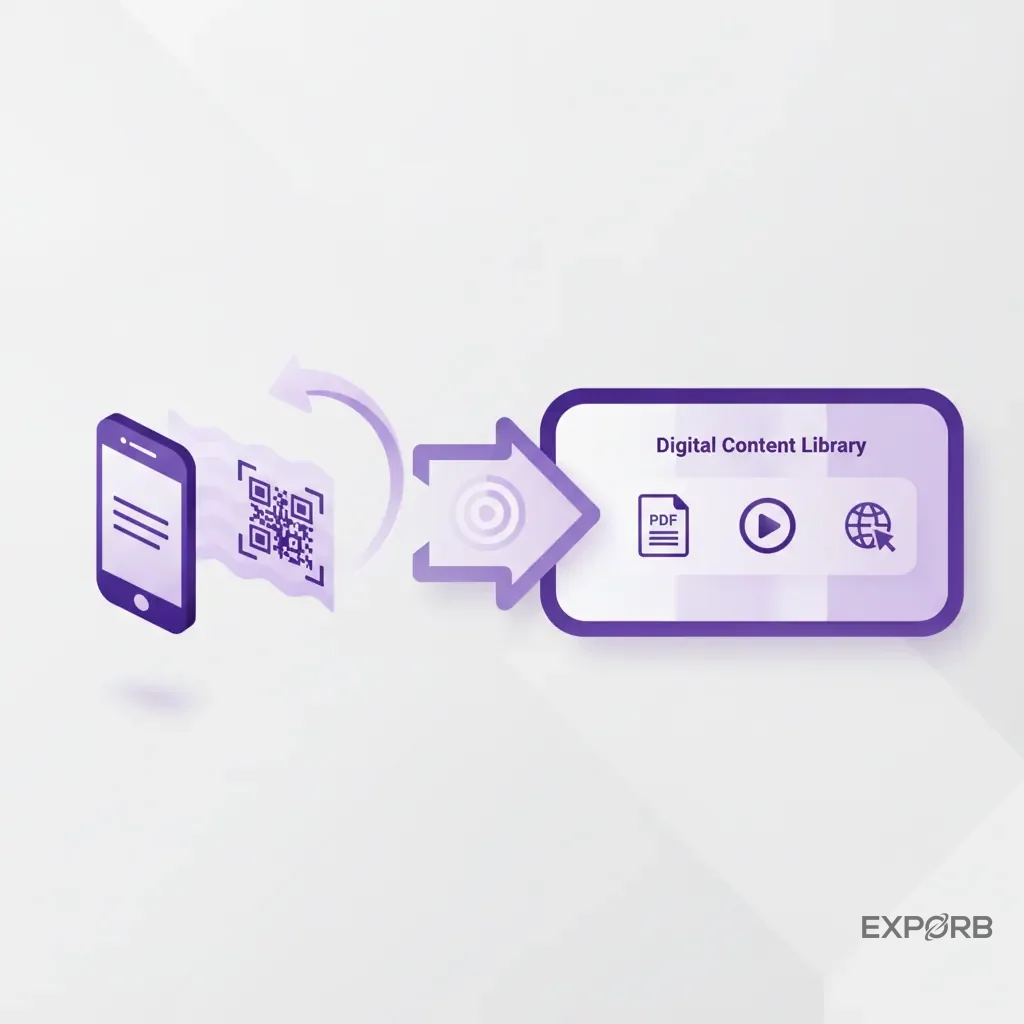
Integrating QR codes and NFC for smooth data and content exchange
Don't make people type URLs. QR codes and NFC (Near Field Communication) tags are the easiest way to bridge the physical and digital worlds.
Use them everywhere:
- On your booth graphics to link to your homepage.
- At demo stations to download a datasheet.
- On the back of your team's badges to share their LinkedIn profile.
- To access your "digital swag bag" landing page.
This makes it easy for attendees to get the information they want. It also gives you trackable data on what content is most popular at your booth.
Choosing the right tech for your budget and goals
Stop and ask: what's this technology's goal?
- If your goal is to generate more leads, a gamified quiz on a touchscreen might be best.
- If your goal is to explain a complex product, AR or VR is a better investment.
- If your goal is to improve lead quality, an AI-powered insight generator could be the answer.
You don't need a six-figure tech budget. A well-designed survey on a few iPads can be more effective than a clunky VR demo that no one uses. Start with your engagement strategy first. Then choose the tech that supports it—not the other way around.
How do you train your booth staff to convert conversations into qualified leads?
Even the best booth design and technology will fail if your staff isn't trained to engage prospects effectively. Your people are your most important engagement tool. Yet most companies just throw their newest sales reps onto the floor with a branded polo and hope for the best. That's a recipe for failure.
Moving from monologue pitching to strategic questioning
The worst thing a booth staffer can say is, "Can I scan your badge?" The second worst is launching into a 5-minute product pitch the second someone makes eye contact.
Train your team to be consultants, not carnival barkers. Their job is to diagnose, not to pitch. This means teaching them a simple framework for strategic questioning:
- Open-ended discovery: "What brought you to the show today?" or "What are some of the biggest challenges you're facing with [your area of expertise] right now?"
- Problem validation: "That sounds tough. How's that impacting your team's productivity?"
- Qualification: "Is solving that a priority for you in the next six months?"
- Connect to solution: "We actually have a feature that helps with exactly that. Would you be interested in a quick 2-minute look?"
This conversational flow turns a monologue into a dialogue. It respects the attendee's time and ensures you're only demoing to people with a real, stated problem.
The founder's pain point: capturing critical conversation data with tools like Exporb
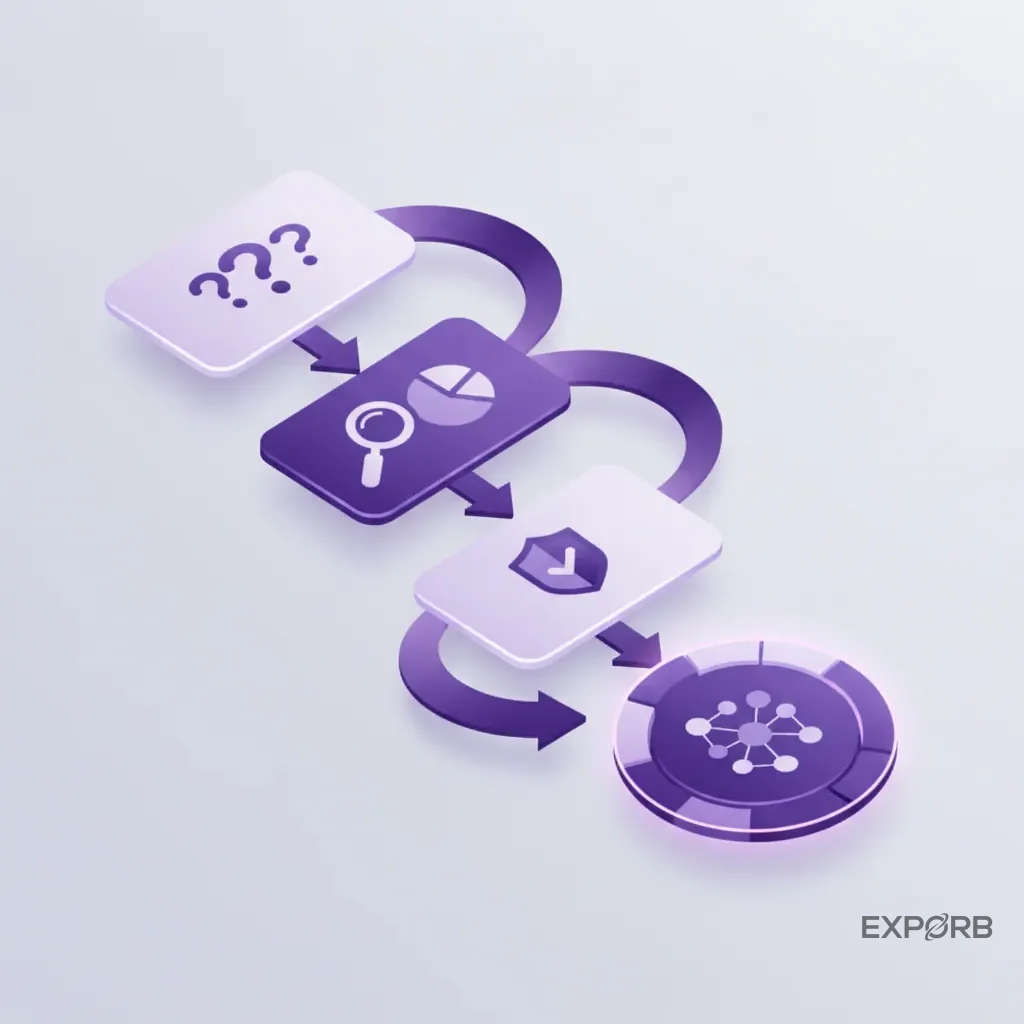
Here's the problem I faced for years. My team would have dozens of great conversations, but by the time we got back to the office, the critical details were gone. Scrawled notes on the back of a business card, a vague memory of a pain point—it was a mess. We were losing the most valuable asset we paid for: the context.
How do you solve this? You need a system that captures the conversation itself, not just contact info. This is why we built Exporb. Instead of relying on memory, your team can use their phone to instantly scan a business card, record a quick voice note summarizing the conversation, and snap a photo of a whiteboard drawing. All that rich context—the pain points, the buying signals, the agreed-upon next steps—gets attached directly to the lead record. It's digital note-taking, not surveillance. It makes sure the intelligence gathered at the booth actually makes it back to the CRM.
Role-playing exercises for qualifying and disengaging effectively
Training can't just be a PowerPoint presentation. You need to run role-playing exercises.
- The "Qualifier": One person plays a qualified prospect with a real need. The staffer has to use strategic questioning to uncover it.
- The "Time Waster": One person plays a student or a competitor just looking for swag. The staffer needs to practice politely disengaging from the conversation to free themselves up for a real prospect. Phrases like, "It was great chatting with you. I'd recommend checking out the resources on our website for more information. I see someone else waiting to chat, so I'll let you go!" are invaluable.
A well-trained team knows how to engage. They also know when and how to disengage. Every minute is precious on the show floor. Make sure your team's spending it wisely.
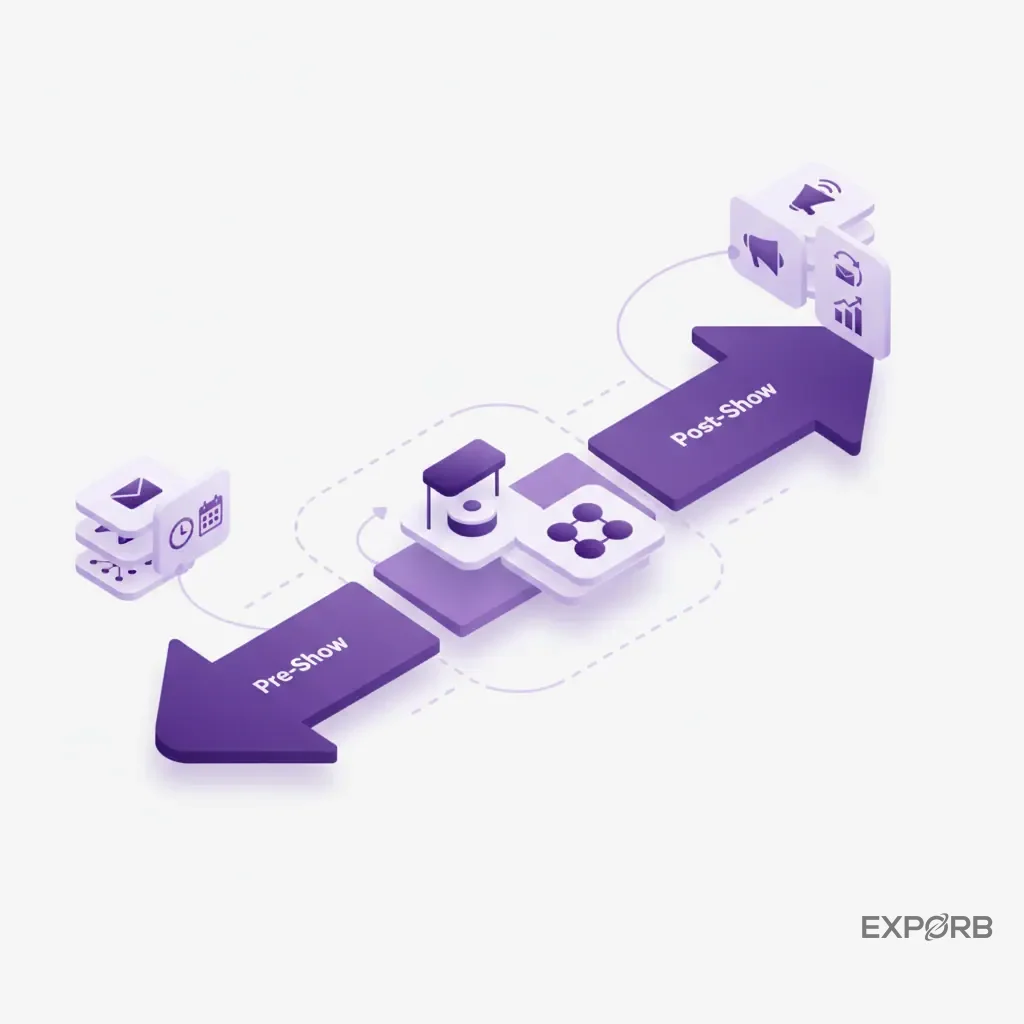
Building your pre-show and post-show engagement strategy
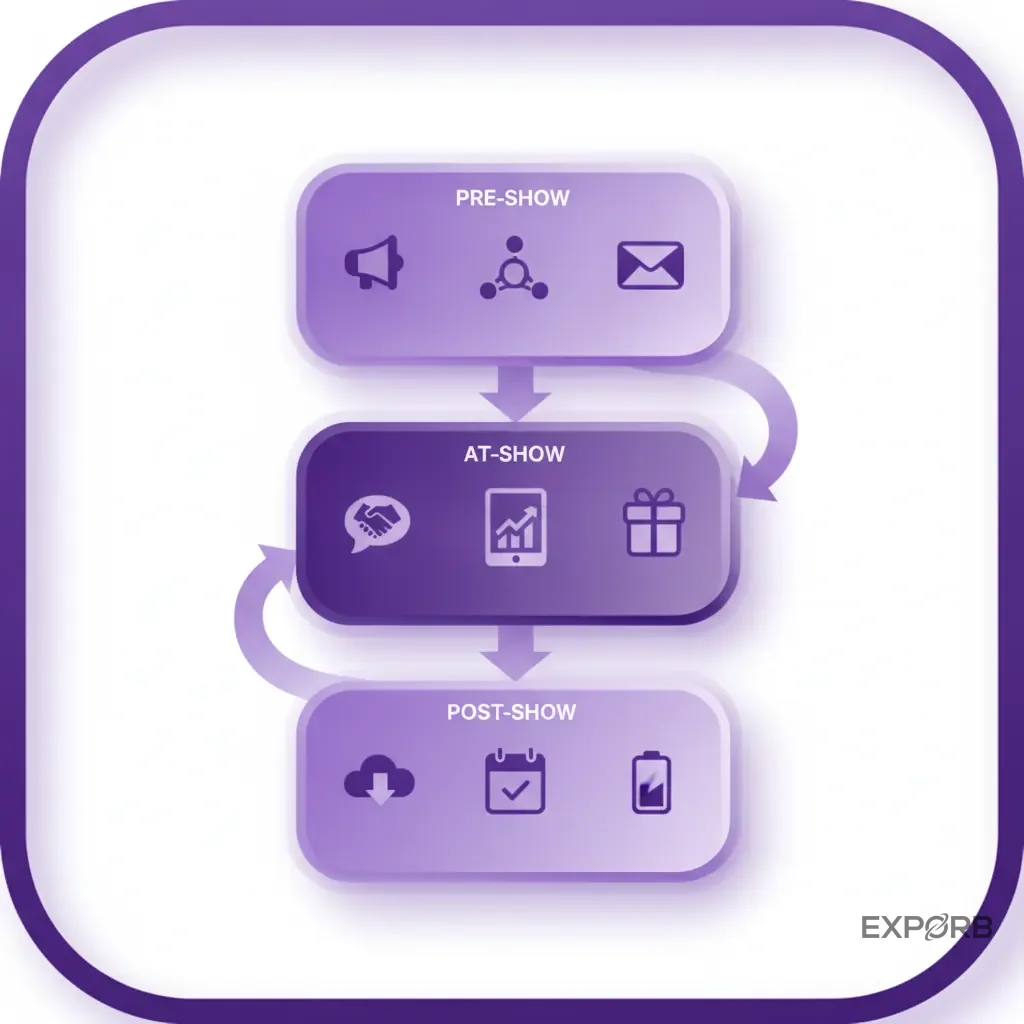
A winning trade show strategy extends far beyond the event floor, starting weeks before and continuing long after. Great booth engagement doesn't start when the show opens, and it certainly doesn't end when the lights go out. A successful trade show strategy is a full-cycle campaign that bookends the event with targeted outreach and lightning-fast follow-up.
Using account-based marketing to schedule meetings with high-value targets
Don't just show up and hope your dream customers walk by. The most valuable meetings are the ones you book in advance. ZoomInfo's trade show guide recommends marketers prioritize 20-30 high-value accounts per show.
Weeks before the event:
- Build your target list: Get the pre-show attendee list if you can. If not, use your CRM and LinkedIn Sales Navigator to identify target accounts in the region who are likely to attend.
- Multi-touch outreach: Launch a coordinated email and LinkedIn outreach sequence. Don't just ask for a meeting. Offer value—"I saw you're speaking on a panel about X, I'd love to connect at our booth to discuss Y."
- Set the meeting: Use a scheduling tool like Calendly to make booking a demo slot at your booth effortless.
Arriving at the show with 10-15 pre-booked meetings with qualified buyers completely changes the ROI equation.
The 24-48 hour rule: crafting a high-impact, personalized follow-up sequence
The speed of your follow-up directly correlates with your conversion rate. Leads go cold incredibly fast. You must follow up within 24-48 hours. But a generic "nice to meet you" email is just noise. Your follow-up has to be personal and context-rich.
This is where most teams fail. They get back to the office with a pile of business cards and spend a week typing up emails, by which time the prospect has forgotten who they are. The key is to capture the context at the booth. When you remember that they're struggling with legacy software and need to present a plan to their VP in Q3, your follow-up is 10x more effective.
This process used to be manual and painful. Now, tools can automate it. For example, using the context from a captured conversation, Exporb can auto-draft a personalized follow-up email right at the booth. Your team has a great conversation, taps a button, and a tailored email mentioning the specific pain points and next steps is ready to send. Follow-up's done before you even leave the convention center.
Nurturing leads who engaged but aren't ready to buy
Not every great conversation is with someone ready to buy today. What do you do with the "good fit, bad timing" leads?
Don't let them fall into a black hole. Tag them appropriately in your system and enroll them in a long-term nurture sequence. This shouldn't be a generic newsletter. It should be a tailored content track based on the challenges they told you about.
- Problem-aware, solution-unaware: Send them educational content like blog posts and webinars that explore their pain point in more detail.
- Solution-aware, product-unaware: Send them case studies, comparison guides, and ROI calculators.
The goal is to stay top-of-mind and be the helpful expert. When the timing is right, you'll be the first person they call.
How can small teams execute high-impact engagement without a massive budget?
You don't need a 50x50 island booth with a two-story structure to make an impact. Some of the most memorable booth experiences come from creativity, not cash. Small teams and startups can outmaneuver big-budget competitors by being smarter, more focused, and more personal.
Using creativity and free digital tools over expensive hardware
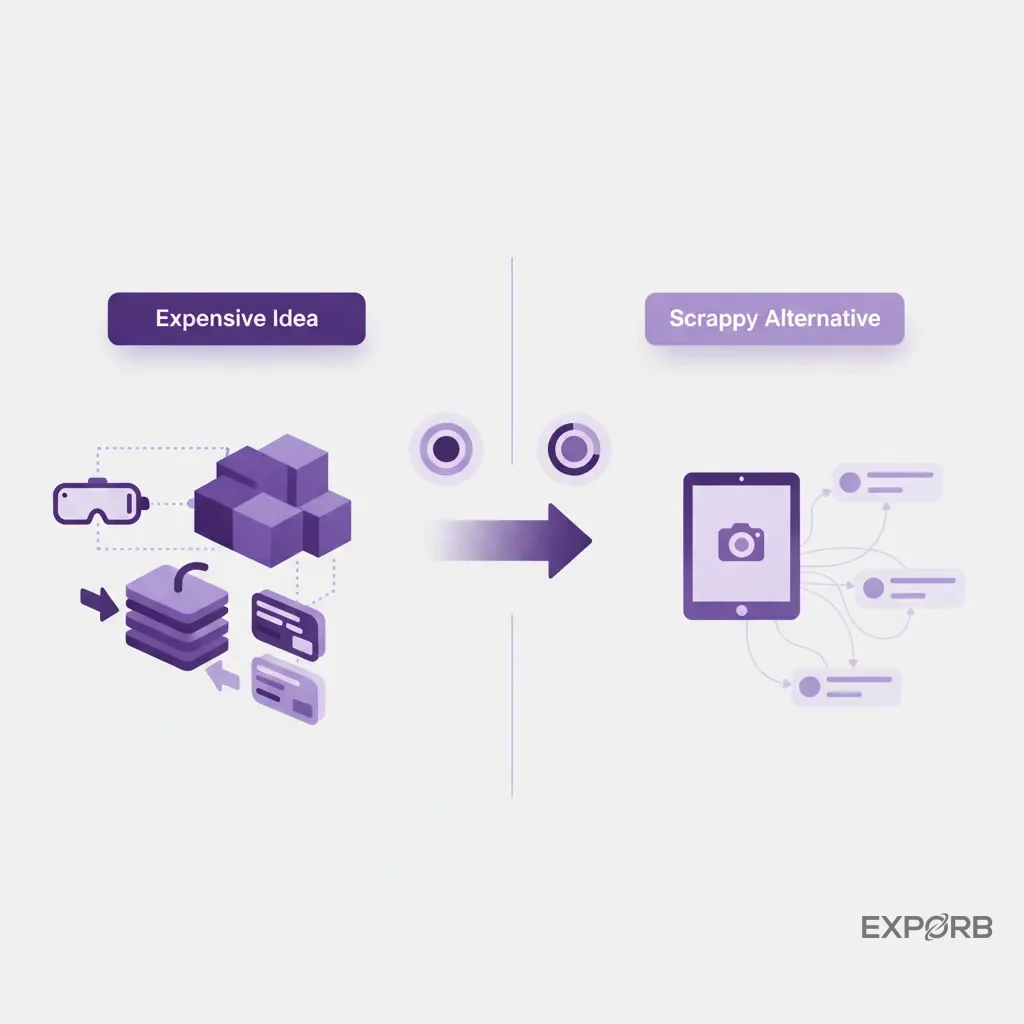
Instead of renting a $10,000 interactive wall, can you achieve the same goal with a well-designed poll using a free tool like Mentimeter displayed on a standard TV? Instead of expensive VR headsets, can you create a powerful "customer story" station using a few iPads and some great video testimonials?
Think about the outcome you want—is it to educate, to generate leads, to entertain?—and find the lowest-cost way to achieve that outcome. A simple, well-executed idea is always better than a complex, expensive one that fails.
Partnering with neighboring booths for cross-promotion
Find a complementary, non-competitive company near your booth and team up. You could run a "passport" program where attendees get a stamp from both booths to enter a larger prize drawing. You can co-host a happy hour, or simply agree to refer relevant visitors to each other.
This instantly doubles your reach. It also shows you're a collaborative, well-connected player in your industry. It costs nothing but a bit of planning and a friendly handshake.
Focusing on one high-impact 'hero' activation
Don't try to do ten things at once. If your budget's tight, pour it all into one "hero" activation that's unique, memorable, and shareable. It's better to be known for one amazing thing than for five mediocre ones.
This could be:
- The booth with the professional headshot station.
- The booth with the amazing local coffee.
- The booth with the hilarious caricature artist.
- The booth with the "Ask an Engineer" genius bar.
Pick one thing, do it exceptionally well, and build your pre-show and at-show promotion around it. This focus makes your marketing message clearer and your booth a must-visit destination.
How do you measure the ROI of your trade show booth engagement?
You can't justify what you can't measure. The days of reporting on "brand awareness" are over. You need to connect your trade show spending directly to sales pipeline and revenue. This means moving beyond the badge scan and tracking metrics that actually matter.
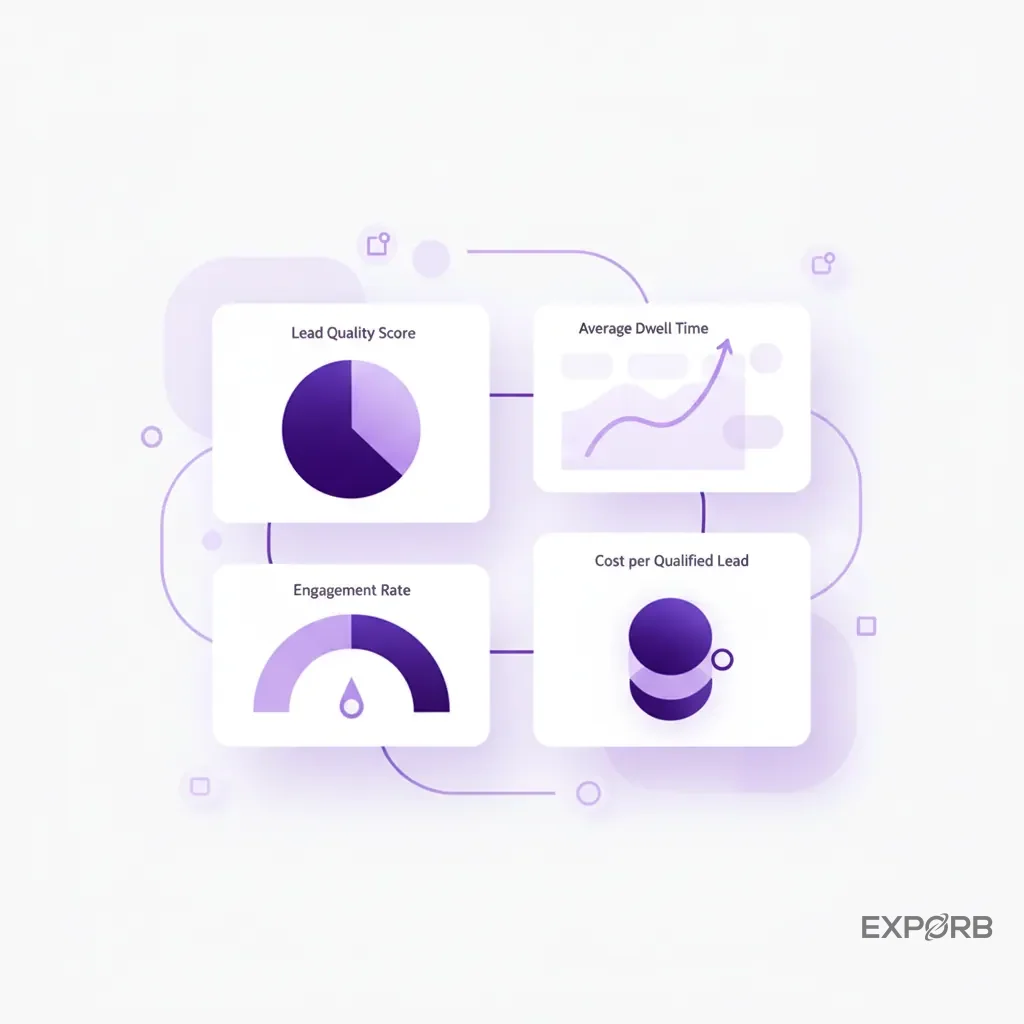
Key performance indicators beyond the badge scan: dwell time, lead quality, and engagement rate
Your ROI report should have a new set of KPIs. The EventCortex guide recommends tracking several of these as core metrics.
- Lead Quality Score: Don't just count leads; score them. A simple A, B, C, D system works. 'A' leads are hot prospects with budget and authority; 'D' leads are students. What was your ratio of A's to D's?
- Engagement Rate: (Number of meaningful conversations / Total booth visitors) x 100. This tells you how effective your booth design and staff are at starting conversations.
- Average Dwell Time: How long are people staying at your booth? Longer dwell times often correlate with higher engagement and interest. Some tech solutions can help measure this.
- Cost per Qualified Lead: (Total event cost / Number of 'A' and 'B' leads). This metric is much more useful than cost per scan.
Connecting booth interactions to sales pipeline and influenced revenue
This is the holy grail of trade show ROI. You need a system that can track a lead from the moment it's captured at the booth all the way through to a closed-won deal.
This requires two things:
- A dedicated campaign in your CRM: Every lead captured at the event should be added to a specific "Trade Show X 2026" campaign.
- Consistent tracking: Your sales team must maintain that campaign association as the lead moves through the sales cycle.
With this in place, you can run a report six months after the show and see exactly how much pipeline and closed-won revenue originated from that event. You can finally answer the CFO's question: "What did we get for that $100,000?"
Using a trade show CRM to build your ROI report
Trying to do this with spreadsheets and messy notes is a nightmare. A dedicated trade show lead capture tool or CRM is essential. It's the bridge between the chaos of the show floor and the clean data in your main CRM.
A good tool will allow you to:
- Capture leads with rich context (notes, photos, voice memos).
- Score and qualify leads in real-time.
- Tag leads to the specific event.
- Export clean, structured data to your main CRM (like Salesforce or HubSpot) with a single click.
This structured data is the foundation of accurate ROI reporting. Without it, you're just guessing.
Common engagement mistakes to avoid at your next event
Knowing what not to do is just as important as knowing what to do. Many well-intentioned exhibitors sabotage their own success by falling into common traps. Here are a few of the most damaging mistakes we see time and time again.
The giveaway trap: attracting crowds but generating low-quality leads
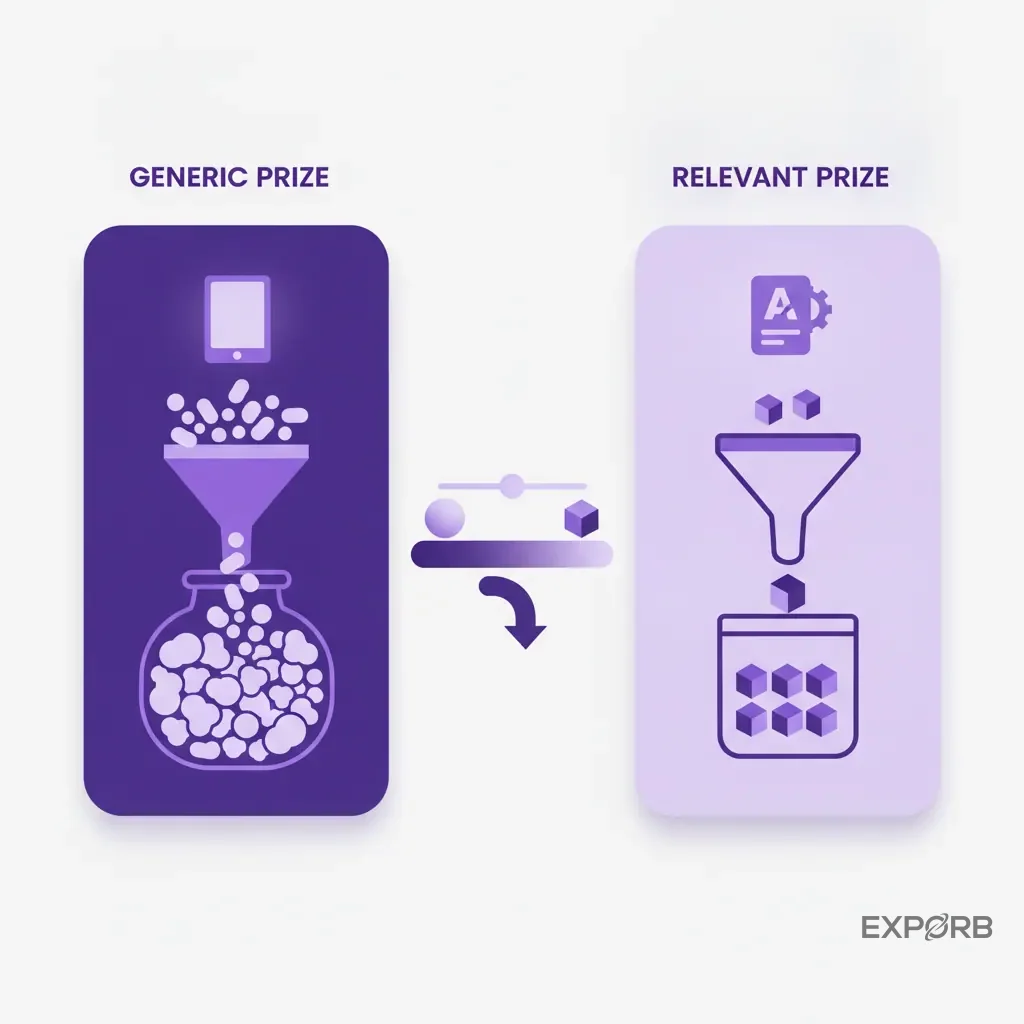
Giving away a big-ticket item like an iPad or a drone will certainly draw a crowd. But what kind of crowd? You'll get a fishbowl full of business cards from people who have zero interest in your product and only want the prize. Your team will spend hours dealing with unqualified prospects while your ideal customers walk by unnoticed.
The Fix: If you do a giveaway, make it relevant to your business. Give away a free year of your software, a professional services package, or a high-end piece of equipment that your customers would actually use. This means that the people who enter are genuinely interested in what you do.
Ignoring the pre-show outreach and arriving cold
Showing up to a trade show without pre-booking any meetings is like launching a product without a marketing plan. You're relying entirely on luck. The most successful exhibitors treat the event as the culmination of a campaign, not the start of one. They arrive with a schedule of back-to-back meetings with their top prospects.
The Fix: Start your outreach 3-4 weeks before the show. Identify your key targets and warm them up with a multi-touch sequence. Give them a compelling reason to meet with you, and make it easy for them to book a time.
Letting valuable conversation data disappear after the show
This is the most common—and most costly—mistake of all. Your team has hundreds of conversations. They learn about customer pain points, buying timelines, and competitive intelligence. And then... nothing. The data stays in their heads or on scraps of paper, never making it into your CRM. The opportunity is lost forever.
The Fix: You must have a rock-solid process and the right tools for capturing conversation context in real-time. Every lead should be entered into a system at the booth, complete with notes on the discussion. Don't wait until you get back to the office. The value of that information decays every hour. Mandate that no business card goes in a pocket—it goes directly into your capture app.
Your action plan for turning booth engagement into revenue
Here's a simple, practical checklist to help you put these principles into practice for your next event.
Your pre-show engagement checklist
- 3-4 weeks out: Identify your top 20-30 target accounts for the show.
- 3 weeks out: Launch your multi-touch email and social outreach campaign.
- 2 weeks out: Finalize your booth design and "hero" activation.
- 1 week out: Conduct role-playing training with all booth staff.
- 3 days out: Send meeting reminders to all pre-booked appointments.
Your at-show conversation and capture plan
Here's how to manage conversations and capture data effectively while at the show:
- Daily: Hold a 15-minute huddle with the team to review goals and tactics.
- During conversations: Focus on strategic questioning, not pitching.
- Immediately after conversations: Use your lead capture app to scan the card, record voice notes, and score the lead. No exceptions.
- End of day: Review the day's leads and prepare for any next-day meetings.
Your post-show follow-up and measurement framework
- Within 24 hours: Send personalized follow-up emails to all 'A' and 'B' level leads.
- Within 48 hours: Export all leads and import them into your CRM, making sure they're tagged to the correct campaign.
- Within 1 week: Enroll all other leads into appropriate long-term nurture tracks.
- 3-6 months later: Run a report in your CRM to measure pipeline and revenue influenced by the event.
Stop thinking about your booth as a piece of real estate. Start thinking of it as a conversation factory. When you shift your focus from collecting scans to creating connections, you win the trade show and the business.