Why do most Trade Show Leads go cold?
You just spent $50,000 on a booth, flights, and hotels. Your team had hundreds of conversations, scanned dozens of badges, and came back exhausted but optimistic. A week later, a messy spreadsheet lands in your inbox filled with cryptic notes and misspelled names. Two weeks later, sales finally starts the follow-up. By then, the urgency is gone. The lead is cold. It's infuriating. This is the reality for most exhibitors, and it's a massive waste of money. Effective trade show lead generation strategies build a pipeline. But most companies get it backwards.
The high cost and higher stakes of event marketing in 2026
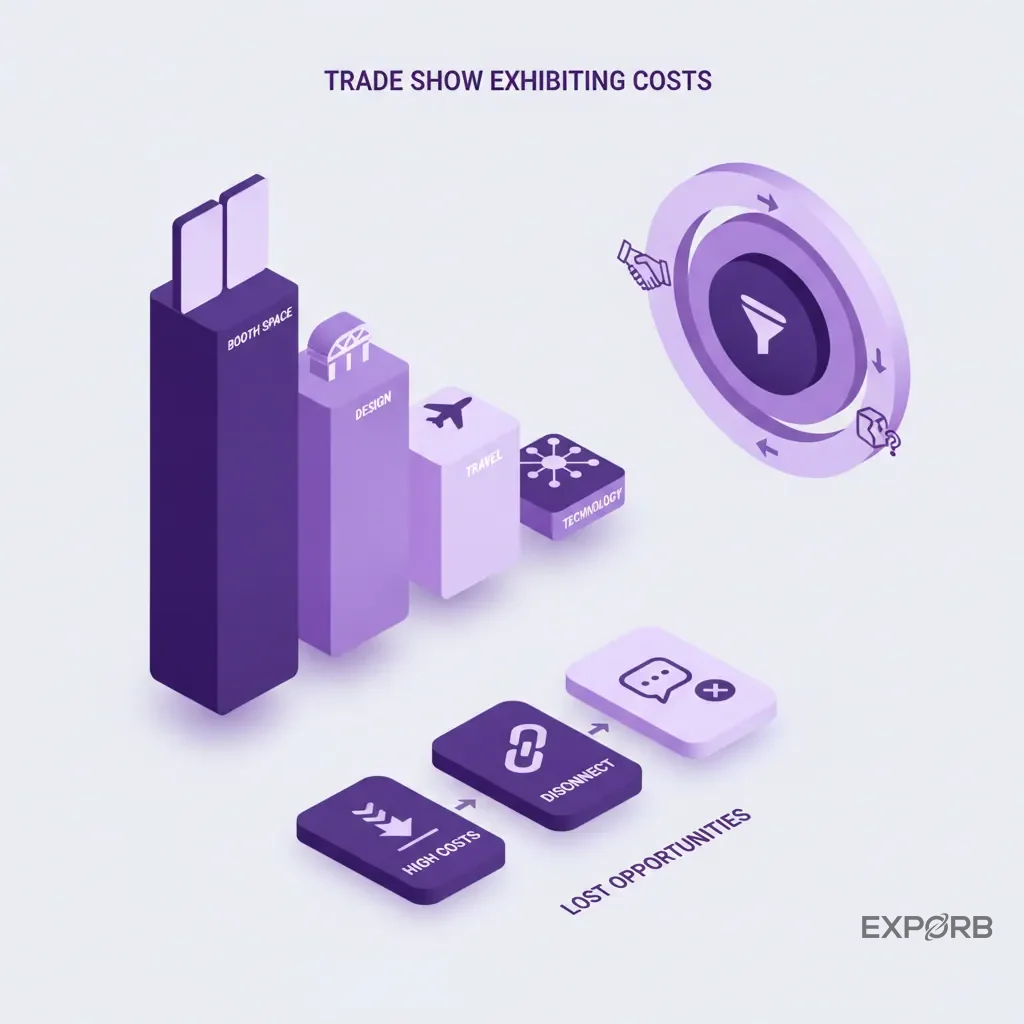
Trade shows aren't cheap. They're one of the most expensive lead generation channels you can invest in. It's a serious investment. B2B benchmarks put the cost per lead anywhere from $394 to over $800. According to research from Martal Group, some estimates place the average cost per lead from events at a staggering $811. When you're spending that kind of money, you can't afford to let good conversations die. With nearly half of B2B marketers planning to attend more trade shows, competition on the floor is only getting fiercer. The stakes have never been higher.
The trade show lead graveyard: From high-intent conversation to forgotten contact
The biggest failure in event marketing happens the moment your team leaves the exhibit hall. The energy evaporates. It's a common problem. The context from a great conversation—specific pain points, budget talks, agreed-upon next steps—gets lost in translation. It turns into a single line in a CSV file: "John Doe, Acme Corp, john.doe@acme.com."
What did you talk to John about? What problem does he need to solve right now? Why was he so interested in your new feature? Nobody remembers. So John gets the same generic "Nice to meet you at SaaSCon" email as everyone else. He ignores it. And another high-intent lead ends up in the graveyard. We've all seen it happen.
Shifting from lead volume to conversation quality
For years, the goal was simple: scan as many badges as possible. More scans meant a better show, right? Wrong. That's the old way of thinking. It's a trap. It's a vanity metric that clogs your pipeline with unqualified contacts who only stopped by for the free socks.
The modern approach isn't about volume; it's about quality. It's about capturing the intent behind the conversation. The goal isn't to get 500 badge scans. It's to have 50 meaningful conversations, document them perfectly, and follow up instantly with personalized context. That's how you turn an expensive event into a revenue-generating machine.
How can you turn your event into a high-intent ABM campaign?
Stop thinking of a trade show as a three-day event. Think bigger. It's a three-month campaign with the show as its centerpiece. The most successful exhibitors don't show up and hope for the best; they arrive with a plan and a pre-warmed audience. They treat it like a targeted Account-Based Marketing (ABM) play.
Using intent data to build your 'must-meet' list
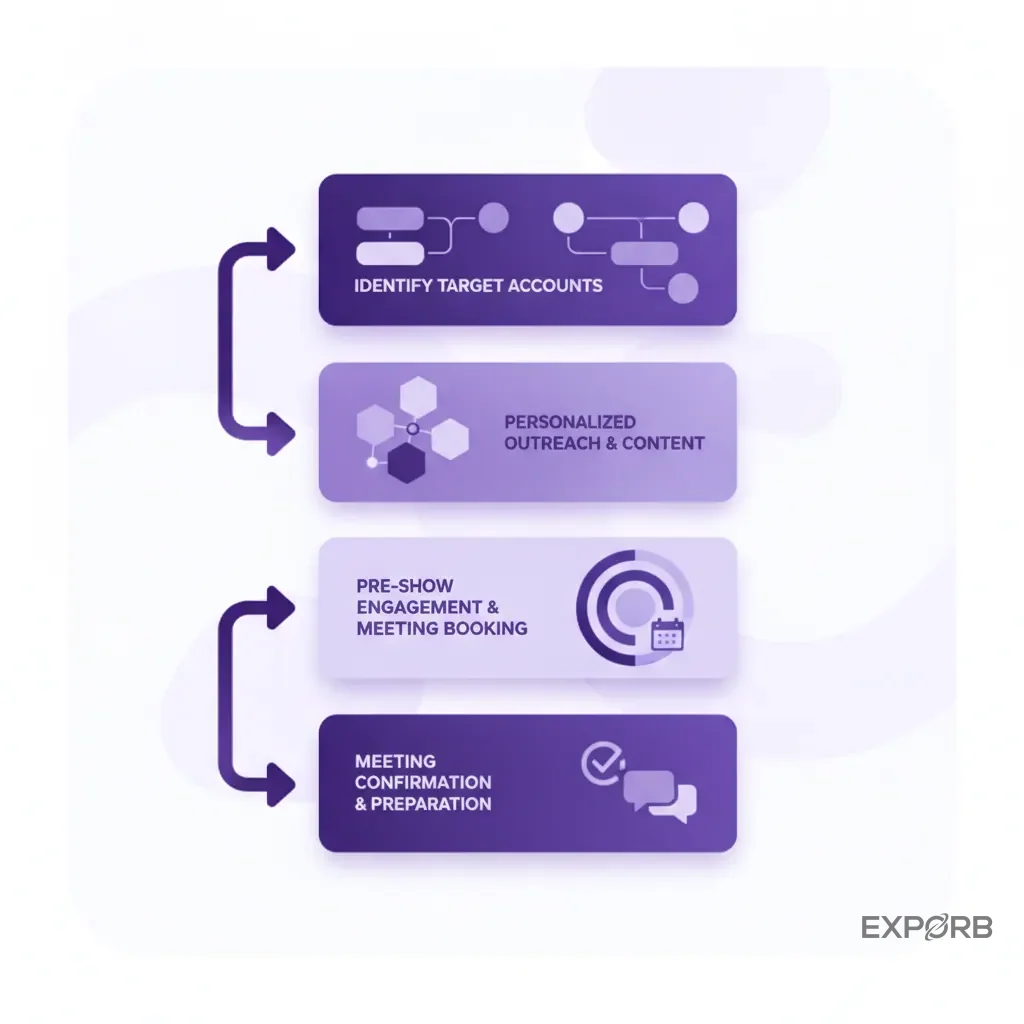
Who is actively searching for a solution like yours right now? Don't guess. Use intent data platforms (like Bombora or 6sense) to see which of your target accounts are researching relevant keywords, visiting competitor websites, or reading industry articles. This isn't a cold list—it's a hot list. These are your top targets. You absolutely must meet these people at the show. Focus your pre-show outreach here first. After all, buyers who show intent convert at a rate nearly 3.4 times higher than those who don't.
Warming up your audience with pre-show digital engagement
Once you've got your "must-meet" list, it's time to warm them up. Don't just send a cold "Hey, we'll be at booth #543" email. Run a multi-touch campaign. It makes a huge difference.
- LinkedIn Ads: Target your list with content that speaks directly to their pain points.
- Personalized Video: Use a tool like Loom or Vidyard to send a quick, personal video from the account executive they'll meet at the show.
- Valuable Content: Share a new research report or an exclusive guide. Give them a reason to care about you before they even see your booth.
The goal is for them to arrive at your booth already knowing who you're and what you do. It changes the entire dynamic of the conversation from an introduction to a consultation.
Securing qualified meetings before you even arrive
The ultimate goal of pre-show engagement is to fill your calendar with qualified meetings. Don't waste time. Your best salespeople shouldn't be standing around waiting for someone to walk by. They should be in back-to-back meetings with high-intent prospects who are ready to talk business.
Use a scheduling tool like Calendly or Chili Piper in your outreach emails to make booking dead simple. Offer a small, high-value incentive for booking a meeting—not a cheap giveaway, but something like a premium gift card or a donation to their favorite charity. You'll walk onto the show floor on day one with a guaranteed pipeline.
Related: The Ultimate Guide to Trade Show Booth Design
What makes a booth a lead magnet instead of a brochure stand?
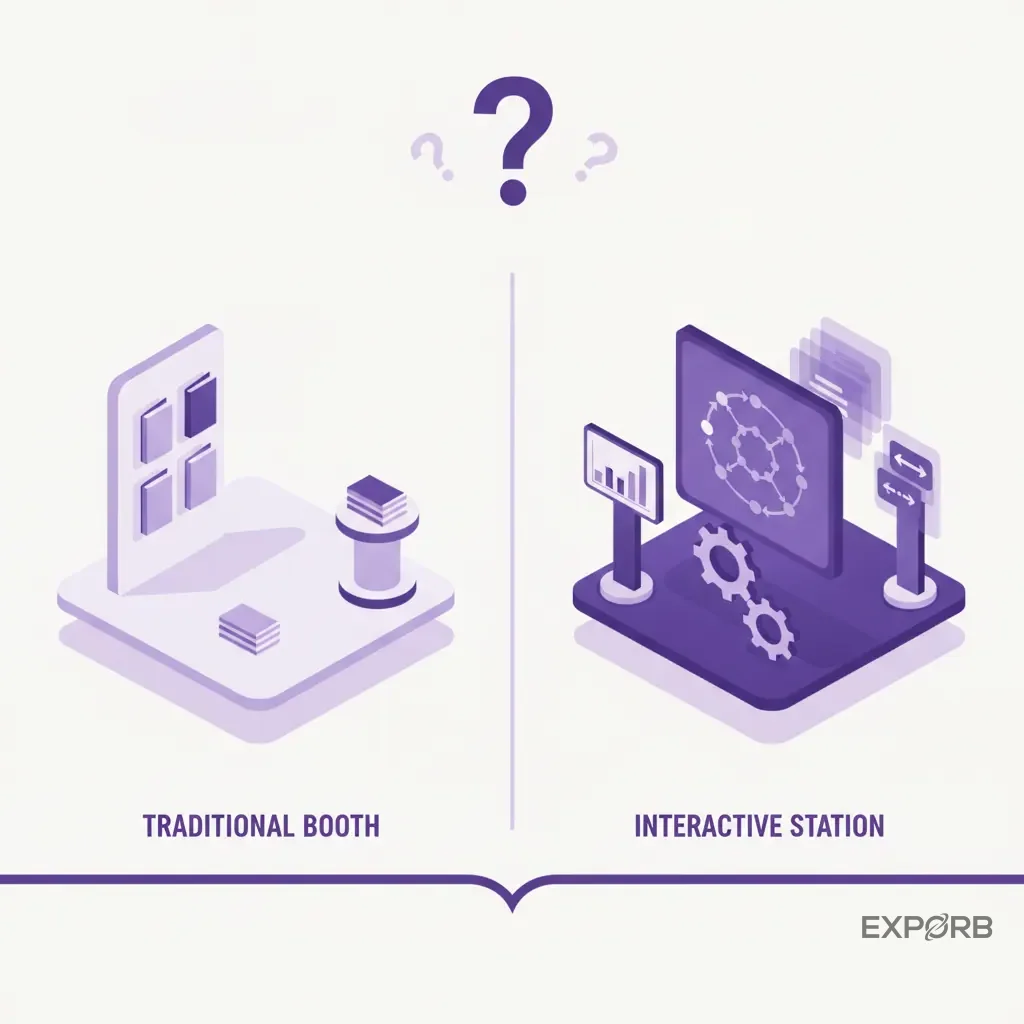
Let's be honest—most trade show booths are boring. They're a collection of marketing-approved taglines, generic stock photos, and a table full of brochures nobody wants. People walk by them without a second glance. It's a huge missed opportunity. Be different. Your booth should be an active, problem-solving experience.
Designing your booth around the buyer's journey
Don't design your booth around your company's org chart. Focus on them. Design it around your customer's problems. Instead of having stations for "Product A" and "Product B," create stations for "Solving X Pain Point" and "Achieving Y Goal."
Map it out:
- Attract: What's the big, bold question on your signage that will stop your ideal customer in their tracks?
- Engage: What interactive element will pull them in and get them talking?
- Qualify: How does that interaction help you understand their needs?
- Capture: What's the smooth, tech-enabled process for capturing their information and the full context of the conversation?
Creating immersive, multi-sensory experiences that drive conversations
People remember what they experience, not what they read. Make it memorable. Ditch the boring pull-up banners and create something memorable.
- Sound: Use directional speakers to create a focused audio experience for a demo station.
- Touch: Have a physical product people can hold and interact with.
- Smell: A subtle, pleasant scent can make your booth more inviting. (Just don't overdo it.)
The goal is to create a space that feels different from the chaos of the trade show floor—a place where people want to stay and talk.
Replacing passive displays with interactive problem-solving stations
Instead of a looping video nobody watches, set up an interactive diagnostic tool on a large touchscreen. Get them involved. Visitors can answer a few questions about their challenges, and the tool can show them exactly how your solution would help.
This does two things:
- It provides immediate value to the visitor.
- It's an incredible qualification tool for your team. You instantly know their biggest pain point before you even say hello.
It's the difference between saying "Let me tell you what we do" and asking "It looks like you're struggling with X. Can I show you how we fix that?"
Are you capturing conversations or just contact information?
This is the most important question you can ask about your event strategy. A name and an email from a badge scan is almost worthless on its own. It's a critical distinction. In fact, a generic badge scan is now considered a very low-value buying signal, contributing only about +4% to a lead score. The real value—the intent, the pain, the urgency, the budget—is in the conversation. And most companies are letting it vanish into thin air. It's like collecting a fishbowl full of business cards that nobody will follow up on.
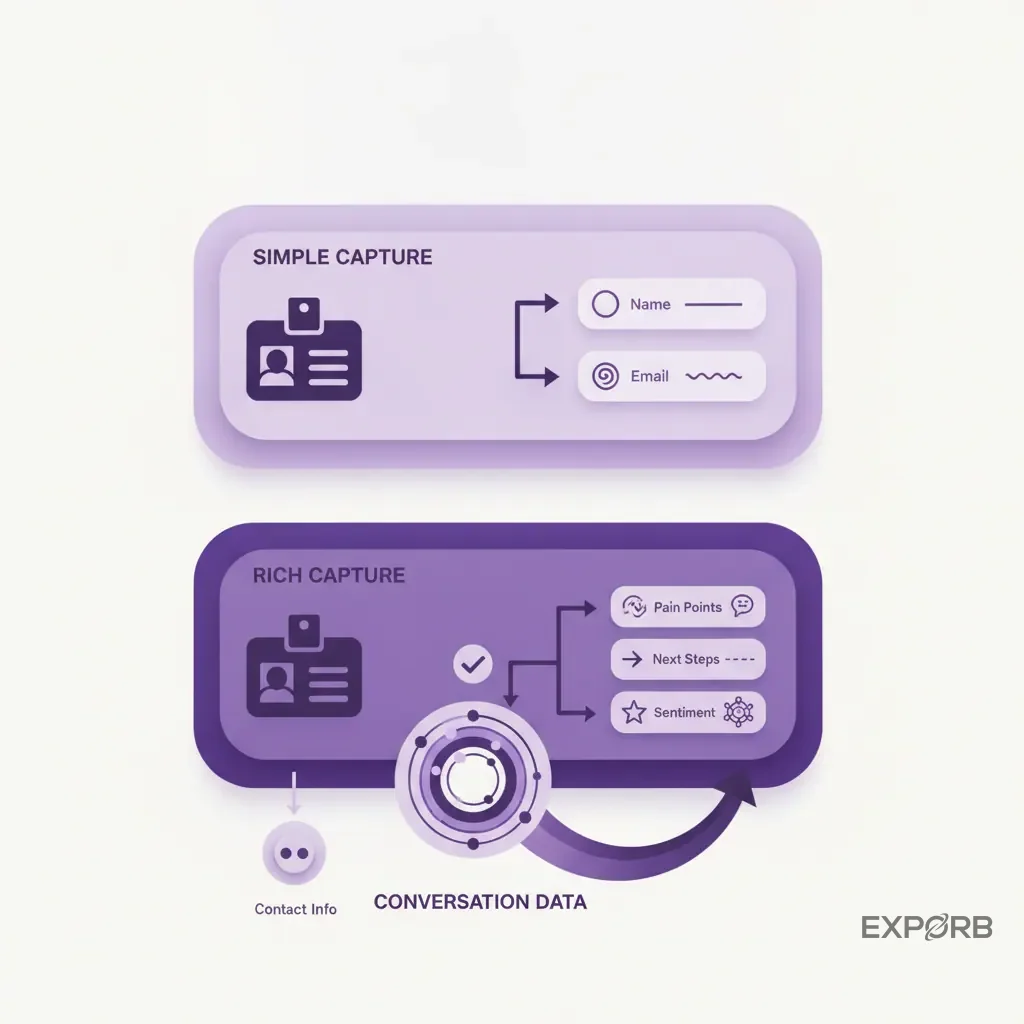
Misconception debunked: Why a badge scan is a low-value signal in 2026
Badge scanners are convenient, but they're a trap. They create the illusion of productivity while capturing the least valuable information. It's a false sense of security. They tell you who you met, but they don't tell you why it mattered.
Was this person a decision-maker with an immediate need? Or a student collecting swag? The badge scan doesn't know. Relying on them is like trying to build a house with just a pile of bricks and no blueprint. You've got the materials, but you've no idea how they fit together.
The founder's dilemma: Remembering the critical details from dozens of talks
I've been there. You're a founder or a sales leader, and your team just got back from a big show. You ask them, "So, who were the best leads?" Sound familiar? They start scrolling through their phones, trying to decipher their own messy notes. "Oh, there was that one person from Acme... I think she said they needed a solution by Q3. Or was that the guy from Apex?"
It's a black hole. You've no visibility into the actual conversations that took place on the floor. You can't help your team prioritize, you can't tailor the marketing follow-up, and you can't accurately forecast the pipeline from the event. It's infuriating. We built Exporb because this exact scenario played out at our own events too many times.
Moving to intent-rich capture: Structuring verbal data for sales
The solution is to stop collecting contacts and start capturing conversations. This means using technology to get your team's verbal data out of their heads and into a structured, usable format. This fundamentally changes how you manage leads.
Modern lead capture apps allow your team to do more than just scan a card. They can instantly add notes, record a quick voice memo summarizing the conversation, and tag the lead with custom qualifiers right at the booth. This turns a chaotic, forgettable conversation into a structured data asset. When your sales team gets that lead, they don't just see a name—they see the full context, the customer's exact words, and the clear next steps. That's how you turn a conversation into a conversion.
How do you use gamification to qualify leads, not just attract crowds?
Everyone loves a good game. But dropping your business card in a fishbowl to win an iPad only gets you a list of people who want a free iPad. It's a common trap. It doesn't tell you anything about their buying intent. Purposeful gamification, on the other hand, can be a powerful tool for engagement and qualification.
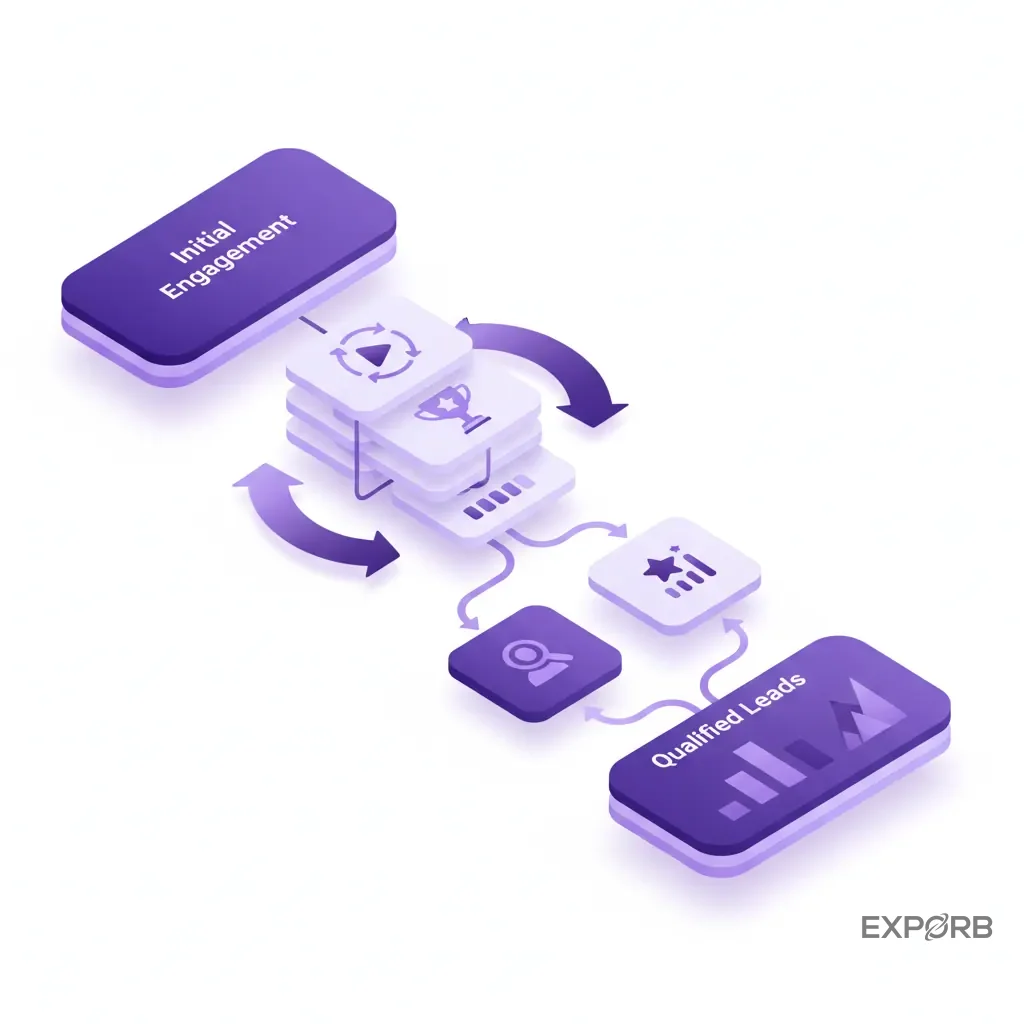
Gamify with purpose: Aligning activities with buying signals
The key is to design a game where the act of playing reveals information about the prospect. Design with intent. The game itself should be a discovery process.
- Wrong way: "Spin the wheel to win a prize!" (Tells you nothing.)
- Right way: "Take our 2-minute 'Process Maturity' quiz to see how you stack up against the competition and get a personalized report." (Tells you their biggest challenges.)
The prize isn't the point; the data you collect is. The game's output should be a qualification signal.
Examples of purpose-driven engagement: Interactive quizzes and diagnostic tools
Think beyond simple trivia. Get creative. Create an interactive tool that helps prospects self-identify their problems.
- Cybersecurity companies: A "What's Your Phishing Risk Score?" quiz. Their score immediately tells you how much they need your help.
- Logistics companies: A "Calculate Your Hidden Shipping Costs" tool. The result shows them how much money they're losing without your solution.
- Marketing automation platforms: An "Audit Your Follow-up Strategy" checklist. Their answers reveal the gaps in their current process.
These aren't just games—they're consultative selling tools disguised as fun.
Tiering leads based on game outcomes and engagement depth
Now, you can connect the game's outcome directly to your lead scoring. Prioritize effectively.
- Tier 1 (Hot): Scored "High Risk" on the quiz and asked for a demo.
- Tier 2 (Warm): Completed the quiz and downloaded the report.
- Tier 3 (Cool): Started the quiz but didn't finish.
This allows your team to instantly prioritize follow-up. Instead of a random list of names, you've got a clearly segmented list based on demonstrated need and engagement. You know exactly who to call first.
What does an AI-powered 60-minute follow-up actually look like?
The single biggest reason trade show leads go cold is the delay in follow-up. Speed matters. It often takes days, if not weeks, for a proper, personalized email to go out. By that time, your prospect has forgotten who you're. The momentum is lost. But what if you could follow up—with a fully personalized email—before they even left the convention center?
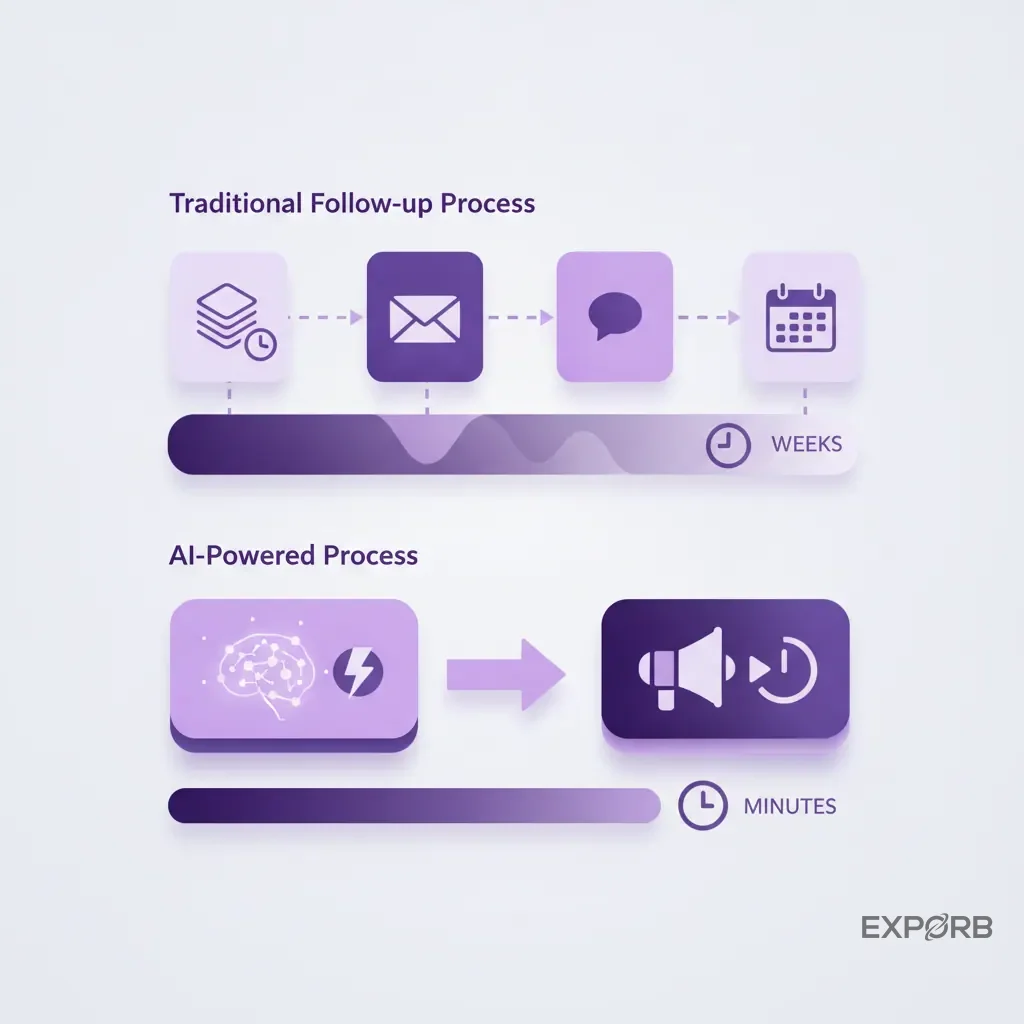
Automating the immediate, personalized connection
Speed is your biggest advantage. Be responsive. An immediate follow-up shows you're organized, attentive, and serious about their business. But it can't be generic. "Nice to meet you" is spam. "Great chatting with you about your challenge with X and how we can help you with Y" is a real conversation starter.
The problem has always been that personalization takes time. And time is something you don't have during a busy show. That's where AI changes the approach.
From audio to action: How AI transcribes, summarizes, and syncs to your CRM
Here's the modern workflow. It's smooth.
- Capture: Your booth staff has a great conversation with a prospect. Instead of scribbling notes, they record a 30-second voice note summarizing the key points and snap a picture of their business card.
- Transcribe & Summarize: As soon as the device is back online, AI gets to work. It transcribes the voice note, identifies key entities like company names and pain points, and creates a clean summary.
- Enrich & Score: The system enriches the contact with data from LinkedIn and assigns an AI-powered lead score based on the conversation's content and sentiment.
- Sync: All of this structured data—contact info, summary, transcript, score—automatically syncs to your CRM. No manual data entry.
Crafting follow-up content based on specific booth interactions
This is where it gets powerful. Real-time personalization. The AI doesn't just store the data; it uses it. We built Exporb so you can trigger an email follow-up instantly. The system uses the conversation summary to draft a personalized email on the spot.
It pulls the prospect's name, company, the specific challenges they mentioned, and the agreed-upon next steps, and inserts them into a pre-approved template. Your team member just has to review it, maybe add a personal touch, and hit send. The whole process takes less than a minute. The prospect receives a relevant, contextual email while the conversation is still fresh in their mind. This simple workflow is one of the most effective trade show lead generation strategies you can implement.
Measuring success: It's more than badge scans
How do you know if a trade show was successful? Stop counting badges. For too long, the answer has been "We got 437 badge scans." That's a terrible metric. It tells you nothing about the quality of those interactions or their impact on the business. To truly understand ROI, you need to connect event activity to pipeline and revenue.
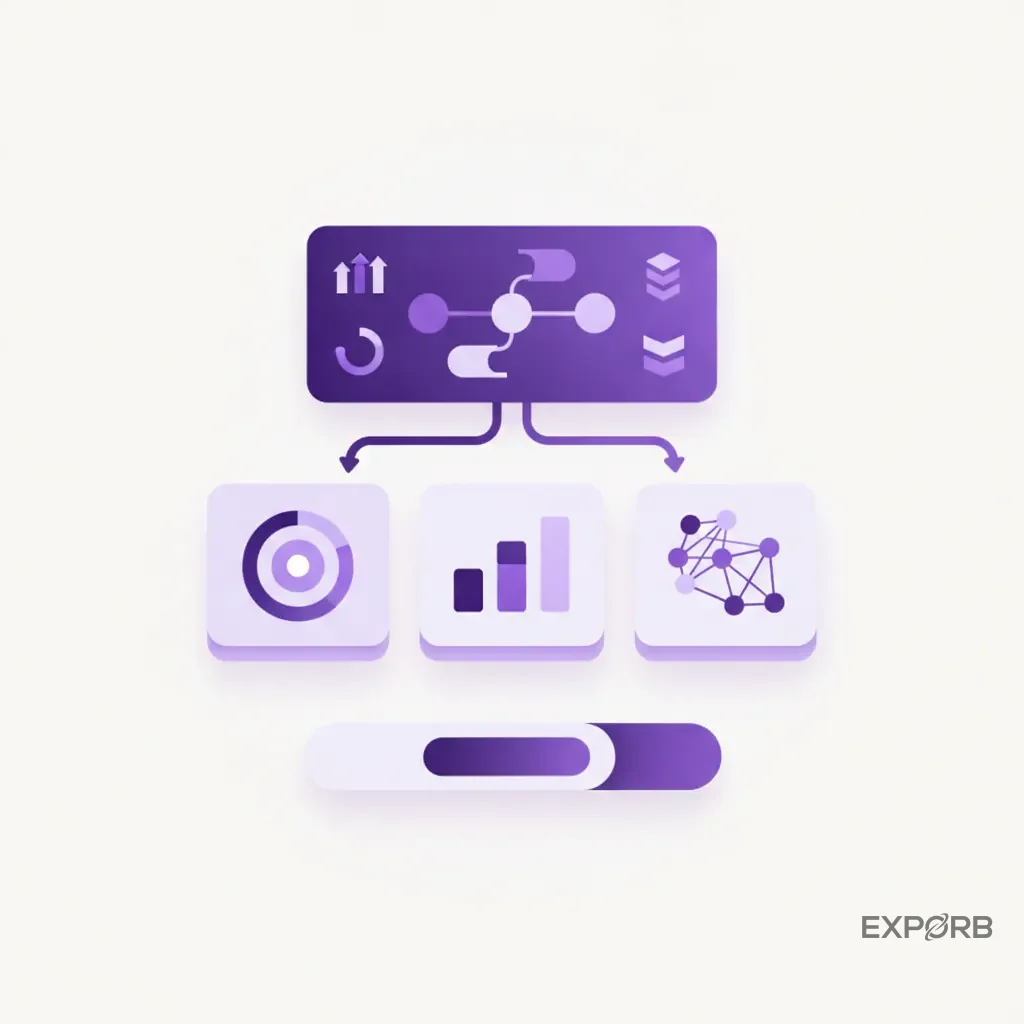
Operationalizing trade show metrics in your RevOps dashboard
Your trade show data shouldn't live in a siloed spreadsheet. Integrate your data. It needs to be piped directly into your CRM and BI tools so your Revenue Operations (RevOps) team can analyze it alongside all your other marketing channels.
This means you must tag every lead captured at the event with the event source. This allows you to track their entire journey, from the first conversation at the booth to the closed-won deal. Only then can you accurately attribute revenue back to the event.
The KPIs that matter: Cost per opportunity and pipeline influenced
Ditch the vanity metrics and focus on the ones that matter to your CFO. Real metrics count.
Shifting from vanity metrics to impact-driven KPIs for trade shows.
The median cost per opportunity from events can be over $3,100, so you need to be sure the opportunities you're generating are high quality. Tracking "Pipeline Influenced" is also important, as an event might be a key touchpoint in a long sales cycle, even if it wasn't the first touch.
Comparing event ROI against your other marketing channels
Once you've got this data operationalized, you can finally answer the big question: "Are trade shows worth it for us?" Prove the value.
You can compare the Customer Acquisition Cost (CAC) from events to the CAC from Google Ads, content marketing, or your outbound sales efforts. You might find that while the upfront cost of a trade show is high, the lead quality and deal size are so superior that it's actually your most profitable channel. Or you might find the opposite. But you can't know until you track the right data.
Related: How to Calculate Trade Show ROI the Right Way
The technology that powers modern trade show lead capture
Your team's ability to execute a modern lead capture strategy is entirely dependent on the tools you give them. Tools matter. A clipboard and a fishbowl for business cards won't cut it anymore. The modern field marketer's tech stack is mobile, integrated, and works even when the terrible conference Wi-Fi doesn't.
The modern field marketer's tech stack
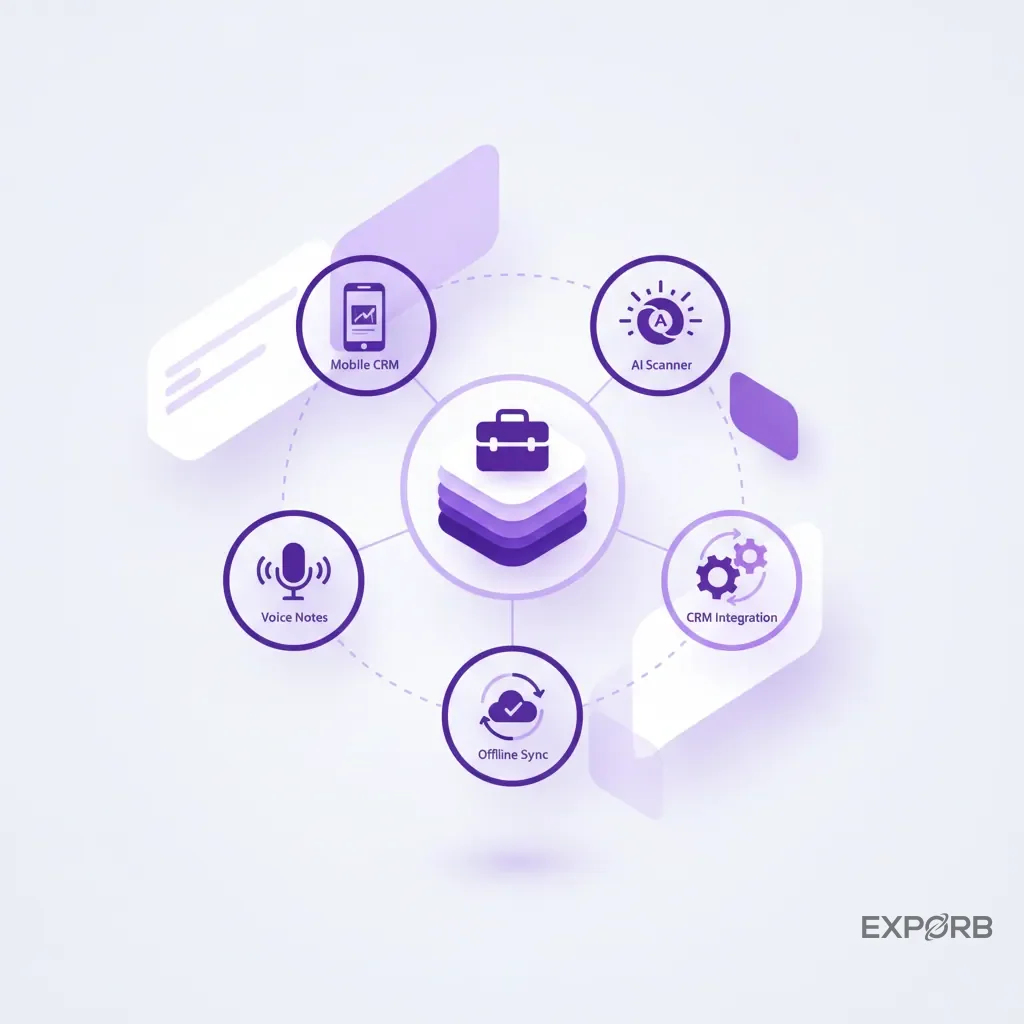
The core of the stack is a dedicated lead capture application that runs on your team's phones or tablets. It's a complete system. It's not just a scanner; it's a complete system for capturing and structuring conversation data.
Key components include:
- A Mobile CRM or Lead Capture App: The central hub for all activity.
- business card scanner: Uses AI-powered OCR to instantly and accurately digitize contact info.
- Voice Note & Transcription: Captures conversation summaries in the rep's own words.
- CRM integration: Pushes clean, structured data directly to Salesforce, HubSpot, or your system of record.
- Offline Capability: This is non-negotiable. The app must be able to capture everything—scans, notes, photos—without an internet connection and then sync automatically when it's back online.
How AI-powered CRMs provide full visibility into team conversations
As a founder, the lack of visibility into event performance was one of my biggest frustrations. No more blind spots. With modern tools, we solve that problem. At Exporb, we give you a real-time dashboard where you can see all the activity from the show floor as it happens.
You can see which reps are having the most conversations, which prospects they mark as "hot," and what the key topics of discussion are. It's like having a direct line to the show floor. This lets you make adjustments on the fly—if you see a lot of interest from a certain industry, you can redeploy your team to focus on that. Team sync has ensure everyone is on the same page, preventing awkward moments where two reps approach the same lead.
Using NFC, QR codes, and PWAs for smooth data exchange
While business cards are still common, digital data exchange is becoming faster and more popular. Offer flexibility. Look for tools that support multiple methods of capture.
- NFC (Near Field Communication): Tapping a phone to an NFC-enabled badge or card for an instant contact swap.
- QR Codes: Every attendee badge has one. A good app can scan it to pull contact info.
- PWAs (Progressive Web Apps): A lightweight web form a prospect can fill out on their own phone in seconds.
The best approach is an "all-of-the-above" strategy. Your team should be equipped to capture a lead's information in whatever way is fastest and most convenient for the prospect.
Your top trade show lead generation questions answered
Here are direct answers to some of the most common questions we hear from exhibitors.
How many leads should I expect from a trade show?
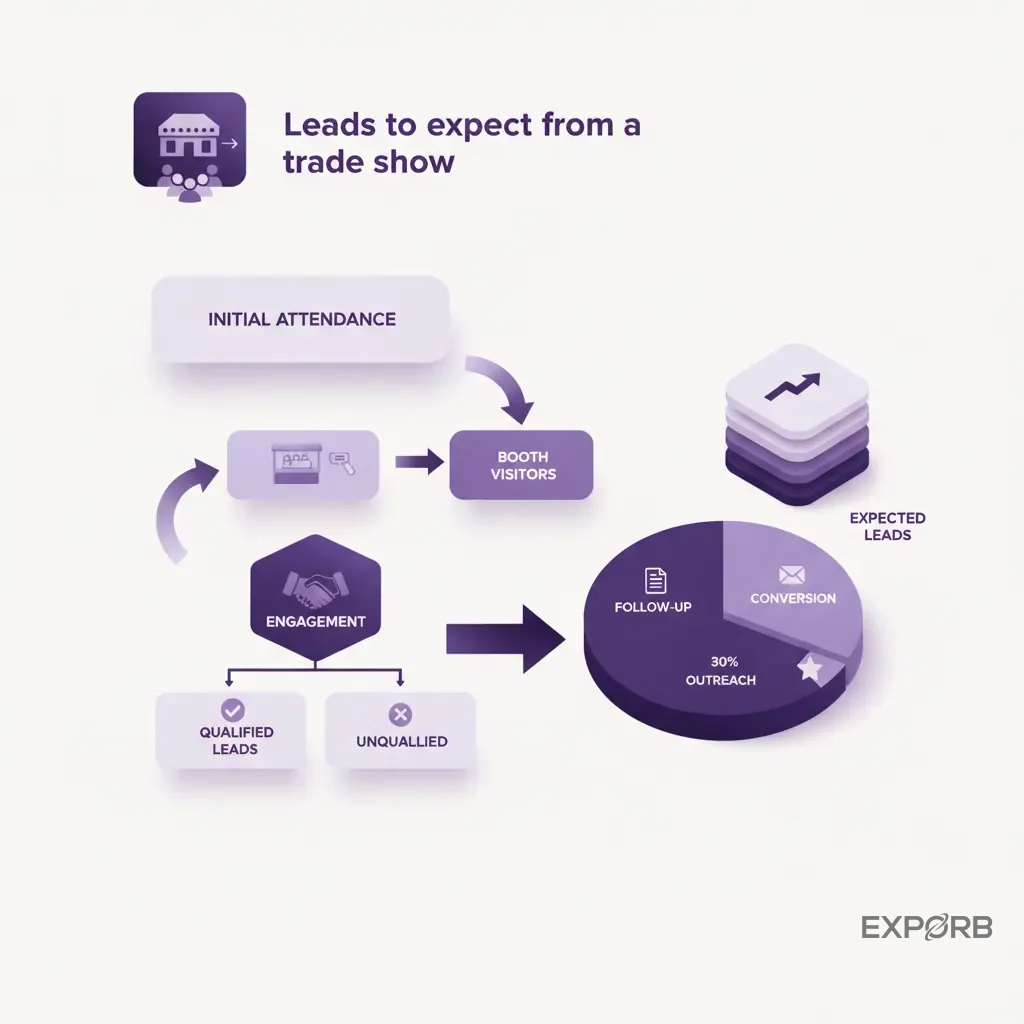
There's no magic number, as it depends heavily on the show's size, your industry, and your booth's location and visibility. It varies greatly. However, a good benchmark is to aim for 2-4 qualified conversations per booth staffer per hour. For an 8-hour day with 4 staffers, that's a target of 64-128 quality conversations per day. Remember, the goal is quality, not quantity. One great conversation with a decision-maker is worth more than 100 unqualified badge scans.
What's the ideal booth staff-to-attendee ratio?
A common mistake is understaffing the booth. Don't understaff. If all your reps are busy, prospects will walk away. A good rule of thumb is to have one staffer for every 50 square feet of booth space. For a 10x20 (200 sq ft) booth, you should have at least 4 people. It's also smart to rotate staff, so everyone gets a break from the floor. Burned-out reps don't have good conversations.
Can small teams compete with enterprise exhibitors?
Absolutely. Yes, you can. In fact, small teams often have an advantage: agility. You can't outspend the big guys on booth size, but you can out-smart them with a better strategy. Large companies are often slow and bureaucratic. You can be personal, nimble, and fast.
Focus on pre-show outreach to your top targets. Design a creative, problem-focused booth experience. Use modern technology to capture great data and follow up instantly. While the enterprise team is still waiting for their marketing department to approve an email template, you'll already be booking demos. Remember, data from Radon Exhibition shows that 81% of trade show attendees have buying authority—you just need to connect with the right ones.
Your playbook for turning the next event into a revenue engine
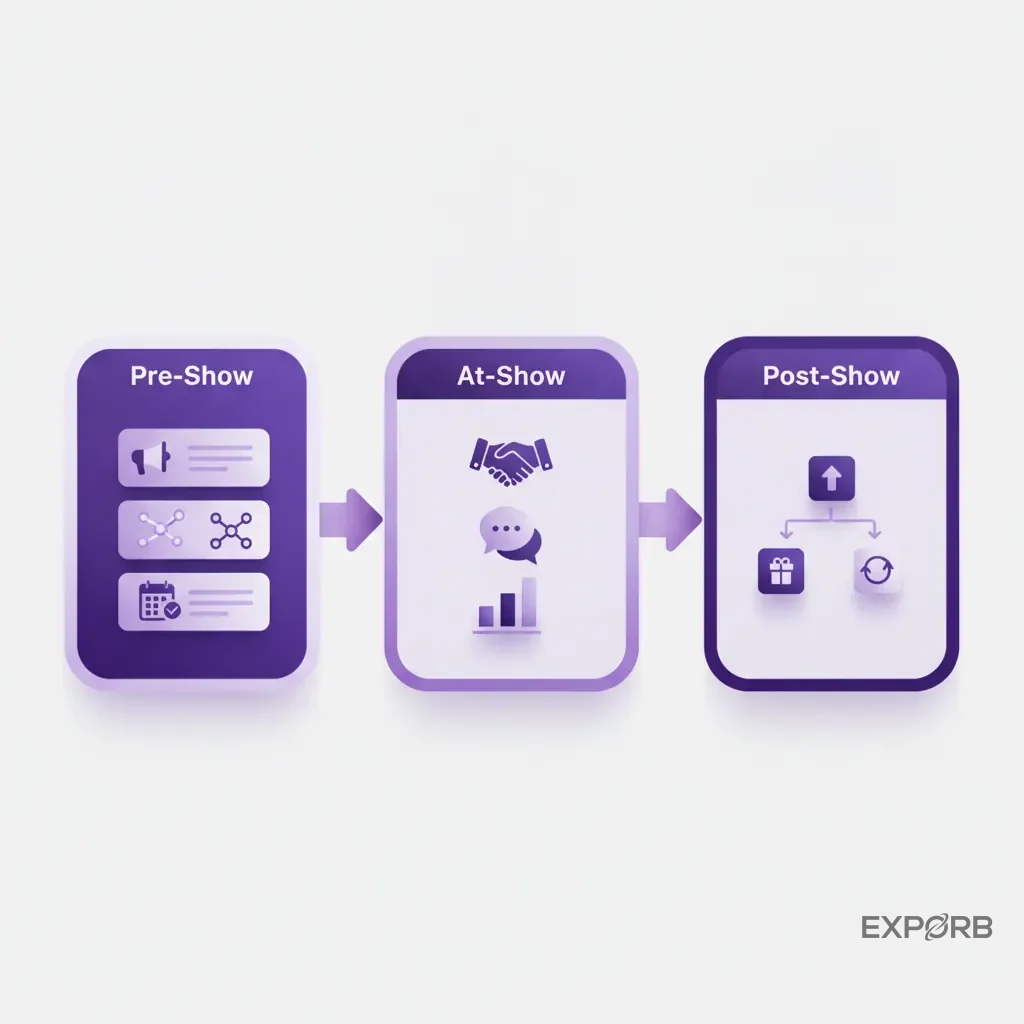
Success at a trade show isn't about what you do during the event. It's a full cycle. It's about the process you build around it—before, during, and after. Stop thinking in terms of one-off events and start building a repeatable, scalable event-led growth program.
The pre-show, at-show, and post-show checklist
Pre-Show (4-6 weeks out): Plan ahead.
- Define your goals. What does success look like in terms of qualified opportunities?
- Build your "Top 50" target list using intent data.
- Launch your pre-show digital warm-up campaign.
- Book at least 5-10 qualified meetings before you arrive.
- Train your booth staff on the new conversation capture process.
At-Show (The Event): Execute flawlessly.
- Focus on quality conversations, not badge scan volume.
- Use your lead capture tool to document every key interaction with notes and voice memos.
- Use AI-powered tools to send personalized follow-ups in near real-time.
- Hold a 15-minute team huddle at the start and end of each day.
Post-Show (1 week after): Analyze and iterate.
- Ensure all data is synced and correctly tagged in the CRM.
- Hold a debrief with sales and marketing to review wins and losses.
- Analyze the data: How many opportunities were created? What is the projected pipeline value?
- Start nurturing the leads that weren't ready for a sales conversation.
Integrating your sales, marketing, and RevOps teams
Events can't be a marketing-only activity. It's a team sport. Sales needs to be involved in the pre-show outreach and at-show conversations. RevOps needs to own the data and reporting to ensure you can measure true ROI. It requires a fully integrated effort where everyone understands their role and is working towards the same pipeline goals.
Making every conversation count
You invest a massive amount of time, money, and energy into trade shows. It's worth it. Don't let the most valuable asset you create—the context from human conversations—disappear into a messy spreadsheet or a forgotten notebook. Arm your team with the right process and technology to capture every detail. Follow up with speed and relevance. And measure what actually matters. That's how you stop wasting money on events and start turning them into your most valuable source of revenue.