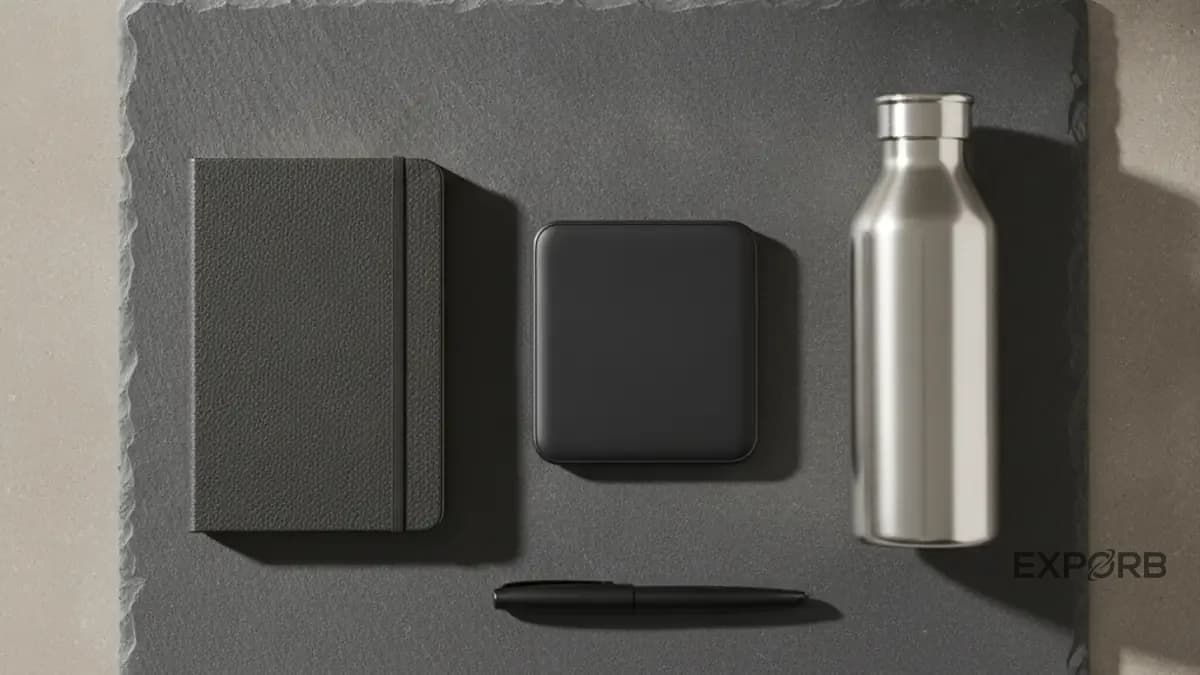
Let's be honest. How many cheap pens, flimsy tote bags, and stress balls have you thrown away the minute you got back to your hotel room? That's your giveaway budget ending up in a landfill. The old playbook of flooding the floor with low-quality swag is broken. It's a race to the bottom, attracting "swag grabbers," not qualified buyers. Great trade show giveaway ideas don't just generate booth traffic; they start valuable conversations.
Your company spends tens of thousands—sometimes hundreds of thousands—on a booth, travel, and sponsorships. Most exhibitors obsess over Booth Design and completely ignore lead capture. They spend $50K looking good and $0 on remembering what was said. Your giveaway isn't a mere toy; it's a strategic tool for filtering, qualifying, and remembering leads. It's a critical investment.
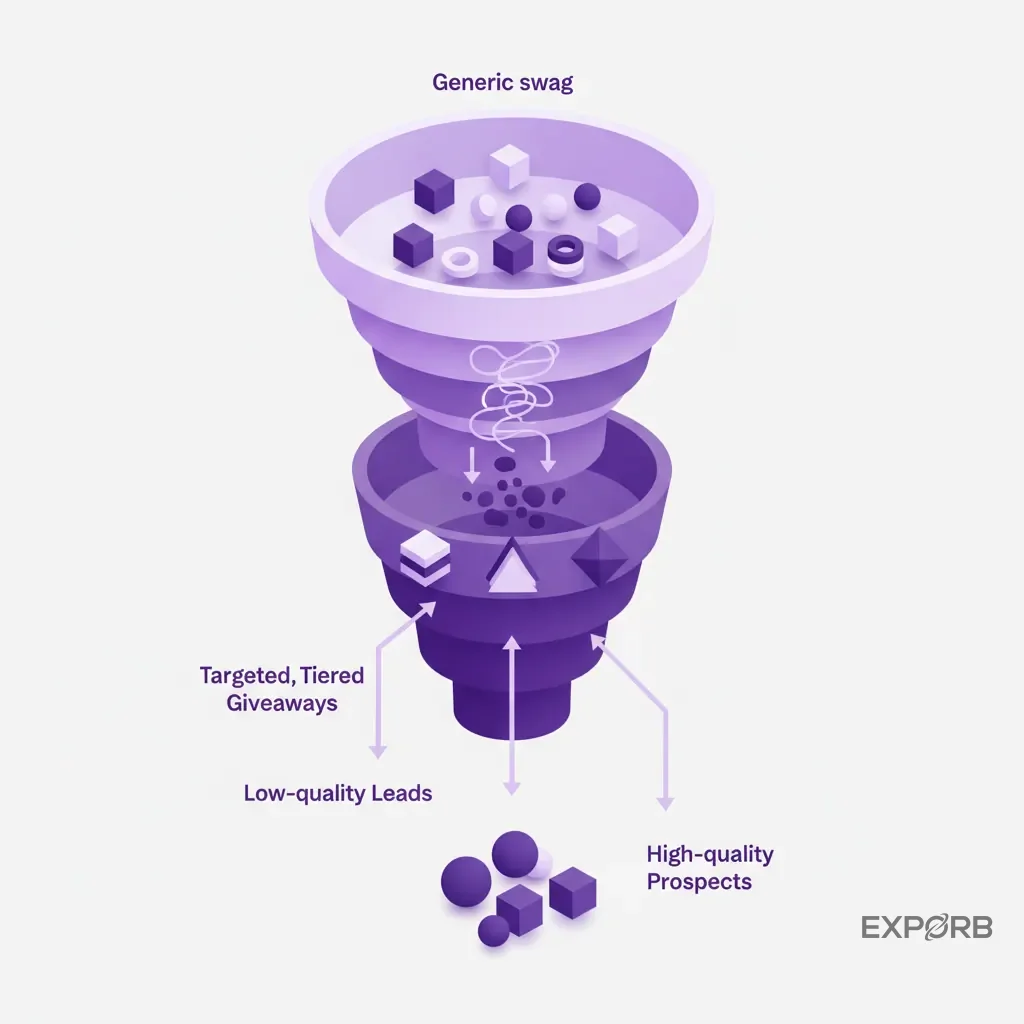
The shift from brand awareness to provable ROI
For years, companies justified swag by calling it "brand awareness." But CFOs and founders don't care about awareness you can't measure. They want to see a clear line from money spent on those custom water bottles to deals closed three months later. Every dollar in your event budget faces scrutiny. If you can't prove your giveaway strategy contributed to the sales pipeline, that budget's the first to get cut.
Attendee fatigue: The problem with cheap, disposable swag
Attendees are tired. They're tired of swag that breaks before they even leave the convention center. They've seen every gadget and gizmo. A cheap, thoughtless item doesn't just get ignored; it actually creates a negative impression of your brand. It says you aren't invested in quality, and it implies your product might be the same. The goal isn't to give something to everyone who walks by. It's to give something meaningful to the right people.
The rise of sustainability and corporate ESG policies
Corporate responsibility is a core business metric, not just a buzzword. Companies and their customers actively look to reduce waste. Handing out thousands of single-use plastic items directly contradicts the sustainability goals many of your ideal customers have. Choosing high-quality, reusable, or eco-friendly items shows your brand's values align with theirs—a much more powerful message than a cheap logo pen could ever send.
How do I create a tiered giveaway strategy that qualifies leads?
A tiered giveaway strategy is the single most effective way to manage your budget and focus on high-value prospects. Instead of a one-size-fits-all approach, you create different levels of giveaways tied to specific levels of engagement. This turns your swag from a simple handout into a powerful qualification tool.
Think of it like a conversation filter. A casual visitor gets one thing, but someone who sits down for a 15-minute demo gets something much better. This approach respects both your budget and the attendee's time. GiftaFeeling's 2026 trade show guide suggests a common budget model allocates 50-60% of the spend to mid-tier items aimed at qualified attendees. It's about investing in the right conversations.
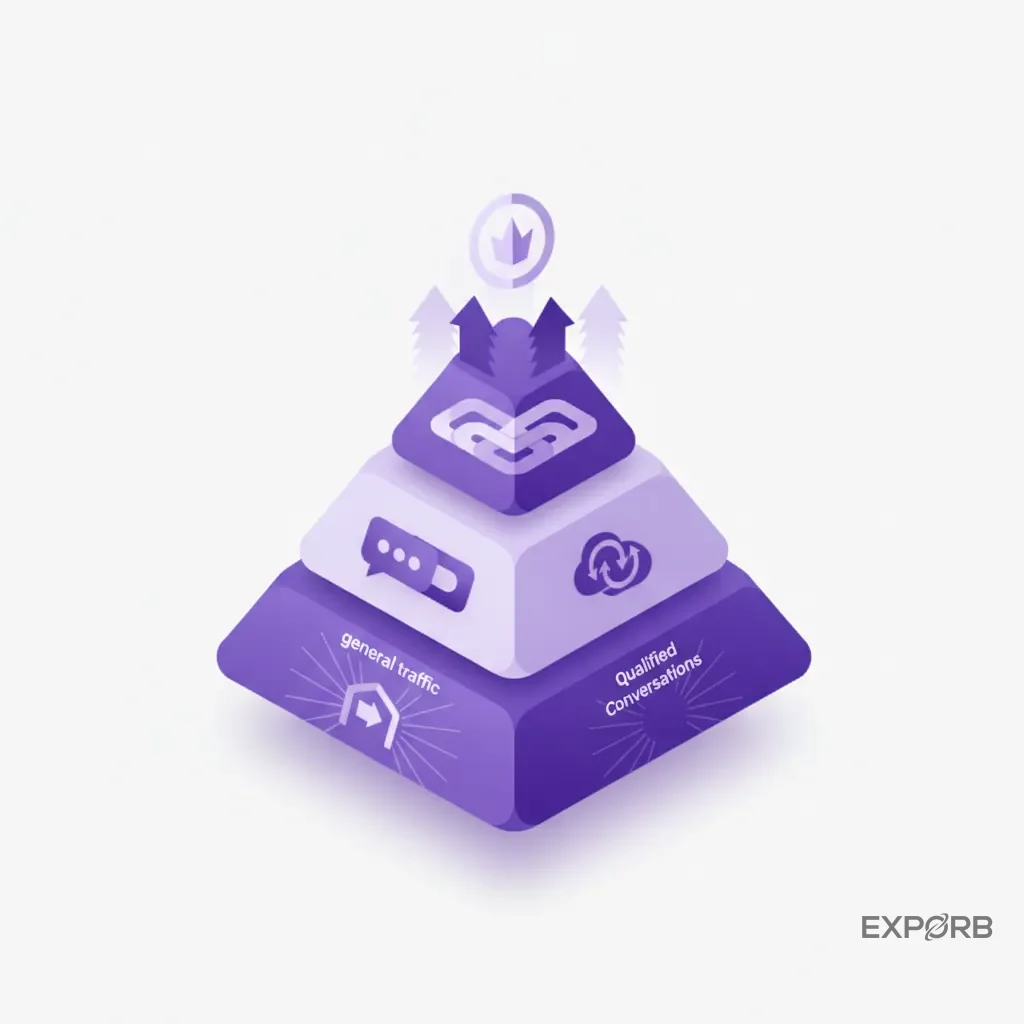
Tier 1: Low-cost items for general booth traffic
These are your "conversation starters." The goal here isn't to pre-qualify, but to break the ice and draw people into your booth. These items should be inexpensive (under $5), easy to transport, and have broad appeal. But cheap doesn't have to mean junk.
- High-quality stickers with a clever design
- Well-designed microfiber screen cleaning cloths
- Custom-shaped mints or candy
- Webcam covers
The key is to hand these out freely, but use them as an opportunity to ask a qualifying question: "What brings you to the show today?" or "What's the biggest challenge you're facing with [your industry problem]?"
Tier 2: Mid-range, useful items for qualified conversations
This is where you spend the bulk of your budget. These items are for people who engage in a real conversation, answer your qualifying questions, or let you scan their business card. They've shown genuine interest—and you reward that interest with something of genuine value. These items should be useful, something the person will keep on their desk or in their bag for months.
- Durable, well-made water bottles or coffee tumblers
- Portable power banks or multi-chargers
- High-quality notebooks and pens (think Moleskine, not BIC)
- Socks with a cool, industry-related design
You don't leave these in a fishbowl on the counter. Instead, keep them behind the desk and personally hand them to a prospect after a good conversation. It feels more exclusive and makes the interaction more memorable.
Tier 3: Premium gifts for scheduled demos and decision-makers
This is your "deal closer" swag. These are high-value items ($50+) reserved exclusively for C-level executives, key decision-makers, or prospects who commit to a specific next step, like scheduling a follow-up demo. Handing one of these out should feel like an event.
- High-end noise-canceling headphones (e.g., Anker, JBL)
- Smart water bottles or coffee mugs
- A high-quality backpack or messenger bag
- A premium local gift, such as artisanal coffee or spirits
You're creating an obligation, not just giving away a gift. It's a tangible expression of how much you value their time and a powerful nudge to ensure they show up for that post-show meeting.
A sample tiered giveaway strategy with budget allocation based on 2026 industry benchmarks.
What trade show giveaways do customers actually keep?
The ultimate test of a giveaway is whether it ends up on a desk or in the trash. The most effective items are practical, durable, and genuinely useful in the attendee's daily life. Custom Ink's guidance emphasizes that the best giveaways are things people will actually use, giving your brand ongoing exposure long after the show ends.
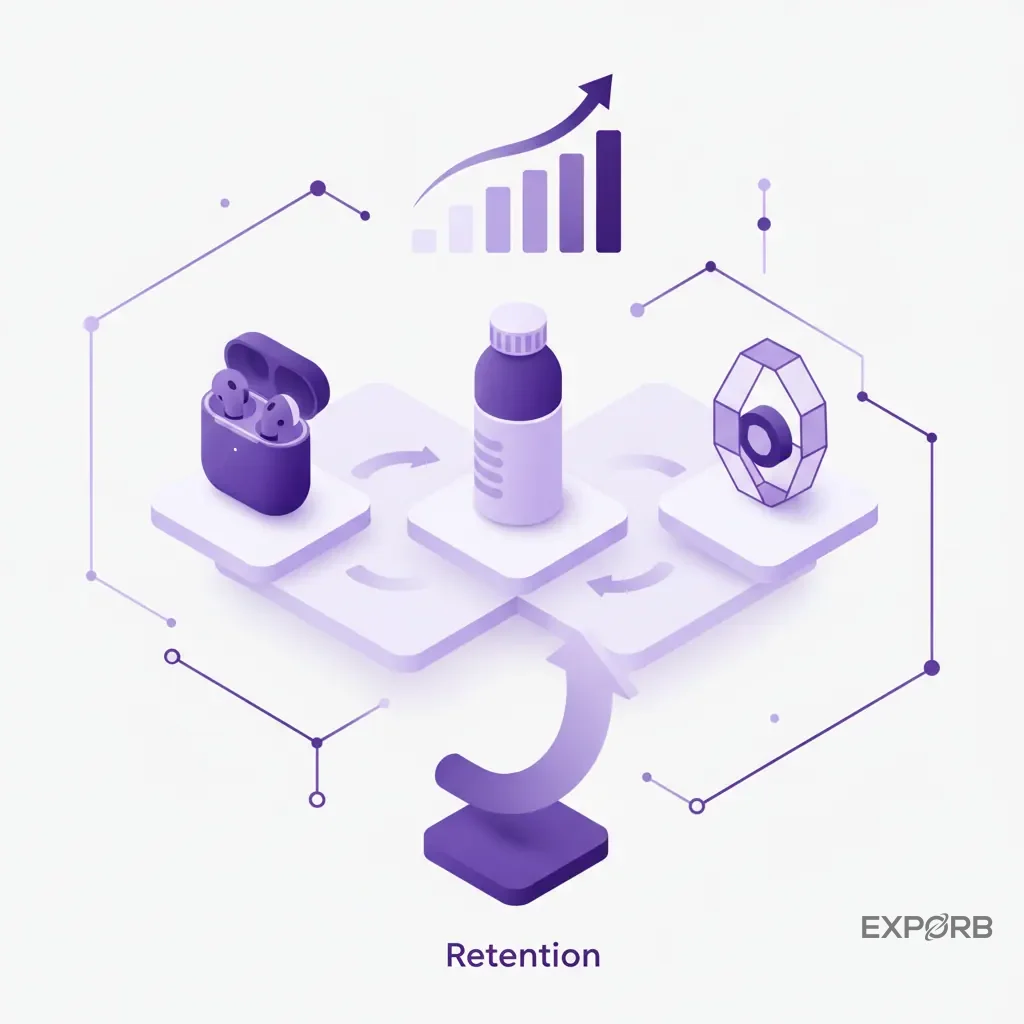
Practical and desk-worthy: Tech accessories and office supplies
What does every professional need more of? Things that make their work life easier. Tech gadgets are almost always a winner. They solve a real problem.
- Multi-port USB chargers: Everyone has multiple devices to charge. A good one with USB-A and USB-C ports is a lifesaver on the road.
- Phone stands or grips: Simple, useful, and keeps your logo in their line of sight all day.
- Cable organizers: A set of branded velcro ties or a magnetic cable holder helps declutter a desk or travel bag. They're cheap for you but incredibly useful for the recipient.
- Noise-dampening earplugs: For open offices or frequent flyers, a small case of high-quality earplugs can be a godsend.
Sustainable and reusable: High-quality drinkware and tote bags
Sustainability is a major factor for modern buyers. A well-made, reusable item shows you share their values. But quality is everything here.
- Insulated tumblers: A flimsy plastic water bottle is forgettable. A high-quality, insulated tumbler from a brand like Yeti, Stanley, or a comparable alternative will get used daily for years.
- Canvas tote bags: Most trade show totes are made from cheap, non-woven polypropylene that rips easily. A sturdy canvas or cotton tote, on the other hand, will become their go-to bag for groceries and errands. Make the design cool and minimalist—don't just slap a giant logo on it.
- Foldable shopping bags: A small, packable bag that fits into a pouch is another great reusable option people will actually carry with them.
Unique and memorable: Custom items that reflect your brand personality
Sometimes the best giveaway is one nobody else has. A unique item that connects to your brand story can be far more memorable than another power bank.
- Custom-branded socks: Fun, quirky, and surprisingly popular. A pair of high-quality socks with a clever design related to your industry will get worn and talked about.
- Local artisanal goods: Partner with a local coffee roaster, chocolatier, or hot sauce maker from your company's hometown. It's a great story and a unique gift they can't get anywhere else.
- Industry-specific tools: Are you in construction tech? Give away a high-quality multi-tool. Cybersecurity? A privacy-focused hardware key. Make the gift relevant to the job they do every day.
- A custom-designed comic book or graphic novel: If your brand has a strong narrative, a unique storytelling piece can be incredibly engaging and shareable.
Related: How to Design a Trade Show Booth That Gets Noticed
Trade show giveaway ideas for every budget and goal
You don't need a massive budget to have an effective giveaway strategy. What you need is a clear goal for each item you select. Are you trying to maximize foot traffic, reward qualified leads, or secure meetings with VPs? The right item depends entirely on the job it needs to do.
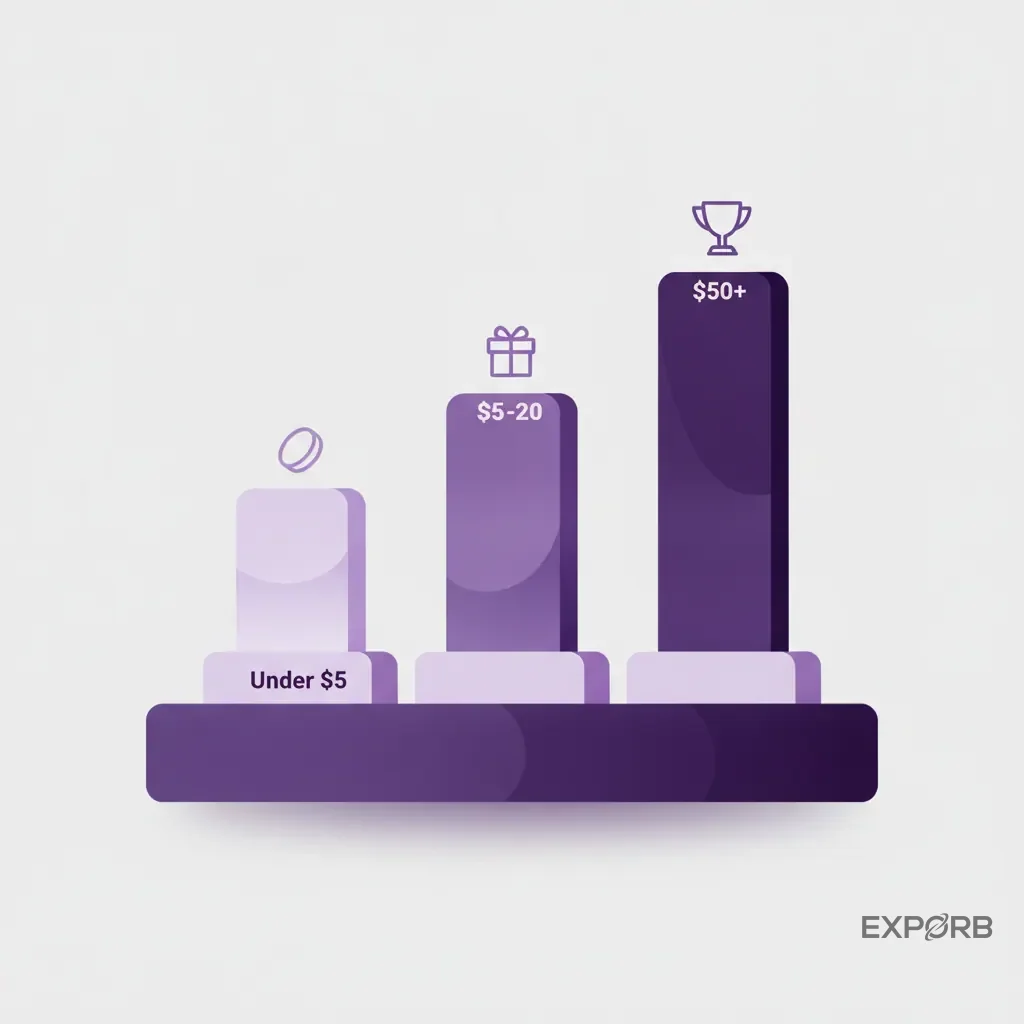
Giveaways under $5: Attracting visitors without breaking the bank
The goal here is volume and conversation starters. You want something appealing enough to make someone stop for 30 seconds, giving your team a window to engage them.
- Lip balm with SPF: Always useful, especially for multi-day conferences.
- Hand sanitizer spray pens: A practical item that will live in a bag or car for months.
- Snack packs: A small bag of high-quality trail mix, gourmet popcorn, or brand-colored candy can be a welcome energy boost. People will remember the booth that saved them from conference hunger.
- Seed packets or small succulents: An eco-friendly and memorable gift that connects your brand with growth.
Mid-range ($5-$20) ideas: Rewarding engagement with quality items
This is the sweet spot for rewarding someone who gives you 5-10 minutes of their time. The item should feel substantial and useful—a fair trade for their attention. Research suggests a majority of giveaway budgets—50-60% for many programs—gets spent in this exact range.
- Rocketbook or other reusable notebooks: Eco-friendly, tech-forward, and genuinely useful.
- Tile Mate or other Bluetooth trackers: A high-perceived-value tech item that helps people keep track of their keys or bags.
- Pour-over coffee kits: For a target audience of coffee lovers, a single-serving pour-over kit is a unique and appreciated gift.
- Travel-size cocktail kits: A fun, memorable item for the right audience they'll look forward to using on their flight home.
Premium ($50+) gifts: Securing meetings with key accounts
These aren't "giveaways"; they're strategic investments. The ROI isn't measured in brand awareness, but in closed deals. These items are exclusively for your top-tier prospects and should be presented as such.
- Ember Mug²: A temperature-controlled smart mug is the ultimate desk accessory and a serious status symbol.
- Patagonia or North Face fleece vest: Co-branding with a premium apparel brand improves your own brand perception.
- A drone or high-end tech gadget: For a select few top accounts, a truly high-value item can get you a meeting that would otherwise be impossible to book.
- Donation to a charity: Offer to make a significant donation ($50 or $100) to a charity of their choice in their name. This is a powerful option for socially-conscious brands and senior executives who don't want more "stuff."
Do higher-value giveaways really generate better leads?
This is a common debate. Does dangling a pair of AirPods actually bring in better leads, or does it just attract people who want free AirPods? The answer: it depends entirely on your process. If you just leave them in a pile for anyone to grab, you're wasting your money. But if you use them as a filter, they can be incredibly effective.
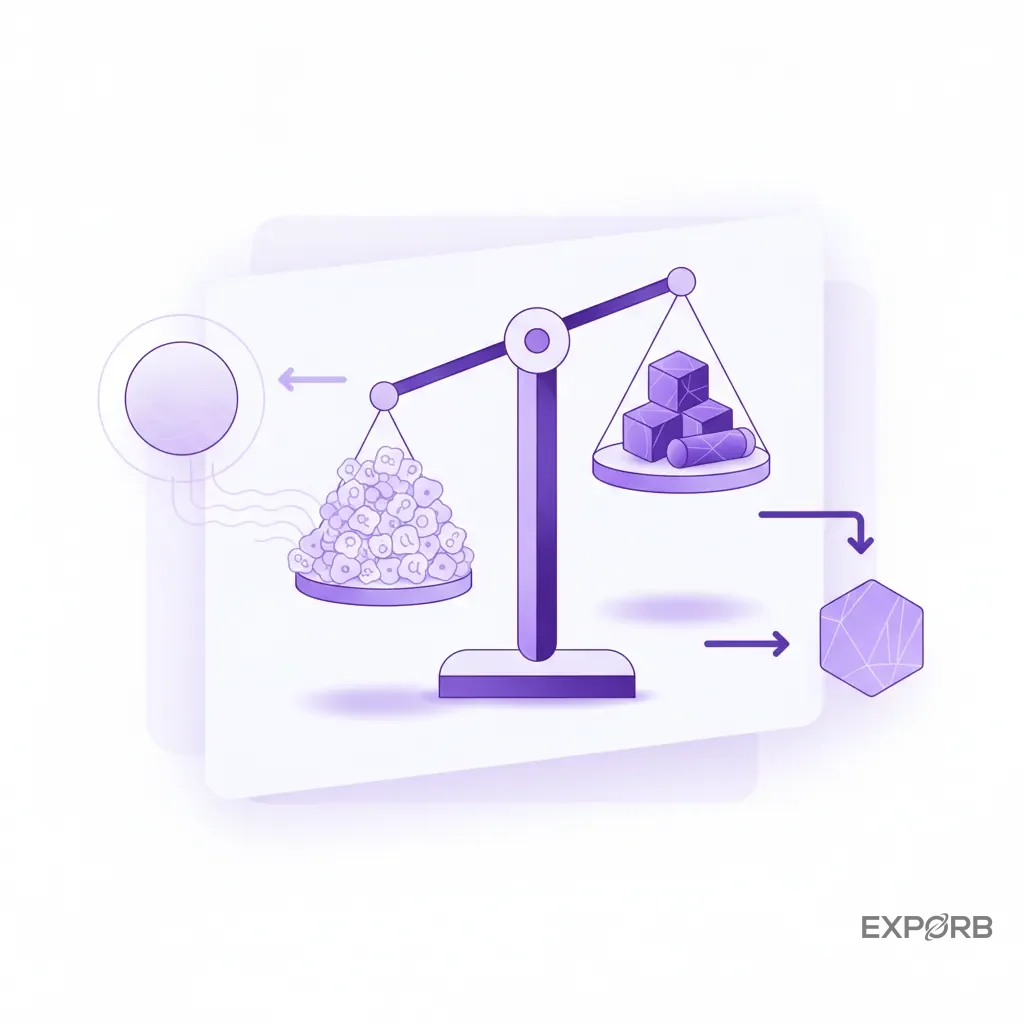
Challenging the myth: Why volume doesn't equal value
The old-school approach was to scan as many badges as possible. Ultimately, the team with the biggest stack of leads seemed like the "winner." We now know this is a terrible metric for success. A list of 500 uninterested names is far less valuable than a list of 20 highly qualified prospects who had in-depth conversations with your team.
A high-value giveaway forces you to shift your mindset from quantity to quality. You can't afford to give one to everyone, so you have to be selective. That selectivity is the entire point. It makes your team stop and think: "Is this person really a good fit for our product?"
Using premium items as a filter for high-intent prospects
The best practice is to tie your best giveaways to a specific, high-intent action. You don't give them away for a badge scan. Instead, you give them away for:
- Completing a full, 15-minute product demo at the booth.
- Scheduling a follow-up call with an Account Executive on the spot.
- Introducing you to another key decision-maker from their company.
- Participating in a brief, in-depth survey about their challenges.
This changes the dynamic completely. The gift is no longer bait; it's a reward for a commitment. It filters out the time-wasters and ensures your most valuable swag—and your team's most valuable time—gets spent on people who are serious about solving a problem you can help with.
Measuring success by lead quality, not just quantity of scans
How do you prove this strategy works? Stop measuring vanity metrics like "number of leads." Instead, track metrics that matter to the business:
- Lead-to-Opportunity Conversion Rate: What percentage of leads from the show became qualified sales opportunities?
- Cost Per Opportunity: How much did you spend (including the giveaway) for each qualified opportunity generated?
- Pipeline Influence: How much sales pipeline did the event generate?
- Close Rate: What was the close rate for opportunities generated at the show compared to other channels?
When you track these numbers, you'll almost always find the 20 leads who earned a premium giveaway convert at a dramatically higher rate than the 500 people who just grabbed a free pen.
How can I make my trade show booth stand out with unique swag?
In a sea of booths, being memorable is half the battle. Your swag can be a powerful tool for creating buzz and making your booth a can't-miss destination. It's about creating an experience, not just handing out an item.
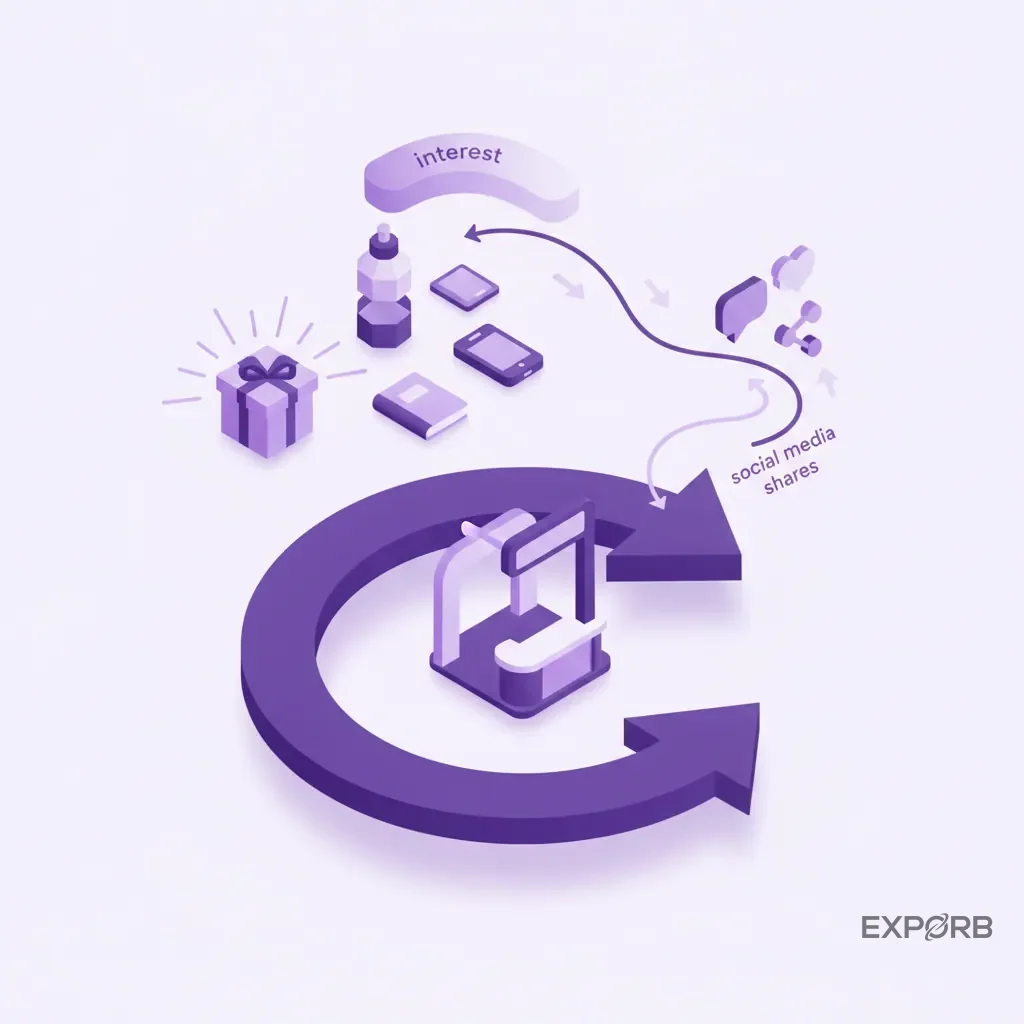
Building buzz with custom logo giveaways and personalized items
Anyone can order pens with a logo. But what if you offered on-site personalization?
- Live T-shirt or Tote Bag Printing: Hire a local screen printer to set up a small station in your booth. Let visitors choose from a few cool designs and watch their item get printed right in front of them. The line itself becomes a spectacle.
- On-site Engraving: For higher-end items like metal water bottles or multi-tools, have an engraver add the attendee's initials. A personalized gift is almost never thrown away.
- Custom Sock Bar: Set up a display with several different sock designs and let qualified leads pick their favorite pair. The element of choice makes it more engaging.
Using scheduled drops and limited editions to create urgency
FOMO (Fear Of Missing Out) is a powerful motivator. Instead of having all your swag available all the time, create specific events around it.
Announce on social media that you'll be "dropping" a limited edition, high-value item at a specific time (e.g., 2 PM on Tuesday). This drives a surge of traffic at a time you choose and creates a sense of excitement and exclusivity. You can do this once per day with a different limited item to keep people checking back.
Incorporating QR codes to link physical swag to digital experiences
Your giveaway shouldn't be the end of the interaction; it should be the beginning. Use a QR code on the item or its packaging to bridge the physical and digital worlds.
But don't just link to your homepage. Link to something valuable:
- A free download of an exclusive industry report.
- A landing page to enter a larger contest (e.g., "Scan to win a MacBook Pro").
- Access to a free tool or resource.
- A direct link to schedule a meeting with your sales team.
This turns a static object into an interactive part of your marketing funnel, giving you another way to track engagement and measure the true ROI of your swag.
How do I calculate giveaway quantity and prove ROI?
Running out of swag halfway through the show is a nightmare. But so is shipping thousands of dollars' worth of leftovers back to the office. Planning the right quantity mixes art and science. Once the show is over, you have to prove to your boss that the investment was worth it.
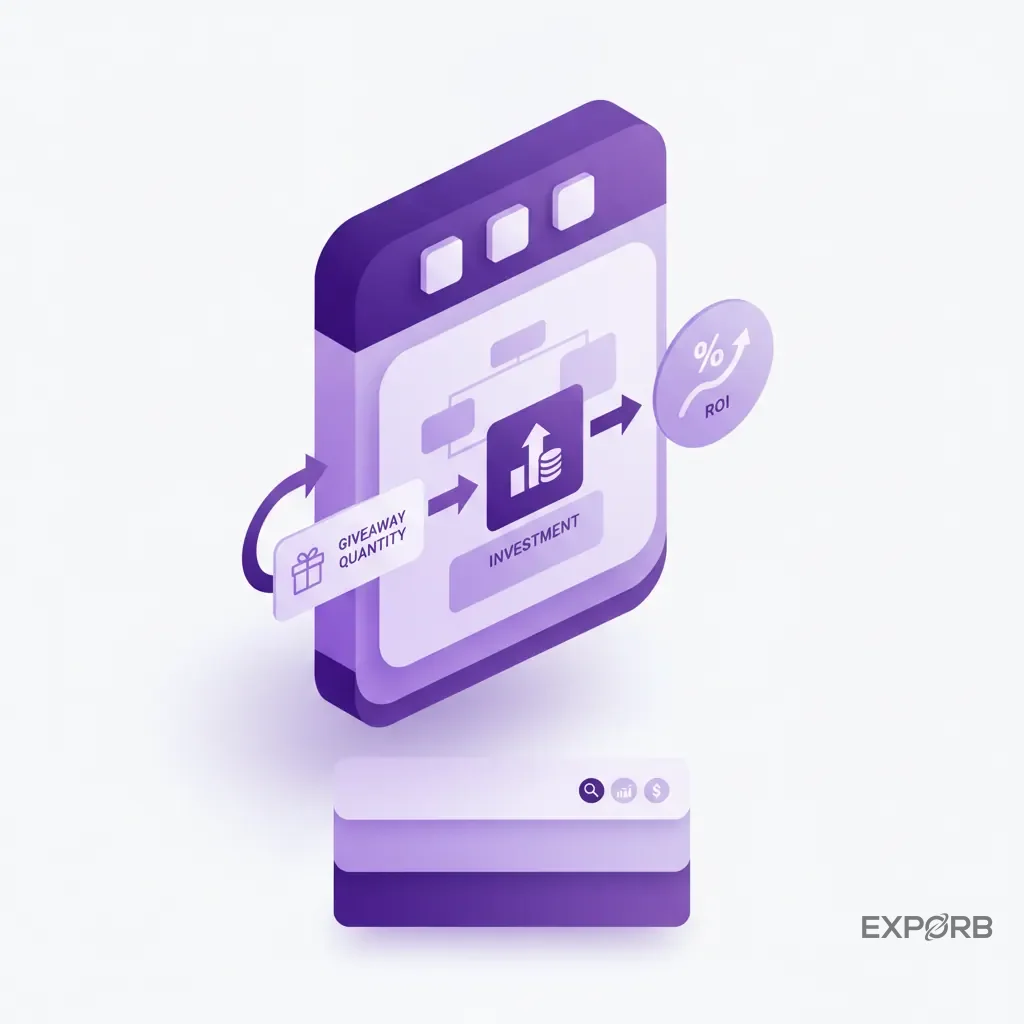
A simple formula for estimating how many items to bring
You don't have to guess. You can create a reasonable estimate with a simple formula. A 2026 planning guide suggests a practical rule: (Total Show Attendees × % Likely to Visit Your Booth) × Conversion Rate.
Let's break it down:
- Total Show Attendees: Get this number from the event organizer. Let's say it's 10,000.
- % Likely to Visit: Be realistic. You won't see everyone. A typical booth visit rate is 10-30%. Let's use 20%, so that's 2,000 potential visitors.
- Conversion Rate: What percentage of visitors do you expect to have a conversation worthy of a giveaway? This can range from 40-70%. Let's say 50%.
So, 2,000 visitors × 50% conversion = 1,000 giveaways needed. Then, add a 10-15% buffer. This gives you a data-backed starting point to plan quantities for your different tiers.
Tracking cost per qualified lead from your giveaway spend
This is the metric that will get your CEO's attention. It connects your swag budget directly to a sales outcome.
The formula is: Total Giveaway Spend / Number of Qualified Leads Generated = Cost Per Qualified Lead (CPL).
For example, if you spent $5,000 on giveaways and your team generated 100 qualified leads (not just badge scans), your CPL from swag is $50. You can then compare this to the CPL from other channels like LinkedIn Ads or Google Ads. This turns a "swag budget" into a "lead acquisition budget"—a language every executive understands.
Presenting giveaway impact to leadership with clear metrics
After the event, don't just say "the show was great." Present a simple report with clear, hard numbers:
- Total Giveaway Spend: $5,000
- Total Qualified Leads: 100
- Cost Per Lead: $50
- Opportunities Generated: 25 (from those 100 leads)
- Cost Per Opportunity: $200
- Pipeline Influenced: $150,000
- Projected ROI: (Pipeline / Spend) = 30x
This is how you justify your budget for the next show. It's not about the cool stuff you gave away; it's about the business you generated.
The founder's dilemma: Connecting giveaways to conversations
Here's a scenario I've lived through dozens of times. Your team is at a massive show. They hand out a premium gift—one of those $100 fleece vests—to a hot prospect. Awesome, right? But when you get the lead list a week later, the notes just say "interested in our platform."
You have no idea what they talked about. What were the prospect's specific pain points? What was their budget? Who was the decision-maker? The context is gone. They handed out the expensive gift, but lost the most valuable asset—the conversation itself.
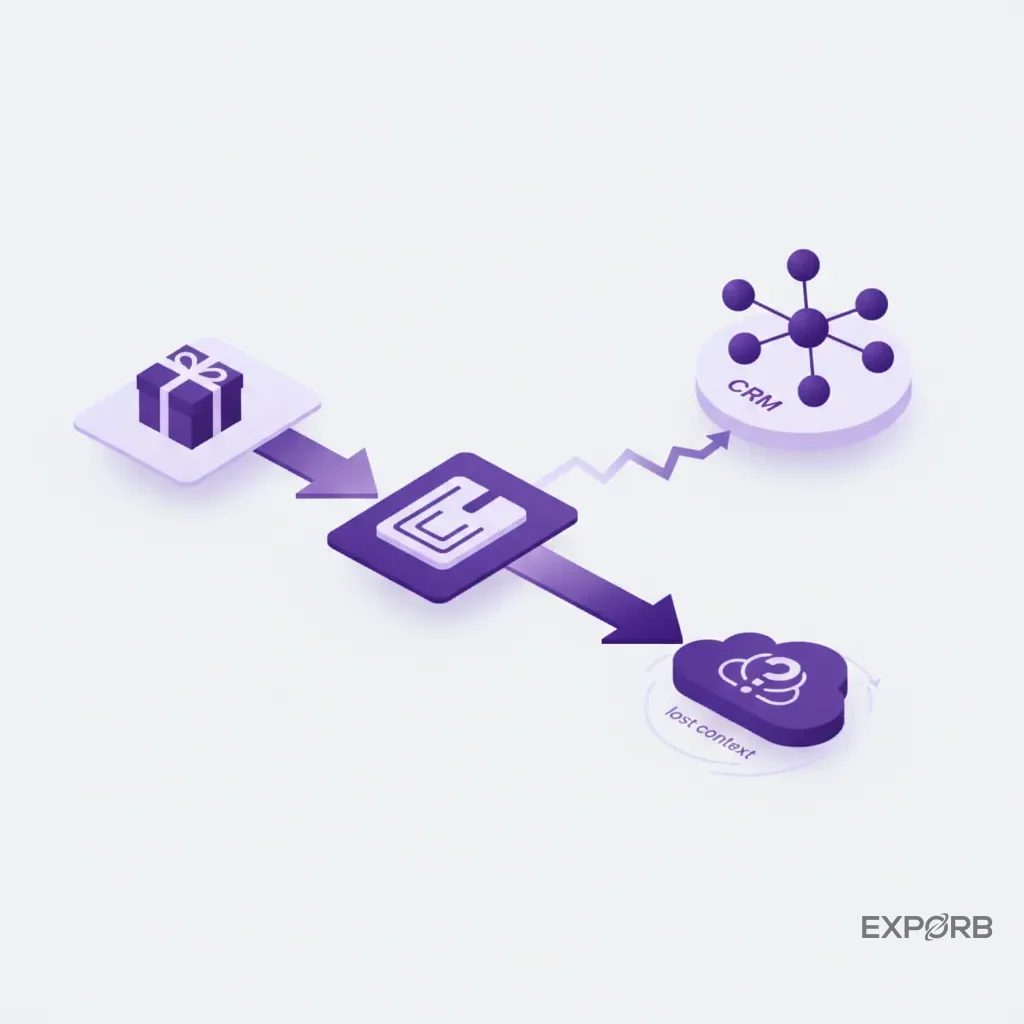
The problem: Your team hands out a premium gift, but the conversation context is lost
This is the black hole of trade show marketing. Your team has hundreds of conversations, but all you get back is a messy spreadsheet of names and titles. Business cards get lost, handwritten notes are unreadable, and by the time you try to follow up, your reps have forgotten the critical details of the conversation. You can't craft a personalized follow-up because you don't have any personal details to work with.
The solution: Integrating giveaways into your lead capture workflow
Your giveaway strategy and your Lead Capture Strategy can't be separate things. They have to work together. The moment a rep decides a prospect has earned a Tier 2 or Tier 3 giveaway, it should trigger a specific action in your lead capture process.
This means your reps need a tool that lets them instantly capture the context, not just the contact info. What did they talk about? What were the agreed-upon next steps? Which specific product were they interested in? That context is more valuable than the lead's name and email.
Using an AI-powered CRM to link conversation notes to specific lead actions
This is where a modern lead capture tool changes the game. At Exporb, we saw this pattern: valuable conversations getting lost. We built Exporb to fix it. Imagine your rep finishes a great conversation. They scan the prospect's business card with their phone. Instead of scribbling messy notes, they record a 30-second voice note summarizing the discussion: "This is Jane from Acme Corp. She's struggling with data silos and needs a solution before Q3. She's the economic buyer, and I gave her one of the premium fleece vests. Follow-up next Tuesday about scheduling a demo with her technical team."
With a platform like Exporb, that voice note automatically transcribes and attaches to the lead's profile. The AI can even analyze the conversation, identify key pain points, and score the lead's intent. Now, when you see a premium gift was given out, you have the full story. You know exactly why they were qualified and what the perfect follow-up should be. The conversation isn't lost—it's structured, actionable data in your CRM.
Common mistakes to avoid with your trade show promotional items
A great giveaway strategy can get derailed by simple, unforced errors. Avoiding these common pitfalls is just as important as picking the right items.
Ordering items that don't align with your brand or audience
Giving away cheap plastic toys when your brand is built on quality and luxury sends a mixed message. Giving away cocktail kits at a healthcare conference might not land well. Always ask: "Does this item reflect our brand's values?" and "Is this something our ideal customer would actually want and use?" If the answer to either is no, find a different item.
Forgetting about logistics: Shipping, storage, and drayage costs
The price of the item itself is only part of the total cost. You also have to consider:
- Shipping: How much will it cost to ship 5,000 water bottles to Las Vegas?
- Drayage: These are the fees convention centers charge to move your materials from the loading dock to your booth. Heavy, bulky items can incur massive drayage fees.
- Storage: Where will you store the items at the booth?
- Return Shipping: What will you do with the leftovers?
Sometimes a smaller, lighter, more expensive item is actually cheaper overall once you factor in these hidden logistical costs.
Giving away your best items without gating them behind an action
This is the cardinal sin of trade show giveaways. Putting your premium gifts in an open bowl on the counter is like setting a pile of money on fire. As we've discussed, your best items are qualification tools. They should always be kept out of sight and earned through meaningful engagement—like watching a demo or scheduling a meeting. Don't give away value without getting value in return.
Turn your giveaway strategy into a post-show sales pipeline
The show isn't over when the lights go out. The work you do in the week after the event determines your ultimate ROI. Your giveaway strategy can provide the perfect foundation for a highly effective, personalized follow-up campaign.
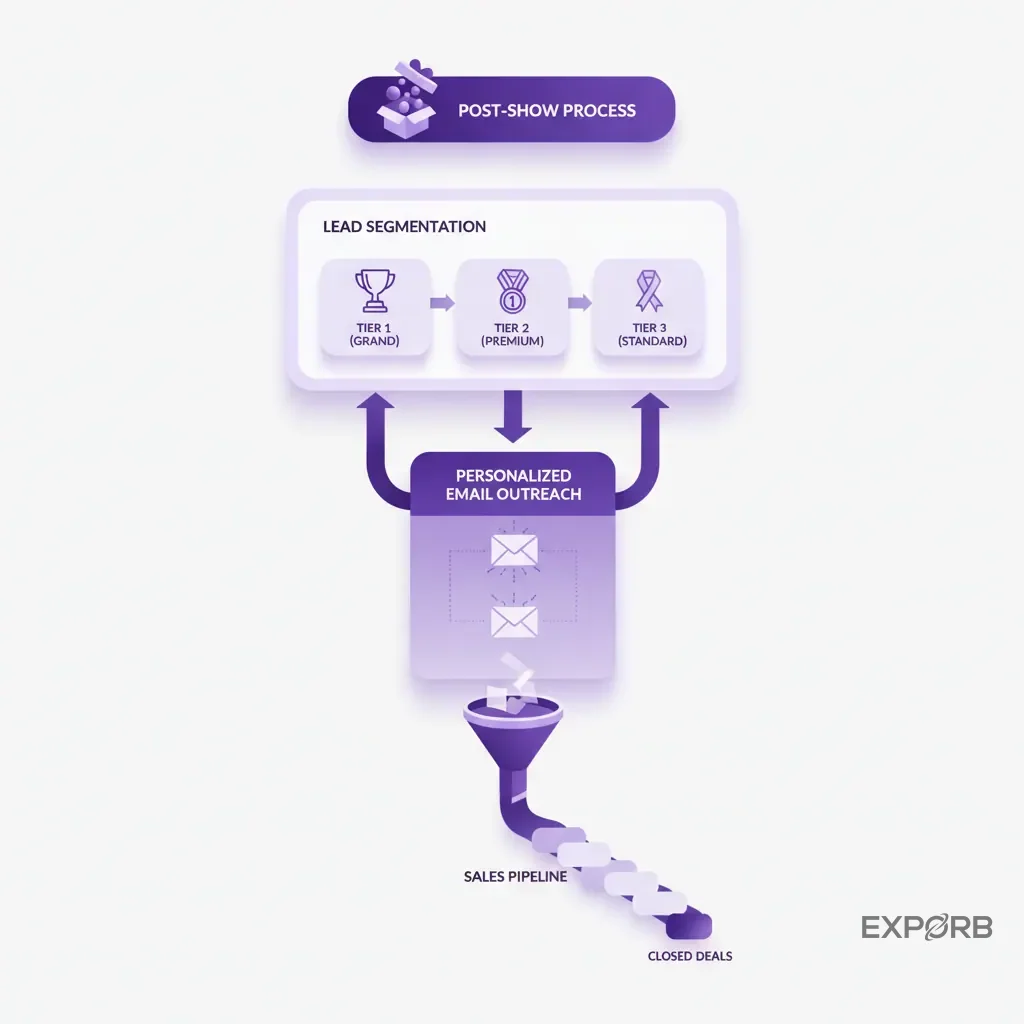
Segmenting your follow-up based on the giveaway tier
You shouldn't send the same generic "Thanks for stopping by" email to everyone. Use the giveaway tiers you created as your first level of segmentation.
- Tier 1 Recipients: These leads are likely lower intent. Add them to your general marketing newsletter with a light-touch follow-up.
- Tier 2 Recipients: These people had a real conversation. They get a semi-personalized email from the rep they spoke with, referencing the discussion.
- Tier 3 Recipients: These are your hottest leads. They should receive a highly personalized, 1-to-1 email within 24 hours to schedule the demo or meeting they committed to. A phone call is often warranted here, too.
Crafting personalized outreach that references your booth interaction
The more specific your follow-up, the better your response rate will be. Instead of "Nice to meet you," try "It was great discussing your challenges with [specific pain point] at the show. I really enjoyed our conversation about [specific topic]. As promised, here's the information on [feature they asked about]."
This is only possible if you have good notes. A system that captures detailed conversation context makes this easy. For example, Exporb's platform can use the transcribed notes from your booth conversation to have AI draft a personalized follow-up email on the spot. The rep just has to review and hit send. The follow-up is done before they even leave the show floor.
Analyzing performance to optimize your strategy for the next event
Finally, close the loop. After a few months, analyze the results.
- Which giveaway tier produced the most qualified opportunities?
- Which tier had the highest conversion rate to closed-won deals?
- What was the final pipeline and revenue generated from each tier?
- What was the average deal size for leads from each tier?
Use this data to refine your strategy for the next event. Maybe you discover your Tier 2 power banks generated more pipeline than your Tier 3 headphones. That's a powerful insight that can save you thousands and make your next trade show even more successful. Your giveaway strategy shouldn't rely on guesses; it should be a data-driven machine for generating revenue.