Why do most trade show display ideas fail to generate measurable ROI?
You've spent a fortune on your booth. The graphics are stunning, the lighting is perfect, and you have a mountain of branded stress balls. But when the show ends, you're left with a fishbowl of business cards and a vague feeling you talked to some "good people." This is where most Trade Show Exhibits fall apart—they prioritize aesthetics over a system for capturing and converting leads.
The common misconception: A beautiful booth is a successful booth
Most exhibitors obsess over booth design and completely ignore lead capture. They spend $50,000 looking good and $0 on remembering what was said. A great design gets people to stop. It doesn't get them to buy. A pretty booth that doesn't fill your pipeline is just an expensive piece of art. It's a stage with no play.
Shifting focus from aesthetics to a high-performance lead capture system
Your booth is more than just a physical space; it's the top of your event funnel. Every element—from the layout to the signage—should guide a visitor toward a single goal: becoming a qualified lead. This means thinking less about the booth's appearance and more about how it functions. How does someone enter? Where do they talk to your team? How, specifically, do you capture their information and the context of your conversation?
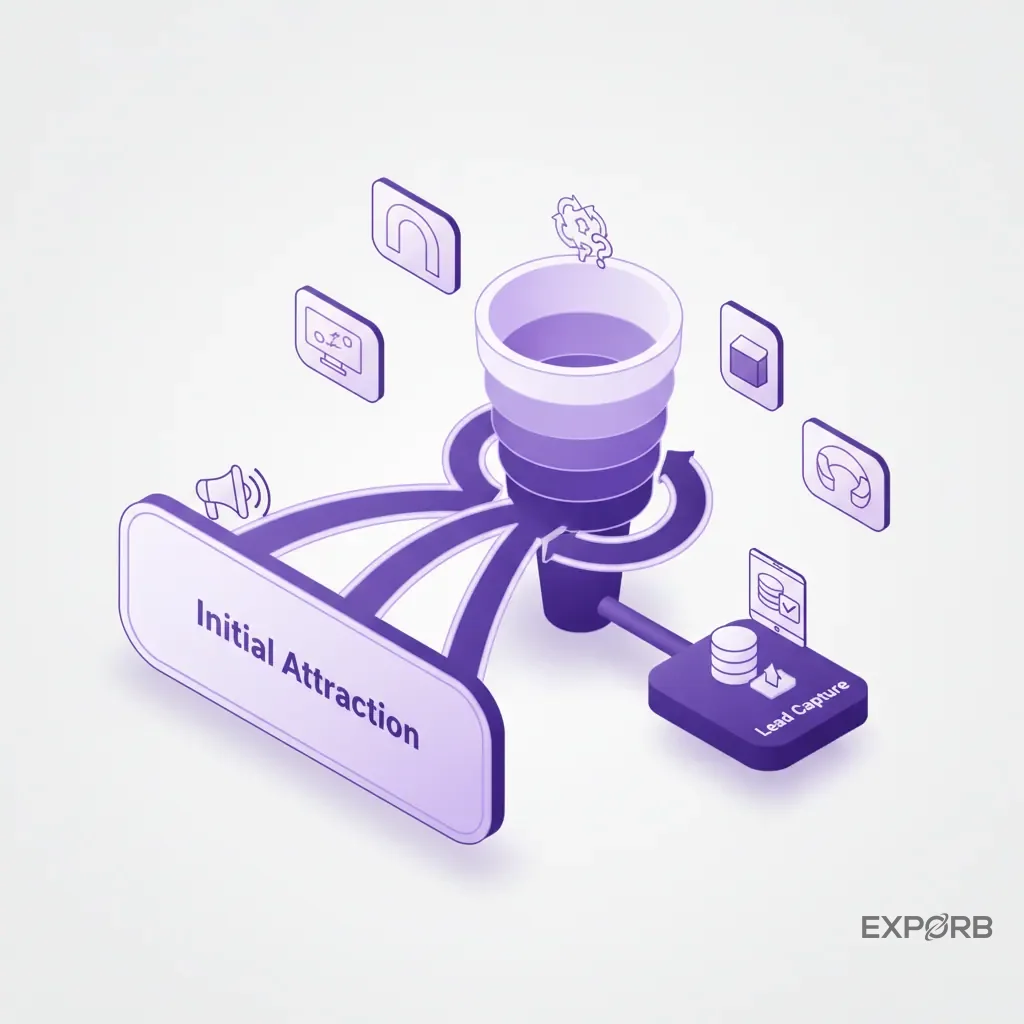
Key 2026 statistics: The massive gap between Lead Generation and follow-up
The numbers are brutal. Industry analysis reveals up to 80% of trade show leads get no follow-up at all. Think about that. You spend thousands per lead, only to let the vast majority go cold. The problem isn't a lack of interest; it's a broken process. The path from a great conversation on the show floor to a follow-up email is broken.
How do you build a lead-first booth layout? A successful booth layout isn't about cramming in as much as possible. It's about creating a deliberate flow that moves people from casual interest to qualified conversation. Don't just build a box; design a journey.
Designing zones for engagement, qualification, and conversion
Your booth should have distinct areas for different interactions.
- The Engagement Zone (Outer Edge): This is your hook. Use an eye-catching display, an interactive screen, or a product demo to grab attention from the aisle. The goal here is to stop traffic.
- The Qualification Zone (Mid-Booth): Once you've got their attention, pull them in for a brief conversation. Here, your team asks targeted questions to see if there's a real fit. It's open and accessible, never intimidating.
- The Conversion Zone (Deep Booth): This is a quieter, more private space—maybe with a small table and chairs—for serious conversations and scheduled demos. High-value prospects get the VIP treatment here.
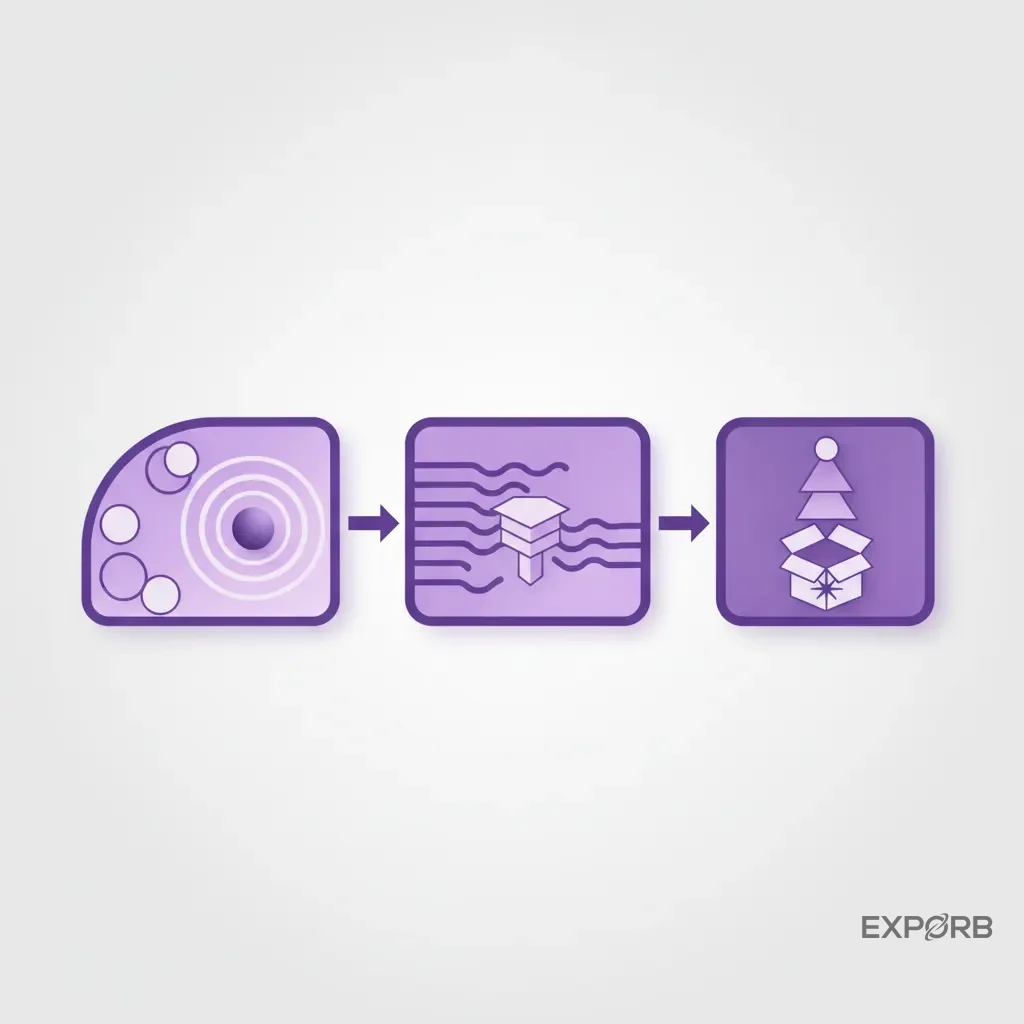
Strategic placement of QR codes and digital capture points
Forget the fishbowl. Place QR codes strategically throughout your booth. Put one on your main backdrop, another at the demo station, and a third on your takeaway literature. Each code should lead to a specific action—booking a demo, downloading a whitepaper, or entering a giveaway. This turns passive interest into an active data capture event.
Creating dedicated spaces for scheduled in-booth meetings
Pre-booking meetings is one of the most effective ways to guarantee face-time with high-value prospects. Designate a semi-private area within your booth for these appointments. It shows you're serious and organized. It also gives your top sales reps a dedicated space to close deals without shouting over the crowd.
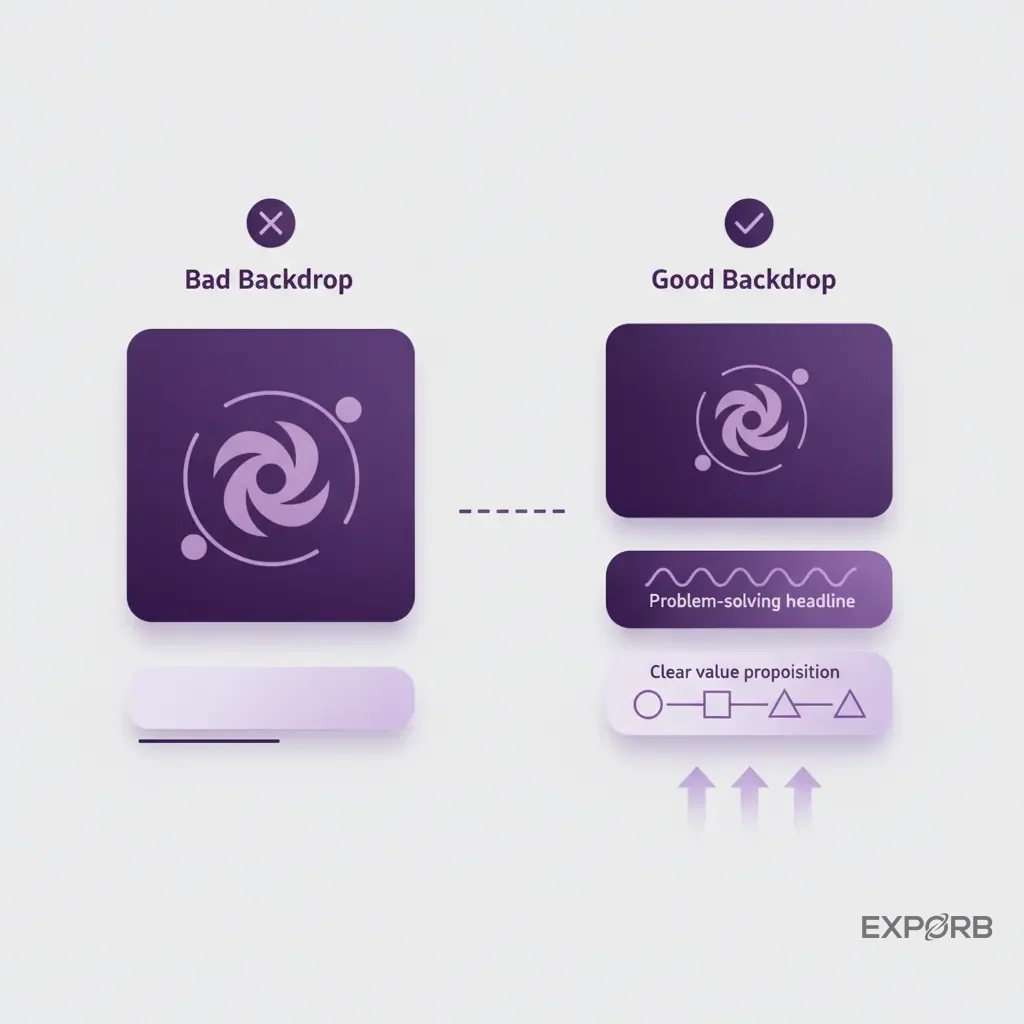
What backdrops and signage actually convert visitors into leads? Your backdrop isn't merely a big logo; it's your billboard. Your signage isn't just decoration; it's your call to action. If a visitor can't understand what you do and what you want them to do within three seconds, your graphics have failed.
Moving beyond logos: Using backdrops to tell a visual story
Your main backdrop should answer three questions instantly:
- Who are you? (Logo)
- What problem do you solve? (Headline, e.g., "Stop Losing Trade Show Leads")
- What makes you different? (A single, powerful value proposition, e.g., "The Only App That Turns Conversations into CRM-Ready Data")
Use strong imagery that shows the outcome of your solution, not just a picture of your product.
Crafting signage with clear, tiered offers that demand attention
Don't use vague phrases like "Learn More." Be specific. Create a hierarchy of offers on smaller signs or digital screens. A low-commitment offer ("Scan to Get Our Free ROI Calculator") can go at the booth's edge. A higher-commitment offer ("Book a 15-Min Demo, Get a $50 Gift Card") is for more engaged visitors.
Integrating digital screens for dynamic content and social proof
A static display is easy to ignore. A digital screen with rotating content isn't. Use screens to display:
- Customer testimonial videos (on mute with subtitles).
- A live social media feed of your event hashtag.
- Short, looping product demo videos.
- A real-time leaderboard for a booth contest.
This movement catches the eye and allows you to display more information without cluttering your booth with text.
Related: The Complete Trade Show Lead Capture Guide
How can your branding do more than just look good? Consistent branding builds trust and makes your booth feel professional and cohesive. It also functions as a tool that guides visitors through your sales process and makes your team easily identifiable on a crowded floor.
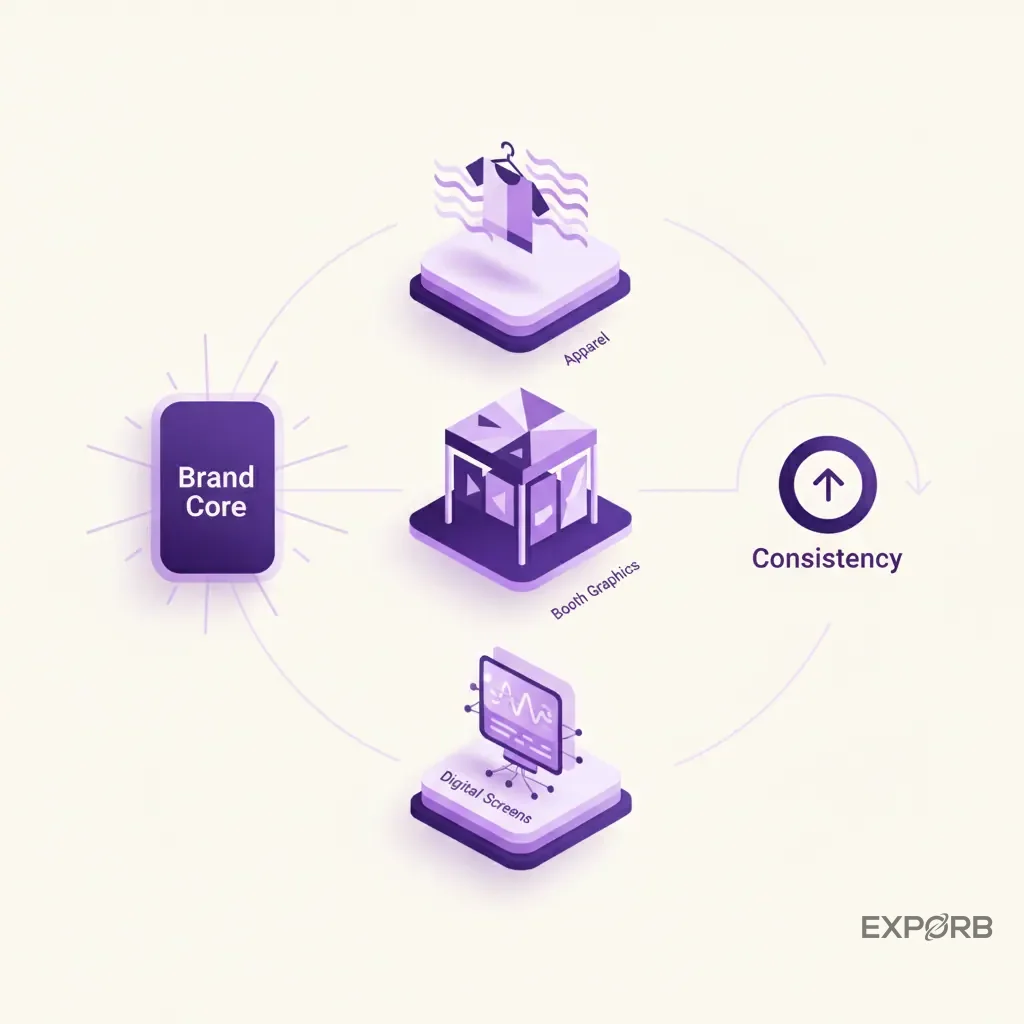
Extending your brand to staff apparel and interactive elements
Your team is the most important part of your booth. Make them stand out. Branded polos or professional jackets in your company colors make them easy to spot. Don't stop there. Brand the tablets they use for lead capture, the charging stations you offer visitors, and even the water bottles you hand out. Every touchpoint is a branding opportunity.
Using cohesive design to guide visitors through your sales funnel
Use your brand's color palette and design elements to create a visual path. For example, use a bold color from your palette to highlight the demo station. Or place floor decals that lead from the aisle to your main reception counter. This subtle guidance makes navigating your booth intuitive and less intimidating for attendees.
Your brand, head to toe: Creating a memorable and professional presence
A well-branded booth signals credibility. When every element—from the carpet to the overhead sign—aligns, it tells visitors you're detail-oriented and established. This professional image is especially important if you're a smaller company competing with industry giants. It levels the playing field before a single word is spoken.
How can you use interactive tech to qualify leads, not just entertain? Interactive technology attracts booth traffic, but its real value lies in collecting data and qualifying leads. If your tech is just a fun toy, it's a wasted investment. The goal is to make the interaction a valuable exchange of information.
Gamified lead capture: Leaderboards and challenges that collect data
People love competition. Set up a simple game or quiz on a tablet. To play, visitors must enter their contact information. Display a live leaderboard on a large screen to encourage more participation. Top scorers win a prize. You'll get a list of engaged prospects who were willing to trade their data for a chance to win—a much more qualified lead than a random card drop.
Self-service kiosks and product demos that segment user interest
Not everyone wants to talk to a salesperson right away. Set up self-service kiosks where visitors can explore your product or solution on their own. By tracking which tabs they click, you can segment them by interest. When they request more information, you already know what they care about, allowing for a much more relevant follow-up.
Using augmented reality (AR) to create immersive product experiences
If your product is large, complex, or difficult to transport, AR is a perfect solution. Create an AR experience that lets visitors place a virtual model of your product right on the trade show floor using their smartphone or a provided tablet. It's memorable, shareable, and demonstrates your product in a way a brochure never could.
What giveaways and offers drive high-quality scans? Stop giving away cheap junk. The goal of a giveaway isn't to get rid of inventory; it's to attract the right people and get them to share their information. A cheap pen attracts everyone. A high-value, industry-specific report attracts potential customers.
Giveaways, leveled up: Moving from cheap swag to valuable digital assets
Physical swag is expensive and often ends up in the hotel trash can. Digital assets cost nothing to replicate and provide genuine value. Offer items like:
- An exclusive industry report or market analysis.
- A full ebook or whitepaper.
- A template, checklist, or ROI calculator.
- Access to a recorded webinar with an industry expert.
These items position you as an authority. They also attract people genuinely interested in solving a problem you can help with.
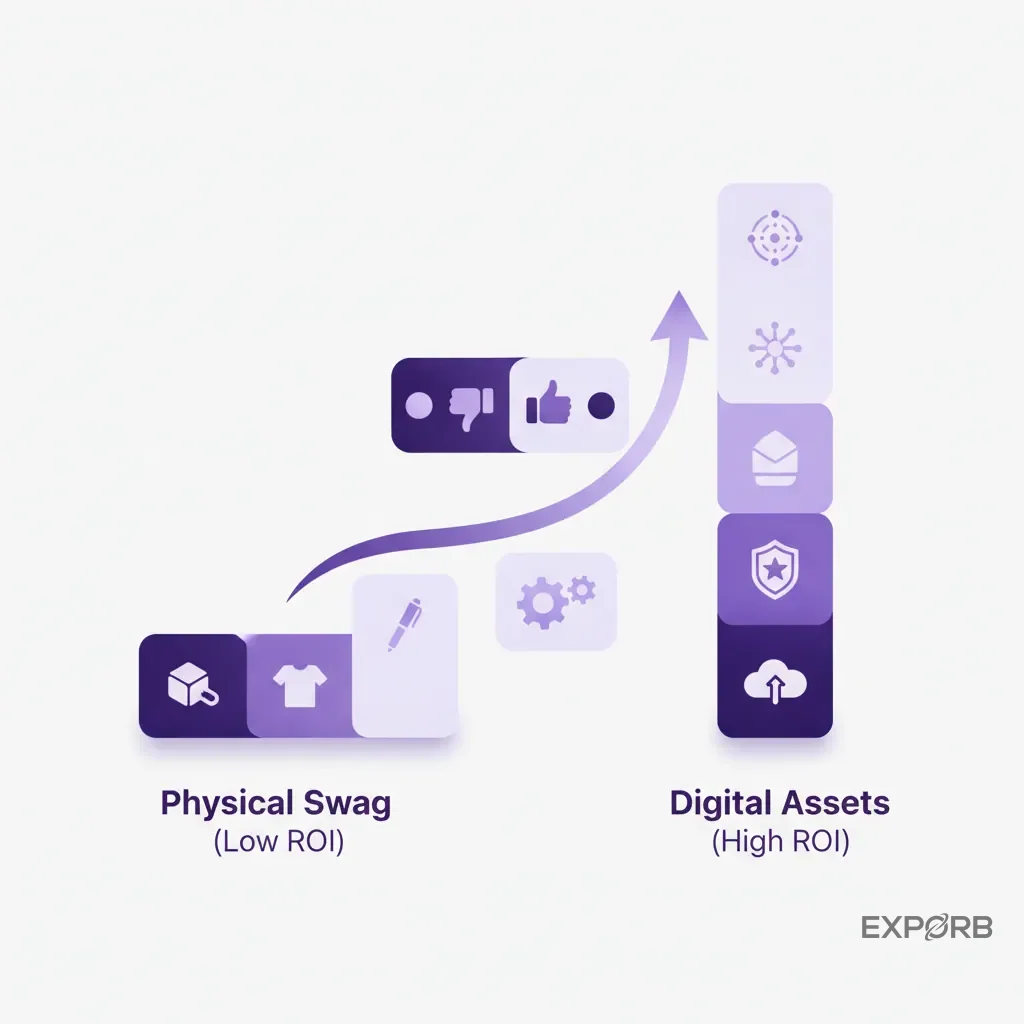
The power of tiered offers: Matching value to Lead Qualification level
Leads aren't all equal, so your offers shouldn't be either. Create a tiered system.
Example of a tiered giveaway strategy to qualify trade show leads.
This model ensures your most valuable giveaways go to your most qualified prospects.
Using marketing that sticks around: QR codes on physical items
If you must give away a physical item, make it a Trojan horse for your marketing. Put a QR code on it. A branded water bottle is nice. A branded water bottle with a QR code that links to your best case study is a lead generation tool that walks the show floor.
Your team is talking, but are they capturing what matters? This is the single biggest point of failure for most exhibitors. Your team has hundreds of conversations. They learn about a prospect's budget, timeline, key pain points, and decision-makers. Then, all that rich context is gone—lost to memory or scribbled on the back of a business card that gets misplaced.
The founder's pain point: When valuable conversations disappear after the show
As a founder, it's terrifying. Your team is on the front lines, gathering mission-critical intelligence, but you have zero visibility. You get a spreadsheet of names and emails a week later, but the why—the actual substance of the conversation—is gone. You can't personalize follow-up. You can't prioritize hot leads. You're flying blind. Monday morning, you ask what your team learned. Blank stares.
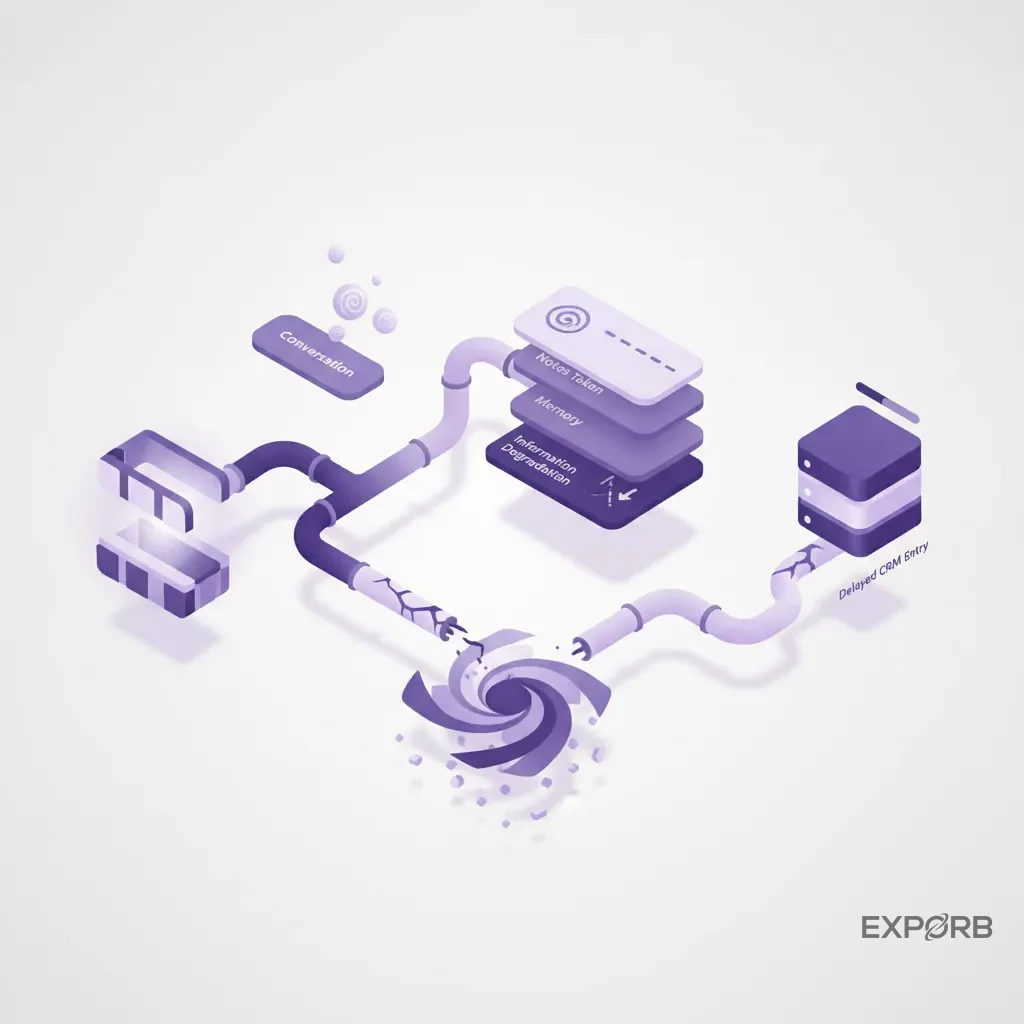
From messy notes to structured data: How AI transcription changes the game
Imagine if every important detail from every conversation was captured automatically. Instead of relying on memory, your team can record a quick voice note right after a conversation. They capture the discussion while it's fresh. Later, AI can transcribe and analyze that conversation, pulling out key interests, pain points, and next steps. Dead business cards become living, structured data records.
Ensuring every conversation is captured, structured, and actionable
The goal is to close the gap between conversation and action. When your team captures context—not just contact info—everything changes. The follow-up email isn't a generic "nice to meet you." It's a personalized message that references the specific challenges you discussed. That's the difference between being forgotten and starting a real sales cycle. With a tool like Exporb, the AI can even draft that personalized follow-up email for you before you've even left the booth.
Related: The Founder's Guide to Trade Show ROI
How can you use social media to drive qualified booth traffic? Your trade show marketing shouldn't start when the doors open. Use social media to build momentum before, during, and after the event to maximize your reach and drive the right people to your booth.
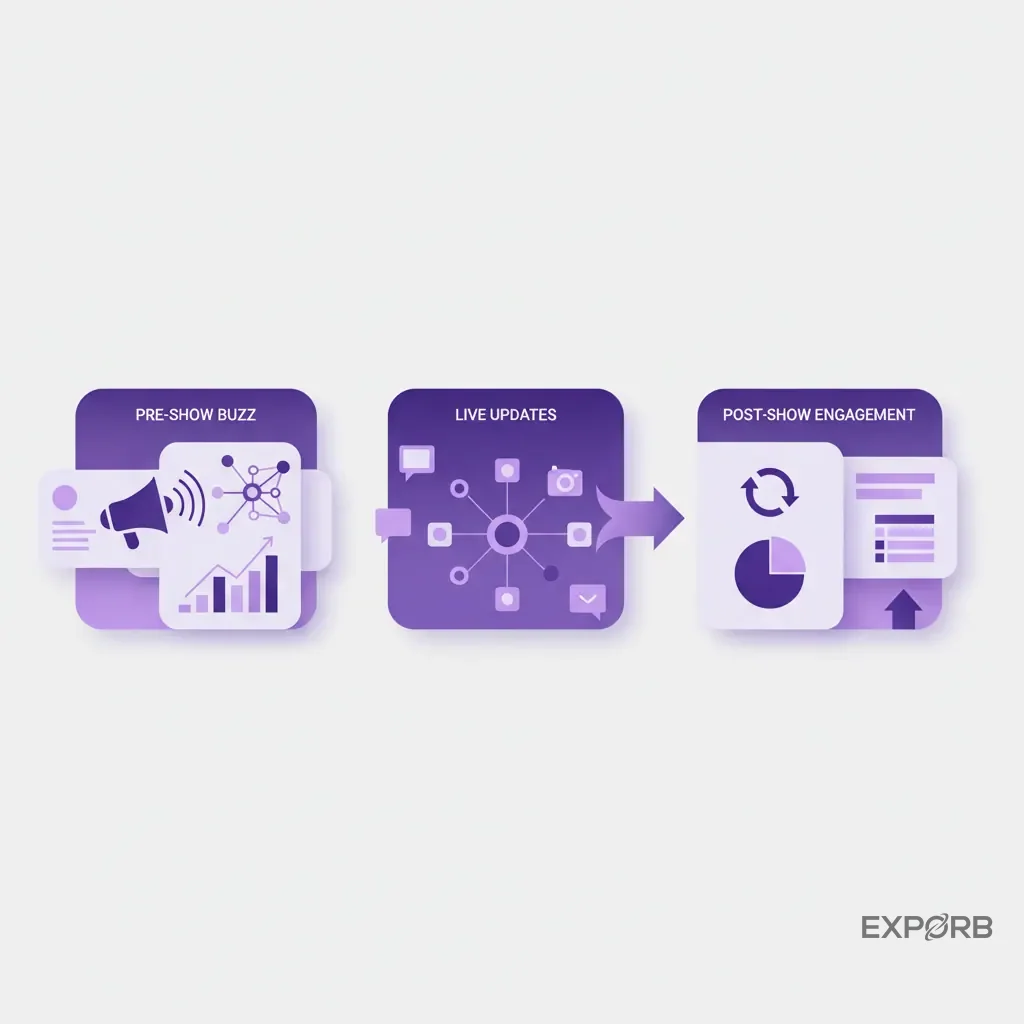
Let's get social: Pre-show campaigns to build buzz and book meetings
Weeks before the show, start your campaign. Announce your booth number and any special offers or speakers. Share sneak peeks of your booth design or product demos. Use the event's official hashtag to engage with other attendees and speakers. Run targeted ads on LinkedIn aimed at people with relevant job titles who've shown interest in the event. Most importantly, use social media to book meetings in advance.
Running live contests and updates from the trade show floor
During the show, turn your social channels into a live feed from your booth. Post photos and videos of your team interacting with visitors. Run a contest: "Post a picture at our booth with #YourHashtag to win a prize." Go live on LinkedIn or Instagram for a quick Q&A with one of your experts. This creates a sense of FOMO (fear of missing out) and encourages people to seek you out.
Using event hashtags and speaker mentions to expand your reach
Monitor the official event hashtag. Engage with people who ask questions you can answer. If you're attending a session, live-tweet key insights and mention the speaker. This positions you as an active, helpful participant in the industry conversation, rather than just a vendor trying to sell something.
Are you prepared with the right trade show tips and support? A great display idea is nothing without flawless execution. This requires careful planning, reliable partners, and a well-prepared team. Don't let logistical failures undermine your strategic investment.
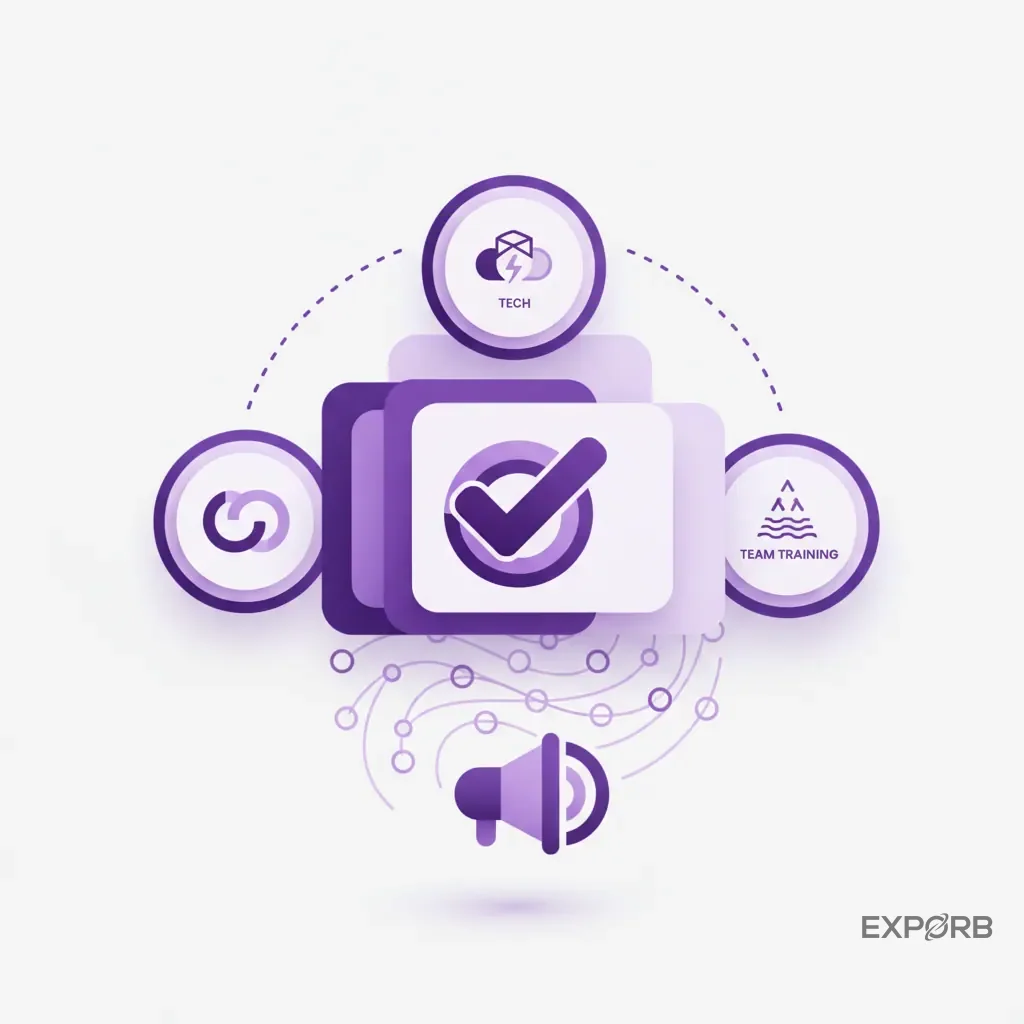
Your vision, our expertise: Choosing partners for display and tech
You can't do it all yourself. You'll need a partner for booth design and construction. Vet them carefully—look at their portfolio and ask for references. The same goes for your technology. Your lead capture app is mission-critical. Does it work when the conference Wi-Fi inevitably fails? Ensure your tools have a solid offline mode so your team can keep scanning and recording notes no matter what.
Help when you need it: Pre-show checklists for a flawless execution
Create a master checklist covering everything from shipping logistics and electrical orders to travel booking and pre-show team training. Assign owners and deadlines to each task. A good checklist prevents last-minute panic and ensures nothing falls through the cracks. There aren't any small details on show day.
Essential trade show tips worth knowing for your team
Train your team. Don't just throw them on the floor.
- Practice your elevator pitch and answers to common questions.
- Qualify: Teach them to ask questions to identify good prospects, not to launch into a 10-minute demo for everyone who walks by.
- Set goals: Give each rep a clear goal for qualified leads per day. This keeps everyone focused and motivated.
Turn your next trade show display into a revenue engine Let's stop talking about trade show display ideas and start talking about trade show revenue systems. A successful event isn't measured by compliments on your booth design; it's measured by the closed deals in your pipeline three months later.
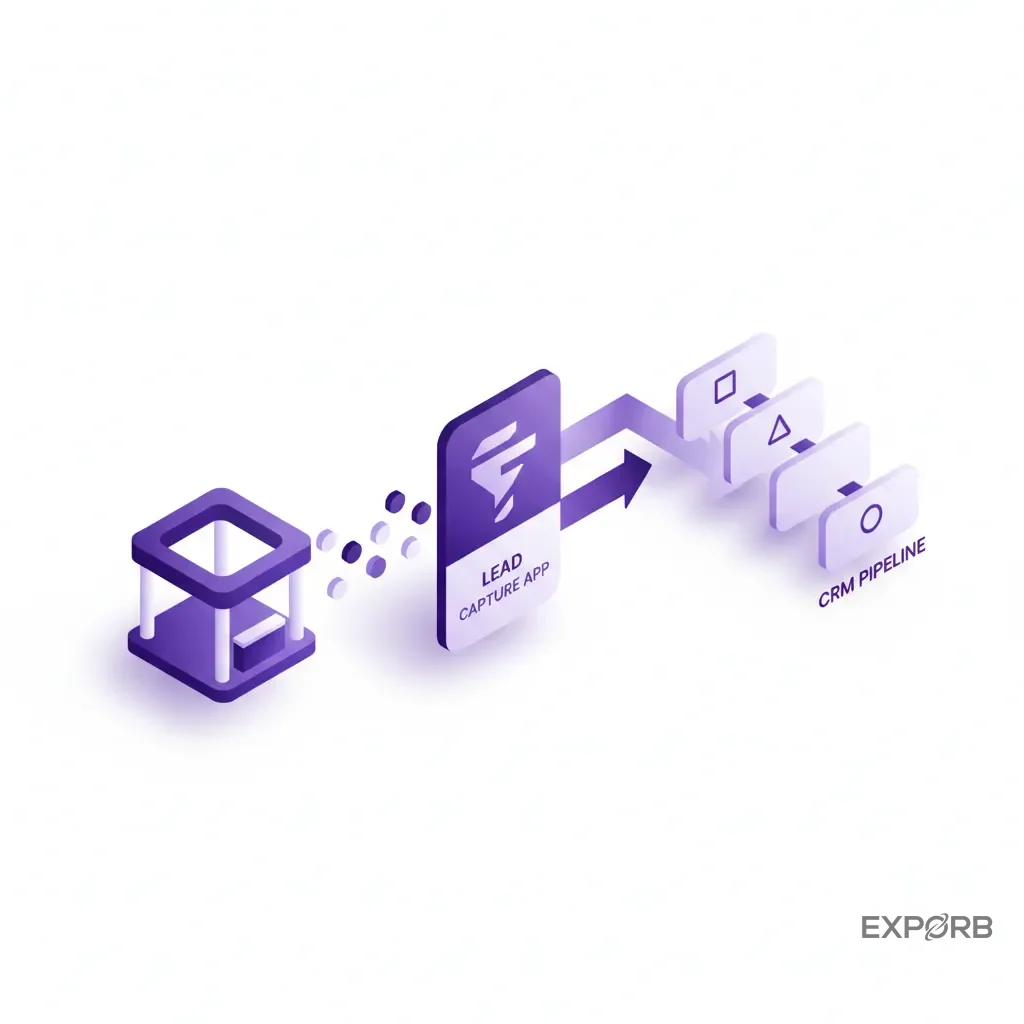
Your action plan: Integrating display, technology, and process
Your booth attracts. Your team engages. Your technology captures. Your process converts. These four elements must work together. Map out the entire lead journey, from the moment a person sees your booth to the moment they receive a personalized follow-up email. Every step should be intentional and connected.
Connecting booth activity directly to your CRM and sales pipeline
The modern approach is to eliminate manual data entry. Your lead capture tool should feed directly into your sales process. Look for solutions that allow for a clean export to your CRM or a simple CSV that contains not just names, but all the rich, structured data your team collected—notes, interests, and qualification details.
How Exporb provides full visibility into your team's event performance
We built Exporb because we were tired of the post-show black hole. Exporb gives founders and marketing leaders a real-time view of what's happening on the show floor. You can see which reps are having the most conversations, which prospects are most promising, and what's actually being discussed. It turns your event investment from a mystery into a measurable, optimizable part of your growth engine.