What is a modular booth design in 2026?
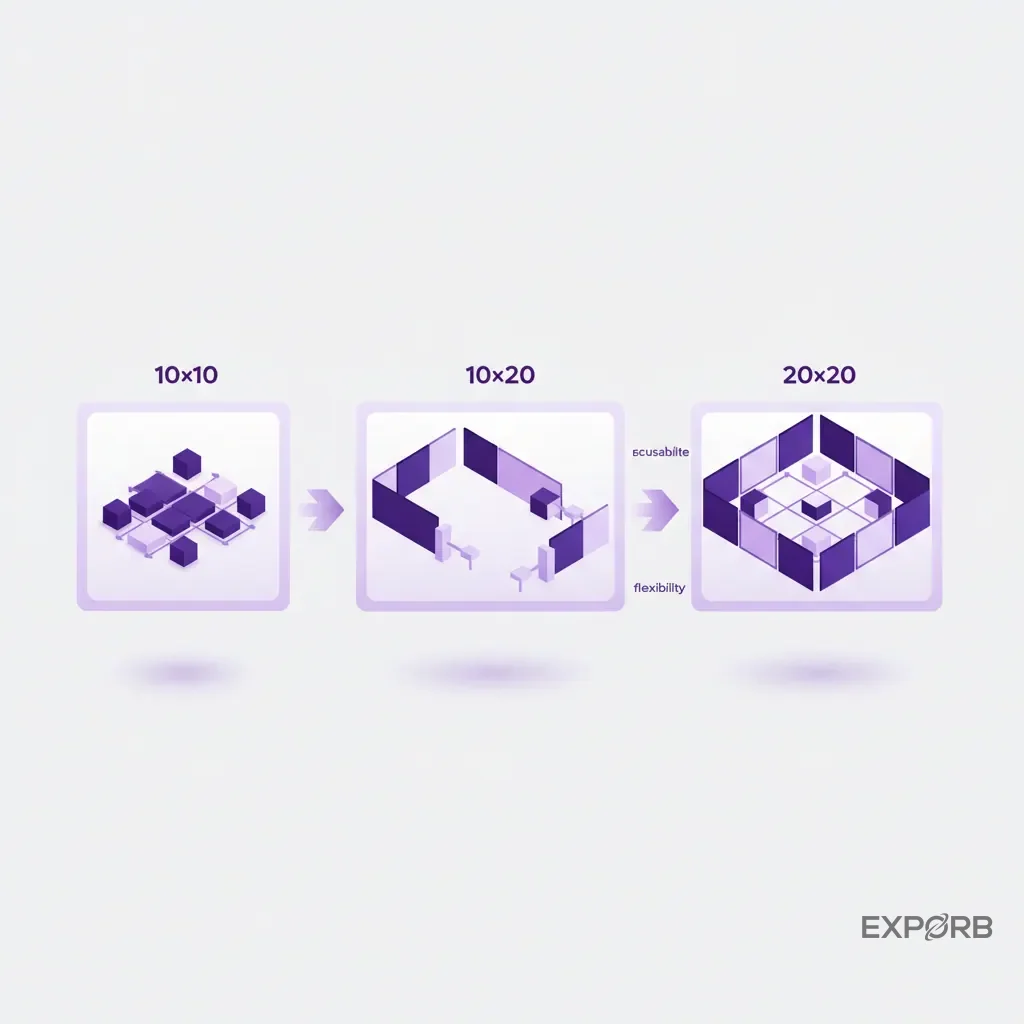
A modular booth design uses standardized, interchangeable components that connect to form a larger structure. Think of it like high-end LEGOs for your marketing team. Reconfigure the same parts to create a 10x10 booth for a regional show. Then expand it into a 10x20 or 20x20 island for a national conference. It's a system built for growth and change, not a one-off custom job.
Defining the modern modular system
Today's modular systems are sophisticated frameworks of lightweight aluminum, fitted with high-resolution tension fabric graphics, integrated LED lighting, and mounts for screens and tablets. They're a far cry from the flimsy pop-up banners of the past. The focus is on creating an immersive environment. It packs, ships, and reassembles efficiently. And it never sacrifices visual impact.
The core principles: reusability, scalability, and flexibility
Reusability, scalability, and flexibility are important for modular booths. These qualities offer long-term value and adaptability.
- Reusability & Scalability: You buy the core system once and reuse it for years. Graphics can be swapped for different shows or product launches, but the expensive hardware stays the same. As your budget and event calendar grow, you can add more components—like towers, counters, or meeting pods—without starting from scratch.
- Flexibility: The same kit assembles in different layouts. An inline 10x20 booth can become a 20x20 peninsula by rearranging walls and counters. This adapts to different floor plans and show objectives.
How modular differs from portable and custom-built exhibits
It's easy to confuse these terms. Portable displays are typically smaller, single-person setup items like banner stands or pop-up backwalls. Manufacturers often craft custom-built exhibits from heavy wood and laminates for a single show and purpose. Modular sits in the middle. It offers the custom look and feel, paired with the practicality and long-term value of a reusable system.
Why are more exhibitors choosing modular systems over custom builds?
The biggest reason is simple math. Exhibitors face pressure to prove ROI. Blowing an entire year's budget on a single custom booth that ends up in a landfill just isn't justifiable anymore. A modular system is an asset, not a one-time expense. You own it.
Answering budget pressures with multi-show ROI
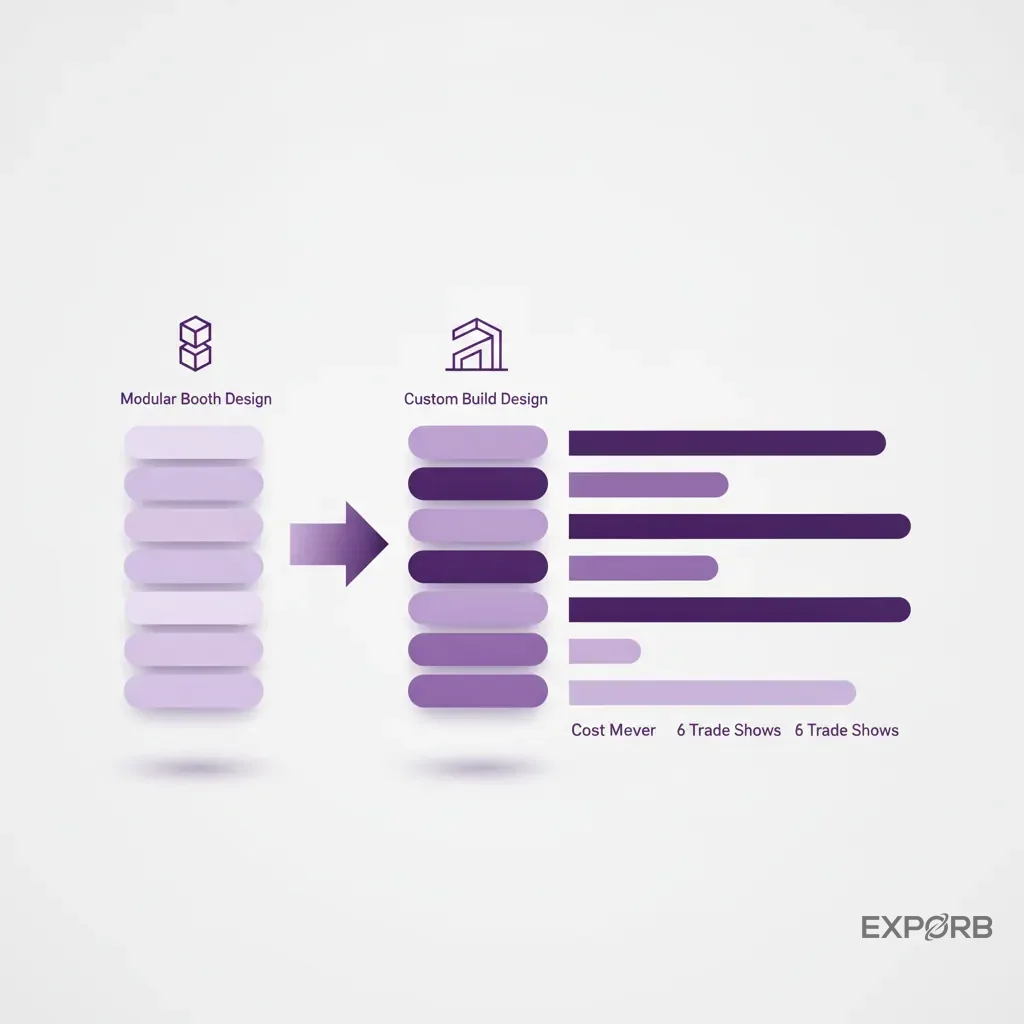
If you exhibit at more than a handful of shows a year, a custom build is a financial dead end. Research from Event Marketing experts at Kreative Brain suggests that companies exhibiting at six or more shows annually can cut their cost-per-show by 40–60% by switching to a modular system. The initial investment might be similar to a small custom build, but shipping, labor, and storage savings compound with every event on your calendar. You pay for the hardware once. That's a huge win.
Meeting sustainability goals with lower-waste materials
Sustainability is a procurement requirement for many companies. According to a report from Taylor Communications, exhibitors actively seek eco-friendly materials like FSC-certified wood, recycled aluminum, and fabric graphics. Modular systems, built for reuse, inherently waste less than single-use custom exhibits that often get tossed after the show.
Comparing modular vs. custom builds side-by-side
The differences become clear when you lay them out. One is an investment in a flexible asset; the other is a one-time operational cost.
Comparison of modular and custom-built trade show booths across key financial and operational factors.
Does 'modular' mean my trade show booth will look generic?
No. This is a common misconception holding exhibitors back. The fear is that buying a "system" means your booth will look exactly like your competitor's down the aisle. But that's not how modern modular design works.
Mythbusting: modular doesn't mean boring
The frame is the skeleton. Your graphics, lighting, and technology are the personality. A well-designed modular booth uses the structure as a canvas for high-impact, full-surface graphics. With tension fabric, you can create smooth, curved walls and vibrant backlit displays that look every bit as impressive as a custom build. The system disappears, and your brand message takes center stage.
The rise of the hybrid model: combining modular frames with custom elements
The smartest exhibitors use a hybrid approach. They use a modular framework for the core structure—the walls, towers, storage areas, and branding elements—and then invest in a few high-impact custom elements. This could be a unique reception counter, a custom-fabricated product display, or a sculpted hanging sign. It's a way to get the best of both worlds.
Using vertical storytelling and overhead structures to stand out
In a crowded hall, you've got to go up. Modular systems make it easy to add height with towers, double-decker structures, or custom signage that you can see from across the floor. Hanging signs, a staple of larger booths, integrate with modular components. They create a cohesive and commanding presence without the weight and expense of a fully custom rig.
Related: The Ultimate Trade Show Checklist for 2026
Key components of a high-performing modular system
What are you actually buying? A good system is an integrated kit designed for performance, not merely metal poles and printed fabric.
The foundational framework: lightweight aluminum and recycled materials
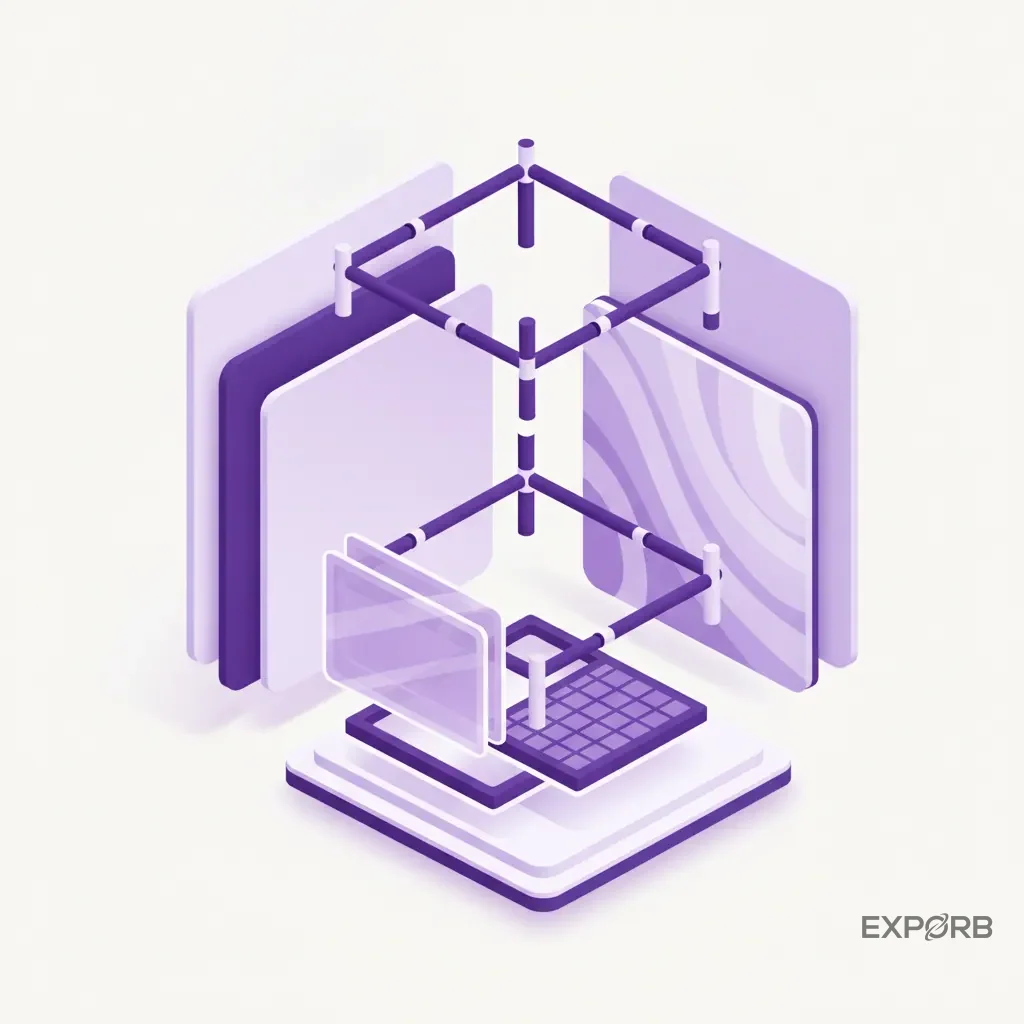
The backbone of any modular system is its frame. Look for systems that use extruded aluminum profiles. They're strong enough to support large structures and heavy monitors but light enough to keep shipping and drayage costs down. Many top-tier systems now use recycled aluminum. That's a big win for your sustainability goals.
High-impact graphics: tension fabric, lightboxes, and LED walls
This is where your brand comes to life. Silicone Edge Graphics (SEG) is now standard. The fabric has a silicone strip sewn around the edge. It tucks into a channel in the aluminum frame. This creates a taut, smooth, and vibrant graphic wall. Integrated lightboxes—where the entire wall backlights—are a must-have for stopping traffic. For maximum impact, some modular systems can even support large LED video walls.
Integrated technology: mounts for screens, tablets, and lead capture devices
Your booth is a workspace. A modern modular system should include integrated mounts for large monitors (for demos), locking tablet stands (for interactive content), and secure counters for your team. You need to manage the wiring cleanly within the frame's channels and avoid the dreaded "rats' nest" of cables on the floor. This is key for a professional look and smooth operation.
How can modular booths reduce setup time and operational costs?
The "soft costs" of exhibiting—labor, shipping, and drayage—can easily exceed the cost of the booth itself. This is where modular systems truly pay off. A custom booth might take a specialized crew of four people two full days to assemble. A comparable modular booth? Two of your own team members can often set it up in just a few hours.
Smooth packing and logistics for efficient freight
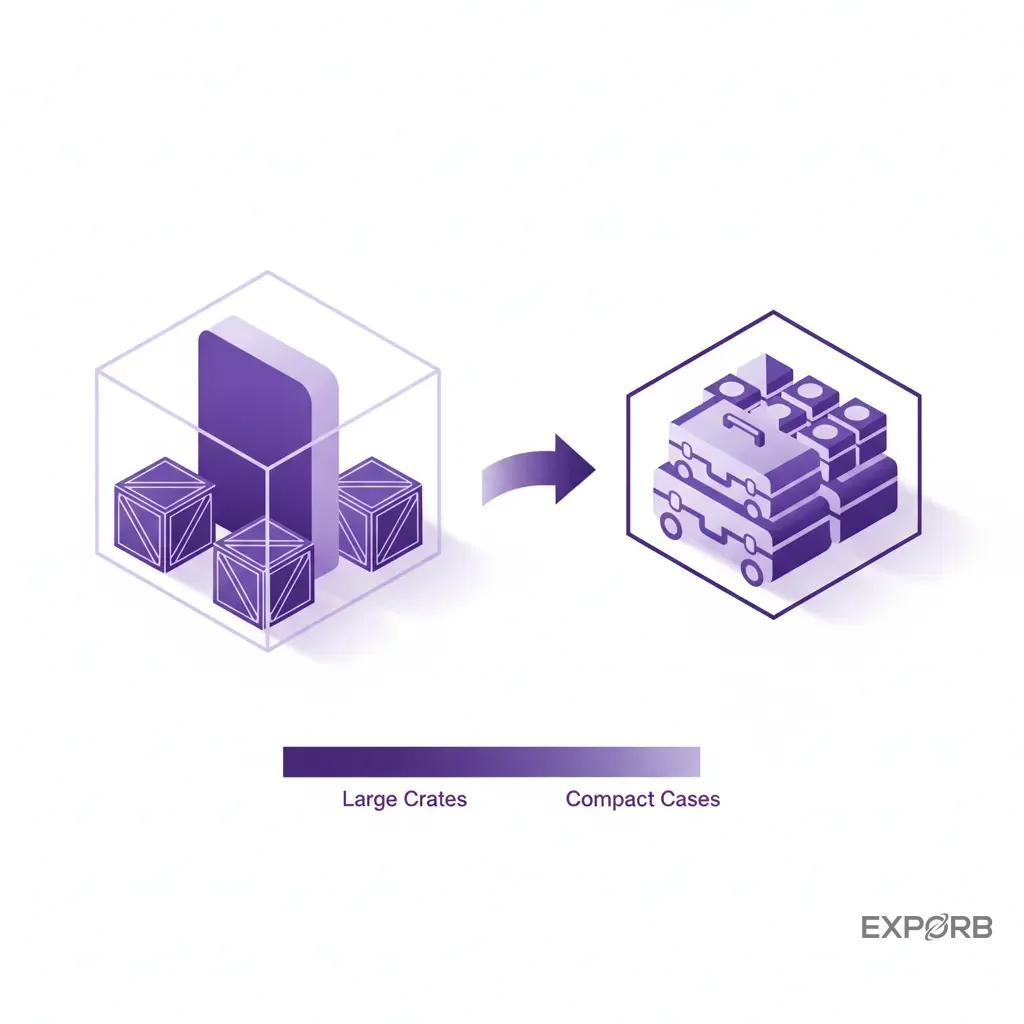
Modular components are engineered to pack down into compact, wheeled cases or small crates. This drastically reduces shipment volume and weight. Less weight means lower shipping costs. A smaller crate footprint means lower material handling (drayage) fees from the show organizer—a notoriously expensive line item. According to Kreative Brain, good systems fit standard truck dimensions to simplify logistics.
Tool-free assembly: slashing install and dismantle labor costs
Many modern systems don't require tools, or need just a single tool for assembly. Components connect with twist-lock connectors, wingnuts, or a single Allen key. This means you don't always need to hire the expensive union labor required for complex builds. Your own marketing team can often handle the setup, saving you thousands of dollars per show.
A look at a 4-hour modular booth setup
Talking about it is one thing. Seeing it is another. Time-lapse videos show how quickly these systems come together, turning a pile of aluminum and fabric into a fully functional exhibit in a morning.
Designing for the visitor journey, not just the floor plan
A great booth is a machine for starting conversations and capturing leads. Its looks are secondary. You need to design the space with a clear purpose, guiding visitors from the aisle to a qualified conversation with your team. This strategic design is important for maximizing your Event ROI.
Step 1: Zoning for approach, orientation, and engagement
Think of your booth in zones.
- The Approach & Orientation Zone (Outer Edge): This is your billboard. Big, bold graphics and a clear headline answer, "What do you do?" A reception counter or kiosk here helps visitors get their bearings and ask initial questions.
- The Engagement Zone (Deeper In): Demo stations, interactive displays, or product displays are where the real conversations happen.
Step 2: Creating a clear path to conversion
What's the single most important action you want a visitor to take? Is it to see a demo? Scan a QR code? Talk to a sales rep? Your layout should physically guide visitors toward that action. Use flooring, lighting, and signage to create an intuitive path. Don't make them guess where to go next.
Step 3: Using semi-private pods for qualified conversations
Once a visitor engages, you need a place to have a meaningful discussion away from the noise of the aisle. Multiple exhibit design firms identify semi-private meeting pods as a growing trend. Modular walls and acoustic panels can create these. They provide a quiet space to discuss needs, pricing, and next steps.
Related: Trade Show Lead Capture Guide: What Works in 2026
How does modular design directly increase lead capture and team visibility?
Most exhibitors obsess over their booth's looks. They spend $50K making it beautiful, but $0 on actually remembering what was said. The link is direct: a better-designed space leads to better conversations, and a better process for capturing those conversations leads to more revenue. You can't separate the physical design from the technology your team uses.
Building dedicated conversion zones for demos and scans
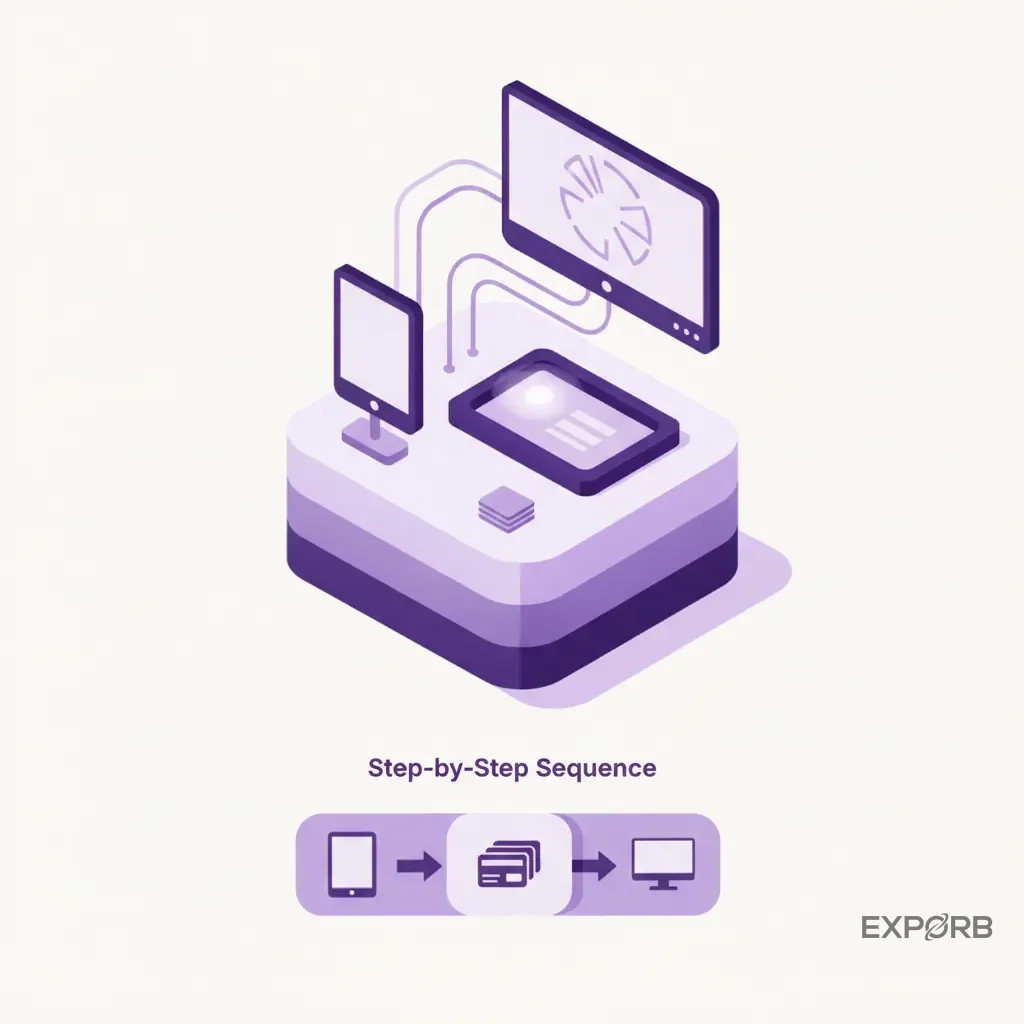
Your modular booth layout needs dedicated "conversion zones." These are specific stations with a counter, a monitor, and a tablet where your team completes the lead capture process. It's where your team gives a demo, scans a business card, and records the conversation details. By creating a specific spot for this activity, you make the process deliberate and consistent. No more scribbled notes on the back of a brochure.
The founder's dilemma: capturing every conversation systematically
Here's the problem we see constantly. A company spends $50,000 on a beautiful booth, but their lead capture strategy is a fishbowl full of business cards and a stack of messy paper forms. Your team meets 100 people at the booth. Monday morning, you ask what they learned. Blank stares.
The team talks to 100 people, but the founder or sales manager has zero visibility into what was actually discussed. Which leads are hot? What did they talk about? Who needs to follow up? It's a black box.
Integrating AI-powered tools like Exporb to structure visitor data
This is where technology bridges the gap. A well-designed booth gets people to talk to you; a tool like Exporb makes sure you don't forget what they said. At Exporb, we built our platform because we saw this pattern: companies investing heavily in their physical presence but failing to capture the rich context of conversations. Your team doesn't just scan a badge for a name and email. They can use their phone to scan a business card, record a quick voice note about the conversation, and snap a photo of a whiteboard sketch. The platform organizes and attaches all that unstructured data—the actual context of the conversation—to the lead record. The founder gets a real-time dashboard. The sales team gets enriched leads with full context. Suddenly, that booth investment starts paying for itself.
Real-world examples of modular booths that win
Theory is great, but what does this look like in practice? Here are a few common scenarios.
Example 1: A 10x10 booth for a SaaS startup that converts
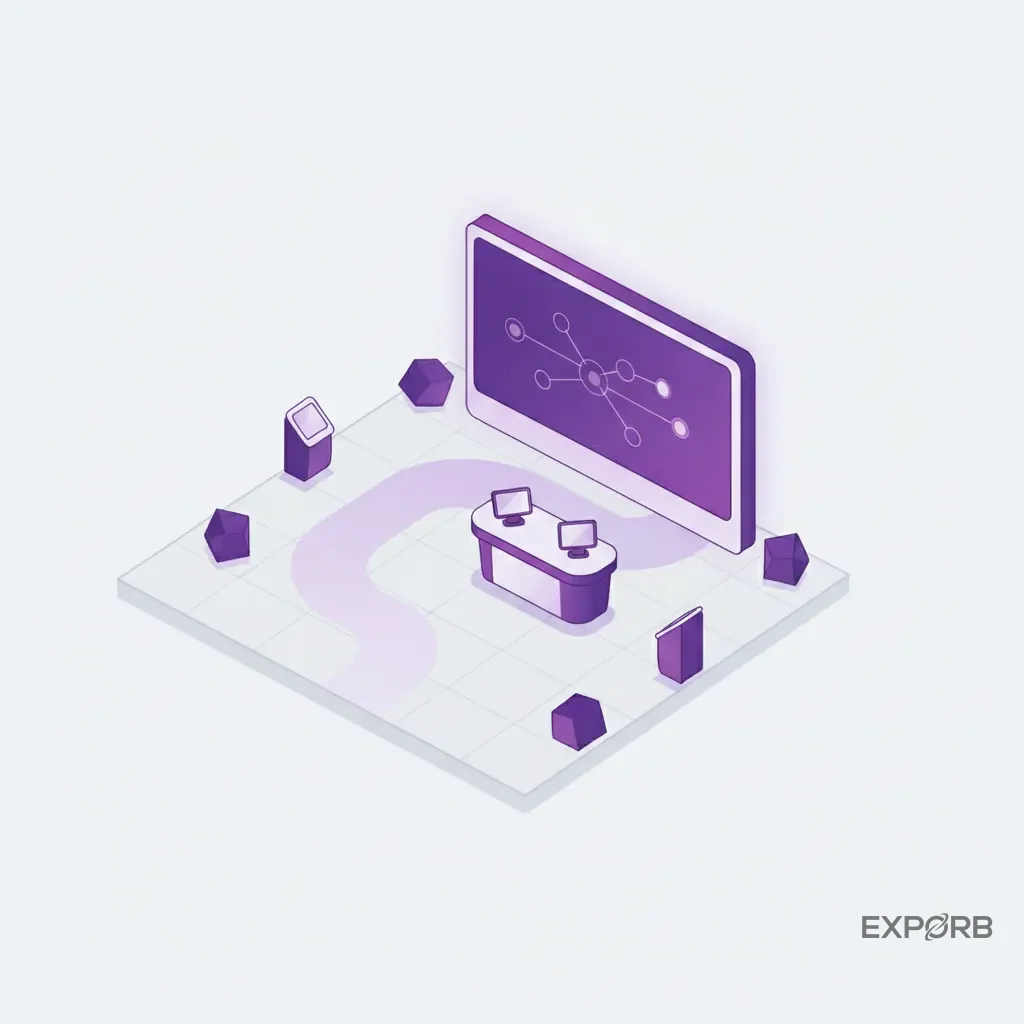
For a small 10x10 space, the goal is to make a big impact. A SaaS startup might use a single, large backlit fabric wall with a bold, simple message. A small counter with two stools provides a demo station. You can pack the entire booth into a single wheeled case. The two founders can set it up themselves in under an hour. It's clean, professional, and focuses entirely on the product demo.
Example 2: A scalable 10x20 design for a mid-market manufacturer
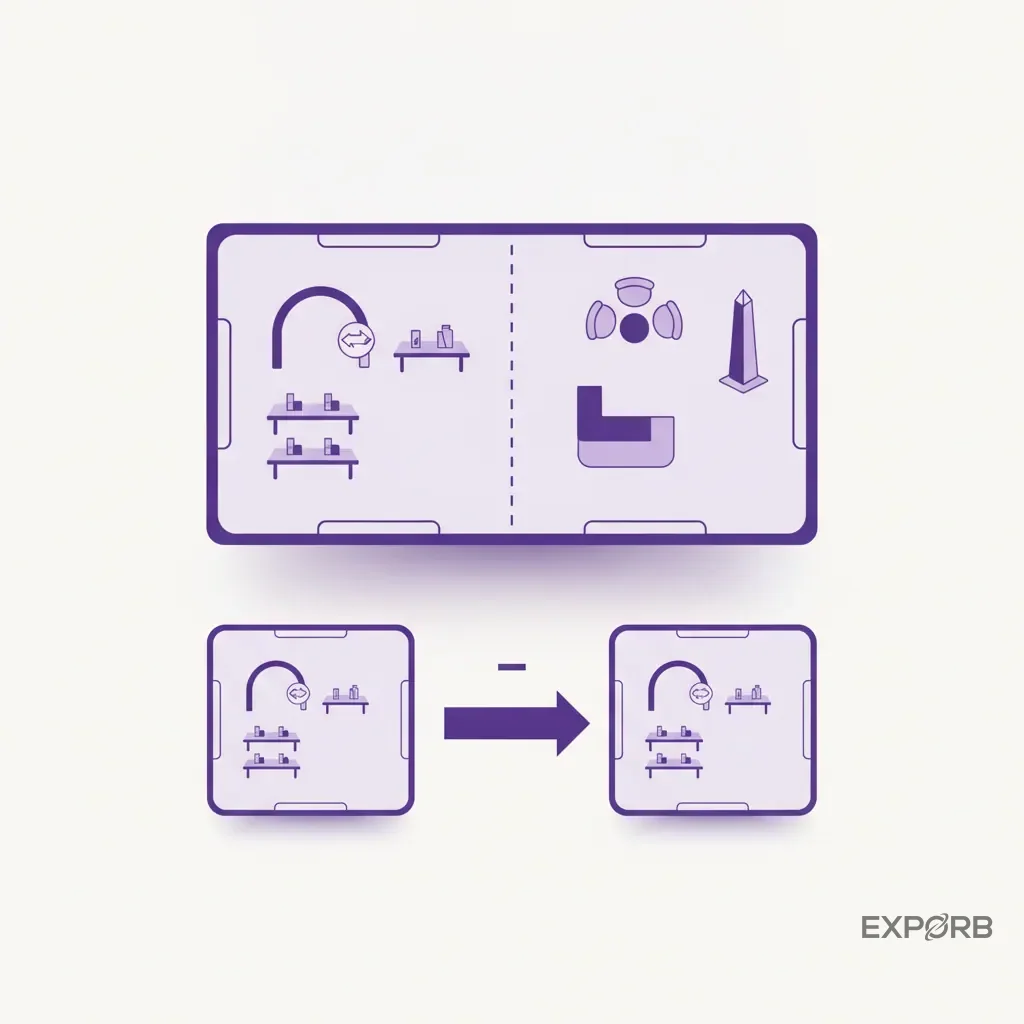
A manufacturer attending multiple regional shows needs flexibility. Their 10x20 modular kit might consist of a backwall, a semi-private meeting area on one side, and a product display counter on the other. For smaller shows, they can use just the backwall and counter to create a 10x10. For larger shows, they use the full kit. The graphics might change, but the hardware is the same.
Example 3: A 20x20 island exhibit using a hybrid modular approach
For a large island space, a hybrid strategy shines. The company uses a modular system to build a tall central tower for storage and branding, visible from across the hall. Lower modular walls with demo stations define the perimeter. They display products or services. But the centerpiece is a custom-built, high-end hospitality bar where they can host key customers. It combines the efficiency of modular with the premium feel of a custom element.
What are the future trends shaping modular exhibits?
The world of trade shows constantly changes. Your booth strategy needs to keep pace. Here are the key trends gaining momentum.
Content-first architecture: when the LED wall is the booth
Dynamic content is replacing static graphics. According to Adamexpostand, full-surface LED content environments are a leading trend. Instead of a printed backwall, exhibitors use modular frames designed to hold massive, smooth LED video walls. The booth itself becomes a dynamic screen for product demos, brand stories, and customer testimonials.
AI and AR integrations: for interactive product experiences
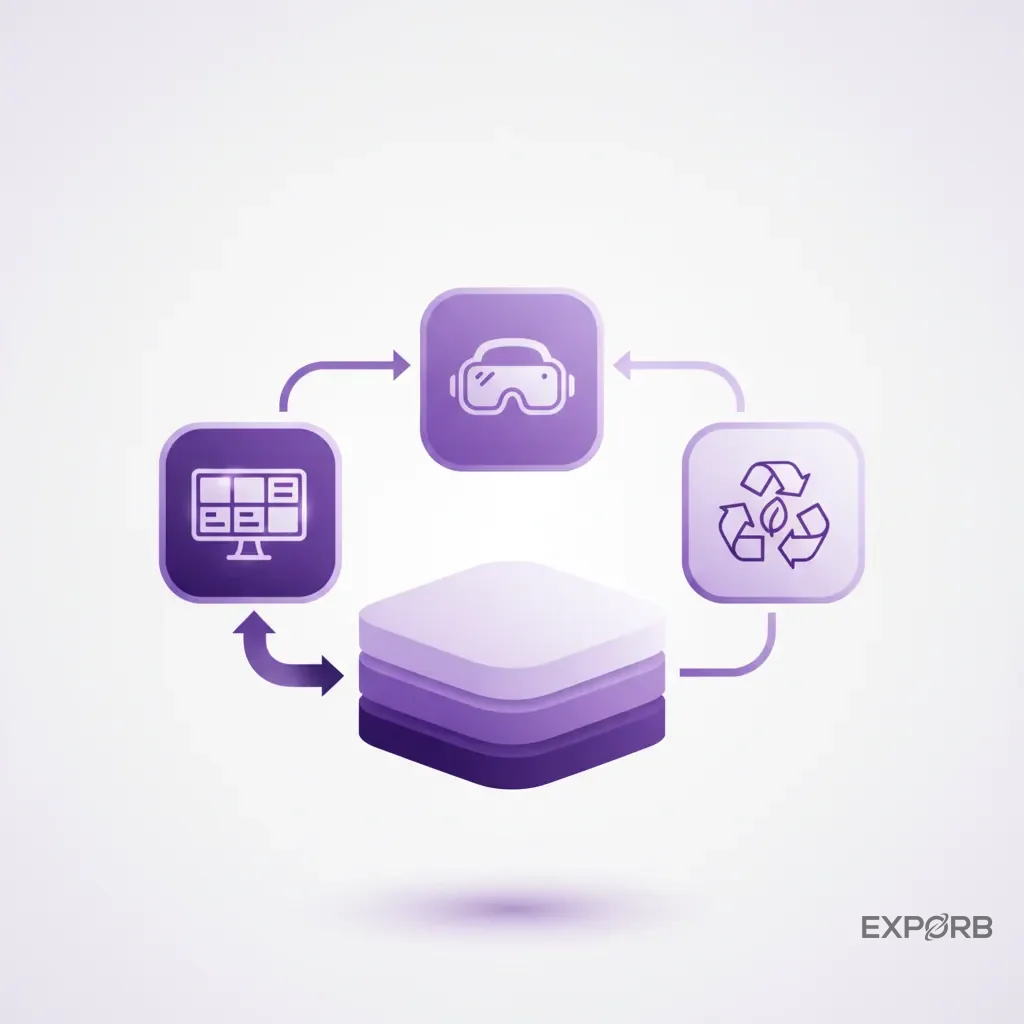
How do you present a large piece of industrial equipment or a complex software platform in a 10x20 space? Augmented Reality (AR) is the answer. Visitors can use a tablet or their own phone to see a full-size virtual model of a product right on the show floor. AI-powered chatbots on kiosks can answer common questions, freeing up your human team for more qualified conversations.
Sustainability: as a non-negotiable procurement requirement
This is becoming the standard. Show organizers, corporate clients, and even attendees demand proof of sustainability. They're asking exhibitors about the materials in their booths, their plan for reuse, and their carbon footprint. A modular system built from recycled aluminum and designed for a multi-year lifespan is a powerful and practical answer to these questions. This commitment to sustainability is key for meeting evolving market expectations. It helps future-proof your brand.
Your action plan for a high-ROI modular booth strategy
Ready to make the switch? Don't just go buy a kit. A successful modular strategy requires planning.
Step 1: Audit your annual trade show calendar and goals
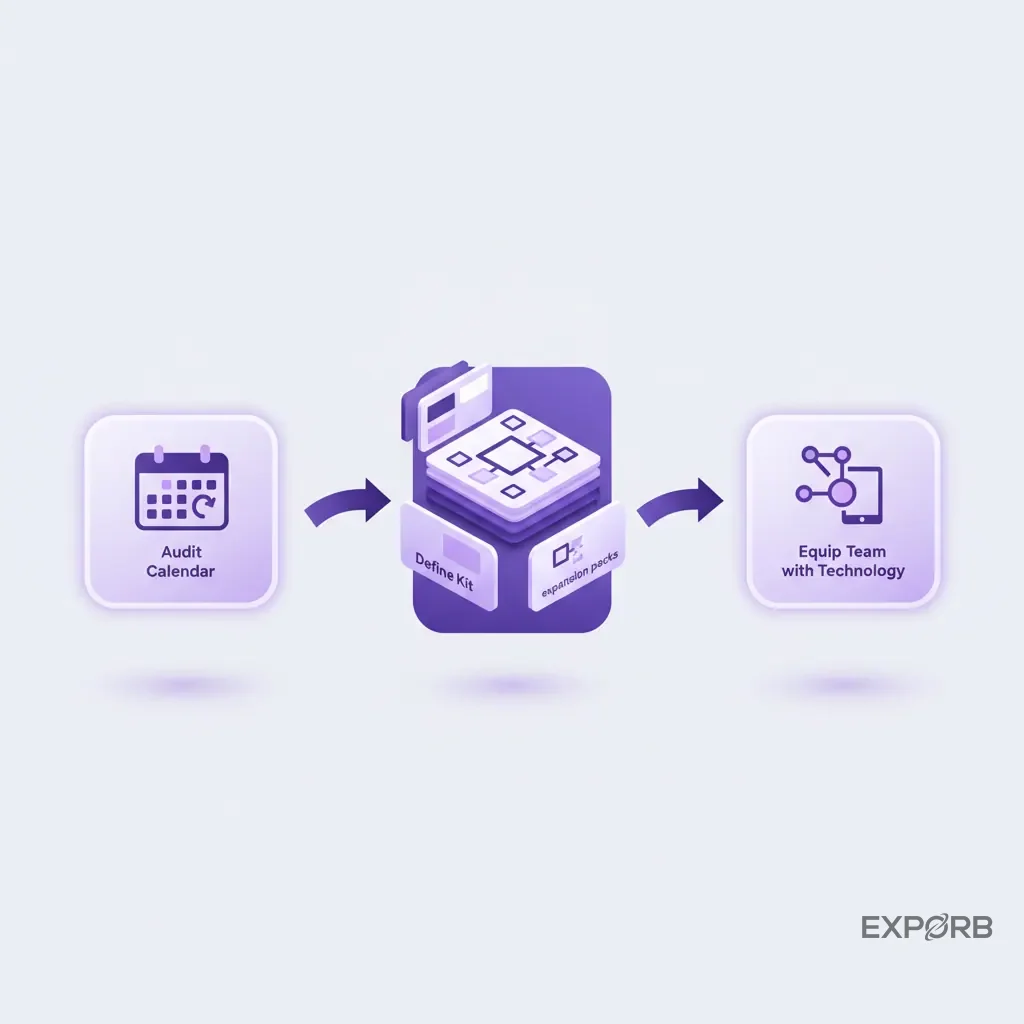
Look at all the shows you plan to attend for the next 2-3 years. What are the booth sizes? What are the goals for each show—brand awareness, Lead generation, partner meetings? Your booth needs to be flexible enough to meet all these needs. This audit will define the requirements for your core system.
Step 2: Define your core modular kit and expansion packs
Based on your audit, define the "base kit" that will work for your smallest standard booth size (likely a 10x10 or 10x20). Then, define the "expansion packs"—the extra walls, counters, or towers you'll need to scale up to your largest shows. This approach ensures you buy only what you need and can scale intelligently.
Step 3: Equip your team with the right lead capture technology
Your beautiful new booth is worthless if your lead capture process is broken. A pile of business cards isn't a strategy. Equip your team with a tool that works as fast as they do, even when the Wi-Fi fails. You need a system that captures the full context of conversations: pain points, budget, buying timeline, and next steps. A name alone isn't enough. Your booth is designed to start conversations; make sure you have a system to finish them and turn that investment into pipeline.