
The Imperative of Trade Show CRM Integration for Events in 2026
You've invested $50,000 in booth design, another $20,000 in travel, and countless hours preparing your team. But what's your strategy for the most critical element—the leads? For too long, exhibitors have treated lead capture as an afterthought, watching their Event ROI evaporate. At Exporb, we built our platform because we saw this pattern. We know a proper trade show CRM integration isn't just a tech upgrade; it's a fundamental shift in how you value and act on every conversation at the show. It's the essential bridge between a promising chat and a closed deal.
Why is Trade Show CRM Integration Now a Core Requirement?
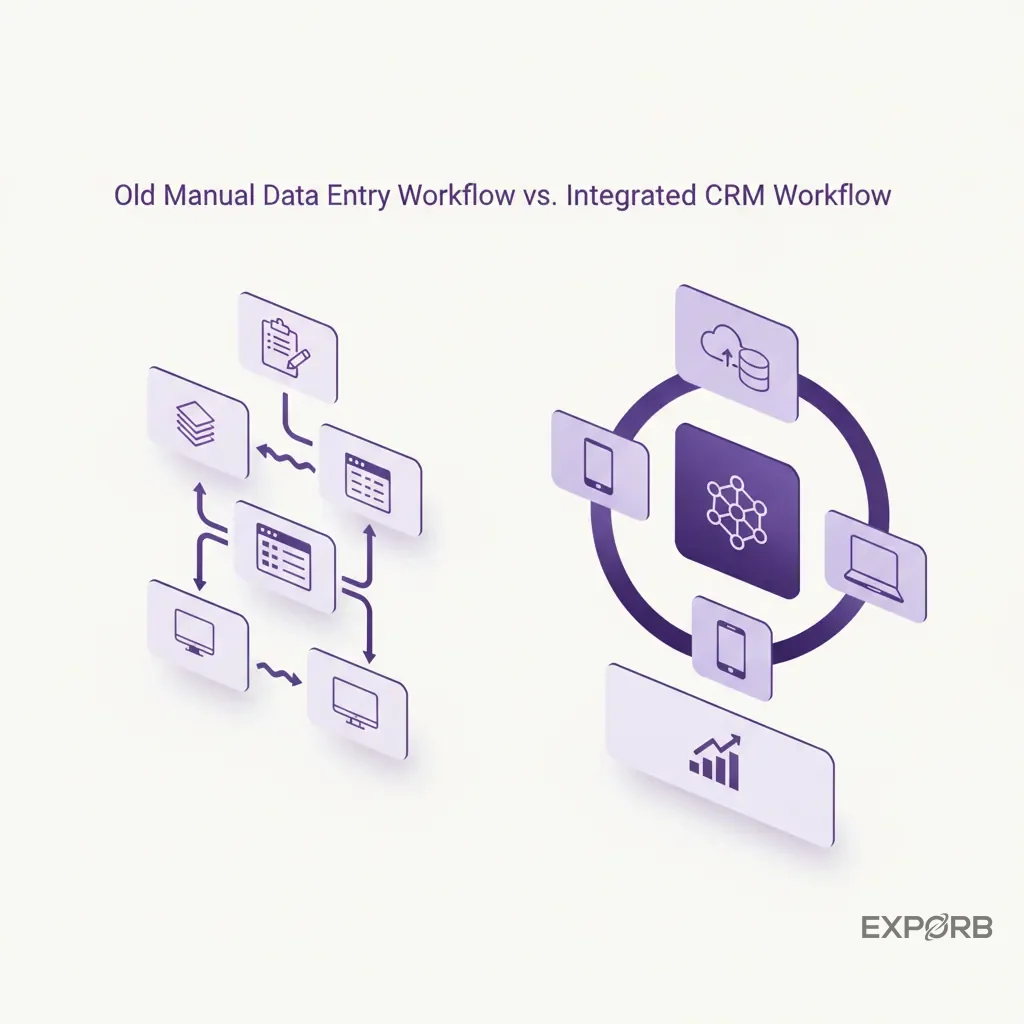
Trade show CRM integration isn't just a nice-to-have anymore. It's a core requirement. The pressure to demonstrate marketing ROI is immense, placing event spending under intense scrutiny. Founders and sales leaders demand a clear, direct link from event expenditure to sales pipeline. Without a system that automatically feeds leads into your CRM, you can't establish this connection. Event spending becomes a black hole of expenses. The entire event industry recognizes this shift, making solid CRM integration an undeniable mandate.
Understanding the 81% Mandate for digital lead capture
This isn't just a suggestion; it's a clear industry directive. A staggering 81% of event organizers now mandate digital lead capture that integrates smoothly with CRM or marketing automation platforms, according to recent Nexalink analysis. Organizers understand that exhibitors using digital methods are more successful. That success, in turn, enhances their event's overall value. This forces the industry to modernize. If your lead capture strategy still relies on paper forms or a standalone app that only exports a spreadsheet, you're already behind. Way behind.
How Manual Data Entry Became the Biggest Risk to Event ROI
Manual data entry kills your event pipeline. It's slow. It introduces delays and errors. This isn't just inefficient; it's a recipe for disaster, consistently undermining your trade show investment. Consider the all-too-common scenario: your team returns exhausted, a bag of business cards sits untouched for days, and eventually, someone—often reluctantly—begins the tedious process of typing names into a spreadsheet. Or worse, the fishbowl full of cards nobody will ever follow up on. This antiquated process is why so many companies struggle to prove their trade shows are worth the substantial investment.
What happens when Trade Show Leads never make it to your CRM?
When trade show leads don't make it to your CRM, the biggest expense isn't the booth itself. It's the immense opportunity cost of lost leads. Every conversation you don't promptly capture, structure, and act upon immediately is money set on fire. The critical gap between your booth and your CRM is precisely where your valuable pipeline goes to die, often resulting in significant lost revenue.
The 'leaky bucket' scenario: Losing 80% of your event leads
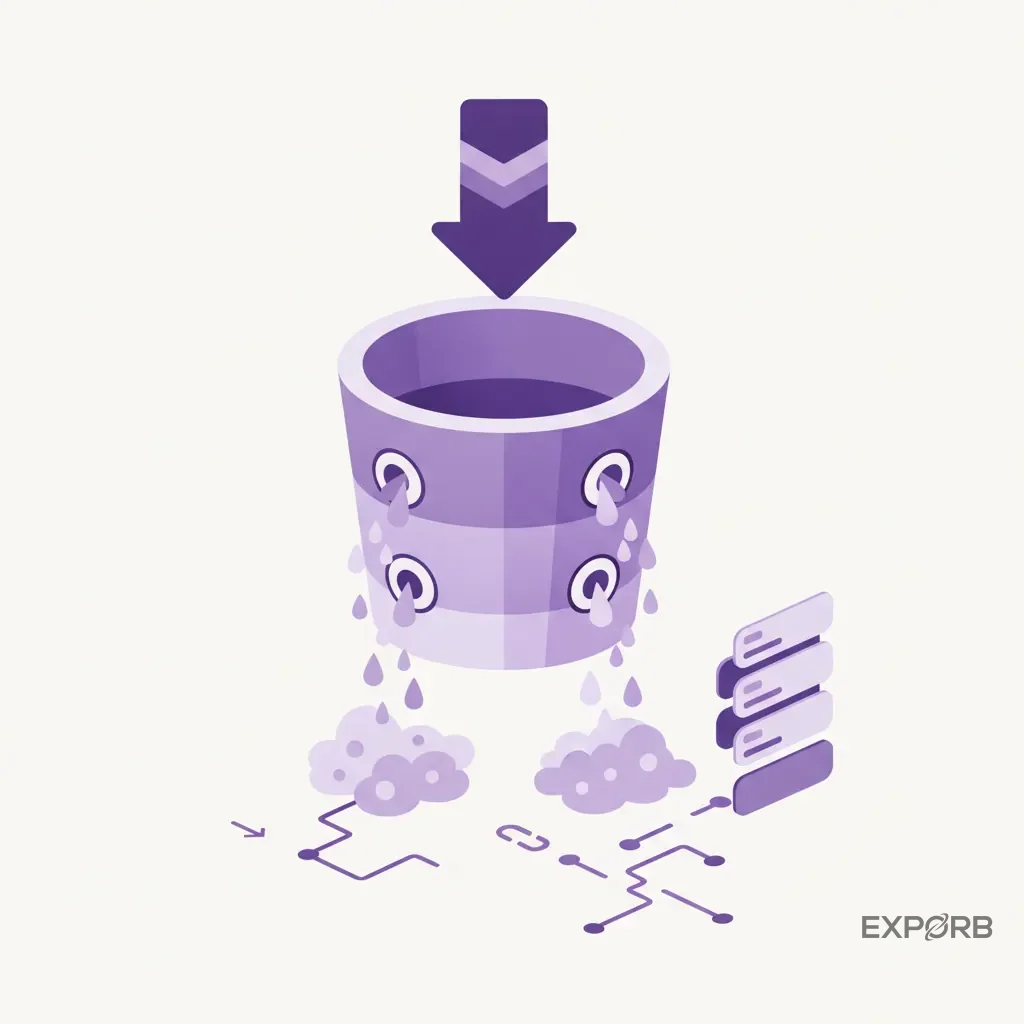
Industry analysis from Wave Connect shows that events generate "incredible leads," yet most companies lose a huge chunk between the booth and the CRM. Why? Manual processes are inherently full of holes. A business card gets misplaced. A note becomes illegible. An important detail from a conversation is forgotten. Each small failure contributes to a massive leak. While 80% is often cited as an estimate, for many companies, it's painfully accurate. You pay to generate 100 leads, but only 20 ever make it into a sales sequence. This unsustainable model drains resources and severely limits your event's potential impact.
A founder's nightmare: Forgetting critical conversations post-event
Here's a scenario many founders have experienced. You have a fantastic 15-minute conversation with a VP from a dream-fit company. You discuss their specific pain points, budget cycle, and exact next steps. You jot a few notes on the back of their business card, confident this is a deal. A week later, staring at that card, your notes simply say, "Follow up re: Q3 budget." The critical context—the specific integration problem, the urgency, the personalized solution discussed—is lost. You're left sending a generic "Great to meet you!" email, which often goes unanswered. The connection was made, but the opportunity died. Why? Vital context was lost. This is the founder's nightmare, proving your memory isn't a scalable lead capture tool.
Calculating the hidden cost of delayed and inaccurate follow-up
What's the true cost of a one-week delay in follow-up? It's not just time; it's conversion. TradeShowPro research clearly states that if you take more than 48 hours to contact a trade show lead, you're "leaving money on the table." Every hour that passes, your lead's memory of your conversation fades. Their interest cools.
Consider the financial impact:
- Cost per lead: If your total event spend is $70,000 and you generate 100 leads, your cost per lead is $700.
- Lead loss from delay: If 50% of those leads go cold due to slow follow-up, you've wasted $35,000.
- Inaccuracy cost: If data entry errors cause another 10% of your emails to bounce or be poorly personalized, that's an additional $7,000 wasted.
The cost isn't theoretical. It's real budget dollars flushed away because of a broken process between the booth and the CRM.
Related: The Complete Guide to Universal Lead Capture at Trade Shows
How does direct CRM integration solve the trade show lead leakage problem?
A direct CRM integration is a sealed pipe. It connects the moment of capture on the trade show floor directly to your sales team's system of record. This eliminates the manual, error-prone steps that inevitably cause leads to leak out of your pipeline. It's not about working harder; it's about implementing a system that prevents failure by default.
Closing the gap from booth conversation to sales pipeline
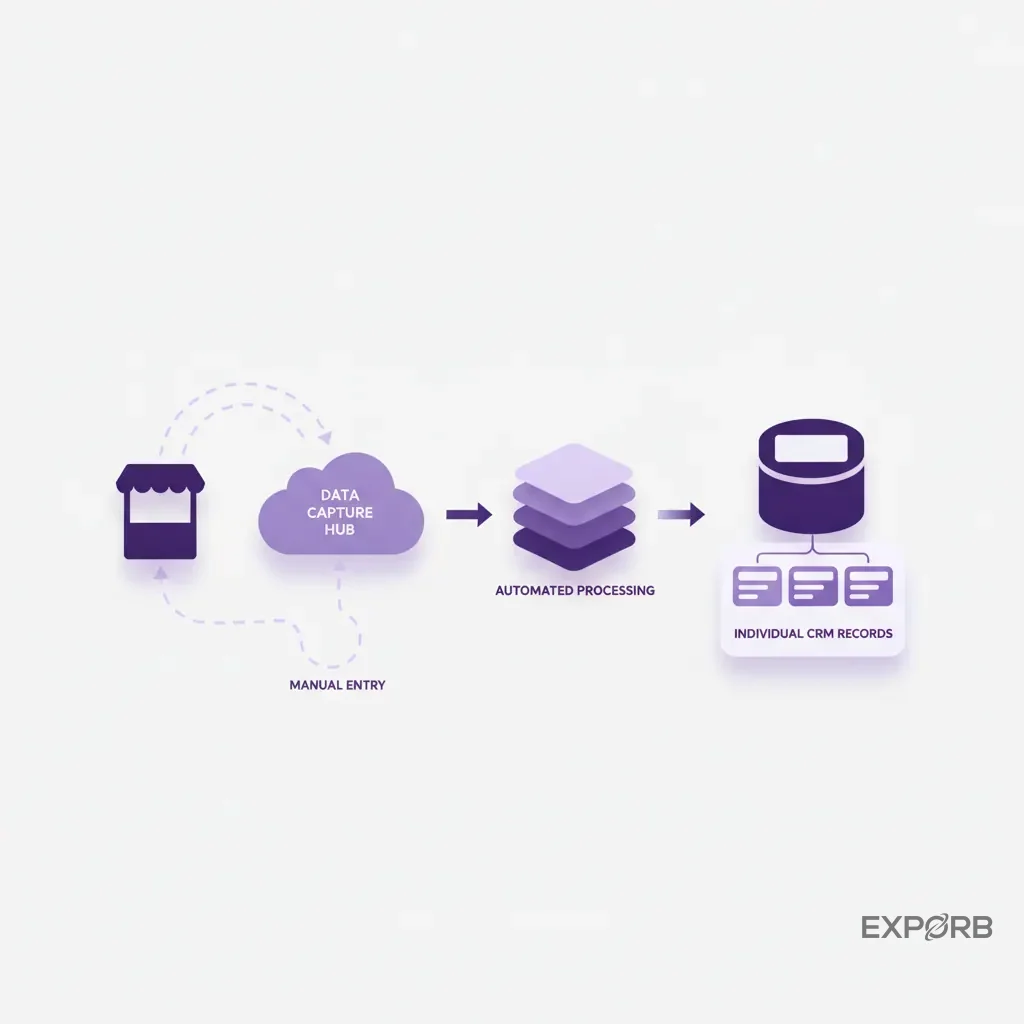
The primary objective? Shrink the time between a handshake and a sales touchpoint to near-zero. When a representative at your booth captures a lead—by scanning a business card or recording a conversation—that data shouldn't remain in an isolated app. It should flow instantly into your CRM.
This immediate integration enables:
- Leads are routed to the correct account executive based on territory or industry even before the rep concludes the conversation.
- The new contact is automatically enrolled in a relevant email nurture sequence while the event is still in progress.
- Your marketing and sales leaders gain real-time insight into the pipeline being built on their dashboards, rather than waiting a week for data compilation.
Automating data enrichment and lead routing in real-time
A name and an email address are just the starting point. Modern capture tools do more than just pass contact information; they enrich it. When a lead enters your CRM, the system automatically appends important firmographic data like company size, industry, and job title, saving your sales team hours of manual research.
But the true power lies in capturing conversation context. Imagine a CRM record that includes a full transcription of the conversation, key pain points identified by AI, and a sentiment analysis score—not just a vague note like "interested in product X." This helps your sales team continue a conversation with complete context. This is precisely where Exporb changes the game. We use AI to structure conversational data and ensure it reaches the right destination instantly.
Ensuring every conversation is captured, structured, and actionable
Traditional lead capture has a fundamental flaw: it only addresses the "who." It completely misses the "why." Why did a visitor stop at your booth? What specific problem are they trying to solve? What's their purchasing timeline?
A modern, integrated system captures this vital context. Reps record voice notes, snap photos of whiteboard diagrams, and scan business cards. Your team builds a full profile of each opportunity. When this rich, structured data lands in the CRM, it's no longer just a lead. It transforms into a sales-ready opportunity with a clear history and defined next steps, actionable the very second it arrives.
Your interactive booth is attracting crowds, but are you capturing value?
An interactive booth is a powerful magnet for attention, but without a solid lead capture strategy, all that buzz can quickly evaporate. You've invested in a racing simulator, a prize wheel, or a live demo that generates a long line. That's excellent. Foot traffic is high, and your booth is the talk of the show. But here's the critical question: are you effectively converting that buzz into pipeline, or are you simply providing free entertainment?
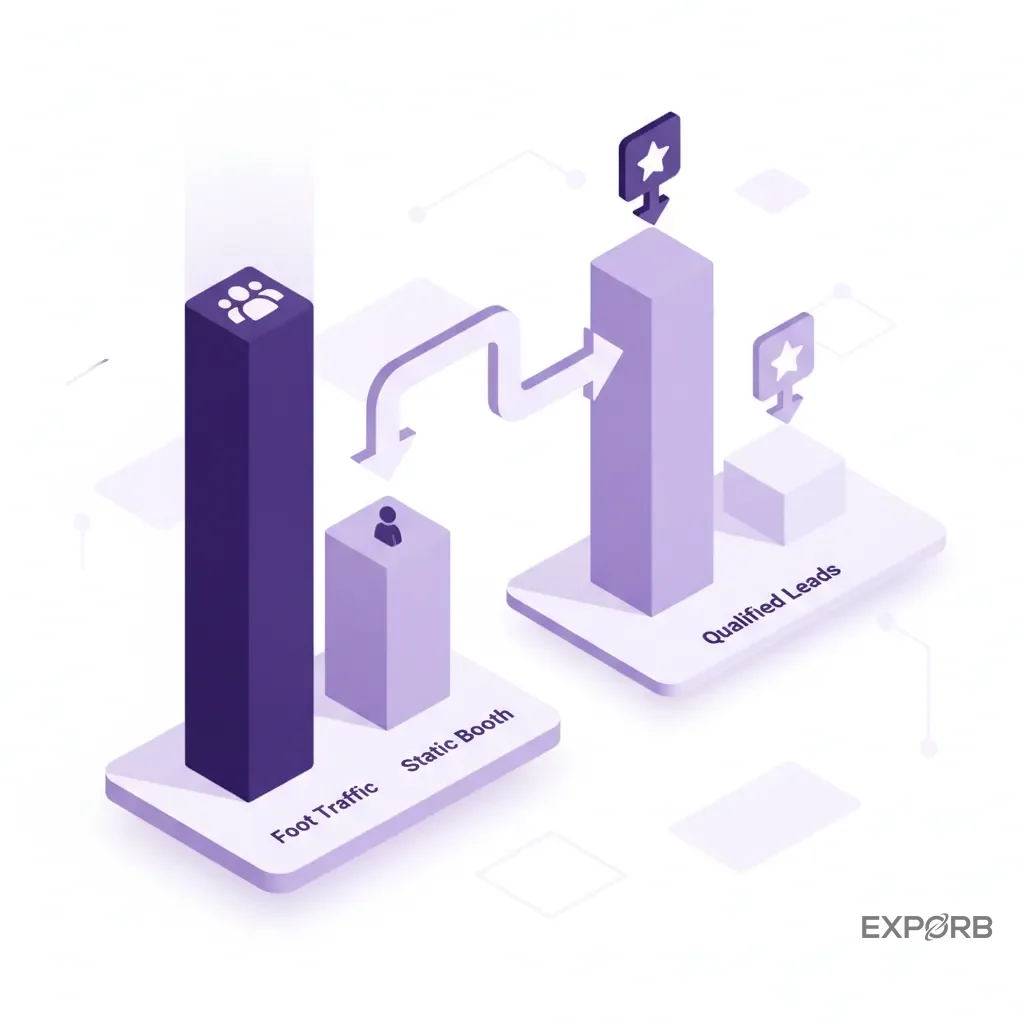
Misconception debunked: Foot traffic doesn't equal pipeline
Most exhibitors obsess over booth design and completely ignore lead capture. They spend $50K looking good and $0 on remembering what was said. This is one of the biggest fallacies in Event Marketing: equating a busy booth with success. If you lack an efficient, integrated method to capture the information of engaged attendees, you'll have nothing tangible to show for your efforts. A crowd is just a crowd. A crowd of captured, qualified leads, however, represents a solid pipeline.
Makai research demonstrates that interactive exhibits are 52% more likely to attract attendees. That's a huge advantage. But it's entirely wasted if your capture process is slow and cumbersome. If someone has to wait to fill out a paper form or fumble with a clunky web form after enjoying the experience, they'll just walk away. Effective lead capture must be smoothly integrated into the interactive experience itself.
Connecting interactive experiences to instant lead capture
The key is to make lead capture an integral, frictionless part of the interactive experience. It can't be an afterthought. The moment of highest engagement is the perfect time to capture information.
Consider these integrations:
- After the game: "Enter your information to get your score and see where you rank on the leaderboard!"
- During the demo: "Scan this QR code to receive a copy of the presentation and a personalized follow-up."
- At the prize wheel: "Let's scan your card so we know where to send your prize if you win!"
The capture process must be fast, digital, and directly connected to your systems. Data also shows that interactive experiences linked to digital capture can convert attendees to leads at a rate of 85% or even higher. The desire is there; you just need to eliminate the friction.
From attendee engagement to qualified CRM opportunities
CRM integration becomes paramount here. When you capture a lead from the racing simulator, it can't simply be a name in a spreadsheet. Your system should enable immediate qualification.
Ask yourself:
- Was this just a student playing a game, or a C-level executive from a target account?
- What specific product did they inquire about after the demo?
- What was the most important question they posed to your team?
With a tool that allows for quick notes, tags, and even voice recordings of the follow-up conversation, you can instantly differentiate hot leads from curious onlookers. This vital context flows directly into the CRM. It helps your sales team prioritize follow-up with genuinely engaged individuals, not just those who were entertained.
What does a modern trade show to CRM workflow actually look like?
A modern trade show to CRM workflow is fast, simple, and has immediate impact. You should complete most lead processing right at your booth. The goal is to finish 90% of the work before you even leave the exhibit hall. Gone are the days of the post-show data entry marathon. Here's a step-by-step breakdown of a workflow that genuinely works and maximizes your event investment.
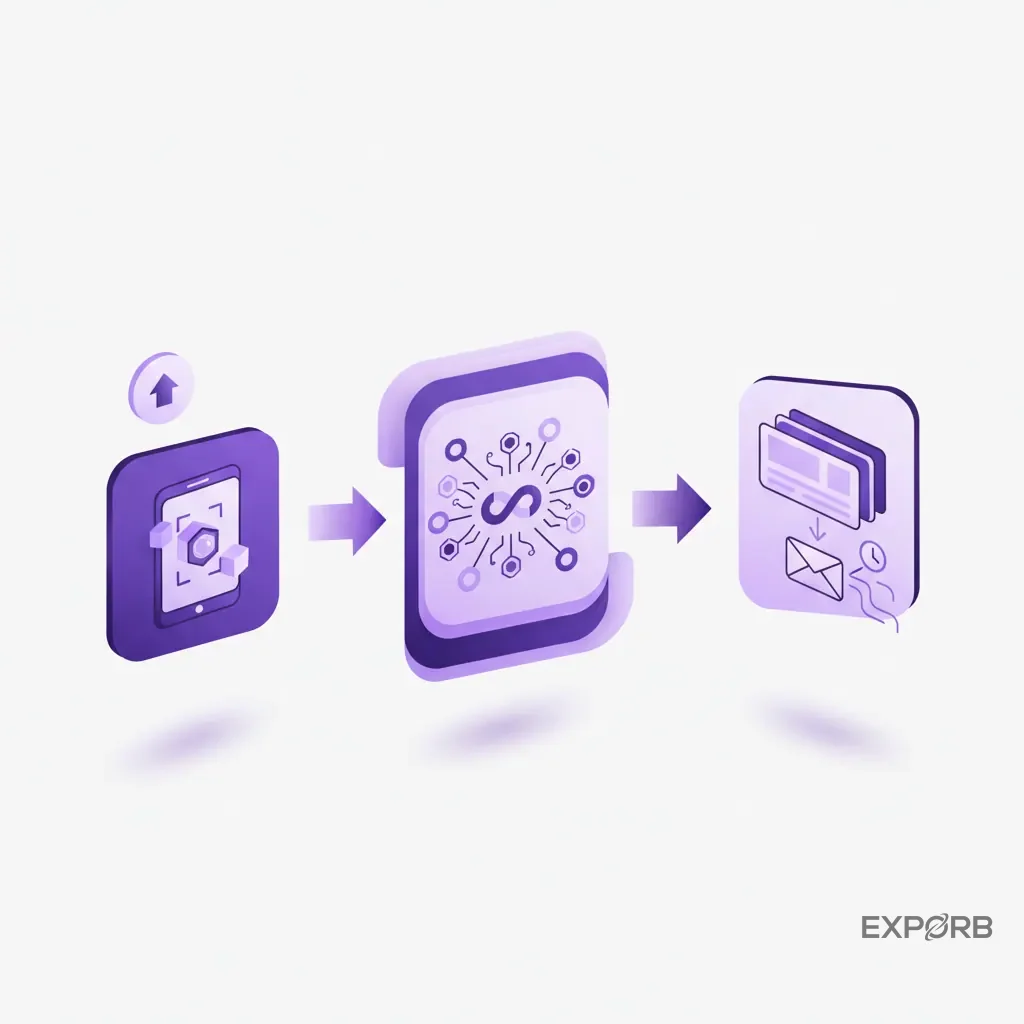
Step 1: Capturing conversations with AI-powered tools like Exporb
The process begins with the interaction. A visitor approaches your booth. Instead of merely scanning a badge and moving on, your team engages in a meaningful conversation. As they talk, they use a mobile app to build a full picture of the lead.
- Scan the Business Card: First, capture basic information. A solid app, like Exporb, uses AI-powered OCR to scan a business card in seconds. It accurately extracts name, title, company, email, and phone number without any manual typing.
- Record the Conversation: This is the most important part. With the visitor's permission, your representative records a voice note summarizing the conversation. For example: "John is the VP of Ops at Acme Corp. They're struggling with inventory management, and their current provider is too expensive. They need a proposal by next Friday. Budget is approved." This captures the vital intent and context that simple badge scanners miss.
- Add Visual Context: Did you sketch a solution on a whiteboard? Snap a photo and attach it to the lead's profile. Did they show you a picture of their current setup? Capture that too.
This entire process takes less than 60 seconds. It creates a rich, multi-format record of the interaction. Crucially, the best tools, like Exporb, work completely offline. This ensures a spotty convention center Wi-Fi connection won't hinder your capture efforts.
Step 2: Instant transcription, structuring, and syncing
As soon as your device regains an internet connection—via Wi-Fi or cellular—the magic of automation begins. The captured data automatically syncs to the cloud.
- The voice note is transcribed into text by an advanced AI.
- The AI then analyzes the transcription to identify key entities: pain points, competitors mentioned, budget, timeline, and next steps.
- The system automatically scores the lead based on the conversation's content and sentiment. A conversation about an approved budget and a clear timeline naturally receives a higher score than a general inquiry.
- This structured, enriched data then pushes directly to your CRM via smooth integration.
What ultimately lands in Salesforce or HubSpot isn't just "John Smith, Acme Corp." It's a complete opportunity profile. It features a transcription, a concise summary, and an AI-generated lead score that immediately tells your sales team exactly how hot this lead is.
Step 3: Triggering automated follow-up sequences from your CRM
The lead arrives in your CRM instantly, with rich, actionable data. This allows you to trigger powerful automations that accelerate your sales cycle.
- Tier 1 Leads (High Score): A high-scoring lead triggers an instant notification to the assigned Account Executive for immediate personal follow-up.
- Tier 2 Leads (Medium Score): These leads automatically enroll in a specific email nurture sequence, tailored to the pain points discussed in their conversation.
- Tier 3 Leads (Low Score): These might be added to your general marketing newsletter for broader engagement.
Even better, platforms like Exporb can draft the first follow-up email for you using the conversation's context, right on the spot. Your representative can review, edit, and send it before the prospect has even left the booth. This instantly closes the loop. It ensures your brand remains top-of-mind.
Related: Trade Show Follow-Up Email Templates That Convert
What is the real ROI of integrating your trade show tech stack?
Investing in a proper trade show CRM integration isn't merely a cost center; it's a powerful revenue multiplier. We've discussed the challenges and the process, but what are the tangible business results? The numbers from across the industry paint a clear picture: when you effectively connect your booth to your pipeline, you acquire more leads, better-qualified leads, and you close them significantly faster. This strategic integration directly translates into measurable financial gains and a stronger sales pipeline.
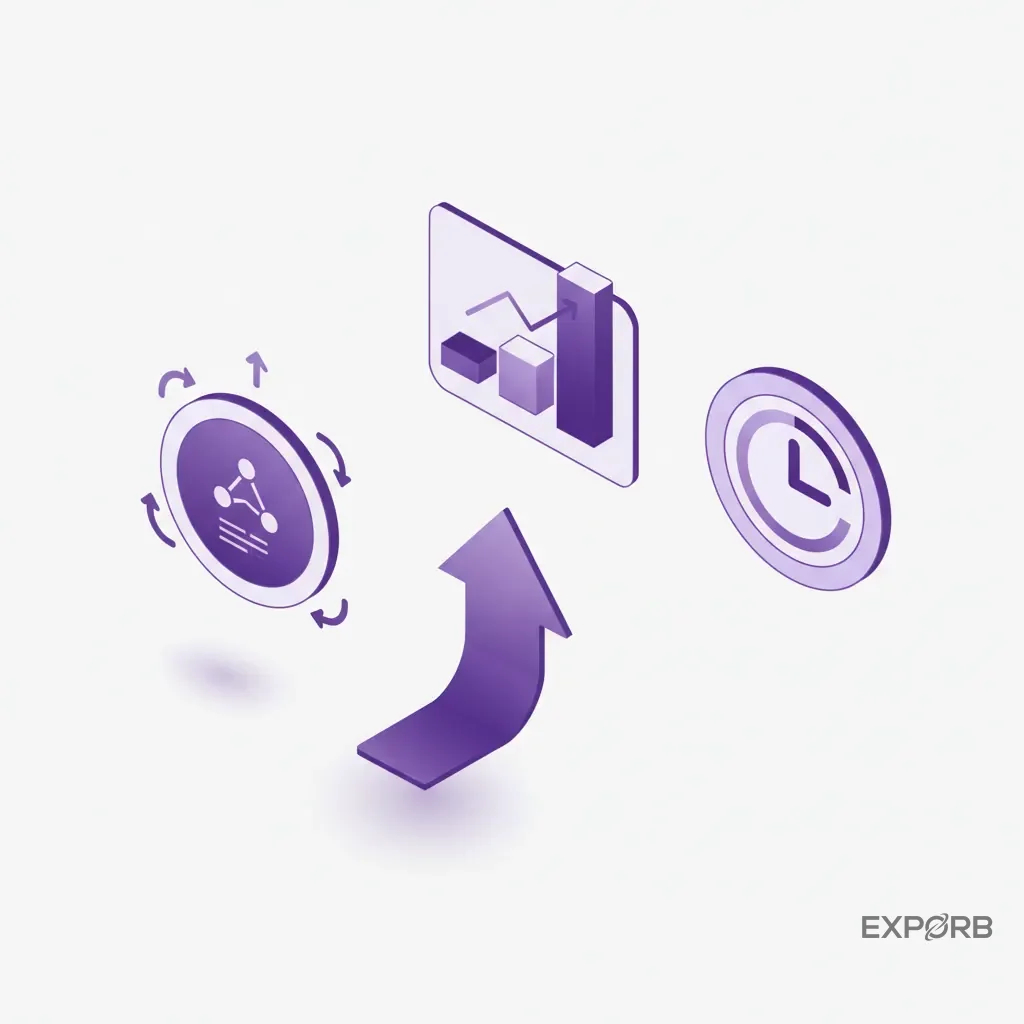
Achieving a 3-4x improvement in qualified lead volume
Let's start with the top of the funnel. TradeShowPro data shows that teams consistently using digital lead capture tools experience a 3 to 4 times improvement in qualified lead volume. This dramatic increase isn't just about collecting more business cards. It's about capturing higher-quality leads with richer context. It ensures your sales team focuses on prospects who are genuinely interested and a good fit for your solutions.