Why are sustainable trade show booths now a requirement, not a choice?
Let's be direct. The conversation around sustainable trade show booths has moved from a "nice-to-have" PR talking point to a non-negotiable line item for any serious exhibitor. If your 2026 event strategy still involves single-use builds that end up in a landfill, you're behind the curve. You're risking access to key venues and alienating your most valuable buyers. This is a fundamental shift in how we approach exhibiting.
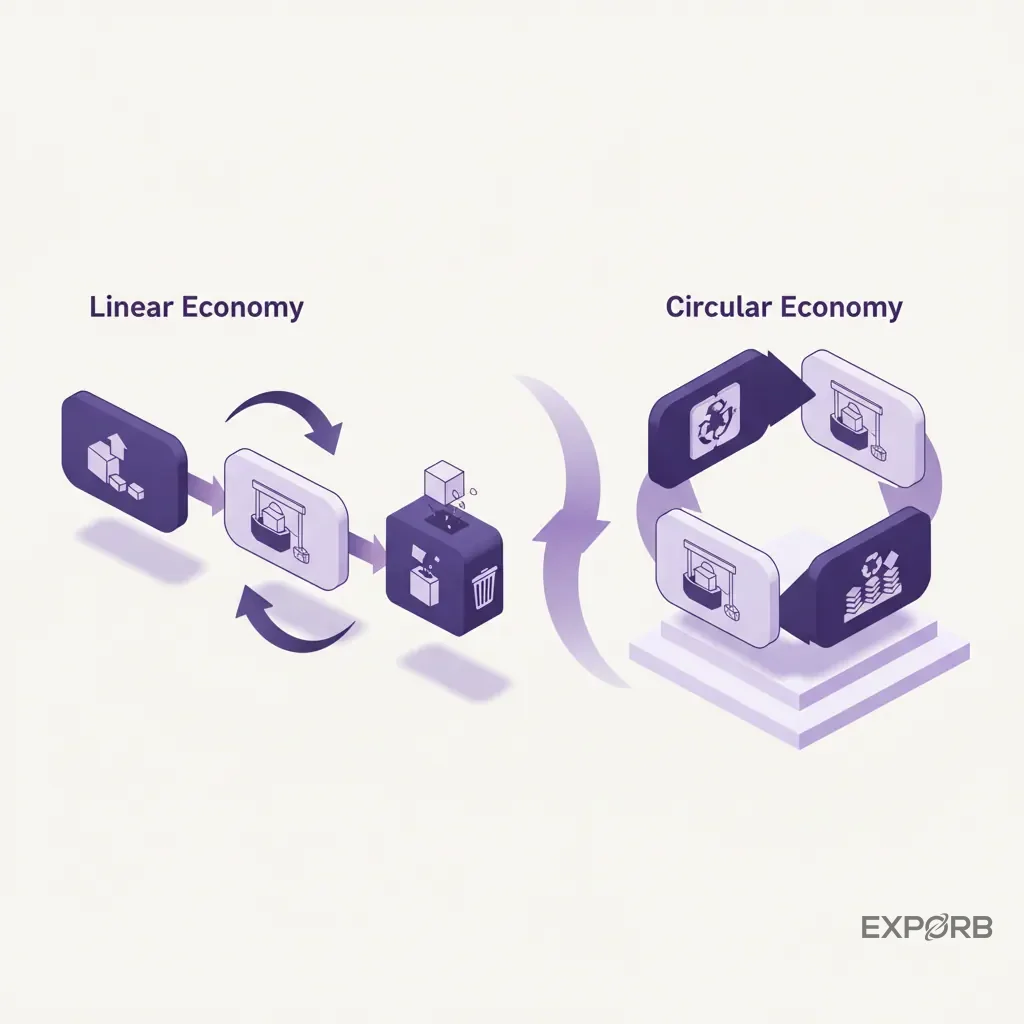
The 2026 shift from 'nice-to-have' to regulatory necessity
What changed? A perfect storm of regulatory pressure and market demand. Venues, especially in Europe, aren't just suggesting green practices anymore—they're mandating them. You can't just show up with any old booth. They want to see your environmental plan. If you don't have one, you might not get a spot on the floor.
Meeting corporate ESG reporting and European venue mandates
Your company's Environmental, Social, and Governance (ESG) goals also drive this change. The carbon footprint of your trade show program now factors into reportable metrics. That massive, single-use custom build looks great for three days, but it's a disaster for your ESG report. Adam Expo Stand reports that some European exhibition centers now require ISO 20121 compliance for stand contractors. This makes documented sustainability a hard requirement for entry.
How visible sustainability builds trust with modern buyers
Don't forget your customers. They're scrutinizing your brand's commitment to sustainability more than ever. A thoughtfully designed, reusable booth communicates your values without you saying a word. It tells attendees you're invested in the future—not just a flashy, disposable presence. This isn't about feeling good; it's about building tangible trust that directly translates into booth traffic and better conversations.
What materials define a truly sustainable booth in 2026?
So, what does a "sustainable" booth actually look like? It's not about flimsy cardboard cutouts. It's about smart, durable materials designed for a circular lifecycle: build, dismantle, store, and reuse. We focus on minimizing weight for shipping and maximizing reusability.
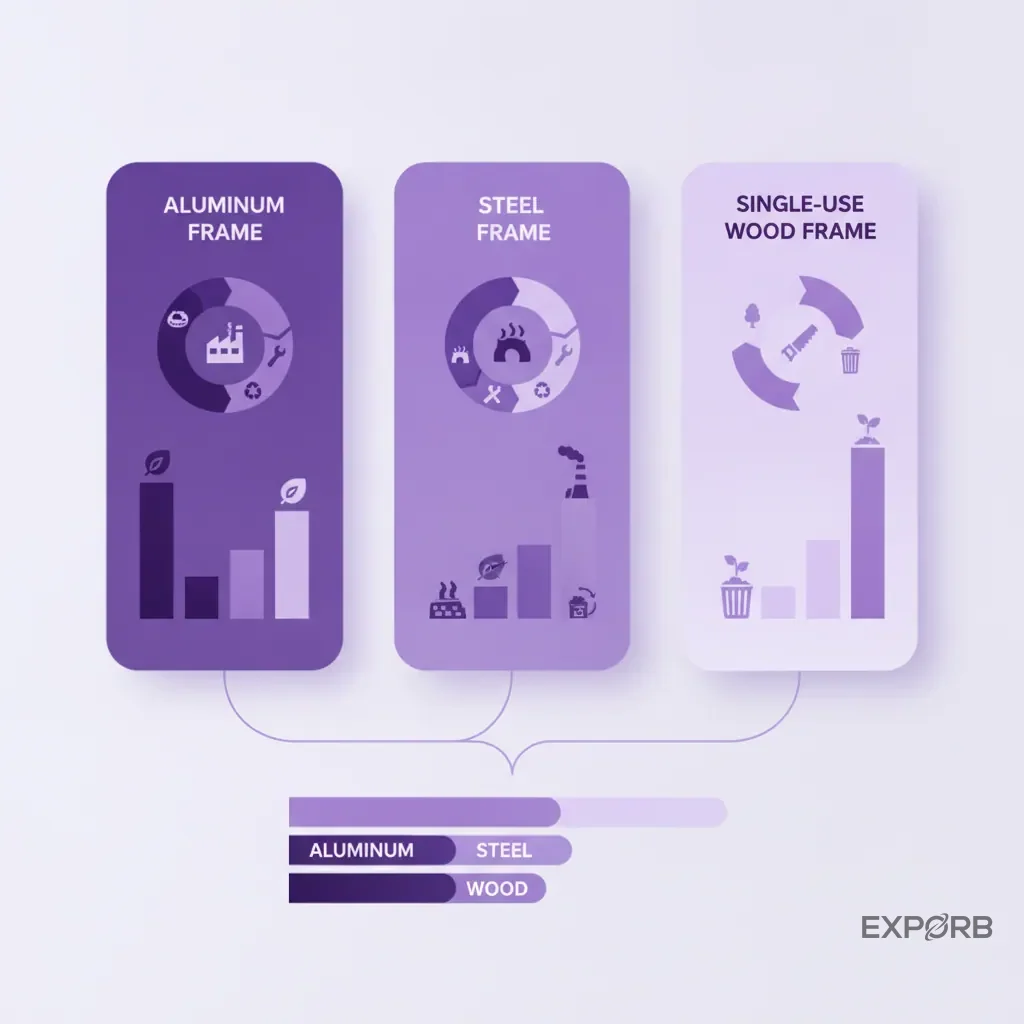
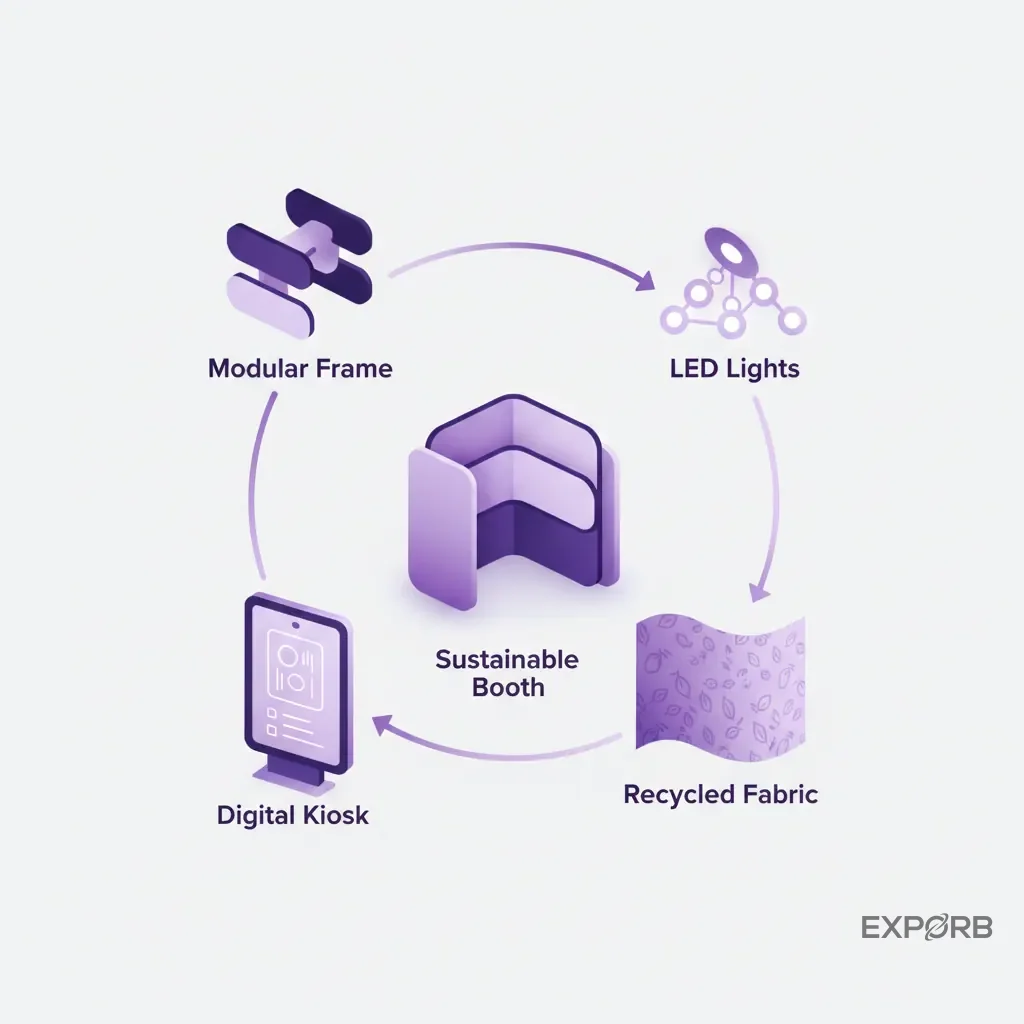
Modular aluminum frames: The lightweight, recyclable standard
Aluminum is the backbone of the modern sustainable exhibit. It's incredibly lightweight, which cuts down on shipping costs and carbon emissions. But its real power comes from its modularity and recyclability. According to a 2026 trend report from Pure Exhibits, aluminum extrusion frames are the most common sustainable structural material because you can reconfigure them into countless designs without tools. You can use the same kit for a 10x10 booth at one show and a 20x20 at the next. That's smart.
From plastic bottles to stunning visuals: Recycled tension fabric graphics
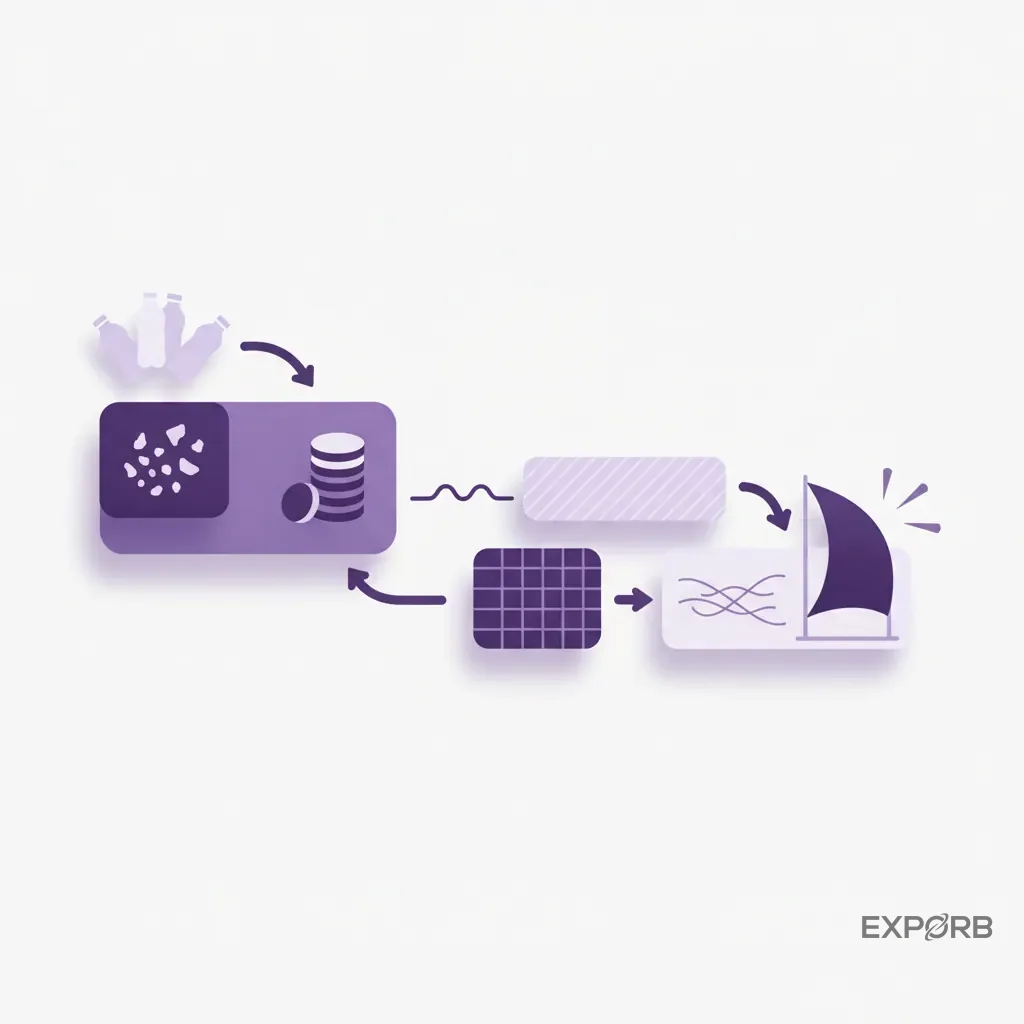
Those huge, vibrant graphics? They don't have to be PVC nightmares. The industry standard is now tension fabric made from recycled PET—yes, plastic water bottles. These graphics are eco-friendly and practical. They're lightweight, machine-washable, and fold down into a small bag, which eliminates the need for giant, fragile shipping crates. Exhibit Potential's guide highlights that these fabrics are fully recyclable at the end of their life.
Beyond the frame: FSC-certified wood, bamboo, and reusable flooring options
If you need solid elements, look for wood sourced from FSC-certified forests. This guarantees it comes from responsibly managed sources. Bamboo is another excellent choice; it's a rapidly renewable grass that's stronger than many hardwoods. For flooring, skip the single-use carpet. Instead, opt for modular carpet tiles or interlocking rubber flooring you can use show after show.
How can you immediately reduce your booth's energy and waste footprint?
You don't need a complete redesign to make a significant impact. Some of the most effective changes are operational—and they'll probably save you money, too. We aim to eliminate waste, both physical and electrical, from your exhibiting process.
The LED lighting revolution: Cutting energy use by up to 80%
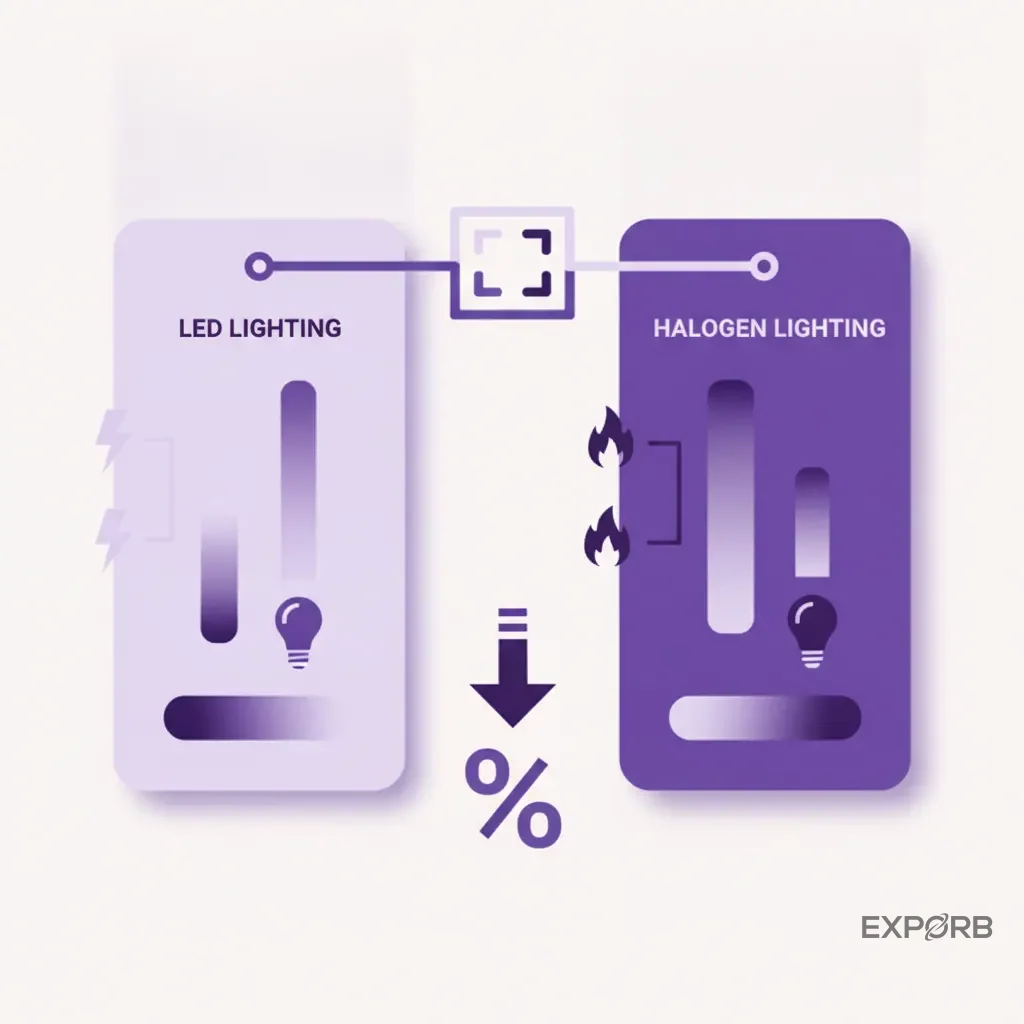
If you're still using old halogen or incandescent lights, you're literally burning money. Switching to LED lighting is the single easiest way to slash your booth's energy consumption. LEDs consume up to 80% less energy than their halogen counterparts, according to research from Pure Exhibits. This doesn't just lower your carbon footprint; it directly reduces your electricity bill from the venue, often one of the most inflated costs of exhibiting.
Ditching the paper trail with QR codes and digital collateral hubs
Think about the mountain of paper you generate at a single show. Brochures that get thrown away. Business cards stuffed into a fishbowl. Printed lead forms that are impossible to read later. It's wasteful and—more importantly—ineffective.
A simple QR code can link attendees to a digital hub with all your case studies, spec sheets, and videos. Instead of collecting a pile of "dead business cards," you can use a modern lead capture app to scan cards directly into a digital system, record notes, and start the follow-up process instantly.
Rethinking giveaways: From plastic swag to valuable digital assets
Let's be honest: nobody wants another cheap plastic pen or foam stress ball. Most of it ends up in the hotel trash can. This is a massive source of waste and a missed opportunity. Instead of disposable trinkets, offer something of genuine value:
- A free trial of your software
- A downloadable industry report
- Access to an exclusive webinar
- A high-quality digital tool or template
This approach creates zero waste and positions your brand as a valuable resource, not just a purveyor of clutter.
Related: [The Ultimate Trade Show lead capture Guide](/blog/trade-show-lead-capture-guide)
Should you rent or buy your sustainable booth for your 2026 schedule?
This is a classic question, but the sustainability angle adds a new dimension. The right answer depends entirely on your event calendar and your need for customization. It's a simple cost-benefit analysis.
Calculating the break-even point: Cost-per-show analysis
The math is straightforward. Divide the total cost of purchasing a booth (including design, fabrication, and a storage crate) by the number of shows you plan to attend. Then, compare that to the per-show rental cost. If you exhibit less than three times a year, renting is almost always the more cost-effective and sustainable option. Ownership only starts making financial sense when you can amortize the cost over many events.
Rental benefits: Maximum flexibility for fewer than three shows per year
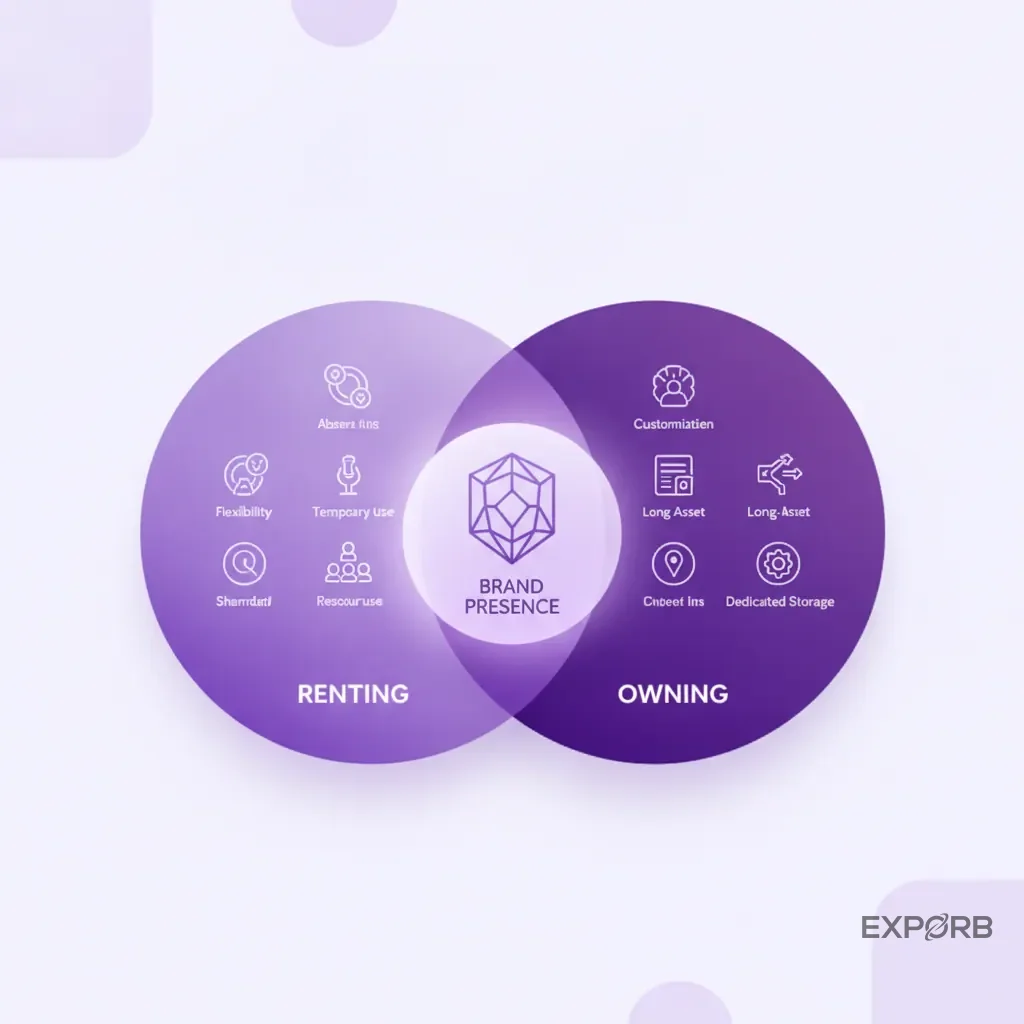
Renting is perfect for companies with a light event schedule or those who need to change their booth size and message frequently. You get a fresh, modern look for every show without the long-term commitment. From a sustainability standpoint, renting offers a great example of the circular economy. The exhibit house owns the components, and dozens of companies use them over their lifespan, maximizing their use and minimizing waste.
Ownership benefits: Long-term brand consistency and customization
If you exhibit frequently (four or more times a year) and your branding is stable, owning your booth can be the better long-term play. You have full control over the design and can build a unique brand experience. But ownership comes with responsibility—you have to pay for storage, maintenance, and repairs. A well-designed modular system can still be a highly sustainable choice for owners, as long as you build it to last.
Comparison of renting vs. buying a sustainable trade show booth.
How does sustainability solve the 'lost conversations' problem at events?
Here's the biggest misconception we see: companies spend $50,000 on a beautiful, sustainable booth and $0 on a strategy for what happens inside it. A green booth that doesn't generate clean, actionable data is just expensive, recyclable art. The move to sustainability isn't only about materials; it's also about shifting from physical, wasteful processes to efficient, digital ones.
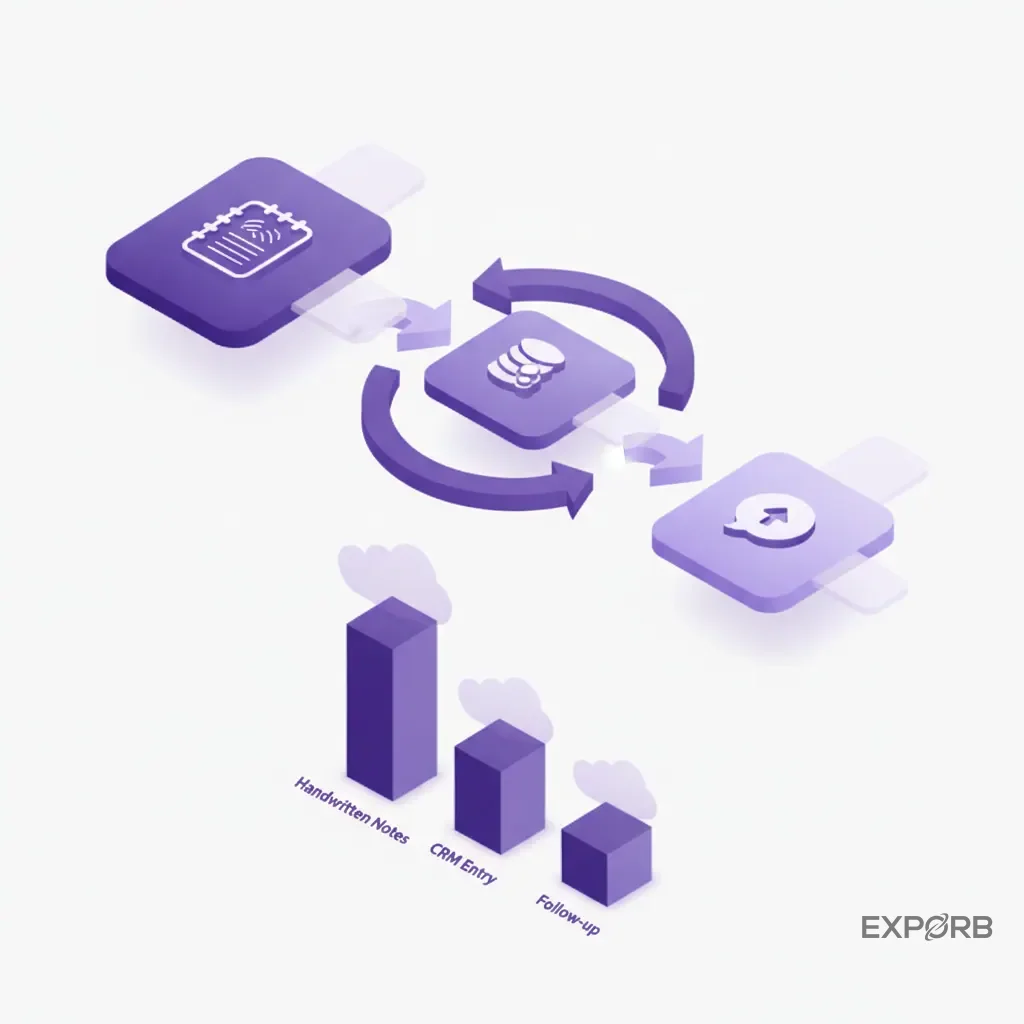
Scenario: The founder's post-show data black hole
You've been there. The show ends. The team flies home and dumps a pile of business cards and scribbled-on napkins on your desk. Who did we talk to? What did we promise them? Which leads are hot and which are duds? You have no idea. The context from hundreds of conversations disappears forever. It's a data black hole, and it happens because your capture process is still stuck in the analog era.
Misconception buster: Why great design is useless without great data capture
Your booth's job is to attract people and start conversations. But the system's job is to capture the value from those conversations. Badge scanners give you a name and an email—they don't tell you the prospect's biggest pain point, their budget, or the agreed-upon next step. A sustainable approach means eliminating the paper that loses this context. When you replace paper forms and business cards with a digital tool, you're not just saving trees; you're saving deals from falling through the cracks.
Connecting the dots: How digital tools link eco-choices to measurable lead quality
This is where it all comes together. When your team stops writing on paper and starts capturing notes digitally, everything changes. Using a tool like Exporb, a team member can scan a business card, record a quick voice note summarizing the conversation, and snap a photo of a whiteboard sketch.
Suddenly, you're not just being sustainable—you're being smart. The founder can see every interaction in real-time. The AI can analyze the conversation to score the lead and even draft a personalized follow-up email on the spot. By ditching paper, you've created a direct link between an eco-friendly choice and a massive improvement in your post-show pipeline.
Sustainable booth design strategies for impactful events
A sustainable booth shouldn't look boring or cheap. The best designs use their eco-friendly constraints to create memorable experiences. It's about smart design that is both visually striking and logistically efficient.
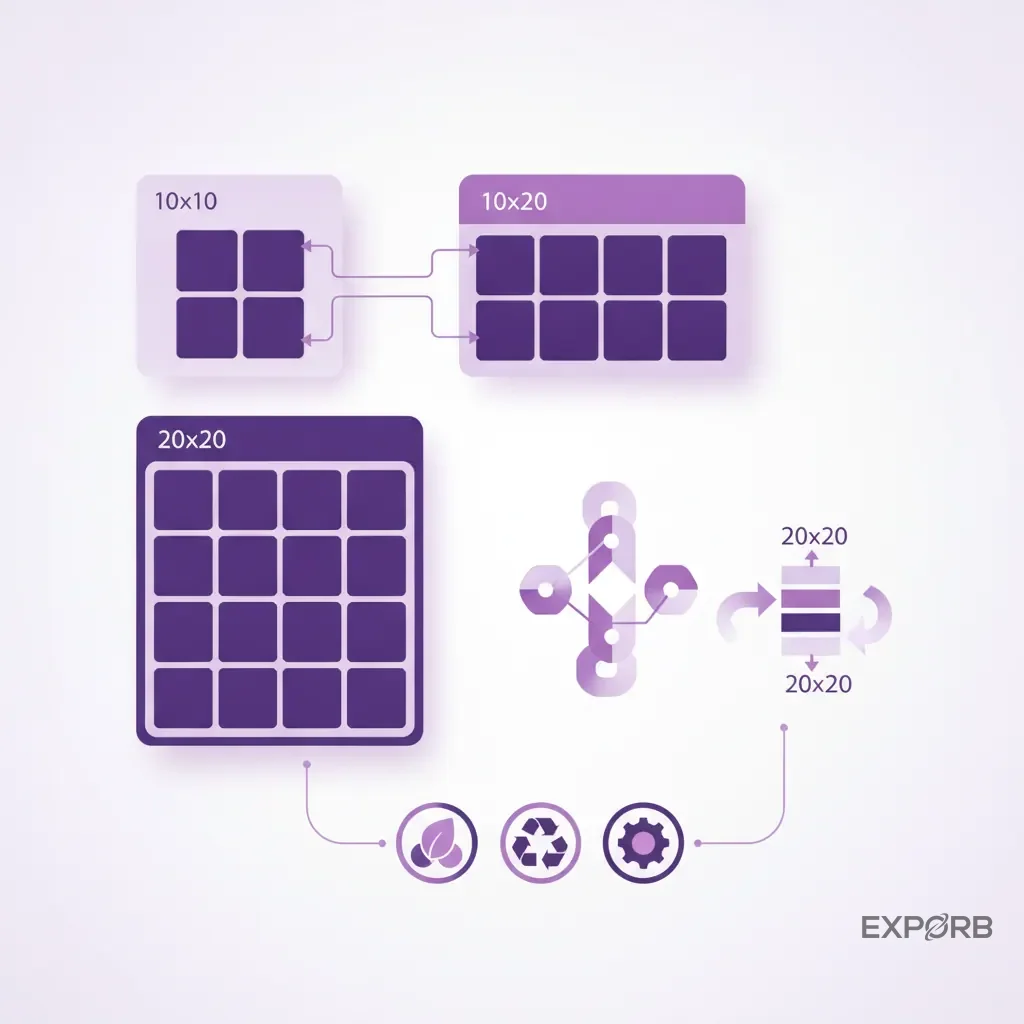
Designing for disassembly and reuse: The circular economy model in practice
Think of your booth like a set of high-end Legos. A great sustainable design uses a modular system you can assemble and disassemble quickly, without special tools. This minimizes labor costs and reduces the risk of damage during setup and teardown. The goal is to ensure every component—from the aluminum frame to the flooring tiles—can be packed neatly and reused for the next event. This is the circular economy in action.
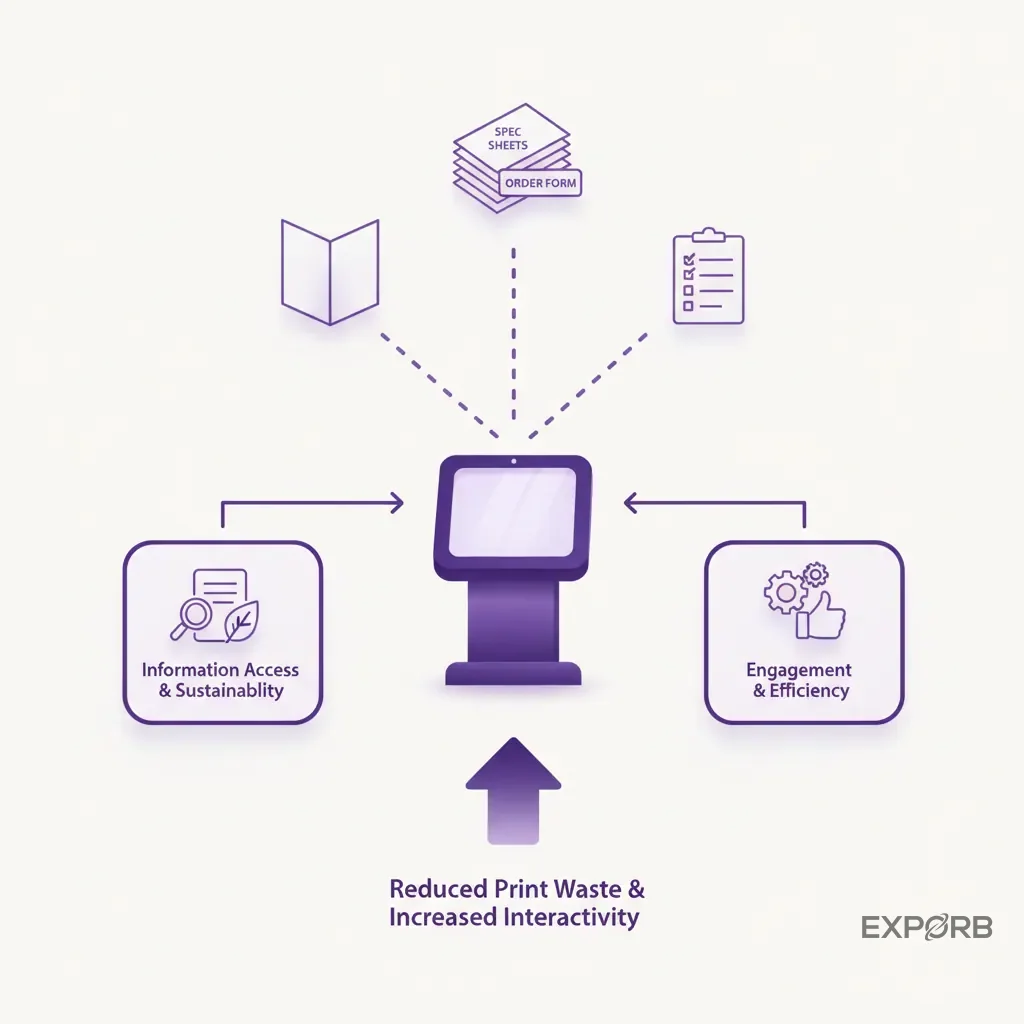
Integrating technology: Using interactive kiosks to reduce print and boost engagement
Interactive screens and tablets can replace stacks of printed brochures and data sheets. They offer a richer, more engaging way for attendees to explore your products. You can feature product demos, video testimonials, and in-depth case studies—all without printing a single page. This cuts down on waste and allows you to track which content attendees engage with most, giving you valuable data on what resonates with your audience.
Telling your green story: Using booth graphics to communicate your commitment
Use your booth's surfaces to tell your sustainability story. A simple icon or short statement on your graphics can communicate your commitment. For example:
- This booth is built with 95% reusable materials.
- Our graphics are made from 200 recycled plastic bottles.
- We're a carbon-neutral exhibitor.
- We prioritize local sourcing for all booth components.
This turns your design into a conversation starter and reinforces your brand's values to every person who walks by.
What does a regulation-ready exhibit look like in Europe vs. the U.S.?
Exhibiting internationally means navigating different sets of rules and expectations. What's considered best practice in the U.S. might be a hard requirement in Europe. Understanding these differences is key to a smooth and successful global event program.
Navigating European standards: ISO 20121 compliance and mandatory energy monitoring
European venues, particularly in Germany and the Netherlands, are far stricter about sustainability. Many require exhibitors and their stand builders to comply with ISO 20121, the international standard for sustainable event management. This isn't a suggestion; it's a prerequisite. They may also require you to monitor and report your booth's energy consumption. This means your design must prioritize energy-efficient lighting and AV from the start.
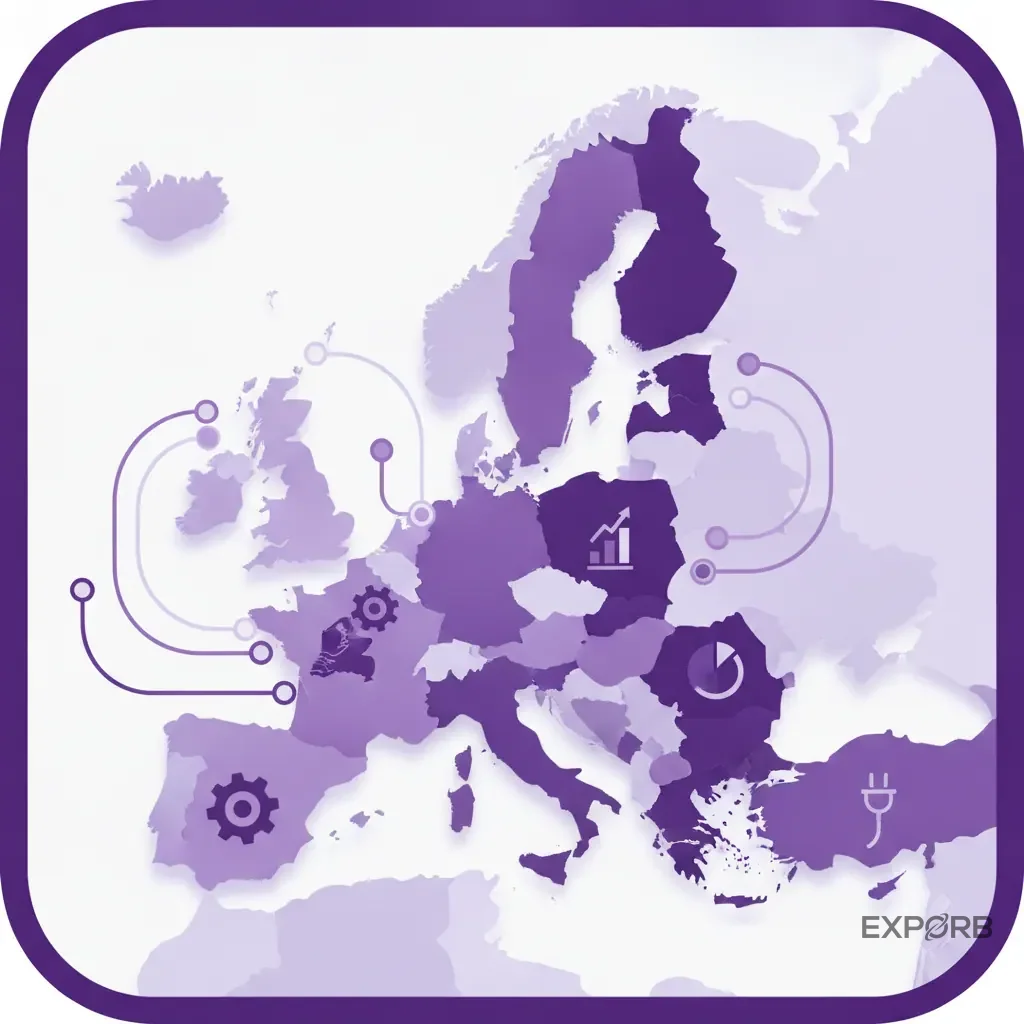
U.S. incentives: How green booths earn better placement and marketing support
In the U.S., sustainability is more often encouraged through incentives rather than enforced by strict regulations. Many major trade shows now have "green exhibitor" programs. By documenting your sustainable practices—like using recycled materials, minimizing waste, and using LED lights—you can earn perks. These might include better booth placement, recognition in the show directory, or mentions in the event's marketing materials.
Documenting your impact: Creating a simple sustainability report for stakeholders
Whether required or not, it's smart practice to create a simple, one-page sustainability report after each show. Document the key metrics:
- Percentage of reusable materials used.
- Estimated waste diverted from landfill (in kg or lbs).
- Energy saved by using LED lighting.
- Number of printed brochures eliminated by using digital collateral.
This report is a valuable tool for your internal ESG reporting and powerful content to share with customers and stakeholders.
Related: Mastering Trade Show Follow-Up: The Definitive Guide
Sustainable trade show booths for eco-conscious brands
Building a sustainable exhibit program doesn't have to be complex or expensive. For small and mid-sized businesses, you should focus on high-impact, practical choices that align with your brand and your budget.
Inspiring examples from small and mid-sized businesses
You don't need a massive budget to be a leader in sustainability. We've seen startups make a huge impact with simple, smart designs. One company used a lightweight modular frame with beautiful, interchangeable fabric graphics. Another built their entire booth out of FSC-certified plywood that could be flat-packed for shipping. The common thread? They focused on reusability and told a clear story about their choices.
Beyond the booth: A checklist for sustainable shipping and logistics
Your booth is just one part of the equation. How you get it to the show matters, too.
- Choose lightweight materials: This is the #1 way to reduce shipping emissions.
- Consolidate shipments: Avoid sending multiple small packages. Pack everything into a single, well-organized crate.
- Opt for ground shipping: Whenever possible, choose ground over air freight, which has a much higher carbon footprint.
- Work with local suppliers: If you need to rent furniture or AV, source it from a local vendor near the convention center to minimize transport.
Partnering with the right builder: Key questions to ask your exhibit house
Your exhibit builder is your most important partner in this process. Before you sign a contract, ask them these questions:
- Can you show me examples of modular and reusable booth designs you've built?
- What percentage of the materials you use are recycled or recyclable?
- Do you have an inventory of rental components we can use?
- How do you manage waste during fabrication and at the show site?
- Can you provide documentation for our company's ESG reporting?
Their answers will tell you everything you need to know about their commitment to sustainability.
Exploring related sustainable event practices
A sustainable booth is a great start, but true impact comes from applying the same principles to your entire event strategy. Think beyond the 10x20 space and look at the whole picture.
Eco-friendly Event Marketing and digital promotion
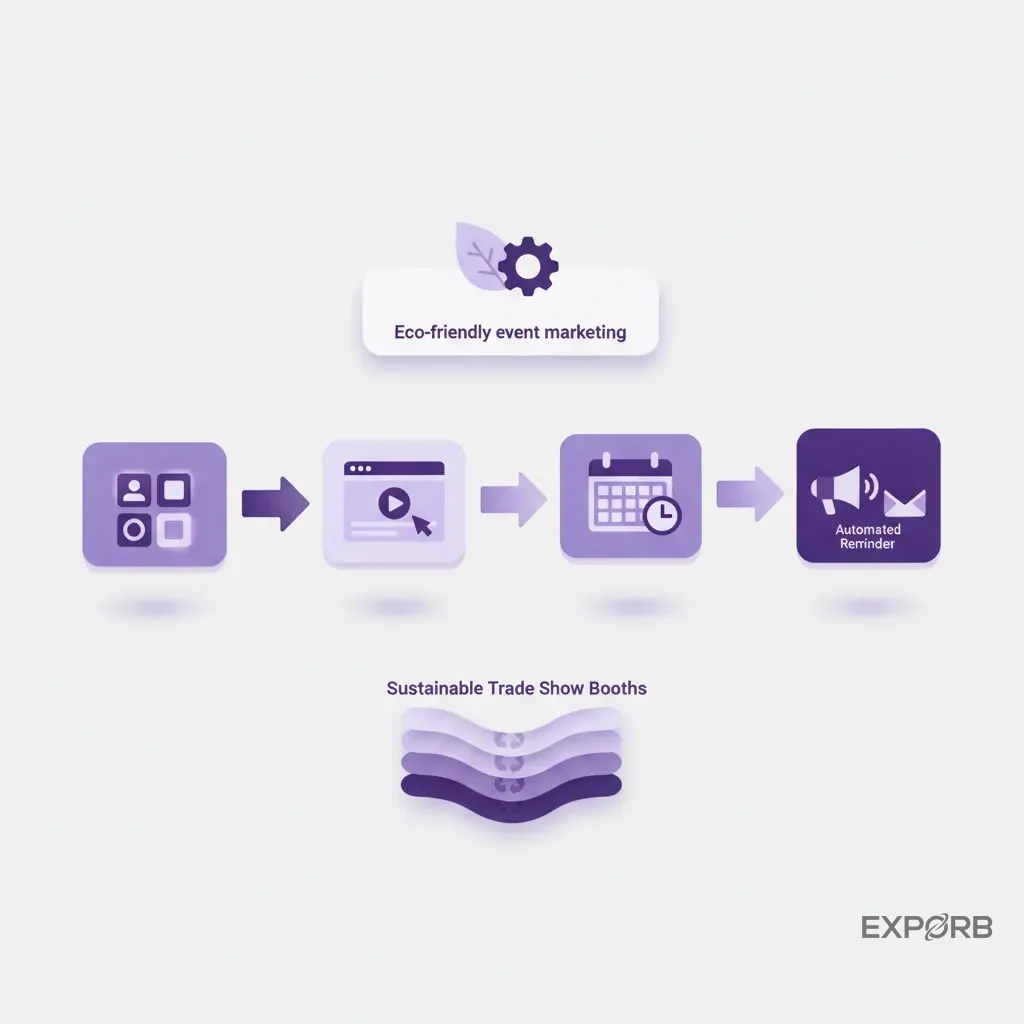
How are you getting the word out about your presence at the show? Ditch the paper mailers and printed invitations. Use targeted email campaigns, social media, and digital advertising to promote your booth. Create a landing page where attendees can book meetings with your team in advance. This digital-first approach is greener and more measurable and effective.
Choosing sustainable venues, hotels, and local vendors
When selecting a trade show, consider the venue's own green credentials. Do they have recycling programs? Do they use renewable energy? The same goes for your team's travel. Choose hotels that have certified sustainability programs. When planning team dinners or events, prioritize restaurants that source their ingredients locally. Every choice contributes to your overall impact.
A simple framework for measuring your event's total carbon footprint
You don't need to be a climate scientist to get a baseline measurement. Many free online calculators can help you estimate your event's carbon footprint. The key inputs usually include:
- Travel: Flights and ground transportation for your team.
- Accommodations: Hotel stays.
- Booth: Shipping weight and distance.
- Energy: On-site electricity usage.
Tracking this data show over show allows you to set reduction goals and measure your progress over time.
Your action plan for a sustainable and high-performing 2026 trade show program
Feeling overwhelmed? Don't be. You can build a greener, more effective event program by taking it one step at a time. Here's a simple, three-step plan to get started.
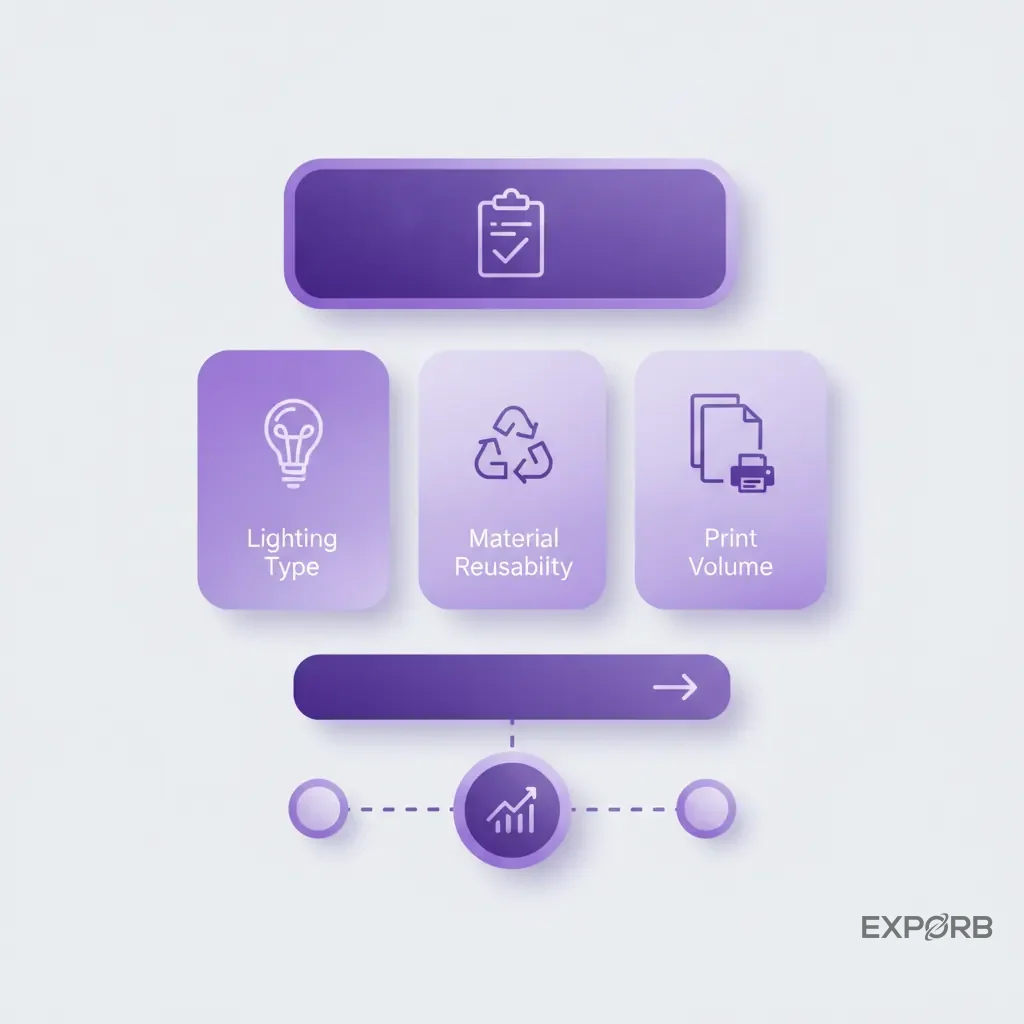
Step 1: Audit your current booth and set three measurable goals
Before your next event, take a hard look at your current setup. Where is the waste? Is it the lighting? The single-use graphics? The mountain of brochures? Identify the biggest problems and set three simple, measurable goals for your next show. For example:
- Reduce booth shipping weight by 25%.
- Cut on-site printed collateral by 90%.
- Switch 100% of booth lighting to LED.
Step 2: Implement high-impact changes for your next show
You don't have to do everything at once. Focus on the changes that deliver the biggest bang for your buck. Switching to LED lights and creating a digital collateral hub are two relatively low-cost changes that have a massive impact on your energy use and physical waste. These are easy wins you can implement for your very next show.
Step 3: use technology to track sustainability metrics and lead quality
This is the final, important step. A sustainable program is a data-driven program. Use tools to track your progress against your goals. And most importantly, use technology to ensure your sustainable practices are also driving better business outcomes. When you replace paper lead forms with a digital trade show solution, you're not just saving paper—you're capturing cleaner data, enabling faster follow-up, and closing more deals. That's how you build a program that benefits the planet and your pipeline.