
For years, "hybrid" meant strapping a webcam to a tripod and live-streaming your keynote. That's a broadcast, not a strategy. A true hybrid trade show strategy treats the physical booth and the digital experience as two sides of the same coin, creating a single, cohesive engine for generating pipeline. If you're still just pointing a camera at the stage, you're already behind. Most exhibitors obsess over Booth Design and completely ignore lead capture. They spend $50K looking good and $0 on remembering what was said.
The game has changed. Your audience isn't just in the convention hall anymore. They're watching from their home offices, tuning in between meetings, and expecting the same level of engagement as the people walking the floor. It's a whole new world.
Moving beyond the livestream: What a true hybrid strategy means now
A modern hybrid strategy doesn't offer a lesser, virtual version of your physical event. Instead, it creates unique, valuable experiences for both audiences that complement each other. Industry analysis confirms this shift. Projections show [over 70% of large B2B trade shows will offer a hybrid option](https://www.beyondmarketingandevents.com/experiential-marketing-news/the-shift-toward-hybrid-events-what-to-expect-in-2026/) this year. It's the new standard.
Remote attendees get exclusive Q&As and digital roundtables. In-person guests experience hands-on demos. Both interactions feed into the same data stream, making the flow of information smooth.
Why a data-first approach is the only way to win pipeline
You can have the most beautiful booth and the slickest virtual platform. But if you can't capture, structure, and act on the conversations happening in both places, you've wasted your money. Your team meets 100 people at the booth. Monday morning, you ask what they learned. Blank stares. The goal is to end the show with a clean, unified list of qualified leads—not two messy spreadsheets and a fishbowl full of business cards that nobody will follow up on. Every interaction, virtual or physical, must inform your follow-up. It's that simple.
How this guide will help you build a repeatable, high-ROI playbook
We've seen hundreds of companies struggle with this. They spend $50,000 on booth design and $0 on a data capture plan. That's backwards. This guide gives you a repeatable playbook for building a hybrid strategy that actually generates revenue. We'll cover planning, technology, engagement, and—most importantly—how to measure what's working. We're here to help.
What defines a successful hybrid trade show strategy today?
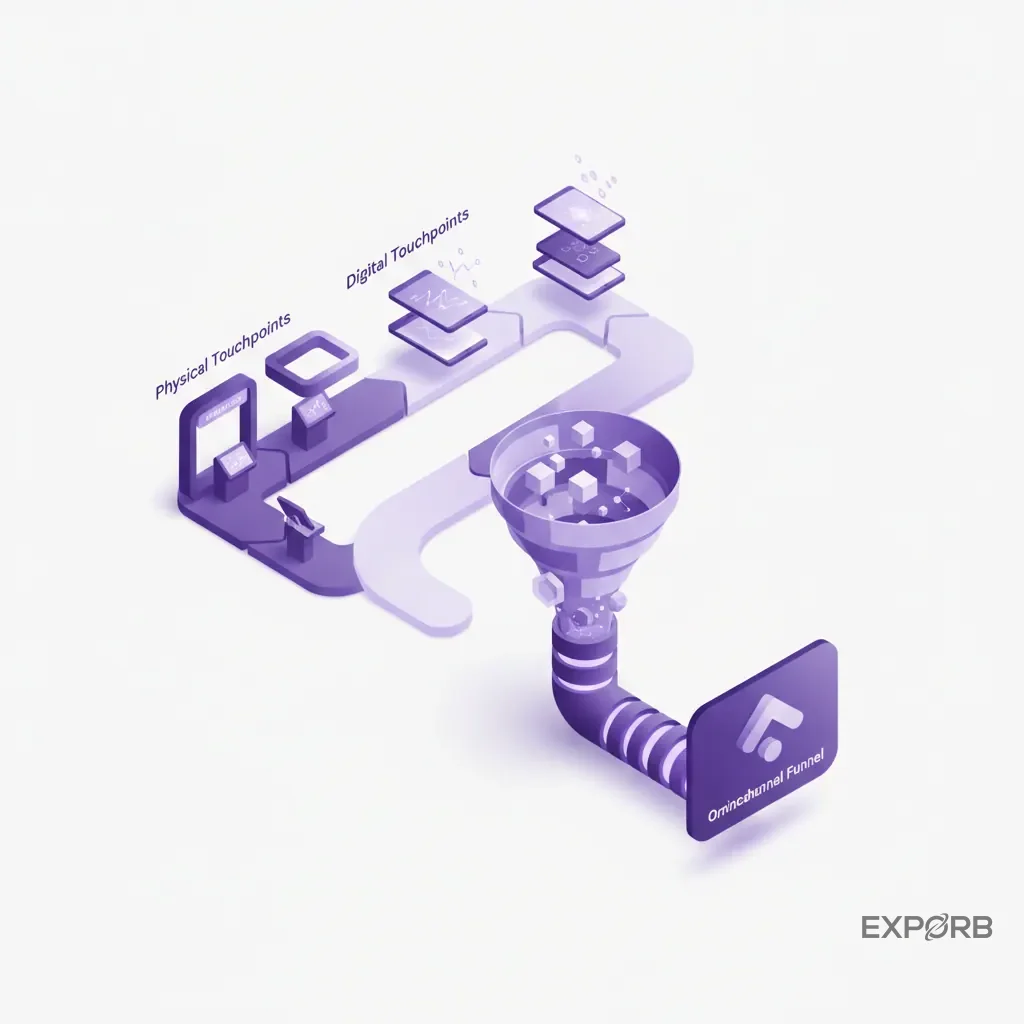
A successful hybrid strategy means one thing: integration. It's the end of siloed efforts where the event team handles the booth and the digital team manages the livestream. Success today means building a single, smooth funnel that guides prospects from a virtual keynote to an in-person demo without friction.
Integrating physical and digital touchpoints into one smooth funnel
Think of it like this: a remote attendee watches a product demo online and asks a question in the chat. A product expert at the physical booth instantly receives and answers that question live on camera. Later, an AI matchmaking tool suggests that remote attendee meet with a sales rep who's also at the physical event. The meeting happens via video call, and the context is shared.
That's an integrated experience. Every touchpoint feels connected because it is. According to recent hybrid event guides, a single registration portal for both attendance types is the important first step to make this data integration possible.
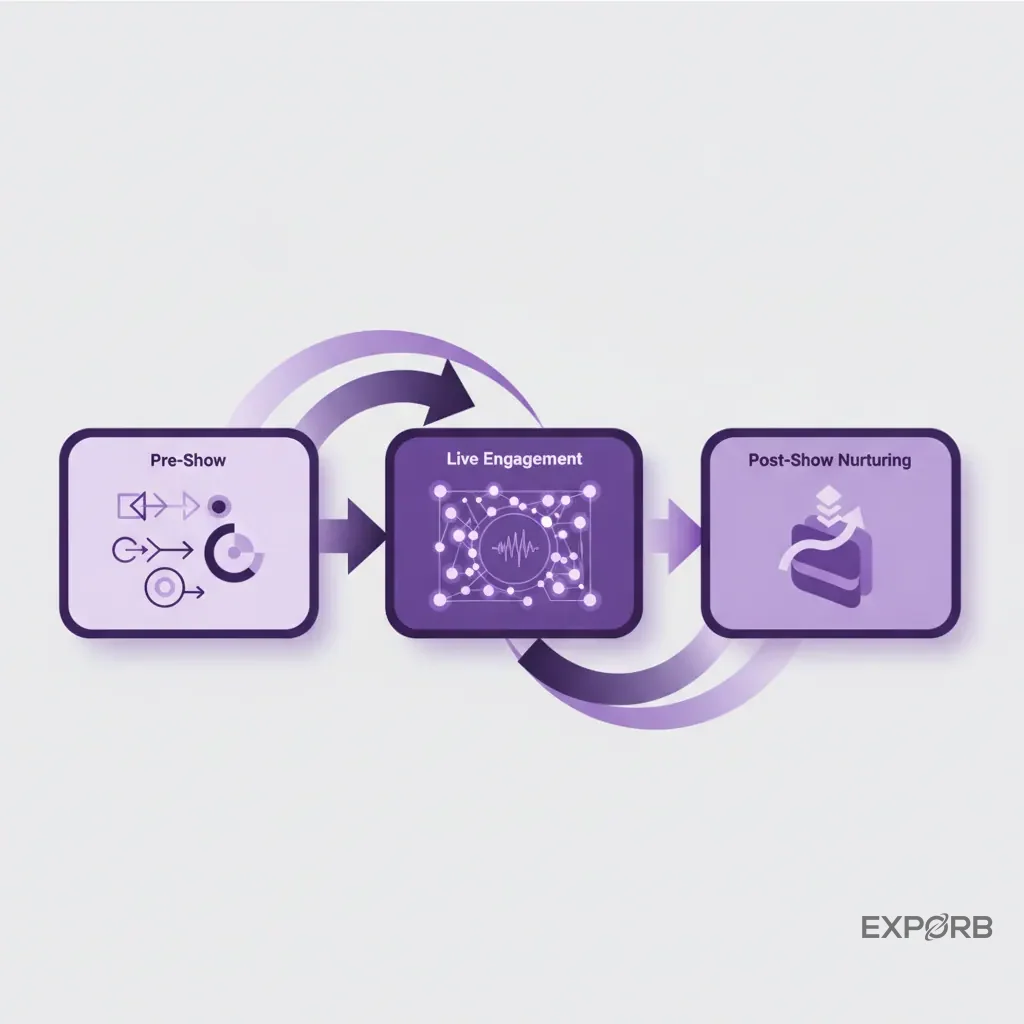
The three core phases: Pre-show activation, live engagement, and post-show nurturing
Your strategy can't just be for the three days of the show. It needs to cover the entire lifecycle of the event.
- Pre-show Activation: This is where you build hype and start qualifying your audience. Use social media, email campaigns, and targeted ads to drive registration for both the physical and virtual components. Offer early access to content or speaker lineups.
- Live Engagement: During the event, your job is to capture attention and data. Use interactive polls, Q&As, and gamification to keep both audiences engaged. Every interaction should be captured in a central system.
- Post-show Nurturing: The show isn't over when the lights go out. This is where the real work begins. Your follow-up has to be fast, personal, and based on the specific conversations you had. The goal is to convert interest into pipeline, not just send a generic "thanks for stopping by" email.
Unified platforms vs. fragmented tools: Architecting your tech stack
You can't run a unified strategy with a fragmented tech stack. If your virtual event platform, your lead capture app, and your CRM don't talk to each other, you're creating a data nightmare for your team. You'll spend weeks after the show just trying to stitch together messy spreadsheets. What a headache.
The right approach is to choose a central platform for conversation and lead data, then integrate other tools into it. You need one source of truth for every interaction: a badge scan, a business card, a virtual chat, or a voice note.
Why is a hybrid strategy essential for B2B growth?
Sticking to a purely physical or purely virtual event model isn't a viable option for growth anymore. A hybrid strategy drives efficiency, reach, and data quality, giving you a significant competitive edge. It allows you to do more with less.
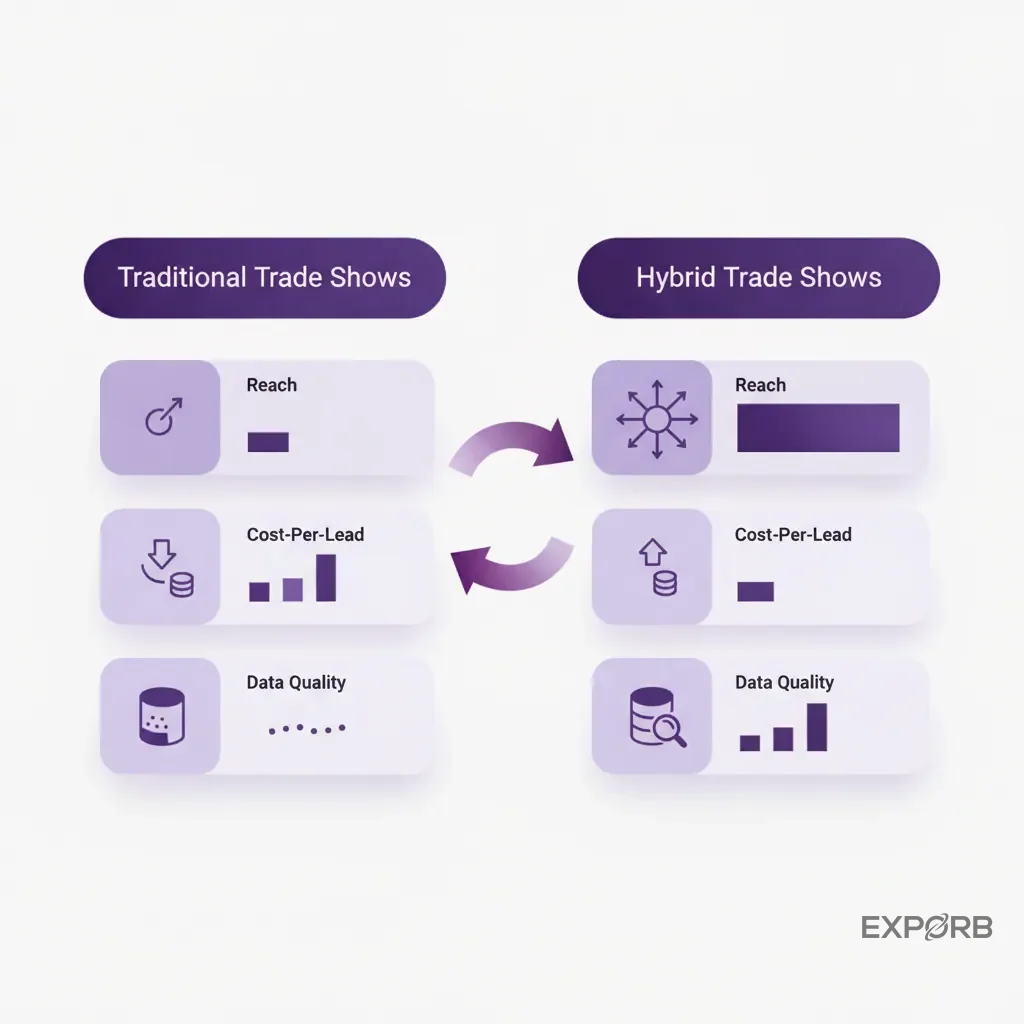
Maximizing reach and capturing a qualified global audience
The most obvious benefit is reach. With a hybrid model, you're no longer limited by geography, travel budgets, or scheduling conflicts. You can attract a global audience of qualified prospects who couldn't have attended in person. This dramatically expands the top of your funnel and brings in leads from previously untapped markets.
It's about access to the right people, not just numbers. The senior decision-maker who can't take three days off to travel might just tune in for the 30-minute keynote that's directly relevant to their pain points. That's targeted engagement.
Driving down cost-per-lead while improving sustainability
Hybrid events are more efficient. While there are costs to running a virtual component, you can engage a much larger audience without a proportional increase in spending on booth space, travel, and logistics. This directly lowers your average cost-per-lead. Smart.
There's also a growing focus on sustainability in the events industry. A hybrid model reduces the carbon footprint associated with travel for both your team and your attendees, which is becoming an important consideration for many companies. It's a win-win.
Unlocking higher-quality intent data from every interaction
A well-executed hybrid event generates a goldmine of intent data. Every session attended, every question asked, every resource downloaded, and every poll answered sends a signal. It tells you exactly what a prospect cares about.
When you combine this digital body language with the rich, qualitative context from in-person conversations, you get a 360-degree view of a lead's needs. You can't achieve this in a single-channel event. As industry analysis for 2026 highlights, using this data is now important for high-performing exhibitors.
Comparison of Key Metrics: Traditional vs. Hybrid Trade Shows
How do you build a winning hybrid plan from scratch?
A great hybrid event doesn't happen by accident. It requires a disciplined, long-term approach that starts months before the show floor opens. Throwing together a livestream at the last minute won't work. You need a structured plan.
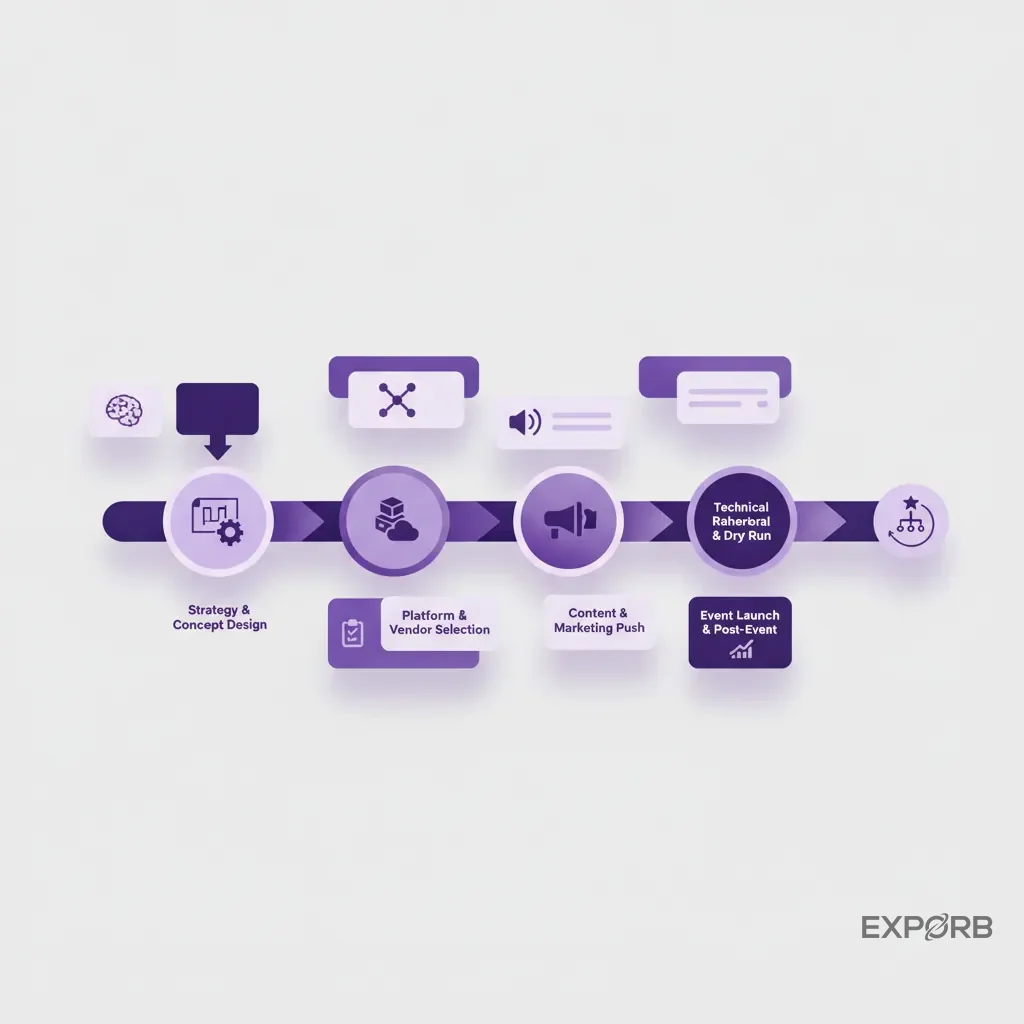
Your 120-day planning timeline: Key milestones and deadlines
The best teams start planning early. According to research on hybrid show planning, a 120-day timeline is the recommended standard for getting everything right. Here's what that looks like:
- 120 Days Out: Define your goals. What does success look like? Is it lead volume, pipeline influence, or brand awareness? Set clear, measurable KPIs for both the virtual and in-person components. Select your core technology platforms.
- 90 Days Out: Finalize your messaging and value propositions. Start your pre-show marketing campaigns to drive registration. Lock in speakers and session content.
- 60 Days Out: Design your physical booth and your virtual event environment. Ensure the branding is consistent across both. Begin outreach for scheduling pre-booked meetings.
- 30 Days Out: Train your team. Everyone—from the booth staff to the online moderators—needs to understand the technology, the messaging, and the lead capture process. Run full technical rehearsals.
- Event Week: Execute. Focus on engagement and flawless data capture.
- 1+ Week Post-Event: The follow-up blitz begins. Analyze your data, measure against your KPIs, and conduct a thorough post-mortem to identify improvements for next time.
Crafting dual value propositions for in-person vs. remote attendees
Why should someone fly across the country to attend your event in person? Why should someone block off time in their calendar to attend virtually? You need clear, compelling answers to both questions.
Guidance for 2026 strongly emphasizes developing dual value propositions to communicate the unique benefits of each experience.
- In-Person Value: Focus on what only happens face-to-face. Hands-on product demos, exclusive networking events, deep-dive conversations at the booth, and the serendipity of bumping into an old colleague.
- Remote Value: Focus on access and efficiency. Attendees watch curated content on-demand, participate in global discussions without travel, and easily connect with experts through AI-powered matchmaking.
Don't treat the virtual experience as a consolation prize. Make it a first-class ticket with its own set of exclusive perks.
Setting unified goals and KPIs to measure total event impact
Your goals can't be siloed. Don't have one set of KPIs for the physical event and another for the virtual one. You need unified metrics that measure the total impact of the program.
Examples of unified KPIs include:
- Total Qualified Leads: The combined number of qualified leads from both audiences.
- Total Pipeline Influenced: The total value of sales opportunities that had a touchpoint at the event, regardless of channel.
- Blended Cost Per Opportunity: The total event cost divided by the total number of new sales opportunities created.
- Engagement Score: A weighted score that combines physical actions (like a booth demo) and virtual actions (like a session rating).
Measuring the entire program holistically gives you a true picture of your ROI. It's how you prove value.
Related: The Ultimate Trade Show Lead Capture Guide
What technology powers the modern hybrid exhibition booth?
Your booth isn't just a physical space anymore. It's a media hub and a data capture center that needs to serve two audiences simultaneously. The technology you choose is the backbone of your entire hybrid strategy—it can either enable a smooth experience or create a frustrating bottleneck.
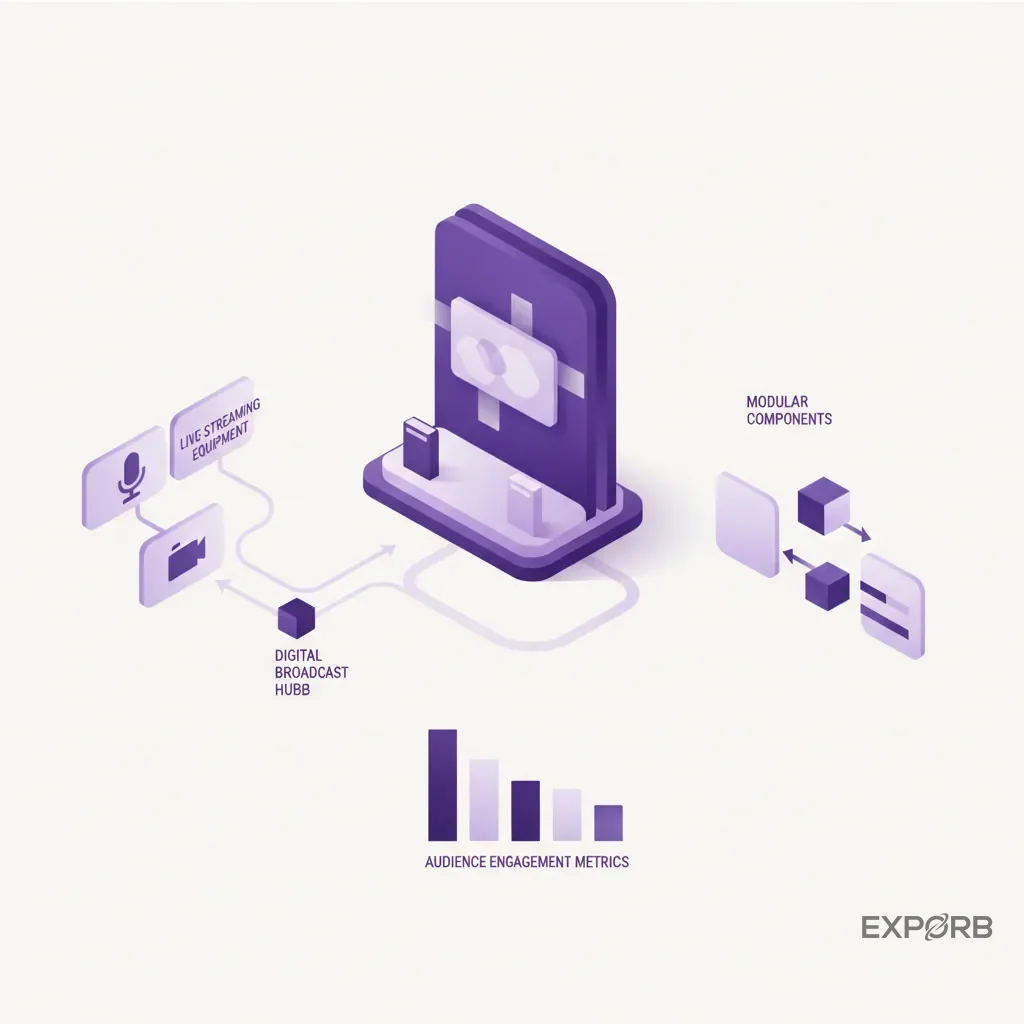
Modular and sustainable designs for a scalable presence
The days of building a massive, single-use booth fade into the past. Modern booth designs are modular and sustainable. This approach allows you to scale your presence up or down depending on the show, reusing components to reduce waste and cost. These designs often incorporate digital signage and interactive screens, making updating messaging easy without reprinting massive graphics.
Interactive displays and live streaming to engage both audiences
Your booth needs to be a stage. Interactive displays, touch screens, and live product demos can captivate the in-person audience. At the same time, high-quality cameras and microphones can stream that same demo to your virtual audience, complete with a live Q&A moderated by a remote team member. This creates a shared experience where both audiences feel like they're part of the same conversation. It's immersive.
The role of AI-powered tools for intelligent lead capture and conversation analysis
How do you make sense of all these interactions? This is where AI becomes essential. Your team is having dozens of conversations on the show floor while hundreds more interactions are happening online. Relying on handwritten notes or memory is a recipe for losing leads. Your team meets 100 people at the booth. Monday morning, you ask what they learned. Blank stares.
Modern AI-powered lead capture tools are built for this reality. We built Exporb because we saw teams scrambling with pen and paper, losing important context. With tools like ours, your team can scan a business card, record a quick voice note summarizing the conversation, and snap a photo of a whiteboard diagram—all in one app. The AI then transcribes the audio, analyzes the sentiment, and scores the lead based on urgency and fit. This means your follow-up can be prioritized and personalized based on what was actually discussed, not just a generic badge scan. And if the Wi-Fi on the show floor dies? The best tools work offline, so you never miss a beat.
How can you effectively engage both onsite and online attendees?
Engagement is the currency of hybrid events. A passive audience is an audience you'll lose. The challenge is creating experiences that feel inclusive and valuable, whether an attendee stands in your booth or sits on their couch. You can't just lecture at them—you have to involve them.
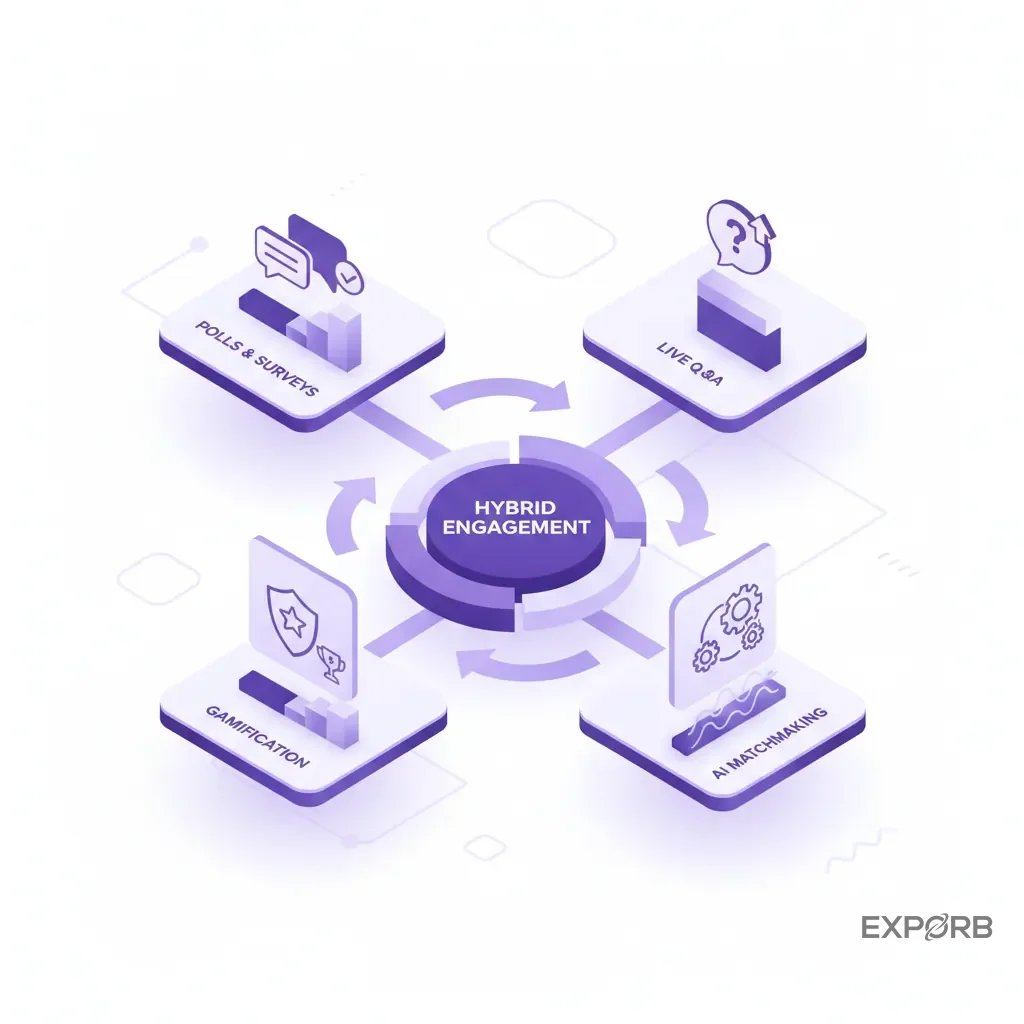
Creating shared experiences with interactive polls, Q&A, and gamification
Shared experiences are the glue that holds a hybrid event together. When you launch a poll, display the results on the screen in your booth and on the virtual platform simultaneously. When an online attendee asks a great question, have the speaker at the physical event answer it for everyone.
Gamification can also bridge the gap. Create a points system where attendees earn rewards for physical actions like visiting a partner booth, and for virtual ones, such as attending a session. A live leaderboard displayed in both environments can create a sense of friendly competition and community. Everyone loves a little competition.
Curating exclusive content and access for each audience segment
While shared experiences are important, you should also provide exclusive value for each audience. Don't make your remote attendees feel like they're just watching a blurry video of the real event.
- For the virtual audience: Offer exclusive "ask me anything" sessions with your top executives, provide downloadable research reports not available onsite, or create digital networking lounges moderated by your subject matter experts.
- Remote Value: Host an exclusive happy hour, offer 1-on-1 consultations with your technical gurus, or give them a sneak peek at a physical product prototype.
This dual-track approach makes both groups feel valued and ensures they get a return on their investment of time or travel.
Using AI matchmaking to help high-value networking
Networking is one of the top reasons people attend trade shows, but it's often left to chance. According to hybrid ROI frameworks, AI-powered matchmaking drives meeting volume and deal velocity.
These tools can be launched weeks before the event. Virtual and in-person attendees fill out a profile detailing their interests and goals. The AI then suggests high-value connections and helps schedule meetings. These meetings can take place at the physical booth or via a video call on the event platform. It's far more effective than hoping the right person happens to wander by your booth.
What are the biggest mistakes to avoid in your hybrid strategy?
Executing a great hybrid strategy is complex, and there are plenty of pitfalls along the way. Many companies make the same handful of critical mistakes that sabotage their ROI before the event even starts. Avoiding these common errors is just as important as implementing the best practices.
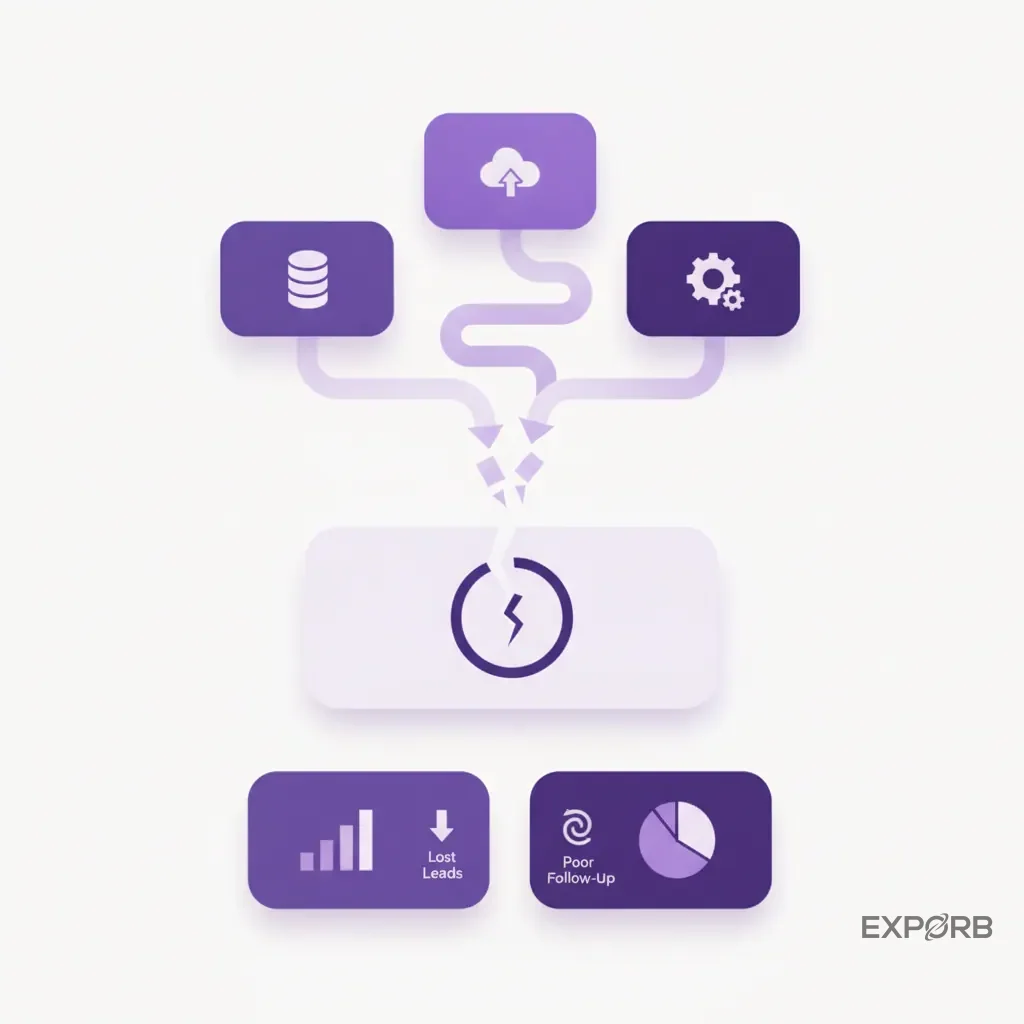
Misconception: Focusing on booth design over a data capture strategy
This is the single biggest—and most expensive—mistake we see. Companies will spend a fortune on fancy lighting, elaborate structures, and comfortable chairs. But they'll have no systematic process for capturing what happens inside that beautiful booth. Your team is left scrambling with pen and paper, fishbowls for business cards, and a clunky badge scanner that gives you a name and an email but zero context. It's a waste.
Your strategy should be data-first, booth-second. A great conversation in a simple booth is infinitely more valuable than a forgotten conversation in an award-winning one. What's the point of attracting traffic if you can't remember what you talked about?
The pain of siloed data: Why a unified CRM like Exporb is important
The second mistake is treating your data streams as separate entities. You'll have leads from the virtual platform in one spreadsheet, badge scans in another, and a pile of business cards on someone's desk. It's a mess. It takes your team a week or more to manually de-dupe, clean, and upload this data into your CRM. By then, the leads have gone cold.
This is where a unified system is non-negotiable. At Exporb, we saw this pattern of fragmented data. That's why we built our platform so every lead—from a scanned business card, a voice note, or a manual entry—goes into the same place in real-time. The whole team can see who talked to whom, what was discussed, and what the next steps are. Founders and sales leaders get instant visibility instead of a black box. No more messy data. No more lost leads.
Forgetting the post-show: How to turn conversations into pipeline
The event doesn't end when the exhibit hall closes. In fact, that's when the most important phase begins. The third critical mistake is having a slow or generic follow-up process. Sending a mass email blast a week after the show is a waste of time. Your prospects have already moved on. They're not waiting.
Speed and personalization are everything. Your follow-up email should reference the specific pain points and next steps you discussed in your conversation. But who has time to write hundreds of custom emails after a long show? Modern tools can now automate this. For example, Exporb can draft personalized follow-up emails right at the booth using the context from your recorded conversations. Your team just reviews the AI-generated draft and hits send. The follow-up is done before you even leave the convention center.
Related: Are Business Cards Dead? Not If You Scan Them Right
How do you measure the true ROI of a hybrid trade show?
If you can't measure it, you can't improve it. Too many exhibitors judge a show's success by vanity metrics like booth traffic or the total number of leads collected. These numbers don't tell you anything about the actual impact on your business. To justify your event budget, you need to connect your hybrid activities directly to pipeline and revenue.
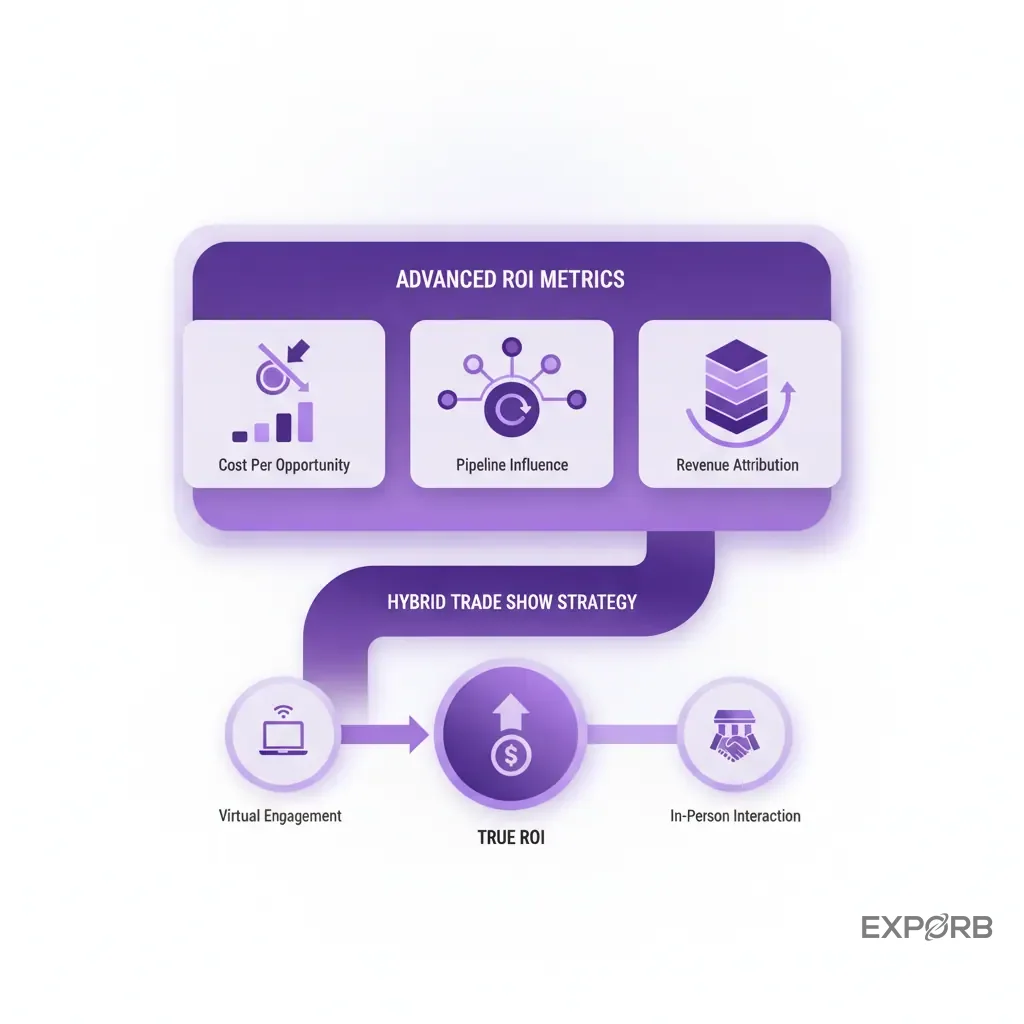
Moving beyond lead count to track cost per opportunity and pipeline influence
Stop counting leads. Start counting qualified opportunities. A "lead" from a badge scan isn't the same as a lead from a 30-minute demo where a prospect outlined their budget and timeline.
The metrics that matter are:
- Cost Per Qualified Opportunity: How much did it cost you to generate a real, sales-accepted opportunity from the event?
- Pipeline Influence: How much new and existing pipeline did the event touch? This includes accelerating existing deals as well as creating new ones.
- Sales Cycle Velocity: Did leads from the event move through your sales process faster than leads from other channels?
- Revenue Attribution: What percentage of closed-won deals can be directly linked back to an event touchpoint?
Tracking these requires tight alignment between your marketing and sales teams and a CRM that can attribute touchpoints correctly.
Attributing revenue to specific touchpoints across physical and virtual channels
Attribution is the holy grail of Event Marketing. Which touchpoint was most effective? The virtual keynote, the in-person demo, or the follow-up email? With a hybrid event, this gets even more complex.
The key is to capture every interaction in a structured way. Tag every lead with its source (e.g., "Virtual Booth Chat," "In-Person Demo"). When a deal closes six months later, you can look back and see the entire journey that prospect took, across both physical and digital channels. This allows you to see which elements of your hybrid strategy are actually driving revenue. So you can double down on them next time.
Building a repeatable measurement framework for future events
Don't reinvent the wheel for every show. Create a standardized event measurement framework. This should include a pre-event goals template, a during-event data capture protocol, and a post-event reporting dashboard that you use consistently for every event.
This consistency allows you to benchmark performance over time. You can compare the ROI of different shows, test new engagement tactics, and make data-driven decisions about where to invest your marketing budget for the highest return. That's how you win.
Can small teams execute a hybrid strategy without a huge budget?
Yes, absolutely. You don't need a multi-million dollar budget and a massive team to run a successful hybrid event. A lean, focused approach can often outperform a bloated, overly complex one. The key is to be smart about your resources and ruthless in your prioritization.
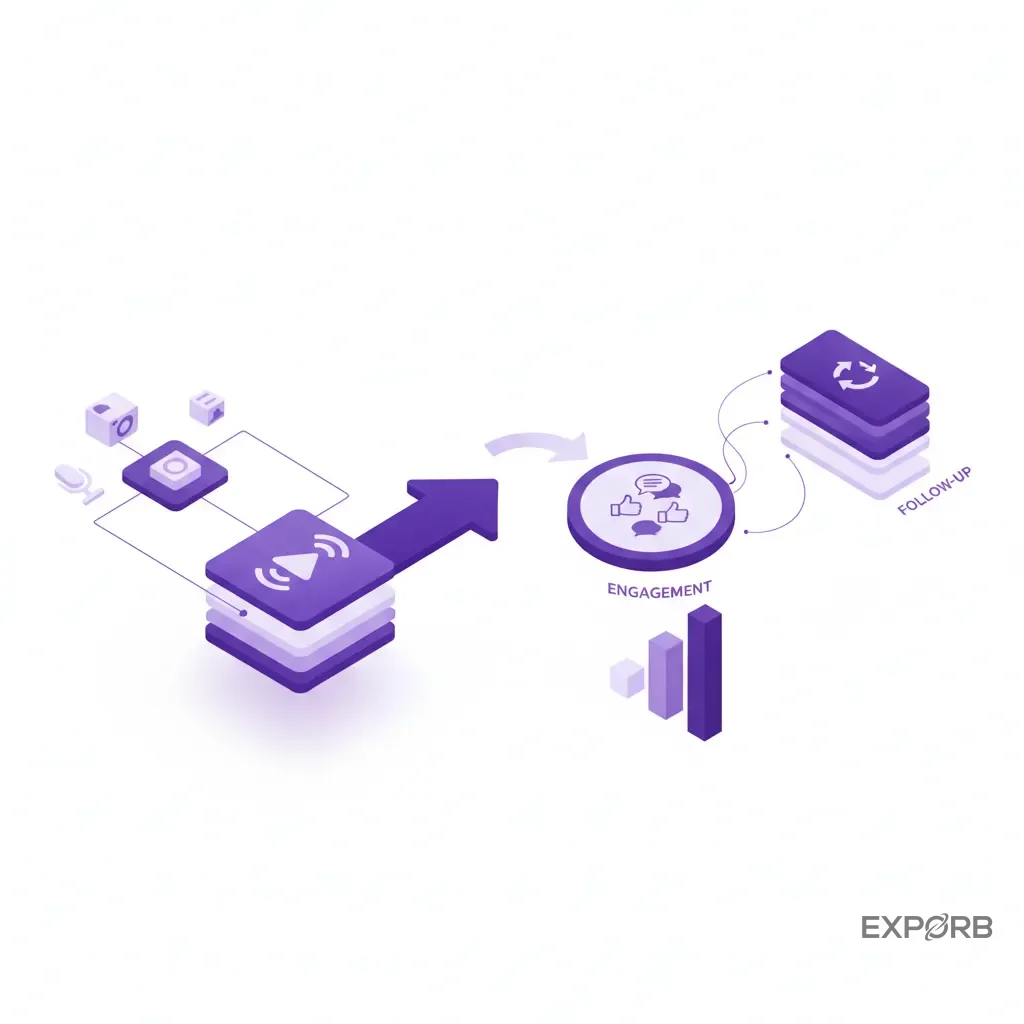
using accessible tools for streaming, engagement, and follow-up
The technology to run a hybrid event has become incredibly accessible. You don't need a professional broadcast studio. A good quality webcam, a decent microphone, and a simple streaming platform can get you started. Dozens of affordable—or even free—tools exist for interactive polls, Q&As, and audience engagement.
For lead capture and follow-up, you don't need an enterprise CRM that costs tens of thousands of dollars. At Exporb, we believe small teams deserve powerful tools. Our modern app lets you start for free and gives your team the same powerful AI-driven tools for capture and follow-up that large companies use. The technology isn't a barrier anymore.
Focusing on one key objective to maximize impact with limited resources
Don't try to do everything. A small team that tries to run 10 different engagement tactics will do all of them poorly. Instead, pick one primary objective for your hybrid event and focus all your energy on it.
Is your goal to book as many qualified demos as possible? Then focus your efforts on pre-scheduling meetings and creating a killer demo experience, both online and in-person. Is your goal to build brand awareness? Then focus on creating one amazing, shareable piece of content, like a keynote from an industry expert. A narrow focus leads to a deeper impact. It's about precision.
Example: How a startup doubled its qualified leads with a lean hybrid approach
Consider a small SaaS startup. They couldn't afford a huge booth or a fancy virtual event platform. Instead, they bought a small 10x10 booth and focused on one thing: hosting a 30-minute "ask the expert" session each day.
They streamed the session live using a simple setup for their virtual audience. The in-person audience gathered around a large monitor in the booth. Both audiences could submit questions. The team used a simple app to capture contact info and conversation notes from everyone who participated. By focusing on providing real value instead of flashy gimmicks, they doubled the number of qualified leads compared to their previous, purely physical events—all on a shoestring budget. Smart choices pay off.
Your action plan for a data-driven hybrid trade show
Thinking about a hybrid strategy is one thing. Building one that works is another. It requires fundamentally shifting how you treat events—from branding exercises to scalable data and content engines. Here's how to start.
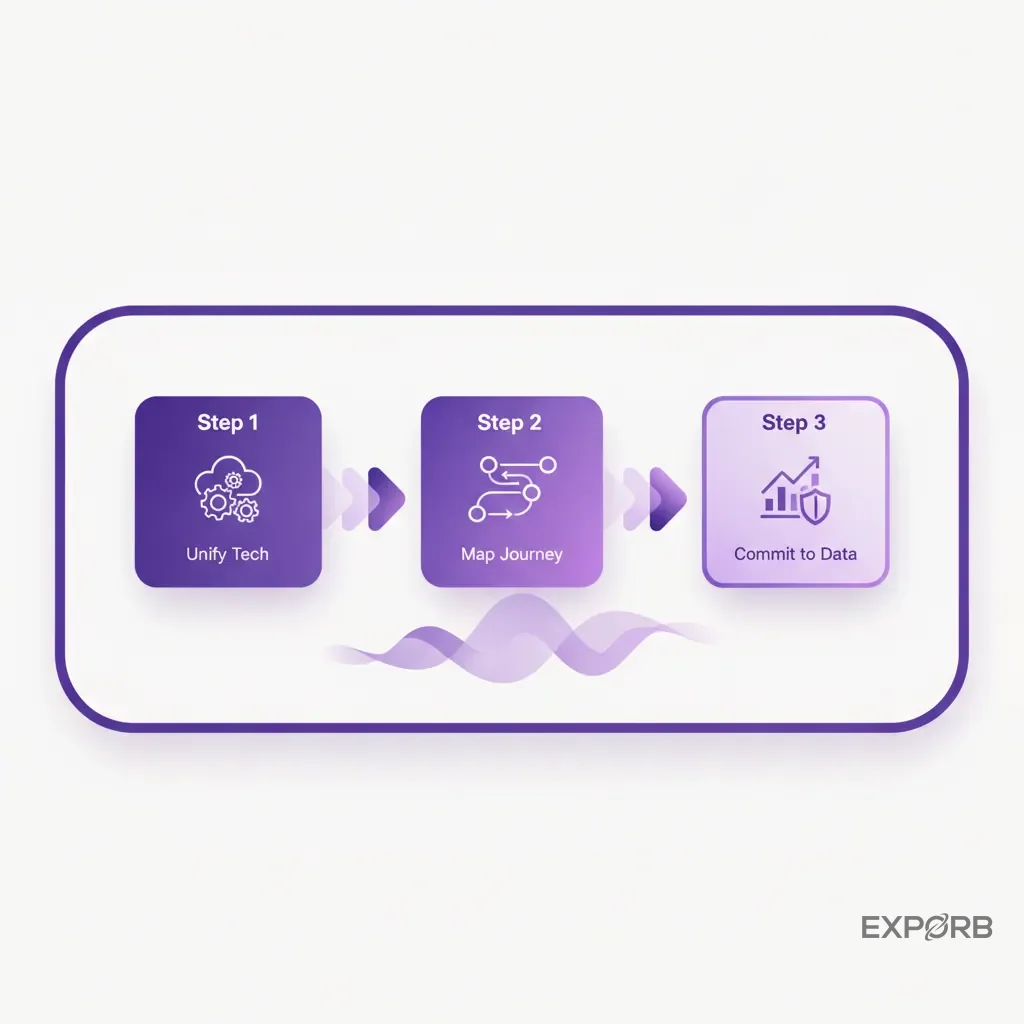
Step 1: Unify your technology around a central conversation intelligence CRM
Stop using fragmented tools. Choose a single source of truth for all your event leads and conversations. Your tech stack should be built around a central hub that can capture every interaction, whether physical or virtual, and structure that data for immediate action.
Step 2: Map the entire attendee journey from first touch to closed deal
Think beyond the three days of the show. Map out every touchpoint a prospect will have with your brand, from the pre-show registration email through the post-show follow-up sequence. Ensure the experience is smooth and the data flows correctly at every stage.
Step 3: Commit to treating every show as a scalable data and content engine
Every conversation is a data point. Every keynote is a piece of content. Adopt the mindset that your hybrid event isn't a one-off expense. It's an investment in creating a rich repository of customer insights and marketing assets that you can use for months to come. This is how you turn your event budget from a cost center into a revenue driver.