

AI Event Personalization uses artificial intelligence to create unique, relevant experiences for every single attendee. It's a move away from broad, persona-based marketing—where you might group all VPs of Marketing together—and toward a "segment-of-one" journey. Each person should feel like the event was designed just for them, from their first email to the final follow-up. A [First Name] tag in your emails isn't enough anymore.
It's about connecting the dots between what someone says they're interested in before the show and what they actually do and say on the event floor. That's the real challenge.
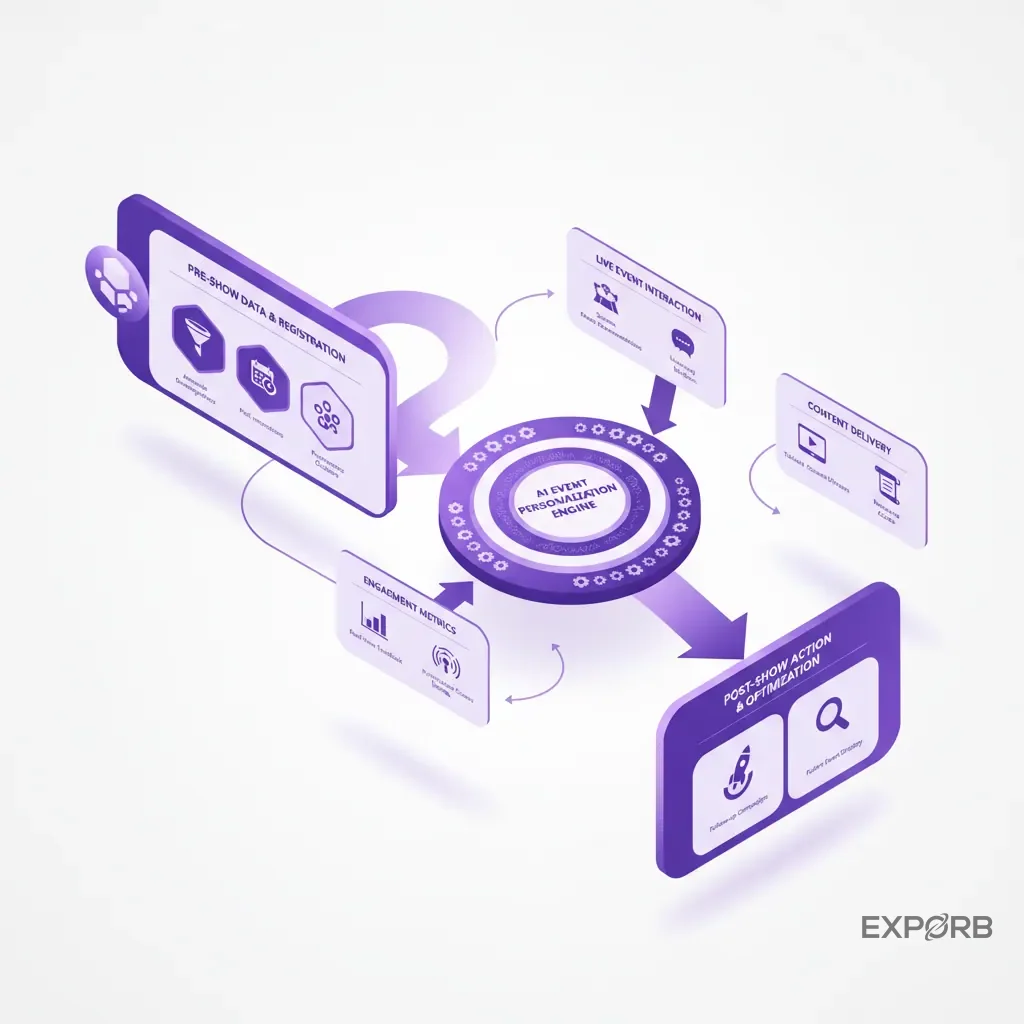
Moving beyond personas to segment-of-one journeys
For years, we've relied on personas: "Marketing Mary" or "Sales Sam." But these are just averages, not actual people. A VP of Marketing at a 50-person startup has completely different needs than a VP at a Fortune 500 company. Yet, we often put them in the same bucket. AI allows you to treat them as individuals. It analyzes their specific role, company size, industry, past event behavior, and even content consumption to build a unique profile. This results in an event journey that feels less like a cattle call and more like a curated experience.
How AI connects pre-show intent with post-show action
The real power here? AI weaves a data thread through the entire event lifecycle. Before the event, AI analyzes registration data to predict who you should meet. During the event, it tracks engagement. It sees which conversations are happening. After the event, it uses context from those conversations to fuel hyper-relevant follow-up. This closes the loop. It ensures the interest someone showed in a pre-show survey translates into a meaningful sales conversation based on what they actually discussed at your booth.
The core technologies: Predictive analytics, NLP, and computer vision
It's not magic; several key technologies work together.
- Predictive Analytics: This powers matchmaking. It looks at historical data to predict which attendees and exhibitors are most likely to be a good fit.
- Natural Language Processing (NLP): NLP understands human language. It can transcribe voice notes from a booth conversation, identify key topics, and even gauge sentiment.
- Computer Vision: In some advanced platforms, computer vision can analyze booth traffic, dwell time, and attendee engagement without intrusive tracking, giving organizers real data on what resonates on the floor.
Why has personalized Event Marketing become essential for B2B growth?
Generic event experiences are a massive waste of money. You spend $50,000, $100,000, or more on a booth, travel, and sponsorships. For what? Just to have hundreds of vague conversations and collect a fishbowl full of business cards that mostly go nowhere. The generic approach yields generic, low-quality leads. Personalized marketing fixes this by focusing on quality over quantity.
Most exhibitors obsess over booth design and completely ignore lead capture. They spend $50K looking good and $0 on remembering what was said.
According to a Demand Gen Report, 67% of B2B buyers say AI helps personalize their experience through tailored content and optimized networking. They don't just want personalization; they expect it.
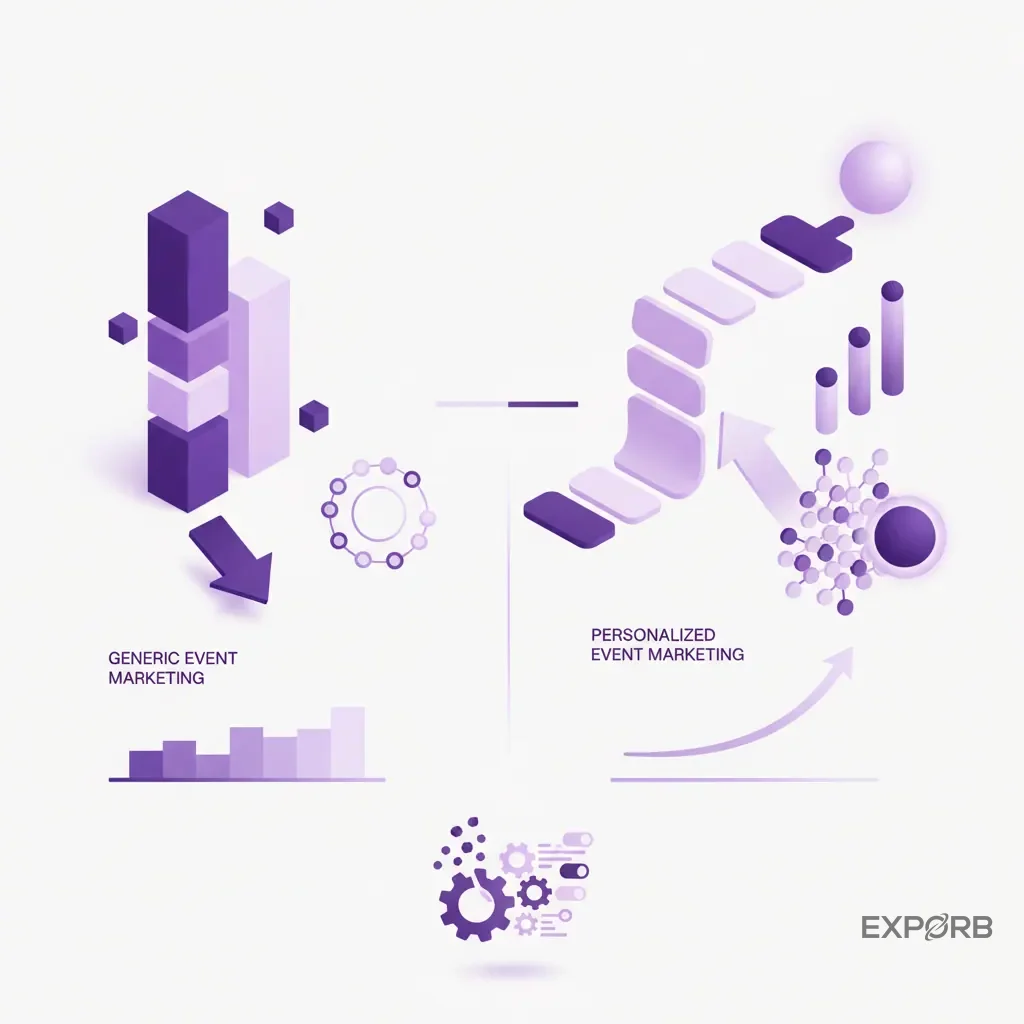
The high cost of generic event experiences
A generic event feels like a one-size-fits-all t-shirt. It doesn't really fit anyone well. Attendees wander aimlessly. Exhibitors have the same scripted conversation 100 times. The follow-up emails are all "Thanks for stopping by!" This approach burns through your budget and your team's energy, leaving you with a list of names but very little actual pipeline. The cost isn't just financial. You also miss out on all the high-value conversations you could've had.
Connecting personalization to exhibitor ROI and lead quality
When you personalize, you flip the script. You don't just hope the right people find you; you actively guide them to your booth. Your team doesn't give generic pitches. Instead, they have conversations armed with context about who they're talking to and what they care about. This leads to fewer, but much better, leads. These are people we've pre-qualified, who have a stated interest in your solution, and who've had a relevant conversation with your team. That's how you generate real ROI—not from a pile of dead business cards.
Meeting the new B2B buyer expectation for relevance
Your B2B buyers use Netflix, Amazon, and Spotify. Algorithms have accustomed them to knowing what they want before they do. They bring that same expectation to the trade show floor. They don't want to sift through 500 exhibitors to find the two that solve their problem. They expect event technology to help them find what's relevant. If your exhibitor strategy isn't built around providing that relevance, you're already behind.
How does AI create tailored event journeys before attendees even arrive?
Effective personalization starts long before the exhibit hall doors open. It begins the moment an attendee registers. AI-powered event platforms immediately get to work, analyzing that initial data to build a custom experience. This experience will guide the attendee throughout the event. This isn't about spamming them with emails—it's about sending the right information at the right time to make their visit more productive.
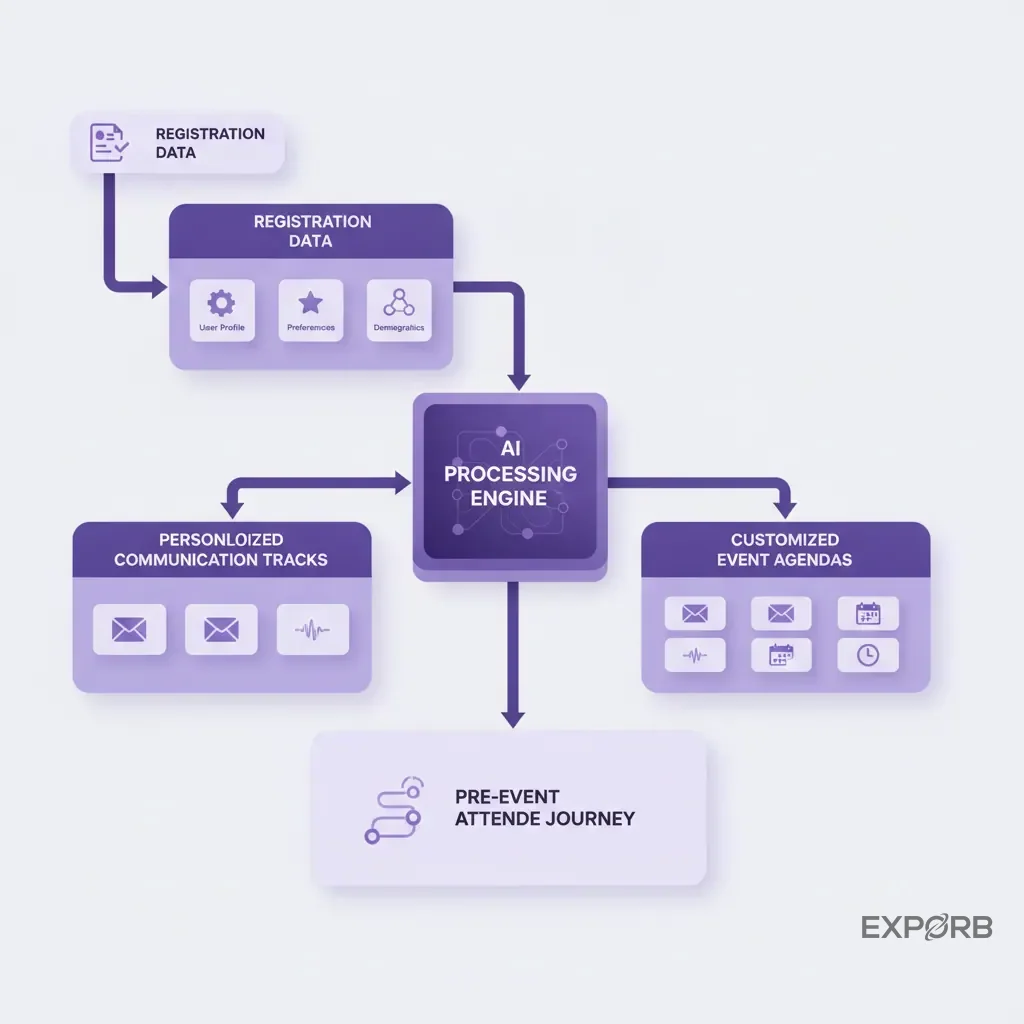
Analyzing registration data and intent signals
When an attendee registers, they provide a trove of information: their job title, company, industry, and often their specific interests or challenges. As noted by MarketingHelm, AI platforms segment attendees by these signals, triggering different communication tracks. An AI system can cross-reference this with firmographic data and even past event behavior to build a rich profile. It can identify a C-level executive from a target account and flag them for a white-glove experience. Meanwhile, a student might receive a standard track.
Automating personalized communication tracks and agendas
Based on that analysis, the AI can automate the entire pre-show communication flow.
- A CEO might get an email inviting them to a private networking dinner.
- A technical user might get a notification about a deep-dive product session.
- Someone who listed "data security" as an interest will see sessions and exhibitors related to that topic at the top of their suggested agenda.
This means every touchpoint is relevant and adds value, increasing engagement before the attendee even books their flight.
Pre-booking high-value meetings based on matchmaking scores
Here's where it gets powerful for exhibitors. Instead of waiting for foot traffic, AI can proactively book meetings for you. The system calculates a "matchmaking score" between attendees and exhibitors based on mutual interests and needs. If there's a high score—say, a decision-maker from a key account whose stated challenges perfectly align with your solution—the AI can automatically suggest a meeting, find a time that works for both parties, and put it on their calendars. You arrive at the show with a schedule of pre-qualified, high-intent meetings already booked.
Related: The Ultimate Guide to Trade Show Lead Capture
How can AI matchmaking enhance Lead Generation for exhibitors?
For exhibitors, the primary goal of any trade show is to generate qualified leads. AI matchmaking transforms this from a game of chance into a data-driven process. It's a concierge for the event floor, connecting attendees with the most urgent needs to the exhibitors best equipped to solve them. It's the difference between fishing with a giant, empty net and using a precision-guided lure.
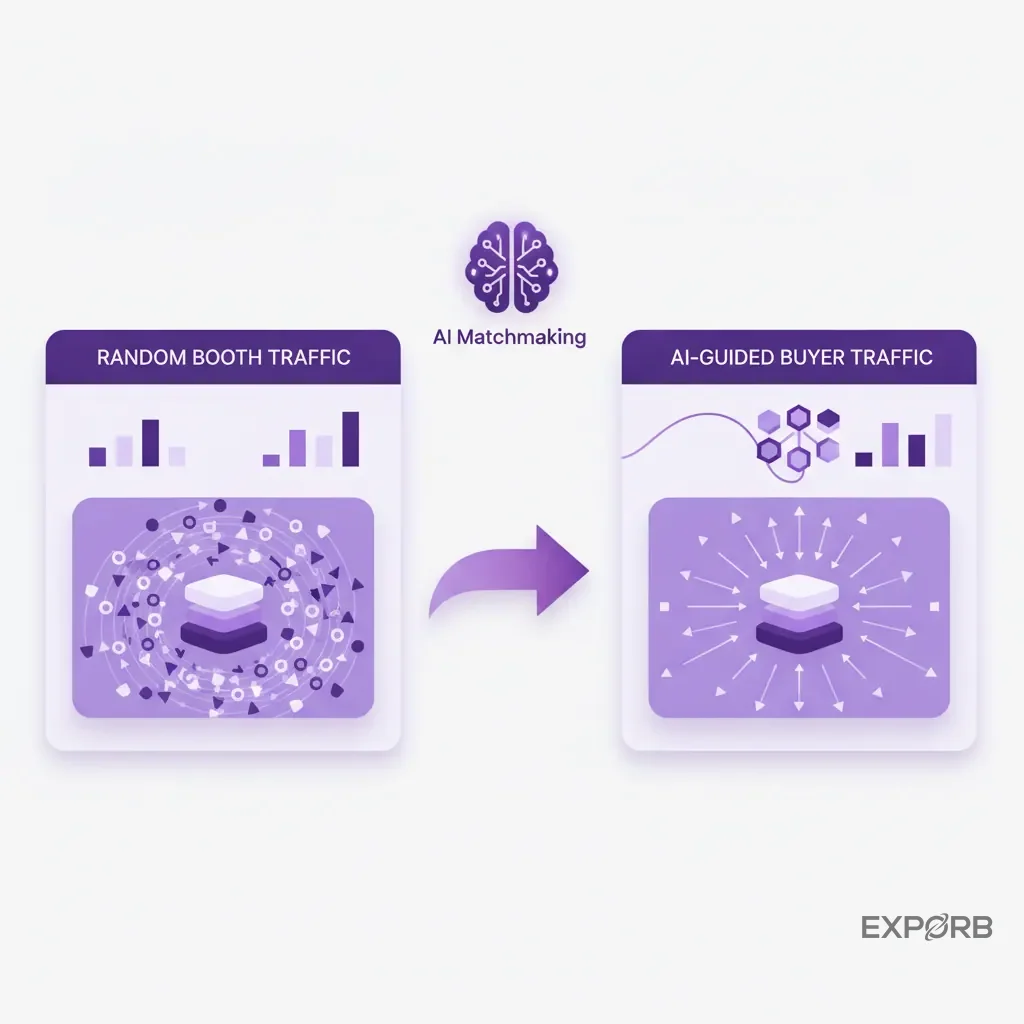
Identifying high-intent buyers on the event floor
How do you identify your next best customer among 10,000 attendees? Manually, you can't. You just have to wait and hope they walk by. AI systems, however, can analyze real-time behavioral data. They see that an attendee has attended three sessions on cybersecurity and just spent 10 minutes at a competitor's booth. The system identifies this person as a high-intent buyer and sends your team a notification—or even guides the attendee to your booth with a personalized app notification like, "Based on your interest in cybersecurity, you should visit Exporb at booth #501."
Matching attendee needs with exhibitor solutions in real-time
This real-time connection separates modern events from old-school trade shows. According to Event Technology experts at BizBash, intelligent matchmaking is a key trend. An attendee can open their event app, type in a problem they're facing, and the AI will recommend the top 3-5 exhibitors who can help. This is a significant improvement for both sides. The attendee saves hours of wandering, and the exhibitor gets to speak exclusively with people who've a qualified, stated need.
Comparing manual Lead Qualification vs. AI-powered scoring
The traditional way of qualifying leads at a booth is slow, inconsistent, and relies entirely on a sales rep's gut feeling and messy handwritten notes. An AI-driven approach is systematic and instant.
Comparison of Manual vs. AI-Powered Lead Qualification at Trade Shows
The difference is stark. Manual qualification leaves you with a pile of work. AI scoring gives you a prioritized list of hot leads, ready for immediate, relevant follow-up. You can see which leads to focus on now with tools that offer AI lead scoring right in your capture app.
How do you optimize engagement with real-time data during the show?
Once the event is underway, data flows in a torrent. Every badge scan, session check-in, and booth visit creates a data point. The key is to use this information in real-time to make the event experience better. Not for analysis a week later, but to improve the experience right now. Real-time personalization reacts to attendee behavior as it happens, keeping them engaged and guiding them toward valuable connections.
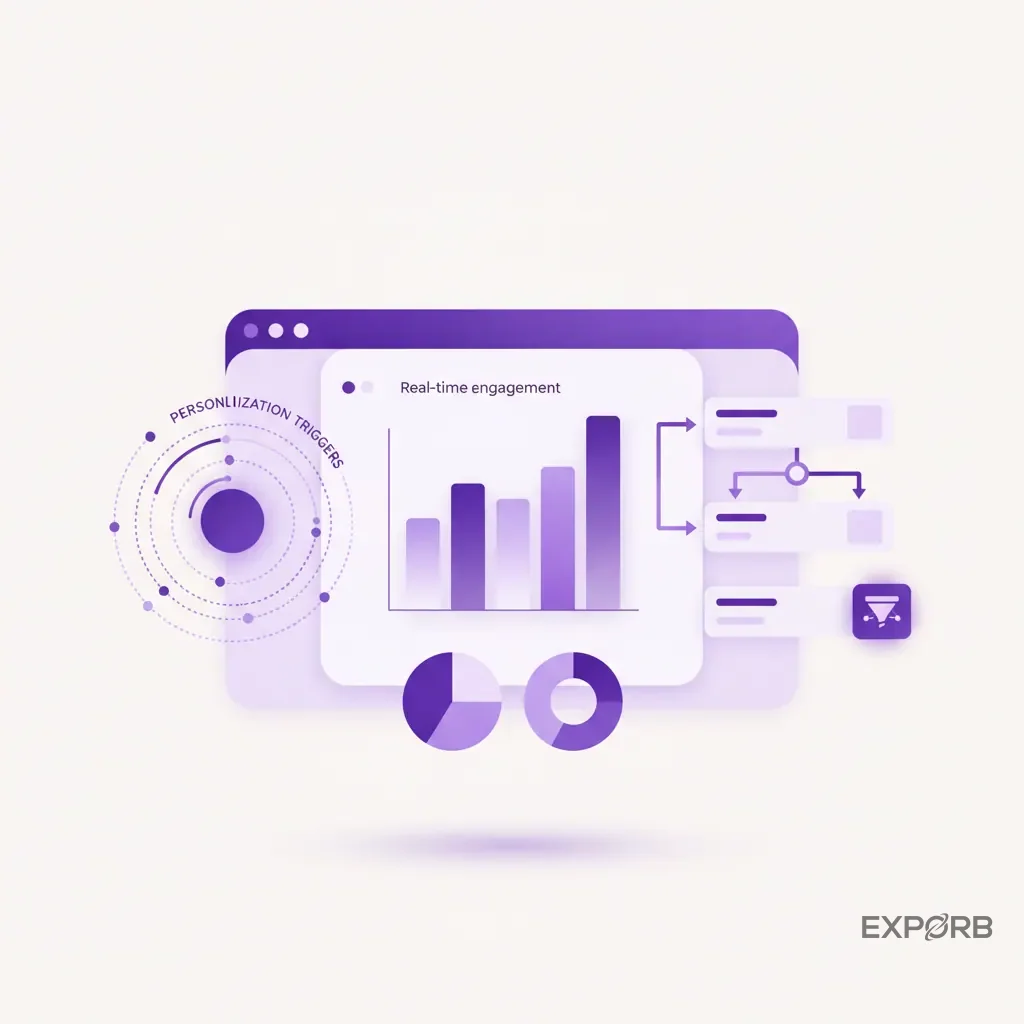
Using behavioral data to trigger adaptive schedules and content
Imagine an attendee's schedule adapting based on their actions. If they skip a scheduled marketing session and instead attend a technical deep-dive, the AI learns from that. It might then recommend another technical session and deprioritize the marketing content it was going to suggest. This creates a dynamic, responsive experience. Some platforms have even shown this can lead to an 18% increase in session attendance, according to event trend analysis.
Guiding attendees to relevant sessions and booths
Push notifications can be annoying if they're generic. But if they're hyper-relevant, they're incredibly helpful. A real-time system can send messages like:
- "The session on 'Scaling Sales Teams' is starting in 5 minutes in Room B, and there are still seats left."
- "You just visited three booths in the AI software pavilion. You might also like Exporb at booth #789."
This gentle guidance helps attendees discover content and exhibitors they might've otherwise missed, making their time on the floor more efficient and valuable.
Practical example: Setting up real-time personalization triggers
Setting this up is more straightforward than it sounds. You create simple "if-then" rules.
- IF an attendee checks into 3+ sessions in the "Advanced Analytics" track, THEN send them an invitation to a special Q&A with the speakers.
- IF an attendee from a target account list scans their badge at your booth, THEN send an alert to your VIP account manager.
- IF an attendee's dwell time at your booth exceeds 5 minutes, THEN tag them as a "high engagement" lead in your system.
These simple triggers, powered by real-time data, can dramatically improve interaction quality and ensure no hot lead slips through the cracks.
What does your team actually learn at a trade show?
Here's the fundamental problem that most event marketing strategies ignore. You spend a fortune to send your team to a show for three days. They talk to hundreds of people. They learn about customer pain points, competitor strategies, and emerging market needs. Then what happens to all that intelligence?
Almost nothing. It just evaporates.
It gets trapped in scribbled notes on the back of business cards, in the memory of a tired sales rep, or in a messy spreadsheet that takes a week to compile. The founder or VP of Sales has zero visibility into the actual substance of those conversations.
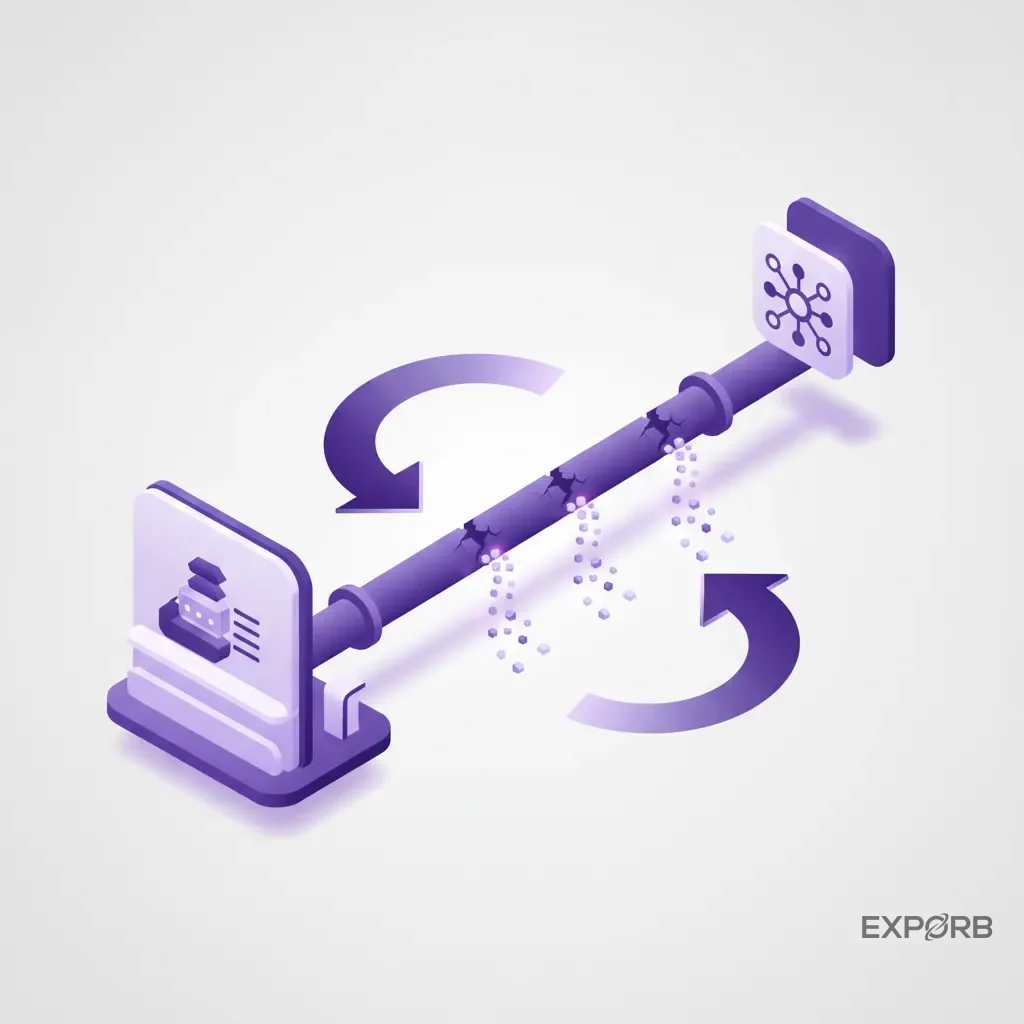
The problem: Valuable conversations lost in notebooks and memory
The most valuable asset you generate at a trade show isn't a list of names—it's conversation intelligence. What was the prospect's biggest challenge? What was their budget? What was the agreed-upon next step? This is the context that turns a cold lead into a warm opportunity. But when your capture method is a pen and paper, most of that context is lost forever. You're left with a dead business card and a vague memory.
Scenario: The founder debrief that reveals missed opportunities
Picture the post-show debrief meeting. The founder asks, "So, how was the show? Who are our hottest leads?" The team looks at each other. "It was great! Super busy. We got a ton of cards." They dump a stack on the table. The founder picks one up. "What did this person care about?" The rep who spoke to them tries to remember one conversation out of a hundred. "I think... they were interested in our enterprise plan? Or maybe it was the other person from that company..." The opportunity's already fading.
Closing the loop: How AI captures and structures conversation intelligence
AI changes the game for exhibitors here. Instead of relying on memory, you can capture the conversation itself. At Exporb, we know how critical it is to capture conversation context. That's why we built tools so your team can record a quick voice note summarizing the conversation right at the booth. The AI then transcribes that audio, analyzes it for key topics, pain points, and next steps, and structures it into clean, actionable data.
Suddenly, the founder isn't blind anymore. They can see a real-time feed of every conversation. They can understand which leads are hot. And they know exactly what context to use in the follow-up. It turns the chaos of the trade show floor into a structured intelligence-gathering operation.
Is personalization just about the attendee app experience?
No. This is the biggest misconception in the industry. Many event organizers and exhibitors think that having a fancy event app with a personalized agenda is the entire AI personalization strategy. That's like thinking having a website is your entire marketing strategy. The app is just one tool, a channel for the experience. The real strategy uses the data the app collects. If that intelligence lives and dies inside the event platform, you've missed the entire point.
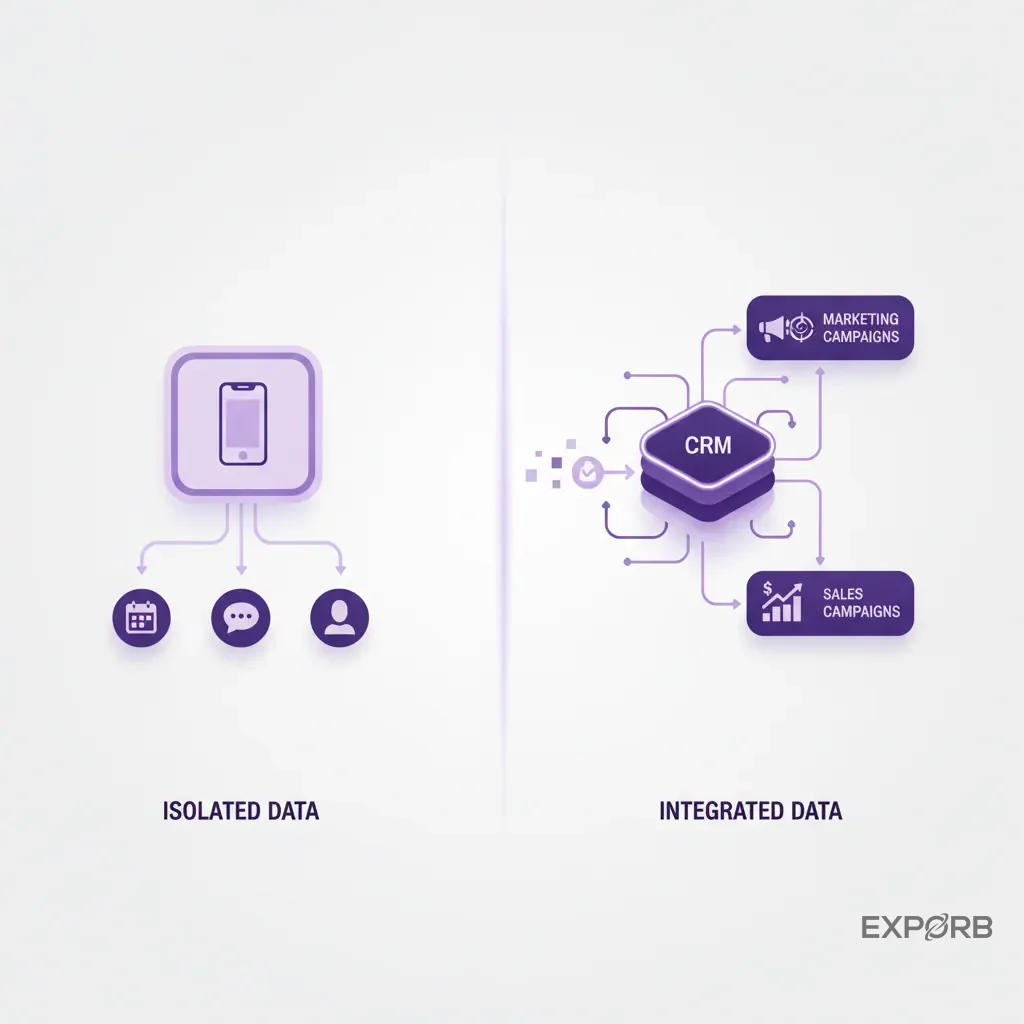
Common misconception: Confusing a feature with a strategy
A personalized schedule is a feature. AI matchmaking is a feature. A push notification is a feature. Your strategy is the plan for using that data to generate revenue. The strategy isn't about giving attendees a slightly better experience for three days. It's about identifying your best future customers and using the intelligence gathered at the event to close them faster.
Beyond the app: Integrating event data into your core CRM
Exporting data is the most important step in any event tech stack. How does the data get out? How does it get into your CRM, your single source of truth for customer interactions? The data—who you met, what you discussed, what they were interested in, how qualified they are—needs to flow directly into your HubSpot or Salesforce instance.
A simple badge scan gives you a name and an email. That's not enough. You need the rich context from the conversation. A modern lead capture system should allow you to export every detail: the full conversation transcript, AI-generated summaries, identified pain points, and next steps, all mapped to the correct contact in your CRM.
How post-event intelligence fuels sales and ABM campaigns
When your CRM is enriched with this deep event intelligence, your follow-up becomes lethal.
- Sales teams can stop sending generic "nice to meet you" emails. They can reference the exact pain point discussed at the booth.
- Marketing teams can enroll leads into highly specific nurture campaigns based on their stated interests.
- ABM campaigns can be tailored with messaging that speaks directly to the challenges you know a target account is facing because you talked to five of their people at the show.
The event stops being an isolated activity and becomes a powerful fuel source for your entire revenue engine.
How do you measure the ROI of your personalization efforts?
If you can't measure it, you can't justify the investment. The good news is that the ROI of AI event personalization is highly measurable. Because you're tracking interactions at such a granular level, you can draw a straight line from specific personalized touchpoints to closed-won deals. You just need to track the right metrics.
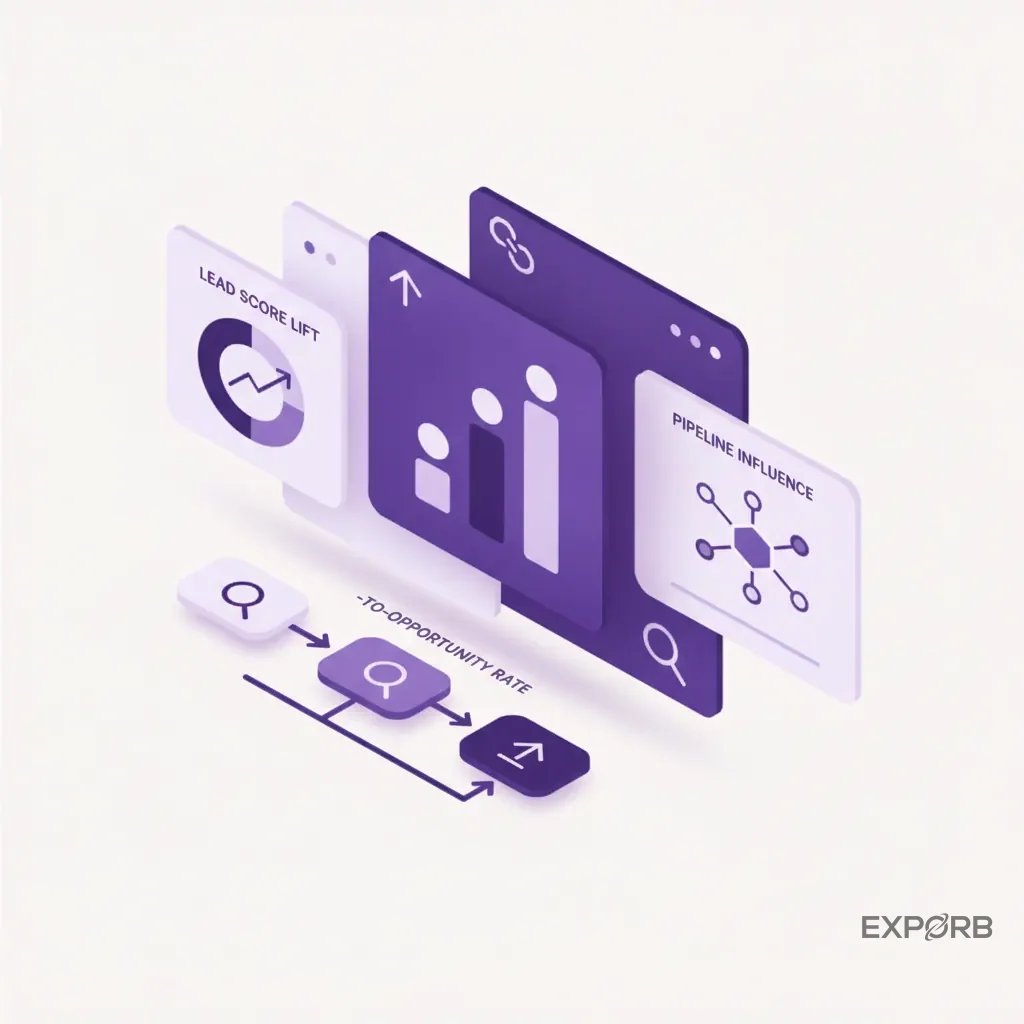
Key metrics: Lead score lift, meeting-to-opportunity rate, and pipeline influence
Forget about vanity metrics like booth visitors or badges scanned. Focus on the metrics that translate to revenue.
- Lead Score Lift: Compare the average lead score of event-generated leads versus leads from other channels. A higher score indicates higher quality and intent.
- Meeting-to-Opportunity Rate: Of the meetings booked through AI matchmaking or had at the booth, what percentage converted into a qualified sales opportunity? This is a direct measure of lead quality.
- Pipeline Influence: Use your CRM's campaign attribution tools. How much new pipeline was directly influenced by the event? You should be able to tag opportunities with the event campaign and track them through the entire sales cycle.
- Sales Cycle Velocity: Do event leads close faster than others? The rich context gathered should enable sales to move deals through the pipeline more quickly.
Attributing revenue to specific personalized touchpoints
With the right setup, you can get even more specific. You can track whether a closed deal came from a pre-booked meeting, a real-time matchmaking suggestion, or a conversation at the booth that was scored highly by AI. This allows you to see which personalization tactics are most effective. For instance, you might find that leads who attended a specific deep-dive session had a 2x higher close rate, telling you to invest more in that type of content next time.
Building a business case for investing in personalization tech
When you have this data, building the business case is simple. You can go to your CFO and say: "We invested $20,000 in this event personalization platform. It generated 50 qualified opportunities, influenced $500,000 in new pipeline, and the deals are closing 15% faster than our webinar leads. The ROI is 25x." These numbers make a compelling case. This transforms the event budget from a marketing expense into a direct investment in revenue generation.
Related: How to Calculate Trade Show ROI The Right Way
What are the best practices for responsible AI and data governance?
Using AI to personalize experiences comes with a responsibility to handle attendee data ethically and securely. People are willing to share their data if they get value in return, but that trust is fragile. Breaking it with irresponsible data practices is the fastest way to ruin your brand's reputation. Being transparent and secure isn't just a legal requirement; it's a business imperative.
Building trust through data transparency and consent
Don't be creepy. Be upfront about what data you're collecting and how you're using it to improve the event experience. Your privacy policy should be written in plain English, not legalese. When an attendee opts in, they should have a clear understanding of the value exchange. For example: "Allow the app to track your location on the event floor, and we'll help you figure out where to go and recommend nearby exhibitors you might like." It's a simple, honest trade.
Securing attendee data in a personalized environment
The more data you collect, the bigger a target you become. You must have solid security measures in place to protect personally identifiable information (PII). This includes data encryption, secure access controls, and regular security audits of your event tech vendors. Ensure your partners comply with regulations like GDPR and CCPA. A data breach can have severe consequences for your brand and your attendees.
Ensuring fairness and avoiding bias in AI algorithms
You train AI models on data, and if that data contains historical biases, the AI will amplify them. For example, a matchmaking algorithm could inadvertently favor men over women or people from large companies over those from small startups if the training data is skewed. You should work with tech providers who actively audit their algorithms for bias and are transparent about how they work to ensure fairness and equal opportunity for all attendees.
Turning event intelligence into your next revenue engine
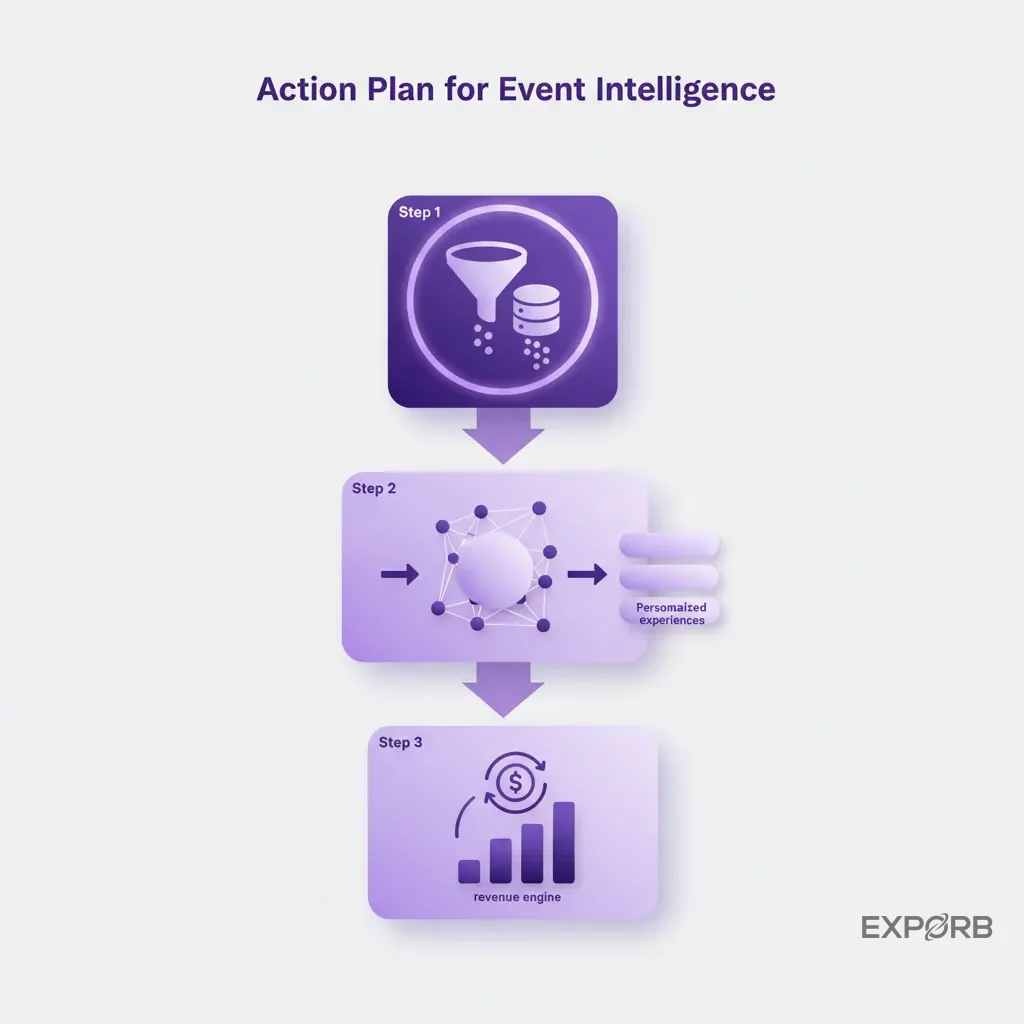
You don't need a massive budget or a team of data scientists to get started with AI event personalization. You can start small, focus on the fundamentals, and build from there. The key is to shift your mindset from "collecting leads" to "gathering intelligence." That intelligence fuels your entire GTM motion.
Your 3-step action plan for getting started
- Define One Clear Goal. Don't try to do everything at once. For your next event, pick one specific, measurable goal. Maybe it's "book 20 qualified meetings with enterprise prospects" or "increase our lead-to-opportunity conversion rate by 10%."
- Focus on Conversation Capture. Before you worry about complex matchmaking, fix the biggest leak in your funnel: lost conversation context. Equip your booth staff with a simple tool to capture what's actually being said. This single change will provide the rich data needed for any future personalization efforts.
- Integrate and Automate Follow-up. Ensure the intelligence you capture flows directly into your CRM. Set up a simple workflow where high-scoring leads are immediately assigned to a sales rep with all the conversation notes attached. You can even use tools that help draft personalized follow-up emails based on the conversation, so your team can send them before they even leave the booth.
Choosing the right AI platform for exhibitor success
When evaluating technology, look for platforms designed for exhibitors, not just event organizers. Does the tool help your team capture better information? Does it work when the spotty conference Wi-Fi inevitably fails? Can you easily get the data out and into your own systems? A good platform helps your team on the ground and gives leadership the visibility they need.
The future: Proactive personalization and autonomous event marketing
Where's this all headed? The future is proactive. Instead of you setting up rules, AI will anticipate needs. It'll identify at-risk accounts showing interest in competitors and suggest outreach. It'll analyze all your event data and recommend the top 5 shows you should invest in next year for the highest ROI. Eventually, much of the manual work of planning and executing an event marketing strategy will be automated, freeing up your team to focus on what they do best: having high-quality conversations with your future customers.