You spent $50,000 on a booth, flights, and hotels. You came back with a fishbowl full of business cards and a spreadsheet of badge scans. A week later, you send a generic "great to meet you" email blast. Crickets. This isn't a strategy—it's a waste of money. The old playbook is broken because buyers expect more. Effective trade show lead nurturing campaigns start with a real conversation and continue with hyper-personalized follow-up, not a generic email.
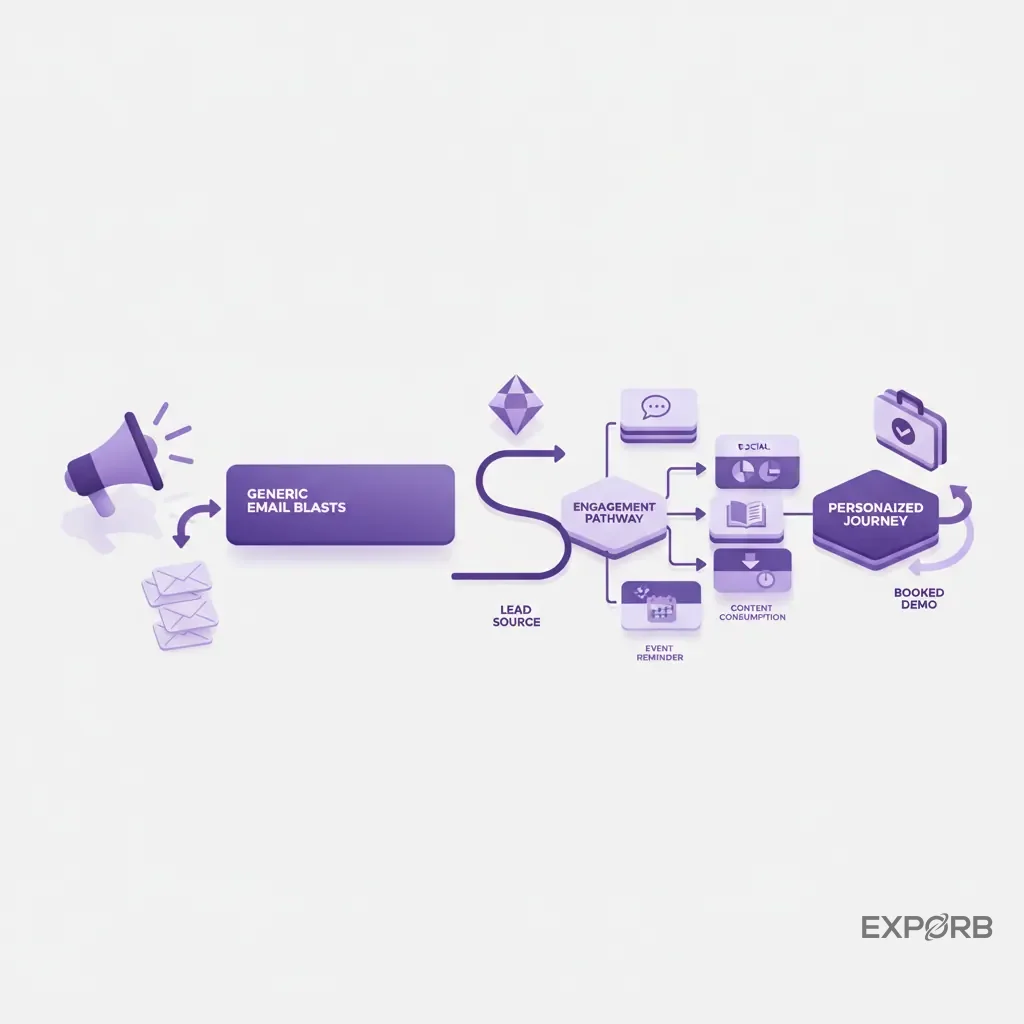
The shift from generic email blasts to hyper-personalized journeys
The "spray and pray" email blast is dead. Your prospects get dozens of them after every show. They don't remember you. They don't remember your booth. They certainly don't remember the conversation they had with your team. The only way to cut through this noise is with personalization based on the actual conversation. Did you talk about their specific pain with scaling their operations? Mention that. Did they ask about an integration with their current software? Reference it. This level of detail shows you listened—and you can't achieve it when your "data" is a blurry photo of a business card.
Misconception: Debunking the myth that nurturing starts after the show
This is the single biggest mistake exhibitors make. They think the work starts when they get back to the office. Wrong. Nurturing starts the moment a prospect walks into your booth. It's in the questions your team asks, the notes they take, and the qualification they perform on the spot. Don't wait. If you wait a week to decipher messy handwriting and import a CSV file, you've already lost. The context is gone. The lead goes cold. Your competitor, who followed up from the show floor, is already booking a demo.
Setting the stage: The end-to-end revenue engine
Think of a trade show not as a one-off event, but as a critical part of your revenue engine. It has three phases:
- Pre-show: Building a target list and scheduling meetings.
- At-show: Capturing high-quality, contextual data.
- Post-show: Executing a fast, personalized, multi-touch nurture sequence. When these three parts work together, the trade show becomes a predictable source of pipeline. When they don't, it's just an expensive trip.
How do you build a high-intent audience before the show even starts?
Most exhibitors walk into a trade show hoping for good conversations. That's a recipe for failure. The best exhibitors arrive with a schedule full of meetings with high-value accounts. You're not there to scan 1,000 badges—you're there to have 30 great conversations.
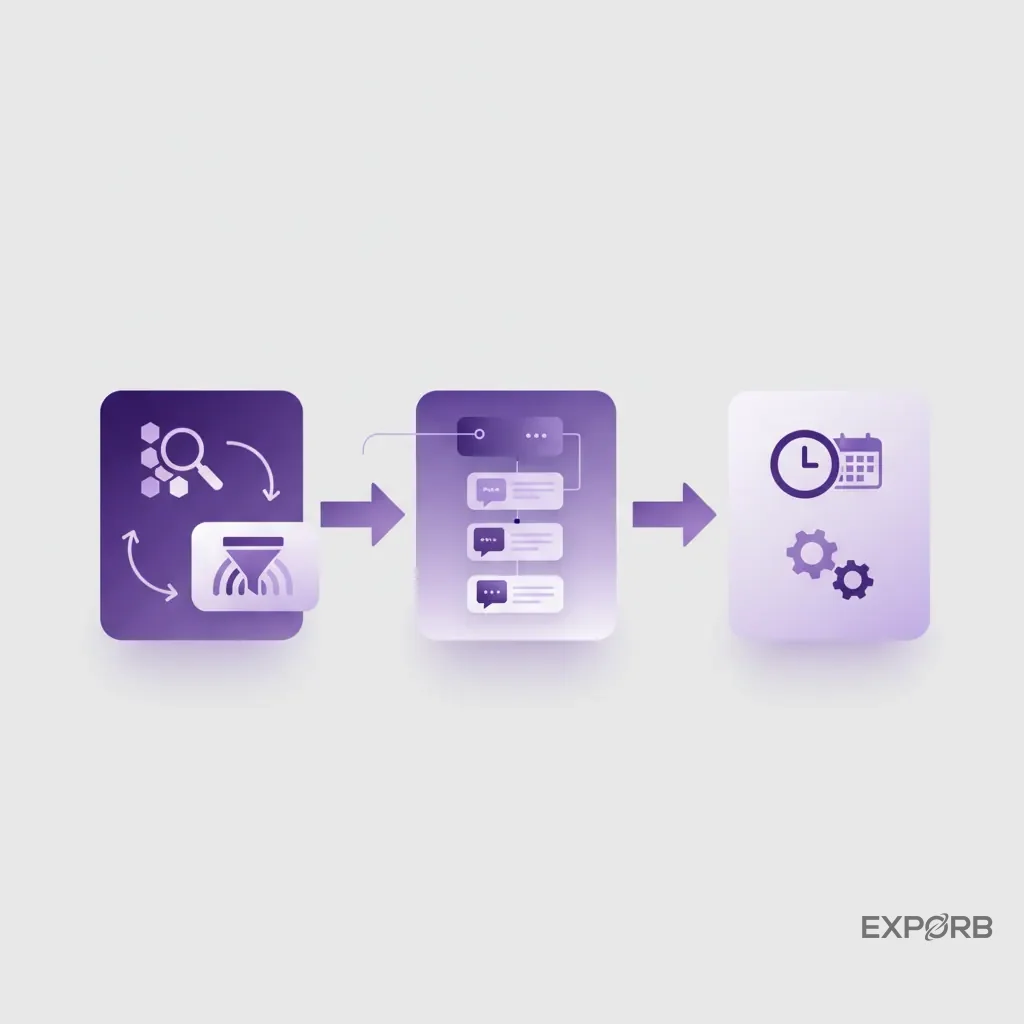
Identifying and targeting your top 30-50 ideal accounts
Who are the 30 companies you absolutely must talk to at this event? According to Gushwork, top manufacturing exhibitors focus on a tight list of 30-50 ideal prospects. They build this list weeks in advance. They know who they want to meet, what their challenges are, and why their solution is a perfect fit. Don't boil the ocean. Make a list. A short one.
Crafting pre-show email and LinkedIn outreach sequences
Once you have your list, it's time for outreach. This isn't a sales pitch. It's a message like, "We'll be at Booth 542, and I saw your company is struggling with X. We've helped others with that, and I'd love to show you how for 15 minutes."
- Email 1 (4 weeks out): "We're coming to [Event Name]..."
- LinkedIn Connection (3 weeks out): Connect with the target contact.
- Email 2 (2 weeks out): Share a valuable piece of content related to their likely pain points.
- Email 3 (1 week out): Propose a specific meeting time.
Scheduling meetings to guarantee high-quality conversations
The goal of pre-show outreach is simple: fill your calendar. Every meeting you pre-book is a guaranteed, high-quality conversation with a qualified prospect. It transforms your booth from a passive fishbowl into an active meeting hub. Your team's time is your most valuable asset at the show. Don't let them waste it on tire-kickers. Use it for scheduled, strategic conversations that move deals forward.
Related: [The Ultimate Trade Show lead capture Guide](/blog/trade-show-lead-capture-guide)
What technology is essential for modern trade show Lead capture?
If your lead capture plan involves a clipboard, a fishbowl for business cards, or a generic badge scanner app, you're set up to fail. It's 2026. Your technology needs to capture context, not just collect a name and an email.
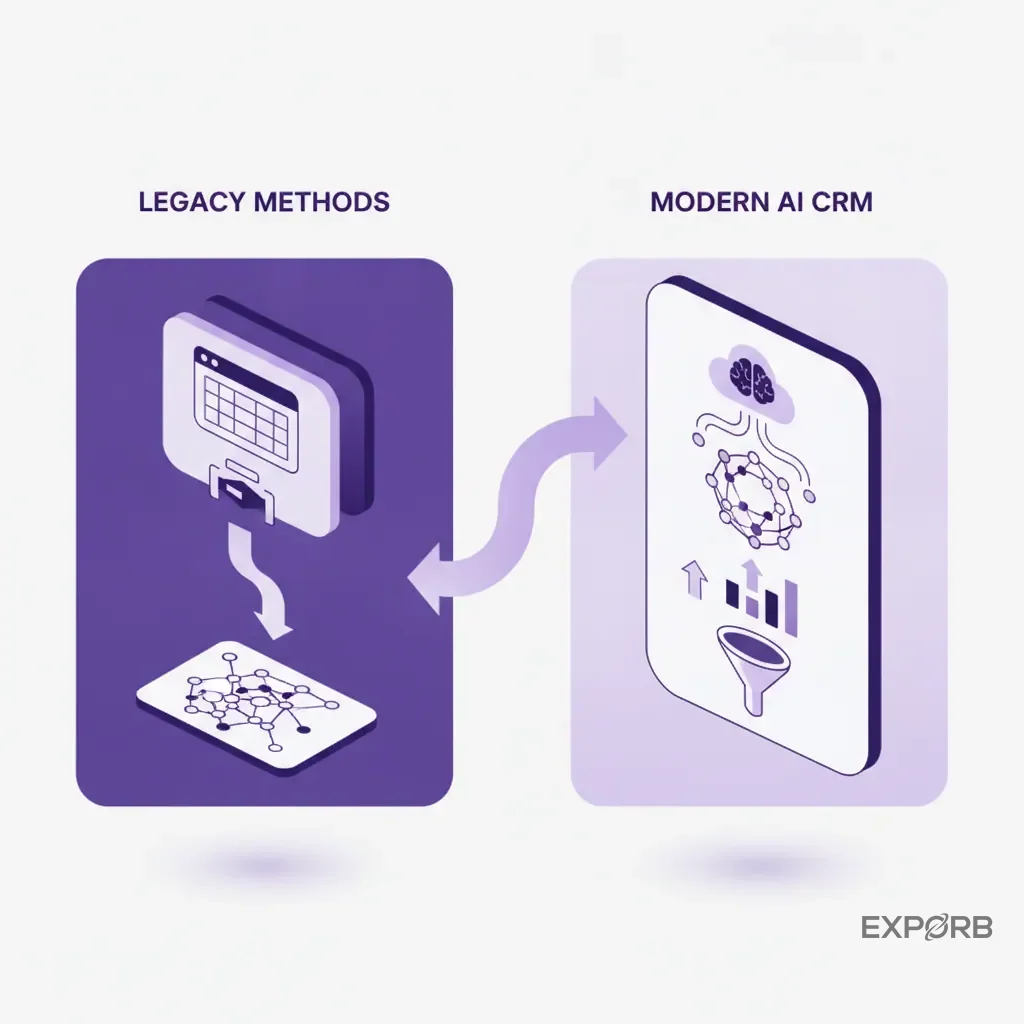
Moving beyond spreadsheets: The rise of AI-powered CRM tools
Spreadsheets are where good leads go to die. They're messy, disconnected from your CRM, and completely devoid of context. Modern lead capture tools bridge the gap between the conversation on the show floor and the nurture sequence in your Marketing Automation platform. They should allow you to scan a card, record voice notes about the conversation, snap a photo of a whiteboard diagram, and qualify the lead with custom tags—all in one place.
Using QR codes and NFC for frictionless data capture
Make it easy for people to give you their information. Instead of fumbling with a pen, let them tap an NFC tag or scan a QR code at your booth to share their details. It's fast, accurate, and gives you a clean digital record from the start. But remember: contact info is just the start. The conversation is the substance.
The founder's dilemma: Gaining visibility into your team's conversations
Here's the problem I always had as a founder. I'd send my team to a show, and they'd come back with 100 leads. I'd ask, "Which ones are good?" They couldn't remember. They lost the details. This is the black box of trade shows. You spend a fortune but have no idea what was actually discussed. We built Exporb because this exact problem needed solving. Your team can record voice notes of every conversation, and AI transcribes and analyzes them. As a founder, you get a real-time feed of every interaction. You finally know which conversations mattered and can direct follow-up immediately. No more guessing.
How can your booth team turn conversations into convertible data?
Your booth staff isn't there just to smile and hand out swag. They're your frontline data collectors. A five-minute conversation can produce more valuable, actionable data than any badge scanner ever could. But only if you train and equip them to capture it properly.
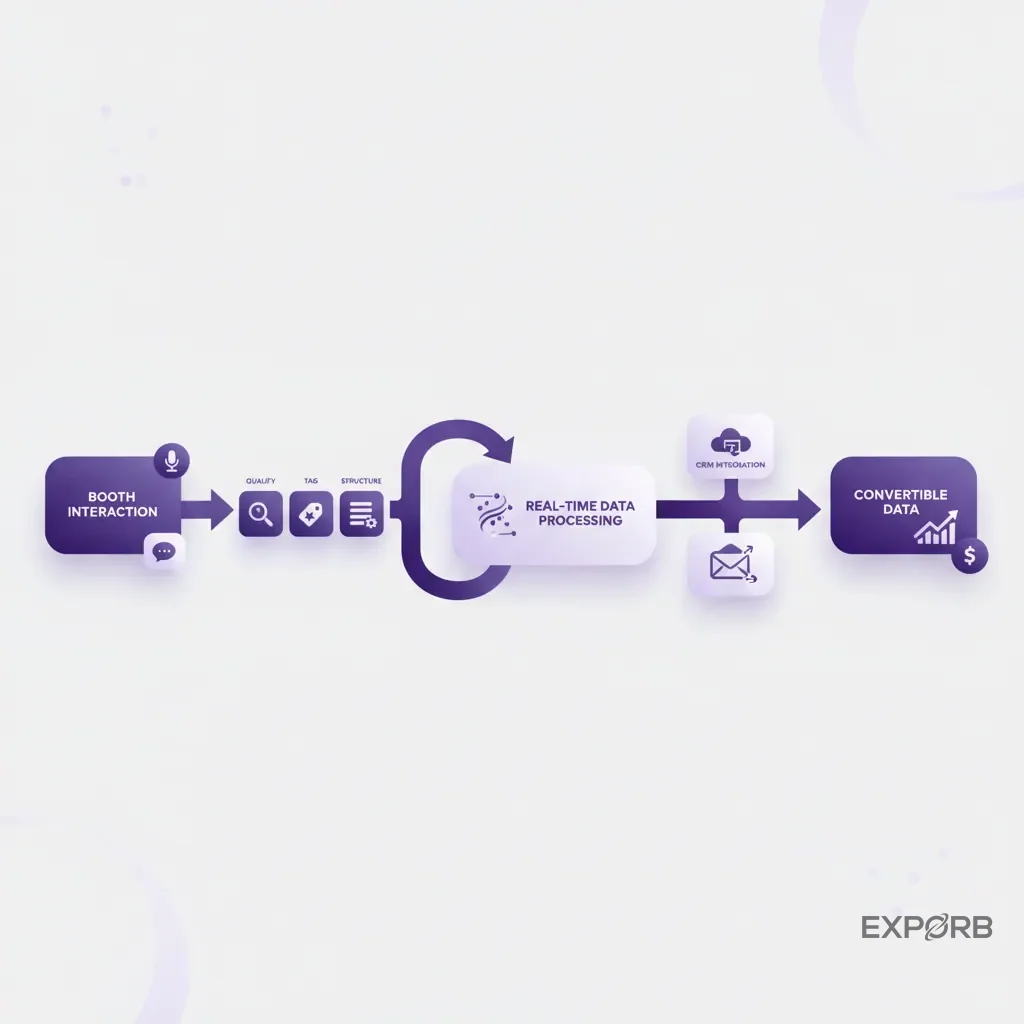
Training your team to qualify and tag leads in real-time
Your team needs a simple, consistent way to qualify every lead. A common framework is BANT (Budget, Authority, Need, Timeline), but it can be anything that makes sense for your business. The key is that they apply these tags during or immediately after the conversation. Is this lead a decision-maker? Tag them "Authority." Are they looking to buy this quarter? Tag them "High Intent." Tagging in real-time makes post-show segmentation instant and accurate.
Structuring conversation notes for effective post-show segmentation
"Had a good chat" isn't a useful note. Your team's notes need structure. What were their top two pain points? What was the agreed-upon next step? Who are the competitors they mentioned? Using a tool with custom fields forces this discipline. It turns a rambling conversation into structured data points you can use to personalize your nurture campaigns. A lead capture app that standardizes this process? Non-negotiable.
Using interactive lead magnets to reveal buying intent
Instead of just scanning a badge, engage prospects with a quick interactive element. A 3-question "Maturity Assessment" on a tablet or an "ROI Calculator" can reveal huge amounts about their needs and sophistication. The data from these tools is far more valuable than a name and email. It reveals intent.
What is the 'golden window' for post-show follow-up?
The moment a prospect leaves your booth, a timer starts. Every hour that passes, their memory of your conversation fades, and your competitor's follow-up email hits their inbox. According to HCI Marketing, you should contact high-potential leads within 3-5 days, but the best teams move much, much faster.
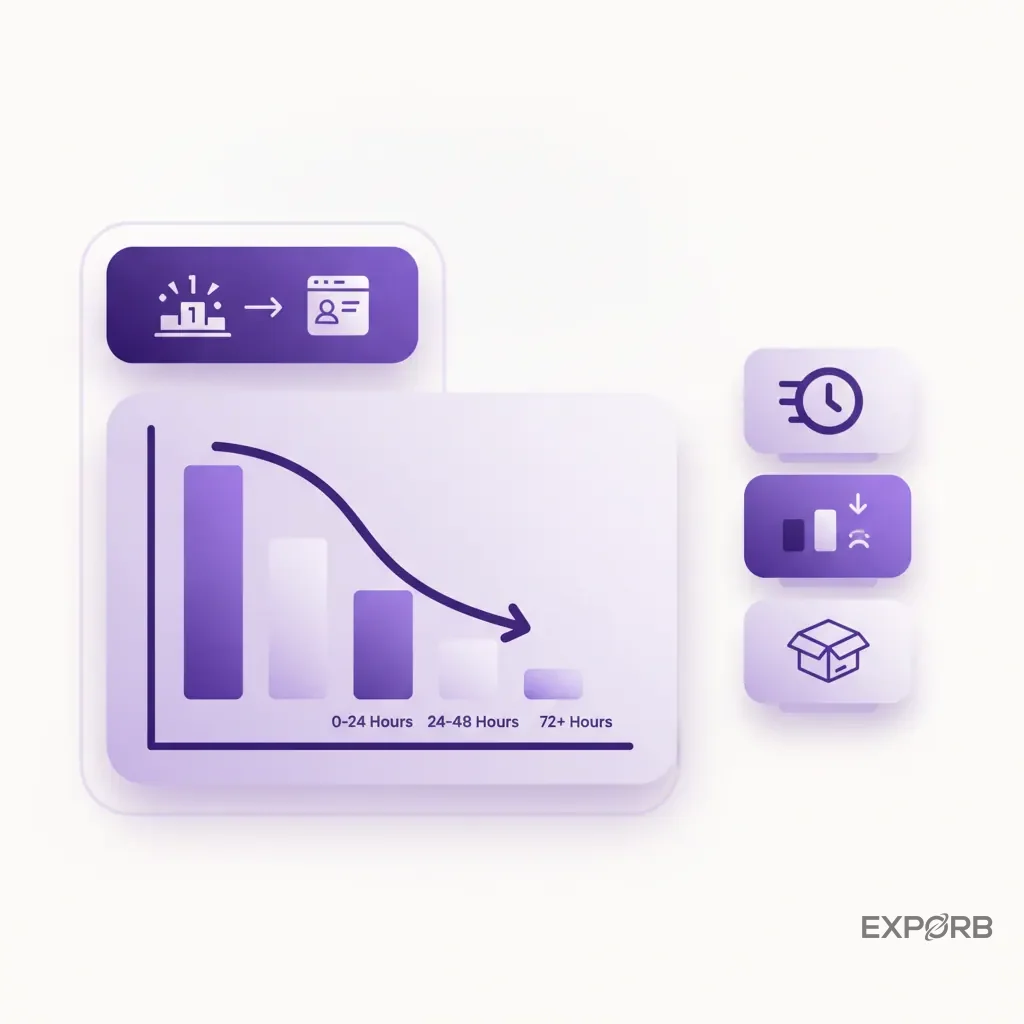
The critical first 48 hours: Speed to first touch
You must follow up within 48 hours. Many experts recommend within 24 hours. The momentum from a face-to-face conversation is perishable. A prompt, personalized follow-up shows you're organized, attentive, and serious about their business. Waiting a week? That's a death sentence for a lead.
Segmenting your leads: A practical guide to hot, warm, and cold tiers
Not all leads are equal. Trying to treat them the same is a massive waste of your sales team's time. You need to segment them immediately.
A simple framework for triaging [Trade Show Leads](/blog/qr-code-lead-capture) for effective follow-up.
Automating the initial touchpoint without losing personalization
So how do you follow up in 24 hours when you have 100+ leads to process? You can't write every email by hand. This is where AI makes a huge difference. Instead of your team typing emails after the show, at Exporb, we built tools that can draft personalized follow-up emails right at the booth. The AI uses the context from the conversation—their pain points, interests, and agreed next steps—to create a draft that feels human, not robotic. Your rep just reviews it and hits send. Follow-up is done before they even leave the convention center.
Building the multi-touch nurture sequence that actually converts
A single follow-up email isn't a campaign. It's a lottery ticket. Real conversion comes from a persistent, multi-channel sequence that provides value over time. You're building a relationship, not just asking for a meeting.
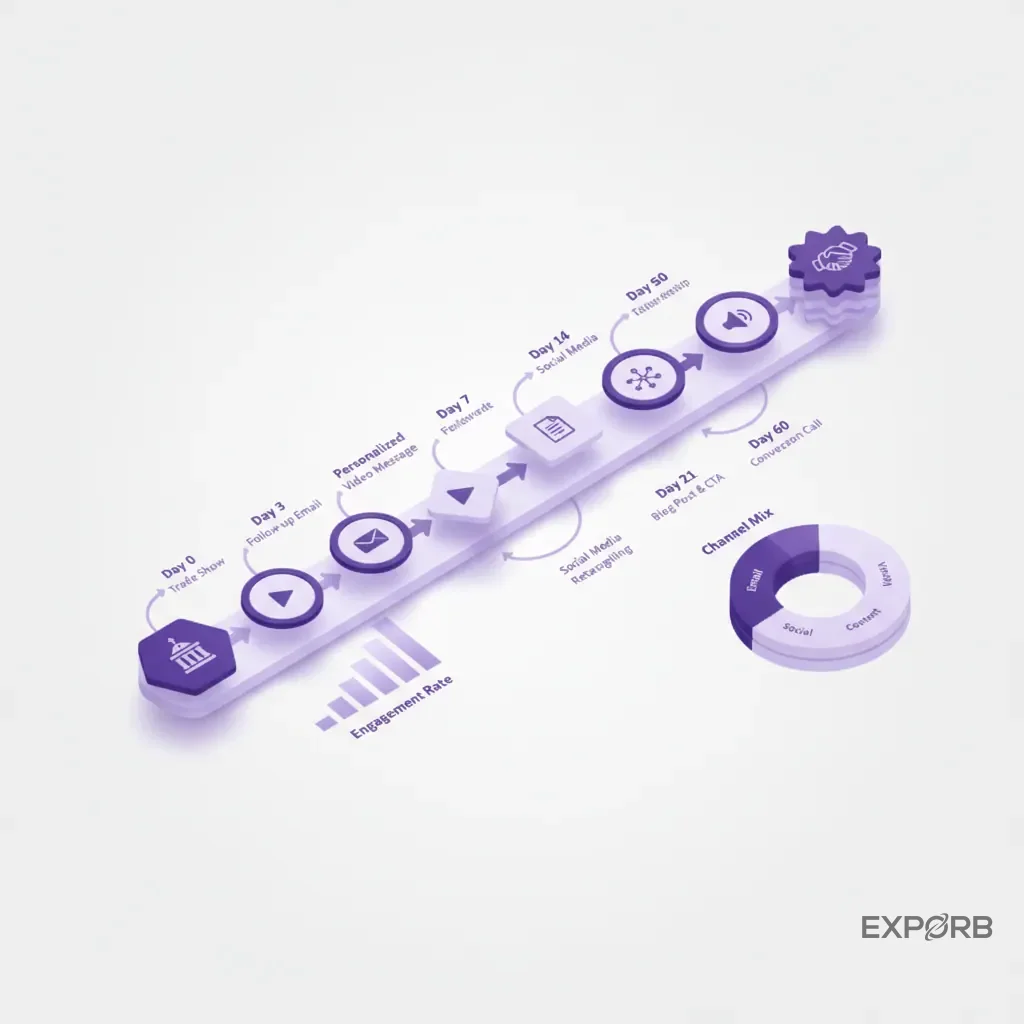
Mapping a 5-9 touch sequence over 30-60 days
Research from Launch Team Inc. suggests a structured, 9-step sequence over about a month is effective. Your own sequence might be shorter or longer, but the principle is the same: stay top-of-mind with a steady cadence of helpful content. A typical sequence might look like this:
- Day 1: Personalized follow-up email.
- Day 4: LinkedIn connection request.
- Day 7: Share a relevant blog post.
- Day 14: Invite them to a webinar.
- Day 21: Share a case study.
- Day 30: Email with a soft call-to-action (e.g., "See a 2-min demo?").
Orchestrating a multi-channel approach: Email, LinkedIn, and retargeting
Don't rely on email alone. People are flooded. Your nurture campaign should show up where your buyers are.
- Email: The backbone of your campaign for direct communication.
- LinkedIn: Connect with them, engage with their posts, and send short messages.
- Retargeting Ads: Use display ads on platforms like LinkedIn or Google to keep your brand visible after they've visited your site from an email link.
Example nurture campaign for a small B2B team (with templates)
You don't need a massive marketing team to do this. Here's a simple, effective sequence:
- Email 1 (Day 1):
Subject: Great to meet you at [Event Name]Hi [FirstName],Enjoyed our chat at your booth yesterday about [Specific Pain Point]. It sounds like your team is struggling to [Elaborate on Pain Point].Here's that case study I mentioned about how [Similar Company] solved this.Best, - LinkedIn Touch (Day 4): Send a connection request with a short note: "Great chatting at [Event Name]. Looking forward to keeping in touch."
- Email 2 (Day 10):
Subject: A quick thought on [Their Company Goal]Hi [FirstName],Thinking more about our conversation. Have you considered [Insightful Idea]? We put together a short guide on it here that you might find useful.Let me know if you'd like to schedule 15 minutes to talk through it.Best,
What content fuels a high-performing nurture campaign?
Your nurture campaign is only as good as the content you use. If every touchpoint is just "checking in" or "bumping this up," you're just spamming. Every email, every message needs to offer something of value.
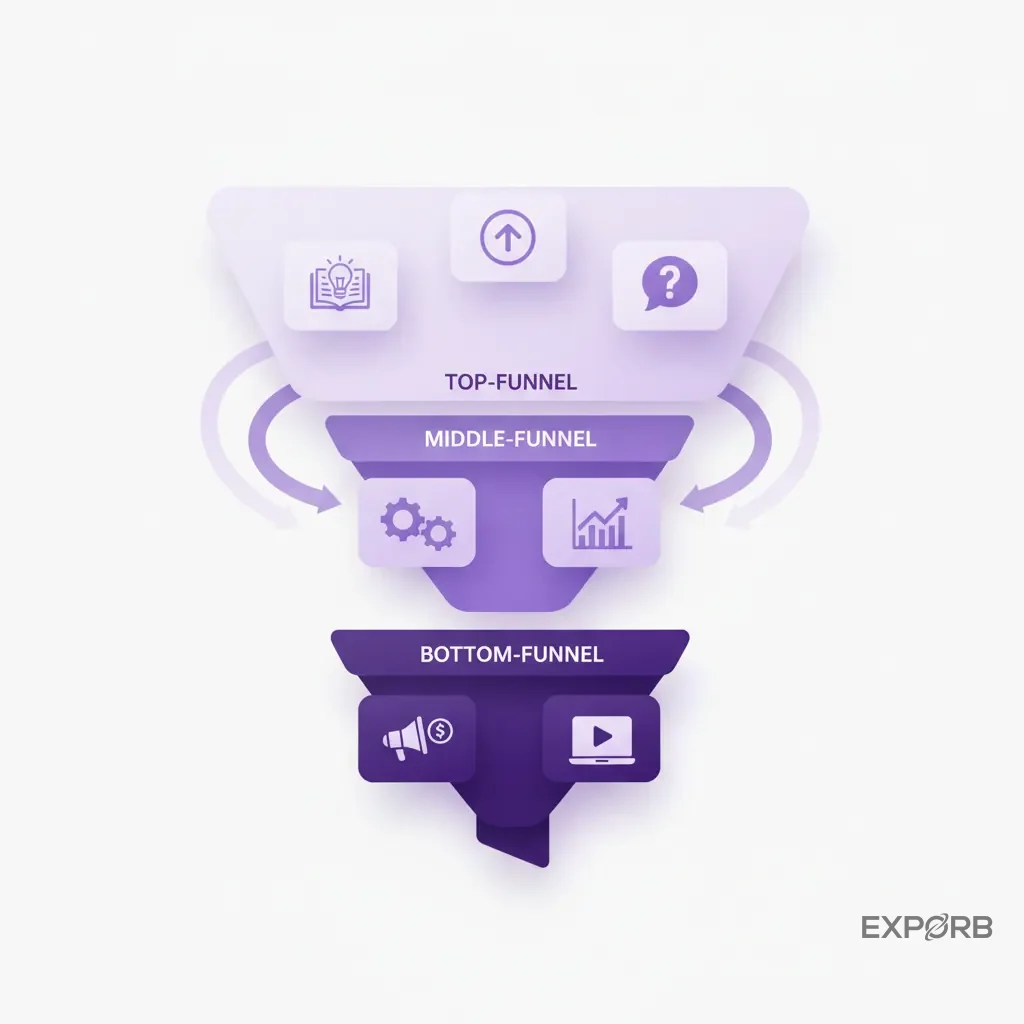
Progressive content offers: From tip sheets to case studies
Don't ask for a demo in your first email. You haven't earned it yet. Use a progressive content strategy that aligns with the buyer's journey.
- Top of Funnel (Awareness): Blog posts, tip sheets, short guides. These are low-commitment and help establish your expertise.
- Middle of Funnel (Consideration): Webinars, case studies, white papers. These are for prospects who are actively researching solutions.
- Bottom of Funnel (Decision): Demos, pricing sheets, consultations. These are for hot leads ready to make a decision.
Using conversation notes to personalize content offers
This is your secret weapon. Your booth team's notes tell you exactly what content to send.
- Did they mention a specific competitor? Send them a comparison sheet.
- Did they talk about their struggles with ROI? Send them a case study with clear financial results.
- Did they ask about a specific feature? Send a link to a 1-minute video showing it in action. This level of personalization separates a world-class trade show follow-up process from an average one. It shows you didn't just hear them—you understood them.
Using thought leadership on LinkedIn to stay top-of-mind
Not every touchpoint needs to be a direct message. After you connect with your new leads on LinkedIn, they'll see your posts in their feed. Consistently publishing valuable content about their industry and challenges keeps your brand visible. When they're finally ready to buy, you'll be the first company they think of.
Related: How to Use AI for Deeper Conversation Analysis
How do you measure the true ROI of your trade show nurturing?
You can't improve what you don't measure. Too many companies judge trade show success by the number of badges scanned. That's a vanity metric. The only metrics that matter connect your event spending to actual revenue.
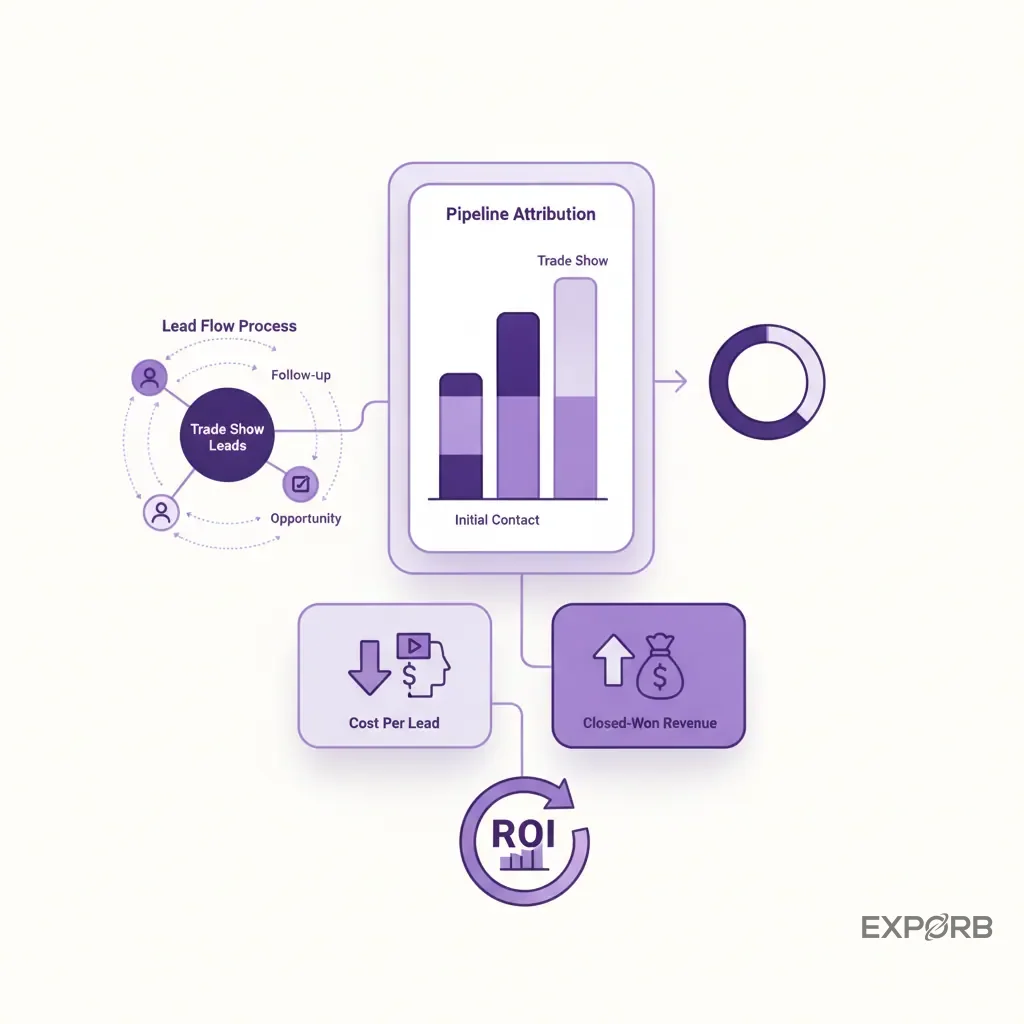
Key metrics to track: Cost per lead, pipeline attribution, and revenue
Stop counting scans. Start tracking these:
- Cost Per Lead (CPL): Total event cost / Number of qualified leads (not total scans).
- Pipeline Attribution: How much sales pipeline (in dollars) you generated from leads originating at the event?
- Closed-Won Revenue: How much actual revenue did you close from those leads?
- Sales Cycle Length: How long does it take to close a trade show lead compared to other channels?
Using your CRM to build trade show performance dashboards
Your CRM should be the single source of truth. Create a specific campaign in your CRM for each trade show. As leads come in, you tag them to that campaign. This allows you to build a dashboard that tracks the leads from that specific event all the way through the funnel to a closed deal. This is how you prove—or disprove—the value of your event budget.
Connecting pre-show outreach to post-show closed deals
Don't forget to track the performance of your pre-show efforts. How many of the meetings you pre-booked converted to opportunities? Often, these leads will be your highest quality and close the fastest. Tying that final deal back to the outreach you did six weeks before the show gives you a complete picture of your ROI.
Frequently asked questions about trade show lead nurturing
How soon should I follow up with a trade show lead?
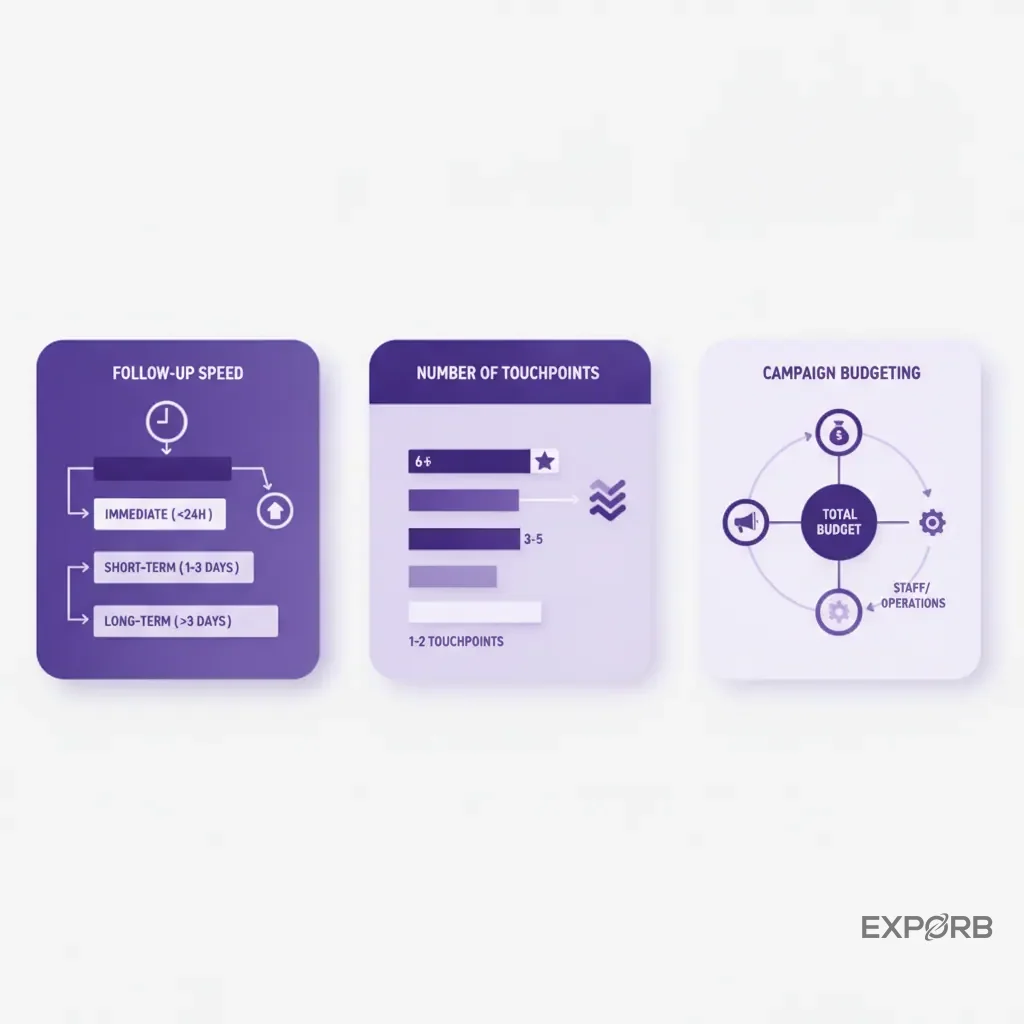
You should send your first follow-up within 24-48 hours of the conversation. According to multiple marketing guides, this "golden window" is when the conversation is still fresh in the prospect's mind. Any longer, and you risk forgetting them in a sea of post-show email blasts.
How many touchpoints are needed in a nurture campaign?
There's no single magic number, but most successful trade show lead nurturing campaigns involve 5 to 9 touchpoints spread over 30 to 60 days. You should make the sequence multi-channel—mixing email, LinkedIn, and even targeted ads—and it should stop automatically once a lead responds or books a meeting.
Can I run a successful campaign with a small budget?
Yes. A successful campaign is about process and discipline, not just expensive tools. The most important investment is in a solid lead capture system to get clean, contextual data. From there, you can build effective email sequences using almost any marketing automation platform. The key is speed and personalization, which process drives more than budget.
Turn your next trade show into a predictable revenue engine
Stop thinking of trade shows as an expensive branding exercise. With the right strategy and technology, they can be one of your most predictable and profitable sources of new business. It doesn't have to be a chaotic scramble of business cards and messy spreadsheets.
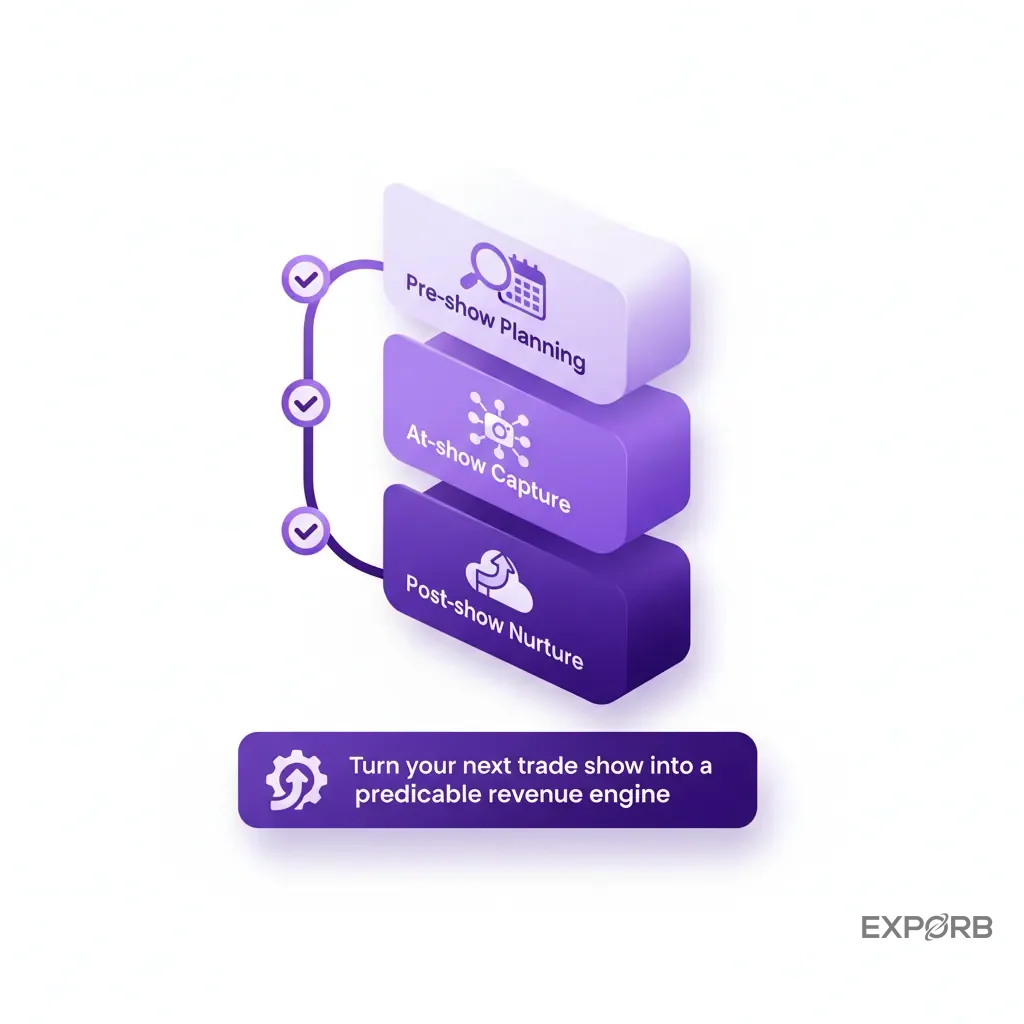
Your 3-step action plan for the next event
- Plan Before: Identify your top 30 target accounts and start your outreach 4-6 weeks before the show. Arrive with meetings already on the calendar.
- Capture with Context: Equip your team with a tool that captures not just contact info, but the substance of the conversation. Use voice notes, tags, and photos.
- Follow-Up Fast: Segment your leads into Hot, Warm, and Cold tiers immediately. Trigger your personalized, multi-touch nurture sequences within 24 hours.
The technology stack that makes it possible
Your stack doesn't need to be complex. You need three core components:
- A modern lead capture tool that works offline and structures data.
- A CRM as your central database.
- A Marketing Automation platform to execute your nurture sequences.
Ready to improve your trade show strategy?
The gap between a costly trade show and a profitable one is a process. It's the discipline to plan ahead, the technology to capture what matters, and the speed to act on it before the opportunity goes cold. It's time to stop leaving money on the convention center floor.