
What is B2B Lead Scoring in 2026?
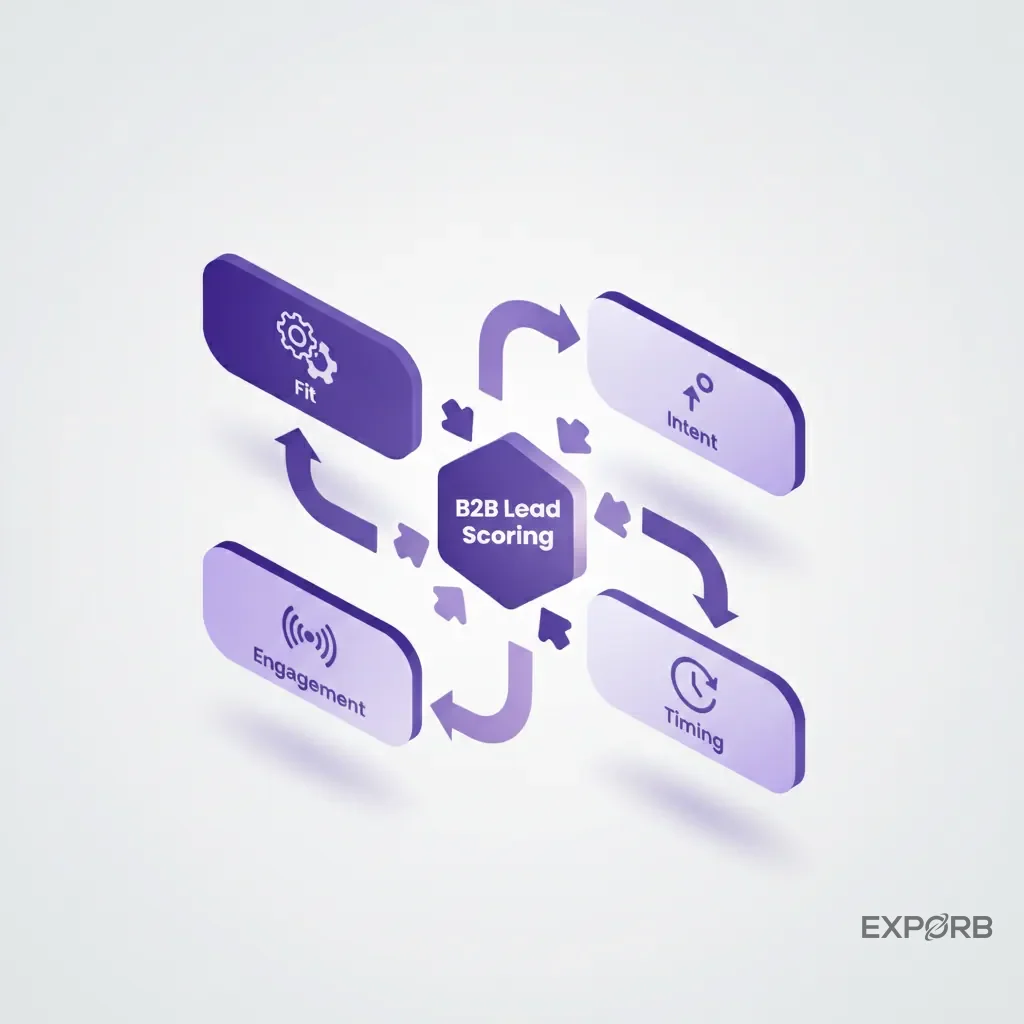
Most companies are still stuck in the past, using manual checklists that feel more like accounting than sales. A modern approach, however, demands more than just checking boxes for job titles and company size. Things have changed. We need to look at a few b2b lead scoring criteria examples to see how. It's about combining four key signals into a single, intelligent score that tells your sales team exactly who to call first.
Moving beyond manual checklists to AI-powered models
Manual lead scoring is broken. It's a static, rule-based system that can't adapt to the messy reality of a trade show floor. Your team assigns points based on a predefined list: "Director-level title? +10 points. Fortune 500 company? +15 points." That's a start, but it misses everything that actually matters.
What did they talk about? Did they mention a specific pain point your product solves? Did they ask about pricing and implementation timelines? A manual checklist just can't capture that.
AI-powered models, on the other hand, analyze the content of the conversation. They listen for keywords, detect sentiment, and identify genuine purchase intent. Research from The Starr Conspiracy shows AI-powered lead scoring delivers a median 28% improvement in MQL-to-SQL conversion rates. That's not a small jump—it's the difference between hitting your quota and missing it.
The core components: Fit, engagement, intent, and timing
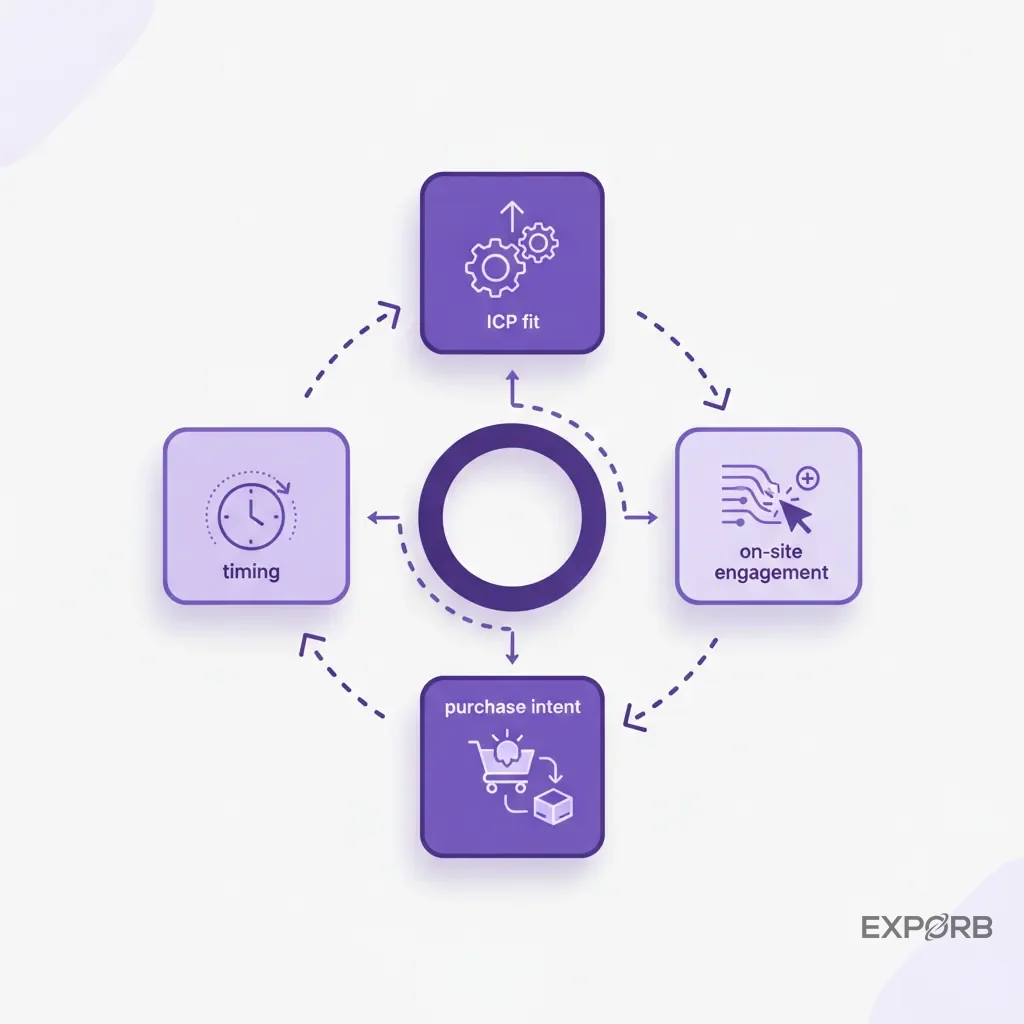
A solid lead scoring model isn't a single number. It's a combination of four distinct data streams:
- Fit (Explicit Data): This is the basic stuff. Does the lead match your Ideal Customer Profile (ICP)? It includes firmographics like company size, industry, and geography, as well as demographics like job title and seniority. Most badge scanners give you this.
- Engagement (Implicit Data): What did they do at your booth? Did they watch a full demo? Ask three deep questions? Bring their manager over to see the product? This behavioral data shows interest.
- Intent (Contextual Data): This is gold. What did they say? Did they mention "evaluating solutions this quarter" or complain about their current provider? These buying signals are things a simple form or badge scan will never capture.
- Timing (Recency Data): When did you talk to them? A conversation from this morning is hotter than one from two days ago. Fast follow-up is everything.
Why generic models fail at trade shows
Your website lead scoring model won't work for events. It just won't. A website model scores ebook downloads and webinar attendance—slow, passive activities. A trade show is fast, chaotic, and person-to-person.
The signals are completely different. A VP of Engineering who spends 10 minutes at your booth discussing an integration problem is a thousand times more valuable than someone who just dropped a business card in a fishbowl to win an iPad. A generic model treats them the same. You need a model built specifically for the high-context, high-intent environment of a live event.
Why is lead scoring critical for trade show ROI?
You spend $50,000, $100,000, or more on a booth, travel, and sponsorships. Then your team collects a pile of business cards and badge scans, dumps them into a spreadsheet a week later, and hopes for the best. That's not a strategy—it's gambling.
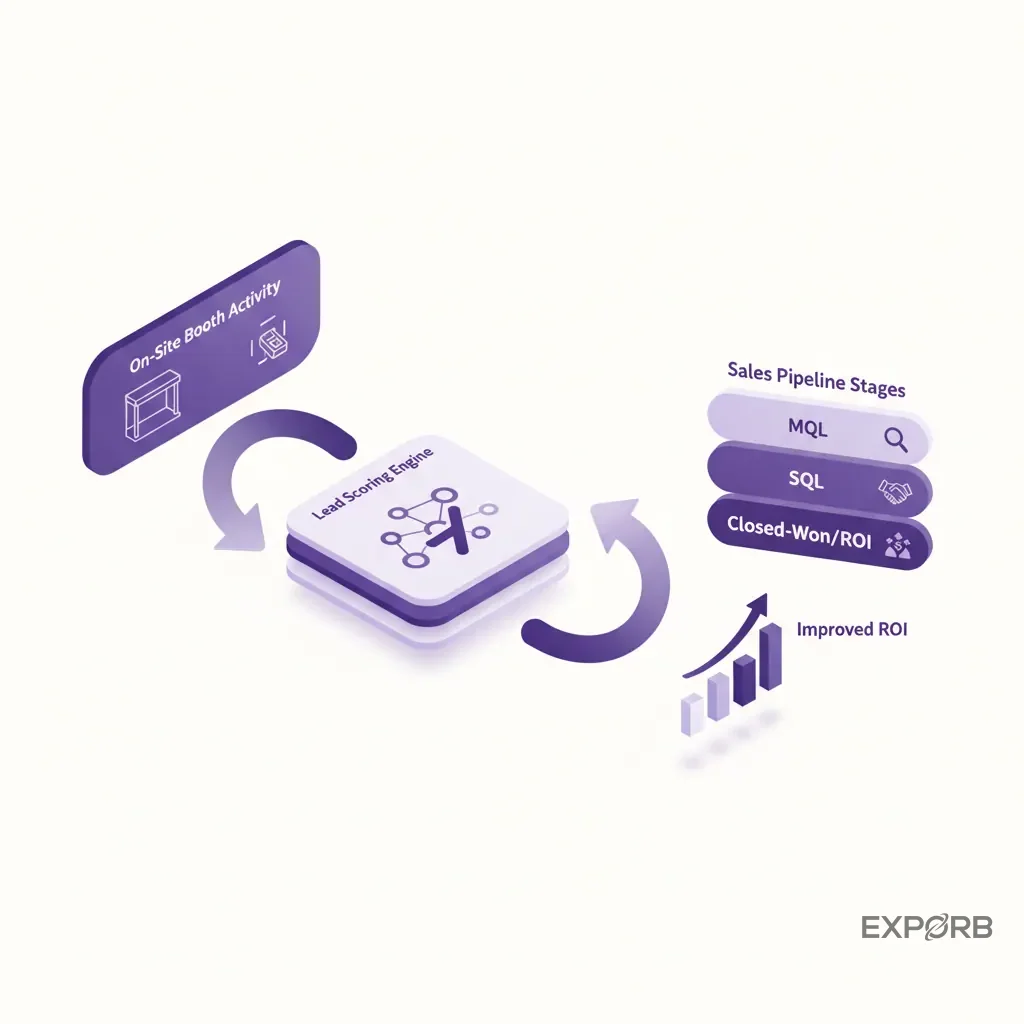
Lead scoring is the bridge between your on-site effort and actual revenue. It's the system that ensures the hottest, most promising conversations turn into pipeline, while tire-kickers are routed to a nurturing sequence. Without it, your best leads just get lost in the noise.
Connecting on-site effort to sales pipeline
How do you justify your event budget? By showing how many qualified leads and how much pipeline it generated. A pile of 500 un-scored names is a vanity metric. But "25 SQLs with a potential pipeline value of $500k" is a result.
Lead scoring forces your team to define what a "good lead" actually is before the event. It creates a direct link between the conversations happening at the booth and the opportunities entering your CRM. You can finally see which events—and even which team members—are driving the most valuable leads.
The high cost of delayed follow-up (and how to fix it)
The value of a trade show lead decays by the hour. A warm conversation on Tuesday is a cold call by the following Monday. By then, the prospect has forgotten your name, your company, and the problem they were trying to solve.
Data from Boothexperiences shows leads followed up within 7-10 days convert at rates of 20-30%. But what if you could follow up in 7-10 minutes? Real-time scoring at the booth lets you prioritize and act immediately. Your sales team can see the hottest leads pop up on a dashboard and send a personalized follow-up before the prospect has even left the exhibit hall. This is how you win deals in 2026.
Benchmark data: How AI scoring lifts MQL-to-SQL conversion by over 20%
The numbers don't lie. Manual scoring is a guess. AI scoring is a data-driven prediction. According to a 2026 report from Optifai, teams using AI-powered lead scoring see an MQL-to-SQL conversion rate of around 55%, compared to just 35% for manual scoring.
That's a 20 percentage-point lift.
For a team generating 200 leads at an event, that's the difference between getting 70 qualified meetings for sales and only 36. You're essentially doubling the productivity of your event spend by simply getting better at identifying who is actually ready to buy.
What are the four pillars of a modern event lead scoring model?
Forget complex, 50-rule spreadsheets. A powerful and effective trade show lead scoring model rests on four simple pillars. You need to know who they are, what they did, what they said, and how recently they said it. Get these four things right, and you'll be ahead of 90% of the other exhibitors on the floor.
Pillar 1: Explicit scoring for ideal customer profile (ICP) fit
This is the foundation. You can't sell to someone who can't buy your product. Explicit scoring is based on the hard data you can collect from a business card or a badge scan. It weeds out the obvious non-fits, but it doesn't tell you who is ready to buy.
- Job Title/Seniority: Are they a decision-maker (VP, Director), an influencer (Manager, Engineer), or an end-user? Assign higher scores to titles that control budget.
- Company Size: Do you sell to SMBs, mid-market, or enterprise? Score leads from your target segment higher.
- Industry: Do you specialize in fintech, healthcare, or manufacturing? Give more points to leads in your key verticals.
- Geography: If you only sell in North America, a lead from Europe gets zero points for this category.
Pillar 2: Implicit scoring for on-site engagement and behavior
This is where you start separating the interested from the merely curious. What did the person do at your booth? These actions reveal their level of engagement.
- Watched a full demo (+15 points): They invested time to see the product in action.
- Asked 3+ technical questions (+20 points): This shows deep interest and domain knowledge. They're not just kicking tires.
- Brought a colleague to the booth (+25 points): A huge buying signal. They've identified you as a potential solution and are building internal consensus.
- Attended your speaking session (+10 points): They sought you out beyond the booth, showing proactive interest.
Pillar 3: AI-driven scoring for purchase intent signals
This is the pillar most exhibitors completely ignore, and it's the most important one. What did they say? The actual words used in the conversation are the strongest indicators of intent. But you can't capture this with a badge scanner.
This is where you need a tool that can capture conversation context. When you use a system like Exporb's voice notes feature, you can record key snippets of the conversation. Then, AI can analyze the transcription for buying signals:
- Mentioned a key competitor by name (+20 points): They're actively comparing solutions.
- Used words like "budget," "timeline," or "evaluation" (+30 points): These are explicit buying process terms.
- Expressed frustration with their current tool (+25 points): This is the pain point you can solve.
- Asked about implementation or pricing (+15 points): They're thinking about the practical steps of becoming a customer.
Pillar 4: Timing and recency scoring
The final pillar is time. A lead's score should be dynamic. The score should be highest right after the conversation and decay over time. This creates urgency for your sales team, forcing fast follow-up. A lead captured an hour ago is a priority. One from three days ago can wait. This simple rule prevents hot leads from going cold.
Related: The Ultimate Guide to Trade Show Lead Capture
How do you score leads at a trade show? (With examples)
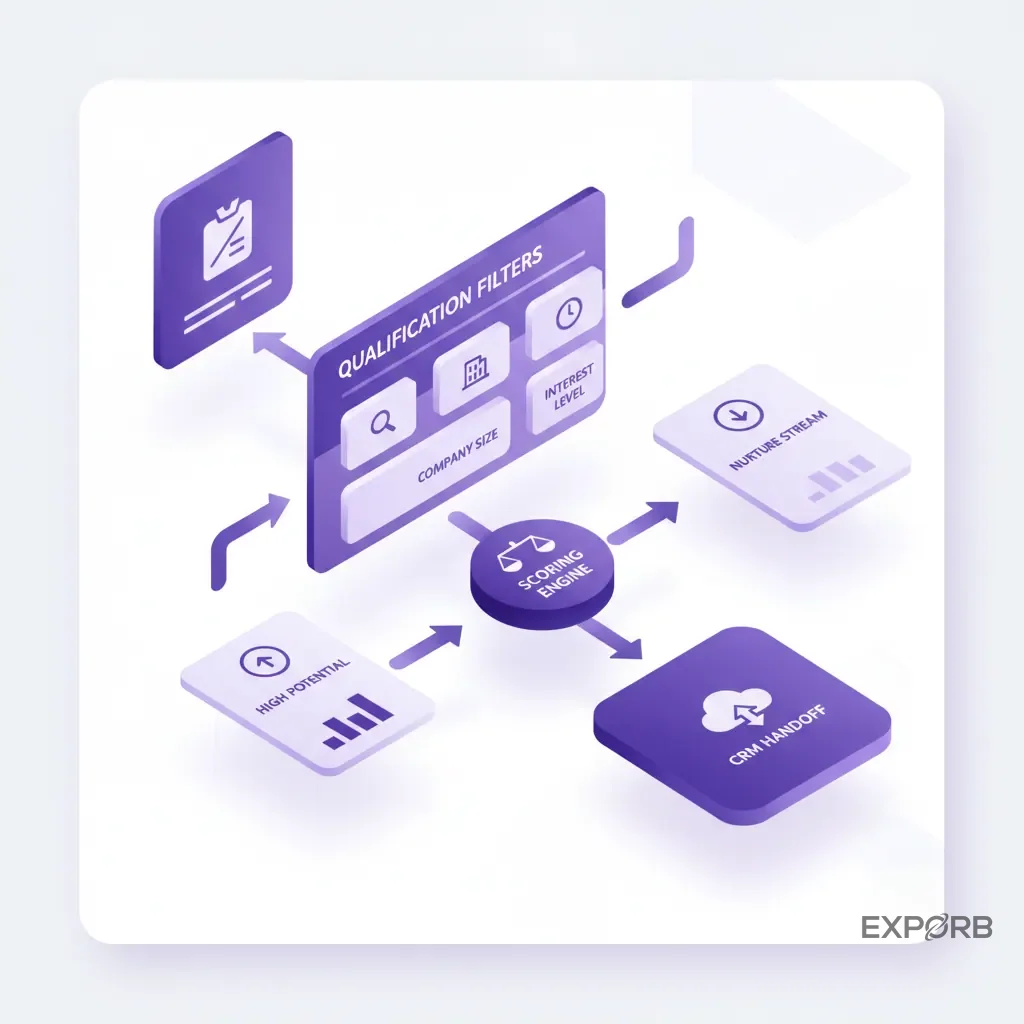
Let's make this practical. Building a scoring model feels abstract, but at the event, it comes down to capturing specific data points and assigning values to them. The goal is to translate a 5-minute conversation into a number that tells your sales team, "Call this person now."
Here's a look at how to assign points based on what you learn at the booth.
Scoring firmographics from a badge scan
The badge scan is your starting point. It gives you the "who" and the "where." It's basic, but it's essential for ICP fit. Don't overcomplicate it.
- Job Title:
- C-Level/VP: +20
- Director: +15
- Manager: +10
- Analyst/Specialist: +5
- Company Size (Annual Revenue):
- Over $1B (Enterprise): +20
- $50M - $1B (Mid-Market): +15
- Under $50M (SMB): +5
- Industry:
- Matches Target Industry: +15
- Adjacent Industry: +5
- Other: 0
A VP of Engineering at a $500M manufacturing company would start with a score of 50 (20 + 15 + 15). That's a good start, but it's just the fit. The real story comes from the conversation.
Assigning points for in-booth conversations and actions
This is where your booth staff needs training. They aren't just demoing; they're qualifying. They need to listen for keywords and observe behaviors that feed the scoring model. What they say and do reveals their intent. These actions are far more valuable than their job title.
Example point values for in-booth lead scoring criteria
Using this model, our VP from before now has a score of 50. If they watched a full demo (+15) and mentioned a key pain point (+25), their score jumps to 90. That's an A-grade, hot lead that needs immediate follow-up.
Integrating session attendance and speaker engagement
Don't forget about activities outside your booth. If you have a speaking slot, the people who attend are self-qualifying. They chose to spend 30-45 minutes listening to your company's point of view.
- Attended your speaking session: +10 points. They actively sought you out.
- Asked a question during Q&A: +15 points. They were engaged enough to participate.
- Visited the booth after your session: +20 points. This is a huge indicator of interest. They heard your message and immediately took the next step.
These are simple data points that add important context. A good lead capture system should allow your team to quickly add these tags to a lead's profile.
Does a high lead score always mean a ready-to-buy prospect?
No. And this is a trap many marketing teams fall into. They get obsessed with the total score and treat every lead over a certain threshold—say, 100 points—as a sales-ready SQL. This is a mistake.
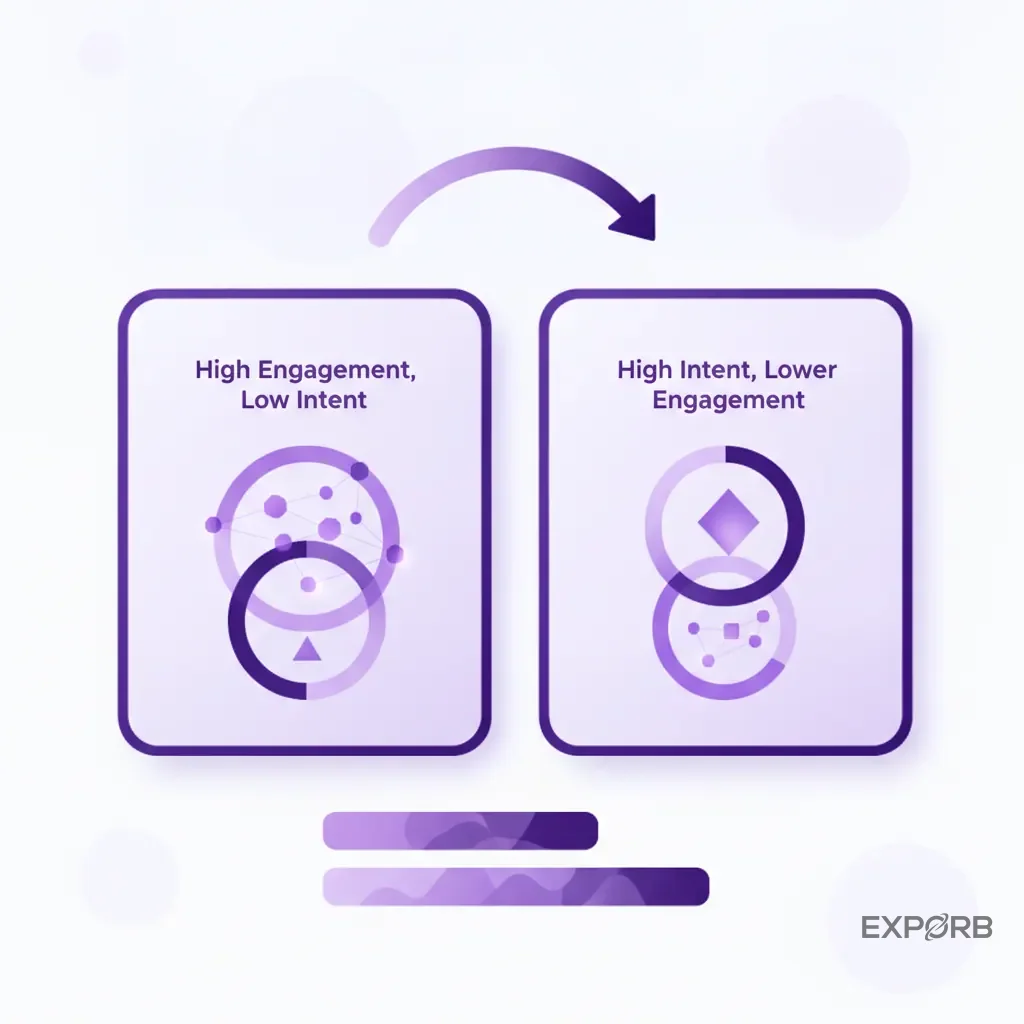
A high score means the lead is a good fit and is highly engaged. It doesn't automatically mean they have budget and authority and are ready to sign a contract next week. You need to look at the composition of the score, not just the total.
Challenging the myth: Separating high engagement from true purchase intent
Think about it. You could have a university researcher who loves your technology. They attend every webinar, read every whitepaper, and spent 30 minutes at your booth asking deep technical questions. Based on engagement, their score is through the roof.
But they have zero budget and no authority to buy. They're an enthusiast, not a customer.
Contrast this with a busy VP who only spent five minutes at your booth. They didn't watch a demo. But in those five minutes, they said, "We need to replace our current system by Q3. My budget is $100k. Can you send me a proposal?" Their engagement score is low, but their intent score is off the charts. Who would you rather your sales team call?
The 'engaged non-buyer' problem and how to spot it
The "engaged non-buyer" is a common persona at trade shows. They can be students, competitors, analysts, or just fans of your tech. They rack up engagement points but have no commercial value.
How do you spot them?
- Look at their title and company. A "Student" or "Researcher" title is a dead giveaway.
- Listen for intent keywords. Did they talk about budget, timeline, or solving a business problem? Or did they just ask about the underlying technology?
- Use negative scoring. Automatically subtract points for email domains like
.eduor for job titles that include "Intern" or "Analyst."
Using score dimensions to route leads for nurturing vs. sales
The solution is to stop looking at a single score. Instead, use score dimensions. Your CRM should show you two scores for every lead:
- Fit/Engagement Score: How much do they look like your ICP and how interested are they?
- Intent Score: How likely are they to buy soon?
This lets you route leads intelligently.
- High Fit/Engagement, Low Intent: These are perfect for your marketing nurture campaigns. Send them case studies, ebooks, and webinar invites. Keep them warm.
- High Fit/Engagement, High Intent: These are your SQLs. Route them directly to sales for immediate follow-up. This is your pipeline from the event.
How can you prevent valuable trade show conversations from getting lost?
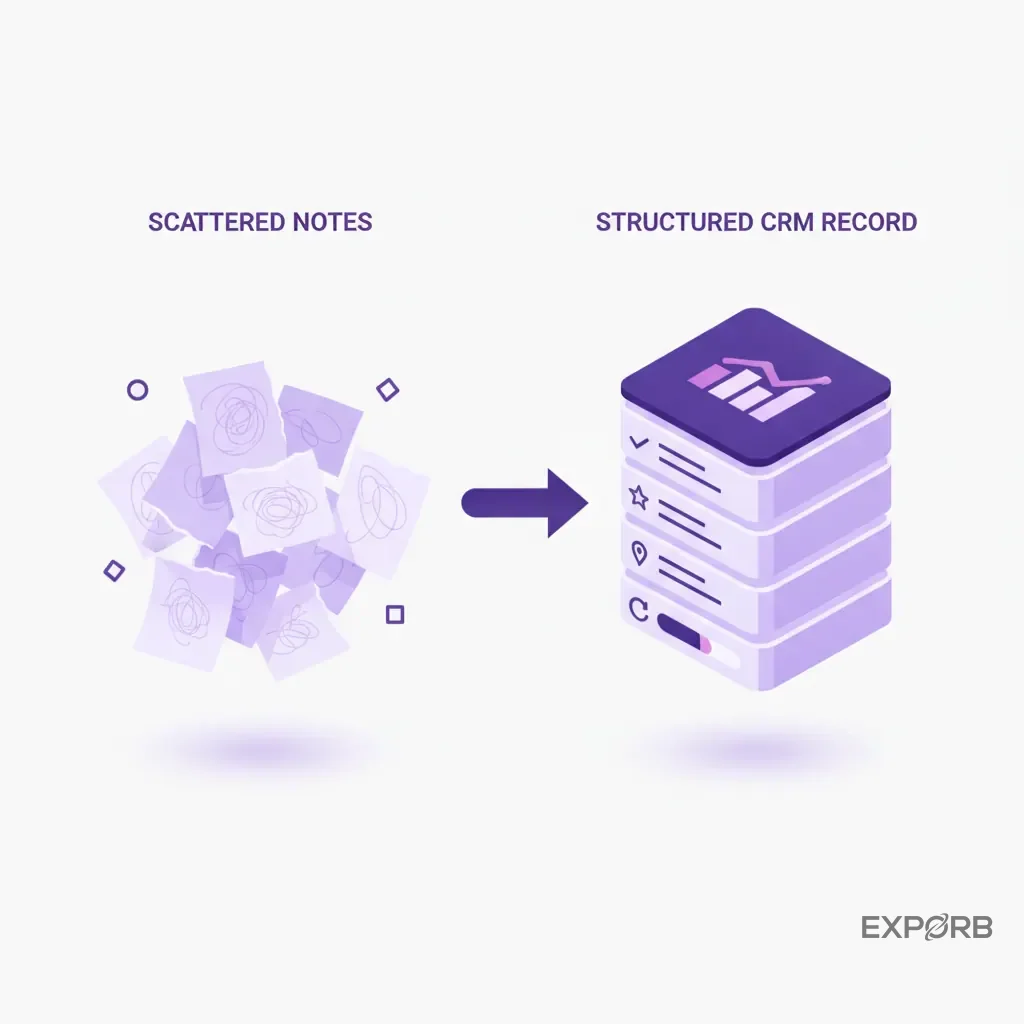
Here's the scenario I hear from founders all the time. You just spent a fortune on a trade show. Your team comes back excited, holding a stack of 200 business cards. You ask them, "So, which ones are the good ones?"
They stare back blankly. "Uh, I think this person from Acme Corp was really interested. And this one... I think she said they were looking for a solution. I can't quite remember what we talked about."
All that valuable context—the pain points, the buying signals, the next steps—is gone. It vanished somewhere between the noisy exhibit hall and the Monday morning meeting.
The founder's pain point: 'What did my team actually learn?'
As a founder or sales leader, you're blind. You have no visibility into the quality of the conversations your team is having. You're relying on their memory and messy notes scribbled on the back of a business card. It can take a week or more to sort through the mess, type everything into a spreadsheet, and figure out who to follow up with. By then, it's too late.
You're losing leads, and you don't even know it. The most valuable insights from the show are trapped in your team's heads, and they leak out with every passing day.
Scenario: From scattered notes to a structured, scorable CRM record
Imagine a different way. Your team member finishes a great conversation. They take out their phone.
- They snap a picture of the business card.
- They tap a button and record a 30-second voice note: "This is Sarah from Acme. She's looking to replace their legacy system by the end of the quarter. Her main pain point is lack of integration. She needs a proposal by Friday and wants to set up a call with her engineering lead next week."
- They add a few tags: #hotlead #q3-deal #proposal-needed.
That's it. The lead is captured. The context is saved. The next steps are clear. There's no data entry after the show because it was done in real-time.
Using AI transcription and conversation capture to power real-time scoring
This is where modern tools change the game. The process I just described is exactly what we built Exporb for. It's not just about scanning a card; it's about capturing the conversation.
When you use a tool with AI-powered voice notes, our system automatically transcribes and analyzes that 30-second summary. It can pick out keywords like "replace," "quarter," and "proposal." It can then use that data to automatically update the lead's intent score in real-time. Your sales leaders, back at the office, can see a live feed of high-intent leads as they're captured. They can even trigger a personalized follow-up email before the rep has moved on to the next conversation. This is how you stop losing the value from your event conversations.
Related: 5 Trade Show Follow-Up Email Templates That Actually Work
How do you build your first trade show lead scoring model?
Building a model from scratch sounds intimidating, but it doesn't have to be. You can start with a simple, effective model and refine it over time. The key is to get sales and marketing in a room together to agree on what a "good lead" looks like. If you don't have alignment, your model is doomed from the start.
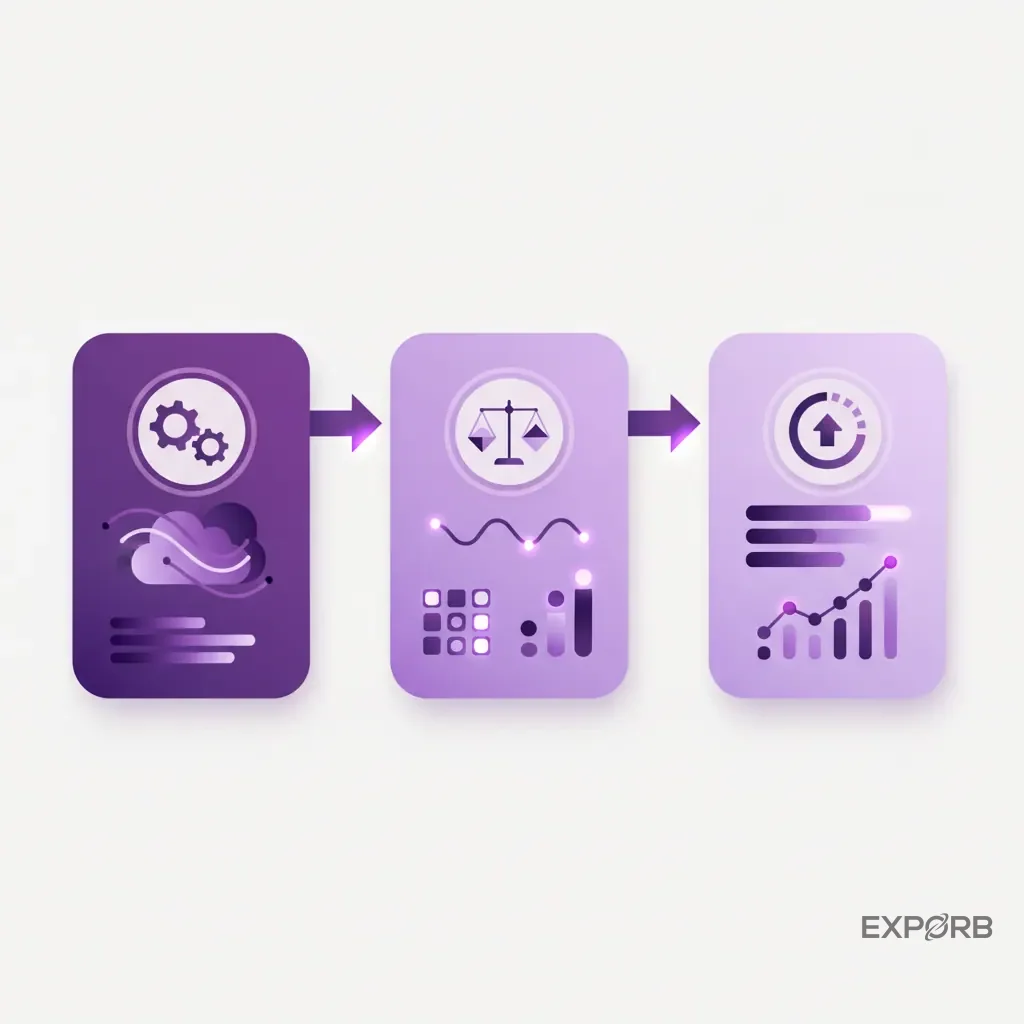
Step 1: Define your ideal customer profile (ICP) with sales
This is the most important step. Marketing can't define the ICP in a vacuum. You need to sit down with your top sales reps and ask them:
- "Describe the last five deals we closed. What were their job titles? What industry were they in? How big were their companies?"
- "What are the red flags? What tells you immediately that a lead is a waste of time?"
- "What are the green flags? What words or phrases make you lean forward in your chair?"
The answers to these questions become the foundation of your scoring model. Document the key attributes of your best customers. This is your ICP.
Step 2: Assign point values to key attributes and actions
Now, turn that ICP into a points system. Start with a baseline of 100 points for a perfect lead. Then, assign positive and negative values to the attributes and actions you defined.
- Firmographics (Max 40 points): Assign points for title, company size, industry.
- Behavior/Engagement (Max 30 points): Assign points for watching a demo, asking questions, etc.
- Intent Signals (Max 30 points): Assign points for mentioning budget, timeline, or pain points.
Keep it simple. You can always add more complexity later. The goal is to create a system that's easy for your booth staff to understand and use.
Step 3: Set clear scoring thresholds for MQL and SQL handoff
Once you have your points system, you need to define the thresholds for action. When does a lead become interesting enough for marketing to nurture? When is it hot enough to send to sales?
- Lead (Score 0-49): A raw, unqualified contact. May not be a fit.
- Marketing Qualified Lead (MQL) (Score 50-79): A good fit who has shown some interest. Add them to a long-term nurture campaign.
- Sales Qualified Lead (SQL) (Score 80+): A great fit who has shown clear buying intent. This lead should be sent to a sales rep for immediate follow-up within 24 hours.
These thresholds are your service-level agreement (SLA) between marketing and sales. They ensure sales only receives leads that are worth their time, and marketing has a clear goal for Lead Qualification.
What are negative and account-based (ABM) scoring criteria?
Not every interaction is a positive one. A good scoring model shouldn't just add points; it should also subtract them. You need a way to quickly disqualify leads that are a bad fit so your sales team doesn't waste time on them. This is where negative scoring comes in.
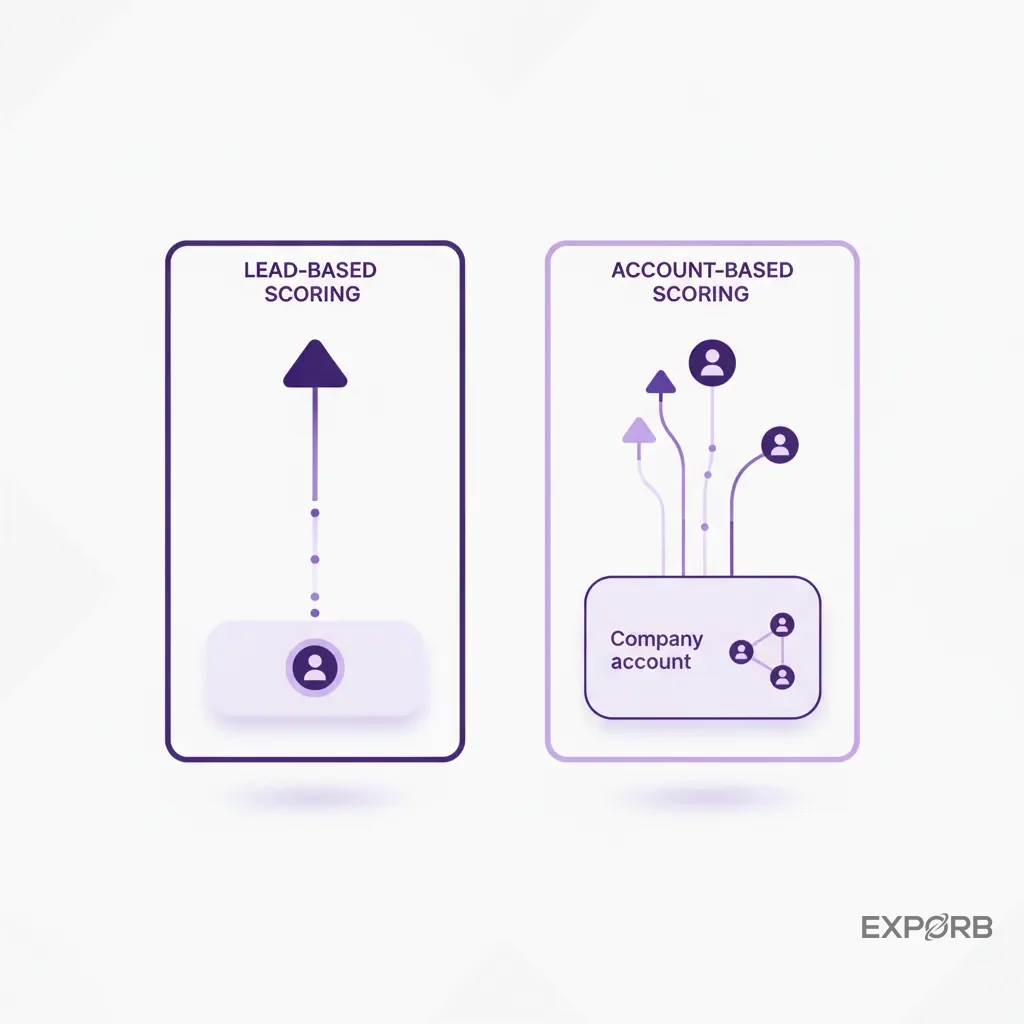
For complex enterprise deals, scoring a single person often isn't enough. You need to look at the entire account.
Using negative scores to disqualify competitors, students, and non-ICP leads
Negative scoring is a powerful filter. It allows you to automatically penalize or disqualify leads based on certain attributes.
- Email Domain:
gmail.com,yahoo.com, or.edu? -20 points. These aren't business buyers. - Job Title: "Student," "Intern," "Professor"? -50 points. They're here to learn, not to buy.
- Known Competitor: If the company name matches a name on your competitor list, disqualify them immediately. Score: -999.
This cleans up your lead queue and ensures your team focuses only on legitimate prospects. It's a simple but effective way to improve the quality of leads passed to sales.
Shifting from lead scoring to account scoring for enterprise sales
In enterprise sales, you're not selling to one person. You're selling to a buying committee. You might talk to an engineer, a manager, and a VP from the same company at a trade show. Scoring each of them individually doesn't give you the full picture.
Account-based scoring (ABM) rolls up the scores of all known contacts at a single company. The account score gives you a much better signal of interest. If three people from the same company visit your booth, that's a much stronger signal than one person visiting three times.
How to score an account based on multiple attendees and their seniority
Your system should be smart enough to aggregate this data. For example:
- An Engineer (score 40) visits your booth on Day 1. The account score for their company is 40.
- Their Manager (score 60) visits on Day 2. The account score is now 100.
- The VP (score 80) stops by for a demo on Day 3. The account score jumps to 180.
An account score of 180 is a massive buying signal. It shows widespread interest across the organization and at multiple levels of seniority. This is an account your top sales rep should be calling immediately.
When should a lead be passed from marketing to sales?
The handoff from marketing to sales is the most critical and often the most broken part of the lead management process. It's where speed, clarity, and automation make all the difference. A poorly managed handoff leads to frustrated sales reps and lost deals.
The answer to "when?" should be defined by your scoring threshold. No exceptions.
Establishing your marketing qualified lead (MQL) threshold
An MQL is a lead marketing has deemed worthy of nurturing. It's a prospect that fits your ICP and has shown some level of engagement, but hasn't yet raised their hand to speak with sales.
Your MQL threshold—for example, a score of 50—is the trigger. Once a lead hits this score, they should be automatically enrolled in a relevant marketing nurture campaign. This could be a drip sequence with case studies, an invitation to an upcoming webinar, or a guide related to the topics they discussed at the booth. The goal is to stay top-of-mind and continue providing value until they're ready to buy.
The sales qualified lead (SQL) criteria: What sales needs to accept a lead
An SQL is a lead that has met a higher scoring threshold—say, 80 points—and has shown clear intent to buy. This is the lead sales has agreed is worth their time to pursue actively.
For sales to accept the lead, it must contain more than just contact info. The record passed to them should include:
- The full conversation notes or transcription.
- The specific pain points mentioned.
- Any competitors they're evaluating.
- The agreed-upon next steps.
Without this context, the sales rep is just making another cold call. With it, they can have a relevant, helpful conversation that picks up exactly where the booth conversation left off.
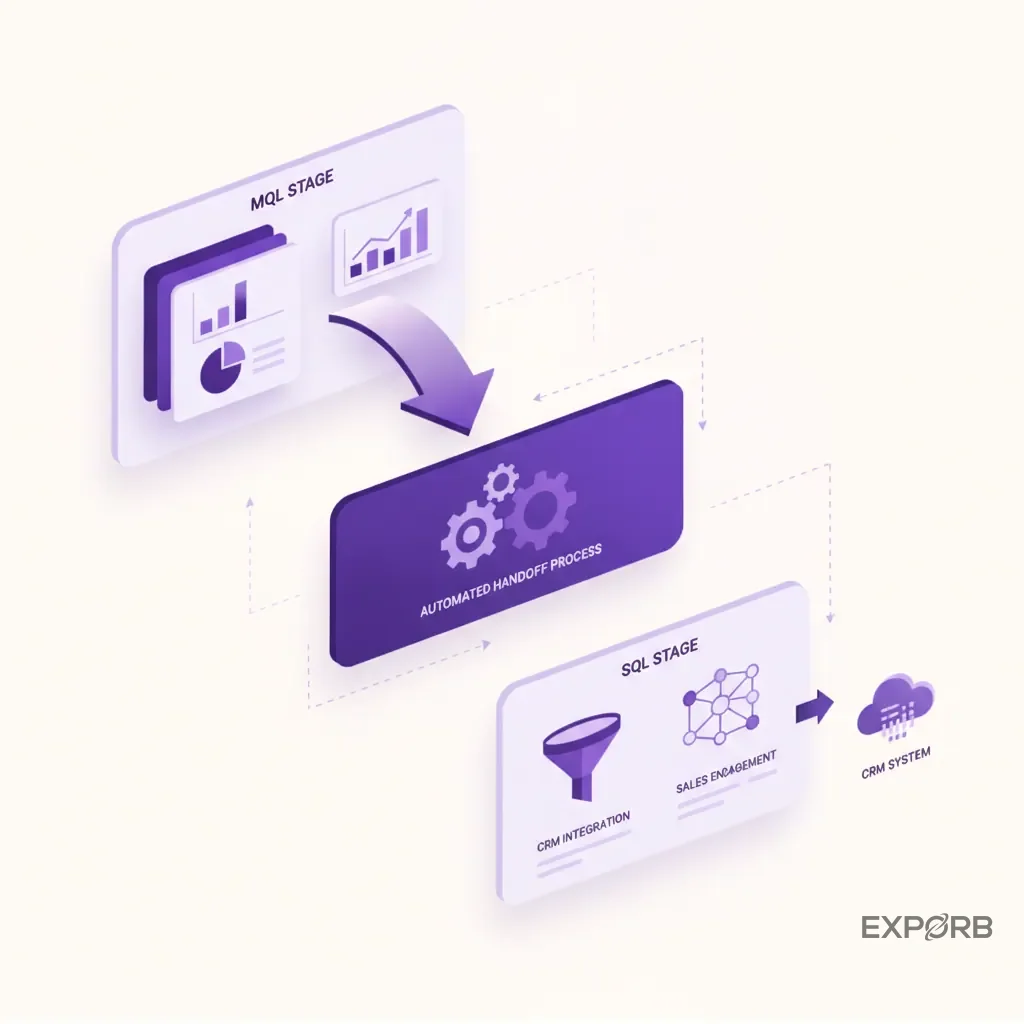
Automating the handoff process with your CRM
This process can't be manual. You can't rely on someone exporting a CSV and uploading it to the CRM a week after the show. It's too slow and prone to error.
A modern lead capture tool should integrate directly with your CRM. When a lead's score crosses the SQL threshold, a rule should fire automatically:
- Create or update the contact in your CRM (e.g., Salesforce, HubSpot).
- Assign the lead to the correct sales rep based on territory or other rules.
- Create a task for that rep with a due date of "today" and the instruction to follow up.
- Populate the lead record with all the captured notes, tags, and conversation context.
This means hot leads are acted on in minutes, not days. This level of automation is what separates high-performing event marketing teams from the rest. Look for tools that offer a smooth CRM export to streamline this process.
Putting your trade show lead scoring plan into action
A plan is useless without execution. You've defined your ICP, built your model, and set your thresholds. Now it's time to prepare for the show and ensure your team is ready to capture the data you need to make it all work. Success depends on what you do before, during, and after the event.
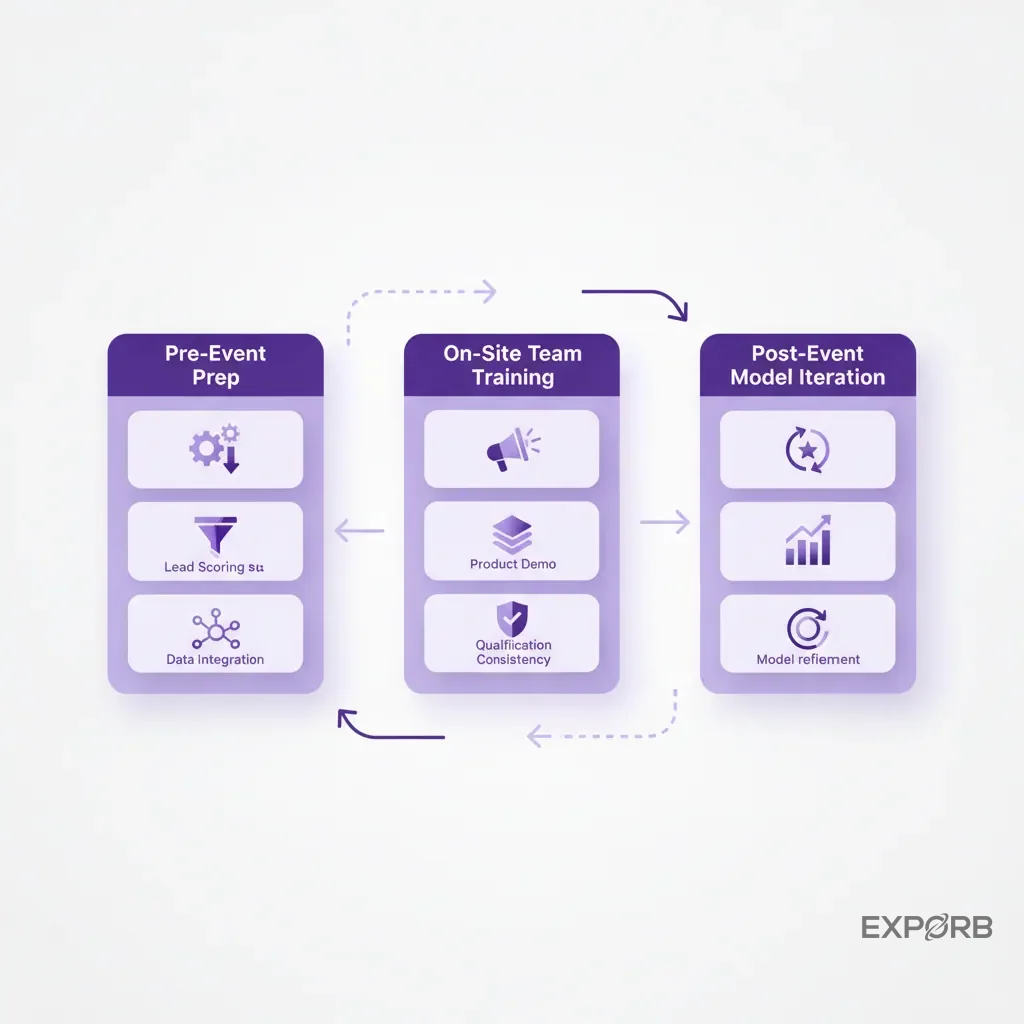
Your pre-event checklist for scoring success
Two weeks before the show, finalize your setup:
- Confirm ICP and Scoring Rules: Get final sign-off from sales and marketing leadership.
- Configure Your Lead Capture App: Build your custom fields, tags, and scoring logic directly into your tool. Don't rely on paper forms.
- Test the Workflow: Do a dry run. Capture a test lead, make sure it scores correctly, and confirm it syncs to your CRM with all the right data.
Training your on-site team to capture the right data
One week before the show, train your booth staff: Your team is the most important part of the equation. Your model is only as good as the data they collect.
- Explain the "Why": Show them how their notes and tags directly impact the lead score and help sales prioritize follow-up.
- Role-play Scenarios: Practice capturing leads for different personas (the busy VP, the technical engineer, the tire-kicker).
- Teach Them to Listen: Train them to listen for the specific keywords and buying signals that add points to the intent score.
Continuously iterating your model based on conversion data
One month after the show, review and refine: Your first lead scoring model won't be perfect. It's a starting point. The real magic happens when you use data to make it better over time.
- Analyze the Results: Look at the leads that converted to opportunities. What did they have in common? Did they have high scores?
- Interview Sales: Ask your reps which leads were the best and why. Was the scoring accurate? What was missing?
- Tweak Your Point Values: Adjust the scores based on what you learned. Maybe "mentioned a competitor" is a stronger signal than you thought. Increase its point value for the next show.
Lead scoring isn't a "set it and forget it" project. It's a continuous process of learning and improvement that will make your entire Event Marketing program more effective.