
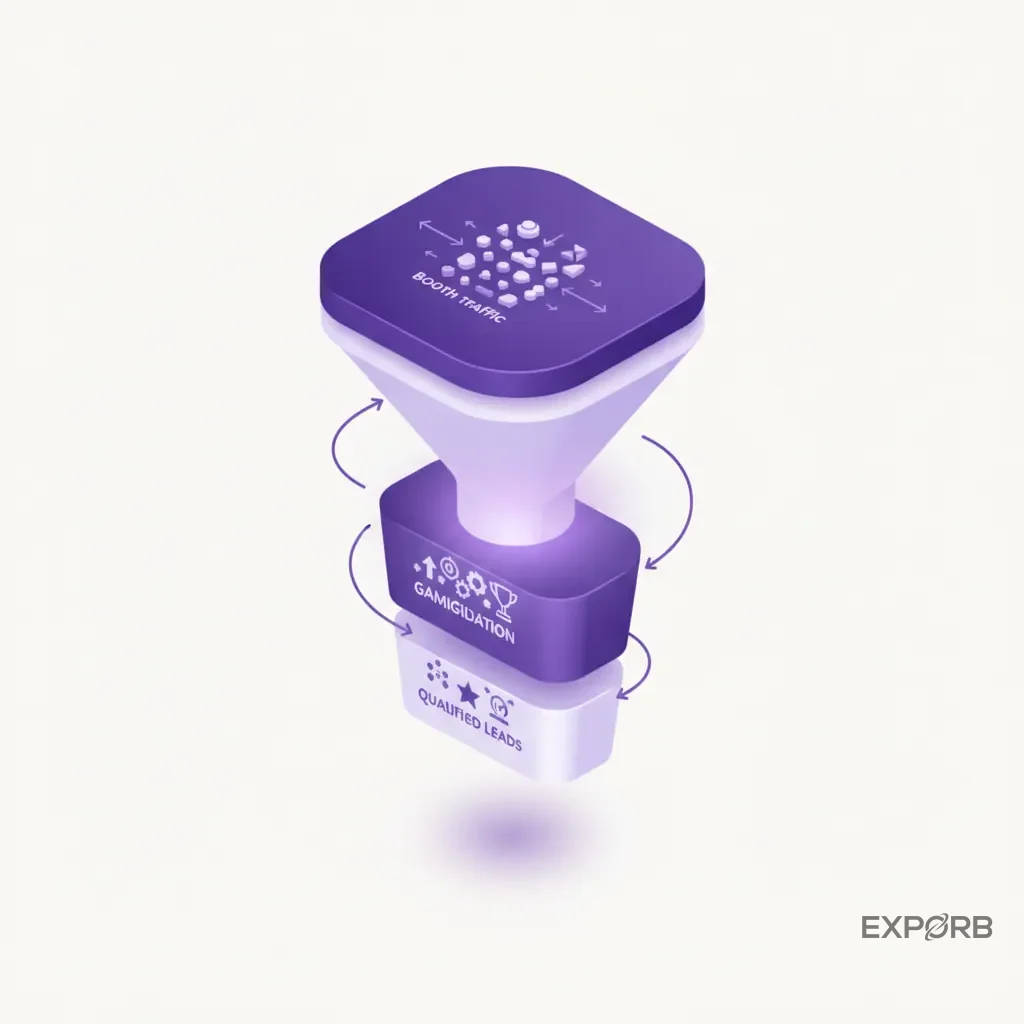
You've spent $50,000 on a booth that looks incredible. The graphics are sharp, the lighting is perfect, and you've got a prime spot on the floor. But what's your plan for turning the river of booth traffic into an actual pipeline? This is where most exhibitors fail. They invest everything in the backdrop and nothing in the interaction. Most exhibitors obsess over booth design and completely ignore lead capture. They're spending $50K looking good and $0 on remembering what was said. An effective trade show gamification strategy bridges a pretty booth and a full CRM. It's about engineering conversations, not just fun.
From crowded floors to qualified pipelines in 2026
The trade show floor is more crowded and competitive than ever. Attendees are bombarded with pitches and suffer from "booth blindness"—where everything starts to look the same. A well-designed game cuts through that noise. It gives people a reason to stop, engage, and—most importantly—share information about their business needs in a low-pressure environment. You aren't just collecting a business card; you're starting a memorable interaction that gives your sales team a warm opening for their follow-up.
Key statistics on attendee engagement and decision-making authority
Don't just take our word for it. The data shows interactive elements work. According to research from American Image, gamified booths can generate up to 40% more visitors and achieve 73% higher attendee engagement. That engagement isn't superficial; it leads to 30% better brand recall after the event. When a prospect gets dozens of follow-up emails, you want yours to be the one they actually remember.
Moving beyond the fishbowl: the limits of traditional lead capture
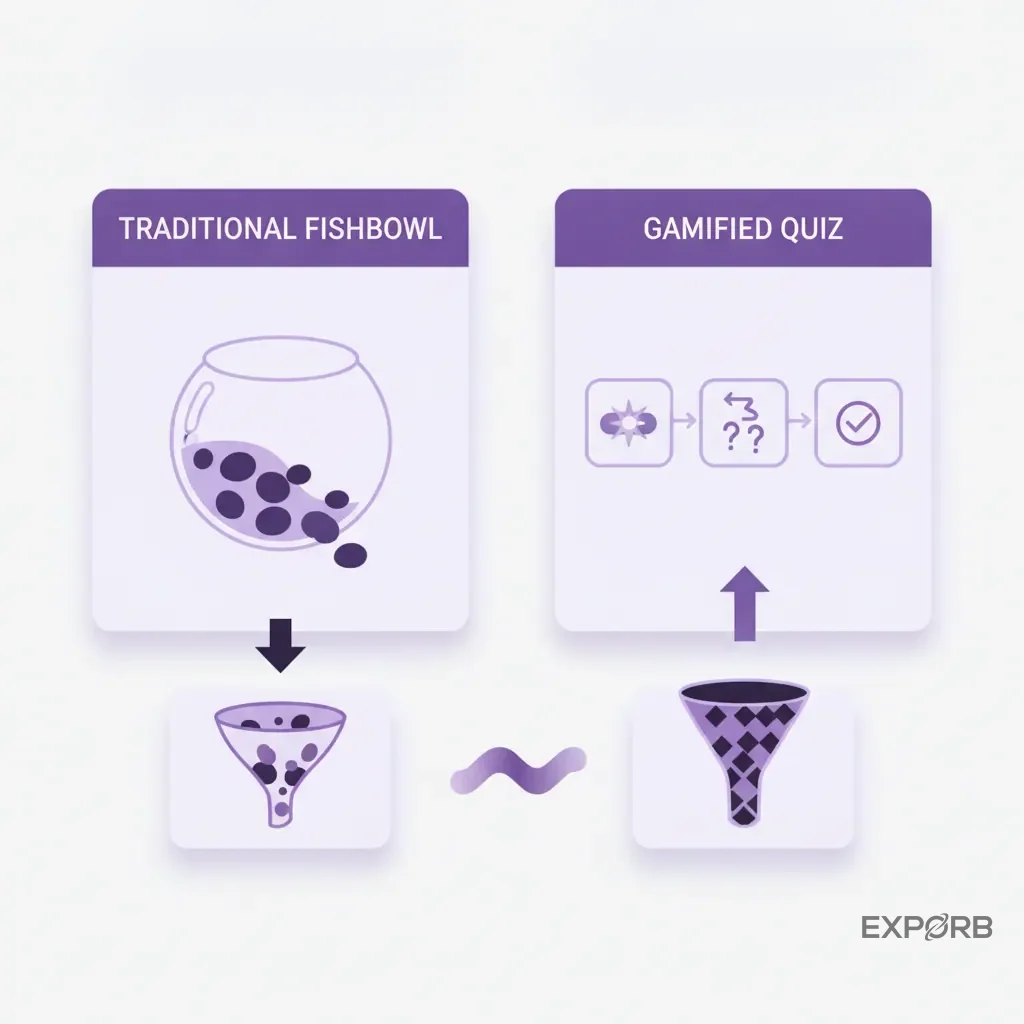
The classic "drop your business card in a fishbowl to win an iPad" is dead. Why? Because it generates a list of people who want a free iPad, not a list of people who need your solution. You get zero qualification data. You don't know their job title, their company's challenges, or their buying authority. It's a messy, untargeted list that wastes your sales team's time. It's the perfect example of being busy instead of being productive. Think about the fishbowl full of business cards that nobody will follow up on.
Are booth games just a gimmick or a serious Lead Generation engine?
Let's be direct: most people think booth games are a gimmick. They picture a cheap prize wheel and a collection of unqualified leads. They're wrong. When designed with intent, a game is a powerful psychological tool for Lead Qualification. It transforms a cold interaction into a warm, consultative conversation.
Challenging the myth: 'fun' doesn't mean 'unqualified'
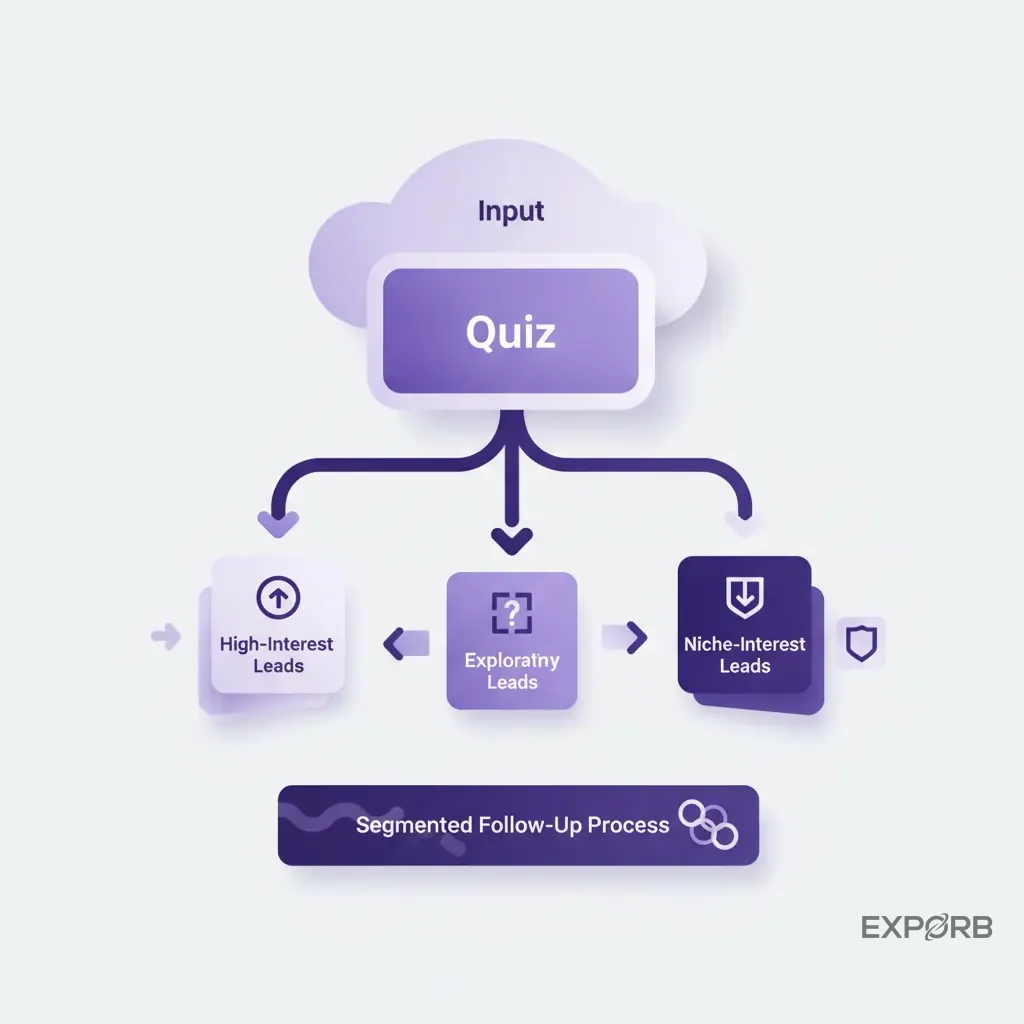
The problem isn't the game; it's the goal of the game. If your goal is just to create a crowd, you'll get a crowd of unqualified people. But if your goal is to identify prospects with a specific business pain, you can design a game that does exactly that. A quick quiz, for example, can segment attendees by their role, industry, or current software stack before your team even says hello. The "fun" is just the hook that gets them to participate willingly in the qualification process.
How interaction builds brand recall and trust (with data)
People remember what they do far more than what they see. A passive booth visit is forgettable. Actively playing a game, answering questions, and competing for a prize creates a multi-sensory experience. This active participation forges a stronger neural pathway, making your brand stick. That 30% increase in brand recall isn't magic; it's a direct result of turning passive viewers into active participants. Trust begins with a positive, memorable interaction.
The psychology of play: why games lower the barrier to conversation
Nobody likes a hard sell. Walking up to a stranger and asking "So, what are your key business challenges for Q3?" is awkward and confrontational. But asking, "Want to test your industry knowledge for a chance to win a great prize?" is friendly and inviting. A game provides a socially acceptable reason for both parties to start talking. It's a structured icebreaker that disarms skepticism and makes people more open to sharing information they'd otherwise guard closely.
What gamification tactics actually convert visitors into qualified leads?
Not all games are created equal. A giant Plinko board might draw a crowd, but it won't tell you who the VPs of Marketing are. The best games are designed to filter and segment your audience while they play. The trick is to embed your qualification questions directly into the game's logic.
Interactive quizzes and trivia that segment prospects by need
This is one of the most effective tactics. Create a short, 3-4 question quiz on a tablet related to your industry. The questions shouldn't be random trivia; they should be qualification questions in disguise.
- Bad Question: "What year was our company founded?" (Who cares?)
- Good Question: "What's your biggest marketing challenge right now? A) Lead Gen, B) Brand Awareness, C) Customer Retention."
The answer immediately tells your team how to frame the conversation. Someone who answers "A) Lead Gen" is a hot prospect who needs a specific conversation about pipeline. You can even have the quiz results recommend a specific sales rep to talk to.
Digital spin-to-win wheels with prize tiers tied to buying intent
Modernize the classic prize wheel. Instead of just winning a pen or a t-shirt, the wheel can land on different "prizes" that reveal buying intent. For example, a senior executive might spin to win a "30-minute strategy session with our CEO," while a student might win a branded pop socket. The prize they're eligible for—or the one they choose—is a data point. The key is to capture their contact info before the spin.
AR scavenger hunts for high-value account engagement
For your top-tier, account-based marketing (ABM) targets, a generic game won't cut it. An Augmented Reality (AR) scavenger hunt is a high-impact way to engage them. Send your target accounts a pre-show mailer with the first clue. They then have to visit your booth (and maybe a partner's booth) to scan AR markers that reveal more clues or product information. It's an immersive experience that guarantees quality time with your most important prospects.
Related: The Complete Trade Show Lead Capture Guide
How can QR codes turn your physical booth into a digital conversion funnel?
QR codes are the simplest, most effective bridge between your physical booth and your digital marketing platform. They're cheap, universally understood, and turn every attendee's smartphone into a lead capture device. But just slapping a QR code on your banner and hoping for scans is a failed strategy.
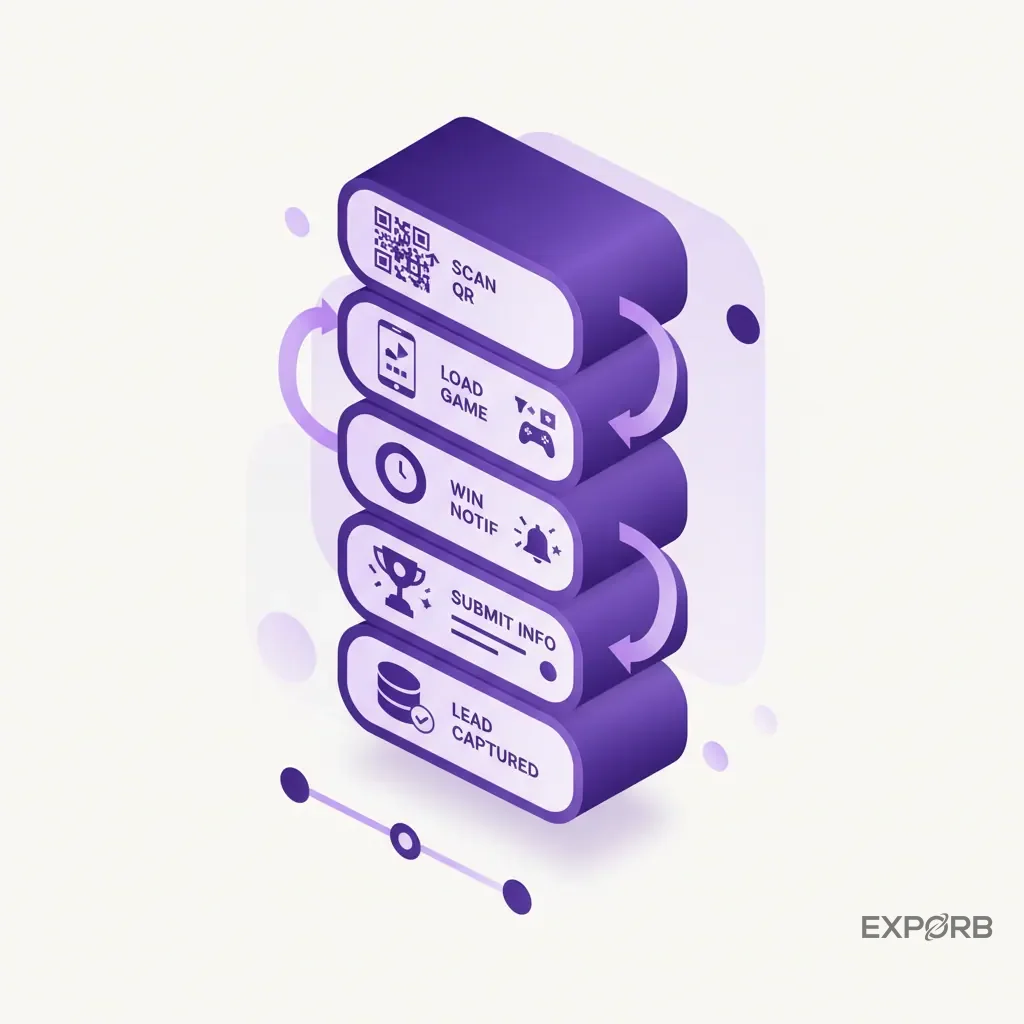
Designing a QR game: from scan to lead capture in under 60 seconds
The flow must be frictionless. From the moment they scan to the moment they submit their information, the entire process should take less than a minute.
- The Scan: A clear call-to-action (CTA) prompts the scan. "Scan to Play & Win!"
- The Landing Page: It loads instantly and presents the game—no logins, no app downloads.
- The Game: A quick quiz or a "pick your prize" entry form.
- The Form: Asks for a maximum of 3 fields: Name, Email, and maybe one qualification question.
- The Thank You: A confirmation page that tells them what they won or what happens next.
Anything more complicated, and you'll see a massive drop-off rate.
Best practices for QR code placement and size (the 3cm minimum rule)
Where you put the QR code matters. Don't hide it at the bottom of a banner. Place it at eye level, on tables, on prize displays, and on your giveaway items. According to research from Qronoplay, a QR code needs to be at least 3cm x 3cm to be easily scannable from a normal distance. Any smaller, and you risk a scan failure rate of up to 50%. The same study found that a QR code game with a verbal invitation from booth staff performs 2-3 times better than one left on its own.
A step-by-step tutorial for setting up your first QR-based game
You don't need a custom development team to launch a QR game. Here's how to do it simply:
- Create a Form: Use a simple form builder like Google Forms or Typeform to create your 2-3 question quiz.
- Get the Link: Grab the public share link for your form.
- Generate a QR Code: Use a free online QR code generator to turn that link into a QR code.
- Design Your CTA: Create a simple graphic that says "Scan Here to Play!" and place the QR code on it.
- Print & Display: Print the graphic and place it prominently around your booth.
How do you capture critical qualification data without killing the fun?
This is the central challenge. The moment your game feels like a survey, you've lost. The key is to make data collection feel like a natural part of the game, not a hurdle to jump over.
The 2-3 question rule for frictionless data collection
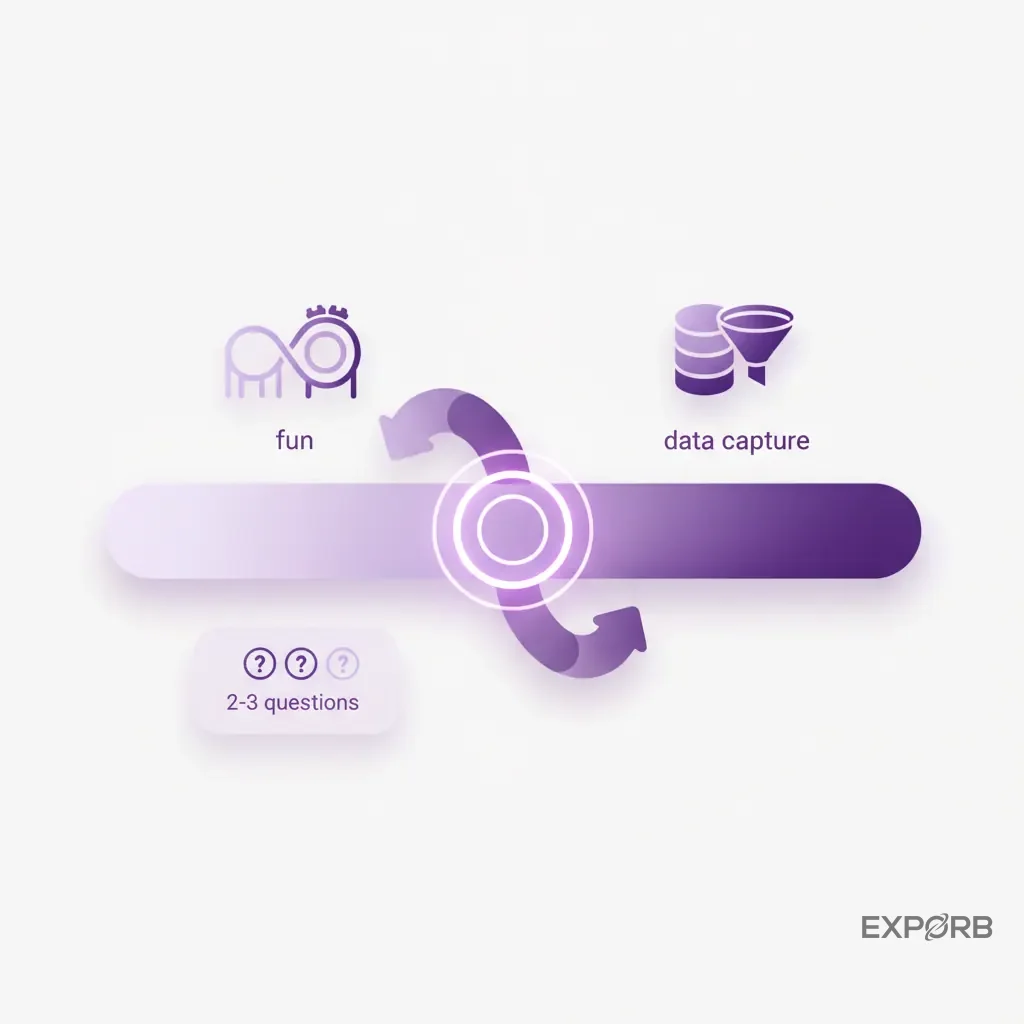
Limit your initial data capture to two or three essential questions. A guide from Loopyah recommends a simple formula: a visible prize, a straightforward game, and a fast qualification process with just 2-3 questions. You can always enrich the lead with more data later. At the booth, your goal is to get the minimum information needed to qualify and route the lead correctly. Name and email are obvious. The third question should be your single most important qualifier, such as "What is your job role?" or "What is your company size?"
Using game logic and branching paths to ask the right questions
More advanced games can use branching logic. The answer to the first question determines the next question you ask. For example:
- Q1: "Are you currently using a CRM?"
- If Yes: "Which one? A) Salesforce, B) HubSpot, C) Other."
- If No: "What's the biggest barrier to adopting one? A) Cost, B) Complexity, C) Team Buy-in."
This approach feels more like a personalized conversation and provides much richer data than a static form.
Comparing data capture methods: QR scan vs. manual entry vs. badge scanner
Each method has its pros and cons. The right choice depends on your event and your goals.
Comparison of common lead capture methods at trade shows.
Badge scanners are fast but often provide nothing more than a name and email—the context is missing. Manual entry is slow and prone to errors. A QR game strikes a great balance, providing self-reported, accurate data with minimal friction for the attendee.
Beyond the grand prize: designing a reward strategy that segments your audience
Your prize strategy is a qualification tool. What you give away, and to whom, sends a signal about who you want to talk to. Giving everyone the same cheap pen attracts everyone. Tiering your prizes attracts the people who matter most.
Tiering prizes based on lead score or job title
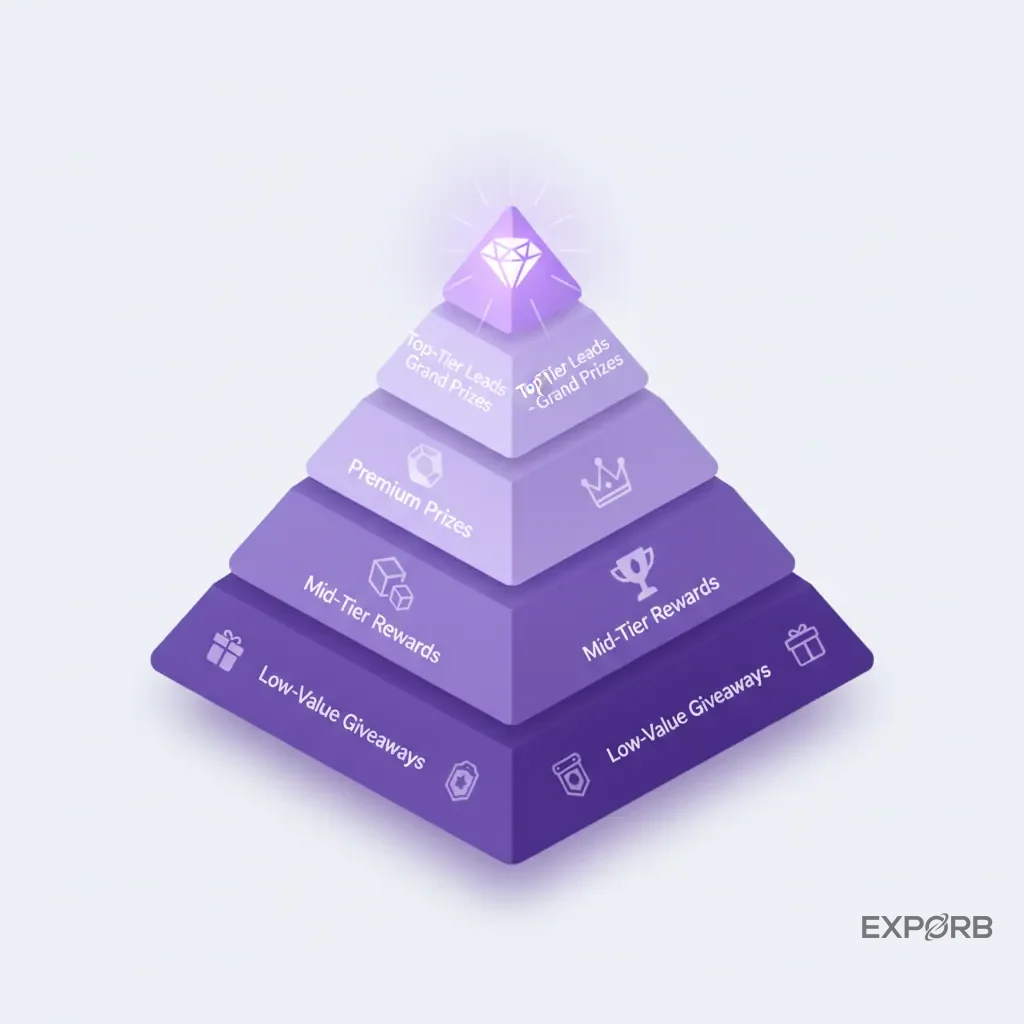
Don't offer the same prize to a student and a C-level executive. Set up your game so the outcome or prize offered is based on the data attendees provide.
- Everyone gets: A branded sticker or pen.
- Managers get: A high-quality coffee mug or notebook.
- Directors & VPs get: Entered into a drawing for a high-value prize like a drone or a premium subscription to a related service.
This means you're investing your prize budget in the people most likely to become customers.
Instant rewards vs. grand prize drawings: pros and cons for B2B
Instant rewards provide immediate gratification and encourage more people to play. The downside is the prize value is typically lower. A grand prize drawing can attract people with a high-value item, but the delayed gratification might reduce participation. For B2B, a hybrid approach often works best. Offer a small, instant reward for everyone who plays, and enter qualified leads into a drawing for a larger prize.
Using prize selection as an implicit qualification signal
Instead of a single prize, offer a choice. The choice itself is a data point. For example, you could offer a choice between a book on marketing strategy, a book on sales tactics, or a high-tech gadget. The person who chooses the book on marketing strategy has just told you something important about their role and priorities without you ever having to ask.
What did your team actually learn at the event?
You played the games. You scanned the badges. You collected a pile of business cards. Now what? The single biggest failure in trade show marketing happens after the crowds go home. It's the black hole of information between what your team learned on the floor and what your founder or sales director actually sees.
The founder's blind spot: lost conversations and forgotten details
Your team had 100 conversations. But back at the office, all you've got is a spreadsheet of names and emails. Which ones were hot? Who asked about that specific feature? What were the agreed-upon next steps? It's all gone—stuck in the heads of your reps or scribbled on the back of a business card. This is the founder's blind spot. You're flying blind, unable to conduct targeted outreach because the context of every conversation disappeared. Your team meets 100 people at the booth. Monday morning, you ask what they learned. Blank stares.
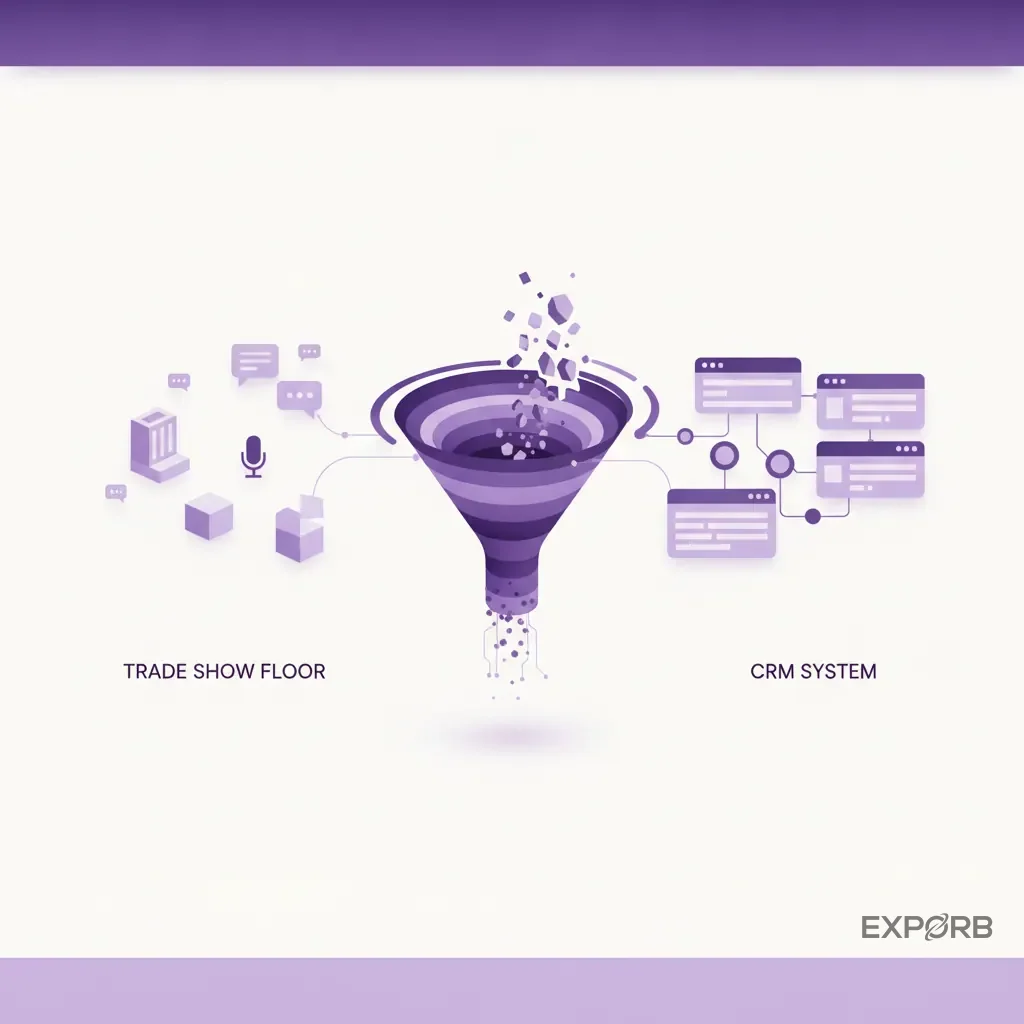
Scenario: turning a casual game interaction into a structured sales note
Imagine an attendee plays your quiz and their answers indicate they're a perfect fit. A rep strikes up a conversation. They talk about a specific pain point and a competitor's product they're unhappy with. This is pure gold. But if that context isn't captured immediately, it's forgotten by the next day. The follow-up email becomes a generic "Nice to meet you" instead of a specific "I remember you mentioned you were struggling with [X] and were looking for a solution that does [Y]."
Creating a single source of truth for your entire event team with a CRM
The only way to solve this is with a system that captures context at the source. This is where tools designed for event lead capture are essential. Your team needs a way to instantly add notes, record key conversation snippets, and tag leads with their specific interests right at the booth. We built Exporb's team sync feature because it lets everyone on the team see who talked to whom in real-time, adding notes and context that syncs to a central dashboard. No more duplicate conversations or lost details.
Related: [How to Calculate Trade Show ROI The Right Way](/blog/trade-show-roi-guide)
How do you measure gamification success beyond just counting booth visits?
"We were really busy" isn't a business metric. To justify your investment in trade show gamification, you need to track metrics that connect directly to revenue. Foot traffic is a vanity metric; pipeline is what matters.
Essential metrics: participation rate, lead quality score, and meetings booked
According to Trade Show Labs, you should track at least three things for any booth activation:
- Participation Rate: How many people who visited your booth actually played the game? (e.g., 200 players / 500 visitors = 40% participation).
- Lead Quality Score: Of the participants, how many met your criteria for a qualified lead? (e.g., 80 qualified leads / 200 players = 40% qualification rate).
- Meetings Booked: How many of those qualified leads converted into a scheduled demo or meeting? This is the ultimate measure of success.
Calculating the ROI of your gamification investment
The formula is simple: (Pipeline Generated - Gamification Cost) / Gamification Cost = ROI. If you spent $2,000 on your game setup (software, prizes, design) and it generated $50,000 in qualified pipeline, your ROI is a staggering 2,400%. Tracking this proves the game was a revenue-generating investment, not just a fun expense.
Connecting booth activity to post-show sales pipeline with event-specific CRMs
To calculate that ROI accurately, you need a clear line of sight from the booth to the closed deal. A generic CRM makes this difficult. Using a specialized trade show lead capture tool allows you to tag every lead from a specific event. This way, six months later, you can run a report and see exactly how many deals that originated from your game have closed, giving you undeniable proof of its value.
The first 48 hours: using AI to activate your gamified leads
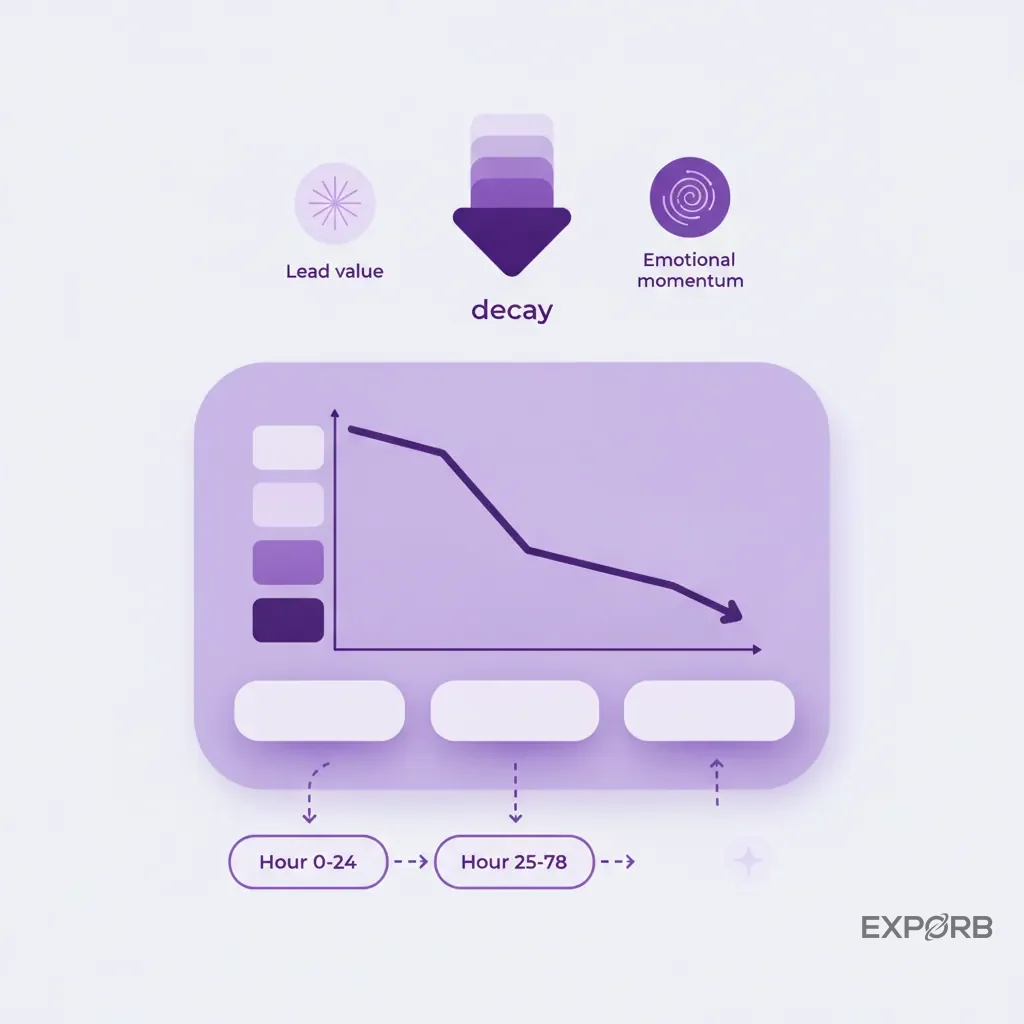
You played a great game and captured hundreds of qualified leads full of rich context. Now the clock is ticking. The emotional momentum and brand recall from an event decay incredibly fast. Research suggests this drop-off happens within 72 hours. If you wait a week to send your follow-up, you've already lost.
Why lead value and emotional momentum decay after 72 hours
The moment attendees leave the trade show floor, they're back in their world of overflowing inboxes and back-to-back meetings. The excitement of your conversation fades. A follow-up email that arrives a week later feels like a cold call. An email that arrives the next morning feels like a continuation of a warm conversation. Speed is everything.
Using AI to transcribe, enrich, and route leads instantly
The traditional post-show process is a bottleneck. It involves manually transcribing notes, researching contacts on LinkedIn, and figuring out who should get which lead. This can take days. AI changes this entirely. Your team can capture a quick voice note after a great conversation, and AI can transcribe it, pull out key entities like pain points and next steps, and enrich the contact with company data—all before your rep has even left the booth.
Automating personalized follow-up based on game responses and conversation data
This is where the process becomes truly powerful. Instead of your team manually typing hundreds of emails, AI can do the heavy lifting. Based on the data from your game and the context from captured conversations, an AI-powered system can draft a personalized follow-up email on the spot. Your rep just reviews it and hits send. At Exporb, we see this pattern: a week-long task becomes a one-minute action, right on the trade show floor, with AI email follow-up.
Your game plan: a step-by-step checklist for your next trade show
Ready to put this into action? Don't just show up and hope for the best. A successful trade show gamification strategy requires planning before, during, and after the event.
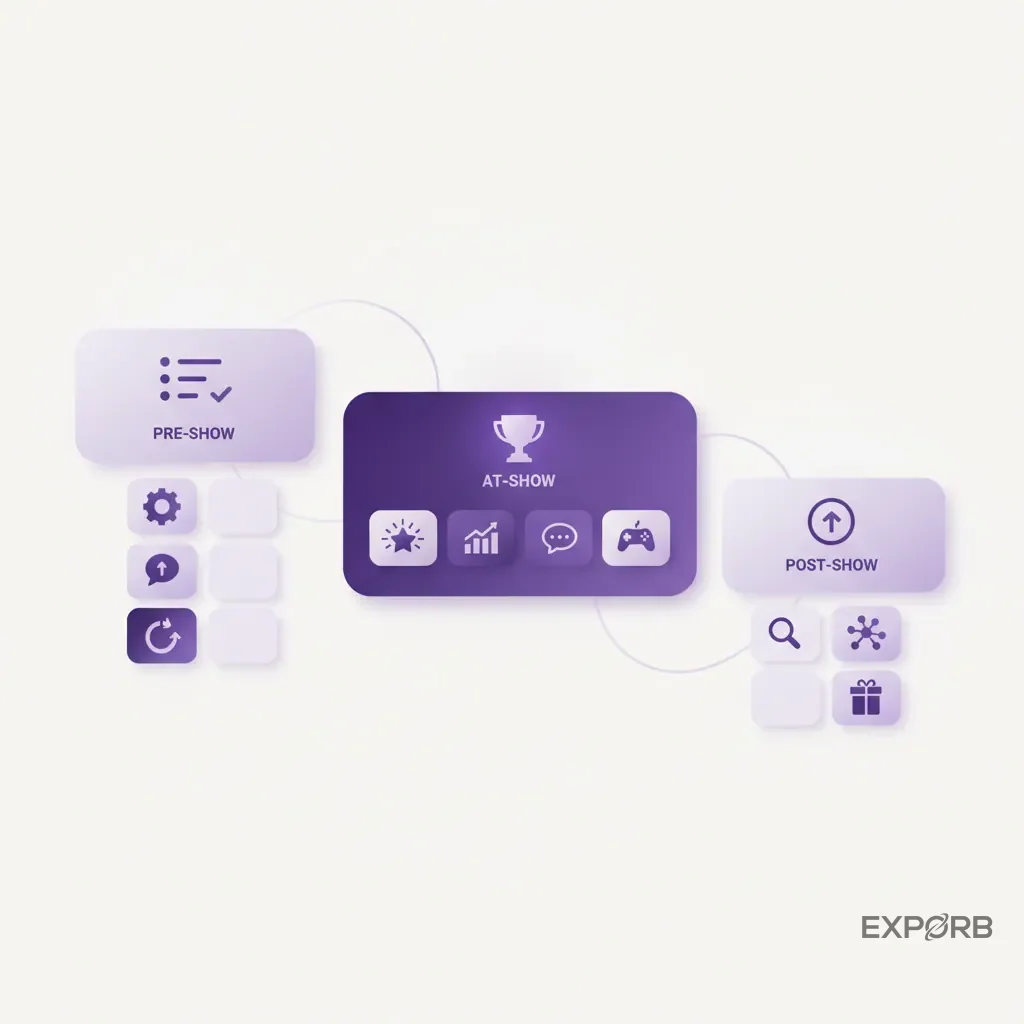
Pre-show: defining your goals and choosing your game
- Define Success: What's your #1 goal? Is it booking 50 demos, identifying 20 enterprise-level leads, or something else? Be specific.
- Know Your Audience: What kind of game will appeal to your ideal customer profile?
- Choose Your Tech: Select your game platform, QR code generator, and lead capture app. Make sure your lead capture tool has solid offline functionality, because trade show Wi-Fi always fails.
- Design Your Prizes: Create a tiered prize strategy that aligns with your lead qualification goals.
- Promote: Announce your game and prizes to your email list and social media followers before the show to build buzz.
At the show: training your team and driving participation
- Train Your Team: Everyone on your booth staff must know how to run the game, answer questions, and—most importantly—how to transition from the game to a business conversation.
- Be Proactive: Don't wait for people to notice your game. Use it as an icebreaker to invite people in.
- Capture Everything: Insist your team captures notes and context for every significant interaction. A name and email isn't enough.
- Monitor Your Metrics: Keep an eye on your participation and qualification rates. If something isn't working, don't be afraid to tweak your approach on day two.
Post-show: executing the follow-up and analyzing results
- Follow Up Fast: Trigger your personalized follow-up sequences within 24 hours. The faster, the better.
- Distribute Leads: Route qualified leads to the correct sales reps immediately, complete with all the context captured at the booth.
- Analyze the Data: Run a full analysis of your results. What was your ROI? Which game worked best? What did you learn?
- Plan for Next Time: Use your findings to make your gamification strategy even more effective at your next event.