
Using AI at trade shows: The modern exhibitor's guide for 2026
Trade show AI isn't just a trend anymore; it's a core part of any winning event strategy. You can't walk a trade show floor without seeing artificial intelligence everywhere—in matchmaking apps, lead capture tools, and powering real-time booth analytics. What was a novelty just a few years ago is now a must-have for exhibitors who want real ROI. The days of scanning a badge and hoping for the best? They're over.
From novelty to necessity: The 2026 shift in event strategy
It's a massive shift. Gitnux reports that 54% of exhibitors now use AI for booth personalization, tailoring demos on the fly. This isn't just about flashy tech. It's a direct response to the immense cost and pressure of exhibiting. Companies are tired of spending $50,000 on a booth only to come home with a fishbowl full of business cards and no idea what to do next. AI turns that expense into an investment.
The advantage of integrated AI vs. standalone gadgets
While the market is flooded with single-purpose AI gadgets, you'll find the real advantage comes from an integrated system. A platform that connects booth conversations directly to your CRM for follow-up delivers far more value than standalone tools ever could. For example, a simple transcription app is useful. But one that transcribes a conversation and uses that data to draft a personalized follow-up email? That's what actually saves time and closes deals.
How this guide helps exhibitors drive measurable revenue
This is a practical guide for exhibitors. We'll cover how to use AI for better preparation, smarter on-site conversations, and proving the value of your event budget post-show. Forget the hype. Let's focus on what works.
How can AI optimize your pre-show strategy?
The best trade show work happens before you ever set foot in the exhibit hall. AI gives you an unfair advantage in preparation, turning guesswork into a data-driven plan. It's about knowing who to talk to before they even know you exist.
Predicting industry trends and high-traffic sessions
Forget reading last year's blog posts. AI models analyze industry publications, social media chatter, and past event data to predict which topics and speakers will be most popular. Industry experts at ION Exhibits explain that forecasting tools can even predict attendee traffic flow, helping you staff your booth for peak hours instead of guessing. You'll know exactly when the most valuable prospects are likely to be walking the floor.
Identifying and targeting high-value attendees before they arrive
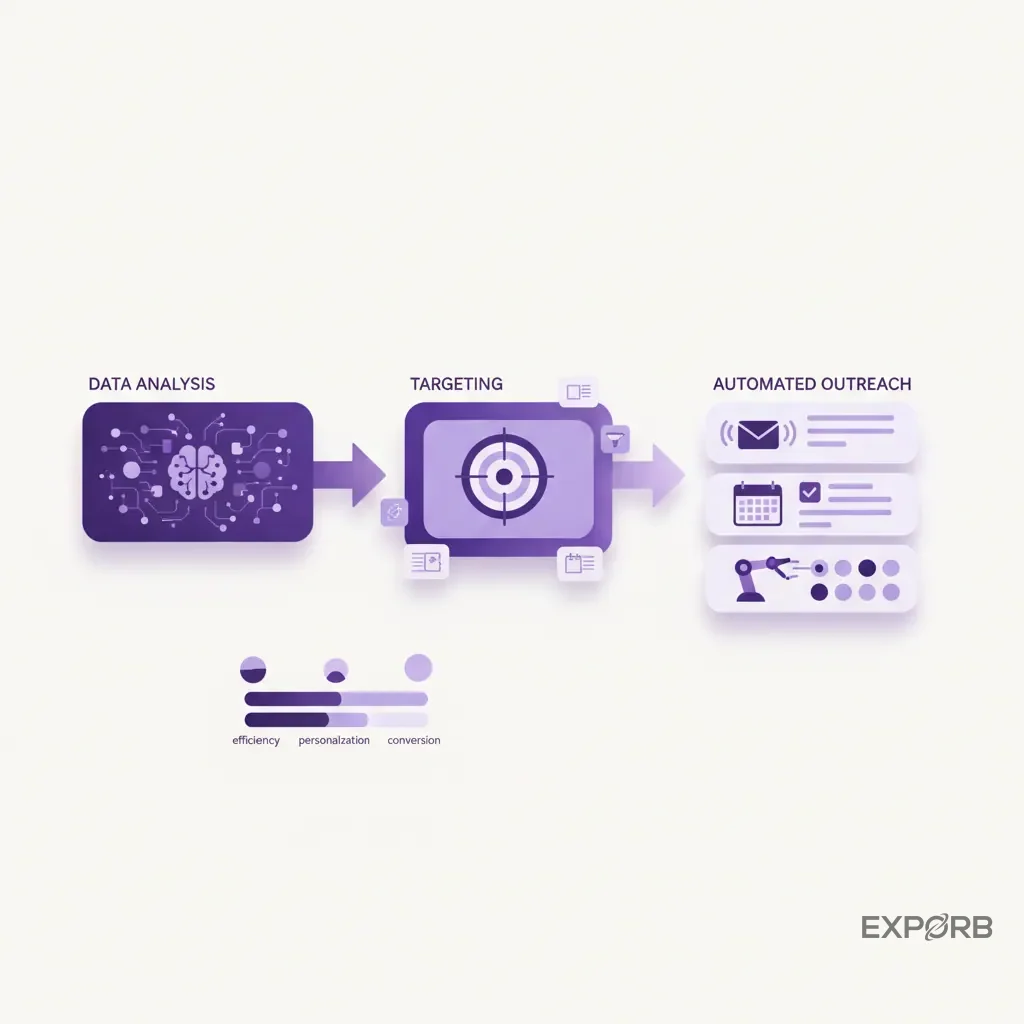
Why wait for people to find your booth? AI platforms can sift through attendee lists (where available) and public data from sources like LinkedIn to identify prospects who match your ideal customer profile. It looks for signals like job titles, company size, recent funding announcements, and technology stacks. This lets you build a "must-meet" list before the show even starts.
Automating personalized outreach and meeting schedules
Once you've got your target list, AI can help you reach out at scale without sounding like a robot. It drafts personalized connection requests and meeting invitations that reference a prospect's specific interests or recent company news. Scheduling tools then manage the back-and-forth, finding open slots on your team's calendar—freeing you up to plan your booth strategy.
What does AI-powered booth engagement actually look like?
On the show floor, AI transforms your booth from a static display into a dynamic, personalized experience for every visitor. You've done the prep work. Now you're on the show floor. How does AI change the actual conversations you have with visitors? It's less about robots and more about making your human team smarter and faster.
Personalizing demos and content in real-time for every visitor
Imagine a visitor scans a QR code at your booth. Instantly, your screen shows a personalized welcome message and highlights the product most relevant to their industry, which the AI pulled from their registration data. This technology is already being deployed. Instead of giving the same generic demo 100 times, your team can have 100 unique conversations, each tailored to a visitor's specific pain points.
Using multimodal AI to understand visitor intent and dwell time
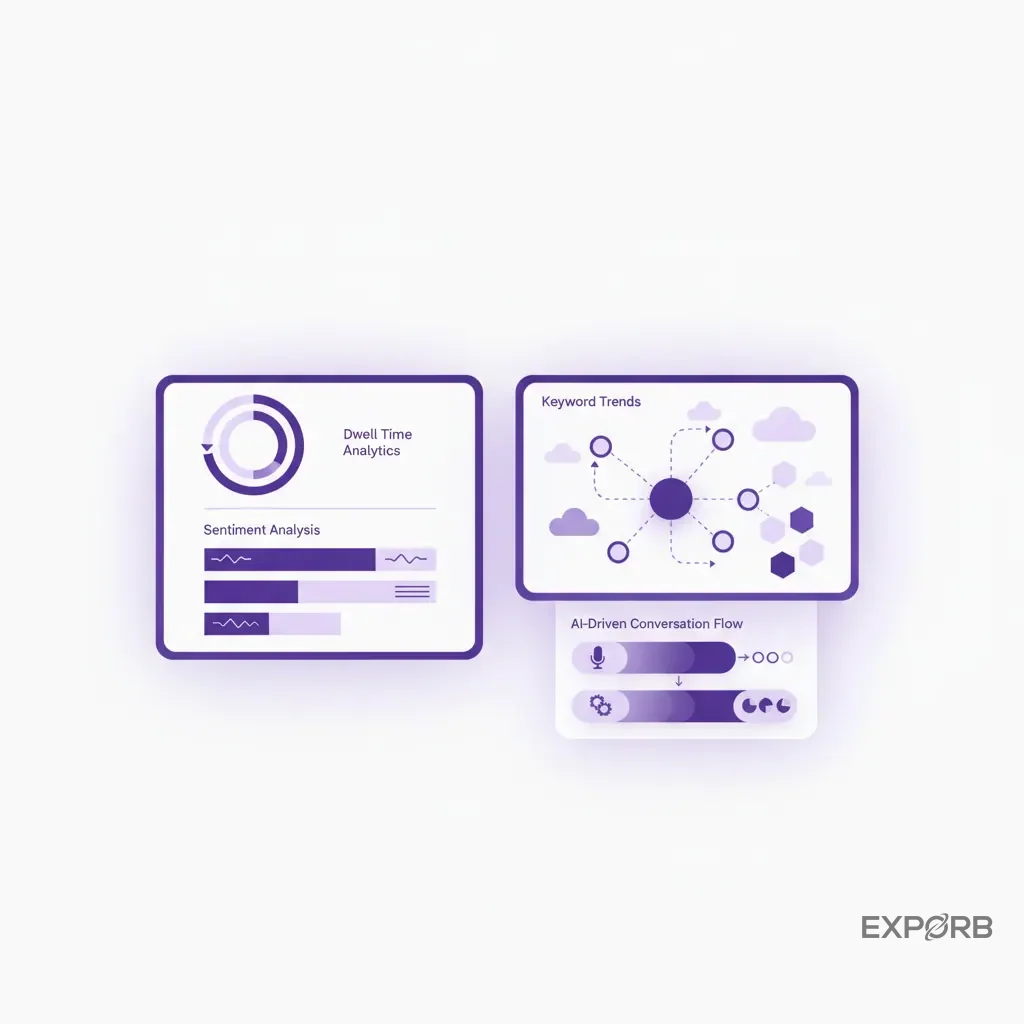
Some AI systems use discreet cameras and sensors to analyze booth traffic. They tell you which parts of your booth attract the most attention, how long people stay, and even gauge general sentiment. Are people looking confused? Intrigued? This data—collected anonymously and in aggregate—helps you understand what's working and what isn't, so you can make adjustments during the show.
Creating hybrid human-AI teams for maximum efficiency
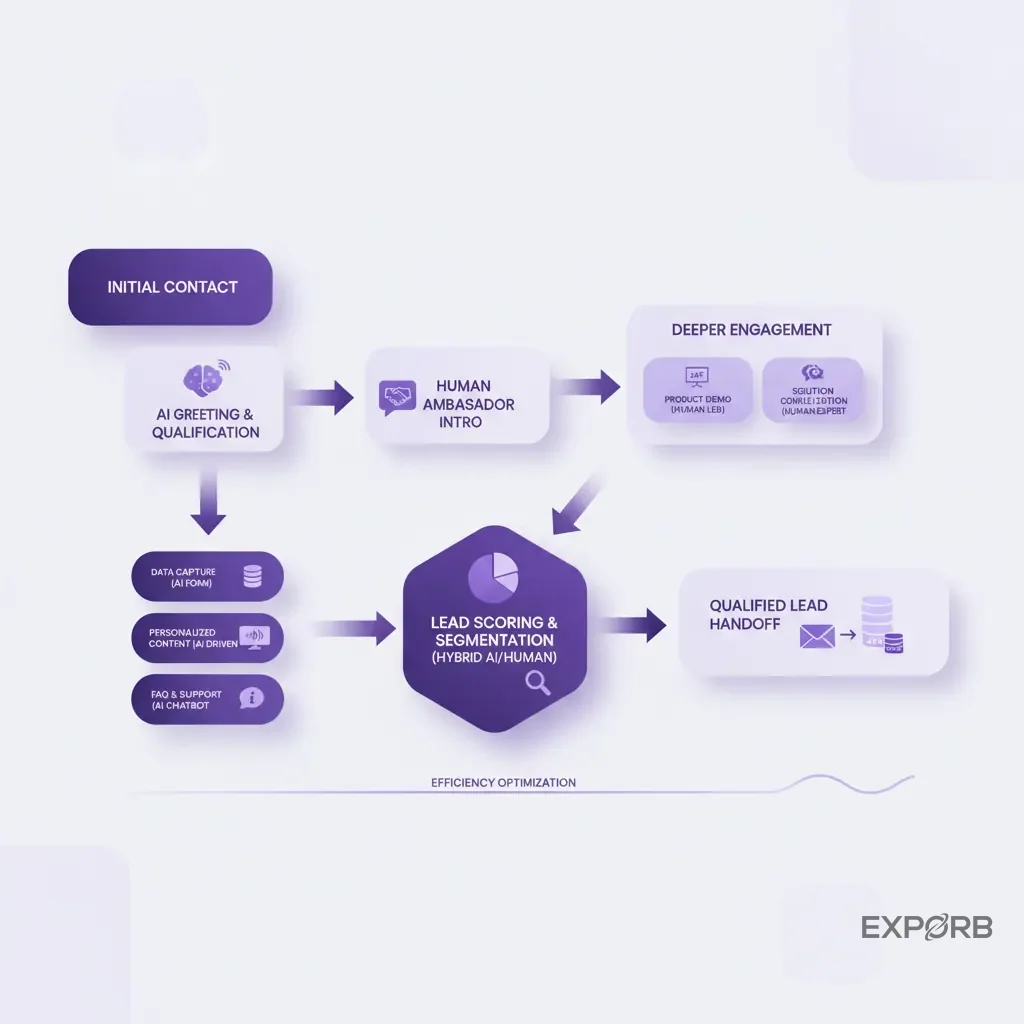
The goal of AI isn't to replace your booth staff. It's to supercharge them. Let an AI-powered kiosk handle the basic qualification questions for passersby. This frees up your experienced account executives to have deeper, more meaningful conversations with the highly qualified prospects the AI has identified. Your best people spend their time on the best leads. Simple.
Why is manual lead capture failing your sales team?
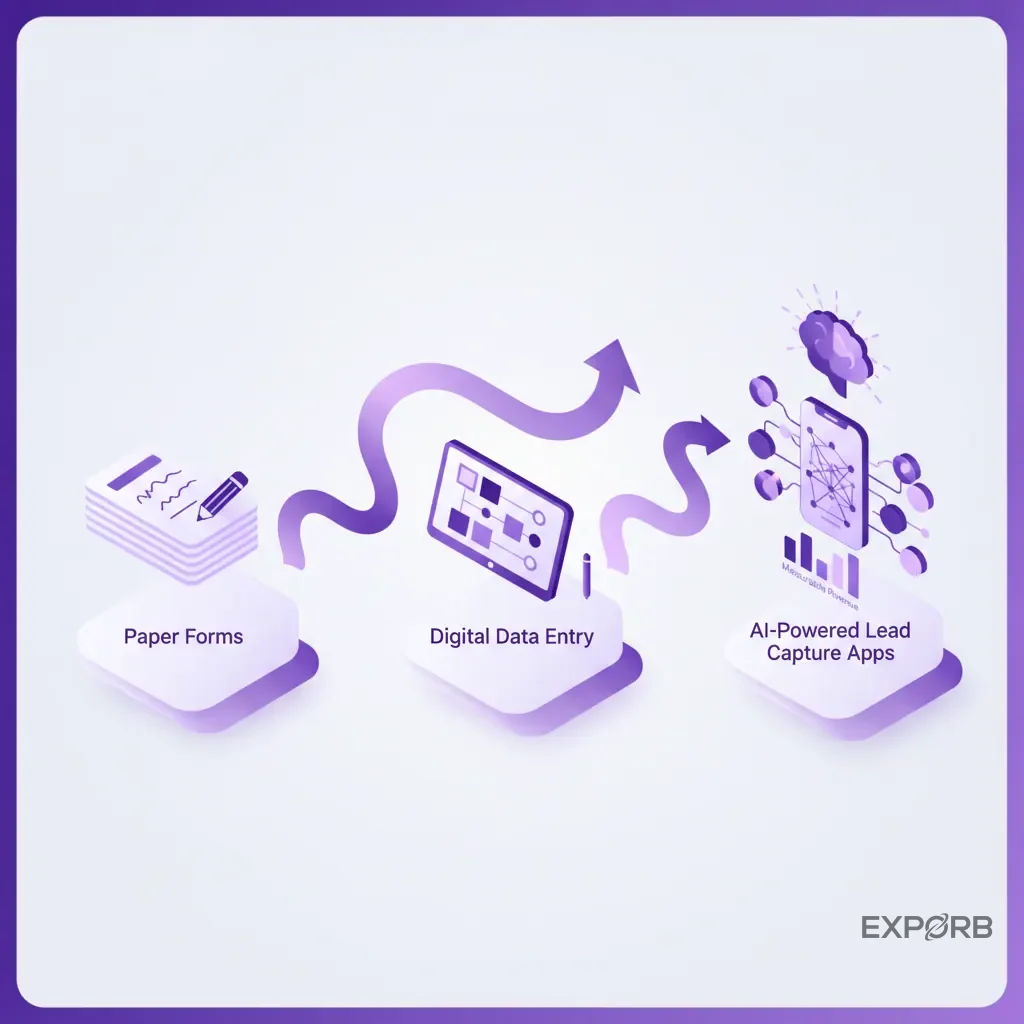
Companies invest heavily in their trade show presence but often undermine their own ROI with outdated lead capture methods. Here's the biggest mistake we see companies make. They spend a fortune on a beautiful booth, fly the whole team out, and then manage their most valuable asset—new leads—with a spreadsheet and a stack of business cards. The Center for Exhibition Industry Research (CEIR) reports that measuring Event ROI is a persistent challenge for exhibitors, and manual lead capture contributes significantly to this problem.
The founder's dilemma: 'What did my team actually learn?'
This is the problem that led us to build Exporb. As a founder, you send your team to an event. They meet 100 people. Then you have zero visibility into those conversations. Which ones were promising? What did they talk about? Who needs a follow-up tomorrow? The answers are trapped in messy notebooks or, worse, in your team's memory. You're flying blind.
Moving from scanned badges to structured conversation data
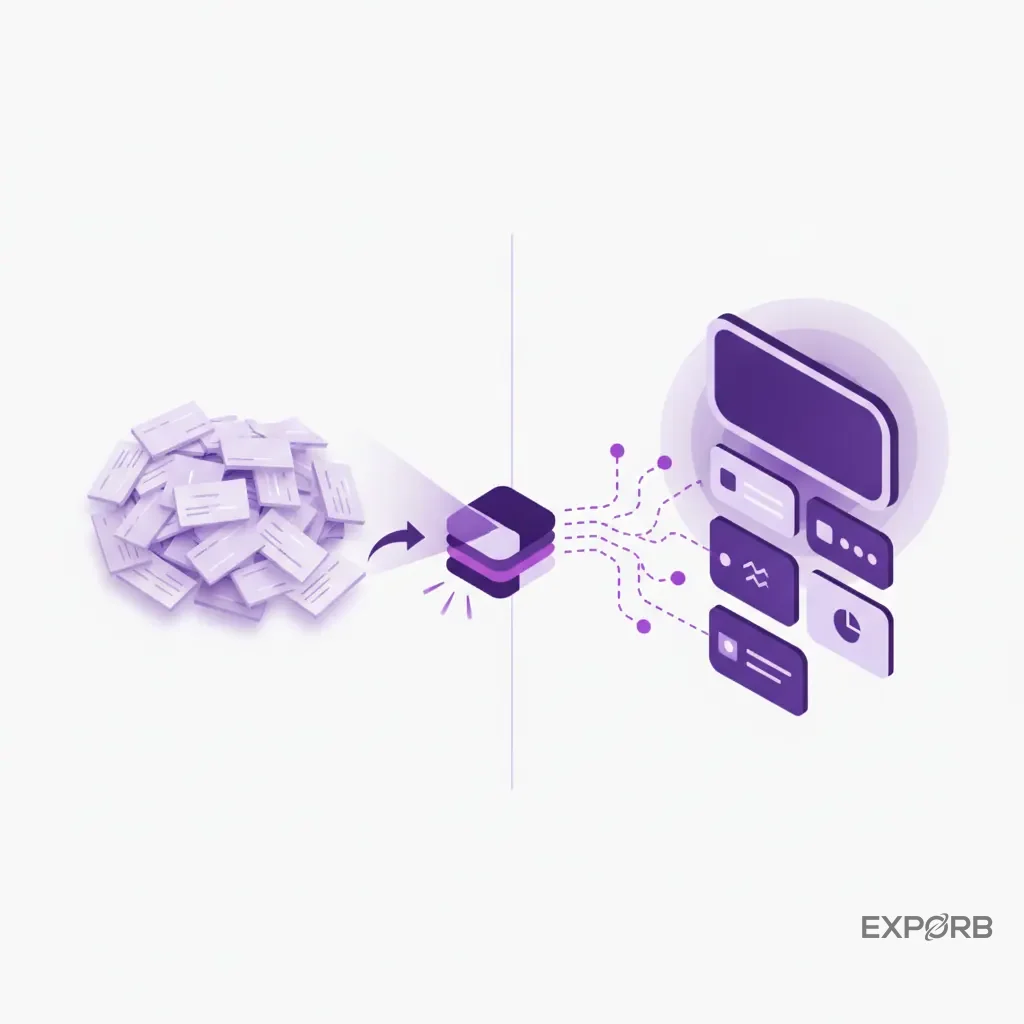
A badge scanner gives you a name and an email. That's it. It tells you nothing about the person's needs, their budget, their timeline, or the action items you agreed on. The future of lead capture isn't about collecting contacts; it's about collecting context. You need structured data—pain points, interests, buying signals—that your sales team can actually use.
How AI transcribes and summarizes every key interaction offline
What if every important conversation could be captured? With modern tools, your team can record voice notes right after a prospect leaves the booth, summarizing the key details while they're still fresh. The app works entirely offline—critical for spotty convention center Wi-Fi. Later, when you're connected, AI transcribes the audio, analyzes it for key topics, and gives you a clean summary. This is how you scale conversations without losing the details. It's not surveillance; it's just really, really good note-taking.
Related: Trade Show Lead Scoring: Convert Scans into Sales
Beyond the flashy booth: AI's role in measuring true engagement
For decades, the primary metric for booth success was foot traffic. But this is a classic vanity metric. A crowded booth was a successful booth. We all know a busy booth doesn't pay the bills—qualified leads do.
Challenging the myth: A busy booth does not equal qualified leads
How many of those people who grabbed a free t-shirt are actually in your target market? This is a critical question, especially when you consider that, according to research from Exhibitor Magazine, 81% of trade show attendees have buying authority. AI helps you move past counting bodies and start measuring intent. It helps you distinguish between the tire-kickers and the true potential customers by analyzing the substance of your interactions. You'd rather have ten meaningful conversations than 100 superficial ones.
Tracking interaction patterns with computer vision and analytics
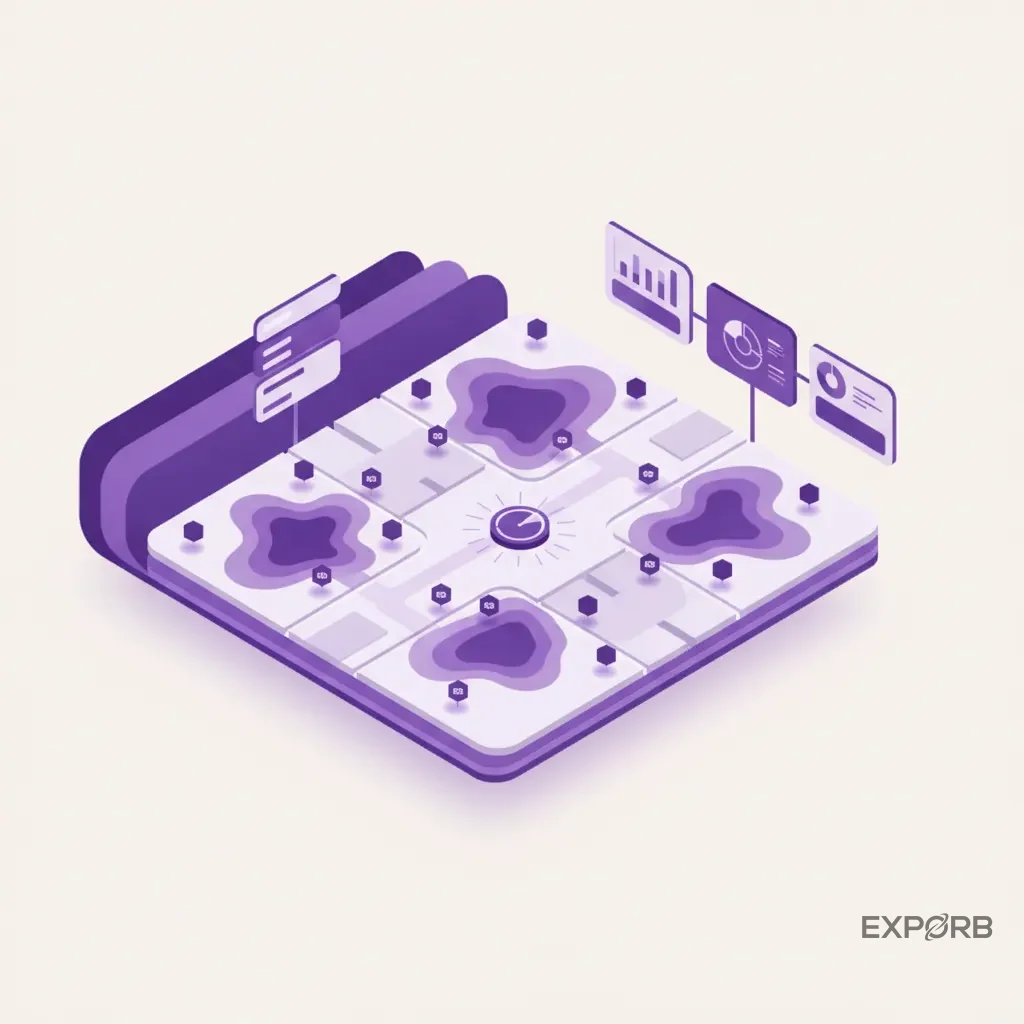
Computer vision analytics can provide a "heatmap" of your booth, showing where visitors spend the most time. Are they lingering by your new product display or the case study video? This data gives you objective feedback on your booth design and messaging. It helps you understand what truly captures a prospect's attention, allowing you to double down on what works at your next show.
Analyzing sentiment and buying signals from transcribed conversations
This is where the analysis becomes particularly valuable. When you have transcripts of your booth conversations, AI can analyze them for sentiment and keywords. It flags conversations where prospects used words like "budget," "timeline," or "proposal." It detects positive or negative sentiment. This data can automatically score leads, ensuring your sales team prioritizes follow-up with the people closest to making a decision. An AI lead scoring system can mean the difference between a hot lead and a cold trail.
How are event organizers using AI to reshape the floor?
The adoption of AI isn't limited to exhibitors; event organizers are completely changing the trade show experience from the top down. It's not just exhibitors who are adopting AI. The organizers of major trade shows are using it to completely redesign the event experience. As an exhibitor, you need to understand these changes because they directly affect how you'll meet your next customer.
AI-driven matchmaking is now the standard for attendees
Remember wandering the aisles hoping to stumble upon the right people? Those days are numbered. Data from Gitnux shows an incredible 82% of event organizers were already using AI for matchmaking back in 2024, so it's table stakes now. Event apps now act like a concierge, suggesting specific booths, sessions, and even other attendees for people to meet based on their profile and stated interests.
Smart navigation and predictive crowd flow analysis
Large events like the AI & Big Data Expo use AI to manage the flow of thousands of attendees. By analyzing real-time location data, organizers prevent bottlenecks and guide visitors to less congested areas. For you, this means the foot traffic on the floor is actively managed, which can impact who ends up walking past your booth.
Proving sponsor ROI with data-rich analytics dashboards
Organizers are under pressure to prove the value of their sponsorships. They're now providing exhibitors and sponsors with sophisticated dashboards. These reports show not just how many people walked by, but how many high-value targets (as defined by registration data) were in the vicinity of your booth. It's a new level of accountability that helps you justify your event spend.
How do you use trade show AI while respecting attendee privacy?
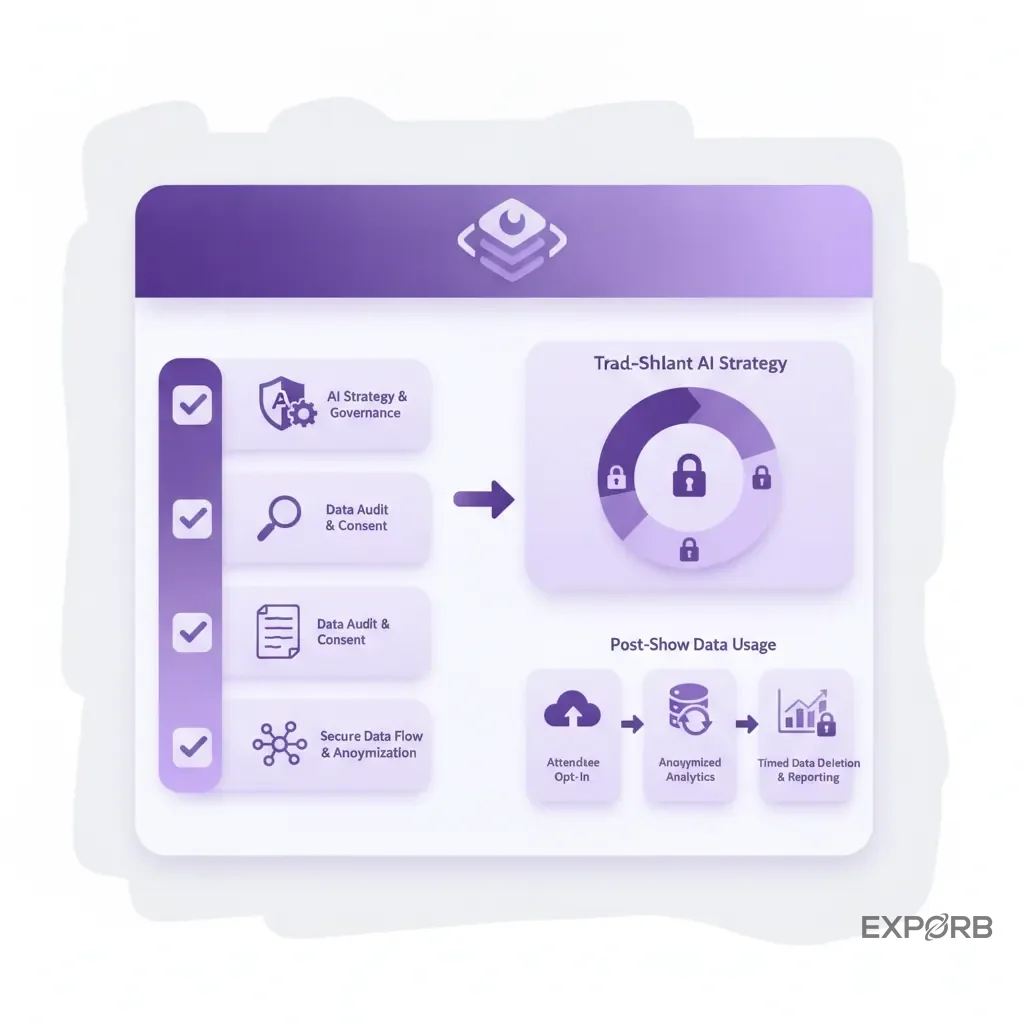
The increased use of data-gathering technology at events makes a clear and transparent privacy strategy an absolute necessity. With all this data collection comes a massive responsibility. You can't just start recording conversations or analyzing visitor behavior without being transparent. Trust is everything. If attendees feel like they're being spied on, you've already lost.
Building a privacy-by-design framework for your booth
This means thinking about privacy from the very beginning. Your strategy should prioritize collecting the minimum amount of data necessary. Do you really need to know someone's home address? Probably not. Use tools built with privacy in mind, and have a clear policy for how you handle, store, and delete the data you collect.
Gaining clear consent for AI-assisted interactions and data capture
Consent isn't a checkbox buried in terms and conditions. It needs to be explicit and clear. If you want to record a conversation for note-taking, you should ask first: "Hey, to make sure I don't miss anything, would you mind if I record our chat as voice notes?" Most people are fine with it when you explain the benefit—that it helps you remember the details and follow up properly. For booth analytics, simple signage like "We use anonymous analytics to improve our booth experience" is often sufficient.
Ensuring transparency in how attendee data is used post-show
Be clear about what happens next. When you capture a lead, tell them what to expect. "Our team will follow up next week with the case study we discussed." Don't just add them to a generic marketing newsletter without their permission. The goal is to build a relationship, and that starts with respecting their inbox and their data.
How does AI accelerate your post-show follow-up and ROI?
The most critical—and most frequently fumbled—part of the trade show process is the post-show follow-up, a gap that AI is uniquely positioned to close. The single biggest point of failure in the trade show process is the lack of timely follow-up. Your team comes back exhausted, and the leads sit in a spreadsheet for a week—or longer. HubSpot reports that speed is critical, as response time is a key factor in converting leads. By then, the momentum is gone. AI closes this gap, connecting the booth conversation to the follow-up in minutes, not weeks.
Triggering intelligent nurture sequences instantly from the show floor
Imagine this: your rep finishes a great conversation. They tap a button in their lead capture app. The AI, using a transcript of the conversation, instantly drafts a personalized follow-up email that mentions the specific pain points and next steps they just discussed. Your rep gives it a quick review and hits send. The follow-up is done before the prospect has even left the building. That's how you win. Some platforms even have pre-built email templates that AI can populate automatically.
Scoring and routing leads based on actual in-booth conversations
Not all leads are created equal. AI can analyze the captured conversation data to score each lead's quality and intent. A lead who mentioned "budget" and "Q3 implementation" should be scored higher and routed directly to your top sales rep. A lead who just wanted a free pen can be added to a long-term nurture sequence. This intelligent routing ensures your sales team's time is spent on deals that are most likely to close.
Building a cross-event learning loop for continuous improvement
The data from one show can make your next show even better. AI analyzes all your conversations from an event to identify trends. Which pain points came up most often? Which generated the most excitement? This insight is gold. It helps you refine your messaging, train your booth staff, and even inform your product roadmap. It turns each event into a learning opportunity.
Impact of Follow-Up Speed on Lead Reply Rates
Implementing AI at your next trade show: A practical framework
Adopting AI doesn't require a complete overhaul of your event strategy. You can start with small, targeted changes to address your biggest pain points first. Feeling overwhelmed? You don't have to boil the ocean. The key is to pick one or two areas where AI can have the biggest immediate impact on your process.
Starting small: AI tools for solo founders and lean teams
You don't need an enterprise budget to get started. Many powerful AI tools are accessible to small businesses. Start with a better lead capture app that can scan business cards and record voice notes. Focus on solving the biggest post-show headache first: data entry and follow-up. A simple tool that gets lead data out of a notebook and into a structured format is a huge first step.
Integrating conversation intelligence into your existing CRM
The goal is to create a smooth flow of data from the booth to your system of record. Look for tools that can easily export data in a clean CSV format or, even better, offer direct integrations. Your sales team lives in the CRM. The easier you can get rich, contextual lead data into their hands, the more effective they'll be. That's why a solid CRM export feature is non-negotiable.
A step-by-step checklist for your first AI-powered event
- Define Your Goal: What's the #1 problem you want to solve? Faster follow-up? Better lead qualification? Pick one.
- Choose Your Tool: Select a modern lead capture platform. Look for one that works offline, since event Wi-Fi is notoriously unreliable.
- Train Your Team: Hold a 30-minute training session. Show them how to scan a card, record a voice note, and add tags. Make it simple.
- Set Up Your Tags: Create a consistent set of tags for products, pain points, and follow-up actions before the show.
- Execute at the Show: Focus on capturing the context of every good conversation.
- Export and Analyze: After the show, export your data. What trends do you see? Who are your hottest leads?
- Follow Up Immediately: Use the structured data and conversation notes to send relevant, timely follow-up emails.
Your AI-powered playbook for the modern trade show
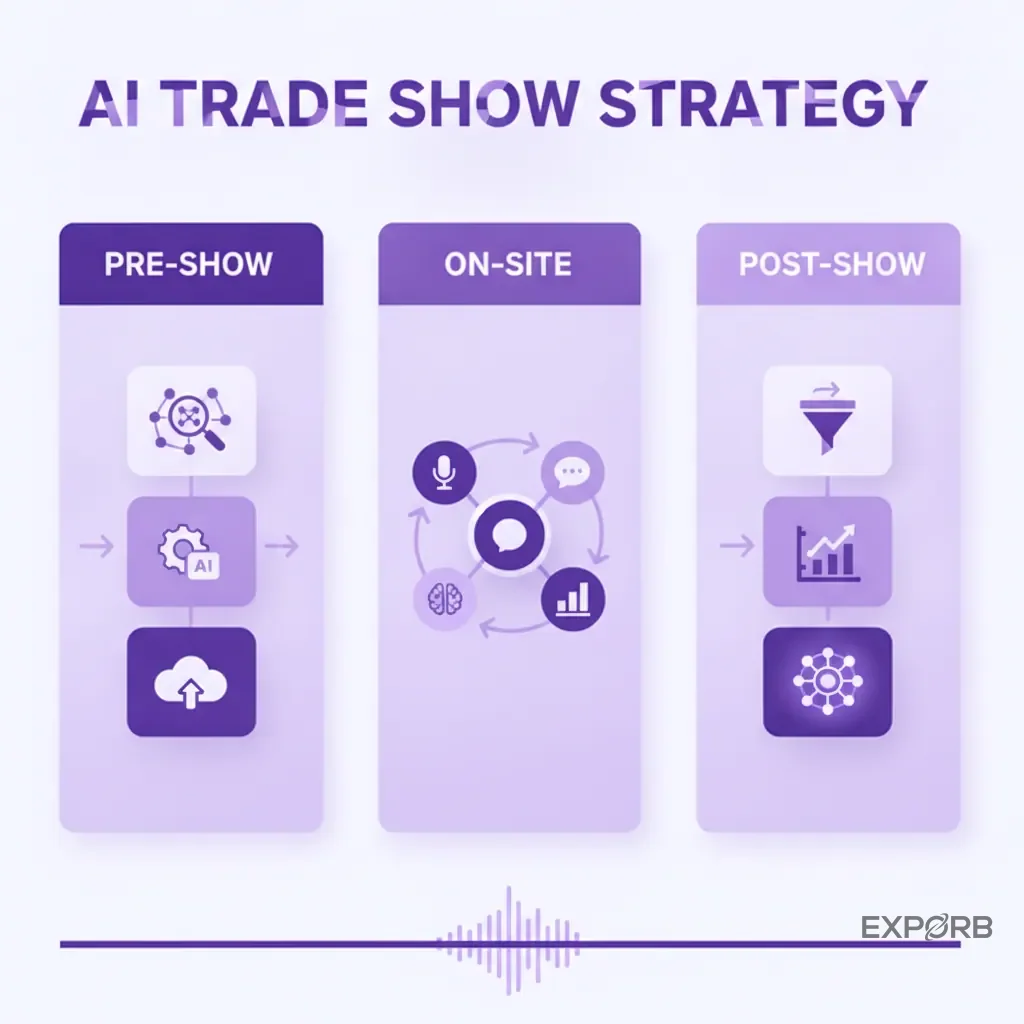
A successful trade show AI strategy integrates technology across the entire event lifecycle, from pre-show planning to post-show conversion. Using AI at trade shows isn't about chasing trends; it's about changing how you generate and manage revenue from events. It's the difference between being reactive and being proactive.
The pillars: Pre-show intelligence, on-site orchestration, and post-show conversion
Success with trade show AI rests on these three stages. You need to use AI to prepare smarter (intelligence), execute more efficiently on the floor (orchestration), and turn conversations into revenue faster (conversion). A weakness in any one of these areas will undermine your entire effort. Your strategy must connect all three.
Key actions to take for your next event budget
Stop thinking of lead capture as an afterthought. It's time to reallocate your budget. Maybe that means a slightly smaller booth in exchange for a tool that guarantees no lead gets lost and every follow-up is perfect. The ROI on better lead management is infinitely higher than the ROI on fancier carpet. This is a mindset shift that high-growth companies have already embraced.
Measuring success beyond lead count with conversation analytics
The new primary metric for trade show success is Conversation-Qualified Leads (CQLs). These are leads where you've captured a real business pain, discussed a potential solution, and defined a clear next step. Your goal shouldn't be "100 scans." It should be "15 CQLs." AI gives you the tools to capture, track, and act on these high-value interactions. This is how you prove that trade shows aren't just a marketing expense—they're a powerful engine for your pipeline.